Our readers keep the lights on and my smoothie glass nicely filled. As an Amazon Associate, I earn from qualifying purchases.
The climb demands ventilation, but the descent demands a jaw guard. A convertible mountain bike helmet solves that contradiction by letting you ride up with an open face and rip down with full protection, all in one shell. The challenge is finding a lid that does both jobs well without feeling like a compromise.
I’m Mohammad Maruf — the founder and writer behind WellFizz. I’ve spent hundreds of hours analyzing MIPS systems, chin bar retention mechanisms, vent counts, and real-world crash data across the convertible helmet category to build this guide.
Whether you’re tackling enduro stages, lapping the bike park, or pushing your XC loop into rowdier terrain, finding the best convertible mountain bike helmet means balancing rotational protection, ventilation, and chin bar security without overpaying for hype.
How To Choose The Best Convertible Mountain Bike Helmet
Not every convertible helmet is certified for the same level of abuse. A helmet that only meets EN 1078 may handle trail riding, but if you plan to hit jump lines or shuttle laps, you need ASTM F1952 downhill certification. The chin bar is also a variable — some attach with a simple slide mechanism, others use locking pins or integrated latches that require two hands. Learn what separates a safe convertible from a risky one.
Rotational Impact Protection
MIPS (Multi-directional Impact Protection System) is the standard, but Spherical MIPS — which uses a ball-and-socket design between two EPS layers — allows more rotational movement and better venting. Some brands like Leatt use 360° Turbine technology. The best convertibles pair this with a secure chin bar that stays rigid in a crash.
Chin Bar Attachment and Security
A wobbly chin bar defeats the purpose. Look for a bar that locks into place with audible clicks and doesn’t require tools. The best systems — like Bell’s wraparound or iXS’s integrated liner — hold the bar rigid even during hard impacts. Also consider whether the chin bar can be stowed on the helmet or carried in a pack while climbing.
Ventilation and Weight
You will pedal in these helmets. Weight above 850 grams in full-face mode becomes noticeable on long climbs. Look for at least 18 vents and deep internal channeling. Helmets with integrated chin bars tend to ventilate better than add-on snap bars, because airflow is designed into the EPS liner from the start.
Quick Comparison
On smaller screens, swipe sideways to see the full table.
| Model | Category | Best For | Key Spec | Amazon |
|---|---|---|---|---|
| Bell Super DH MIPS | Premium Convertible | Enduro racers wanting DH cert | ASTM F1952 Downhill | Amazon |
| iXS Trigger FF MIPS | Premium Full Face | All-day pedaling in a fixed FF | 595g full face weight | Amazon |
| Leatt MTB Enduro 2.0 | Premium Convertible | Low-speed impact protection | 360° Turbine Technology | Amazon |
| Smith Engage MIPS | Mid-Range Open Face | XC light trail with MIPS | Zonal Koroyd coverage | Amazon |
| Bell Sanction 2 DLX MIPS | Mid-Range Full Face | Park laps and dirt jump | DLX MIPS + Fidlock buckle | Amazon |
| O’Neal Sonus Deft | Budget Full Face | E-scooter and low-speed use | Fidlock magnetic buckle | Amazon |
| Demon United FR Link | Budget Convertible | Entry-level convertible | Removable chin guard | Amazon |
In‑Depth Reviews
1. Bell Super DH MIPS
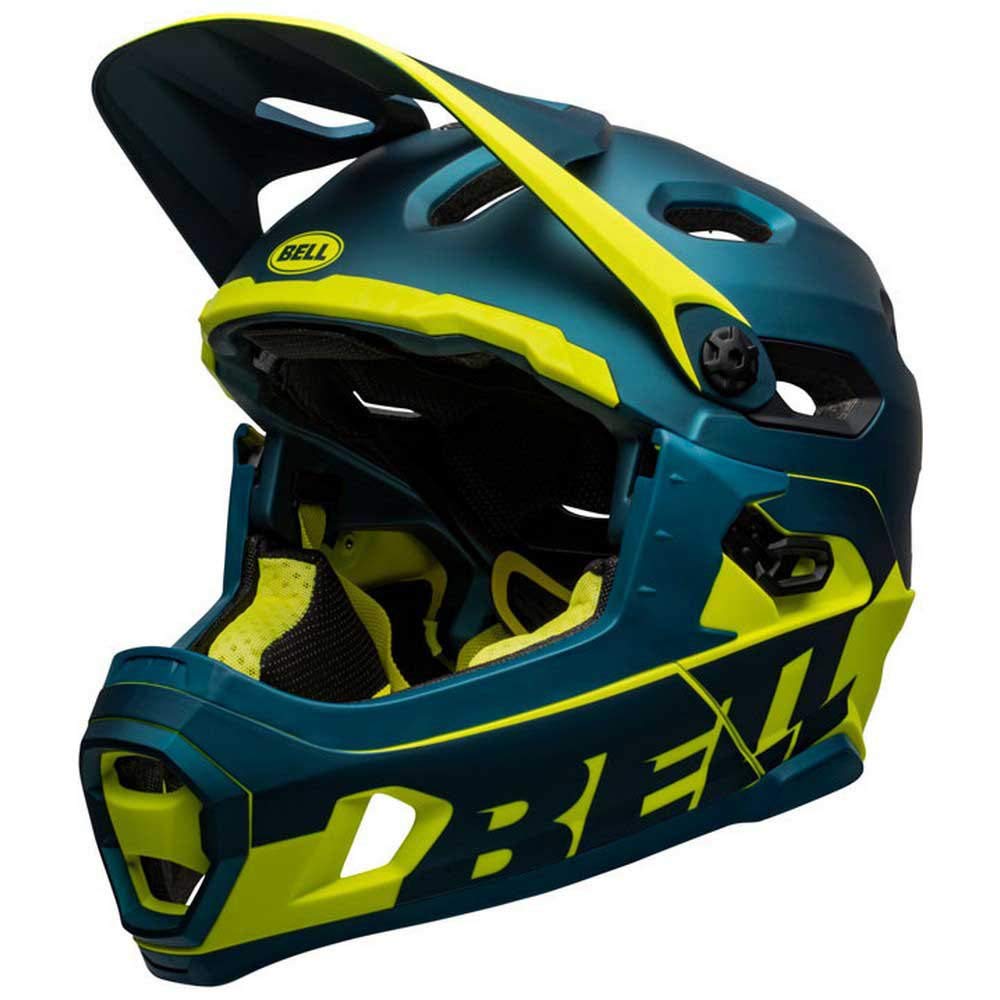
The Bell Super DH MIPS is the gold standard for convertible helmets because it carries an ASTM F1952 downhill certification while still functioning as a trail open-face. The Flex Spherical+MIPS system uses a ball-and-socket design between two EPS densities, which allows more rotational movement than standard MIPS and helps design deeper internal airflow channels. The wraparound chin bar secures without tools and stays rigid during impacts — riders on forums report surviving serious crashes with no chin bar failure.
Ventilation is strong for a DH-rated convertible. Nineteen vents plus four chin bar vents and two brow ports keep air moving even during long pedals. The Float Fit DH system with a Fidlock magnetic buckle makes one-handed operation effortless, even with gloves. The Sweat Guide pad design pulls moisture away from the brow, reducing fog on glasses. It also includes an integrated breakaway camera mount, so you don’t need zip ties or tape to run a GoPro.
The only real con is that replacement pads can be hard to source separately — several long-term owners note the velcro on one pad can lose grip after a couple seasons. At under 900 grams in open-face mode, it’s not the lightest convertible, but the combination of DH cert, Spherical MIPS, and proven real-world crash performance makes it the top choice for riders who shuttle and pedal on the same day.
Why it’s great
- ASTM F1952 Downhill certified
- Flex Spherical MIPS for rotational + linear protection
- Wraparound chin bar stays rigid without tools
- Integrated breakaway camera mount
Good to know
- Replacement pads are difficult to find separately
- Chin bar re-attachment can require some finagling
2. iXS Trigger FF MIPS
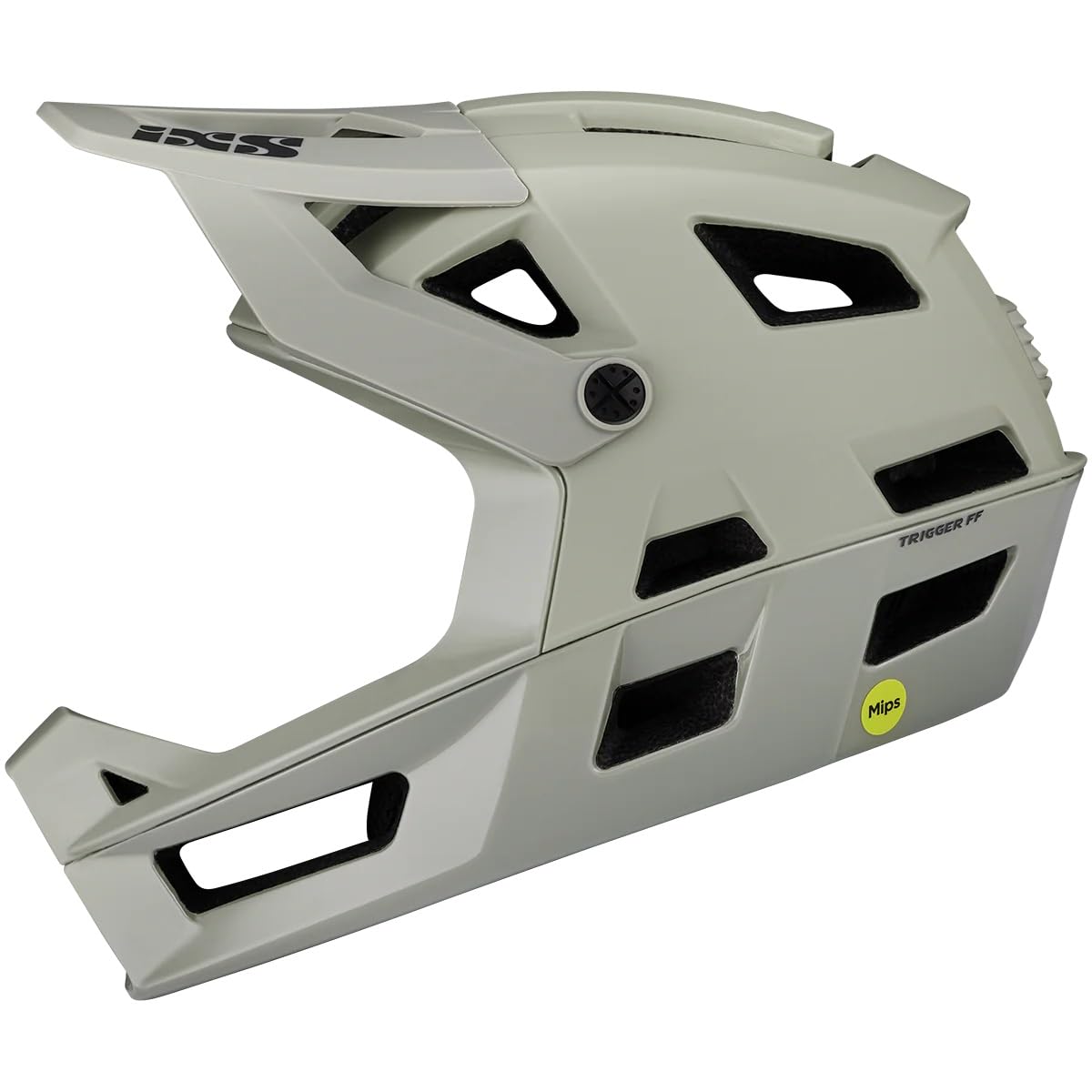
The iXS Trigger FF MIPS hits a remarkable 595 grams for a medium shell, making it one of the lightest DH-certified full-face helmets on the market. It is a fixed full-face design, not a convertible, but it earns a spot here because its weight and venting make it comfortable for all-day climbing — a rare feat for full-face protection. The patented all-in-one construction integrates the EPS liner and chin bar as a single piece, so its ventilation channels are part of the structural design.
MIPS is implemented via rubber shear pads that rotate between the EPS and the comfort liner. Users report zero squeaking, unlike some competing MIPS systems. The Ergo-Fit Ultra system provides both vertical and circumference dial adjustment, plus adjustable straps and a Fidlock magnetic buckle. It meets ASTM F1952-15 and F1446-15b standards, so it’s certified for real downhill punishment. Multiple customers have survived hard jaw impacts that would have broken a jaw without a full-face.
The main limitation is that it’s not convertible — you cannot remove the chin bar. For riders who only want one helmet for everything, the lack of open-face mode may be a deal-breaker. Also, the front vents lack mesh screens, so trail debris can get through unless you add aftermarket mesh. Ventilation is excellent for a full-face, but it’s still warmer than an open shell on hot climbs.
Why it’s great
- Extremely light at 595g in full-face mode
- DH certified to ASTM F1952
- Excellent ventilation for pedaling
- Easy dial fit system with Fidlock buckle
Good to know
- Not convertible — chin bar is fixed
- No mesh screens on front vents
3. Leatt MTB Enduro 2.0
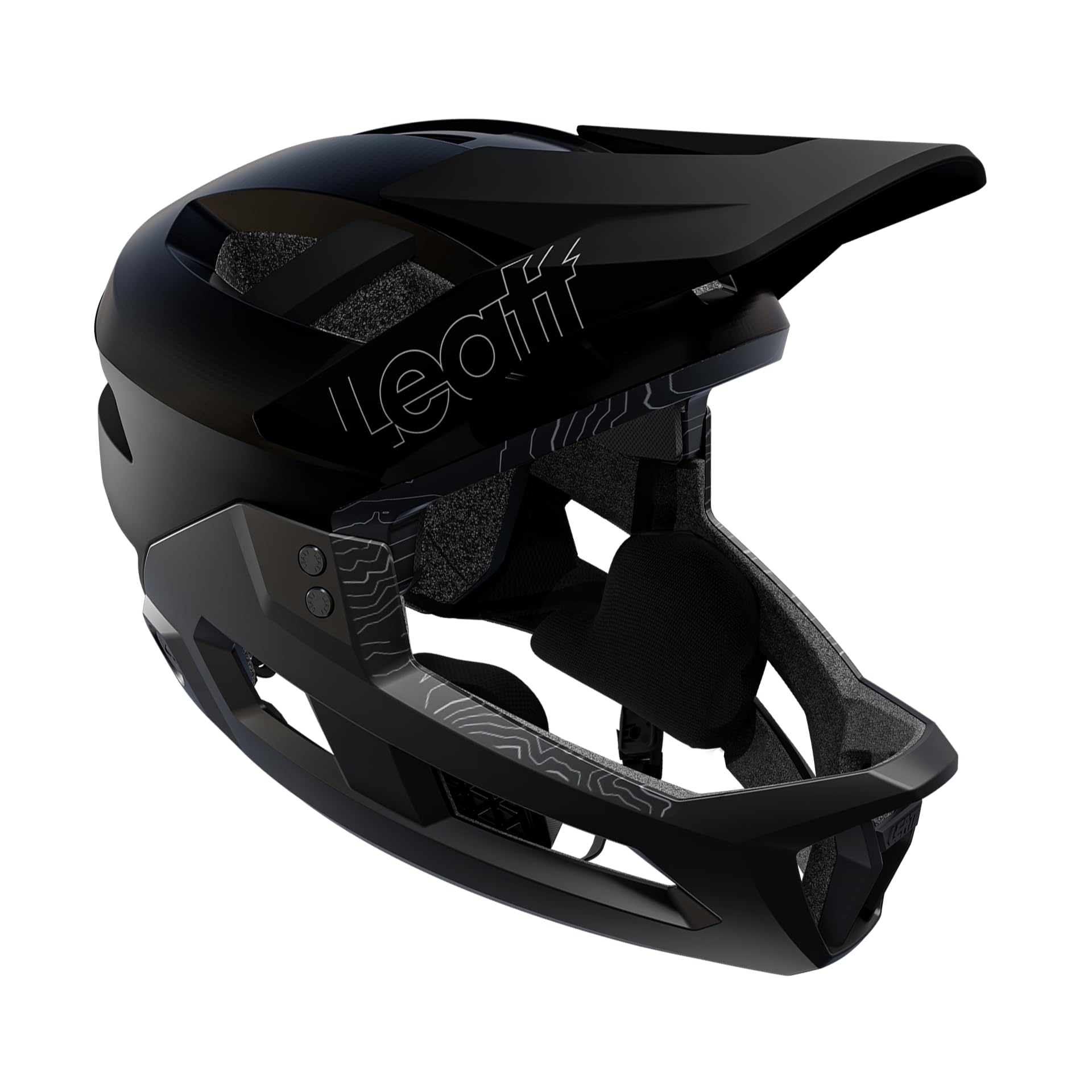
The Leatt MTB Enduro 2.0 stands out for its 360° Turbine Technology — soft, viscoelastic energy-absorbing discs positioned around the entire head that address low-speed impacts, high-speed impacts, and rotational forces simultaneously. This is a different approach than MIPS, and Leatt’s testing shows it reduces peak head acceleration during oblique impacts. The chin bar is fully removable via a flip-easy system, and the helmet weighs roughly 640 grams in full-face mode.
Ventilation is a strong point with 20 vents designed for airflow even at low speeds, which matters for riders who do technical climbs. The moisture-wicking anti-odor liner is removable and washable. The Fidlock magnetic closure is glove-friendly and reliable. The helmet has a polymer shell with in-molded impact foam, and Leatt offers a 3-year spare part availability guarantee, which is reassuring for long-term ownership.
The main drawback is sizing — several customers report that the size Large runs smaller than labeled, fitting heads up to about 58 cm rather than the advertised 63 cm. If you have a large head, measure carefully before buying. Also, the chin bar attachment can be fiddly to operate while wearing gloves, though it’s secure once clicked in. It lacks a DH certification, so it’s best suited for trail and enduro use rather than bike park shuttling.
Why it’s great
- 360° Turbine technology for three impact modes
- Lightweight convertible design
- Excellent low-speed ventilation
- Fidlock magnetic buckle
Good to know
- Size Large fits smaller than labeled
- Not DH certified
- Chin bar can be tricky to attach while wearing
4. Smith Engage MIPS

The Smith Engage MIPS is an open-face trail helmet, not a convertible, but it delivers a level of comfort and fit that makes it an excellent companion for riders who want a dedicated climbing lid and use a separate full-face for descents. It features zonal Koroyd coverage — a honeycomb-like material that absorbs energy while allowing airflow — combined with a MIPS system. The 20 fixed vents channel air consistently, and the Ionic+ lining uses sweat-activated odor control.
The fit is where Smith excels. The Engage’s low-back design avoids the mushroom-head look that many trail helmets create, and the adjustable visor has two positions to accommodate goggles or glasses. The single-layer webbing reduces bulk, and the ratchet system is smooth and easy to micro-adjust. Customers consistently rate it as the most comfortable helmet they have owned, noting that the deep rear coverage feels secure without being restrictive.
It is not convertible, so it cannot offer chin bar protection. Some users note the buckle can be tricky to fasten quickly, and despite the venting, you will still sweat on hot days. At roughly 350 grams, it is light enough to forget you are wearing it. For riders who climb a lot and don’t need a chin bar, this is a top-tier open-face option that fits well under goggles.
Why it’s great
- Koroyd + MIPS for excellent energy absorption
- Deep rear coverage, comfortable fit
- Two-position adjustable visor
- Ionic+ odor-control lining
Good to know
- Not convertible — open face only
- Buckle can be finicky to fasten
5. Bell Sanction 2 DLX MIPS
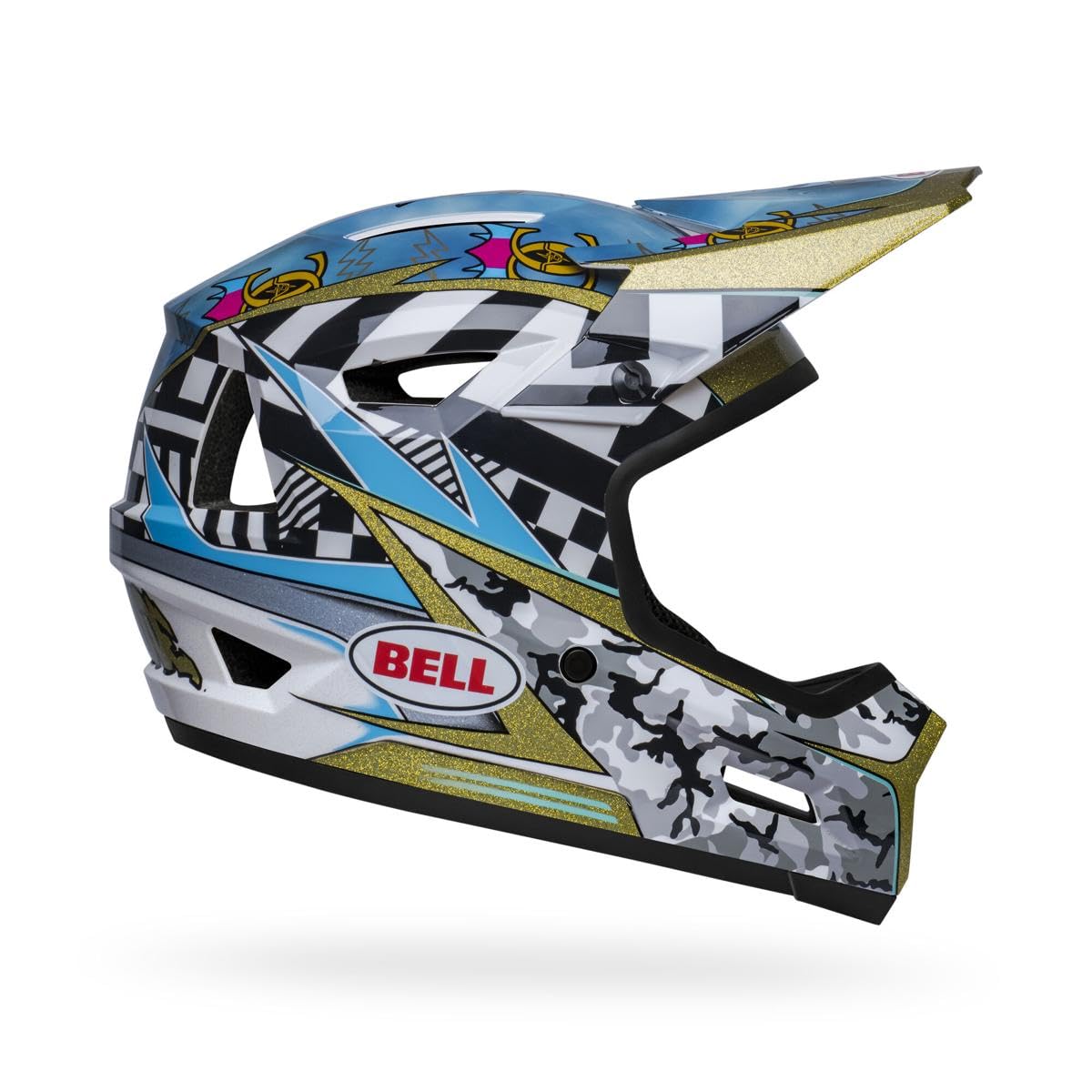
The Bell Sanction 2 DLX MIPS is a dedicated full-face helmet built for jump lines, BMX tracks, and bike park laps. It is not convertible — the chin bar is fixed — but its MIPS rotational protection and Fidlock magnetic buckle make it one of the most user-friendly full-face helmets at its level. The polycarbonate shell is bonded to an EPS foam liner, and the DLX version includes a MIPS slip plane and upgraded padding.
Ventilation is better than older full-face helmets thanks to openings under the visor and across the top, but it is not as airy as high-end enduro lids. The magnetic chin strap clip is a standout feature — it clicks home one-handed, even with thick gloves. The size L fits 57-59 cm heads snugly, and the helmet weighs roughly 1.84 kg, which is on the heavier side for pedaling. The visor is adjustable to accommodate goggles.
It lacks a DH safety certification like ASTM F1952, so it’s best for park riding where speeds are high but impacts are typically not as severe as full-speed DH racing. Customers who pair it with an open-face for pedaling find it a great value helmet. The fixed chin bar means you cannot stash it in a pack, but for dedicated park days, the magnetic buckle and MIPS make it a solid mid-range pick.
Why it’s great
- MIPS rotational protection
- Fidlock magnetic buckle is incredibly convenient
- Good ventilation for a fixed full-face
- Adjustable visor for goggles
Good to know
- Not DH certified
- Heavier than premium options
- Not convertible
6. O’Neal Sonus Deft

The O’Neal Sonus Deft is an entry-level full-face helmet built around an ABS shell and EVA foam liner. It is not a convertible — the chin bar is fixed — but it offers a Fidlock magnetic buckle, which is a feature usually found on helmets costing twice as much. The EVA liner is not EPS, which means less impact absorption than premium options, but it does meet EN 1078 safety standards for bicycle helmets.
Multiple vents provide adequate airflow for low-speed use like e-scooter commuting, urban riding, or light trail cruising. At 3.5 pounds, it is noticeably heavier than mid-range full-face helmets. The removable and washable inner liner is a nice touch for hygiene, and the size XL fits larger heads better than most budget options. Customers report it works well for Onewheel and e-scooter use, where speeds stay under 30 mph.
It is not DH certified, so it should not be used for aggressive downhill riding. The EVA foam is less effective at absorbing high-energy impacts compared to EPS. However, for riders who want full-face protection on a strict budget and don’t need MIPS or convertible functionality, the magnetic buckle and lightweight feel make it a decent choice for casual use.
Why it’s great
- Fidlock magnetic buckle at a low price point
- Removable washable liner
- Good for large head sizes
- Solid build for low-speed use
Good to know
- EVA foam instead of EPS for impact absorption
- Heavier than premium options
- Not DH certified
7. Demon United FR Link

The Demon United FR Link is the most affordable true convertible helmet on the market — a polycarbonate shell with a removable chin guard that attaches via a flip-easy system. It comes in one size (58-61 cm) with two sets of cheek pads to adjust fit, and it includes a cinch dial at the back for head circumference. At 1.8 pounds (816 grams), it is light for a convertible and very ventilated compared to many budget options.
The chin bar removal is simple: push a button on each side and lift. However, multiple customers report that re-attaching the chin bar while wearing the helmet is difficult, and some have experienced the ratchet system coming apart during use. The tightening band can also loosen during rides, which is a safety concern. The stealthy matte black look and low stack height are visually appealing, and it works well with goggles.
It lacks MIPS and is not DH certified, so it should be considered a trail-only helmet. The quality control is inconsistent — some users report great value, while others describe the chin bar attachment as unreliable. For the price, it offers convertible functionality, but if you can stretch your budget, a mid-range convertible like the Leatt or Bell Super DH provides significantly better security and peace of mind.
Why it’s great
- Most affordable true convertible helmet
- Lightweight at 1.8 lbs
- Good ventilation
- Adjustable cheek pads and cinch dial
Good to know
- Chin bar ratchet system can fail
- Lacks MIPS and DH certification
- Hard to attach chin bar while wearing
- Tightening band loosens during rides
FAQ
Can I use a convertible mountain bike helmet for downhill racing?
How does MIPS affect the fit of a convertible helmet?
How often should I replace a convertible mountain bike helmet?
Do convertible helmets fit differently than full-face or open-face helmets?
Is a magnetic Fidlock buckle worth paying extra for?
Final Thoughts: The Verdict
For most users, the best convertible mountain bike helmet winner is the Bell Super DH MIPS because it combines ASTM F1952 downhill certification, Spherical MIPS, and a secure wraparound chin bar in a package that handles climbs and descents equally well. If you want the lightest full-face protection that breathes like an open-face — and you don’t need the chin bar to come off — grab the iXS Trigger FF MIPS. And for a budget-friendly convertible that opens up the category, the Demon United FR Link offers removable chin bar functionality at a low entry point, though you sacrifice MIPS and DH certification.

Mo Maruf
I created WellFizz to bridge the gap between vague wellness advice and actionable solutions. My mission is simple: to decode the research and give you practical tools you can actually use.
Beyond the data, I am a passionate traveler. I believe that stepping away from the screen to explore new environments is essential for mental clarity and physical vitality.