Our readers keep the lights on and my smoothie glass nicely filled. As an Amazon Associate, I earn from qualifying purchases.
The frustration is real: you buy a toddler bike with training wheels, and your child still wobbles, struggles with the pedal timing, and resists practice. A convertible balance bike solves that by letting your child learn the harder skill—balancing—first, then adding pedaling once the instinct is automatic. That single design shift shaves weeks, sometimes months, off the learning curve and leaves tears on the garage floor instead of in the child’s eyes.
I’m Mohammad Maruf — the founder and writer behind WellFizz. I’ve spent hundreds of hours cross-referencing frame materials, wheel types, conversion mechanisms, and safety certifications to find the models that actually convert without tools and hold up after the thousandth lap around the driveway.
This guide breaks down seven top-tier options, from wood-frame trike-to-bike hybrids to lightweight aluminum 2-in-1s that serve kids up to age ten, so you can find the best convertible balance bike for your child’s specific stage and riding environment.
How To Choose The Best Convertible Balance Bike
The convertible balance bike market has exploded, but not every model transitions cleanly. Some require tools—or worse, a new part purchase—to switch modes. Others cap out at 44 pounds, forcing a second bike purchase within a year. Focus on these three factors to avoid wasted money and frustrated kids.
Conversion Mechanism and Effort
The whole point of a convertible is the ability to move between balance and pedal modes as your child’s skill progresses. Look for tool-free systems: a locking pin or a quick-release axle that lets you swap training wheels, store pedals, or change the rear wheel geometry without hunting for a hex wrench. Models that require screwdrivers or wrenches often get left in one mode permanently, defeating the investment.
Frame Material and Weight
A heavy steel frame may seem durable, but a toddler struggling to lift or steer a 10-pound bike will tire quickly and lose confidence. Aluminum frames cut weight by up to 40 percent, making the bike easier to control and carry. Wood frames offer a lighter ride and natural vibration dampening, but check the weight limits carefully—most cap around 55 pounds. The lighter the bike, the more independent your child feels.
Seat and Handlebar Adjustability Range
Children grow fast between 18 months and 4 years, so an adjustable seat height with a wide range—at least 4 inches of vertical travel—extends the bike’s useful life. The lowest seat setting should allow your child to place both feet flat on the ground with knees slightly bent. Handlebars should adjust independently of the seat to accommodate torso growth. Tool-free adjustment levers are a massive convenience when you’re adjusting mid-play session.
Quick Comparison
On smaller screens, swipe sideways to see the full table.
| Model | Category | Best For | Key Spec | Amazon |
|---|---|---|---|---|
| Kinderfeets Tiny Tot Plus | Wood Trike-to-Bike | Eco-conscious families | Seat height 10-13 inches | Amazon |
| RoyalBaby EZ Kids Bike | Aluminum 2-in-1 | Older toddlers & big kids | Aluminum alloy frame, 16-20 in wheels | Amazon |
| Retrospec Cub | Steel Balance Bike | First-time gliders | Airless puncture-proof tires | Amazon |
| KRIDDO 2-in-1 | Trike/Balance Hybrid | Youngest beginners | 110 lb max weight limit | Amazon |
| Yvolution Y Velo Junior | Dual Wheel Trainer | Kids needing extra stability | Dual rear wheel design | Amazon |
| Radio Flyer Triple Play Trike | 3-in-1 Ride-On | Multi-stage learning | Tool-free 3-in-1 conversion | Amazon |
| Radio Flyer Steady Start | 3-Wheel Balance | Indoor & sidewalk riding | Quiet ride wheels, 7 lb weight | Amazon |
In‑Depth Reviews
1. Kinderfeets Tiny Tot Plus Balance Bike
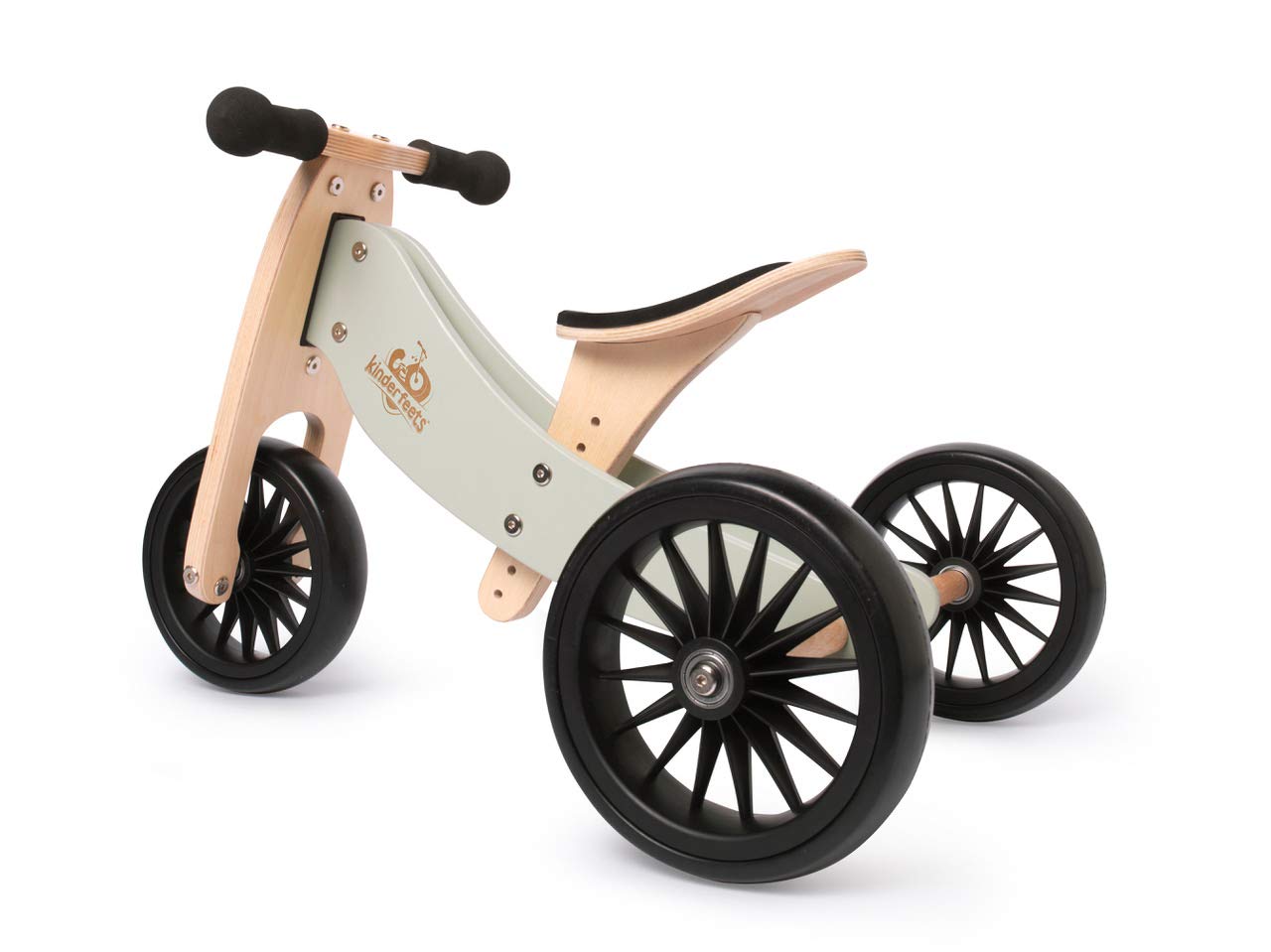
The Kinderfeets Tiny Tot Plus stands apart because it starts as a trike and converts to a two-wheel balance bike using a specialized conversion axle—no pedals to lose, no tools required. The sustainable birchwood frame with water-based lacquers is a rare find in a category dominated by painted steel, and the extra-wide base gives beginners a generous platform for stability. Seat height spans 10 to 13 inches, fitting riders from 18 months up to about 4 years, and the 7.25-inch airless tires handle pavement and hard-packed dirt equally well.
The 55-pound weight limit means this bike can serve a child through the full gliding-to-coasting progression without hitting a structural ceiling. Customers report that the wood frame holds up for years, and one review noted the bike lasted through two siblings and still looked presentable. The padded handlebar grips reduce hand fatigue during longer rides, and the lack of sharp edges or pinch points aligns with ASTM and EN71 safety standards.
The only trade-off is assembly time—though straightforward, the conversion axle requires initial setup that takes about 15 minutes. The wood frame also has less impact resistance than steel, so avoid bouncing it down stairs. But for a family that values sustainability, longevity, and a smooth glide, this is the standout pick.
Why it’s great
- Eco-friendly birchwood construction with non-toxic finishes
- True 2-in-1: trike mode for stability, then converts to balance bike
- 55-pound weight capacity extends usability to age 4+
Good to know
- Wood frame requires careful storage away from moisture
- Initial assembly of conversion axle takes some effort
2. RoyalBaby EZ Kids Bike
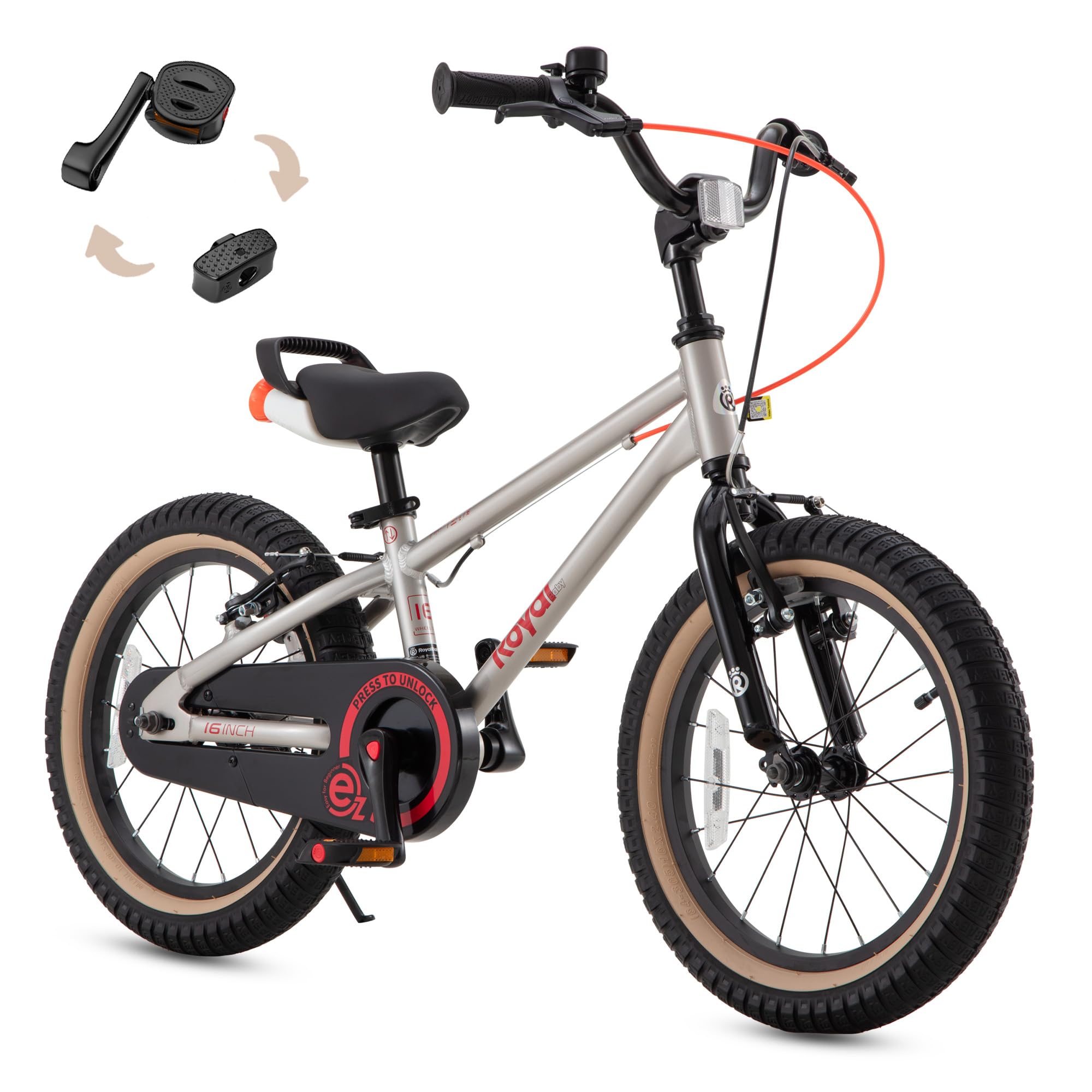
The RoyalBaby EZ Kids Bike targets a slightly older demographic—ages 3 to 10—and bridges the gap from balance gliding to full pedal riding without any tools. The key innovation here is the one-key switch: pull a lever and the drivetrain disengages, turning the pedal bike into a balance bike instantly. When your child is ready to pedal, you re-engage the chain drive in seconds. The aluminum alloy frame brings the bike weight down to roughly 16 pounds for a 16-inch model, which is several pounds lighter than typical steel alternatives at this size.
Wheel sizes range from 14 to 20 inches, so you can match the bike to your child’s height rather than forcing them onto a one-size-fits-all frame. The dual hand brake system (linear pull) gives responsive stopping power, and customers noted that kids accustomed to coaster brakes adapted within an hour. The included bell, kickstand, and reflectors add real-world utility without feeling like packaging filler.
The trade-off is the price—this is a premium buy relative to basic steel balance bikes. The 19.4-pound weight on the 20-inch version starts to push the upper end of what a young child can easily maneuver, so pay attention to model sizing. Also, the balance-to-pedal transition is only useful if your child is within the recommended height range; very short 3-year-olds may struggle to reach the ground with the seat at its lowest setting.
Why it’s great
- Tool-free one-key switch between balance and pedal modes
- Aluminum frame is significantly lighter than steel alternatives
- Multiple wheel sizes (14-20 inches) fit ages 3-10
Good to know
- Hand brakes only—no coaster brake option for pedal mode
- Larger wheel sizes approach 20 pounds, which may be heavy for some kids
3. Retrospec Cub Toddler Balance Bike

The Retrospec Cub delivers the convenience of puncture-proof, airless tires at a price that undercuts most premium competitors. Those tires eliminate the risk of flats entirely—no pump, no patches, no sudden deflation mid-ride—which matters when your child abandons the bike at the end of the driveway for hours at a time. The alloy steel frame is heavy but bombproof: 10 pounds distributed low to the ground thanks to the low-step-through frame design that makes mounting and dismounting effortless for toddlers as young as 18 months.
Seat height adjusts from 11 to 14.5 inches via a quick-release lever, and the handlebars also lift independently. Customers consistently highlighted the sturdy build and the fact that the bike held up through a full year of daily use with zero maintenance beyond wiping off mud. The coaster brake option adds a layer of control for kids who want to drag their feet less, and the rounded edges and non-slip grips pass a common-sense safety check.
The steel frame does add weight, and at 10 pounds, some smaller toddlers may struggle to lift it over curbs or door thresholds. There’s no conversion option—this is a dedicated balance bike, not a 2-in-1—so you’ll still need to buy a pedal bike later. But if puncture-proof convenience and a low price are your priorities, this is a rock-solid choice.
Why it’s great
- Airless tires eliminate flat tire hassles entirely
- Low-step-through frame builds confidence for first-time riders
- Quick-release seat and handlebar adjustments
Good to know
- Steel frame is heavier than aluminum competitors
- Non-convertible—no pedal mode for later stages
4. KRIDDO 2-in-1 Kids Tricycle and Balance Bike

The KRIDDO 2-in-1 solves the problem of lost parts with an integrated pedal storage slot under the rear seat—the pedals snap into a dedicated compartment when not in use, so you never have to search the garage for a pedal adapter. The training wheels are also stowable: they lift up and lock into position when your child gains enough confidence to ride on two wheels, and they can be removed entirely later. This flexibility lets you adjust the bike’s stability level in seconds, without tools.
The carbon steel frame supports up to 110 pounds, which is unusually high for this class and means the bike can survive rough play and potentially even pass down to a sibling. The customizable plate lets kids add stickers or decals, turning the bike into a personal canvas. Customers reported that the 2-in-1 design worked well for children as young as 18 months, particularly in trike mode, and that the transition to balance bike mode was intuitive.
The plastic wheels (non-rubber) are the main drawback—they ride smoothly on pavement but can be noisy and less grippy on loose gravel or grass. The bike also lacks a brake, so kids rely on foot braking, which is fine at low speeds but requires supervision on slopes. If you’re primarily riding on sidewalks and driveways, the KRIDDO’s modular design and generous weight capacity make it a smart mid-range choice.
Why it’s great
- Integrated pedal storage prevents losing conversion parts
- Stowable training wheels adjust stability without tools
- 110-pound weight limit supports heavy use and sibling hand-me-downs
Good to know
- Plastic wheels are louder and less grippy than rubber tires
- No braking system—only foot braking available
5. Yvolution Y Velo Junior Balance Bike

The Yvolution Y Velo Junior uses a dual-rear-wheel setup that gives beginners a wider base of support without permanently locking them into training wheels. The rear axle accommodates two wheels side by side, and as your child’s balance improves, you can remove one wheel to reduce stability and force better gliding technique. It’s a clever middle ground between a tricycle and a true two-wheel balance bike, and it works particularly well for cautious toddlers who need extra reassurance before committing to single-wheel coasting.
The 7.7-pound alloy steel frame is light enough for a 2-year-old to steer, and the seat adjusts from 11 to 14.2 inches of ride height. Customers praised the bike’s ability to stay upright even when the child leans aggressively, which reduces crash anxiety and keeps practice sessions longer. The larger front wheel handles sidewalk cracks and small gravel better than smaller-wheeled alternatives, and the higher ground clearance prevents scraping on low curbs.
The 44-pound weight limit is the main constraint—most kids hit that around age 3, at which point the bike becomes too small. There’s also no brake, and the dual-wheel mode can make tight turns slightly less nimble because the rear footprint is wider. For a 18-month to 3-year-old who needs a confidence boost before hitting two wheels, this is a standout transitional tool.
Why it’s great
- Dual-rear-wheel design offers exceptional tip resistance for beginners
- Large front wheel clears uneven terrain better than smaller competitors
- Lightweight frame at 7.7 pounds aids small-rider control
Good to know
- 44-pound weight limit caps usage around age 3
- Wide rear footprint reduces turning agility in dual-wheel mode
6. Radio Flyer Triple Play Trike

The Radio Flyer Triple Play Trike covers three modes—ride-on, tricycle, and balance bike—all in one frame, and every transition is tool-free. You remove or install the pedals (which store neatly under the padded seat), adjust the rear wheel position, and you’re done. This is the most versatile model in the lineup because it starts with a foot-to-floor ride-on stage for 12-month-olds who aren’t ready to steer, then graduates through pedaling and finally to balance-bike gliding.
The steel frame weighs 8.1 pounds, which is reasonable for a 3-in-1, and the adjustable padded seat keeps the child comfortable as they grow. The included ring bell adds a classic touch that kids genuinely enjoy—it’s not just packaging filler. Customers universally praised the cleverness of the pedal storage and the fact that no tools ever required, making it easy to switch modes mid-playdate when your child’s confidence suddenly surges.
The tricycle mode has a wide turning radius compared to a dedicated trike, and the balance bike mode lacks the low-step-through frame that makes some pure balance bikes easier to mount. The weight capacity isn’t listed as high as some competitors, so larger 3-year-olds may outgrow it quickly. Still, for the price, you get three distinct riding experiences that can keep a child engaged from first steps through the transition to a real pedal bike.
Why it’s great
- Three riding modes in one tool-free frame
- Pedals store under the seat—no lost parts
- Ride-on mode works for children as young as 12 months
Good to know
- Balance bike mode lacks low-step-through frame design
- Tricycle turning radius is wider than dedicated trikes
7. Radio Flyer Steady Start Balance Bike

The Radio Flyer Steady Start uses a three-wheel configuration—one wide front wheel and two rear wheels—so the bike stands upright on its own without a kickstand. That self-standing feature is surprisingly practical: your toddler can get on and off without the bike tipping, and you don’t need to prop it against a wall. The treaded wheels are designed for quiet operation on hardwood, carpet, and pavement, which means indoor practice sessions won’t drive you crazy with clatter.
At 7 pounds, this is one of the lightest models in the roundup, and the tool-free adjustable seat makes it easy to dial in the right height as your child grows. The padded seat and comfort handgrips reduce complaints during longer rides. Customers consistently noted that the bike was easy to assemble (just a screwdriver needed) and that the wide stance made their 1-year-old feel secure from the first ride.
The three-wheel design sacrifices true balance training—since the bike can’t tip sideways, your child never has to learn to correct a lean. That’s fine for a first “balance introduction” bike at age 12-18 months, but you’ll need to move to a two-wheel model to actually teach independent balancing. The steel frame is durable but not convertible, so it’s a single-purpose purchase. For a quiet, stable, indoor-friendly first bike, it’s difficult to beat at this price.
Why it’s great
- Three-wheel design stands on its own—no kickstand needed
- Quiet treaded wheels minimize noise on indoor surfaces
- Lightweight at 7 pounds, easy for toddlers to maneuver
Good to know
- Three-wheel design doesn’t teach true lateral balance
- Non-convertible—no pedal or two-wheel mode available
FAQ
At what age should I start my child on a convertible balance bike?
How do I know when to switch from trike mode to balance bike mode?
Final Thoughts: The Verdict
For most users, the best convertible balance bike winner is the Kinderfeets Tiny Tot Plus because its birchwood construction, trike-to-bike conversion, and 55-pound weight limit deliver the longest usable life in an eco-friendly package. If you want a tool-free balance-to-pedal switch that works through age 10, grab the RoyalBaby EZ Kids Bike. And for a budget-friendly first bike with puncture-proof tires and a low frame, nothing beats the Retrospec Cub.

Mo Maruf
I created WellFizz to bridge the gap between vague wellness advice and actionable solutions. My mission is simple: to decode the research and give you practical tools you can actually use.
Beyond the data, I am a passionate traveler. I believe that stepping away from the screen to explore new environments is essential for mental clarity and physical vitality.