Our readers keep the lights on and my smoothie glass nicely filled. As an Amazon Associate, I earn from qualifying purchases.
A night with friends or family often falls into the same rhythm of small talk, only to end without remembering anything truly meaningful said. The right deck of cards changes that by giving everyone permission to skip the weather report and share something real.
I’m Mohammad Maruf — the founder and writer behind WellFizz. I’ve analyzed hundreds of market reviews, studied the psychological mechanisms behind question design, and cross-referenced user feedback across the full price spectrum to identify which decks actually deliver emotional depth and enduring replay value.
This guide breaks down the five most popular decks by how they handle depth, group dynamics, and long-term use, so you can find the best conversation card games for your specific setting without wading through endless options.
How To Choose The Right Conversation Card Game
Unlike competitive card games, conversation decks rely entirely on the quality of their prompts. A single poorly written question can kill the mood, while one perfectly timed prompt can unlock a whole evening of connection. Focus on three factors: the depth range of the questions, the physical usability of the deck, and how the card themes handle repeat plays over time.
Depth Range and Emotional Safety
The best decks offer a gradient — some lighthearted prompts to warm up, followed by progressively deeper questions. Decks that jump straight into heavy emotional territory can overwhelm a group that isn’t prepared. Look for color-coded categories that let you choose your level of vulnerability for the evening.
Build and Portability
Cardstock quality and box design matter more than you’d think. Flimsy cards warp in humid conditions, and awkwardly shaped boxes won’t fit in a bag for travel or a restaurant table. Cube-shaped containers or hard-shell boxes keep the deck protected and organized, while pocket-sized options work best for impromptu use on dates or commutes.
Replay Value and Audience Fit
Decks with over 100 questions offer more longevity, but the real metric is whether the questions invite a different answer each time. Vague questions like “What is your favorite memory?” yield the same answer every play. Superior decks ask situational or comparative questions that evolve as relationships grow. Always verify the intended age range and sensitivity level — what works for a therapy session may bomb at a casual dinner party.
Quick Comparison
On smaller screens, swipe sideways to see the full table.
| Model | Category | Best For | Key Spec | Amazon |
|---|---|---|---|---|
| Holstee Reflection Cards | Premium | Deeper connection with friends & partners | 100+ cards; vegetable-based inks | Amazon |
| UNPACK THAT Conversation Cards | Mid-Range | Therapy-adjacent emotional exploration | 125 cards; 5 themed categories | Amazon |
| TableTopics Dinner Party | Premium | Casual adult social gatherings | 135 cards; plastic cube case | Amazon |
| TableTopics Kids Conversation Pack | Mid-Range | Family dinner with children aged 6-12 | 120 cards; 3 boxed themes | Amazon |
| Cards Against Humanity | Premium | Adult parties with dark humor | 600 cards; plastic-coated stock | Amazon |
In‑Depth Reviews
1. Holstee Reflection Cards
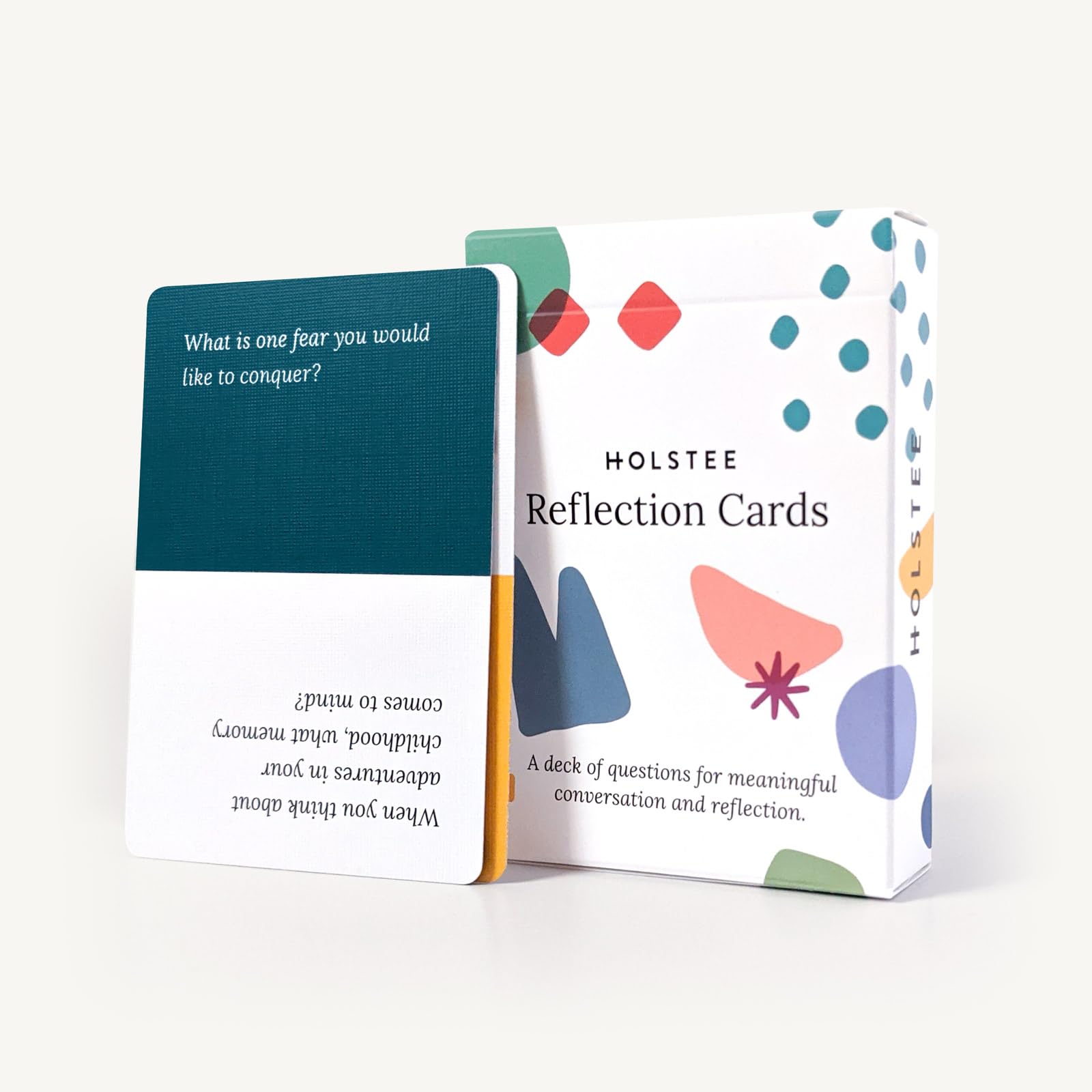
The Holstee Reflection Cards strike a rare balance between accessibility and depth. Each card features two questions — one surface-level and one deeper — letting a group ease into vulnerability without being blindsided. The deck is organized around themes like gratitude, kinship, and compassion, which map well to a wide range of settings from dinner parties to yoga retreats.
At just over 100 cards, this deck is compact enough to fit in a jacket pocket or purse, making it a natural choice for dates or commutes. The cards are printed in the USA on sustainably-forested paper with vegetable-based inks, and the starch-based laminate holds up well against frequent handling. Users consistently report learning new things about friends they’ve known for years.
The minimalist abstract art on each card adds an organic, coffee-table look that doesn’t scream “game night.” It’s a deck that works equally well as a conversation starter and a solo journaling prompt, which extends its value beyond group play alone.
Why it’s great
- Two-depth question format reduces entry awkwardness
- Small footprint for on-the-go use
- High-quality, eco-friendly materials
Good to know
- Not designed for high-energy party play
- Some may find the tone too earnest for casual groups
2. UNPACK THAT Conversation Cards

UNPACK THAT offers 125 questions spread across five distinct categories: Good, Bad, Reflection, Tough Questions, and Wildcards. This structure gives the group control over emotional intensity — you can stick to the lighter categories for a casual evening or move into deeper territory when the mood is right. The deck is explicitly used by therapists and counselors, which speaks to the thoughtfulness of the question design.
The physical build is straightforward — a simple box with cardstock that is adequate for home use. The cards are lightweight and portable, though the box is not a hard case, so it may show wear after being tossed in a bag. The language is English and the questions are designed for adults, though mature teenagers can handle most of the lighter categories.
Customer feedback consistently highlights that this deck is not for shallow small talk. Several reviewers note that the “Tough Questions” and “Wildcard” categories can get very intense very quickly, which makes it a poor fit for groups that prefer lighthearted humor. However, for couples or close friends looking to resolve lingering issues or build trust, this deck is highly effective.
Why it’s great
- Five distinct depth categories for pacing
- Proven in therapeutic settings
- Low cost per card
Good to know
- Some cards can feel too heavy for casual settings
- Basic box design with thinner cardstock
3. TableTopics Dinner Party Conversation Cards

TableTopics has built a reputation on making conversation feel effortless in social settings, and the Dinner Party edition is their most polished product. With 135 questions stored in a clear plastic cube that sits naturally on a counter or coffee table, this deck doubles as a decorative piece and an icebreaker. The questions intentionally avoid divisive topics like politics and religion, making it safe for diverse groups including coworkers and new acquaintances.
The topics range from movie memories to travel preferences to brush-with-fame stories, keeping the tone light and universally relatable. The plastic cube is durable and makes the deck easy to clean after spills — a practical advantage over cardboard boxes. The cardstock inside, however, has been noted by some users to warp in high-humidity environments like beach houses.
This deck excels at its intended purpose: keeping a dinner party moving without awkward silences. It won’t produce the same level of emotional depth as the Holstee or UNPACK THAT decks, which is exactly the point. If your priority is a pleasant, inclusive gathering where everyone feels included, this is the most reliable option.
Why it’s great
- Excellent for mixed or unfamiliar groups
- Durable plastic cube case
- Avoids polarizing topics intentionally
Good to know
- Cardstock can warp in humid conditions
- Not designed for deep emotional exploration
4. TableTopics Kids Conversation Pack

The TableTopics Kids Conversation Pack is specifically designed for families with children aged six to twelve, and the question design reflects that focus. The set includes three separate packs of 40 cards each — Giant Teeny Tiny, Five Senses, and With Gratitude — giving parents the ability to rotate themes to keep the activity fresh. The questions are concrete and sensory-based, asking about favorite smells, tiny precious objects, or what songs bring happiness.
The packaging is a single clear plastic slipcase that holds all three packs together, which is convenient for storage but not as sturdy as a hinged box. The cardstock is adequate for supervised use but may not survive rough handling by very young children. Some feedback notes that the “With Gratitude” theme contains questions that feel slightly bias-heavy, such as a card that asks the child to say something nice about their mom.
This deck shines during dinner time or car rides when parents are actively participating. It turns ordinary family moments into structured sharing time, and many families report that it uncovers surprising details about their children’s inner lives. For the entry-level price point, it offers a reliable way to build a family habit of meaningful conversation.
Why it’s great
- Age-appropriate question design for 6-12 year olds
- Three separate themed packs for variety
- Excellent for family dinner routines
Good to know
- Plastic slipcase can crack under pressure
- Some questions have subtle adult bias
5. Cards Against Humanity

Cards Against Humanity occupies a unique space on this list — it is not a conversation starter in the traditional sense, but a party game that generates conversation through humor and social dynamics. The base set includes 500 white cards and 100 black cards, all plastic-coated for durability. Version 2.0 adds over 150 new cards, refreshing the content for returning players.
The gameplay is simple: one player draws a black card with a phrase or question, and the other players submit their funniest white card to complete it. The judge picks the best combination. This format encourages a specific kind of conversation — one driven by shared laughter and inside jokes rather than personal disclosure. The humor is deliberately vulgar, racy, and politically incorrect, making it unsuitable for conservative groups or minors.
Where this deck differs from the others is in its replay dynamic. Because the humor relies on the combination of cards and the specific group’s sensibilities, the same deck can produce wildly different experiences with different players. However, with a consistent group, the shock value diminishes after a few sessions, and some cards reference dated cultural touchpoints.
Why it’s great
- Massive card count for high replay variety
- Creates shared humor and inside jokes
- Plastic-coated cards resist wear
Good to know
- Humor is offensive and not for all groups
- Shock value fades with repeated play
FAQ
What is the difference between a conversation game and a party game like Cards Against Humanity?
Can conversation card games be used in a therapy setting?
How do I keep the cards from getting damaged during travel?
Which deck works best for a first date or new relationship?
Final Thoughts: The Verdict
For most users, the best conversation card games winner is the Holstee Reflection Cards because they combine portability, two-depth question design, and premium materials into a single versatile deck. If you want intentionally light social interaction for diverse groups, grab the TableTopics Dinner Party. And for emotional exploration with a partner or close friend, nothing beats the UNPACK THAT Conversation Cards.

Mo Maruf
I created WellFizz to bridge the gap between vague wellness advice and actionable solutions. My mission is simple: to decode the research and give you practical tools you can actually use.
Beyond the data, I am a passionate traveler. I believe that stepping away from the screen to explore new environments is essential for mental clarity and physical vitality.