Our readers keep the lights on and my smoothie glass nicely filled. As an Amazon Associate, I earn from qualifying purchases.
Specs are compiled from manufacturer listings and verified buyer reviews and can change over time — please confirm the key details on the product page before buying.
Choosing conventional motor oil used to mean grabbing whatever was on sale — until you realized the wrong viscosity can leave your engine knocking, your seals leaking, or your cam lobes worn flat. This guide breaks down four conventional oils by their real specs, so you match the right weight and additive package to your engine’s exact needs, whether it is a daily commuter, a classic tractor, a high-mileage pickup, or a flat-tappet race motor.
I’m Mohammad Maruf — the founder and writer behind WellFizz. This guide is built by comparing the manufacturers’ published specifications and the patterns across verified customer reviews, so you get each pick’s real strengths and trade-offs instead of marketing spin.
Whether you are topping off a generator, keeping a 15-year-old Saturn rolling, or protecting a rebuilt air-cooled Porsche, the right conventional motor oil depends on viscosity, additive chemistry, and the specific demands of your engine’s design and age.
Quick Picks
- Quaker State Advanced Durability Conventional — Best Overall
- Driven Racing Oil Motor Oil — High Zinc Specialist
- Valvoline Daily Protection SAE 30 Conventional — Old Engine Essential
- Ultra1Plus SAE 10W-30 Motor Oil — Budget Champion
How To Choose The Best Conventional Motor Oil
Conventional motor oil is a petroleum-based lubricant that has been refined from crude oil, without the synthetic modifiers found in full-synthetic or synthetic-blend oils. It remains the right choice for many older engines, small engines, and high-mileage vehicles that were designed before synthetic formulas became common. Three factors decide which conventional oil fits your car or truck.
Viscosity Grade — The “Weight” That Matches Your Climate and Engine Clearances
The SAE viscosity grade (like 5W-30 or 15W-50) tells you how thick the oil is at cold and hot temperatures. The first number followed by a “W” indicates cold-weather flow — lower numbers flow better in freezing starts. The second number measures thickness at operating temperature (around 212°F). A modern commuter engine designed for 5W-30 will have tight clearances that need thinner oil, while an older air-cooled engine or a racing motor with looser tolerances often calls for a heavier 15W-50 or straight SAE 30 grade. Using the wrong viscosity can reduce fuel economy or leave critical parts starved of lubrication.
Additive Package — ZDDP for Flat-Tappet Engines
Many conventional oils for modern cars reduce zinc dialkyl dithiophosphate (ZDDP) — an anti-wear additive — to protect catalytic converters. But older engines, especially those with flat-tappet camshafts found in muscle cars, classic tractors, and air-cooled Volkswagens, rely on higher zinc levels (around 1200-1400 ppm) to prevent cam lobe and lifter wear. If you run a low-zinc oil in a flat-tappet engine, you risk metal-on-metal contact that can destroy the camshaft within a few hundred miles. Look for oils explicitly labeled “High Zinc” or formulated for classic/racing use if you own an older pushrod engine.
API Rating and Intended Use — Gasoline vs Diesel, Modern vs Vintage
The American Petroleum Institute (API) rating (such as API SL or SN) tells you which engines the oil was designed to protect. API SL is an older standard suitable for engines built before 2004, while newer SN/SP ratings include extra deposit control and seal compatibility for modern variable-valve-timing systems. Some conventional oils are also rated for diesel engines (API CJ-4) or have specific approvals for turbocharged units. Always check your owner’s manual for the minimum API rating required — using an oil rated below what your engine needs can void a warranty or accelerate sludge formation.
Quick Comparison
| Model | Best For | Viscosity Grade | Flash Point | Container Size | Amazon |
|---|---|---|---|---|---|
| Quaker State Advanced Durability 5W-30 | Modern daily commuters | 5W-30 | — | 5 Quart | Amazon |
| Driven Racing Oil HR1 15W-50 | High-zinc flat-tappet / race | 15W-50 | — | 1 qt, 12 Pack | Amazon |
| Valvoline Daily Protection SAE 30 | Older engines & small engines | 30 | 390°F | 1 qt, Case of 6 | Amazon |
| Ultra1Plus SAE 10W-30 API SL | Budget-friendly universal use | 10W-30 | 210°C / 410°F | 1 Quart | Amazon |
In‑Depth Reviews
1. Quaker State Advanced Durability Conventional 5W-30 Motor Oil (5-Quart)
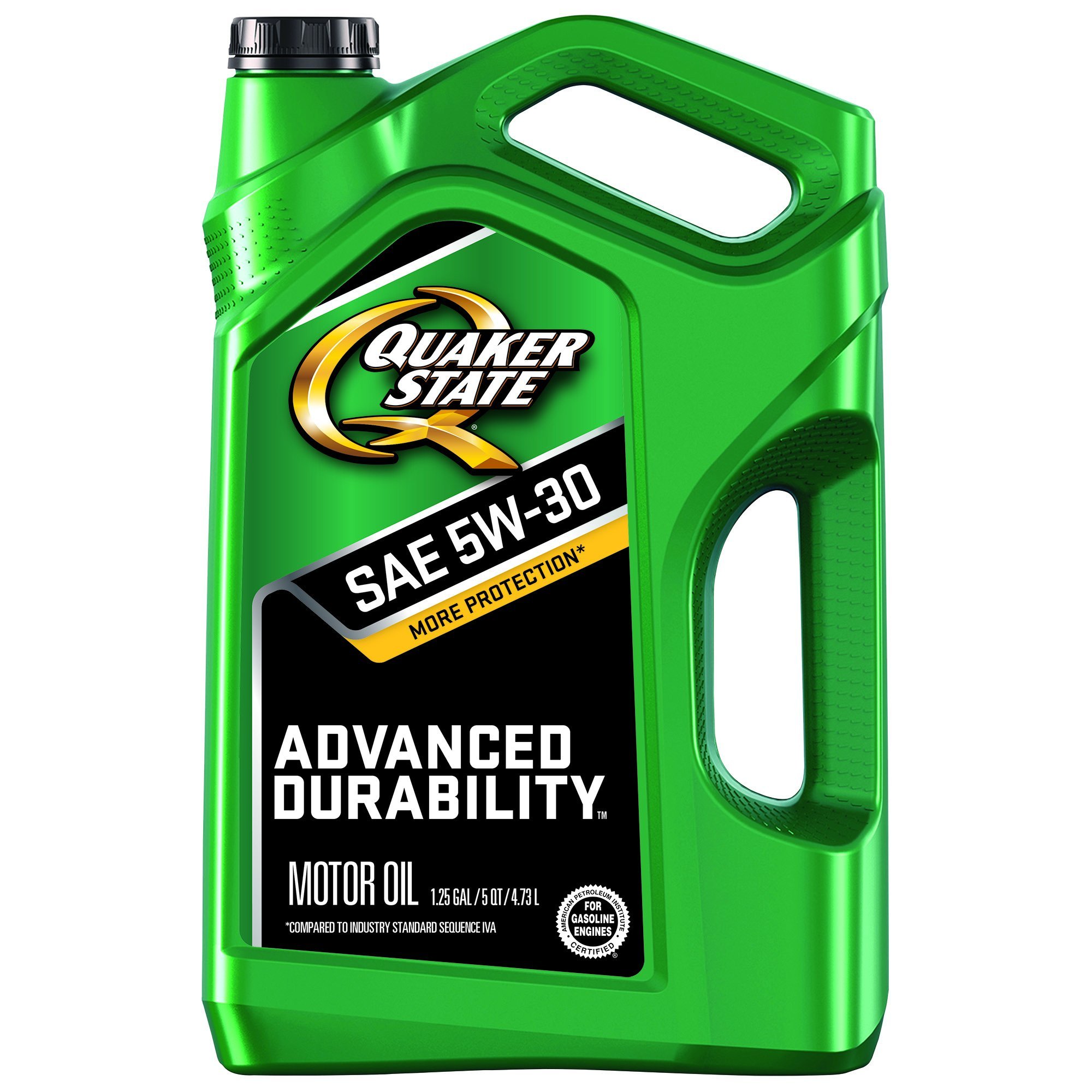
The trusted commuter oil that keeps daily drivers running quietly past 200,000 miles.
For the most common modern gasoline engines — sedans, crossovers, and light trucks that call for 5W-30 — this Quaker State oil delivers two times more wear protection than the industry standard throughout the life of the oil, according to the maker. That extra margin matters when you sit in stop-and-go traffic or hammer down a highway on-ramp. The 5-quart can also simplifies storage and pouring compared to buying five separate quart bottles.
Buyers report that a mechanic recommended this oil for a 15-year-old Saturn that has needed no repairs beyond normal maintenance for years, running strong at 36 MPG. One owner ran it in a 2008 Chevy Silverado for a full year and 5,000 miles before changing it, and the oil life indicator still showed nearly new — impressive for a conventional oil. At 9.4 pounds per jug, the weight tells you this is a full 5-quart container, not a skimpy 4.5-quart “economy” bottle.
The catch is that this is a universal-fit product — it is not formulated for diesel engines, air-cooled motors, or engines that require a heavier viscosity like SAE 30 or 15W-50. If your owner’s manual specifies 5W-30 and your car is a modern gasoline daily driver, this is the conventional oil to reach for first. Unlike the Driven Racing Oil below, it does not carry the high zinc levels needed for flat-tappet cams, so skip it for classic muscle or vintage air-cooled engines.
What Shines
- Two times the wear protection of the industry standard
- Maintains required viscosity from start to finish for consistent protection
- 5-quart jug is easier to store and pour than separate quarts
- Provides rust and corrosion protection against harmful acids
What To Watch
- Not designed for diesel, air-cooled, or flat-tappet engines
- Universal fit — always verify your vehicle’s required viscosity first
Reach for this: If you drive a modern gasoline commuter, SUV, or light truck that specifies 5W-30 and you want proven wear protection from a brand trusted for over 100 years.
Look elsewhere: If your engine needs a heavier viscosity (SAE 30, 15W-50) or high-ZDDP protection for flat-tappet camshafts.
2. Driven Racing Oil Motor Oil, HR1, High Zinc, 15W50, Conventional, 1 qt Bottle, Set of 12
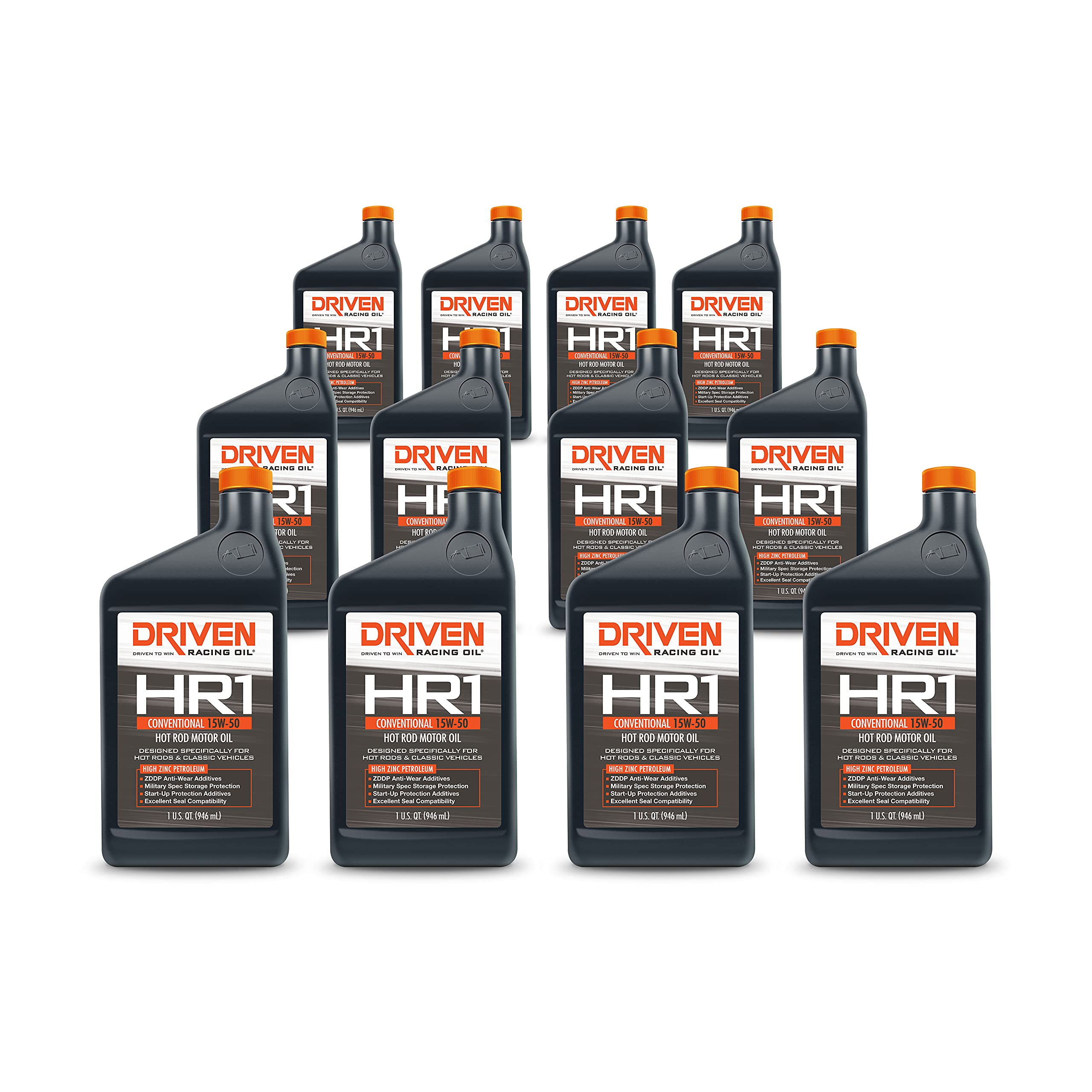
The flat-tappet lifesaver with the zinc levels modern oils stripped out.
This is not an oil for your daily Civic — it is a specialty conventional oil built for engines that need high ZDDP (zinc anti-wear additives) to protect flat-tappet camshafts and lifter faces. The SAE 15W-50 viscosity grade is typical for air-cooled engines, big-block V8s, and endurance racing motors where higher operating temperatures demand thicker oil. The additive package includes start-up protection additives and excellent seal compatibility, which helps keep old gaskets from leaking on a freshly rebuilt engine.
Owners mention that LN Engineering specifically recommends HR1 for air-cooled Porsche and Volkswagen engines — one owner used it in a rebuilt 1974 Porsche 914 type 4 after choosing conventional over synthetic because of the low mileage between oil changes. Another reviewer switched from a major synthetic brand (which had caused scoring in cam bores on a 2.0 Ford Zetec race engine) to Driven after seeing a friend’s engine with less wear. The set of 12 quarts gives you enough for multiple oil changes on a race car or classic truck. At a 15W-50 viscosity, it sits at the heavy end of the spectrum.
The honest trade-off: this oil is not intended for modern gasoline engines with catalytic converters, and the high zinc content can damage emissions equipment over time. It is also a noticeable step up in price from the budget picks below, but for a rebuilt flat-tappet engine, skimping on zinc is not an option. If your engine does not have a flat-tappet cam or you do not need 15W-50 thickness, you are paying for additives you will not use.
Why It Stands Out
- High ZDDP anti-wear additives for flat-tappet cam lobe protection
- Start-up protection additives reduce wear during cold starts
- Military spec storage protection for long-term engine preservation
- Excellent seal compatibility for older engines prone to leaks
Considerations
- Not suitable for modern catalytic-converter-equipped daily drivers
- Premium price — costs significantly more than standard conventional oils
- SAE 15W-50 is too thick for most modern car engines
Ideal for: Classic cars, muscle cars, air-cooled Porsches, VW flat-fours, and any flat-tappet engine that needs high-zinc conventional oil for cam protection.
skip it if: Your car is a modern commuter with roller lifters and a catalytic converter — you need standard 5W-30 like the Quaker State, not high-zinc racing oil.
3. Valvoline Daily Protection SAE 30 Conventional Motor Oil 1 QT, Case of 6
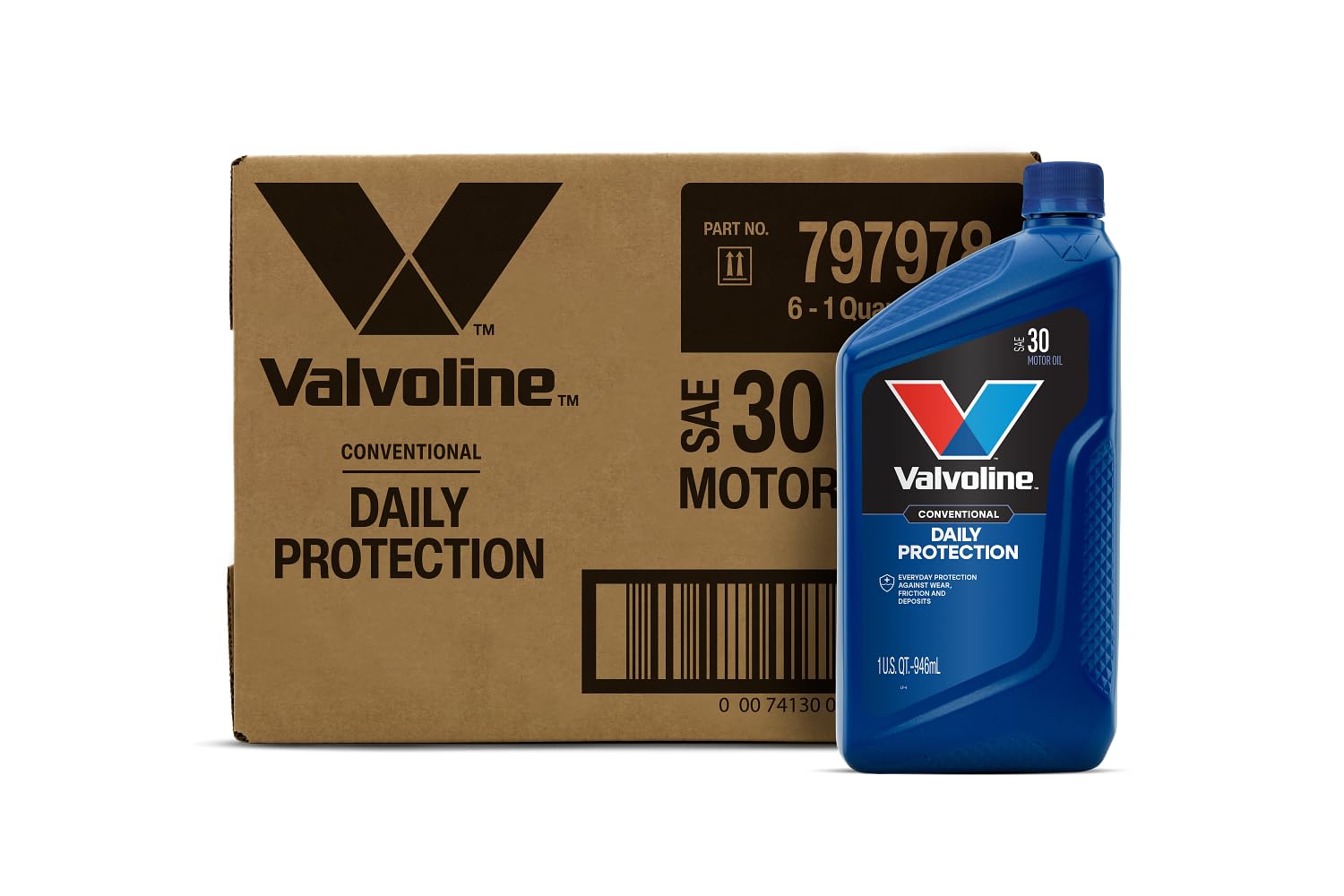
The straight-grade oil you cannot find on store shelves anymore — until now.
Straight SAE 30 (no “W” rating) is a single-viscosity oil designed for engines that operate in a narrower temperature range: older cars, lawn tractors, generators, and vintage farm equipment. Valvoline’s Daily Protection formulation includes added detergents to resist oil breakdown and sludge, and the flash point sits at 390 degrees Fahrenheit — a solid indicator of resistance to thermal breakdown. The brand has been trusted for more than 150 years as the “Original Motor Oil,” and this conventional oil is approved for turbo-powered engines as well.
Buyers confirm that SAE 30 oil is becoming hard to find locally at Walmart or auto parts stores. One reviewer uses it for a 1957 Ford 600 Jubilee tractor and noted the case of six quarts provides enough for four years of oil changes on that machine. Another owner of a 2004 Nissan Frontier, which was originally designed for straight 30W, reported that switching back from a multi-viscosity 5W-30 restored the engine’s normal sound. For mowers operating in high outdoor temperatures, this oil is a dependable choice that won’t thin out like lighter grades.
The limitation is that straight SAE 30 is not ideal for cold climates — it does not have the “W” cold-flow rating that helps oil pump quickly in freezing temperatures. If your winter starts drop below 32°F, a multi-viscosity grade like 10W-30 (Ultra1Plus below) will protect your engine better on startup. This case-of-6 pack is a mid-range buy that makes sense if you maintain multiple small engines or a single older vehicle that calls for straight 30 weight.
Strengths
- Added detergents keep engine clean and resist sludge buildup
- Flash point of 390°F provides strong resistance to oil breakdown
- Low-friction technology helps tune power and fuel efficiency
- Approved for turbo-powered engines
Limitations
- Not suitable for freezing starts — no cold-flow “W” rating
- Hard to find locally, making the case-of-6 pack the practical option
- Not formulated for high-zinc needs of flat-tappet race engines
Best suited for: Small engines (mowers, generators, tractors) and older vehicles that require straight SAE 30 — especially when you cannot find it on local shelves.
Consider something else if: You need cold-weather startup protection or high-ZDDP additives for a flat-tappet performance engine.
4. Ultra1Plus SAE 10W-30 Motor Oil – Conventional API SL 10W30 Motor Oil for Gasoline Engines – 1 QT

The wallet-friendly quart that keeps generators and small engines running without fuss.
This Ultra1Plus oil carries an API SL rating, which means it is formulated for gasoline engines built through 2004, and the flash point of 210 degrees Celsius (approximately 410°F) indicates decent thermal stability for a budget conventional oil. The 1-liter (1-quart) bottle makes it easy to top off without committing to a 5-quart jug.
Customers note using this oil in generators with good results — one reviewer simply says “good quality oil for my generator.” Another owner calls it high-quality motor oil for their car and notes it is made in the USA. The formulation includes deposit and sludge protection to help extend engine life and reduce the need for frequent servicing, and it supports emission systems to reduce exhaust output. For a budget-friendly quart that covers the basics, this does everything a conventional 10W-30 should do.
The trade-off is the API SL rating — it does not meet the newer SN or SP standards that many 2010-and-later engines require for warranty protection and advanced deposit control. If your car is a modern daily driver, the Quaker State 5W-30 above is a better match. Also, this is a single quart, not a case, so if you need a full oil change (typically 4-6 quarts) you will need to buy multiple bottles. As a first-gen budget conventional oil, it is a solid choice for older engines and small equipment where the newest API rating is not required.
What Works
- 10W-30 cold-flow works for four-season use in most climates
- Deposit and sludge protection helps extend engine life
- Flash point of 210°C provides good thermal resistance
- Made in the USA at a budget-friendly price point
What To Know
- API SL rating is outdated for 2005+ engines requiring SN or SP
- Single quart — not economical for a full oil change
- Not formulated for diesel, turbo, or high-zinc applications
Grab this for: Generators, lawn mowers, older cars (pre-2005), and any gasoline engine where a budget 10W-30 with API SL is sufficient.
Pass if: You own a modern car requiring SN/SP rated oil, or you need a case quantity for multiple changes — the single quart is just a top-off size.
Understanding the Specs
SAE Viscosity Grade
The Society of Automotive Engineers (SAE) grade tells you how the oil flows at different temperatures. A 5W-30 oil has a “winter” rating of 5, meaning it pumps easily in cold weather, and a hot rating of 30, meaning it thickens enough at operating temperature to maintain a protective film. Heavier oils like SAE 30 or 15W-50 are designed for engines with looser tolerances, higher operating temperatures, or air-cooled designs — they resist thinning at extreme heat but struggle to flow in freezing starts.
Flash Point
The flash point is the temperature at which the oil’s vapors can ignite when exposed to an open flame — a measure of thermal stability, not a number you will ever test. A higher flash point (390°F or 210°C and above) means the oil resists breaking down and evaporating under high heat, which matters for engines that run hot, such as air-cooled small engines or turbocharged motors. Oils with low flash points can thin out and burn off faster, leaving you with less lubrication between changes.
FAQ
What is the difference between conventional and synthetic motor oil?
Can I use SAE 30 instead of 10W-30 in my lawn mower?
What does API SL mean on a bottle of conventional oil?
Why do some conventional oils have high zinc and others do not?
How long can I run conventional oil before changing it?
Can I mix conventional oil with synthetic oil?
Is conventional oil safe for turbocharged engines?
What viscosity should I use for an air-cooled Porsche or VW engine?
Can I use conventional oil in a 2020 or newer car?
Final Thoughts: The Verdict
For most people, the conventional motor oil winner is the Quaker State Advanced Durability 5W-30 because it combines proven wear protection with an easy-to-store 5-quart jug at a mid-range price point for modern gasoline daily drivers. If you need high-zinc protection for a flat-tappet cam in a classic or race engine, grab the Driven Racing Oil HR1 15W-50. And for small engines and vintage vehicles that require hard-to-find straight SAE 30, the standout is the Valvoline Daily Protection SAE 30 in a case of six.
How We Picked
We do not accept paid placement. Every pick is matched to a real buyer and a real use-case; we do not hands-on test units.
Sources & Methodology
Specifications: manufacturer listings and product documentation. Review insights: verified customer reviews, as of July 2026. Pricing: not shown on this page (it changes often); check the current price via the retailer link.
As an Amazon Associate, WellFizz earns from qualifying purchases. This does not affect which products we feature.
Related Guides

Mo Maruf
I created WellFizz to bridge the gap between vague wellness advice and actionable solutions. My mission is simple: to decode the research and give you practical tools you can actually use.
Beyond the data, I am a passionate traveler. I believe that stepping away from the screen to explore new environments is essential for mental clarity and physical vitality.