Our readers keep the lights on and my smoothie glass nicely filled. As an Amazon Associate, I earn from qualifying purchases.
Specs are compiled from manufacturer listings and verified buyer reviews and can change over time — please confirm the key details on the product page before buying.
Your horse’s back will tell you at the end of a long ride if the pad is wrong. Rub marks, uneven sweat, a gap under the saddle — those are signs you need a contoured shape that matches the curve of your horse. You want a contoured wool saddle pad that wicks sweat, absorbs shock, and fits snugly without shifting, all while keeping your horse comfortable mile after mile. The trick is knowing which shape, thickness, and build actually deliver that on your ride.
I’m Mohammad Maruf — the founder and writer behind WellFizz. This guide is built by comparing the manufacturers’ published specifications and the patterns across verified customer reviews, so you get each pick’s real strengths and trade-offs instead of marketing spin.
We have looked at the wool blend thickness, the leather quality, the cutout design, and real-world sweat patterns to find the best contoured wool saddle pad for different horses and budgets.
Quick Picks
- Southwestern Equine Silverado 1″ Grey Made in the USA Contoured Saddle Pad — Premium Pick
- Southwestern Equine OrthoRide Made in USA Premium All Wool Build up Saddle Pad — Wither Relief Specialist
- Weaver Equine 30″ x 30″ Contoured Wool Blend Felt Horse Saddle Pad — Versatile All-Rounder
- Tough 1 Pachanga Contour Wool Saddle Pad — Value Star
- CHALLENGER 3/4″ Thick Horse Saddle PAD Western Contoured Wool Felt Moisture Wicking — Mid-Range Workhorse
- Weaver Leather 35-1677-S8 Contoured Single Weave Wool Blend Felt Saddle Pad — Budget Champion
How To Choose The Best Contoured Wool Saddle Pad
A contoured wool saddle pad has a curved shape that follows the horse’s back and clears the withers (the bony ridge just behind the neck). That shape stops the pad from pressing down on the spine or bunching up behind the saddle. Here is what matters when picking one.
Thickness and wool content
Thicker pads (3/4-inch to 1-inch) absorb more shock but can lift the saddle too high on a horse with low withers. A thinner pad sits closer and gives you more feel of the horse’s movement. Pure wool felt wicks moisture best, but a wool blend often strikes the right balance between durability and cost.
Wear leathers and stitching
The leather panels on the sides protect the pad from saddle rub and friction. Top grain leather (the top layer of the hide) holds up far longer than bonded leather or polyurethane (PU) fake leather. Double stitching on the leather adds years of life. A few models use PU with cloth backing—buyers report that this can peel and does not hold up to heavy use.
Cutouts and contour depth
A wither cutout or slit gives extra clearance for horses with high withers and stops the pad from binding. Some pads also have a girth cutout to keep the girth (the strap around the horse’s belly) from pinching. A deeper contour fits horses with a more prominent back dip; a shallower contour works on flatter-backed horses.
Quick Comparison
| Model | Best For | Thickness | Material | Weight | Amazon |
|---|---|---|---|---|---|
| Southwestern Equine Silverado 1″ Grey | Premium shock absorption and USA build | 1″ | 100% Wool | 7.21 lb | Amazon |
| Southwestern Equine OrthoRide | High wither relief and injury recovery | Build-up design | All Wool | 6.2 lb (approx) | Amazon |
| Weaver Equine 30″ x 30″ Contoured | Versatile fit across horse sizes | 3/4″ | Wool Blend | 16 oz | Amazon |
| Tough 1 Pachanga Contour | Real leather and proven sweat wicking | Heavy padding | Wool | 6 lb | Amazon |
| CHALLENGER 3/4″ Thick | Mid-range value with thick wool | 3/4″ | Wool | — | Amazon |
| Weaver Leather 35-1677-S8 | Budget pick with southwest style | 3/4″ | Wool Blend | 6.2 lb | Amazon |
In‑Depth Reviews
1. Southwestern Equine Silverado 1″ Grey Made in the USA Contoured Saddle Pad

The full inch of pure wool for max cushion and wither clearance on long rides.
This pad gives you a full 1-inch thickness made from 100% grey wool, which is the thickest option in this lineup. That thickness means serious shock absorption for your horse’s back, especially during long trail rides or heavy work like reining. The size is 32″ x 32″, so it fits most saddles with room to spare, and the top grain wear leathers (the leather panels that protect the saddle from rubbing), according to the maker, last three times longer than standard leathers.
The wither cutout (a slit that clears the bony ridge behind the neck) is shaped to relieve pressure from the gullet of the saddle, which helps horses with more prominent withers avoid a binding feeling. The contour itself targets horses with a slight dip in their back or those with prominent withers, lifting the pad away from the spine. Owners mention that the fit and finish feel superior, and it fits a small mare particularly well with good wither and cinch cutouts, though one reviewer noted it was not as shaped to the horse’s back as they had hoped. The pad is built in the USA, and customers note “Built to last for sure!” and that it works for long hours riding through cattle.
The thick advantage
- 100% wool felt for natural moisture wicking and breathability
- 1-inch thickness provides premium shock absorption
- Top grain wear leathers—maker claims longer lifespan than standard leathers
- Wither cutout relieves gullet pressure
A shape trade-off
- Not as deeply contoured to the horse’s back as some may expect
- Hand wash only for care
Reach for this if: you want max thickness, 100% wool, and a wither cutout for a horse with a dip or prominent withers, and you ride long hours where padding matters most.
Look elsewhere if: your horse has a very flat back or you prefer less lift in the front—the full inch may sit too high for some saddles.
2. Southwestern Equine OrthoRide Made in USA Premium All Wool Build up Saddle Pad
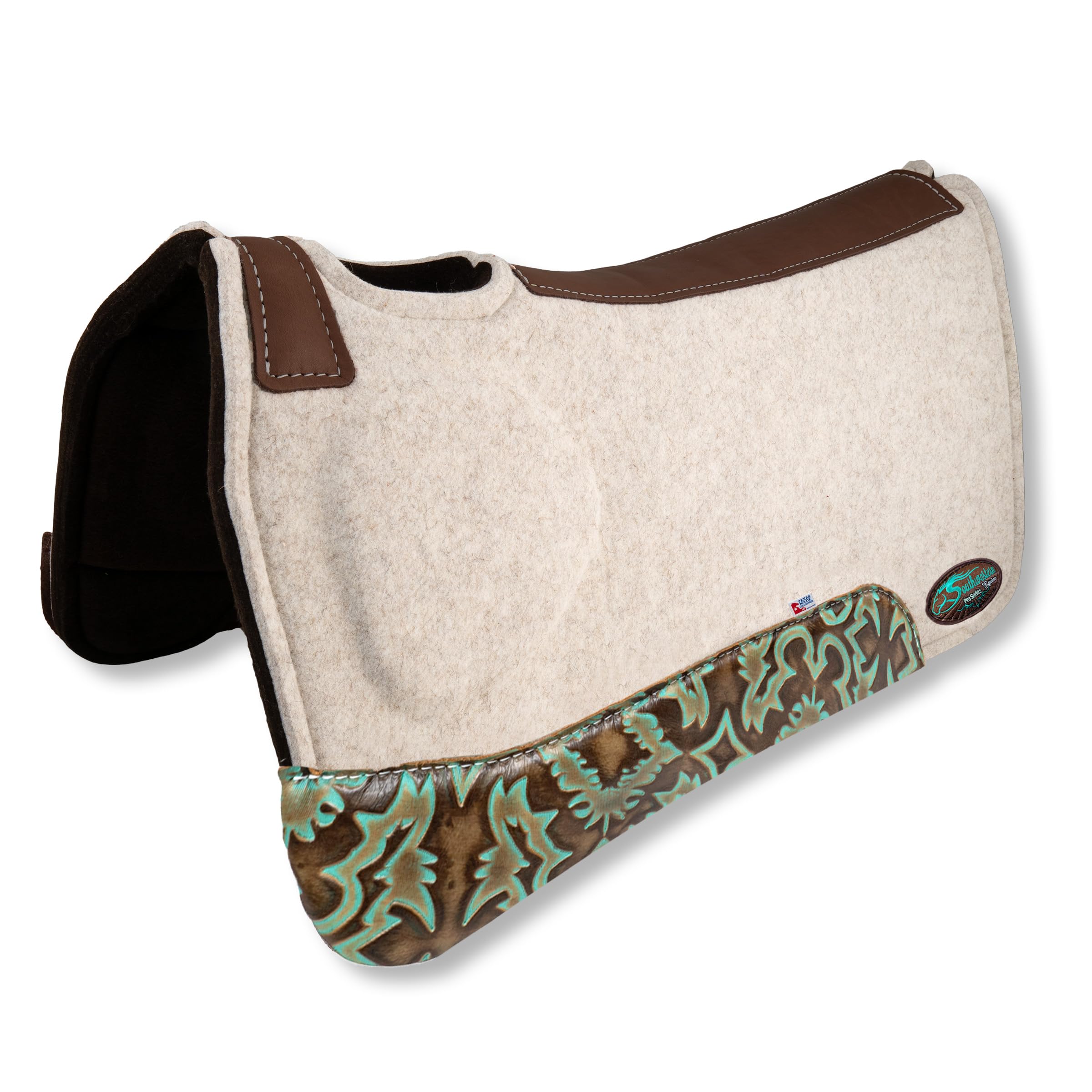
The build-up design that solved a two-year wither pain issue for one gelding.
This is the most specialized pad on the list, built for horses with saddle fit problems. It is an all-wool build-up pad with Poron XRD foam inserts under the saddle bars—a high-impact cushioning foam that the brand claims absorbs up to 90% of shock. The pad’s main job is to lift the front of the saddle off the withers, making it a strong choice for high-withered horses or young horses with underdeveloped shoulder muscles. The size is 31″ x 32″.
The real story here is in the reviews. One buyer described two years of frustration with a 4-year-old gelding that had pain in the upper trapezius when saddled. The first day with this pad, the horse showed “some retained memory of pain when stepping in the stirrup, 15 minutes later, all anxiety gone and horse was moving freely like never before.” A major relief moment. However, the pad is thick in the leg area—one experienced reviewer noted a full inch of air between their calf and the horse’s side, which hurts leg cue precision. Compared with the Tough 1 Pachanga below, this pad sacrifices feel for pure lift.
Key benefits
- Poron XRD foam absorbs up to 90% of shock, according to the brand
- Excellent for high-withered horses and young horses still developing
- Made in the USA from all-wool build-up
- Has helped horses with long-term wither pain recover comfort
The downsides
- Very thick in the leg area—reduces close contact for leg cues
- Saddle may slide backward if not combined with a breast collar or rear cinch
- Wither binding possible for horses with very tall withers
Ideal for: high-withered horses or horses recovering from wither pain where saddle rub is the main problem and you prioritize relief over leg feel.
Not for: riders who need close leg contact for precision cues, or horses with flat backs that do not need the build-up lift.
3. Weaver Equine 30″ x 30″ Contoured Wool Blend Felt Horse Saddle Pad

The 3/4-inch wool blend that one reviewer owns in every size.
The CHALLENGER pad packs a 3/4-inch thick wool felt build that provides solid shock absorption without the bulk of a 1-inch pad. The size is 30″ spine x 15″ drop, which suits average-sized western saddles well. It uses natural wool fibers to wick moisture away, and the reinforced wear leathers are built to protect high-friction areas from saddle rub. The style is classic western, and the red color is bright and visible.
Reviewers point out it fits a wide range of horses. One reviewer wrote, “I’ve used it on many horses, 14’1 to 16’3,” and noted that even after full gallops the horses never come up sore. Because of the lighter tan color, shoppers say it works well in summer months. Another fan said, “I have one in every size!” The only knock: at 30″ x 30″, it is square and not as deep in contour as the longer 31″ x 32″ pads on this list, so it fits horses 16 hands and below best.
Why it works
- Moisture-wicking wool blend felt liner keeps horses cool and dry
- Very light at 16 oz—easy to handle and wash
- Top grain wear leathers for long-lasting friction protection
- Great fit for horses 14.1 to 16 hands
One limitation
- Best for horses 16 hands and below; may not contour deeply enough for taller builds
- Square shape may shift more than longer contour designs on steep terrain
Pick this if: you need a lightweight, breathable pad that fits a range of horse sizes and works well in warmer months—the 16-ounce wool blend is tough to top for daily use.
Think twice if: your horse is over 16 hands or you need the extra wither clearance of a build-up pad—the 30″ square may not have enough contour depth.
4. Tough 1 Pachanga Contour Wool Saddle Pad
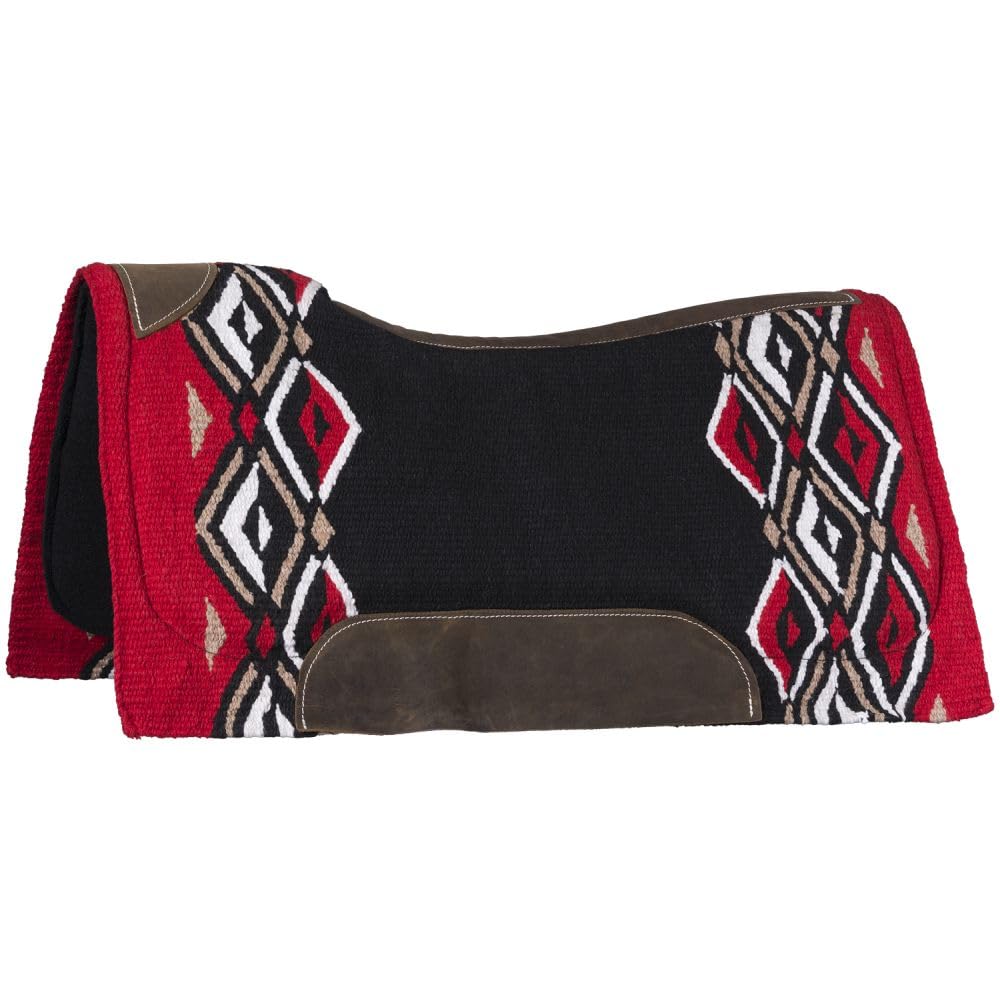
The contoured pad with real top grain leather that won over a skeptical wife.
Tough 1 uses a wool fill and felt cover with heavy padding and real leather wear leathers—a detail that separates it from cheaper pads that use PU (polyurethane fake leather). The pad measures 36″ L x 34″ W, making it the longest and widest of the group, which gives good coverage for larger horses or deeper saddles. It weighs 6 pounds, offering a substantial feel. The contour is designed to stop the pad from pressing on the horse’s withers, and buyers report it stays in place without gaps.
One reviewer who bought three colors said: “The contour keeps the pad from pressing down on my horses withers while riding.” Another praised the sweat pattern: “Even sweat marks after 2-hour trail ride, no gaps.” That even sweat distribution is a strong sign the fit is uniform. A funny real-world moment: one buyer’s wife was upset he bought this pad instead of her usual expensive brand, but after comparing the Tough 1’s real leather and heavy padding against the expensive brand’s pleather (fake leather), she agreed the Tough 1 was higher quality. It weighs 6 pounds, while the Weaver Leather pad weighs 6.2 pounds, and the real standout here is that real leather and long length.
What stands out
- Real top grain leather wear leathers—not PU
- Long 36″ length covers larger horses well
- Buyers confirm even, gap-free sweat after 2-hour trail rides
- Comes with a storage bag for easy carry
A couple of notes
- Some horses may find the heavy padding too thick for close leg contact
- Color choices are limited compared to other pads
Grab this if: you want real leather, a long 36″ pad, and the confidence of even sweat wicking—great for trail riders who cover distance.
skip it if: your horse has a very flat back and does not need the contour depth, or you want a lighter weight pad for short arena work.
5. CHALLENGER 3/4″ Thick Horse Saddle PAD Western Contoured Wool Felt Moisture Wicking
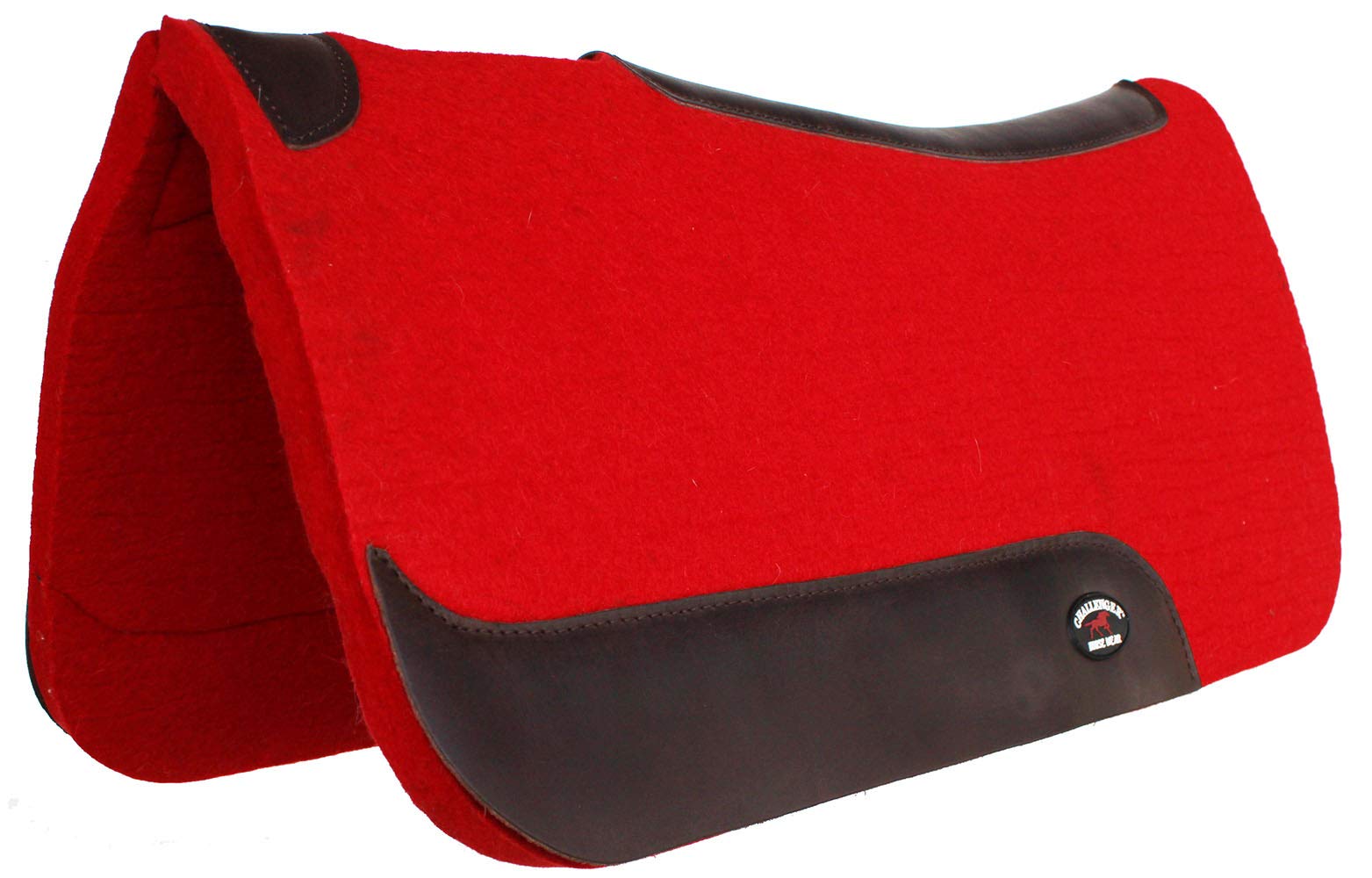
The 3/4-inch thick wool felt with reinforced wear leathers at a mid-tier price.
The CHALLENGER pad packs a 3/4-inch thick wool felt build that provides solid shock absorption without the bulk of a 1-inch pad. The size is 30″ spine x 15″ drop, which suits average-sized western saddles well. It uses natural wool fibers to wick moisture away, and the reinforced wear leathers are built to protect high-friction areas from saddle rub. The style is classic western, and the red color is bright and visible.
Owners mention solid quality: one buyer mentioned “I have been using it for a few months and it seems to be great quality.” Another noted “Wicks the sweat, stays put, and the horse feels comfortable.” The pad arrived quickly and feels “expensive” according to one buyer. The main trade-off is that it measures 30″ spine x 15″ drop, while the Tough 1 Pachanga measures 36″ L x 34″ W and the Weaver Leather pad measures 31″ x 32″, so it may not cover taller or longer-backed horses as well.
Strong points
- 3/4-inch wool felt gives a good balance of cushion and close contact
- Reinforced wear leathers protect high-friction areas
- Moisture-wicking wool keeps horses cool during trail and ranch rides
- Customers note it stays in place and feels comfortable for the horse
One drawback
- 30″ spine length is shorter than other options—may not suit horses over 15 hands
- Limited to western style; not ideal for English or multi-discipline riders
Best for: trail and ranch riders on average-sized horses who want a thick wool pad with good sweat wicking at a reasonable price.
Consider another if: your horse has a longer back and needs the extra length of a 34″ or 36″ pad for full coverage.
6. Weaver Leather 35-1677-S8 Contoured Single Weave Wool Blend Felt Saddle Pad

The budget southwest-style pad that balances 3/4-inch wool with colorful design.
Weaver Leather’s black-and-blue pad brings a southwest-inspired single weave topper with a 3/4-inch wool blend felt liner underneath. It measures 31″ x 32″, which is a good all-around size for most horses, and weighs 6.2 pounds. The top grain wear leathers are meant to add extra protection at the saddle contact points. The contoured shape is designed to follow the horse’s back for a closer, gap-free fit.
Wool content and thickness
Wool content determines how well the pad wicks moisture and breathes. Pure wool (100%) absorbs sweat and stays cooler in summer but costs more. Wool blends (like the 3/4-inch or single weave) mix synthetic fibers for durability and lower price. Thickness—from 3/4-inch to 1-inch in this lineup—controls shock absorption. A 1-inch pad like the Southwestern Equine Silverado cushions the most but may lift the saddle higher, while a 3/4-inch pad keeps you closer to the horse for better feel.
What you get
- 3/4-inch wool blend felt liner for cushioning and moisture wicking
- 31″ x 32″ size fits the average horse well
- Distinctive southwest-style weave topper looks great
- Affordable entry point into a contoured wool pad
What to check
- Some reviewers point out the “top grain leather” is actually PU with cloth backing
- Buyers wish it were longer for larger horses
- Color may run or fade over time
Go for it if: you want a budget-friendly, colorful wool blend pad for an average-sized horse and you are not at a competition level where real leather is mandatory.
Steer clear if: real leather is a requirement, or your horse needs a longer pad for full coverage—the 31″ length may leave tall horses exposed.
Understanding the Specs
Wool content and thickness
The wool percentage determines how well the pad wicks moisture and breathes. Pure wool (100%) absorbs the most sweat and stays cooler in summer but costs more. Wool blends (like the 3/4-inch or single weave) mix synthetic fibers for durability and lower price. Thickness—from 3/8-inch to 1-inch—controls shock absorption. A 1-inch pad like the Southwestern Equine Silverado cushions the most but may lift the saddle higher, while a 3/4-inch pad keeps you closer to the horse for better feel.
Wear leathers and materials
Wear leathers are the protective panels on the sides of the pad that absorb saddle friction. Top grain leather is cut from the top layer of the hide and lasts much longer than polyurethane (PU) or bonded leather, which can peel, crack, or have a cloth backing. Real leather costs more but survives years of trail and arena use. Check the stitching on the leather panels; double stitching or reinforced seams add significant life to the pad.
FAQ
Will a contoured wool saddle pad fit my horse’s high withers?
How do I clean a wool felt saddle pad?
What is the difference between 3/4-inch and 1-inch thick wool pads?
Can I use a contoured wool pad for barrel racing or team roping?
Why do some cheaper pads say “top grain leather” but feel fake?
Will a contoured pad stop my saddle from sliding back?
How long should a contoured wool saddle pad last with regular use?
Do I need a girth cutout on a contoured pad?
What size contoured pad should I get for a 15-hand quarter horse?
Final Thoughts: The Verdict
For most riders, the best contoured wool saddle pad is the Tough 1 Pachanga Contour Wool Saddle Pad because it combines real top grain leather, proven even sweat wicking with no gaps, a long 36-inch length for larger horses, and consistent buyer praise across dozens of rides. If you need serious wither relief and have a horse with a history of saddle pain, grab the Southwestern Equine OrthoRide. And for a versatile, lightweight daily pad that works across multiple horses from 14.1 to 16 hands, the Weaver Equine 30″ x 30″ Contoured Wool Blend is the one to beat for its 16-ounce weight and strong buyer satisfaction.
How We Picked
We do not accept paid placement. Every pick is matched to a real buyer and a real use-case; we do not hands-on test units.
Sources & Methodology
Specifications: manufacturer listings and product documentation. Review insights: verified customer reviews, as of July 2026. Pricing: not shown on this page (it changes often); check the current price via the retailer link.
As an Amazon Associate, WellFizz earns from qualifying purchases. This does not affect which products we feature.

Mo Maruf
I created WellFizz to bridge the gap between vague wellness advice and actionable solutions. My mission is simple: to decode the research and give you practical tools you can actually use.
Beyond the data, I am a passionate traveler. I believe that stepping away from the screen to explore new environments is essential for mental clarity and physical vitality.