Our readers keep the lights on and my smoothie glass nicely filled. As an Amazon Associate, I earn from qualifying purchases.
Waking up gasping for air or wondering if your oxygen levels dipped while you slept is a frightening experience. A continuous oxygen monitor gives you the power to track your SpO2 and pulse rate throughout the night without the anxiety of spot-checking or the disruption of a fingertip clip that cuts off circulation.
I’m Mohammad Maruf — the founder and writer behind WellFizz. I’ve spent hundreds of hours analyzing the specifications, user reviews, and real-world performance data of wearable and handheld pulse oximeters to identify which units deliver reliable overnight monitoring without false alarms or uncomfortable designs.
Whether you need data to share with your doctor or simply want peace of mind during sleep, finding the right device means understanding sensor accuracy, data storage limits, and battery endurance — all of which I break down in this guide to the best continuous oxygen monitor.
How To Choose The Best Continuous Oxygen Monitor
Not all pulse oximeters are built for continuous use. While a standard fingertip spot-check unit works for quick readings, an overnight monitor must stay comfortable for hours, hold enough battery charge, and store or transmit your data without interruption. Here are the specific factors that separate a reliable continuous monitor from a device that will fail you mid-sleep.
Sensor Accuracy and FDA Clearance
The most critical spec is accuracy tolerance. Look for devices that claim ±1% SpO2 accuracy in the 70-100% range — this matches clinical-grade performance. However, many consumer units carry a “sports and aviation only” disclaimer and are not FDA-cleared for medical use. If you need data your doctor will trust, prioritize monitors with FDA clearance or medical-grade certification like the Nonin TruO2 or units whose accuracy has been validated against hospital equipment in user reports.
Battery Life and Power Source
An overnight monitor must survive at least 8-12 hours on a single charge. Ring-style wearables like the LOOKEE O2-Tracker and Vibeat WearO2 offer 12-16 hours per charge, while handheld units with rechargeable batteries typically last 8-48 hours depending on usage. Some devices include a USB-C or AC power port so you can plug them in for uninterrupted all-night use — a crucial feature if your battery tends to drain faster than expected.
Comfort and Wearable Design
Fingertip clips can cause numbness, soreness, and disrupted sleep after a few hours. Ring-style sensors with soft silicone bands distribute pressure more evenly and allow natural finger movement. If you need to wear the monitor every night, choose a design that doesn’t restrict circulation or fall off during tossing and turning. Wrist-based options add further stability by securing the sensor cable to your arm.
Alarm Features and Data Storage
Vibration alarms are far less disruptive than audio beeps when you’re sleeping next to a partner. Look for adjustable low-O2 thresholds so the alarm only triggers when your SpO2 drops to a clinically concerning level. For data analysis, onboard memory that stores at least one full night (8-10 hours) is essential — you don’t want to lose data if your phone disconnects. Mobile apps that generate PDF or CSV reports make sharing with healthcare providers straightforward.
Quick Comparison
On smaller screens, swipe sideways to see the full table.
| Model | Category | Best For | Key Spec | Amazon |
|---|---|---|---|---|
| Wellue Wrist Pulse Oximeter | Premium Wearable | Long-term all-night tracking with wrist stability | 72-hour battery / ring sensor / vibration alarm | Amazon |
| Nonin TruO2 3250 | Medical-Grade | Clinically accurate spot checks with wireless data | FDA-cleared / ±1% accuracy / 2,200 checks | Amazon |
| LOOKEE O2-Tracker Ring | Ring Wearable | Comfortable overnight O2 and pulse tracking | 16-hour battery / silicone ring / vibration reminder | Amazon |
| Vibeat WearO2 | Ring Wearable | Long session recording with battery life up to 16 hours | 12-16 hr battery / 4 sessions of 10-hr memory | Amazon |
| Medline Soft-Touch Bluetooth | Bluetooth Fingertip | App-based tracking with shareable reports | 300-hr battery / 7-direction OLED / app sync | Amazon |
| Manhero Handheld Pulse Oximeter | Handheld Continuous | Bedside overnight monitoring with USB power | 2.4″ display / ±1% accuracy / AC power port | Amazon |
| HOLFENRY Handheld Oximeter | Multi-User Handheld | Family monitoring with independent user storage | 8-hr battery / 10 users / 300 records per ID | Amazon |
In‑Depth Reviews
1. Wellue Wrist Pulse Oximeter Style 2
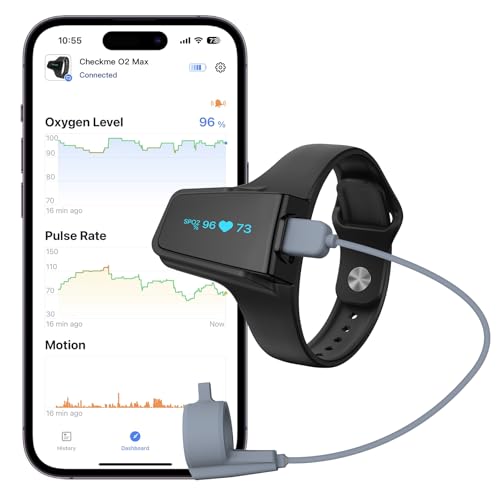
The Wellue Wrist Pulse Oximeter strikes the best balance between comfort and monitoring endurance. Its patented soft silicone ring sensor attaches to your finger without causing numbness, while the wrist-mounted display and battery keep the weight off your hand. The claimed 72-hour battery life means you can track multiple nights between charges — a major advantage over ring-style wearables that require daily charging.
The device supports both vibration and audio alarms with adjustable intensity, so you can set a low-O2 threshold without waking your partner with beeps. Data stores onboard for up to four 10-hour sessions, and the free Vihealth app syncs via Bluetooth to generate PDF and CSV reports compatible with Apple Health. Multiple user reviews confirm its readings match hospital equipment closely, even in patients with poor perfusion.
The wrist strap has a secure clasp, though some users report it feels snug and may cause skin irritation in sensitive individuals. Replacement sensor clips are available from the manufacturer, and the proprietary charging cable requires care to avoid wear at the connection point. For nightly use where battery longevity and data export are priorities, this is the most well-rounded option available.
Why it’s great
- Exceptional battery endurance — up to 72 hours between charges
- Comfortable silicone ring sensor stays secure without cutting circulation
- Free app generates shareable PDF and CSV reports with Apple Health integration
Good to know
- Proprietary charging cable is a weak point — handle the connection carefully
- App alarm may fail if the background process is closed
- Wrist clasp can cause skin irritation for some users
2. Nonin TruO2 Pulse Oximeter 3250

The Nonin TruO2 3250 is the only device on this list with FDA clearance for over-the-counter home use — a distinction that matters if you need readings your doctor will accept without question. The PureSAT technology delivers accurate SpO2 measurements across skin tones and in low-perfusion conditions like cold fingers or poor circulation, a scenario where many consumer oximeters fail.
The fingertip clip houses an LED display that provides automatic on/off operation and a CorrectCheck feature that alerts you if your finger isn’t positioned properly. Bluetooth connectivity syncs with the NoninConnect app for iOS, allowing you to email data history or share with Apple Health. Battery life is rated at an extraordinary 2,200 spot checks from two included AAA batteries — effectively years of occasional use.
However, the TruO2 is designed primarily for spot-checking, not overnight continuous wear. The clip is larger and heavier than typical fingertip units, and user reviews note it can pinch during extended use. Some units have arrived non-functional out of the box, and the plastic build has durability complaints. If your priority is clinical-grade spot measurement rather than all-night tracking, this is the most trustworthy choice.
Why it’s great
- FDA-cleared for OTC home use — the highest regulatory standard here
- Proven accuracy on cold fingers, dark skin tones, and low-perfusion conditions
- Exceptional battery life — up to 2,200 spot checks from two AAA cells
Good to know
- Fingertip clip is large, heavy, and uncomfortable for extended overnight wear
- Quality control concerns — some units arrive dead on arrival
- Plastic housing feels flimsy given the premium price
3. LOOKEE O2-Tracker Ring
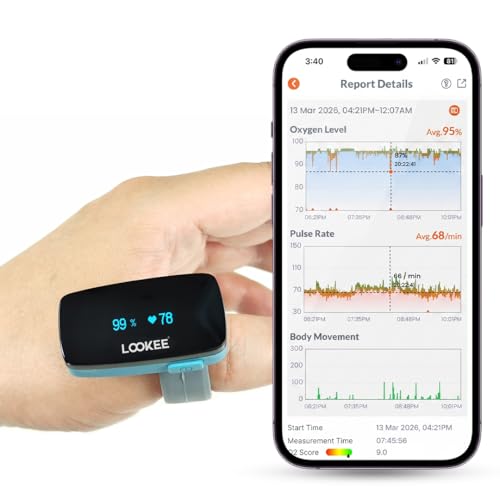
The LOOKEE O2-Tracker Ring has become a favorite among sleep apnea patients and anyone needing comfortable overnight monitoring. The soft silicone ring weighs only 18 grams and slips onto your finger without the pinching sensation of a clip. A full charge delivers up to 16 hours of continuous tracking — enough to cover even your longest sleep session with a buffer.
The device records SpO2, pulse rate, and body motion, and a vibration reminder alerts you when your oxygen level drops below your preset threshold — no audio beeps required. Onboard memory stores four groups of 10-hour data, automatically uploading to the free app once connected. The app generates PDF and CSV reports that you can share with healthcare providers, and users report the data correlates closely with hospital-grade monitors and sleep study results.
Some users have experienced accuracy discrepancies — one review showed a 5-point difference compared to a fingertip oximeter — and the device is designed to shut off after 10 hours of continuous recording, which may interrupt tracking for longer sleep sessions. Customer support has been described as unhelpful when resolving these issues. For most users who need a lightweight, non-disruptive overnight monitor, the LOOKEE Ring remains a top contender.
Why it’s great
- Ultra-light silicone ring design — easy to wear all night
- Vibration-only alarms prevent disturbing sleep partners
- Free app generates professional PDF and CSV reports for doctor visits
Good to know
- Some units show SpO2 lower than reference fingertip oximeters
- Forced power-off after 10 hours can interrupt longer sleep sessions
- Customer support responsiveness is inconsistent
4. Vibeat WearO2 Pulse Oximeter

The Vibeat WearO2 brings ring-style continuous tracking at a more accessible price point without sacrificing comfort. The patented silicone ring sensor is designed for hours of use without finger numbness, and its 12-16 hour battery life covers a full night with margin. The device works standalone — onboard memory stores up to four sessions of 10-hour data, so even if your phone isn’t nearby, your readings are saved.
The free Vihealth app provides graphical O2, heart rate, and motion trends, and allows you to adjust both the low-O2 threshold and vibration intensity. PDF reports can be emailed directly to your doctor.
A significant concern is accuracy: one reviewer reported the WearO2 reading 87% SpO2 while a fingertip oximeter read 92% — a 5-point gap that could cause unnecessary alarm or missed intervention. Another unit failed after three months. The device also carries a “sports and aviation” disclaimer rather than medical certification. For budget-conscious buyers who want continuous tracking and are willing to cross-check readings occasionally, this is the best entry point.
Why it’s great
- Comfortable ring design ideal for overnight wear without numbness
- Robust 10-year track record of reliability in long-term users
- Independent memory stores data even without a smartphone nearby
Good to know
- Occasional large accuracy gaps compared to reference oximeters
- Some units have failed after only three months of use
- Not medically certified — labeled for sports and aviation use only
5. Medline Soft-Touch Bluetooth Pulse Oximeter

The Medline Soft-Touch Bluetooth Oximeter combines the convenience of wireless data syncing with a remarkably long battery life — 300 hours from two AAA batteries. Its soft finger pad and lightweight clip make it more comfortable than typical rigid fingertip oximeters, while the OLED display offers seven viewing orientations so you can read it from any angle without moving your hand.
Bluetooth connectivity pairs with the free Medline Health App for documenting, tracking, and sharing SpO2 and pulse rate measurements. Users report accuracy within ±1% SpO2 and ±2 bpm when compared against clinical monitors, and the device’s auto-shutoff feature conserves battery when you forget to turn it off. The five-year lifespan claim is realistic for a device used primarily for spot checks rather than continuous wear.
There are notable caveats. The auto-shutoff activates while the device is still on your finger, which can interrupt any attempt at continuous overnight monitoring — this unit is really designed for repeated spot checks rather than sleep tracking. The app requires account registration with phone or email verification and does not offer a guest mode. Some packaging has listed the device for “aviation and sporting use” only, contradicting the home-use marketing on the Amazon listing.
Why it’s great
- Exceptional 300-hour battery life from standard AAA batteries
- 7-direction OLED display for easy reading at any angle
- Accurate readings — within ±1% SpO2 of clinical meters
Good to know
- Auto-shutoff activates while on your finger — not suitable for continuous overnight use
- App requires mandatory account registration with no guest mode
- Packaging inconsistency — some units labeled for aviation use only
6. Manhero Continuous Pulse Oximeter
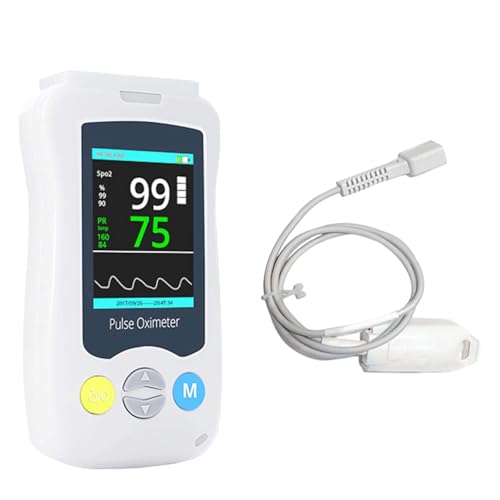
The Manhero Continuous Pulse Oximeter offers a unique advantage for overnight monitoring: a dedicated AC power port that lets you plug the device into the wall for uninterrupted all-night use. The 2.4-inch HD display is one of the largest in this category, and the unit simultaneously shows SpO2, pulse rate, and a real-time plethysmograph waveform — visual confirmation that the signal is stable and accurate.
Accuracy is rated at ±1% for SpO2 and ±1 bpm for heart rate, and the adjustable alarm thresholds let you set custom low-O2 and low-pulse limits. The handheld form factor is compact enough to sit on a nightstand, and the companion probe is designed for both continuous monitoring and quick spot checks. Users confirm the device works well for overnight O2 tracking when plugged into a USB power source.
Battery life is a weak point — the two AA batteries drain within 24 hours of continuous use, making the AC adapter or USB cord a necessity for sleep tracking. The included USB cord is notably short (approximately 1 foot), requiring an extension cable for convenient bedside placement. Some units have arrived without batteries or USB cord, and the finger probe plug can dislodge easily from the socket. For a budget-friendly baseline monitor that stays plugged in, it gets the job done.
Why it’s great
- AC power port enables true all-night continuous monitoring without battery concerns
- Large 2.4-inch display with real-time plethysmograph for signal quality verification
- Medical-grade accuracy specification (±1% SpO2) at an entry-level price
Good to know
- Battery life under 24 hours — USB/AC power mandatory for overnight use
- Probe plug can accidentally dislodge from the main unit during sleep
- Included charging cable is too short for convenient nightstand placement
7. HOLFENRY Handheld Pulse Oximeter
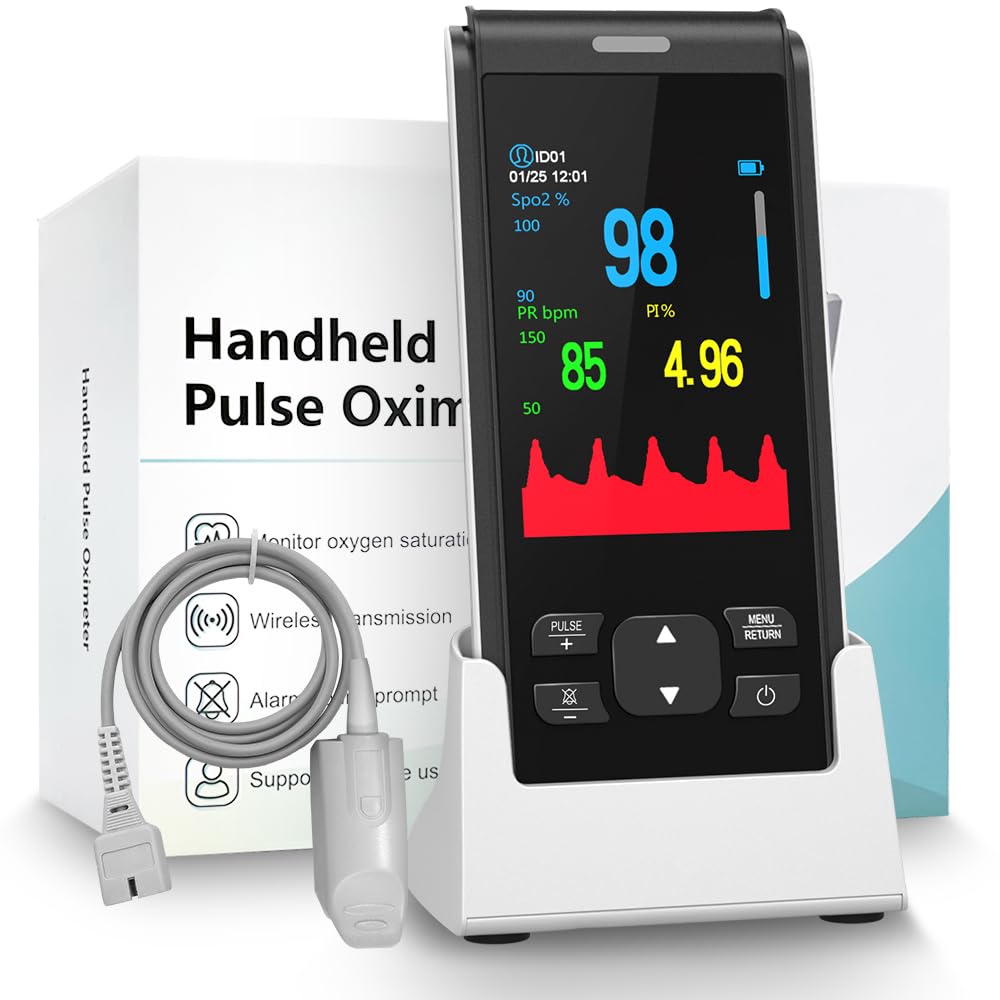
The HOLFENRY Handheld Pulse Oximeter is designed for families managing multiple people’s health data. The device supports up to 10 independent user IDs, each storing 300 sets of SpO2 and pulse measurements — making it easy for every household member to track their own trends without mixing up data. Two measurement modes (spot-check and trend record) allow versatility across different monitoring scenarios.
The rechargeable battery lasts 8 hours on a full charge, and the unit can be used plugged in for 24-hour uninterrupted monitoring. The audio alarm audibly beeps when SpO2 falls below your set threshold or when pulse drops below 50 bpm, and the corresponding value flashes on the screen. The charging cradle uses a USB-C cable with a magnetic docking system, and the included adult probe fits standard connector ports — a useful compatibility feature noted by an ER nurse reviewer who paired it with a pediatric wrap-style probe.
Several users experienced reliability issues: the probe loses pulse contact during sleep, causing false alarms or lost data, and the magnetic charging connection has no replacement parts available if damaged. The device is labeled for sports and aviation use, not medical purposes. For families who need separate data profiles and don’t mind troubleshooting occasional signal dropout, this is a functional option, but reliability lags behind the premium wearables on this list.
Why it’s great
- Multi-user architecture — supports 10 independent profiles with 300 records each
- Standard probe port allows use with hospital-grade or pediatric sensors
- Can run 24 hours continuously when plugged into USB power
Good to know
- Probe frequently loses pulse lock during sleep, causing false alarms
- Magnetic charging connection has no replaceable parts if damaged
- Labeled for sports and aviation only — not intended for medical monitoring
FAQ
Can I use a continuous oxygen monitor for sleep apnea diagnosis?
What does the “sports and aviation only” disclaimer actually mean?
How often should I replace the sensor on a ring-style continuous monitor?
Why does my finger feel numb after wearing a clip for a few hours?
Final Thoughts: The Verdict
For most users, the best continuous oxygen monitor winner is the Wellue Wrist Pulse Oximeter because it combines the longest battery life in its class (72 hours), a comfortable ring sensor that stays put through the night, and the ability to generate professional-quality reports that your doctor will take seriously. If you need FDA-cleared medical-grade accuracy for spot checks with wireless data sharing, grab the Nonin TruO2 3250. And for a budget-friendly entry into ring-style overnight tracking that prioritizes comfort over certification, nothing beats the LOOKEE O2-Tracker Ring.

Mo Maruf
I created WellFizz to bridge the gap between vague wellness advice and actionable solutions. My mission is simple: to decode the research and give you practical tools you can actually use.
Beyond the data, I am a passionate traveler. I believe that stepping away from the screen to explore new environments is essential for mental clarity and physical vitality.