Our readers keep the lights on and my smoothie glass nicely filled. As an Amazon Associate, I earn from qualifying purchases.
Specs are compiled from manufacturer listings and verified buyer reviews and can change over time — please confirm the key details on the product page before buying.
If you’re curious how your breakfast, afternoon slump, or evening run actually affects your body, a continuous glucose monitor gives you that data in real time — no finger pricks required. These wearables track your glucose levels 24/7, showing you exactly which foods spike your sugar and how exercise or sleep smooths things out. The challenge is picking the right one: many options demand a prescription, others have clunky apps, and some just don’t last long enough to be useful. This guide compares the three top-tier CGMs available without a prescription, built for non-diabetics who want to tune their health through real glucose data.
I’m Mohammad Maruf — the founder and writer behind WellFizz. This guide is built by comparing the manufacturers’ published specifications and the patterns across verified customer reviews, so you get each pick’s real strengths and trade-offs instead of marketing spin.
The best continuous glucose monitor for non diabetics gives you real-time glucose readings so you can spot patterns that affect your energy and cravings — but you need to pick one that fits your lifestyle, budget, and how long you want to track.
Our Picks at a Glance
How To Choose The Best Continuous Glucose Monitor For Non Diabetics
For non-diabetics, a CGM isn’t a medical device — it’s a tool for learning. You want a sensor that stays on long enough to reveal patterns, an app that translates messy data into clear insights, and a battery that doesn’t die before the week is through. Here are the three specifications that matter most when you are paying out of pocket.
Sensor Lifespan & Operating Time
The sensor lifespan tells you how many consecutive days one unit stays active on your arm. Operating time is the total calendar days a multi-pack covers. If you travel or plan to track for a full month, a pack that offers 28 days of operating time saves you from reordering mid-cycle. Non-diabetics often get better trend data from longer single-sensor wear because you can compare identical routines day over day.
Water Resistance & Physical Durability
You will swim, shower, or sweat in a gym, so the degree of waterproofing matters. Some units are water-resistant enough for splashes but not for full immersion. The highest rated units handle submersion up to 8 feet — a meaningful difference if you are a regular swimmer or do long soaks in a hot tub. The adhesive that holds the sensor in place counts too: a few owners find stock patches lacking and buy an aftermarket overpatch for extra security during sweaty workouts.
App Integration & Data Export
A powerful sensor is useless if the phone app is buggy or locks you out of your own data. Look for apps that sync with Apple Health or Google Health Connect so your glucose trends live alongside your step count and sleep data. The ability to export a CSV file matters if you want to chart trends in a spreadsheet or share them with a nutritionist — some apps offer this, others don’t. Also check whether the app shows historical data beyond the current sensor’s lifespan; an app that keeps 180 days of history gives you a much richer view of your progress.
Quick Comparison
In‑Depth Reviews
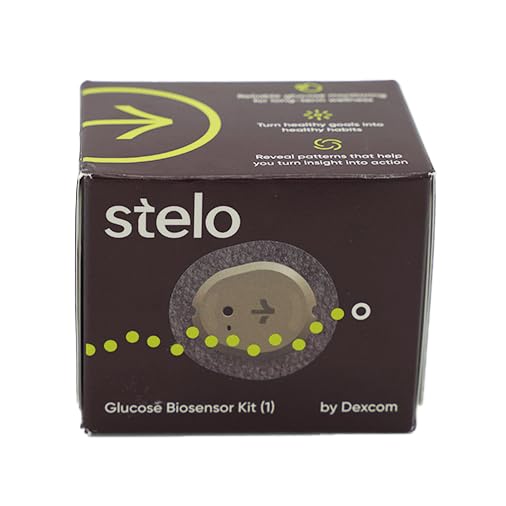
1. Stelo 1 Pack
Our pick — over 4★ from 20+ verified ratings; the strongest balance of quality and price.
A single 15-day sensor that lets you test the waters without a multi-pack commitment.
This is exactly the same biosensor technology as the Stelo 2-Pack, but in a single unit. You get one 15-day sensor, one applicator, and one overpatch. That lower unit count — 1.0 Count vs 2.0 Count — makes this a less expensive entry point for anyone who wants to see whether a CGM fits their lifestyle before buying a larger supply. The sensor runs on a Zinc-Air battery cell, and the adhesive is the same as the 2-Pack’s, which means some owners recommend grabbing an aftermarket overpatch if you plan to be active or shower daily.
Dexcom’s Stelo platform is the same on both the 1-pack and the 2-pack, so the Stelo app, the personalized insights, the 180-day in-app glucose history, and the Apple Health / Google Health Connect sync are identical. Buyers report the device is “accurate compared to daily blood glucose meter” and “enables real-time trend tracking for diet/activity adjustments.” The key limitation is that while the standard pack offers 30 days of operating time for the price, the single sensor totals exactly 15 days. If you love the experience, you will need to reorder sooner than you would with the twin pack.
The downside reported by a handful of owners is that prolonged water exposure from swimming or bathing can kill a single sensor early. The 2-Pack resolves that with a higher waterproof rating, but this 1-pack is only water-resistant to a more modest degree. If you are a casual shower-only user, it works fine. If you are a lap swimmer, the 2-Pack is the safer move.
One honest caveat: The adhesive gets complaints for some users — consider picking up an aftermarket overpatch before you apply the sensor, especially if you plan to exercise. “Adhesive is a little bad,” as owners mention, “so make sure to get a good over patch.”
Grab this if: You are a first-time CGM user and want the lowest-cost trial of a 15-day sensor to see if the data changes your habits before you commit to a multi-pack.
skip it if: You swim regularly or want a full month of uninterrupted tracking — the 2-Pack offers both longer operating time and better water protection.
2. Stelo Glucose Biosensor & App 2-Pack

The two-pack that lasts a full 30 days and shrugs off a dip in the deep end.
This is the pick for anyone who wants the most uninterrupted tracking period and the highest water resistance. Each biosensor stays on your arm for 15 days, plus a 12-hour grace period before it stops measuring — so you are never rushing a replacement. With two sensors in the box, the total operating time is 30 days. That matters when you are building a 4-week picture of how your body responds to different foods and routines. The Stelo app offers 180 days of in-app glucose history, which means your first month becomes the baseline for the next several months of data.
What wins people over is the waterproofing. This unit is fully waterproof up to 8 feet — the highest rating of any glucose biosensor you can buy without a prescription. Swimmers, tub-soakers, and gym-goers who sweat heavily don’t have to worry about killing the sensor early. The adhesive, though, gets mixed marks: a few owners mention the stock overpatches lose grip by day 10, so an aftermarket overpatch can save a sensor that still has five days of life left. As owners put it: “three sensors all lasted full 15 days plus 12-hour grace period.”
The big difference between this and the Lingo pack is the operating time — 30 days versus 28 — plus the superior waterproof rating. You pay a modest premium for that margin, and the app syncs with Apple Health, Google Health Connect, and Oura. The trade-off is that support is chatbot-based during off-hours; if a sensor glitches, you may need to wait until business hours for a live agent. That said, replacements are free if a sensor fails before the 15-day wear time is up.
Real-world edge: The thing that keeps owners coming back is the confidence of a full month of coverage and the ability to wear it in the pool without sealing it off.
Reach for this if: You plan to wear a CGM continuously for at least a month, swim or shower freely, and want the deepest app history (180 days) to spot long-term trends.
Look elsewhere if: You are testing the waters for just two weeks — the single-pack Stelo will save you money on your first trial.
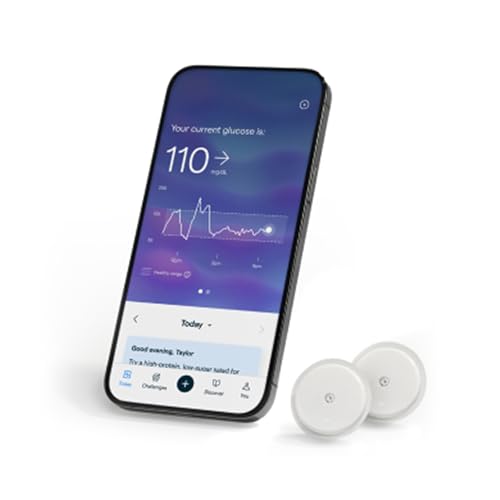
3. Lingo Continuous Glucose Monitor (CGM) & App Pack of 2
A two-week sensor that helps you map meals to glucose without a prescription.
Each Lingo biosensor delivers 14 days of continuous glucose tracking, and the pack contains two sensors for a combined operating time of 28 days. That is a full calendar month of data, giving you enough time to test how your body handles different meals on repeat cycles. The Lingo app is designed to show you which foods work for you and which don’t — it draws a direct line from your dinner plate to your glucose curve. Non-diabetic users report accuracy is solid, with lab comparisons showing a difference of only 2 mg/dL.
Lingo markets this specifically for prediabetes and heart health awareness. The app encourages more time in the healthy glucose range of 70–140 mg/dL. You do not need to finger-prick at all; the biosensor attaches painlessly to the back of your arm and is water-resistant for daily wear. One thing owners consistently mention is that the phone needs to be within about 12 feet of the sensor or it loses connection and requires re-pairing. A CSV export for your data is available, which spreadsheet users appreciate.
The gap between this and the Stelo 2-Pack is a difference in operating time: 28 days versus 30, and a lower waterproof rating. The Lingo pack also has a slightly shorter per-sensor lifespan — 14 days compared to 15 — meaning you swap sensors one day sooner each time. For many users that difference is negligible. Free replacement is offered if a sensor fails before 14 days, which is a solid safety net. The overall crowd sentiment is that Lingo delivers accurate trends at a compelling cost of entry.
Smart starting point: If you are price-aware and want a month of real glucose data without committing to a premium subscription, Lingo gives you the same core tracking with slightly less waterproofing and one fewer day per sensor.
Reach for this if: Your goal is to understand how specific meals, exercise, and sleep affect your glucose over a full month, and you want an HSA/FSA-eligible option.
Opt for the Stelo 2-Pack if: You need the extra waterproofing for swimming or the longer operating time (30 days versus 28) to avoid sensor swaps mid-weekend.
Understanding the Specs
Sensor Lifespan vs Operating Time
Sensor lifespan is how many consecutive days a single CGM unit stays attached and measuring your glucose. Operating time is the total calendar days a pack covers when you switch sensors back-to-back. A 15-day sensor lifespan with a 30-day operating time (two sensors) lets you track for a full month with one purchase. If you plan to wear a CGM long-term, operating time determines how often you reorder — and whether you get a monthly discount by buying the larger pack.
Waterproof Rating
This tells you how deep you can submerge the sensor without damaging it. A rating like “fully waterproof up to 8 feet” means you can swim, shower, and soak in a bath or hot tub with the sensor on. A lower rating like “water-resistant” may handle sweat and splashes but might fail if you submerge it for long periods. For non-diabetic wearers who exercise, swim, or live in humid climates, the waterproof rating is a daily-use spec — not just a spec for extreme sports.
App Integration & Data Export
The app is where your raw glucose numbers become usable insights. Look for apps that sync with Apple Health or Google Health Connect so your data is not isolated. In-app glucose history (such as 180 days in the Stelo app) lets you compare weeks or months later, which is more useful than just seeing today’s numbers. A CSV export function lets you move your data to a spreadsheet for your own charting — crucial if you work with a nutritionist or want to run your own analysis.
No Prescription Required
Traditional diabetic CGMs require a doctor’s prescription and diagnosis. Non-diabetic CGMs are sold over the counter because they are classified as wellness devices rather than medical monitors. They use the same sensor technology but are not intended for insulin dosing or clinical treatment. That is fine for tracking trends, but it means the accuracy is often quoted as ±10% — good enough to see if a food spikes your sugar, not precise enough to replace a lab blood test.
FAQ
Can I use a CGM without having diabetes?
Do I need to finger prick with a non-diabetic CGM?
How long does one sensor stay on my arm?
What happens if the sensor falls off early?
Can I shower or swim with a CGM on?
Will the CGM app work on both iPhone and Android?
Is a CGM accurate enough to replace a lab blood test?
Can I use a CGM while it is on if I go through airport security?
Is a CGM better than a fingertip glucose meter for non-diabetics?
Final Thoughts: The Verdict
Across the board, the best continuous glucose monitor for non diabetics winner is the Stelo Glucose Biosensor 2-Pack because it offers the longest operating time (30 days), the highest waterproof rating, and 180 days of in-app history for deep trend analysis. If you want a month of tracking at a lower entry cost, the Lingo Pack of 2 delivers proven accuracy with a 14-day sensor lifespan and HSA/FSA eligibility. And for a first-time trial, the Stelo 1 Pack gives you the same Dexcom technology in a single 15-day sensor at the most modest investment. Choose the one that matches your tracking ambition, and you will see the patterns that change how you eat, sleep, and move.
How We Picked
We do not accept paid placement. Every pick is matched to a real buyer and a real use-case; we do not hands-on test units.
Sources & Methodology
Specifications: manufacturer listings and product documentation. Review insights: verified customer reviews, as of July 2026. Pricing: not shown on this page (it changes often); check the current price via the retailer link.
As an Amazon Associate, WellFizz earns from qualifying purchases. This does not affect which products we feature.
Related Guides

Mo Maruf
I created WellFizz to bridge the gap between vague wellness advice and actionable solutions. My mission is simple: to decode the research and give you practical tools you can actually use.
Beyond the data, I am a passionate traveler. I believe that stepping away from the screen to explore new environments is essential for mental clarity and physical vitality.