Our readers keep the lights on and my smoothie glass nicely filled. As an Amazon Associate, I earn from qualifying purchases.
Blinding LED headlights, halo effects around streetlights, and washed-out road markings turn a routine night drive into a stressful squint-fest. The right pair of yellow-tinted lenses cuts that harsh blue-white glare, boosts contrast on wet pavement, and lets your eyes relax behind the wheel.
I’m Mohammad Maruf — the founder and writer behind WellFizz. I’ve spent hundreds of hours combing through lens coatings, frame geometries, and customer testimonials to find which contact lenses for night driving actually deliver on their promise of safer, clearer nighttime vision.
This guide breaks down seven top contenders, comparing how each handles glare, fits over existing frames, and holds up in low-light conditions so you can pick the pair that matches your nightly commute.
How To Choose The Best Contact Lenses For Night Driving
Not all night driving glasses are created equal. The gap between a lens that just turns everything yellow and one that actually neutralizes glare comes down to a few key specifications. Here’s what to focus on before you click “add to cart.”
Yellow Tint & Blue Light Filtration
The core technology behind night driving glasses is a yellow tint that selectively filters high-energy blue light from LED headlights and streetlights. This increases contrast and reduces the scatter that causes halos. Avoid lenses that are simply dipped in yellow dye — look for durable polycarbonate or CR-39 lenses with blue-light blocking integrated into the material.
Polarization Level
Polarized lenses cut horizontal glare from wet roads, windshields, and oncoming traffic. Full polarization works best for daytime driving, but at night it can reduce overall light transmission too much. Semi-polarized or anti-glare coatings strike a better balance, letting enough light in while still taming harsh reflections.
Fit Over Prescription Glasses
If you wear prescription lenses, your night driving glasses need to fit over them without pinching or slipping. Measure the width and height of your current frames — a wrap-around design with at least 139mm width and 38mm height accommodates most standard prescription eyewear. Lightweight TR90 frames reduce the bulk of wearing two pairs at once.
Frame Build & Weight
Heavy frames cause fatigue during long drives. Aluminum-magnesium alloy and TR90 polymer frames keep weight under 30 grams while maintaining durability. Spring hinges add flexibility and reduce pressure on the temples, making the glasses more comfortable for extended wear.
Quick Comparison
On smaller screens, swipe sideways to see the full table.
| Model | Category | Best For | Key Spec | Amazon |
|---|---|---|---|---|
| BLUPOND Knight Visor Set | Premium Set | Day & night versatility | 26g, semi-polarized yellow & copper | Amazon |
| Cyxus 8208 Photochromic | Photochromic | All-day wear, screen use | TR90 frame, auto-adjusting tint | Amazon |
| ILLUMIN Vector | Low Yellow | Subtle tint, less light loss | Scratch-resistant, non-slip design | Amazon |
| Dollger Fit-Over | Fit-Over | Night driving with Rx glasses | 139mm width, 38mm height | Amazon |
| CAXMAN Wrap-Around | Wrap-Around | Side glare blocking | Oleophobic coating, polarized side shields | Amazon |
| URUMQI Cat Eye | Fit-Over Style | Stylish fit-over for women | TR90, wide temples, cat-eye shape | Amazon |
| Bircen Metal Frame | Budget Pick | Entry-level glare reduction | Al-Mg alloy, spring hinges | Amazon |
In‑Depth Reviews
1. BLUPOND Knight Visor Set

The BLUPOND Knight Visor set gives you a dedicated pair for day and night. The yellow-tinted night lenses use semi-polarized technology to filter blue light while preserving enough luminance for safe low-light driving. At just 26 grams with aluminum-magnesium alloy frames and spring hinges, these glasses stay comfortable during long hauls — no temple pressure or nose-bridge fatigue after two hours behind the wheel.
The included daytime pair features copper polarized lenses that handle wet-road reflections and midday brightness. Both pairs come with soft cases, cleaning cloths, and a universal car visor clip that keeps them organized. Customer feedback consistently highlights the night lenses’ ability to reduce the blinding effect of modern LED headlights, with several reviewers reporting they could drive again after cataract surgery or TBI-related light sensitivity.
One limitation: the yellow night lenses are semi-polarized, not fully polarized, which means some users with very sensitive eyes may still perceive halos around the brightest LED clusters. The visor clip works well for storage but the glasses protrude slightly when clipped. Overall, this two-in-one kit offers the best balance of build quality, performance, and versatility for anyone who drives both day and night.
Why it’s great
- Two complete pairs cover all lighting conditions
- Ultra-light alloy frame with spring hinges reduces fatigue
- Effective blue-light filtration confirmed by lab tests
Good to know
- Night lenses are semi-polarized, not fully polarized
- Visor clip may not fit all car visors perfectly
2. Cyxus Night Vision Glasses 8208
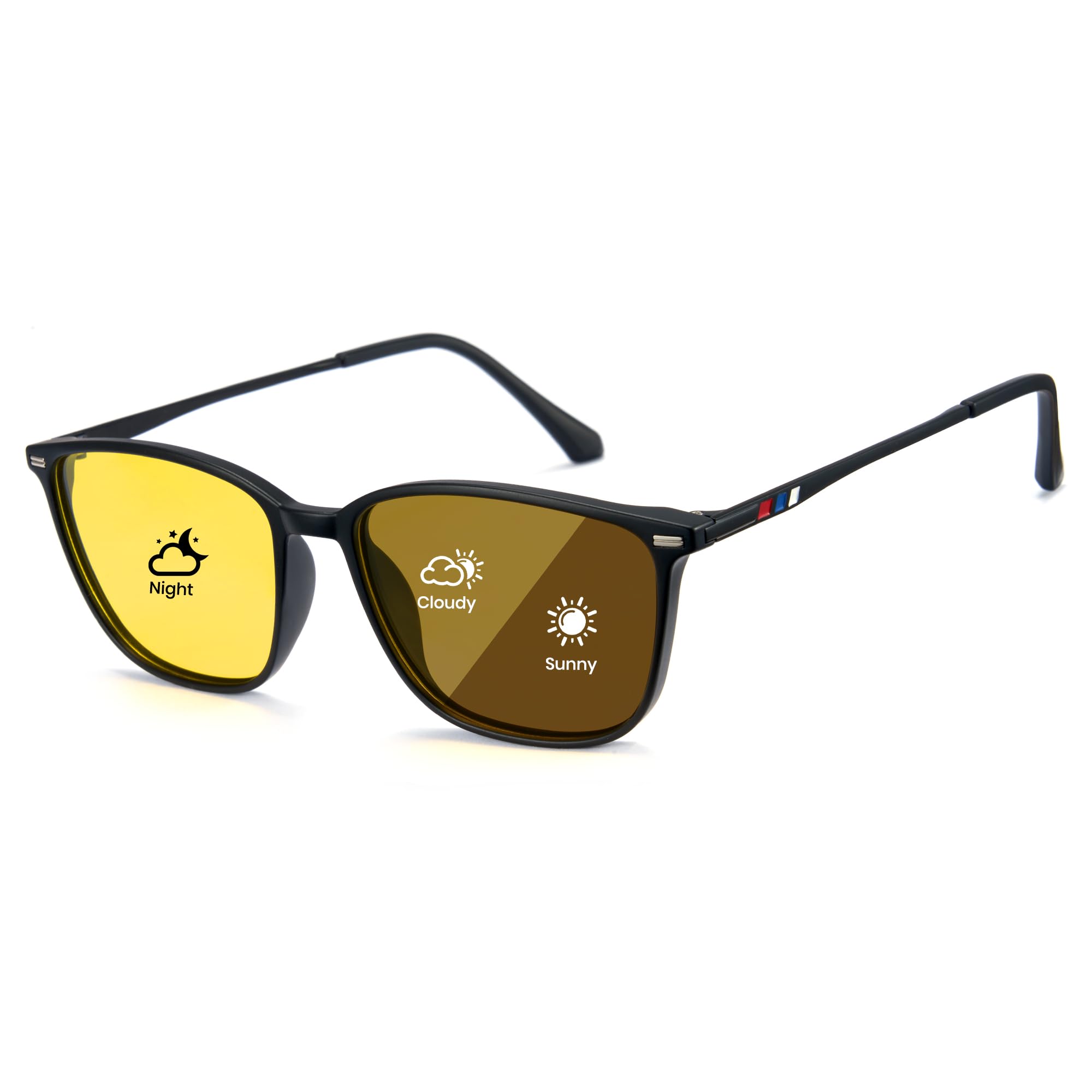
The Cyxus 8208 stands out because it adapts to ambient light. The photochromic lenses automatically shift from a light yellow indoors to a darker tint outdoors while staying at the optimal yellow for night driving. This makes them a true all-day companion — you can wear them at your desk to filter screen blue light, then walk out to the car and drive without swapping glasses.
The TR90 frame is semi-rimless, keeping weight low and the field of view wide. Customers with traumatic brain injury and chronic screen headaches reported significant relief, noting the tint eliminates the harsh blue-white cast from computer monitors and oncoming headlights alike. The included blue light test card lets you verify the filtration at home, which adds a layer of trust.
On the downside, the photochromic transition is UV-driven, so inside a car (where the windshield blocks most UV) the lenses may not darken as much as they would outdoors. The frame also feels slightly less robust than metal alternatives, though Cyxus backs it with a lifetime warranty. For those who want one pair for driving, work, and daily life, this is the most practical option.
Why it’s great
- Auto-adjusting tint eliminates the need for multiple pairs
- Proven blue light blocking reduces screen-induced headaches
- Lightweight TR90 frame comfortable for all-day wear
Good to know
- UV-driven transition is less effective behind a windshield
- Semi-rimless frame feels less premium than full-metal builds
3. ILLUMIN Night Driving Glasses Vector

The ILLUMIN Vector takes a deliberately different approach. Instead of the deep amber tint common in night driving glasses, it uses a low-yellow lens that blocks glare without significantly reducing overall brightness. This is a smart choice for drivers who found traditional yellow lenses too dark or who live in areas with minimal street lighting where every lumen counts.
Scratch-resistant lenses and a non-slip nose bridge make these suitable for daily use. Multiple customers mentioned that the Vector directly solved the “painful bright spots” problem from oncoming headlights, allowing them to look toward traffic without squinting or looking away. The frame is lightweight and the fit is secure, though the rubber nose bridge can be irritating during extended drives for some users.
Where the Vector falls short is polarization — it lacks the full polarization of the BLUPOND day pair, so wet-road glare is less controlled. The earpieces also curve slightly, which may feel tight on larger head shapes. Still, for drivers who prioritize minimal light loss over maximum tint, the Vector is a well-engineered middle ground.
Why it’s great
- Low-yellow tint preserves natural night vision brightness
- Scratch-resistant coating extends lens life
- Non-slip design keeps glasses in place during quick head turns
Good to know
- Not polarized, so wet-road glare remains visible
- Rubber nose bridge can become uncomfortable over time
4. Dollger Night Vision Glasses
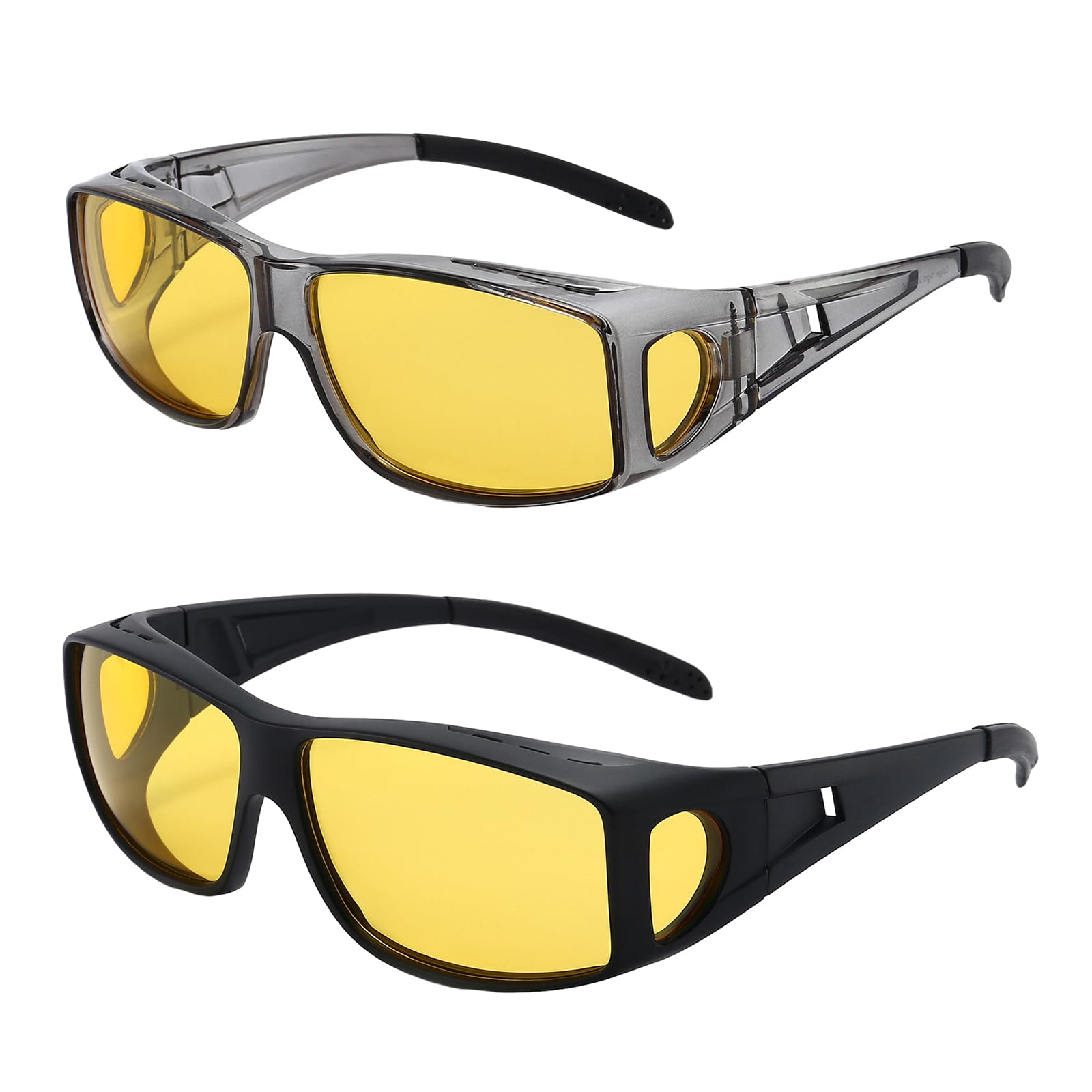
Dollger’s fit-over model is designed for drivers who wear prescription glasses and don’t want to pay for custom tinted Rx lenses. The frame measures 139mm wide and 38mm tall, which accommodates most standard prescription frames without pinching the sides or pushing the inner glasses into your face. The yellow tint does an honest job of dulling the harshness of LED headlights and streetlights.
Several customers noted that these glasses prevented migraines triggered by nighttime driving — a major win for anyone with light sensitivity. The fit-over design works with both smaller and medium-sized frames, though users with very large or thick-rimmed glasses may find the fit tight. The lenses are comfortable for extended wear, with one reviewer saying they forgot they had them on.
The main compromise is optical clarity. Some users report that oncoming headlights create a “light circle” artifact, likely due to the combination of the yellow layer and the user’s own prescription lens curvature. This effect varies person to person but is worth noting if you have prism correction or astigmatism. For the price, though, this is one of the most accessible fit-over solutions on the market.
Why it’s great
- Specifically sized to fit over most prescription glasses
- Effectively reduces migraine triggers from nighttime light
- Comfortable enough for forgettable extended wear
Good to know
- May create distracting light circles with certain prescription lenses
- Not suitable for very large or thick-rimmed Rx frames
5. CAXMAN Night Driving Glasses
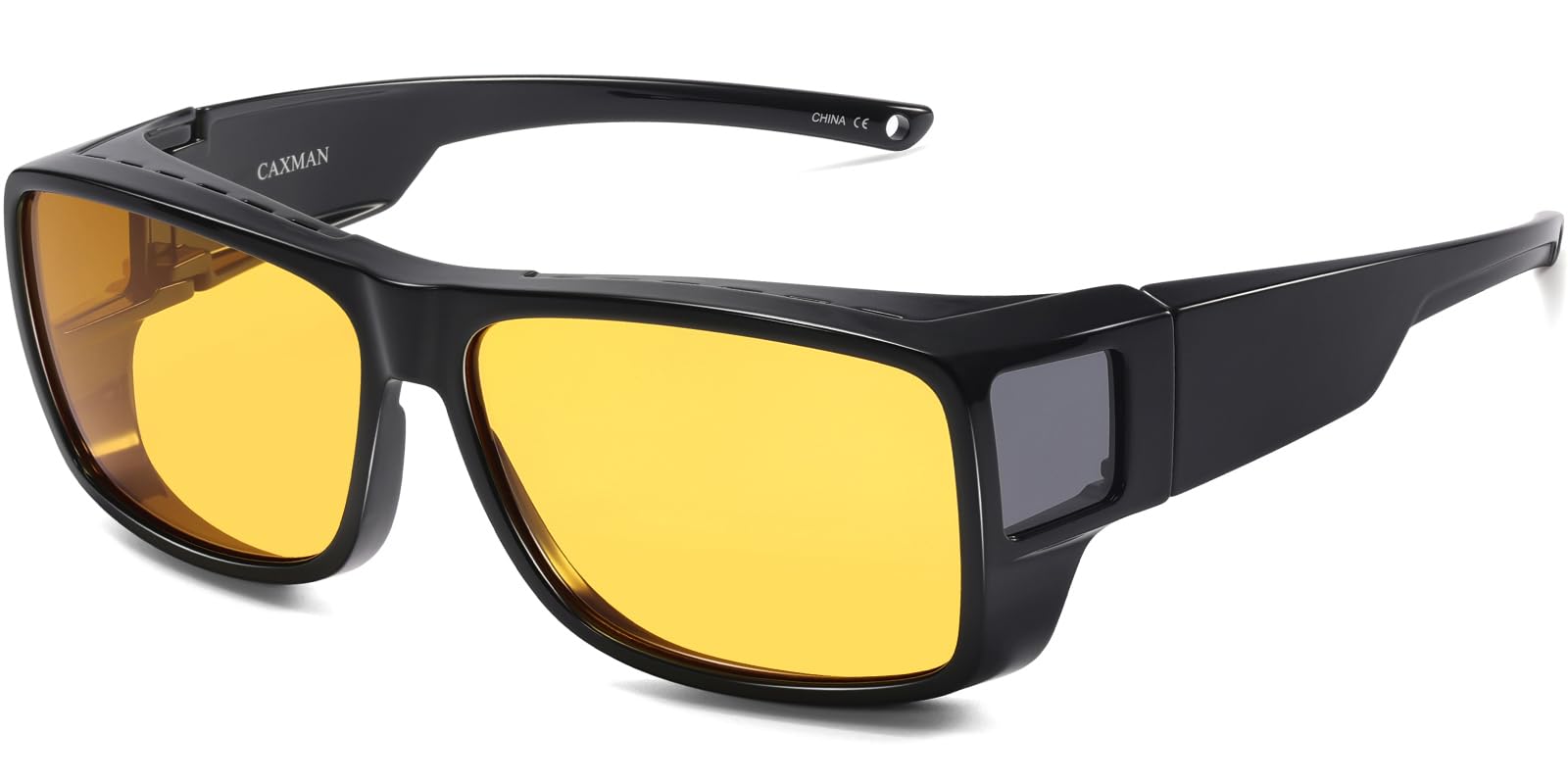
CAXMAN focuses on peripheral glare — the kind that sneaks in from the side window and reflects off the A-pillar. The wrap-around design includes polarized side shields that block stray light without narrowing your field of vision. The lenses also feature an oleophobic coating that resists skin oils and fingerprints, keeping the optics clean even after repeated handling.
The yellow tint is effective against the blinding LED arrays found on modern trucks and Teslas — several commercial drivers reported that these glasses restored their ability to drive night routes after years of squinting through glare. The frame is sized to fit over prescription eyewear with a maximum width of 142mm and height of 44mm, which covers the majority of standard frames.
Fit precision matters here: if your glasses exceed the specified dimensions, the wrap-around won’t seat properly. The oleophobic coating works well initially but can degrade over months of cleaning, requiring more frequent lens wiping. For drivers who face a lot of side-window glare, the CAXMAN wrap-around design is a genuinely useful upgrade.
Why it’s great
- Polarized side shields cut peripheral glare effectively
- Oleophobic coating repels smudges for clearer optics
- Good fit-over compatibility with detailed size guidelines
Good to know
- Exact frame dimension check required before ordering
- Anti-smudge coating may wear off after extended use
6. URUMQI Cat Eye Fit-Over Glasses
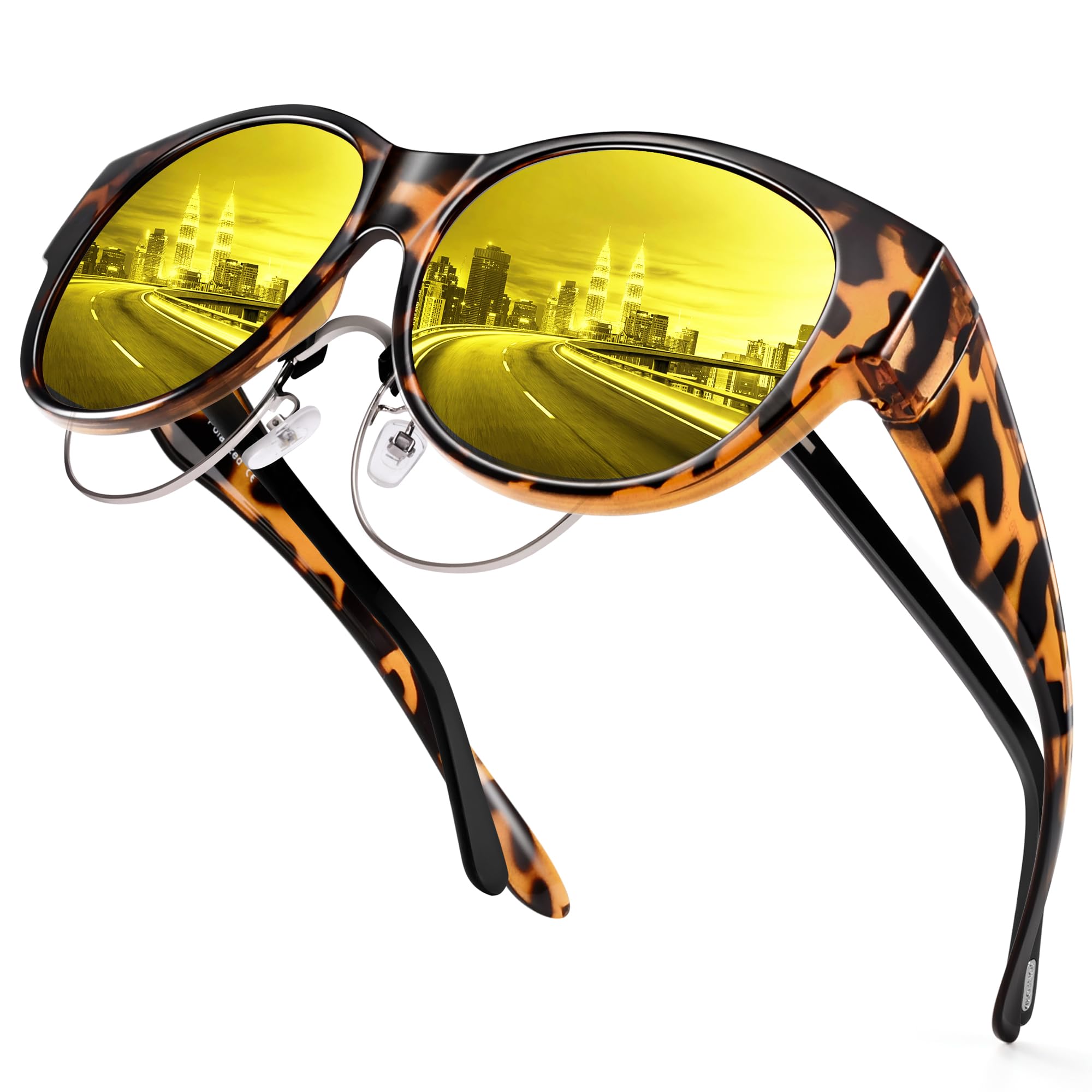
URUMQI brings a cat-eye silhouette to the fit-over category, proving that function doesn’t have to look utilitarian. The wide temples and large lenses are designed to wrap around most standard prescription frames while adding a touch of personality. The TR90 construction keeps the weight low, and the nano yellow factor in the lens material boosts contrast in foggy or rainy conditions.
Customer reviews consistently praise the confidence these glasses restore. Drivers reported that lines on the road become more vivid at night and that the reduced glare from incoming traffic made highway merges feel safer. The fit-over performance is solid for women’s frames, and the design is sleek enough to wear beyond the car — several users mentioned using them for late-night computer work.
The main caveat is that the yellow tint is less effective against the most powerful LED headlights. Some reviewers found the glare reduction subtle rather than transformative, and one customer reported no practical benefit. The cat-eye shape also limits fit for oversized or rectangular men’s prescription frames. As a style-forward, comfort-oriented option, this is a strong pick for the right user.
Why it’s great
- Cat-eye design combines style with practical fit-over function
- Nano yellow factor improves contrast in rain and fog
- Lightweight TR90 frame reduces pressure during long drives
Good to know
- Glare reduction is subtle for the brightest LED headlights
- Shape may not accommodate larger or rectangular Rx frames
7. Bircen Night Vision Glasses
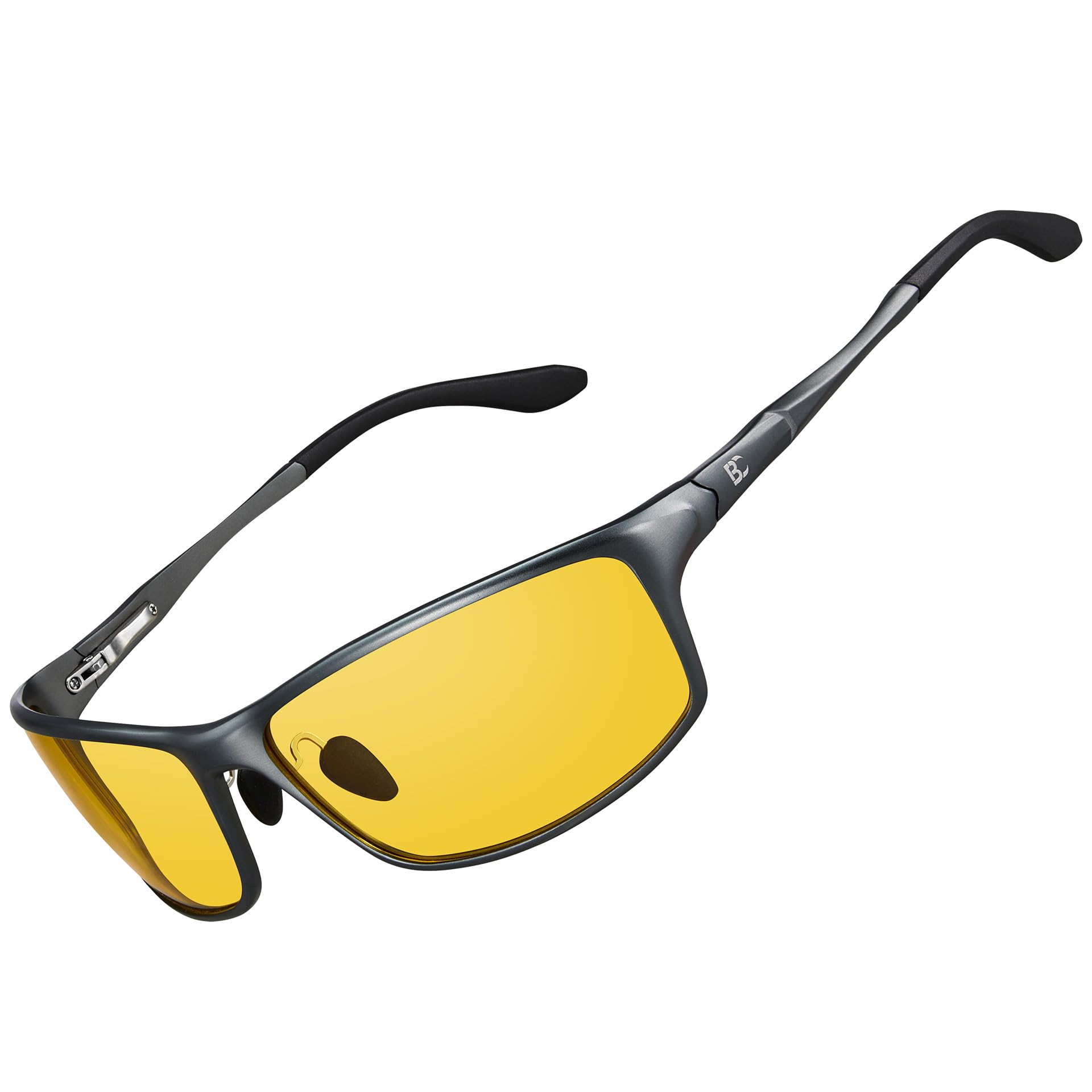
Bircen’s entry-level night driving glasses use an aluminum-magnesium alloy frame with spring hinges, giving them a premium feel at a budget-friendly tier. The yellow-tinted lenses are designed to cut the worst of headlight glare, and customer feedback indicates they perform well against standard halogen and older LED lights. The metal frame is notably more durable than the plastic alternatives at similar price points.
Several reviews mention that these glasses effectively kill the terrible night-time headlight glare from modern cars, particularly in areas with challenging topography where headlights hit directly from multiple angles. The non-slip nose pads keep the glasses in place, and the spring hinges provide a flexible fit that reduces pressure on the temples.
The limitations are typical of the category’s lower end. The optical clarity is decent but not crisp — some users notice a slight haziness around the edges of the lens, and the yellow tint can take about 10 minutes for your eyes to adjust to fully. The polarization is minimal, so wet-road glare remains noticeable. For a first pair or a backup to keep in the glovebox, Bircen offers solid value without breaking the bank.
Why it’s great
- Metal frame with spring hinges feels more premium than the price suggests
- Effective against common halogen and older LED headlight glare
- Non-slip nose pads keep glasses secure during quick head movements
Good to know
- May require a short adjustment period as eyes adapt to the tint
- Limited polarization, so wet-road reflections persist
FAQ
Can I wear night driving glasses over my prescription glasses?
Do yellow glasses actually reduce glare from LED headlights?
What is the difference between polarized and semi-polarized night glasses?
How do photochromic lenses work for night driving?
Why do some people see light circles or ghosting with night glasses?
Final Thoughts: The Verdict
For most users, the contact lenses for night driving winner is the BLUPOND Knight Visor Set because it covers both day and night with high-quality semi-polarized yellow lenses in a durable, ultra-light frame. If you want photochromic convenience for all-day wear, grab the Cyxus 8208. And for a budget-friendly entry point that doesn’t feel cheap, nothing beats the Bircen Metal Frame for the price.

Mo Maruf
I created WellFizz to bridge the gap between vague wellness advice and actionable solutions. My mission is simple: to decode the research and give you practical tools you can actually use.
Beyond the data, I am a passionate traveler. I believe that stepping away from the screen to explore new environments is essential for mental clarity and physical vitality.