Our readers keep the lights on and my smoothie glass nicely filled. As an Amazon Associate, I earn from qualifying purchases.
The wrong pair of construction boots turns an eight-hour shift into a day-long battle against fatigue, blisters, and sore arches. You need a boot that handles rebar, wet concrete, and slick steel decking without sacrificing your ability to walk normally the next morning. That means finding the right balance between protective certifications, midsole support, and a last that fits your foot shape.
I’m Mohammad Maruf — the founder and writer behind WellFizz. I’ve spent hundreds of hours cross-referencing ASTM safety ratings, analyzing outsole compounds, and reading real-world durability feedback to identify which boots actually hold up on active job sites.
After comparing composite vs. steel toe weight, waterproof membrane types, and slip-resistance testing standards across nine serious contenders, I’ve built a clear guide to the best construction safety boots available right now.
How To Choose The Best Construction Safety Boots
Selecting construction boots requires matching protective requirements with your specific work environment. A framing crew on open steel needs different features than a finisher working wet concrete all day.
Toe Protection: Steel vs. Composite vs. Alloy
Steel toes offer the highest impact resistance per dollar but conduct cold in winter and add noticeable weight. Composite toes are lighter and non-conductive, ideal for electrical hazard environments or cold-weather sites. Alloy toes (aluminum/titanium blends) sit between steel and composite in both weight and cost, offering thin-profile protection without the metallic cold transfer.
Slip Resistance Standards
Look for boots tested to ASTM F2913-19 (SATRA) or ASTM F1677-96 (Mark II). A boot with SR (Slip Resistant) or MaxTrak sole grading will grip wet steel and slick concrete better than a generic lug pattern. The rubber compound’s durometer rating also affects grip — softer compounds bite better but wear faster on rough surfaces.
Waterproofing and Breathability
Internal membranes (TimberDry, KEEN.DRY, or similar) keep water out while allowing vapor to escape, preventing swampy feet during long shifts. Rubber outer shells with neoprene lining offer 100% waterproof protection but trade off breathability. For all-day wear in mixed conditions, a membrane-lined full-grain leather boot provides the best comfort balance.
Midsole Support and Outsole Durability
A steel or composite shank provides torsional stability when climbing ladders or walking rebar. Anti-fatigue footbeds with energy return reduce heel-strike impact over 10-hour days. Outsoles with oil- and abrasion-resistant rubber compounds (like Timberland PRO’s convex outsole or Wolverine’s Durashocks) prevent premature wear on abrasive surfaces like concrete or expanded metal.
Quick Comparison
On smaller screens, swipe sideways to see the full table.
| Model | Category | Best For | Key Spec | Amazon |
|---|---|---|---|---|
| Timberland PRO Titan EV | Premium | All-day comfort on concrete | Hover Spring foam midsole + Anti-Fatigue footbed | Amazon |
| KEEN Utility Gibson Mid | Premium | Heavy construction & static dissipation | Carbon fiber composite toe & ASTM F2913-19 slip resistance | Amazon |
| Ariat Groundbreaker Wide Square Toe | Premium | Steel toe with cowboy boot styling | Full-grain leather & Duratread outsole | Amazon |
| Wolverine Overpass | Premium | Waterproof with flexible feel | ContourWelt technology & lightweight rubber lug outsole | Amazon |
| CAT Invader Mid Vent | Mid-Range | Wet site traction & ankle support | SRX Extreme slip-resistant outsole | Amazon |
| Timberland PRO Gridworks Wedge | Mid-Range | Freezing & oily terrain grip | Cold-formula outsole + alloy safety toe | Amazon |
| CAT Resorption | Mid-Range | Zero break-in needed | Composite toe & rubber cup outsole | Amazon |
| KEEN Utility Kenton Mid | Mid-Range | Light-duty & automotive work | Comp toe + 18.3 oz weight | Amazon |
| Men’s Rubber Work Boots with Steel Toe | Budget | Mud, concrete, and standing water | Vulcanized rubber shell + 6mm neoprene | Amazon |
In‑Depth Reviews
1. Timberland PRO Titan EV
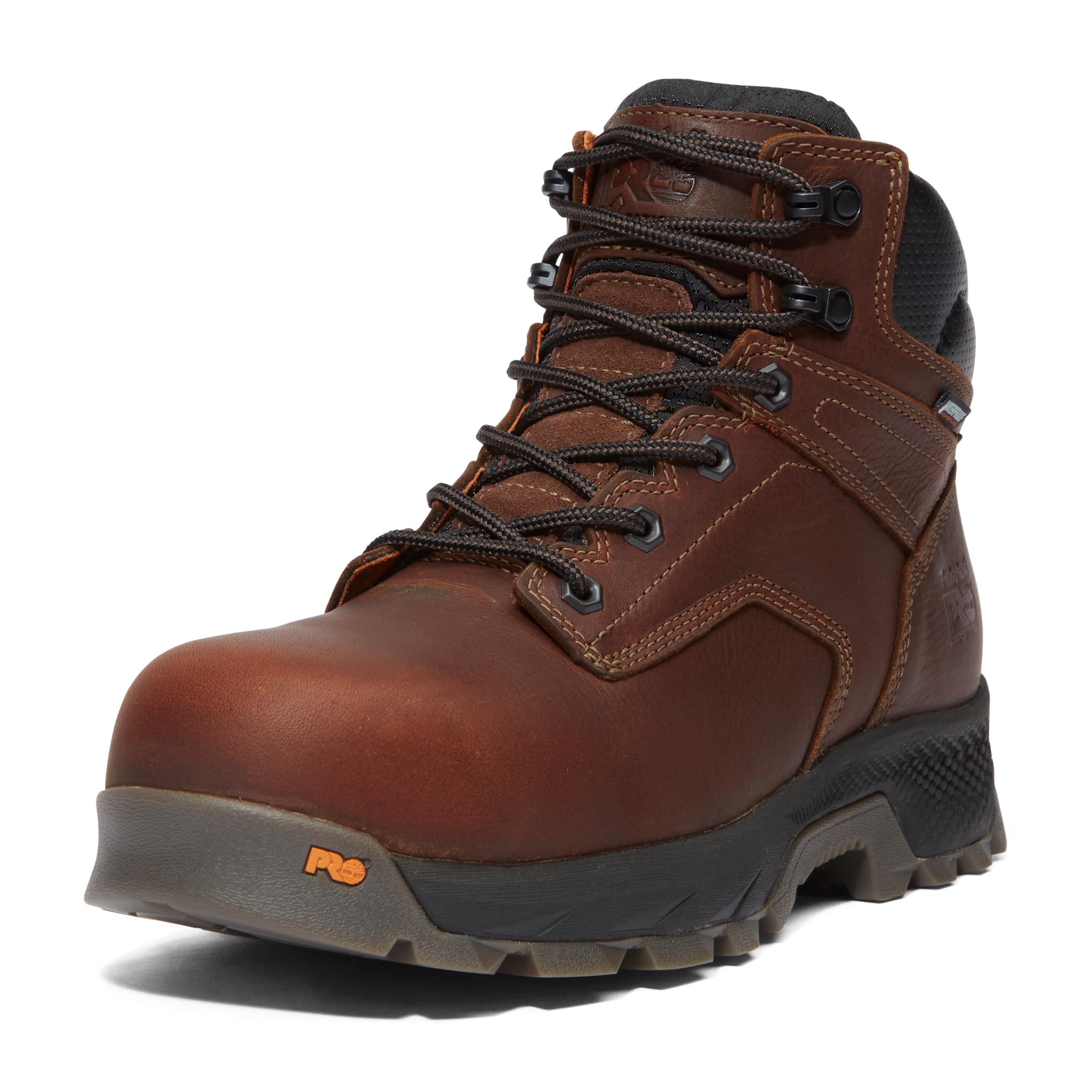
The Titan EV from Timberland PRO is the benchmark for what a modern construction boot should feel like straight out of the box. Its Hover Spring foam midsole delivers energy return on par with athletic shoes, so your legs feel fresher after a 12-hour day on concrete. The composite toe keeps weight down while meeting ASTM impact standards, and the Anti-Fatigue footbed works alongside the foam to absorb heel-strike shock.
The upper uses premium full-grain waterproof leather with an internal membrane — not a rubber shell — so breathability remains acceptable even during warm-weather pours. The convex outsole resists oil and heat while providing slip resistance on both dry plywood and wet steel. Multiple users confirm zero break-in time, with accurate sizing and a toe box that avoids pressure points on the big toe.
It runs warm on hot days, so expect some foot sweat in summer. The bulkier leather construction also adds minor weight compared to a sneaker-style boot, but the trade-off in durability is worth it. Electrical hazard protection adds an extra safety layer for anyone working near live circuits.
Why it’s great
- Hover Spring foam provides industry-leading comfort and energy return
- No break-in period; comfortable immediately even for flat feet
- Excellent waterproofing with adequate breathability
Good to know
- Runs warm in hot weather; lacks ventilation panels
- Order one full size larger to avoid blistering on initial wears
2. KEEN Utility Gibson Mid

The Gibson Mid is KEEN Utility’s most technically loaded boot, combining a carbon fiber composite toe with static dissipative (SD) certification for environments where electronics or flammable dusts are a concern. KEEN.ReGEN midsole foam resists compression better than standard EVA, so the cushioning lasts beyond the first few months.
The full-grain water-resistant leather upper is treated with a PFAS-free durable water repellent, and the slip-resistant rubber outsole meets both ASTM F2913-19 and ASTM F1677-99 standards — tested on wet tile, oil, and soapy surfaces. The non-mutilating upper helps avoid scratched floors in finished environments. Users with wide feet praise the traditonally generous KEEN toe box, which prevents the toe rubbing that wears out socks or causes blisters on long shifts.
Thick leather scuffs fairly easily — a common trade-off for the LWG-certified full-grain material. The boot also runs true to size, so order your normal sneaker size. Break-in is minimal, with most users reporting comfort from day one on rough construction sites.
Why it’s great
- Carbon fiber composite toe is extremely light and meets ASTM F3445-21
- Static dissipative rating for sensitive work environments
- PFAS-free water repellent and LWG-certified leather
Good to know
- Thick leather upper scuffs easily; conditioner helps hide marks
- Minimal break-in but still requires a full day to conform perfectly
3. Wolverine Overpass

The Overpass serves as Wolverine’s answer to the demand for a boot that feels like a sneaker but protects like a proper work boot. The ContourWelt construction bonds the upper directly to the midsole, eliminating the stiff strip of material that normally requires weeks of break-in. The result is a flexible platform that allows natural foot movement while keeping the composite toe in place. The lightweight rubber lug outsole adds shock absorption without the clunkiness of traditional welted boots.
The premium waterproof leather and abrasion-resistant toe cap hold up well in abrasive environments like lumber mills or concrete finishing. Users report the waterproof membrane staying intact well past the two-year mark, even with exposure to mud and ice. The outsole tread pattern grips expanded metal grating and icy ladder rungs securely, which is a critical safety feature for winter construction work.
Some users report the internal padding wears down faster than the outer materials, eventually requiring aftermarket insoles for continued comfort past year three. The boot also runs slightly long for some — a half-inch of extra toe room means you may need to experiment with sizing. Overall, it’s a durable, lightweight option at a mid-tier price point that delivers impressive longevity.
Why it’s great
- ContourWelt eliminates stiffness for a sneaker-like feel
- Waterproof membrane lasts 2+ years in harsh conditions
- Excellent heel grip for icy surfaces and ladders
Good to know
- Inner padding may wear out before the outsole does
- Sizing inconsistent; some users report half-size longer
4. Ariat Groundbreaker Wide Square Toe
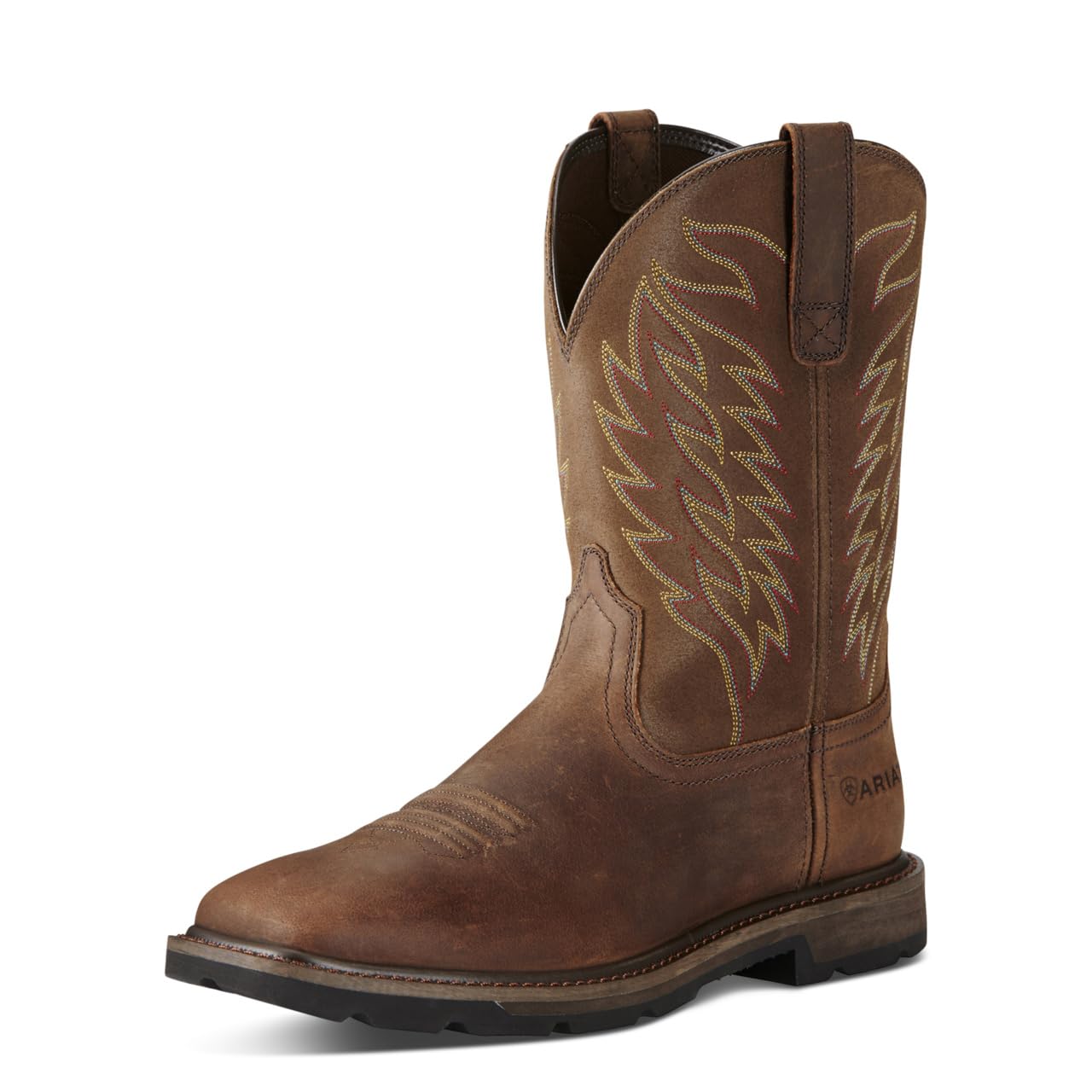
The Groundbreaker delivers protection in a classic cowboy boot silhouette without sacrificing the traction needed for active job sites. The steel toe meets ASTM safety standards, and the Duratread outsole combines flexibility with high abrasion resistance — ideal for warehouse floors, ranch work, or light construction. The full-grain leather upper is thick and built to last, resisting scuffs and punctures from sharp debris.
Comfort starts immediately with the cushioned insole and no break-in period required. The wide square toe provides extra room for toe splay, reducing fatigue for those who stand or walk on hard surfaces. Users who wear orthotics report that the removable footbed accommodates aftermarket inserts without losing depth.
The heel fit runs slightly loose for some — the cowboy boot shape doesn’t lock the heel as tightly as a lace-up boot. Sizing also varies; some users found a full size down works better than TTS. It lacks a waterproof membrane, so wet-site work requires additional treatment or a different boot entirely.
Why it’s great
- Steel toe protection in a lightweight cowboy boot design
- Duratread outsole offers excellent wear resistance and flexibility
- Comfortable from day one with room for orthotic inserts
Good to know
- Heel fit can be loose due to slip-on design
- No waterproof membrane; not ideal for wet conditions
5. CAT Invader Mid Vent
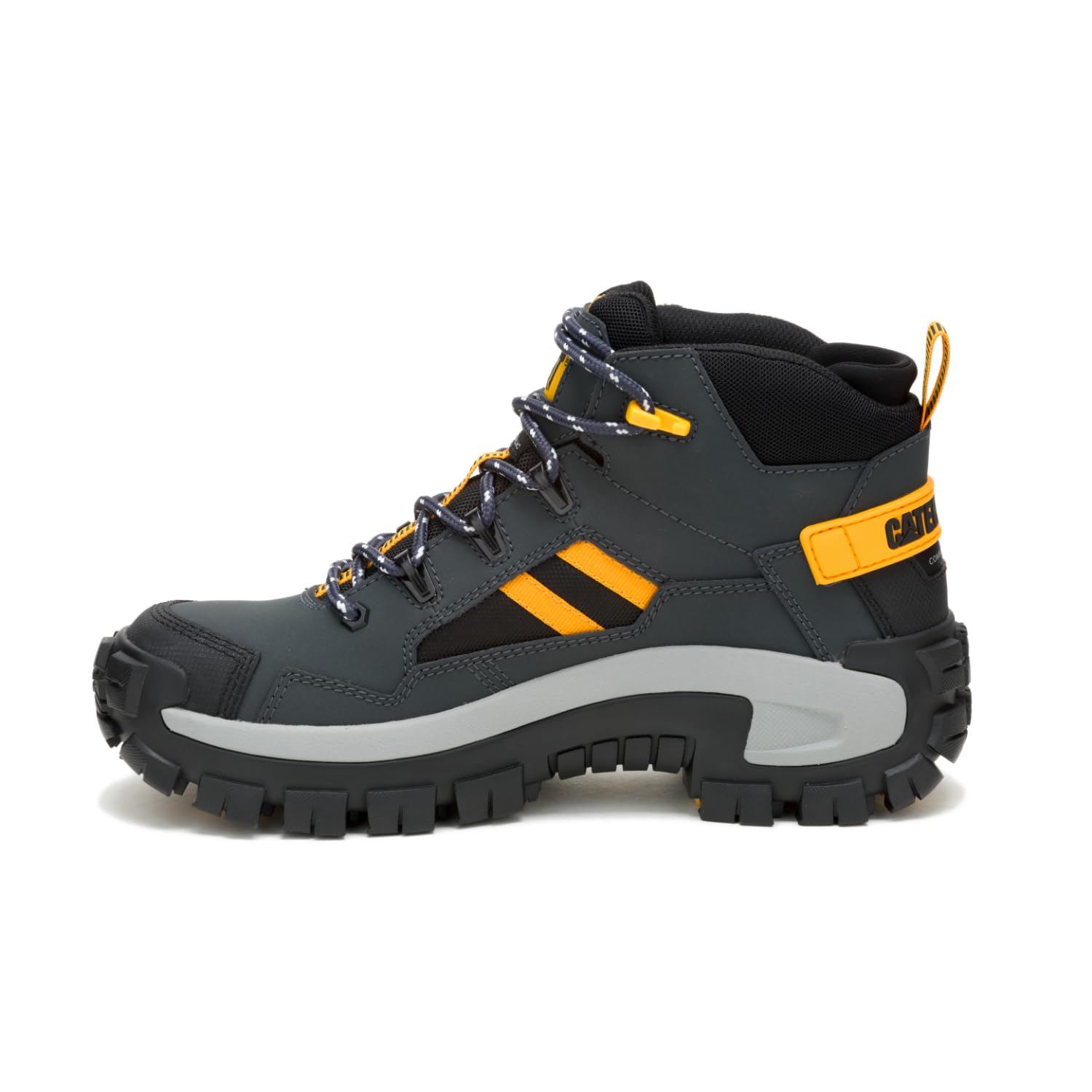
The CAT Invader Mid Vent offers a solid combination of waterproofing and ankle support at a price that fits a mid-range budget. The SRX Extreme slip-resistant rubber outsole provides exceptional bite on wet concrete, oily shop floors, and muddy terrain. The cushion foam footbed delivers decent shock absorption, and the lightweight EVA midsole keeps the overall boot manageable for eight-hour days.
The composite toe is noticeably lighter than steel, reducing leg fatigue for workers who climb ladders or navigate rebar mats frequently. The mid-height collar provides good ankle stabilization without restricting flexibility. Users report excellent comfort from day one, with particular praise for the secure sole feel on uneven ground. The boot also fits a wider foot well, accommodating thicker work socks in cold weather.
The right boot tends to press against the ankle bone for some users, which can cause chafing without padded socks. The cushion foam footbed may feel firm to those accustomed to plush running-shoe midsoles. While waterproofing holds up in rain and puddles, it’s not designed for submersion in standing water.
Why it’s great
- SRX Extreme outsole provides excellent wet-surface traction
- Lightweight composite toe reduces fatigue over long shifts
- Comfortable from day one with good ankle support
Good to know
- Right boot can rub the ankle; padded socks recommended
- Footbed feels firm compared to premium foam midsoles
6. Timberland PRO Gridworks Wedge
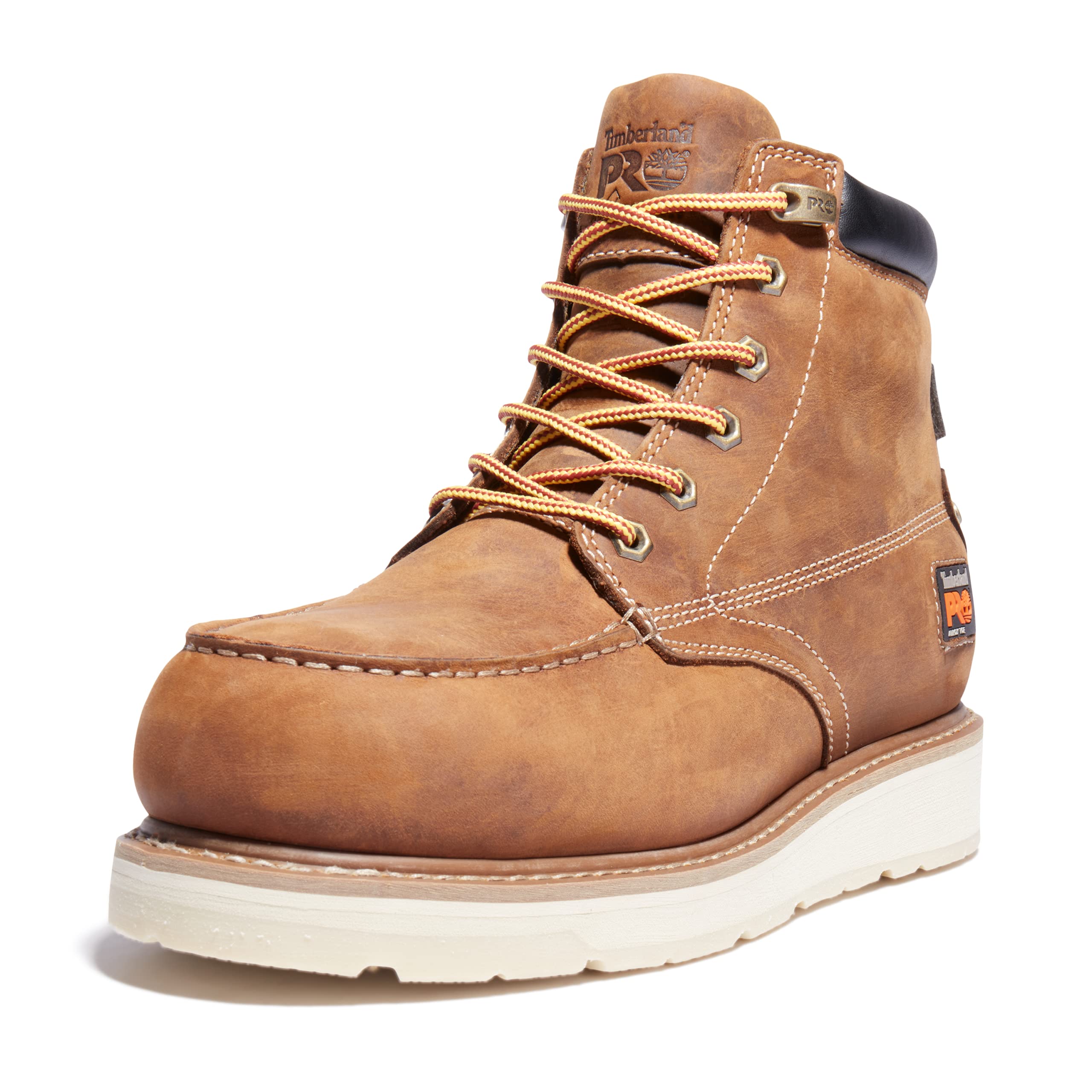
The Gridworks Wedge is engineered for environments where freezing temperatures and oily surfaces meet. The cold-formula outsole maintains flexibility and grip in subzero conditions, avoiding the stiffening that rubber compounds undergo in winter. The alloy safety toe offers a thinner profile than steel while still meeting impact and compression standards, giving toes more room inside the boot.
The Premium Timberland full-grain leather upper includes an internal waterproof membrane that can also resist blood-borne pathogens — a requirement for jobsite biohazard compliance. Anti-Fatigue Technology footbeds absorb shock and return energy, reducing heel-strike impact during long hours on concrete. The ReBOTL lining, made with at least 50% recycled plastic, wicks moisture and includes antimicrobial treatment to fight odor.
The boot runs wide, which suits users with wider feet but may require sizing down for average-width feet. Some users report the outsole tread life passing two years with three insole replacements, making it a durable investment for cold-climate construction. The wedge sole lacks deep lugs, so deep mud or loose gravel traction is compromised compared to a traditional lug pattern.
Why it’s great
- Cold-formula outsole retains grip in freezing temperatures
- Alloy safety toe offers thin profile with full protection
- Anti-Fatigue footbed reduces leg fatigue on concrete
Good to know
- Wedge sole lacks deep lugs; less effective in deep mud
- Runs wide; sizing adjustment may be needed for narrow feet
7. CAT Resorption
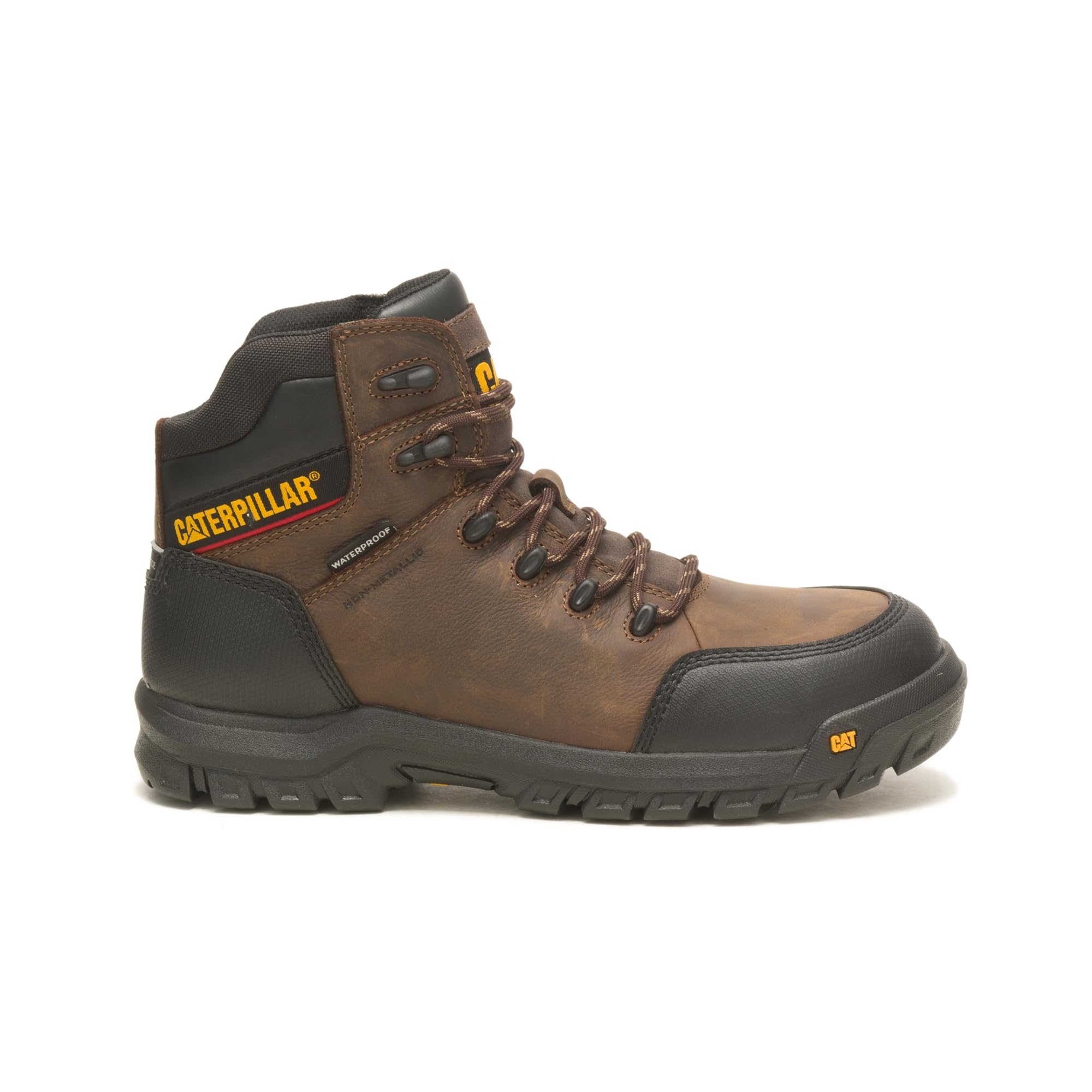
The CAT Resorption stands out for how immediately wearable it is — multiple users report perfect fit on the first day with zero blistering or pressure points. The composite toe is lightweight enough that first-time composite users notice the difference immediately compared to steel. The rubber cup outsole provides stable footing on dry surfaces and offers decent grip on wet floors.
The full-leather upper is warm and waterproof, with users confirming it protects feet during submersion in cold water and boggy conditions during tree work. The boot’s construction is simple and reliable, without unnecessary padding that could wear out quickly. Users working 10-hour days, seven days a week, report no foot pain — a strong indicator that the midsole and shank are properly matched for prolonged standing.
Durability is the main concern — some users report the front leather tearing after six months of heavy tree work, exposing the composite toe cap. The boot also lacks breathability; loose lacing becomes necessary to prevent sweaty feet during summer months. The ankle string hooks use a two-hump design that slows lacing compared to standard speed hooks.
Why it’s great
- Zero break-in required; comfortable from day one
- Composite toe is lighter than steel for all-day wear
- Excellent waterproofing for submersion in freezing water
Good to know
- Leather may tear after ~6 months in heavy brush work
- Poor breathability; requires loose lacing for airflow
8. KEEN Utility Kenton Mid

The Kenton Mid reimagines the work boot as a sneaker, weighing just over a pound per shoe. The compression-toe protection is paired with a traditional KEEN wider toe box, allowing toes to splay naturally and reducing fatigue during light-duty tasks. The outsole’s unique tread pattern provides excellent grip on smooth, oily concrete, and the soles resist oil damage that causes premature wear in automotive environments.
The casual, low-profile look transitions easily from a maintenance shift to running errands without looking like a work boot. The cement construction keeps the boot flexible, and the removable metatomical insole offers decent arch support. Users working in assembly, warehousing, and automotive shops consistently report the Kenton lasting two years or more before needing replacement.
The boot is not waterproof — water seeps in quickly at the sole edge when stepping in puddles, making it unsuitable for wet-site construction. The midsole cushioning is firm, so users accustomed to plush athletic-style footbeds may find it lacking for shifts longer than eight hours on hard concrete. The leather scuffs easily, though regular conditioning helps maintain appearance.
Why it’s great
- Extremely lightweight at 18.3 oz per shoe for agile movement
- Excellent grip on smooth, oily concrete surfaces
- Wide toe box allows natural toe splay
Good to know
- Not waterproof; water seeps in at sole edge
- Firm midsole cushioning; not ideal for 10+ hour concrete shifts
9. Men’s Rubber Work Boots with Steel Toe & Shank
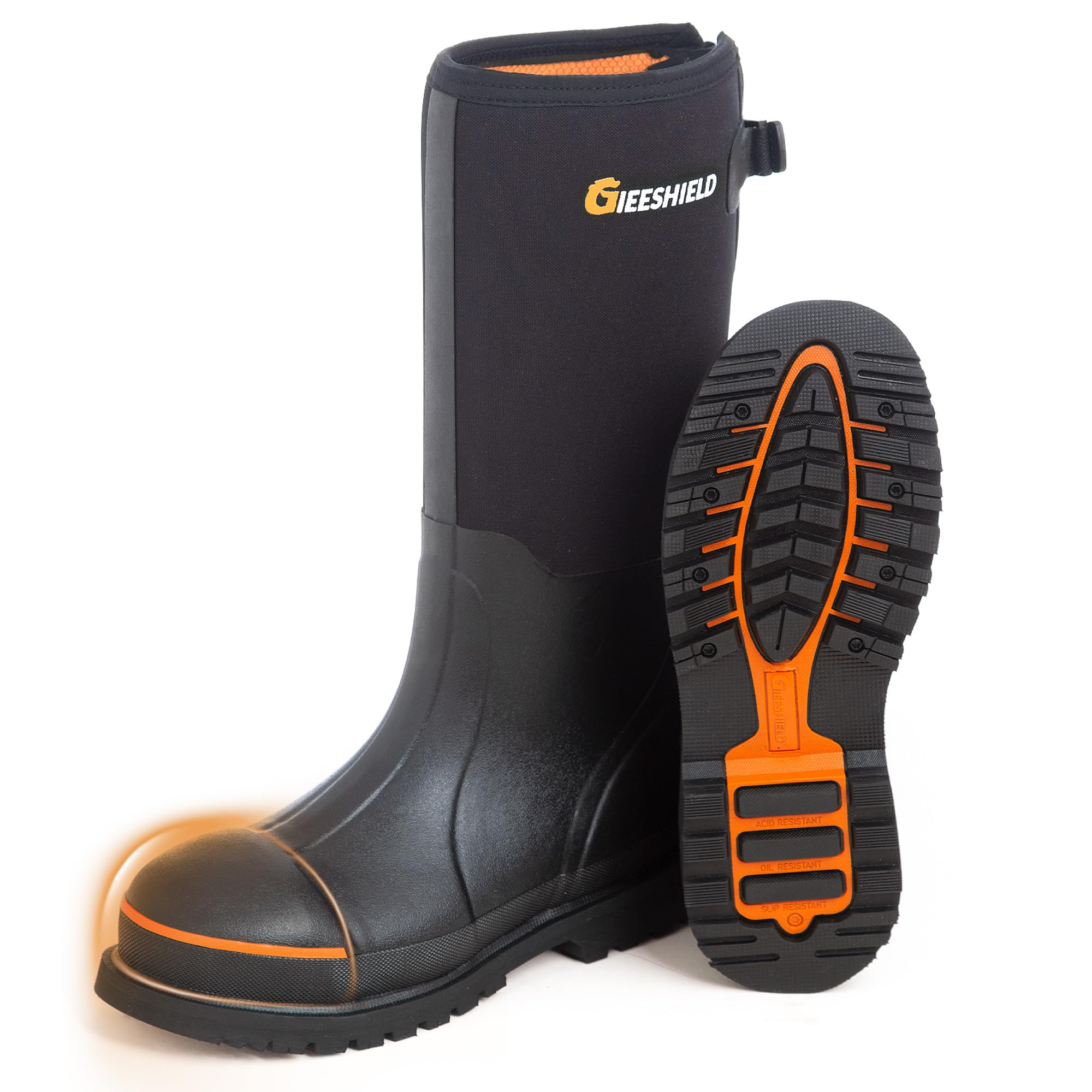
These rubber pull-on boots prioritize one thing: keeping your feet dry in serious wet conditions. The vulcanized seam construction prevents leaks where the rubber meets the sole, and the 6mm neoprene lining adds warmth and comfort without adding bulk. The steel toe and steel shank provide puncture resistance and structural rigidity for walking on rebar or rocky ground.
The heel tab makes removal easy even with muddy hands, and the wide calf opening fits comfortably over work pants. Users confirm the boots keep feet bone-dry after hours in four inches of standing water and mud. The rubber shell is heavy — noticeably heavier than leather or composite-toe boots — but that weight is the price of 100% waterproof protection in flood zones, concrete washouts, or rain-soaked excavation sites.
The boots lack breathability entirely — expect significant foot sweat during warm-weather use. The rubber exterior also offers minimal ankle articulation, so walking on uneven terrain feels clunky. Sizing runs slightly large; users with average-width feet may need thick socks or insoles to fill the volume.
Why it’s great
- Vulcanized seams deliver reliable waterproof protection
- 6mm neoprene lining adds warmth and comfort
- Easy on/off with heel pull tab and wide calf opening
Good to know
- Heavy rubber shell; significant leg fatigue over long shifts
- No breathability; feet sweat in warm conditions
FAQ
Should I choose steel toe or composite toe for construction?
How do I know if a boot is truly slip-resistant on wet concrete?
Can I wear composite toe boots in freezing weather?
How often should I replace construction safety boots?
What does electrical hazard (EH) rating mean on a work boot?
Final Thoughts: The Verdict
For most users, the best construction safety boots winner is the Timberland PRO Titan EV because the Hover Spring midsole provides industry-leading comfort that keeps you going through 12-hour concrete pours without foot fatigue. If you want a carbon fiber composite toe with static dissipative certification for sensitive environments, grab the KEEN Utility Gibson Mid. And for a lightweight, sneaker-like option that still offers composite toe protection at a mid-range price, nothing beats the Wolverine Overpass.

Mo Maruf
I created WellFizz to bridge the gap between vague wellness advice and actionable solutions. My mission is simple: to decode the research and give you practical tools you can actually use.
Beyond the data, I am a passionate traveler. I believe that stepping away from the screen to explore new environments is essential for mental clarity and physical vitality.