Our readers keep the lights on and my smoothie glass nicely filled. As an Amazon Associate, I earn from qualifying purchases.
Specs are compiled from manufacturer listings and verified buyer reviews and can change over time — please confirm the key details on the product page before buying.
Getting soaked through while you are trying to work is miserable and dangerous. A good day on a muddy job site turns into a cold, ruined shift fast. That shift often depends on one piece of gear: your rain suit. This guide finds the construction rain gear that keeps you dry, visible, and moving freely. It uses only published specs and verified buyer reports — no marketing spin.
I’m Mohammad Maruf — the founder and writer behind WellFizz. This guide is built by comparing the manufacturers’ published specifications and the patterns across verified customer reviews, so you get each pick’s real strengths and trade-offs instead of marketing spin.
Whether you are framing in a drizzle or directing traffic through a downpour, having reliable construction rain gear is the biggest factor separating a productive day from one that ends with you changing wet clothes in the truck.
Quick Picks
- Pioneer Hi Vis Ripstop Waterproof Bib Pants/Overalls — Best Overall
- VUVEA Rain Suit For Men & Women Waterproof Heavy Duty Rain Gear — Lightweight Champion
- Men’s PRO Workwear 3-Piece Waterproof Rain Suit – NAVIS MARINE — Industrial Workhorse
- Men’s PRO Workwear 3-Piece Waterproof PU Rain Suit – NAVIS MARINE — Marine-Grade Heavyweight
- Helly Hansen Potsdam Men’s High Visibility Rain Jacket — Premium Comfort
How To Choose The Best Construction Rain Gear
Picking rain gear for a construction site is not like buying a jacket for a weekend hike. You need fabric that does not tear on rebar. You need seams that do not split when you bend. And you need visibility that keeps heavy equipment operators aware of you. Here is what to look for.
Waterproofing vs. Water Resistance
Look for “100% waterproof” in the description, not “water-resistant.” The real test is in the seams. Heat-sealed or taped seams fuse a waterproof strip over the needle holes so water cannot leak in. PVC or PU coatings on the fabric itself create the barrier. The picks below cite heat-sealed seams and PU-coated layers, which is what you need.
Durability and Fabric Weight
On a construction site, your rain gear drags against wood, metal, and concrete. Fabrics like 300D ripstop polyester or PVC/PU blends are designed to resist abrasions, punctures, and tears. “Heavy-duty” or “heavyweight” in the fabric class is a good sign. Lighter hiking materials will rip on the first snag.
Visibility and Safety Standards
High-visibility yellow or orange combined with reflective tape is not optional. Look for ANSI/ISEA 107-20 Class E (for pants) or Class 3 (for a full suit) ratings. The reflective elements must be bright enough to be seen in low light or heavy fog. The picks below meet these standards so you are seen.
Fit for Mobility and Layering
You need room to bend, squat, and lift your arms without the jacket riding up. A relaxed fit lets you layer a hoodie or insulated vest underneath. Features like adjustable suspenders on bib pants, 12-inch leg zippers for boot access, and internal cuff seals make the difference between a suit that works and one that fights you all day.
Quick Comparison
| Model | Best For | Fabric & Weight | Waterproofing | Safety Rating | Amazon |
|---|---|---|---|---|---|
| Pioneer Hi Vis Ripstop Bib Pants | Standalone bib + layering | 300D PU-coated Ripstop Polyester | Heat-sealed seams | ANSI/ISEA 107-20 Class E | Amazon |
| VUVEA Rain Suit | Lightweight all-day comfort | PU-coated | Sealed seams | Reflective | Amazon |
| NAVIS MARINE PRO 3-Piece | Mid-weight industrial protection | Tear-resistant PVC/PU | Certified EN 343 3,1 | Reflective piping | Amazon |
| NAVIS MARINE PRO PU 3-Piece | Heavy-duty maritime/construction | PU/Heavy Duty | Waterproof | Reflective piping | Amazon |
| Helly Hansen Potsdam Jacket | Premium breathable jacket | Rugged polyester/nylon | Waterproof & windproof | Hi Vis, reflective | Amazon |
In‑Depth Reviews
1. Pioneer Hi Vis Ripstop Waterproof Bib Pants/Overalls
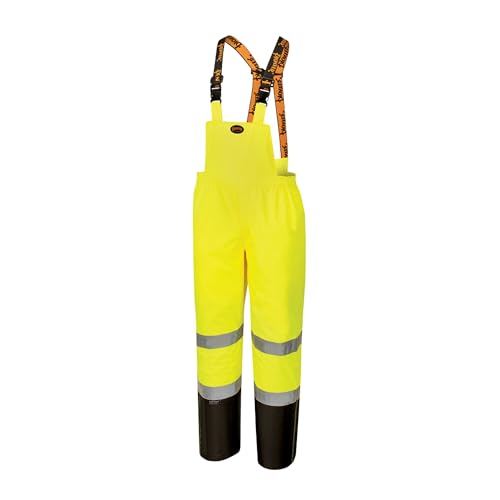
The standalone bib that outlasts your shift and your expectations.
You want a bib that keeps water out and holds up to years of abuse. This one is built from 300D PU-coated ripstop polyester with heat-sealed seams. Water cannot sneak through the stitching because the heat-sealed tape blocks the needle holes. It meets ANSI/ISEA 107-20 Class E standards, so you get high-vis yellow and reflective tape for low-light conditions. Pair it with a Class 2 or 3 top for full Class 3 compliance.
The 12-inch leg zippers make getting these over work boots easy. The adjustable suspenders keep the weight off your hips. Buyers report that this bib holds up to severe abuse. One tow truck operator shared that after “5th winter as tow truck operator; durable, 100% intact after heavy abuse,” the pants are still going strong in freezing snow and rain. A flagger using them year-round noted “minimal damage after one year.” The zip-up chest pocket and zippered fly access add everyday utility you notice on the clock.
The catch? Buyers consistently say to order 1-2 sizes up from your normal size for a comfortable fit over layers. The fabric has no stretch, so that extra room matters when you are squatting or bending.
What Works
- 300D ripstop fabric resists tears and punctures on the job
- Heat-sealed seams keep water out completely
- Adjustable suspenders and 12-inch leg zippers for easy on/off
What To Watch For
- Runs small — order 1-2 sizes up
- No jacket included (bib only)
- Fabric has no stretch for movement
The play: Grab these if you want a tough standalone bib that layers under any jacket and survives years of heavy fieldwork.
The trade-off: You will need to size up, and there is no matching jacket in this set.
2. VUVEA Rain Suit For Men & Women Waterproof Heavy Duty Rain Gear
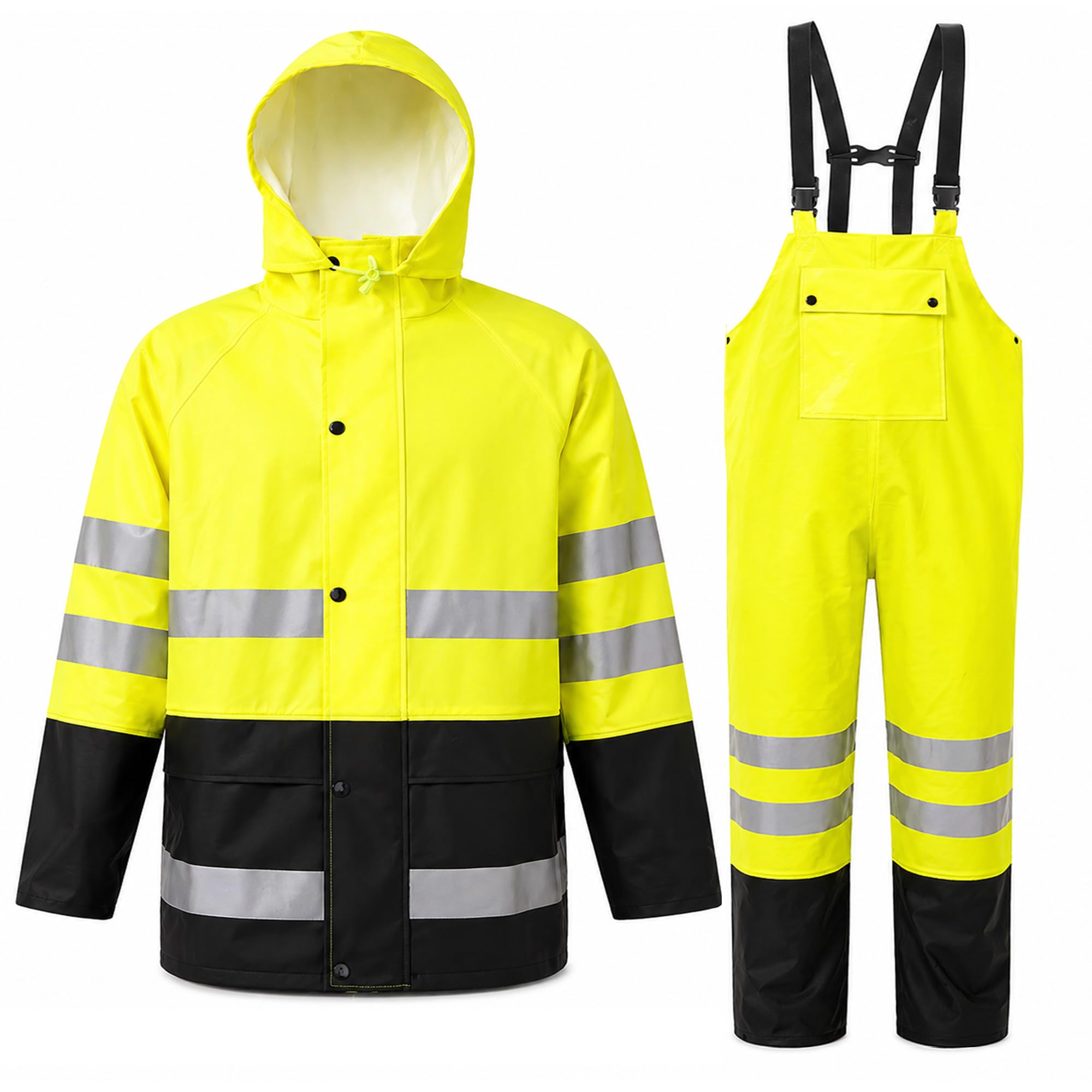
A full suit that disappears on your body until the rain starts.
Unlike the thicker PVC/PU suits on this list, this VUVEA suit uses a PU-coated outer layer with sealed seams to block heavy rain. The multi-layer construction helps reduce moisture buildup inside, so you feel less clammy after hours of movement. It is lighter and more packable than the NAVIS MARINE PVC option.
Buyers put this suit through real work. One fencing contractor “stayed dry the whole day putting in fences.” An offshore worker said the suit is “perfect for working the deck” in the cold wind. The relaxed fit layers easily over workwear without restricting your reach. Unlike the heavier PVC suits below, this one packs down small for storage or travel. That matters if you switch between job sites.
The honest downside is length. A 6-foot reviewer in a size large found the jacket and pants “run short.” Taller workers may need to size up or look at the Pioneer bib for more coverage. The lack of side-access pockets on the pants is another small annoyance buyers flagged.
What makes it different: This is the lightest full suit here. It keeps you dry without the heavy, stiff feel of PVC gear. It is better for workers who move constantly and need breathability.
The catch: The shorter cut means tall frames need careful sizing. You also lose the side pocket convenience you get on dedicated bibs.
Get this if: You want a complete jacket-and-pants set that is comfortable enough to wear all day without feeling weighed down.
Pass if: You are over 6 feet tall, or you need the maximum abrasion resistance of a 300D ripstop or PVC shell.
3. Men’s PRO Workwear 3-Piece Waterproof Rain Suit – NAVIS MARINE
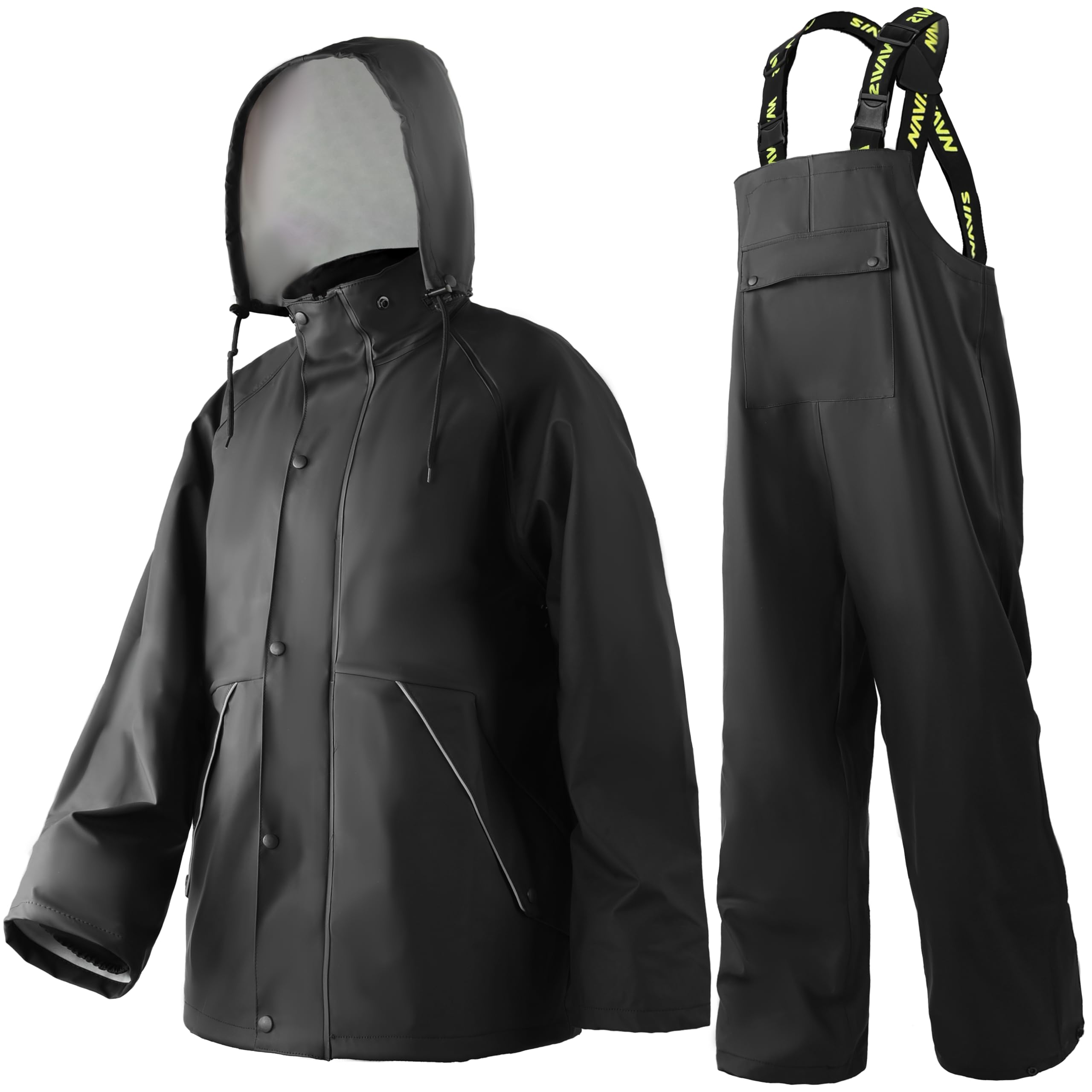
A certified 3-piece set that treats water like a personal insult.
You get an EN 343 3,1 certification here, which is a European standard rating the suit waterproof (class 3 out of 4) but basic on breathability (class 1 out of 4). The tear-resistant PVC/PU fabric is what you see on commercial fishing boats and heavy construction sites. It does not rip on sharp edges. The set includes a jacket, bib pants, and a stowable hood, giving you full coverage from the start.
Reviewers appreciate the real-world durability. One heavy equipment operator noted “the seams have been strong enough to prevent splitting, as has happened with other brands, and the material provides enough stretch to accommodate my prolonged physical activities.” The jacket has internal cuffs that keep water out when you raise your arms for overhead work. The bib pants come with suspenders to keep them up through a full day of squatting and bending. A buyer who used this digging in rain and mud said it “held up well.” Compared to the Pioneer bib above, this is a complete suit for slightly more money.
The PVC/PU shell is heavier and less breathable for warm-weather work. A few buyers mention the hood and its drawstrings could be better designed. They work but feel less refined than the rest of the suit.
Top Reasons To Buy
- EN 343 3,1 certified for professional use
- Internal jacket cuffs block water during overhead work
- 3-piece set includes jacket, bib pants, and stowable hood
Small Gripes
- PVC fabric feels heavier and less breathable than PU-coated nylon
- Hood design and drawstrings could be better
- No hi-vis reflective on pants (only piping on jacket)
Stick with this if: You need a certified industrial suit that is ready to go out of the bag and will not rip on the first snag.
Look elsewhere if: Breathability is your top priority, or you need full ANSI-rated hi-vis on both jacket and pants.
4. Men’s PRO Workwear 3-Piece Waterproof PU Rain Suit – NAVIS MARINE
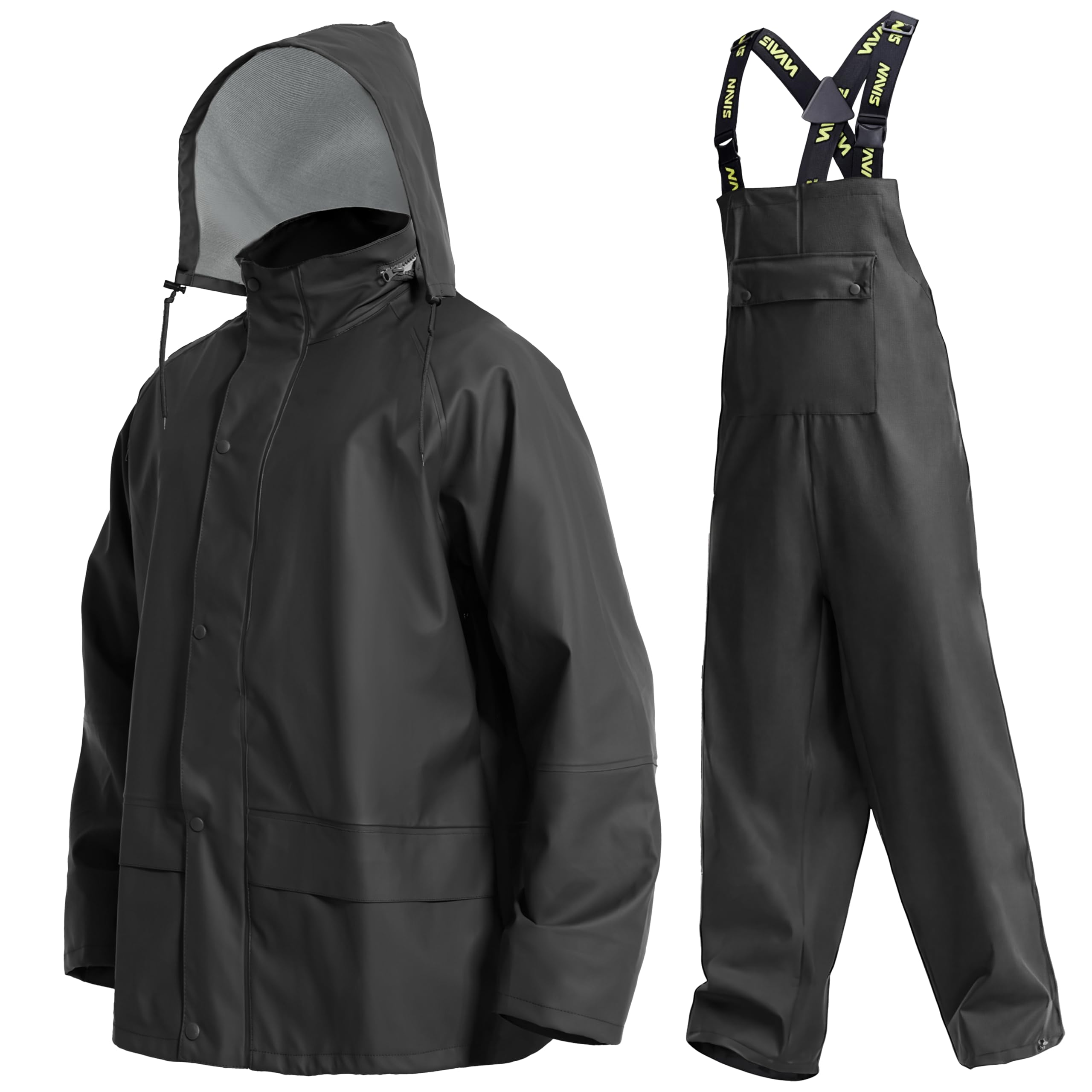
For the worker who expects their gear to outlast their truck.
This is the step-up version of the previous NAVIS MARINE suit. It uses a heavier PU fabric designed for the absolute worst conditions. The 3-piece set (jacket, bib pants, stowable hood) is the same layout, but the PU material here is noticeably thicker. It is more like what you see on a commercial fishing deck than a suburban construction site. It is heavier and tougher than the VUVEA suit above.
The longevity is the headline. One mariner reports using this set “for about 5 years now and it’s still working great,” which is an extraordinary run for rain gear in that environment. Another buyer who has had theirs for almost two years confirms it is “100% waterproof” and that the zipper still works perfectly. The suit slides right over your regular clothes and boots, so you can gear up fast when the weather turns. Unlike the VUVEA suit, this one does not pack down small. But it is built to take abuse that would destroy lighter gear.
The main weakness is the hood stitching. One buyer found “the stitching for the hood came apart the very first time I used it,” which is a quality-control miss you do not see on the Helly Hansen jacket below. The inner material also feels scratchy against bare skin, so you will want to wear a long-sleeve layer underneath.
The standout stat: 5 years of maritime use and still functional — this suit is built for workers who destroy lesser gear in a single season.
The honest flaw: Hood stitching can fail early, so check it before you depend on it in a storm.
Choose this if: You work in the harshest environments — maritime, heavy construction, or any job where gear gets dragged through sharp materials daily.
skip it if: You need a breathable suit for warm-weather work or you want a hood that feels bombproof out of the package.
5. Helly Hansen Potsdam Men’s High Visibility Rain Jacket

The high-vis jacket that feels like a shell, not a tarp.
Unlike the PVC/PU suits above, this is a waterproof and breathable shell made from rugged polyester and nylon. It keeps rain out while letting sweat escape. That makes it the most comfortable pick for long shifts where you are moving constantly, because you are not cooking inside a plastic bag. Helly Hansen brings 140 years of experience to this jacket.
The jacket is cut with room for layers. Buyers at 6 feet and 215 pounds report that an XL fits baggy enough for a heavy fleece underneath. A 4XL fits a 270-pound frame with broad shoulders. The removable, helmet-compatible hood adds versatility for site safety requirements. Underarm vents help dump heat during active work. The two-way zipper is a practical touch for accessing a tool belt without undressing.
The trade-off is real: this is a jacket-only piece, so you will need separate rain pants to complete a suit. Buyers also note that the front pocket flaps are hard to access with gloves. The pocket placement is not ideal for carrying a radio. One railroad worker mentioned the jacket “picks up grease” easily, so it is not as abrasion-resistant as the PVC/PU options from NAVIS MARINE. For full-field, all-day work in heavy rain, some buyers prefer a dedicated bib suit.
Why It Shines
- Breathable shell fabric prevents clamminess during active work
- Removable, helmet-compatible hood
- Underarm vents and two-way zipper for range of motion
Where It Falls Short
- Jacket only — no matching rain pants included
- Pocket flaps hard to access with work gloves
- Fabric picks up grease and grime more than PVC
Reach for this if: You value breathability and comfort over raw durability, and you already own rain pants to pair with it.
Look elsewhere if: You need a complete suit in one purchase, or your work conditions involve constant abrasion against sharp metal or concrete.
Understanding the Specs
Fabric Weight & Type
Fabric weight and type directly determine how long your rain gear resists abrasion on a construction site. 300D ripstop polyester (the “D” stands for denier) is a tightly woven fabric with reinforcing threads in a grid pattern that stops small tears from growing. PVC/PU fabrics are a bonded layer of polyvinyl chloride and polyurethane — very tough against punctures but heavier and less breathable. For a construction site, heavy-weight fabric is not a luxury; it is the difference between gear lasting a season and gear lasting years.
Seam Construction
A jacket or bib is only as waterproof as its seams—heat-sealed or taped seams are essential. Every time a needle punches through the fabric to sew a seam, it creates a tiny hole. Heat-sealed seams (also called taped seams) fuse a waterproof tape over those holes so water cannot leak in. If a product does not mention sealed seams, assume it will leak after a few hours in heavy rain. All the picks above use either heat-sealed seams or sealed seams as part of their construction.
ANSI/ISEA 107-20 Visibility Standards
ANSI/ISEA 107-20 defines the minimum reflective material and background color required for high-visibility compliance. Class E applies to pants only and needs at least 0.80 square meters of reflective material. Class 2 and Class 3 apply to upper-body garments (vests, jackets, shirts). If you wear Class E pants with a Class 2 or 3 top, you meet Class 3 overall. This matters for site compliance and actual safety in low-light or foggy conditions.
Waterproof Ratings and Certifications
EN 343 rates waterproof clothing from class 1 (minimum) to class 4 (maximum) for professional use. The “3,1” on the NAVIS MARINE suit means it has a waterproof rating of 3 (good) and a breathability rating of 1 (basic). For heavy construction work, a waterproof rating of 3 or higher is ideal. The Helly Hansen jacket uses a breathable membrane, which trades some waterproof durability for much better moisture escape during active work.
FAQ
How do I size construction rain gear correctly?
What is the difference between PU and PVC rain gear?
Can I machine wash my rain gear?
How long should a good rain suit last on a construction site?
Do I need ANSI-rated rain gear for every construction site?
Can I wear rain gear in hot weather without overheating?
What does Class E mean for rain pants?
Are waterproof rain suits also windproof?
Can I use the Helly Hansen jacket on its own for construction?
How do I repair a small tear in my PVC rain suit?
Final Thoughts: The Verdict
If you want one dependable pick, the construction rain gear winner is the Pioneer Hi Vis Ripstop Bib Pants because they combine 300D ripstop durability, heat-sealed seams, and ANSI Class E compliance at a price that beats the premium options. If you want a complete lightweight suit that you can throw in a bag and wear all day, grab the VUVEA Rain Suit. And for the harshest environments where only the toughest gear will do, the standout is the NAVIS MARINE PRO PU 3-Piece Suit, which has proven itself over 5 years of commercial maritime use.
How We Picked
We do not accept paid placement. Every pick is matched to a real buyer and a real use-case; we do not hands-on test units.
Sources & Methodology
Specifications: manufacturer listings and product documentation. Review insights: verified customer reviews, as of July 2026. Pricing: not shown on this page (it changes often); check the current price via the retailer link.
As an Amazon Associate, WellFizz earns from qualifying purchases. This does not affect which products we feature.

Mo Maruf
I created WellFizz to bridge the gap between vague wellness advice and actionable solutions. My mission is simple: to decode the research and give you practical tools you can actually use.
Beyond the data, I am a passionate traveler. I believe that stepping away from the screen to explore new environments is essential for mental clarity and physical vitality.