Our readers keep the lights on and my smoothie glass nicely filled. As an Amazon Associate, I earn from qualifying purchases.
The leap between a blurry, disorienting VR session and a fully immersive one where you forget the headset is on comes down to which console sits on your desk. With inside-out tracking replacing external base stations and standalone headsets closing the gap on PC-tethered rigs, choosing the right console for VR now means balancing graphical horsepower against freedom of movement.
I’m Mohammad Maruf — the founder and writer behind WellFizz. My research dives deep into the technical specs that separate a good VR experience from a great one, from display refresh rates and lens types to processor benchmarks and tracking camera fidelity.
This guide breaks down the top options across standalone, PC-connected, and console-locked systems so you can make an informed decision on the best console for vr that matches your gaming style and space.
How To Choose The Best Console For VR
Picking a VR console isn’t a one-spec-fits-all decision. Your space, your tolerance for wires, and your preferred game library all influence which system delivers the best experience. Start by deciding between standalone and PC-tethered, then drill into the specs that matter most for comfort and clarity.
Standalone Freedom vs PC-Tethered Power
Standalone headsets like the Meta Quest 3 pack the Snapdragon XR2 Gen 2 processor inside the headset, giving you total freedom from a gaming PC. You can play in any room without cables. The tradeoff is graphical fidelity — standalone titles run at lower detail levels compared to what a dedicated GPU can push. PC-tethered systems like the HTC Vive XR Elite connect to a VR-ready computer for higher resolutions, smoother frame rates, and access to the full SteamVR library. If you already own a powerful gaming PC, a tethered or hybrid headset gives you the best visual experience.
Display Resolution and Refresh Rate
Resolution determines how sharp the image appears. A combined resolution of 3840 x 1920 or higher generally eliminates the screen-door effect where you can see individual pixels. Refresh rate measured in hertz (Hz) directly impacts motion sickness — 90Hz is considered the minimum comfortable threshold, while 120Hz headsets like the Meta Quest 3 and PSVR2 offer noticeably smoother motion that reduces disorientation during fast-paced games.
Tracking System
Inside-out tracking uses cameras on the headset to map your environment and track controller positions without external sensors. This makes setup simple and portable. Base station tracking, used by older systems like the original HTC Vive, requires mounting sensors in the room corners and offers higher precision for full-body tracking setups. Most modern consoles for VR now rely on inside-out, but if you need full-body tracking for VRChat or dance games, the HTC Vive Ultimate Tracker ecosystem becomes relevant.
Quick Comparison
On smaller screens, swipe sideways to see the full table.
| Model | Category | Best For | Key Spec | Amazon |
|---|---|---|---|---|
| Meta Quest 3 512GB Renewed | Standalone | Best Overall Wireless VR | 4K+ Infinite Display, 120Hz | Amazon |
| PlayStation VR2 Horizon Bundle | Console-Locked | PS5 Owners | 2000×2040 per eye OLED, 120Hz | Amazon |
| HTC Vive XR Elite Deluxe Pack | Hybrid | Mixed Reality + PC VR | 3840×1920 combined, 90Hz | Amazon |
| Meta Quest 3S 128GB Renewed | Standalone | Best Entry-Level Standalone | 2064×2208 per eye, 90Hz | Amazon |
| Meta Quest 3S 256GB Gorilla Bundle | Standalone | Gorilla Tag Players | 1832×1920 per eye OLED, 60Hz | Amazon |
| PlayStation VR Iron Man Bundle | Console-Locked | PS4/PS5 Retro VR | 1920×1080 OLED, 90Hz | Amazon |
| HTC Vive Ultimate Tracker 3 Pack | Accessory | Full-Body Tracking | Inside-out camera tracking | Amazon |
| Oculus Rift S | PC-Tethered | Budget PC VR | 1440×1600 LCD, 80Hz | Amazon |
| Valve Steam Deck OLED 512GB | Handheld PC | Portable Gaming | 1280×800 HDR OLED, 90Hz | Amazon |
| Valve Steam Deck OLED 1TB | Handheld PC | High-Capacity Portable | 1280×800 HDR OLED, 90Hz | Amazon |
| MSI Codex Z2 Desktop | VR-Ready PC | VR-Ready Gaming Desktop | RTX 5070, 32GB DDR5 | Amazon |
In‑Depth Reviews
1. Meta Quest 3 512GB Renewed
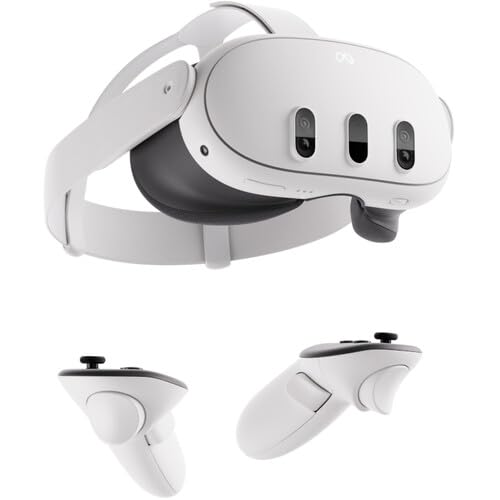
The Meta Quest 3 delivers the sharpest standalone VR experience on the market thanks to its nearly 30% resolution leap over its predecessor and a 120Hz refresh rate that dramatically reduces motion sickness during fast-paced titles. The 4K Infinite Display uses pancake lenses to reduce bulk while keeping the image crisp edge-to-edge, and the Snapdragon XR2 Gen 2 processor handles demanding games like Asgard’s Wrath 2 without stutter. With 512GB of storage, you can install dozens of titles without worrying about space.
The dual RGB color cameras enable full-color passthrough mixed reality, letting you see your physical environment in high fidelity without removing the headset. This makes room-scale VR safer and opens up MR gaming where virtual objects interact with real furniture. The Touch Plus controllers ditch the tracking rings found on earlier Quest models, using onboard cameras to detect finger positions naturally.
Battery life sits around 2.2 hours per charge, which is typical for standalone VR but means you will want a power bank for extended sessions. The stock head strap can feel front-heavy after an hour — many users swap in an Elite Strap with battery for better weight distribution and extra playtime. The renewed unit arrives in factory-sealed condition and functions identically to new stock at a more accessible entry point.
Why it’s great
- Best standalone resolution with 4K+ Infinite Display at 120Hz
- Full-color passthrough mixed reality for safe room-scale play
- 512GB storage eliminates space concerns
Good to know
- Stock head strap causes front heaviness over time
- Battery limited to roughly 2 hours of continuous use
- Renewed unit may show minor cosmetic wear
2. PlayStation VR2 Horizon Call of The Mountain Bundle

The PSVR2 brings OLED HDR display technology to console VR with a per-eye resolution of 2000×2040 and a maximum refresh rate of 120Hz, delivering deep blacks and vibrant color that LCD panels struggle to match. The eye-tracking system enables foveated rendering — the headset renders high detail only where you are looking, boosting performance significantly in titles like Gran Turismo 7 and Horizon Call of the Mountain.
The haptic feedback built into the headset itself vibrates during dramatic moments, syncing with the adaptive triggers on the Sense controllers for tactile immersion that no other console for VR offers. Setup is straightforward if you own a PlayStation 5 — a single USB-C cable connects the headset, and the included Horizon bundle gives you a flagship launch title to test the hardware immediately.
The main limitation is that the PSVR2 is locked to the PlayStation 5 ecosystem with no official PC support, though third-party drivers are slowly emerging. The wired connection keeps latency low but limits room-scale freedom compared to standalone headsets. Some users report the lens smudges easily and that the sweet spot for optimal clarity is smaller than on pancake-lens competitors.
Why it’s great
- OLED HDR display with deep blacks and 120Hz smoothness
- Eye-tracking with foveated rendering boosts performance
- Headset haptic feedback enhances immersion
Good to know
- Requires PlayStation 5 with no native PC support
- Single USB-C cable tethers you to the console
- Smaller optical sweet spot than pancake lens headsets
3. HTC Vive XR Elite with Deluxe Pack

The HTC Vive XR Elite is the most versatile hybrid headset in this lineup, functioning as a standalone mixed reality device and connecting to a VR-ready PC for low-latency SteamVR gaming. The 3840×1920 combined LCD display delivers 19 pixels per degree with a 110-degree field of view, and the stepless IPD along with integrated diopter dials lets you fine-tune the focus without wearing glasses inside the headset — a rare feature that greatly improves comfort.
The Deluxe Pack adds a padded face gasket, a deluxe strap for better weight distribution, and a MR gasket for mixed reality use. The hot-swappable battery design means you can exchange a drained pack for a fresh one without interrupting a session, addressing a major pain point of standalone VR headsets. The depth sensor and full-color passthrough cameras create convincing mixed reality environments where virtual objects sit naturally in your physical space.
Standalone performance falls behind the Meta Quest 3 due to a less optimized game library and older chipset. The XR Elite excels as a PC VR headset thanks to its comfortable fit and high-resolution display, but the premium price and reliance on a separate dongle for full-body tracking make it a niche pick for enthusiasts who want both standalone and PC flexibility. The audio from the built-in speakers is serviceable but lacks bass compared to over-ear options.
Why it’s great
- Integrated diopter adjustment allows use without glasses
- Hot-swappable battery for extended play sessions
- Depth sensor and full-color passthrough for convincing MR
Good to know
- Standalone performance trails Meta Quest 3
- Premium pricing compared to standalone competitors
- Built-in speakers lack low-end audio presence
4. Meta Quest 3S 128GB Renewed Premium
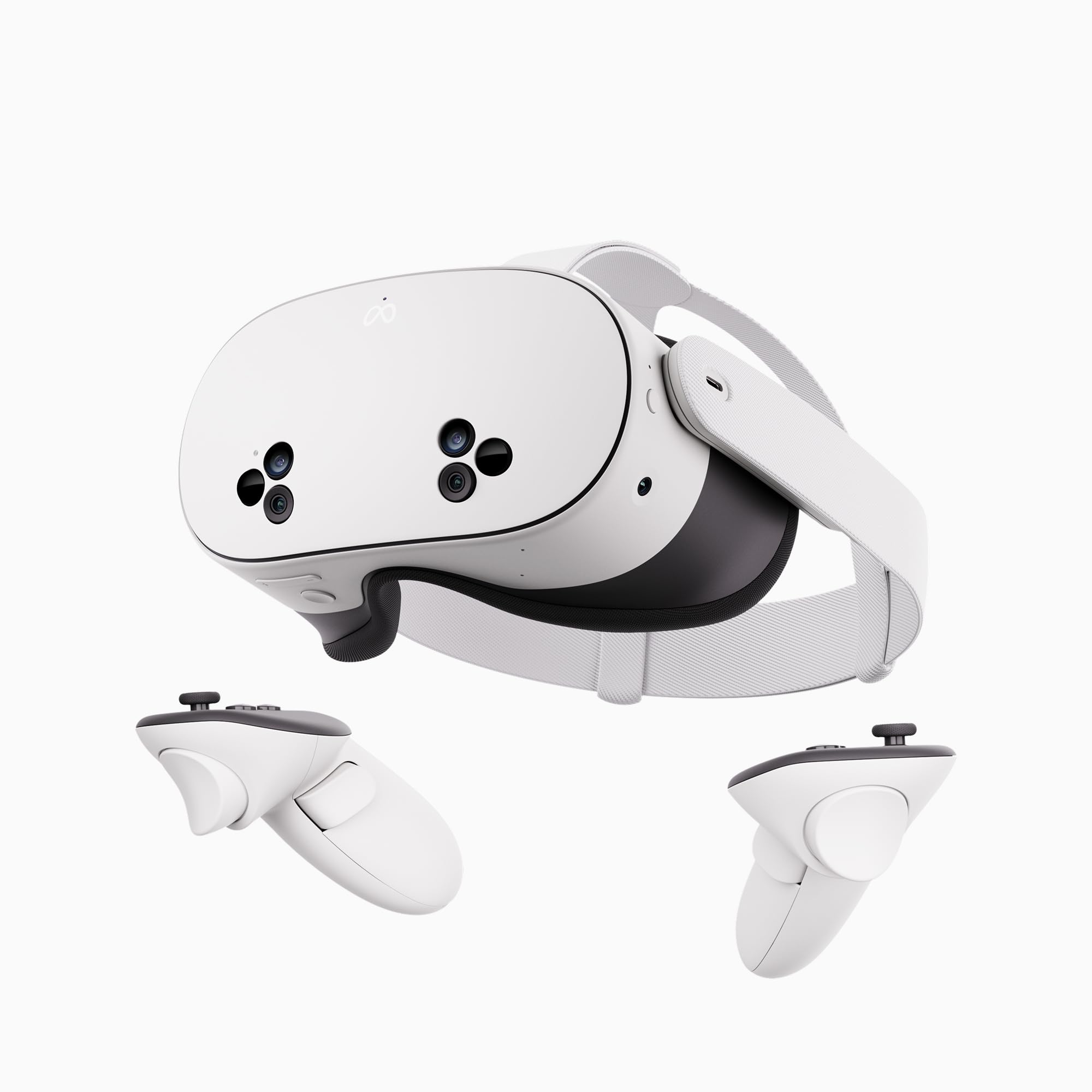
The Meta Quest 3S offers a gateway into standalone VR with the same Snapdragon XR2 Gen 2 processor and 8GB of RAM as the standard Quest 3, ensuring identical game performance and compatibility. The 2064×2208 per eye display runs at 90Hz, which is adequate for comfortable immersion, though the resolution drop from the Quest 3’s 4K+ panel is noticeable when reading small text or examining distant objects.
The refreshed design includes the same Touch Plus controllers with no tracking rings and the same dual RGB color cameras for full-color passthrough. The eye relief adjuster and glasses spacer accommodate prescription eyewear, and the facial interface uses a breathable fabric that reduces sweating during active games like Beat Saber or Supernatural. The 128GB storage handles around 15 to 20 typical VR titles before filling up.
The battery life matches the Quest 3 at approximately 2.2 hours, and the Fresnel lenses produce a smaller sweet spot than the pancake lenses on the more expensive model, so positioning the headset correctly on your face is more critical. The renewed unit saves significantly on cost while delivering the same core experience, making this the best entry point for someone unsure about committing to a multi-hundred-dollar VR habit.
Why it’s great
- Same XR2 Gen 2 processor and 8GB RAM as Quest 3
- Full-color passthrough MR at a budget-friendly tier
- Touch Plus controllers with natural finger tracking
Good to know
- Lower resolution and Fresnel lenses reduce clarity
- 128GB fills quickly with larger games
- Fresnel sweet spot requires precise headset alignment
5. Meta Quest 3S 256GB Gorilla Tag Bundle

This Amazon exclusive bundle pairs the Quest 3S with the Gorilla Space Program Suit and Helmet plus 2,000 SHINY ROCKS, making it the definitive package for Gorilla Tag enthusiasts. The headset itself features an OLED display with per-eye resolution of 1832×1920, delivering richer contrast than the LCD panel found in the standard Quest 3S, though the 60Hz refresh rate is significantly lower and may cause discomfort during fast locomotion.
The 256GB storage capacity doubles the base model’s space, letting you build a substantial game library without deleting favorites. Bundles like this add real value if you already play Gorilla Tag or plan to dive into the social VR scene, as the in-game currency and cosmetic items would otherwise cost extra. The removable facial interface and glasses spacer maintain comfort for multiple family members sharing the headset.
The 60Hz refresh rate is the most noticeable compromise here — most modern VR headsets target 90Hz as a minimum, and the difference in perceived smoothness is stark during quick head movements. Some user reports also note the stock head strap slips and loses adjustment during active play, requiring an aftermarket solution. If Gorilla Tag is your primary game, the bundled content offsets these flaws, but for general VR use, the standard 128GB model with a higher refresh rate is more versatile.
Why it’s great
- Amazon exclusive with Gorilla Tag cosmetic bundle and in-game currency
- 256GB storage for a larger game library
- OLED display for better contrast and blacks
Good to know
- 60Hz refresh rate may cause discomfort during fast movement
- Stock head strap loses adjustment during active play
- Lower per-eye resolution than standard Quest 3S
6. PlayStation VR Marvel’s Iron Man Bundle

The original PlayStation VR bundled with Marvel’s Iron Man VR gives PS4 and PS5 owners access to a curated VR library at a much lower entry point than the PSVR2. The 1920×1080 OLED display uses RGB subpixels for solid contrast, and the 90Hz refresh rate keeps motion comfortable for most seated experiences. The bundle includes the PS Camera and two Move motion controllers, replicating Iron Man’s repulsor jets through physical gestures.
Setup requires the PlayStation Camera and a PS4 or PS5 (with the free camera adapter for PS5). The headset is lightweight at roughly 600 grams and uses a halo-style headband that distributes weight across your forehead rather than pressing against your face, which helps during longer sessions. The included Iron Man VR disc and Blood & Truth disc give you two full games out of the box.
The tracking relies on the PlayStation Camera’s visible light detection, which suffers in bright rooms or if you move outside the camera’s narrow field of view. The resolution is noticeably dated compared to modern headsets — screen-door effect is visible, and text can appear blurry. The digital code for Everybody’s Golf VR in some bundles has expired, so check the listing carefully. This is a nostalgia pick for players invested in the PlayStation ecosystem who want to explore VR without buying a PS5 and PSVR2.
Why it’s great
- Low entry cost for PlayStation VR gaming
- Lightweight halo headband design for comfort
- Includes Iron Man VR and Blood & Truth discs
Good to know
- 1920×1080 resolution shows visible screen-door effect
- Camera-based tracking has narrow play area
- Some bundles include expired digital download codes
7. HTC Vive Ultimate Tracker 3 Pack + Dongle

The HTC Vive Ultimate Tracker is the first all-in-one positional tracker that works without external base stations, using two wide-FOV cameras and computer vision to self-track its position in space. This 3-pack with a wireless dongle enables full-body tracking for VRChat, Blade & Sorcery, and other SteamVR titles on the Vive XR Elite, Meta Quest 2/3 (via Link cable), and Valve Index. The quick-release mechanism lets you snap trackers onto straps or clip them to objects in seconds.
Each tracker runs on a rechargeable lithium-ion battery that lasts over five hours per charge, and the dongle supports up to five trackers simultaneously for controller-free full-body tracking. The AI-powered self-tracking means you can move through large-scale environments without worrying about line-of-sight to a base station, which is especially useful for dance games and immersive roleplaying where you spin and crouch.
The setup process is finicky — the Vive Hub beta software and firmware updates can take significant time, and the tracking requires well-lit rooms with visual anchor points like posters or furniture to maintain stability. Reflective surfaces like mirrors cause the tracking to drift. The cost of two additional trackers and a dongle is significant, and the package does not include mounting straps or a charging station, which adds to the overall investment. For serious VRChat users, the result is transformative, but casual players may find the expense and calibration effort excessive.
Why it’s great
- Inside-out tracking without base stations for full-body VR
- Over 5 hours of battery life per charge
- Quick-release mechanism for easy attachment
Good to know
- Setup requires Vive Hub beta and multiple firmware updates
- Needs bright lighting with visual reference points
- Accessories like straps and charging hub sold separately
8. Oculus Rift S

The Oculus Rift S remains a viable entry into PC VR for anyone with a capable gaming PC who wants inside-out tracking without spending premium dollars. The 1440×1600 LCD panel runs at 80Hz, which is slightly below the 90Hz standard but acceptable for slower-paced titles like Moss or The Climb. The improved optics over the original Rift reduce the screen-door effect significantly, and the halo-style headband offers comfortable weight distribution for hour-long sessions.
The five-camera tracking array covers a wider area than the original Rift’s three-sensor setup, allowing room-scale movement without external base stations. The integrated audio solution uses speakers near your ears rather than a headphone jack, which keeps the setup clean but sacrifices audio isolation and bass response. The single DisplayPort and USB-A connection keep cable management simple compared to the Rift’s older multi-sensor rig.
The 80Hz refresh rate is noticeable when switching from a 90Hz or 120Hz headset — fast movement can feel slightly stroboscopic. The USB power draw sometimes exceeds what motherboard ports can supply, leading to random disconnections that require a powered USB 3.0 PCIe card to resolve. The Rift S is a discontinued product, meaning no firmware updates or warranty support from Meta, and the Touch controller battery drains in under a week of standby. This is only worth considering for budget builds where every dollar counts and you can tolerate the discontinued status.
Why it’s great
- Inside-out tracking with five cameras for room-scale play
- Comfortable halo headband design for extended use
- Lowest cost entry into PC VR with integrated audio
Good to know
- 80Hz refresh rate noticeable when switching from 90Hz headsets
- USB power draw may cause disconnections on some PCs
- Discontinued product with no firmware updates or support
9. Valve Steam Deck OLED 512GB

The Steam Deck OLED functions as a portable handheld that can drive lightweight VR experiences when docked to PC VR headsets, but its primary strength is delivering a premium flat-screen gaming experience on an HDR OLED panel. The 1280×800 resolution at 90Hz offers buttery smooth motion for titles like Hades or Elden Ring, and the 50Wh battery provides 3 to 12 hours of gameplay depending on the title’s demands. The Linux-based SteamOS supports suspend/resume, letting you drop in and out of games instantly.
The OLED model improves battery life by 30-50% over the original LCD Deck while producing perfect blacks and vibrant colors. The anti-glare etched glass on the 512GB model reduces reflections during outdoor or brightly lit use. The included carrying case makes it easy to transport, and the extensive Steam library means most PC VR owners already have compatible games in their catalog. The microSD slot lets you expand storage cheaply for older or indie titles.
The Steam Deck is not a VR headset — it is a handheld PC that can output to VR headsets via USB-C or Bluetooth, but the integrated graphics are far below the threshold for comfortable VR gaming. You would still need a separate VR headset and a PC for serious VR use. The 512GB storage fills quickly with modern AAA games, and the ergonomics can feel bulky for extended handheld sessions compared to a Switch or dedicated handheld. This is a companion device rather than a console for VR, suited for players who want portable flat-screen gaming alongside a dedicated VR rig.
Why it’s great
- HDR OLED display with 90Hz for smooth portable gaming
- 30-50% better battery life over LCD version
- Extensive Steam library with suspend/resume functionality
Good to know
- Not a VR headset — integrated graphics not VR-capable
- 512GB storage fills quickly with modern games
- Bulkier than dedicated handhelds like the Switch
10. Valve Steam Deck OLED 1TB

Identical to the 512GB model in display, processor, and battery, the 1TB Steam Deck OLED doubles the internal storage for players who install multiple large VR-adjacent titles or want to keep their entire Steam library accessible on the go. The anti-glare etched glass is standard on the 1TB version, providing the same reflection-diffusing benefit as the 512GB model. The exclusive startup movie and virtual keyboard theme offer cosmetic differentiation for early adopters.
The 1TB capacity comfortably holds dozens of AAA games alongside indie titles and emulated classics from GBA, PSP, PS1/2, and SNES. The NVMe SSD delivers fast load times that keep the suspend/resume experience snappy. The carrying case includes a removable liner for easy cleaning, and the Wi-Fi 6E support improves download speeds for large game files compared to the older Wi-Fi 5 standard.
The same limitations apply — this is a handheld PC, not a VR console. The 90Hz display and OLED panel make flat-screen games look incredible, but you still need a separate VR headset and a capable PC to play VR titles. The premium is for those who want a single internal drive with no expansion dongle or card protruding from the top.
Why it’s great
- 1TB internal NVMe SSD for massive game libraries
- Wi-Fi 6E for faster downloads and online play
- Anti-glare etched glass reduces reflections
Good to know
- Same APU and display as 512GB model at higher cost
- Not a VR headset — needs separate PC VR setup
- Exclusive startup movie and keyboard theme are cosmetic only
11. MSI Codex Z2 Gaming Desktop

The MSI Codex Z2 is a VR-ready gaming desktop built around the NVIDIA GeForce RTX 5070 with 12GB of GDDR7 VRAM, delivering enough GPU horsepower to drive high-resolution headsets like the Meta Quest 3 at full resolution via Link cable or wireless streaming. The AMD Ryzen 7 8700F with 8 cores and 16 threads clocks up to 5.0 GHz, ensuring CPU-bound VR titles like Half-Life: Alyx maintain smooth frame rates even with background tasks running. The 32GB of DDR5 RAM provides ample headroom for multitasking during VR sessions.
The cooling system uses four ARGB fans in a push-pull configuration — three front intake and one rear exhaust — that keeps the RTX 5070 and Ryzen 7 below thermal throttle limits during extended VR gaming. The compact ATX chassis fits most desk setups, and the included keyboard and mouse get you started immediately. The MSI Center software lets you cycle RGB lighting or adjust fan curves for quieter operation when not gaming.
Some units have reported Bluetooth module issues requiring a PCIe card replacement, and the stock SSD has been flagged in event logs for warning failures in a minority of cases. The RTX 5070 is a powerful card, but it sits below the RTX 5080 and 5090 for VR tasks requiring extreme resolutions like 4K per eye. For most VR games at comfortable settings with a Quest 3 or PSVR2-level headset, the Codex Z2 delivers solid performance without bottlenecking. This is a VR foundation — you still need to pair it with a headset of your choice.
Why it’s great
- RTX 5070 with 12GB VRAM handles high-resolution VR headsets
- 32GB DDR5 RAM for smooth multitasking
- Four-fan cooling system keeps thermals under control
Good to know
- Bluetooth module may require replacement PCIe card
- RTX 5070 not the top tier for extreme 4K per eye VR
- Some units reported SSD and boot issues after initial use
FAQ
Can I use the Meta Quest 3 with a gaming PC for higher graphics?
Does the PSVR2 work on PC or only on PlayStation 5?
How much space do I need for room-scale VR?
Is a VR-ready gaming PC necessary for the Quest 3 standalone mode?
What does full-body tracking add to VR games?
Final Thoughts: The Verdict
For most users, the best console for vr winner is the Meta Quest 3 512GB Renewed because it combines the highest standalone resolution with the largest app library and seamless PC VR compatibility. If you own a PlayStation 5 and want HDR OLED visuals with eye-tracking, grab the PlayStation VR2 Horizon Bundle. And for mixed reality versatility and glasses-free adjustment, nothing beats the HTC Vive XR Elite Deluxe Pack.

Mo Maruf
I created WellFizz to bridge the gap between vague wellness advice and actionable solutions. My mission is simple: to decode the research and give you practical tools you can actually use.
Beyond the data, I am a passionate traveler. I believe that stepping away from the screen to explore new environments is essential for mental clarity and physical vitality.