Our readers keep the lights on and my smoothie glass nicely filled. As an Amazon Associate, I earn from qualifying purchases.
Specs are compiled from manufacturer listings and verified buyer reviews and can change over time — please confirm the key details on the product page before buying.
If your car audio install is plagued by alternator whine, static, or a buzzing noise that gets louder when you hit the gas, the fix almost always hides in the connectors. A bad RCA cable, a loose speaker terminal, or a cheap line-output converter can ruin a thousand-watt system before it takes a single note. This guide breaks down the seven types of connectors that actually shut that noise down and keep the signal pure from the head unit to the last subwoofer.
I’m Mohammad Maruf — the founder and writer behind WellFizz. This guide is built by comparing the manufacturers’ published specifications and the patterns across verified customer reviews, so you get each pick’s real strengths and trade-offs instead of marketing spin.
If you are wiring a fresh install or chasing a ground-loop ghost, the connectors for car audio you choose determine whether you hear clean bass or a faint whine that drives you crazy every time you drive.
Our Picks at a Glance

How To Choose The Best Connectors For Car Audio
Picking the right connectors for your car stereo is not just about the package count — it is about matching the cable gauge, the connector type, and the shielding to the actual equipment in your car. Here is what to look for.
Gauge and Conductor Material
Thicker wire (a lower gauge number like 4-gauge or 0-gauge) carries more current cleanly to an amplifier. The conductor should be oxygen-free copper (OFC) for best conductivity; copper-clad aluminum (CCA) is cheaper but loses signal over long runs. For RCA cables, a 22-gauge high-purity copper core resists resistance better than a thin, generic wire.
Shielding and Noise Rejection
Signal cables like RCA lines sit right next to power wires in a car door or under the carpet. Multi-layer shielding — a braided copper wrap over a foil layer — blocks electromagnetic interference (EMI) and radio-frequency interference (RFI) that cause that dreaded alternator whine. Twisted-pair construction adds another layer of noise cancellation.
Connector Build and Fit
A split-tip RCA plug that pinches the center pin tightly prevents the cable from vibrating loose over bumps. For power wires, spade terminals and set-screw reducers need a snug mechanical fit — a loose connection creates heat and resistance that robs your amp of voltage.
Quick Comparison
| Model | Best For | Cable Type / Function | Gauge | Key Feature | Amazon |
|---|---|---|---|---|---|
| SKW BG03B RCA Y-Splitter★ Best Overall | Dual-sub / signal purity | RCA Y-Splitter | 22 AWG | Multi-layer shielding, 24K gold plugs | Amazon |
| Wakauto 4GA Spade TerminalsPro Install Prep | Clean power-wire terminations | Spade fork terminals | 4 Gauge | Gold-plated brass, 10-pair pack | Amazon |
| NuIth Speaker-to-RCA Converter | Adding amp to factory stereo | Line output converter | 1 Amp rated | Level gain adjustment, relay trigger | Amazon |
| RECOIL RCI217-2 17ft RCA | Long clean RCA runs | 2-channel RCA cable | OFC multi-strand | Twisted pair, 17ft length | Amazon |
| NuIth 0-to-4 Gauge Reducer | Fitting thick wire to small amp inputs | Gauge reducer | 0 to 4 Gauge | Nickel-plated brass, set-screw clamp | Amazon |
| BetyBedy 12-Way Battery Terminals | Multi-accessory power distribution | Battery clamp terminals | 8AWG up to 4/0 AWG | 6061 aluminum, 6 holes + 6 studs | Amazon |
| Elite Audio PRM417 4-Channel RCA | Full 4-channel amp install | 4-channel RCA cable | 99.9% OFC | Double shielded, brass connectors | Amazon |
In‑Depth Reviews
1. SKW BG03B RCA Y-Splitter Cable
Our pick — over 4.5★ from 400+ verified ratings; the strongest balance of quality and price.
The clean-signal specialist that banishes white noise from dual-sub setups.
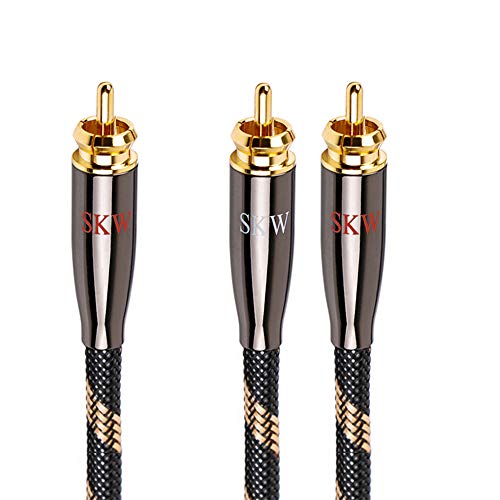
If you have ever heard a faint hiss when your subwoofer wakes up, you already know this is exactly the fix. The SKW Y-splitter keeps the silent gap between songs silent by using a 22 AWG (a thick wire gauge) ultra-high-purity copper conductor inside multi-layer shielding that blocks both EMI (electromagnetic interference) and RFI (radio frequency interference). Buyers report the same thing over and over: “There is no noticeable white noise when powered on.” The all-metal, 24K gold-plated plugs fit tight on purpose; a loose RCA is the most common cause of hum, and these connectors resist vibration by design.
At just 3.2 feet, this is not the cable for a long run from the dash to the amp. It is made for a short, noise-free jump from a subwoofer or AV receiver. The split-tip plugs also give a better grip than the cheap molded barrels that crack over time. Compared to the 17-foot RECOIL below, this is 3.2 feet versus 17 feet, but uses a thicker 22 AWG core for notably snappier signal transfer in that short span.
Why it wins
- Multi-layer armor stops alternator whine completely.
- 22 AWG UHP copper delivers tighter bass than standard thin RCAs.
- Gold-plated connectors resist corrosion and stay put over bumps.
The trade-off
- 3.2ft length is too short for a trunk-to-dash run.
- Fit is intentionally tight — may feel stiff to remove at first.
Reach for it if: you are wiring a subwoofer or a dual-sub setup and want dead-silent signal free of engine noise.
Look elsewhere if: you need a 15+ foot RCA for a full trunk install — the length will not stretch there.
2. Wakauto 10 Pairs Gold Plated 4 Gauge Spade Terminals
The terminal pack that makes bare-wire connections feel like a factory harness.
Bare 4-gauge wire stuffed into an amp terminal will always fray and eventually loosen. These gold-plated spade terminals solve that by giving each cable a crimp-ready fork that locks onto the binding post. The copper body is heat-tested to handle the current draw of a powerful subwoofer amp without distortion. One owner working on a serious amp project said they “would have been PERFECT if I’d waited on my Amp project” — meaning these are the kind of connectors you buy before you run the power wire, not after. Skip these if you already have your power wire run and just need a quick fix; they are for the planning stage.
You get 10 red and 10 black boots, enough for two full amplifier installs plus a battery-termination clean-up. The 4-gauge size is the standard for mid-power car audio systems. If you are still twisting bare copper into a terminal block, these are the single cheapest upgrade for reliability.
Why it works
- Gold plating prevents corrosion that strikes bare copper terminals in a damp car door.
- Insulated boots protect against accidental short circuits.
- 20 terminals means you have enough for two amps plus spares.
Know before you buy
- Requires a proper crimp tool — you cannot solder these forks reliably.
- 4-gauge only; will not fit 0-gauge or 8-gauge cable.
Best for: anyone running 4-gauge power or ground wire who wants a termination that won’t wiggle loose.
Not for: installs using 0-gauge or 8-gauge wire — these are 4-gauge specific.
3. NuIth Speaker Wire to RCA Line Output Converter

The brain that keeps a modern factory radio talking to a high-power aftermarket amp.
Adding a subwoofer to a stock stereo means tapping into the speaker-level wires and converting that high-voltage signal into a low-voltage RCA output the amplifier can read. The NuIth converter pulls that off with a built-in level gain adjustment so you can dial the bass down without pulling over to tweak the amp. It even uses a relay to sense the signal and trigger the amp’s remote turn-on automatically, which means no separate switch wire to run. One owner has it connected to “a 2024 Chevy equinox with a Kicker 15 Solobaric and kicker 1,000 watt amp” — a setup that proves this small box handles real power without distortion.
The catch is that the instruction sheet is sparse. A few owners discovered you must wire the 12V to an ignition-switched accessory feed, not a constant battery source, or the converter will keep the amp powered on after the car shuts off. Once you make that connection correctly, the 50-watt nominal power rating handles most stock speaker taps with room to spare.
Why it is useful
- Level gain knob lets you adjust input sensitivity without touching the amp.
- Integrated relay handles amp turn-on so you skip a separate remote wire.
- Compact size slips behind a radio cavity without bulging the dash.
One install note
- Requires ignition-switched 12V to avoid draining the battery.
- No printed wiring guide — check polarity markings before you tap.
Grab it if: you are keeping the factory head unit and want a clean, low-noise way to add an amp and sub.
skip it if: you plan to run a high-powered head unit with native RCA outputs — you do not need a converter at all.
4. RECOIL RCI217-2 17ft 2-Channel RCA Cable

The 17-foot twisted pair that killed engine noise for Tacoma owners on the first try.
When the pro-installed cheap RCA in a 2002 Tacoma let alternator whine bleed into the music, swapping to this RECOIL cable fixed it instantly. The twisted-pair construction cancels electromagnetic interference naturally, while the 100% oxygen-free multi-strand copper wire carries a clear signal the whole 17 feet from the dash to the trunk. Nickel-plated split-tip connectors give a snug fit that does not rattle loose over bumps. Owners describe the sound as “crisp” and note the cable is flexible enough to route under carpet and through tight kick panels.
At 17 feet, this is 17 feet versus the 3.2-foot SKW Y-splitter, making it the right pick when the amp lives in the trunk and the head unit sits in the dash. The only point of debate is the noise-floor: while most owners hear nothing but silence, a handful report it picks up noise in specific vehicle installations. Running the RCA on the opposite side of the car from the power wire usually eliminates that entirely.
What stands out
- Twisted-pair technology kills alternator whine at its source.
- 17-foot reach covers any trunk install without needing an extension.
- Frosted PVC jacket stays flexible in cold weather.
What to watch
- Not shielded as heavily as some premium cables; keep it away from power wires.
- Only 2-channel — not for 4-channel systems without a splitter.
Best for: trunk-mounted amps where the long dash-to-trunk run needs clean, noise-free signal every time.
Not ideal for: 4-channel setups unless you combine two cables, and avoid routing it alongside the power cable.
5. NuIth 0-to-4 Gauge Amp Input Reducer
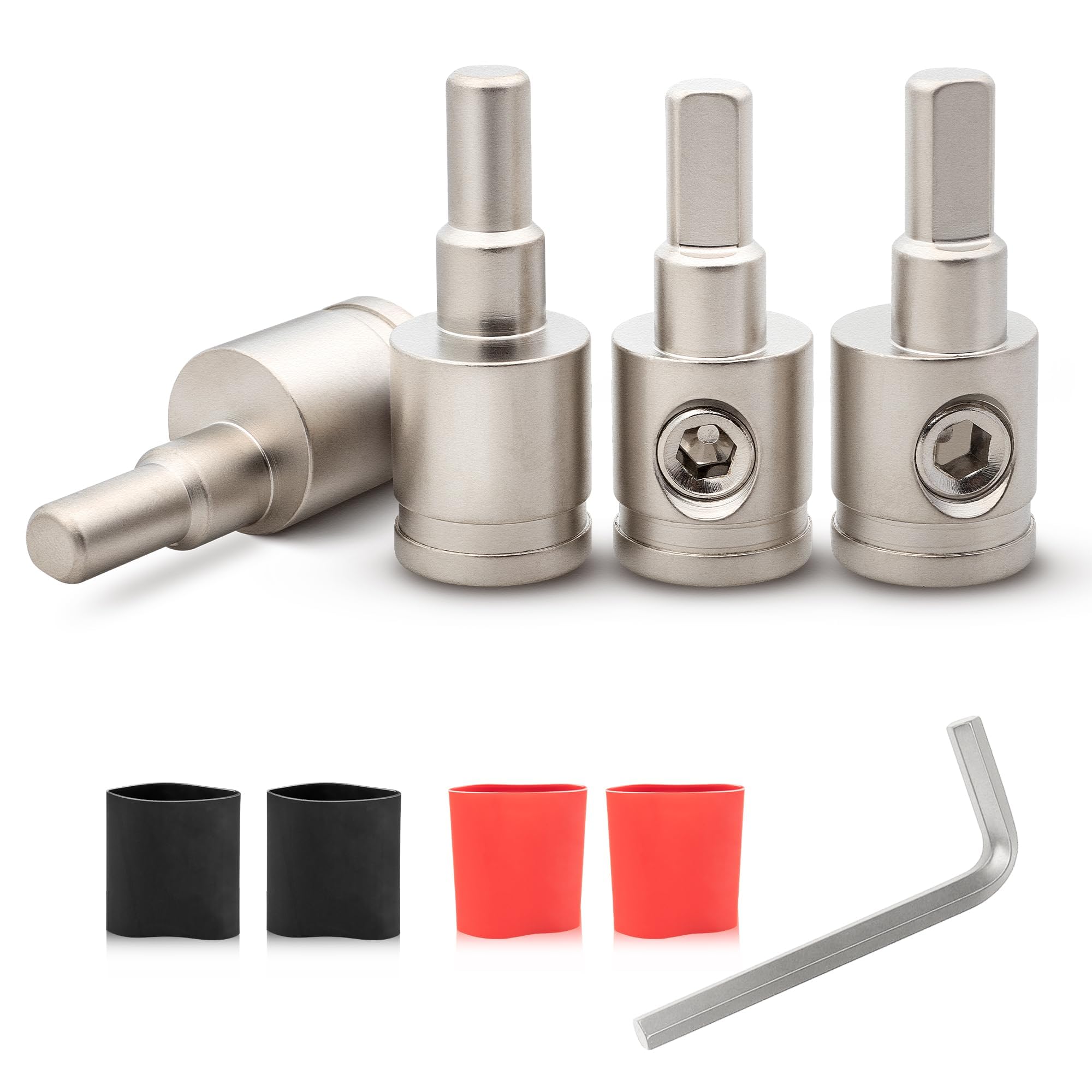
That thick 0-gauge wire that kept springing loose from your amp input? This is the fix.
Running 0-gauge power cable is smart for current capacity, but many amplifier input terminals only accept 4-gauge wire. That mismatch means a thick, stiff cable that pops out after a few drives. The NuIth reducer solves it with a compact nickel-plated brass barrel that steps 0-gauge down to 4-gauge using a simple set-screw. No crimping tool, no soldering — just push the wire in and tighten. One owner described the exact problem: “I had just installed a system and was having a problem getting the thick 0 gauge wire to fit in amp and was just popping out after a little bit of driving. Ordered this item and it fit perfectly and solved my problem.” The package includes four reducers plus heat-shrink tubing and an Allen key, so you have enough for a stereo amplifier setup with spares.
The only fit issue is that the 4-gauge reducer barrel is too thick for 8-gauge amp inputs; owners running smaller wire should size down. Everything else — solid brass construction, secure set-screw clamping, and a professional look under the hood — earns praise from the crowd.
Why it is handy
- Set-screw clamping is truly zero-crimp — insert 0-gauge wire, tighten, done.
- Includes heat shrink and a wrench for a tidy, professional termination.
- Solid brass does not deform under high current or vibration.
The fit note
- Too thick for 8-gauge amp inputs — best paired with 4-gauge terminals.
- A 30-day warranty is short; open and test immediately.
Reach for it if: your amp’s 4-gauge input keeps rejecting the 0-gauge power cable you already bought.
Think twice if: you are wiring anything smaller than 4-gauge — the 8-gauge size is not supported here.
6. BetyBedy 12-Way Battery Terminal Connectors

A 12-port battery distribution block that keeps every amp, relay, and accessory powered from one heavy-duty terminal.
Once you add a second amplifier, a power distribution block, and maybe a voltage meter, the battery post gets crowded fast. These BetyBedy terminals solve that with 6 hole-holders and 6 threaded studs — 12 connection points total — machined from 6061 aluminum. They accept cables from 8 AWG all the way up to 4/0 (XL) AWG, which handles the biggest true 0-gauge welding cable without a struggle. Owners using them in diesel trucks and heavy equipment report the truck “starts instantly” after replacing a damaged stock terminal. The pack includes a 4mm and 6mm Allen wrench, copper wire lugs, and heat shrink so you have hardware on hand.
The one weak point is that the aluminum is strong but brittle if overtightened. A number of owners have cracked the positive terminal by reefing on the set screws too hard. The key is to snug the bolts to moderate pressure — aluminum does not flex before breaking the way brass does. For an AGM battery, the taper may also feel slightly loose, so use the included fiber washers.
What makes it useful
- 12 connection points handle a full multi-amp install without a separate distribution block.
- Accepts cables as large as 4/0 AWG for high-current competition builds.
- Anodized aluminum resists corrosion better than bare lead terminals.
The caution
- Aluminum can crack if you overtighten — use a gentle hand on the set screws.
- Does not fit JIS pencil-post batteries; only SAE, DIN, and EN tapered posts.
Best for: big builds with multiple amps, a second battery, or a big diesel truck that needs a clean power hub.
Not for: delicate installs where you might over-torque — brass or copper terminals are more forgiving.
7. Elite Audio Premium Series 17ft 4-Channel RCA Cable
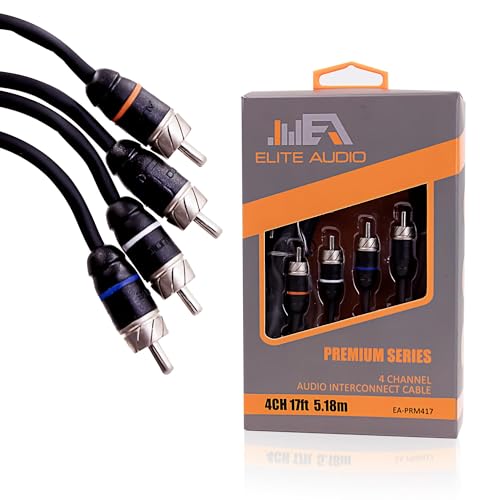
The single-cable solution for a 4-channel amp that eliminates the need for splitters and extra runs.
Running front and rear channels from a 4-channel amplifier normally means two separate RCA cables. This Elite Audio cable bundles all four channels into one jacket, so you pull one wire from the dash to the trunk instead of two. It uses 99.9% oxygen-free copper conductors with a tinned copper shield and a copper drain wire — a combination that stops alternator hum cold in high-interference environments. Owners who already have a 2-amp setup with an EQ noted that these connectors fit tighter than other brands, requiring “a push to plug them in,” which is exactly what you want to prevent that cable from vibrating loose. One owner said the cable “removed alternator hum with some small adjustments on position.”
The double-shielded construction and precision-machined brass connectors put this in premium territory, but the price reflects the convenience: one cable does the job of two. The trade-off is that if one of the four channels fails, the entire cable must be replaced rather than swapping a single line. Durability reviews are mixed, but the majority praise the build quality and clean sound.
Why it is a standout
- 4-channel single jacket saves pulling two separate RCA cables.
- 99.9% OFC and double shielding deliver studio-quality noise rejection.
- Brass quad-clamp connectors grip the amp input firmly.
The trade-off
- If one channel fails, the whole 17-foot cable must be replaced.
- It costs about three times a basic 2-channel cable run.
Best for: 4-channel amplifiers where a single clean run matters and budget allows a premium, low-maintenance cable. If you are running a simpler 2-channel setup, the SKW Y-splitter above will save you money and still kill the noise.
Not the pick for: budget-minded builds or cars with tight routing where replacing a full 17-foot cable later would be a pain.
Understanding the Specs
Gauge and Conductor Quality
The thickness of a wire is measured in AWG — a lower number means a thicker wire. For car audio, you will see 0-gauge, 4-gauge, and 22-gauge in RCA cables. Thicker wire (lower gauge) carries more current with less resistance. Oxygen-free copper (OFC) conducts better than copper-clad aluminum (CCA), so your signal stays clean from the battery to the amplifier.
Shielding and Noise Rejection
A weak or nonexistent shield is why engine whine enters your music. RCA cables should use a braided copper shield over a foil layer to block electromagnetic interference from the car’s alternator and ignition system. Twisted-pair construction also cancels induced noise by having the signal and ground wires constantly cross each other inside the jacket.
FAQ
Can I use a regular home theater RCA cable in my car?
What happens if I use a 0-gauge cable in a 4-gauge amp terminal?
Will a line output converter drain my battery?
How do I stop alternator whine through my speakers?
Can I solder spade terminals instead of crimping them?
What is the difference between SAE and DIN battery terminal posts?
Do gold-plated RCA connectors actually sound better?
Can I use a 2-channel RCA cable for a 4-channel amplifier?
Final Thoughts: The Verdict
The connectors for car audio that cover the most ground in one purchase is the SKW BG03B RCA Y-Splitter because its 22 AWG ultra-high-purity copper and multi-layer shielding deliver dead-quiet signal for any subwoofer or AV receiver. If you are working with a factory stereo and need an amp, the NuIth Line Output Converter is the smartest entry-level bridge. And for a full 4-channel install where you want to pull one cable rather than two, the Elite Audio Premium Series 17ft 4-Channel is the premium play that keeps the install clean and the noise floor invisible.
How We Picked
We do not accept paid placement. Every pick is matched to a real buyer and a real use-case; we do not hands-on test units.
Sources & Methodology
Specifications: manufacturer listings and product documentation. Review insights: verified customer reviews, as of July 2026. Pricing: not shown on this page (it changes often); check the current price via the retailer link.
As an Amazon Associate, WellFizz earns from qualifying purchases. This does not affect which products we feature.
Related Guides

Mo Maruf
I created WellFizz to bridge the gap between vague wellness advice and actionable solutions. My mission is simple: to decode the research and give you practical tools you can actually use.
Beyond the data, I am a passionate traveler. I believe that stepping away from the screen to explore new environments is essential for mental clarity and physical vitality.