Our readers keep the lights on and my smoothie glass nicely filled. As an Amazon Associate, I earn from qualifying purchases.
Specs are compiled from manufacturer listings and verified buyer reviews and can change over time — please confirm the key details on the product page before buying.
You know that thud when your heel hits concrete after a long shift or a brisk walk? It travels right up through your knees and into your lower back. The right pair of best concrete walking shoes softens that impact so you can keep going without pain. This guide compares the seven best options, focusing on what actually keeps you comfortable on hard pavement, mile after mile.
I’m Mohammad Maruf — the founder and writer behind WellFizz. This guide is built by comparing the manufacturers’ published specifications and the patterns across verified customer reviews, so you get each pick’s real strengths and trade-offs instead of marketing spin.
The goal is simple: help you match your specific needs—whether that is extra width, maximum arch support, or plush cushioning—with the shoe that actually delivers it.
Quick Picks
- Brooks Men’s Addiction Walker 2 Walking Shoe — Best Overall
- Brooks Men’s Glycerin Max 2 Neutral Running & Walking Shoe — Premium Pick
- Ryka Devotion X Max RS Walking Shoe — Best Value
- Saucony Women’s Integrity WLK 3 Walking Shoes — Classic Leather Choice
- Orthofeet Men’s Orthopedic Lava Stretch Breathable Walking Sneaker — Orthopedic Relief
- FitVille Extra Wide Walking Shoes for Men Wide Width Sneakers for Flat Feet Heel Pain Relief – Rebound Core — Budget Champion
- gdefy Orthopedic Shoes for Women with Arch Support and 3 Orthotic Insoles — Energy-Return Tech
How To Choose The Best Concrete Walking Shoes
Not every sneaker marketed as “comfortable” can handle eight hours on a concrete floor or a five-mile walk on the sidewalk. Here is what actually separates a good concrete walking shoe from one that leaves your feet sore by lunch.
Cushioning and Shock Absorption
The sole is your only barrier between your joints and the hard ground. Look for shoes with a thick, responsive midsole—materials like EVA foam (a lightweight, cushioning plastic) or proprietary compounds such as RE-ZORB or VersoShock absorb the impact before it reaches your heel and knees.
Arch Support and Stability
Concrete is perfectly flat, which can aggravate fallen arches or plantar fasciitis (a heel-pain condition). A shoe with a built-in orthotic insole (a medically shaped footbed) or a supportive heel counter helps keep your foot aligned and reduces strain on your plantar fascia (the ligament along the bottom of your foot).
Fit and Toe Box Width
Your feet swell during long periods of standing or walking. A shoe with a wide toe box lets your toes splay naturally and prevents pinching, while a secure heel hold stops your foot from sliding and causing blisters.
Quick Comparison
| Model | Best For | Weight | Drop | Cushion Type | Amazon |
|---|---|---|---|---|---|
| Brooks Addiction Walker 2 | Maximum stability | 14.5 oz / 411.1 g | 12 mm | Support | Amazon |
| Saucony Integrity WLK 3 | Premium leather | 1.1 lbs | — | Neutral | Amazon |
| Ryka Devotion X Max RS | Performance walking | 8.6 oz / 244 g | 10 mm | RE-ZORB | Amazon |
| Brooks Glycerin Max 2 | Plush, luxurious feel | 11.3 oz / 320.3 g | 6 mm | Plush | Amazon |
| gdefy Orthopedic Shoes | All-day standing | — | — | VersoShock | Amazon |
| FitVille Rebound Core | Extra wide fit | — | — | PropelCore | Amazon |
| Orthofeet Lava Stretch | Orthopedic relief | — | — | Ortho-Cushion | Amazon |
In‑Depth Reviews
1. Brooks Men’s Addiction Walker 2 Walking Shoe

The gold standard for stability that a 225 lbs reviewer wore for ten years straight.
This shoe keeps you planted on concrete. It provides maximum support (the cushion level is literally labeled “Support”), with a 12mm midsole drop that encourages a smooth heel-to-toe stride. At 14.5 oz / 411.1 g it is heavier than most, but that weight gives you a stable base—buyers report it excels on steep descents and wet surfaces without slipping. One owner mentioned his black pair from 2015 still gets use, which tells you the leather-and-synthetic build outlasts typical walking shoes. The Addiction Walker 2 also carries the APMA Seal of Acceptance (American Podiatric Medical Association approval) and the PDAC A5500 Diabetic Shoe designation (a Medicare-recognized code for diabetic footwear). Compared to the lighter, more flexible Ryka Devotion X Max RS below, the Brooks is the tank—less agile but far more supportive over long days on concrete.
What wins you over
- APMA accepted and PDAC A5500 certified for diabetic footwear
- Extremely durable construction—owners mention a decade of use
- Excellent stability on wet surfaces and descents
The honest trade-offs
- Heavier than most walking shoes at 14.5 oz
- Some buyers found the toe box slightly narrower than the previous version
Your best match: If you want a stable, long-lasting walking shoe that your orthopedist would approve of, this is the one.
Heads up: If you prioritize ultralight weight or need an exceptionally wide toe box, you might prefer the FitVille below.
2. Brooks Men’s Glycerin Max 2 Neutral Running & Walking Shoe
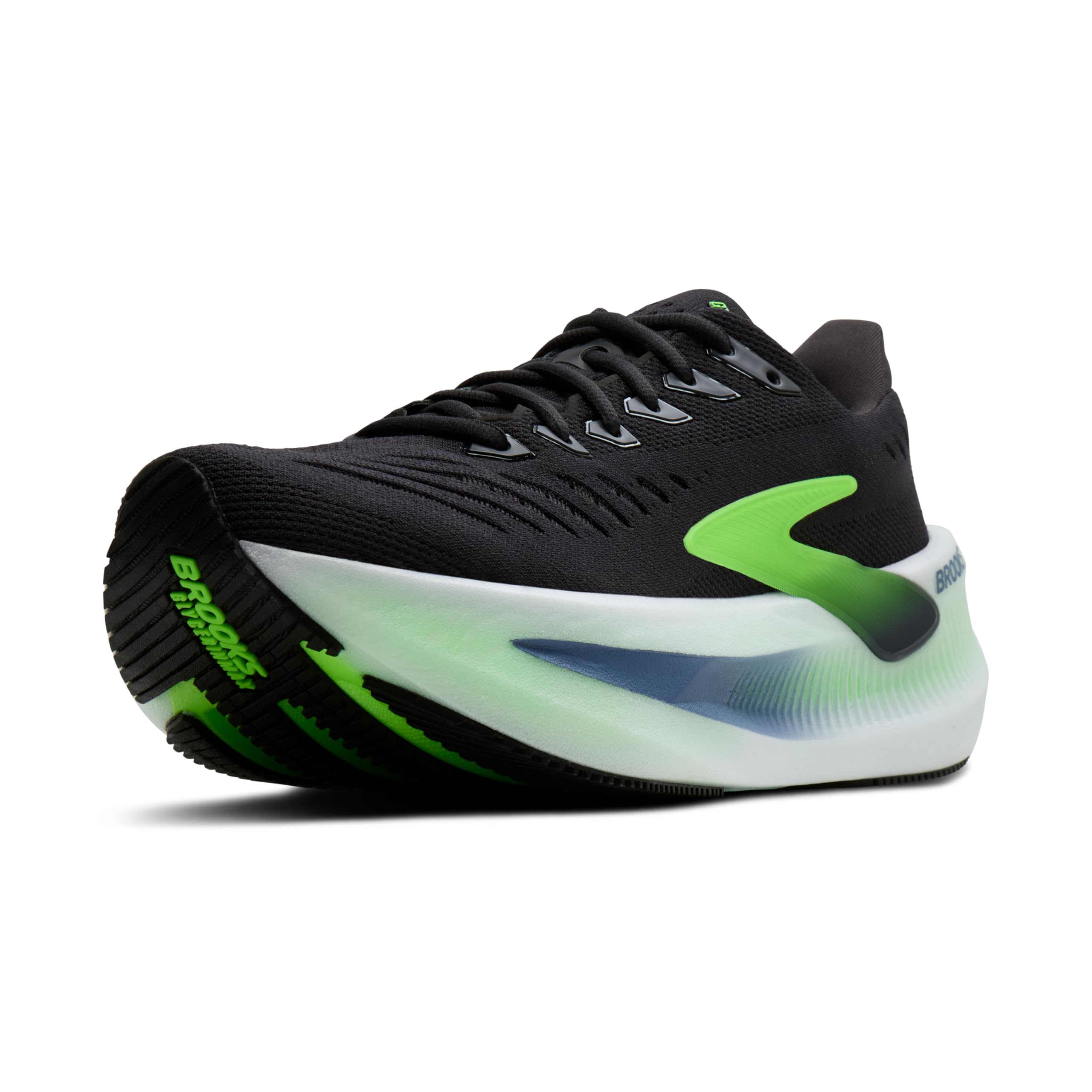
Plush, luxurious soft landings for bigger frames that demand serious cushioning.
If the Addiction Walker 2 is the stability king, the Glycerin Max 2 is the cloud. It uses a plush, luxurious midsole with a 6mm drop—lower than the Addiction Walker’s 12mm, which encourages a more natural midfoot stride. Customers note that the shoe’s ramp at the front creates a gentle rolling motion, reducing the effort of each step on concrete. One 225-pound buyer reported wearing the first-generation model every day for a full year before the sole started to crush down. While it does not carry the APMA Seal like the Addiction Walker 2, it is lighter at 11.3 oz / 320.3 g and offers a more flexible, forgiving ride that runners and walkers alike appreciate. Some buyers mentioned the second-generation toe box feels slightly smaller, but going up half a size solved that.
Luxurious landings: For walkers who want the most cushioned, springy ride on concrete and are willing to invest in it.
One caveat: No APMA certification, and the toe box runs a touch snug for some wide-footed buyers.
Reach for it if: you are a bigger-framed walker who wants pillowy softness without sacrificing lateral stability.
Look elsewhere if: you need a certified diabetic shoe or the maximum arch support of a structured stability shoe.
3. Ryka Devotion X Max RS Walking Shoe
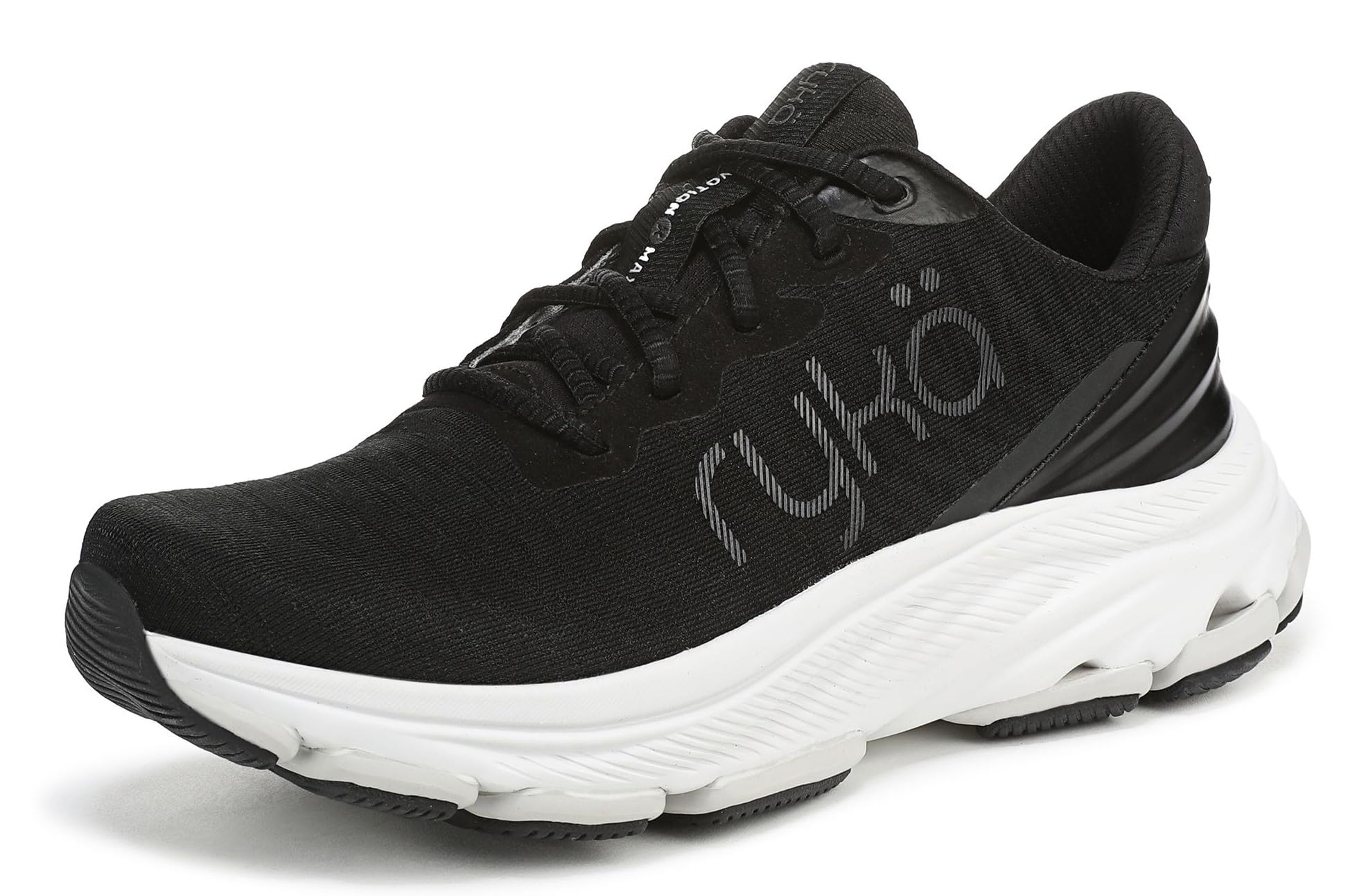
Lab-tested for low impact forces and a featherlight feel at just 8.6 oz per shoe.
Ryka designed this women’s-specific walking shoe for high-performance fitness walking on hard surfaces. The full-length RE-ZORB responsive cushioning (a shock-absorbing foam) plus RE-ZORB LITE pads in the forefoot and heel mean you get impact protection without a clunky sole. Reviewers point out walking 4–6 miles daily and finding it comfortable beyond the first week—no break-in period needed. One reviewer even called it “more cushiony than my Hoka Bondi 9s” at a far lower cost. The 10mm drop is moderately higher, which helps take pressure off your Achilles tendon (the cord at the back of your ankle), and the durable two-piece rubber sole has built-in compression channels for extra shock absorption. It is also the lightest shoe in this roundup at 244 g / 8.6 oz per shoe, a full 5.9 oz lighter than the Brooks Addiction Walker 2. The trade-off is less structured support—this is a neutral shoe, so if you need heavy pronation control (to correct inward ankle rolling), the Brooks or Orthofeet options are a better fit.
Why walkers love it
- Proven in lab testing to provide low deceleration and impact forces
- Very high perceived cushioning at a lightweight build
- Removable insole accommodates custom orthotics easily
Worth noting
- Wide toe box may feel loose for narrow-footed wearers
- Not designed for heavy pronation support
Best for: women who walk multiple miles daily on concrete and want a light, bouncy shoe that does not require a break-in.
skip it if: you have severe overpronation or need a wide width beyond standard sizing.
4. Saucony Women’s Integrity WLK 3 Walking Shoes

Premium full-grain leather that looks sharp while delivering dependable arch support.
This shoe gives you a classic, polished look without sacrificing all-day comfort on concrete. The upper is made from premium full-grain leather (the strongest, most durable layer of the hide), which makes it sturdy and dressier than most mesh sneakers. Multiple buyers emphasize the excellent arch support straight from the start and the high-quality construction that holds up to daily use on stairs and uneven roads. At 1.1 pounds per pair it is not the lightest, but the neutral cushioning and wide toe box make it forgiving for people with foot issues like bunions (a bony bump at the big toe joint) or hammertoes (a bent toe joint). One reviewer called it a “sturdy, well-fitting walking shoe” that looks like “old lady shoes” but is undeniably comfortable. It lacks the high-tech cushioning of the Ryka or Brooks options, but for a traditional walker who values leather durability, it is a reliable pick.
Classic comfort: Excellent arch support and high-quality leather make these a durable everyday walking shoe that looks presentable.
The stylistic trade-off: The design leans conservative, so it may not appeal to those wanting a modern athletic look.
Grab these if: you want a leather walking shoe with genuine arch support that you can wear to work and on weekend walks.
Pass if: you need maximum modern cushioning or a very lightweight feel for long fitness walks.
5. Orthofeet Men’s Orthopedic Lava Stretch Breathable Walking Sneaker

Built from the ground up to relieve foot pain with a customizable orthotic system.
If you have plantar fasciitis, neuropathy (nerve pain), or general foot pain that makes every step on concrete a reminder, Orthofeet designed this shoe for you. The Ortho-Cushion system includes a built-in orthotic insole, a shock-absorbing sole, and a pressure-free fit. It also comes with fitting spacers and an Arch Booster (an extra support insert), giving you fine-grained control over how much arch support you get. Buyers with neuropathy report these are comfortable enough for all-day wear and that the wide toe box and plush lining make a real difference. One reviewer did note the shoe felt “a whole size larger” and recommended buying half a size down, while another mentioned the sole felt “very hard” due to the supportive construction. It is not the cloud-like shoe the Brooks Glycerin Max 2 is, but for targeted orthopedic relief it leads the pack. The Orthofeet also accepts custom orthotics—the insoles are removable and there is extra depth to fit them.
Pain relief features
- Built-in orthotic insole with adjustable Arch Booster
- Wide base and firm heel counter for stability
- Slip-resistant sole for secure steps on concrete
What to watch for
- Runs large—some buyers recommend going half a size down
- Cushioning feels firm to accommodate orthotic support
Ideal for: anyone dealing with plantar fasciitis, neuropathy, or heel pain who needs a shoe with adjustable orthotic support.
Not for: walkers who prefer a very soft, plush underfoot feel over structured support.
6. FitVille Extra Wide Walking Shoes for Men Wide Width Sneakers for Flat Feet Heel Pain Relief – Rebound Core

The widest toe box in the lineup, going up to 6E for true XX-wide fitting.
If you have wide feet, flat feet, or need space for custom orthotics, the FitVille Rebound Core is a standout. It offers sizes from 8 to 16 and widths in 2E, 4E, and 6E—the only shoe here that goes to XX-wide (E stands for extra width, with each E adding about 1/4 inch). The patented PropelCore sole includes a shock-absorbing pad, arch support, and an anti-pronation heel ring (a support ring that helps correct inward ankle rolling) designed for plantar fasciitis relief. One reviewer noted, “My plantar fasciitis in my right foot seems to be improving, and I can really feel the anti-pronation ring working to straighten out my foot while walking.” At a budget-friendly price, it delivers features that usually cost twice as much. That said, some reviewers noted the material does not look like it will hold up for years, and you will need a shoe horn—they are not slip-ons. The V1 model has a slightly narrower toe box than the V5, so wide-footed buyers should pay close attention to the version.
Fit highlights
- Available in Wide (2E), Extra Wide (4E), and Extra Extra Wide (6E)
- Patented PropelCore sole with anti-pronation ring for foot pain relief
- Removable insoles accommodate custom orthotics
Consider these limits
- Material may not be as durable as premium leather options
- V1 has a slightly more narrow toe box than the V5 model
Your pick if: you have very wide feet, flat feet, or heel pain and want affordable relief with a proven design.
Pass on these if: you need a shoe that looks modern or you prioritize long-term leather durability.
7. gdefy Orthopedic Shoes for Women with Arch Support and 3 Orthotic Insoles
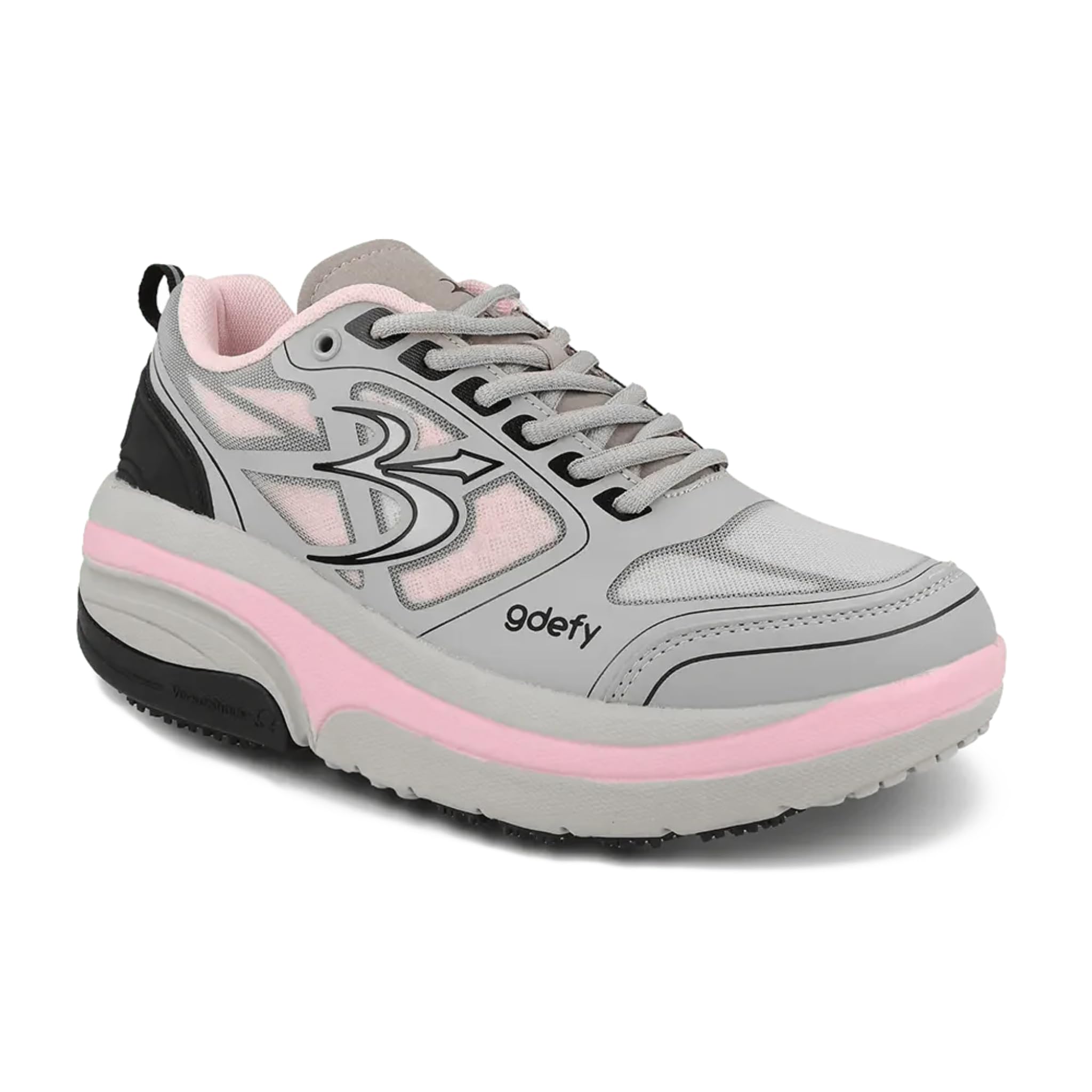
Three sets of orthotic insoles give you a custom fit right from the start.
Gravity Defyer’s gdefy line uses a rocker sole (a curved sole that rocks you from heel to toe) with VersoShock technology, intended to return energy with each step and reduce impact on concrete. What sets this shoe apart is the inclusion of three different orthotic insoles: one standard, one for pronation control, and a set of sub-insoles to fine-tune the fit. Buyers with plantar fasciitis and high arches report significant relief, with one noting the gdefy helped them walk without pain for the first time in years. Another reviewer, a nurse who stands all day, said these are the only shoes that help relieve discomfort from standing on concrete. There are durability concerns, however. Some buyers reported the outer mesh breaking down within two months, and the midsoles can deteriorate after a year of heavy use. The rocker sole also requires a short adjustment period—the company recommends wearing them 1–2 hours daily for 3–5 days to adapt. Compared to the Brooks Addiction Walker 2, which buyers have worn for a decade, the gdefy is less sturdy but offers a unique energy-return feel that many walkers love.
Standout features
- Comes with 3 orthotic insole sets for customized arch and pronation support
- Rocker sole promotes natural heel-to-toe gait on concrete
- Buyers with plantar fasciitis report significant pain relief
Honest downsides
- Durability concerns—some shoppers say mesh breakdown in under 2 months
- Requires a 3–5 day break-in period for the rocker sole
Go for it if: you want an energy-return rocker sole with customizable arch support for plantar fasciitis relief.
Think twice if: you need a shoe that lasts multiple years or you dislike the feel of a rocker bottom sole.
Understanding the Specs
Midsole Drop (Heel-to-Toe Drop)
This is the difference in height between the heel and the forefoot of the shoe, measured in millimeters. A higher drop (like the Brooks Addiction Walker 2’s 12mm) encourages a heel-first walking stride and takes pressure off your Achilles, which is common for walkers. A lower drop (like the Glycerin Max 2’s 6mm) encourages a midfoot strike and feels more natural for some people, but can put more strain on your calves when you first switch.
Arch Support and Orthotic Compatibility
Arch support refers to the built-in contour under the middle of your foot that prevents your arch from collapsing. If you have flat feet or plantar fasciitis, look for shoes with a noticeable arch shape in the insole. Many shoes here have removable insoles, allowing you to swap in your own custom orthotics. The Orthofeet Lava Stretch goes a step further by including extra fitting spacers and an Arch Booster to adjust support levels.
Weight
The weight of a walking shoe directly affects how tired your feet feel after miles on concrete. A lighter shoe like the Ryka Devotion X Max RS at 244 g / 8.6 oz per shoe reduces fatigue, while a heavier shoe like the Brooks Addiction Walker 2 at 14.5 oz / 411.1 g provides more stability and durability but can feel clunky. Your choice depends on whether you prioritize speed and agility or planted support.
Cushioning Technology
Different brands use proprietary foams and systems to absorb shock. EVA foam (ethylene-vinyl acetate, a lightweight plastic foam) is a common lightweight base. Brooks uses plush cushioning in the Glycerin Max 2 for soft landings. Ryka uses RE-ZORB responsive cushioning with RE-ZORB LITE pads for impact protection. Gravity Defyer uses VersoShock for energy return. There is no single “best” technology—match the feel (plush, firm, springy) to your personal preference on concrete.
FAQ
How is a concrete walking shoe different from a running shoe?
How much arch support do I need for concrete walking?
Will these shoes fit my custom orthotics?
What is the best width for wide feet on concrete walking shoes?
How long do concrete walking shoes typically last?
Should I buy a half size up for concrete walking shoes?
Can I wear these walking shoes for running too?
What does a 10mm or 12mm heel-to-toe drop mean for my walking stride?
How do I clean my concrete walking shoes without ruining them?
Are these shoes slip-resistant on wet concrete?
Final Thoughts: The Verdict
For most people, the concrete walking shoes winner is the Brooks Addiction Walker 2 because it delivers class-leading stability, certified support, and proven durability that buyers have trusted for years. If you want a lighter, bouncier ride that feels like walking on clouds, grab the Brooks Glycerin Max 2. And for the best value with lab-tested performance, the Ryka Devotion X Max RS gives you premium cushioning at a mid-range price.
How We Picked
We do not accept paid placement. Every pick is matched to a real buyer and a real use-case; we do not hands-on test units.
Sources & Methodology
Specifications: manufacturer listings and product documentation. Review insights: verified customer reviews, as of July 2026. Pricing: not shown on this page (it changes often); check the current price via the retailer link.
As an Amazon Associate, WellFizz earns from qualifying purchases. This does not affect which products we feature.

Mo Maruf
I created WellFizz to bridge the gap between vague wellness advice and actionable solutions. My mission is simple: to decode the research and give you practical tools you can actually use.
Beyond the data, I am a passionate traveler. I believe that stepping away from the screen to explore new environments is essential for mental clarity and physical vitality.