Our readers keep the lights on and my smoothie glass nicely filled. As an Amazon Associate, I earn from qualifying purchases.
Walk into a hardware store and you are faced with a wall of jugs promising weatherproof protection. The problem is choosing the wrong one means driveway stains, peeling films, or a shine that fades within months. Concrete stain and sealer work as a single system — one adds color while the other locks it in, but not every formula plays well together or survives freeze-thaw cycles.
I’m Mohammad Maruf — the founder and writer behind WellFizz. This guide cuts through the chemical confusion by comparing real-world coverage rates, base chemistries, and gloss levels across seven competitive products so you know exactly which gallon to pour.
The data-backed evaluation that follows will help you find the right best concrete stain and sealer for your specific surface, climate, and desired finish.
How To Choose The Best Concrete Stain And Sealer
Selecting the optimal product starts with understanding three core variables: the base chemistry (solvent vs. water), the desired finish (penetrating vs. film-forming, gloss vs. matte), and the application surface (broom-finished, stamped, or paver). A mismatch here causes poor adhesion, premature wear, or a slippery surface that becomes a liability.
Solvent-Based vs. Water-Based Chemistry
Solvent-based acrylics like the Armor AR350 penetrate deeper and deliver a richer color enhancement, but they come with strong VOC odors and require respirator use. Water-based options such as the DOMINATOR LG+ offer low odor, fast dry times, and easier cleanup, making them better for occupied homes or enclosed patios. The trade-off is that water-based films can be less abrasion-resistant under heavy tire traffic.
Penetrating vs. Film-Forming Sealers
Penetrating formulas like the MasonryDefender silane siloxane sealer bond chemically inside the concrete pores to repel water without changing the surface texture. They preserve the natural slip resistance of broom-finished concrete and do not peel. Film-forming acrylics, on the other hand, create a plastic layer on top of the concrete. They produce the wet look effect and lock in joint sand, but they require re-application when the film wears and can become slick when wet.
Coverage Rate and Porosity
Listed coverage rates vary wildly — from 90 square feet per gallon on porous old concrete to 400 square feet on dense pavers. Always test a small area first. High-porosity surfaces absorb more product on the first coat, so plan for two thin coats rather than one heavy application that can pool and dry cloudy.
Quick Comparison
On smaller screens, swipe sideways to see the full table.
| Model | Category | Best For | Key Spec | Amazon |
|---|---|---|---|---|
| DOMINATOR LG+ | Water-Based Acrylic | Low odor, fast-dry paver sealing | 250-400 sq. ft. per gallon | Amazon |
| Armor AR350 | Solvent-Based Acrylic | Color enhancement, low gloss wet look | 175-225 sq. ft. per gallon | Amazon |
| Cryli-Tek 5505 | Solvent-Based Acrylic | High-gloss wet look, longest wear | Self-crosslinking, UV stable | Amazon |
| Concrete Resurrection WRC | Water-Based Stain | Custom color blending, marble effects | 100-500 sq. ft. per 32 oz | Amazon |
| MasonryDefender Paver Sealer | Water-Based Acrylic | Low gloss paver & joint sand lock | 75-150 sq. ft. per gallon | Amazon |
| Shabebe Super Wet Look | Solvent-Based Sealer | High gloss on stone & brick | 150-300 sq. ft. per gallon | Amazon |
| MasonryDefender Silane Siloxane | Penetrating Sealer | Invisible waterproofing, no gloss change | 90-150 sq. ft. per gallon | Amazon |
In‑Depth Reviews
1. DOMINATOR LG+
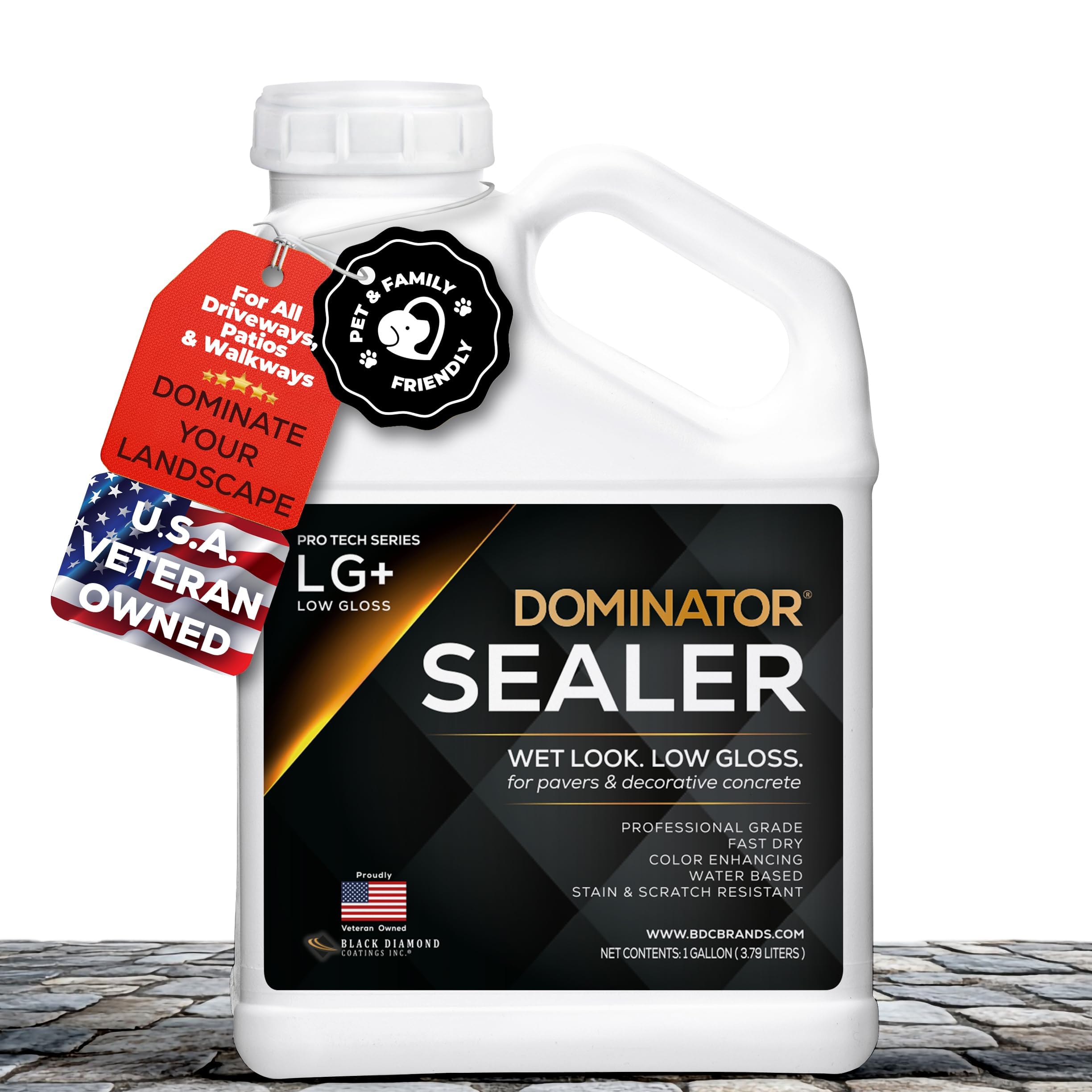
DOMINATOR LG+ sits at a sweet spot in this comparison by pairing a water-based formula — meaning low odor and easy soap-and-water cleanup — with a generous coverage rate of 250 to 400 square feet per gallon. That range is notably higher than many competitors because the relatively low-viscosity acrylic lays down thin, allowing one gallon to stretch further across dense pavers or smooth decorative concrete. Users consistently report that two coats provide a durable low-gloss wet look that makes paver colors pop without the sticky residue some film-formers leave behind.
The fast dry time between coats makes this a viable one-day project for a medium-sized patio or driveway. The formula dries clear even though it applies milky-white, so you avoid the panic of seeing white streaks during application. The protective shell resists oil stains and weather exposure for an estimated two to four years before reapplication, depending on sun intensity and traffic levels.
One caution involves cold weather — the manufacturer warns against application if surface temperatures will fall below 50°F within 48 hours before or after sealing. This product also works best on concrete pavers and decorative concrete; it is explicitly not intended for natural stone or clay brick surfaces. A few users noted that ants and weeds can still penetrate if the joint sand was not fully locked, so pairing this with a polymeric sand prep is recommended.
Why it’s great
- Low-odor water-based formula for comfortable indoor or enclosed-area application
- Exceptional coverage rate reduces cost per square foot on dense surfaces
- Fast intercoat drying enables same-day two-coat completion
Good to know
- Not suitable for natural stone, clay brick, or extremely porous old concrete
- Cold-weather application restrictions limit use in northern fall or early spring
2. Armor AR350 Low Gloss Wet Look Concrete Sealer

The Armor AR350 is the benchmark for solvent-based low-gloss wet look sealers in the mid-range tier. Its resin blend darkens concrete to replicate the saturated color you see when the surface is wet — an effect that stamped concrete owners and pool deck renovators seek. Coverage sits at 175 to 225 square feet per gallon, which is tighter than water-based alternatives, but the depth of color enhancement justifies the higher gallon cost per project.
Multiple user reports confirm that a single coat dramatically transforms broom-finished gray concrete into a rich, dark surface that resists UV yellowing. The solvent carrier produces a strong chemical odor that requires a respirator for safe application, though the smell dissipates within an hour outdoors. The self-priming nature allows recoating immediately without sanding, and the cured film resists road salts, freeze-thaw damage, and light vehicle traffic well.
The AR350 comes in three VOC formulations — 700, 350, and 50 — so it can be legally shipped to all 50 states. The 700 VOC variation (provided in this guide) offers the strongest solvent punch and deepest penetration, but buyers in California or other strict VOC states must select the compliant variant. Some users experienced bubbling when applying in direct sun on hot surfaces, so morning or late-afternoon application is advisable.
Why it’s great
- Dramatic wet-look color enhancement on stamped and broom-finished surfaces
- Three VOC formulations ensure legal compliance anywhere in the United States
- Long-lasting UV-resistant finish withstands road salts and freeze-thaw cycling
Good to know
- Strong solvent odor demands full respirator and excellent ventilation
- Bubbles can form if applied on hot surfaces or in direct sunlight
3. Cryli-Tek 5505 Solvent Based Acrylic High Gloss Wet Look Sealer
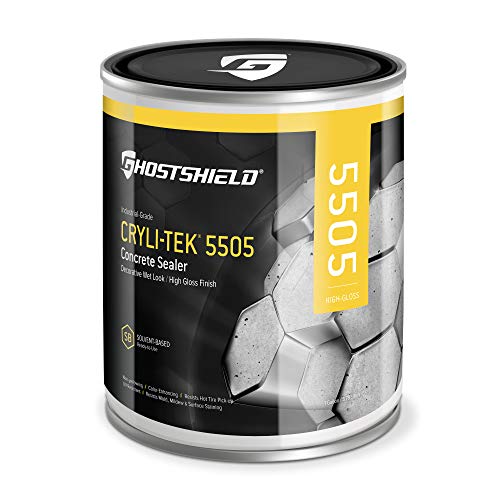
Cryli-Tek 5505 distinguishes itself through self-crosslinking resin technology that bonds chemically as it cures, forming a network that is measurably tougher than standard acrylic sealers. The manufacturer claims up to three times longer service life than competitors, and user reports of two-plus years of maintained gloss and water beading on high-traffic paver patios back that assertion. It delivers a true high-gloss wet look rather than the low-gloss sheen of the Armor AR350, making it the top choice for homeowners who want a polished, reflective finish.
The high-solids content means the product does not shrink as much during curing, resulting in a thicker protective film that stands up to cracking and spalling. Users note that it performs exceptionally well in cold-weather application — one review specifically mentions that it worked quickly in near-freezing temperatures to restore a 20-year-old brick patio. The solvent base again carries strong fumes, and the manufacturer alongside users strongly emphasize ventilation and respirator use.
A notable limitation is coverage. Multiple buyers reported that the one-gallon container covered less area than anticipated on porous surfaces, requiring the purchase of a second gallon for medium-sized driveways. The product also bonds aggressively — spills on surrounding surfaces must be cleaned immediately before the solvent evaporates, or they become permanent. For those wanting to reduce slip risk, the companion Grip-Tek 250 additive is recommended.
Why it’s great
- Self-crosslinking resin yields the longest-lasting gloss of any product reviewed
- Performs reliably in cold-weather application when other acrylics fail
- High-solids formula resists shrinking, cracking, and spalling over years of service
Good to know
- Strong toxic fumes require a respirator and cannot be used in enclosed spaces
- Actual coverage is often lower than advertised on porous or rough concrete surfaces
4. Concrete Resurrection WRC Stain Concentrate
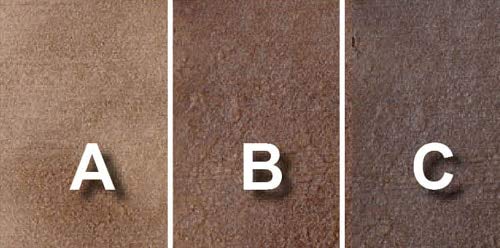
Unlike the one-step sealers above, Concrete Resurrection WRC is a water-reducible concentrated stain that must be mixed with water and then sealed over with a separate topcoat. This two-step process appeals to DIYers who want custom color blending — the semi-transparent finish allows layering multiple colors while still wet to create variegated marble-like patterns. The Mocha shade tested here produces a medium brown tone that can be lightened or darkened by adjusting the stain-to-water ratio from one part stain to four parts water up to a full-strength application.
Users report that the stain soaks into concrete quickly and dries fast, so working in manageable sections is essential to avoid lap marks. A sealer is required afterward because the stain alone is not abrasion-resistant; exposed interior floors showed wear in high-traffic zones after a single winter without a topcoat. The low-odor, water-based carrier makes it suitable for indoor garage floors and basement slabs.
Quality control issues surface occasionally — a few users received product with thickened consistency that did not pour properly, suggesting that some batches may sit on shelves too long. The 32-ounce concentrate yields a wide coverage range of 100 to 500 square feet depending on the dilution ratio, but that variability makes precise project planning difficult. Plan to buy extra concentrate for touch-ups, as matching the exact shade batch-to-batch can be challenging.
Why it’s great
- Customizable dilution enables precise control over color saturation and opacity
- Low-odor water-based formulation safe for indoor and enclosed concrete floors
- Layer-while-wet technique produces unique variegated and marble-like patterns
Good to know
- Requires a separate sealer topcoat to prevent wear and staining over time
- Batch consistency varies, and thickened product has been reported
5. MasonryDefender Patio Paver Sealer

For homeowners who prefer a natural, non-reflective finish, the MasonryDefender Patio Paver Sealer delivers a low-gloss water-based acrylic that dries clear and matte. Its primary claim to fame is joint sand stabilization — the sealer hardens the polymeric sand between pavers, preventing ants, weeds, and erosion from undermining the installation. Users who reseal slate sidewalks and brick walkways annually report that the matte look keeps the stone looking natural while locking every piece firmly in place.
The coverage rate of 75 to 150 square feet per gallon is on the lower end of the spectrum, which makes this product relatively expensive on a per-project basis. However, reviewers consistently describe it as worth the cost for its primary purpose: preventing sand washout during heavy rain. The low-odor formula is pleasant to work with, and cleanup requires only soap and water. Application with a pump sprayer followed by a back-brush ensures even penetration into joints.
One limitation is that the white, milky liquid can leave a slight haze if over-applied or back-brushed too aggressively, so thin coats are critical. It is also not designed to darken or enhance paver color — if you want a wet look or rich color saturation, this is the wrong product. Stick with it if your priority is structural integrity of the paver joints rather than aesthetic gloss.
Why it’s great
- Stabilizes and hardens joint sand to prevent weed growth and ant colonization
- Dries to a natural matte finish that preserves the original stone appearance
- Low-odor water-based formula with easy soap-and-water cleanup
Good to know
- Coverage is low relative to the gallon size, increasing project material cost
- Does not provide the wet-look color enhancement many decorative concrete owners want
6. Shabebe Super Wet Look Stone Sealer

Shabebe’s super wet look sealer is formulated to deliver a high-gloss, mirror-like finish on non-porous surfaces such as slate, brick, and dark-colored natural stone. Users report that it brings out the vivid colors in landscaping rocks and outdoor fire tables, with a sun-activated shine that deepens in brightness. The solvent-based chemistry creates a durable shell that resists water- and oil-based stains for one to three years per application, depending on exposure.
The product applies milky-white and dries clear, but the high-gloss appearance varies significantly by substrate. On porous concrete and light masonry, the wet look is less pronounced than on dark slate or smooth pavers. Some users achieved excellent results by diluting the sealer with up to 30 percent water and applying it with a pump sprayer, though the manufacturer recommends testing a small hidden area first to confirm the aesthetic outcome.
Over-application is the primary risk here — too much product leaves white spots that remain visible after drying, and the manufacturer warns that the glossy finish can look blotchy if not spread evenly. The 150 to 300 square feet coverage range is moderate, but the product’s ultra-concentrated nature means a single gallon can go further on non-porous surfaces. The strong solvent smell again calls for a respirator.
Why it’s great
- Produces a true high-gloss wet look that dramatically enhances dark stone colors
- Sun-activated shine effect deepens the reflective appearance over time
- Durable shell resists stains and weathering for up to three years
Good to know
- High-gloss effect is muted on porous concrete and light-colored masonry
- White spots from over-application are difficult to reverse once dried
7. MasonryDefender Concrete Sealer – Deep Penetrating Silane Siloxane
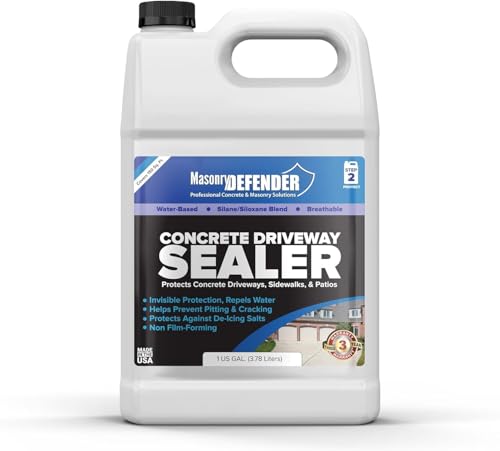
This entry-level penetrating sealer from MasonryDefender uses silane siloxane technology to bond deep within concrete pores and repel liquid water without forming any surface film. The result is completely invisible protection — no gloss, no color change, and no change in slip resistance. For driveways, walkways, and shed slabs where cosmetic appearance is secondary to preventing freeze-thaw damage and chloride ion penetration, this is the most straightforward solution in the lineup.
Users in the Pacific Northwest, where constant rain is a reality, confirm that water beads and rolls off treated surfaces for a full season, with many reporting three years of effective repellency before reapplication is needed. The breathable nature of the sealer allows trapped moisture vapor to escape, which prevents the blistering and peeling that film-forming sealers can suffer on existing concrete that has not cured fully. Application with a low-pressure garden sprayer takes about ten minutes for a small slab, making it the fastest product to deploy.
The coverage of 90 to 150 square feet per gallon is the lowest of any product in this guide, but the material cost per gallon is also the lowest. The trade-off is that this sealer offers no color enhancement, no joint sand stabilization, and no UV protection for decorative work. If your goal is simply to keep water out of an uncolored driveway without changing its appearance, this is the most cost-effective weapon.
Why it’s great
- Completely invisible protection preserves the natural look and texture of bare concrete
- Breathable formula prevents blistering and allows moisture vapor to escape
- Fast and simple garden-sprayer application with no back-brushing required
Good to know
- No gloss, color enhancement, or sand stabilization for decorative or joint-sensitive projects
- Lowest coverage rate per gallon increases reorder frequency on large areas
FAQ
Can I apply a concrete stain and sealer over an existing acrylic coating?
How long should I wait before driving on a freshly sealed concrete driveway?
Why did my clear concrete sealer turn white or hazy after drying?
Final Thoughts: The Verdict
For most users, the best concrete stain and sealer winner is the DOMINATOR LG+ because it balances low-odor water-based safety with the widest coverage range and a beautiful low-gloss wet look that lasts two to four years. If you want dramatic color enhancement and don’t mind wearing a respirator, grab the Armor AR350. And for bare-bones waterproofing that keeps your driveway looking exactly as it does now, nothing beats the MasonryDefender Silane Siloxane.

Mo Maruf
I created WellFizz to bridge the gap between vague wellness advice and actionable solutions. My mission is simple: to decode the research and give you practical tools you can actually use.
Beyond the data, I am a passionate traveler. I believe that stepping away from the screen to explore new environments is essential for mental clarity and physical vitality.