Our readers keep the lights on and my smoothie glass nicely filled. As an Amazon Associate, I earn from qualifying purchases.
A lumpy, off-kilter concrete slab isn’t just an eyesore; it’s a ticking time bomb for any flooring you put on top of it. From cracked tiles to creaking laminate, the root cause is almost always the same: a subfloor that wasn’t properly leveled. The solution isn’t a complete demolition — it’s a precisely mixed and applied concrete self-leveler that transforms a wave into a mirror-flat plane.
I’m Mohammad Maruf — the founder and writer behind WellFizz. My approach to this guide is built on hours of dissecting technical data sheets, analyzing real-world application feedback from contractors and DIYers, and comparing the specific chemical properties that separate a reliable pour from a frustrating failure.
Whether you are prepping for tile, hardwood, or luxury vinyl, finding the best concrete self-leveler for your project means understanding flow characteristics, working time, and compressive strength.
How To Choose The Best Concrete Self-Leveler
Selecting the right self-leveler is about more than just grabbing the biggest bag. You need to consider the depth of your pour, the hardness required for your final flooring, and how fast you need to work. Getting these factors wrong can lead to cracking, poor adhesion, or a finish that is anything but level.
Pour Depth and Coverage
Some levelers are designed for thin feathering applications, while others can handle deeper fills of one inch or more. A product that excels at shallow patches will crack if poured too thick. Always check the manufacturer’s specified minimum and maximum pour depth to ensure your product matches the severity of your floor’s dips.
Compressive Strength and Hardness
The compressive strength of a leveler, measured in psi (pounds per square inch), dictates how much weight it can support. A low psi product might be fine under a floating floor, but you need a high-psi leveler for areas that will bear heavy traffic or point loads, such as under tile or in a workshop.
Working Time and Flow
Once mixed, a self-leveler has a limited pot life. High-flow formulations are easier to spread and self-level with minimal effort, but they set faster. Slower-setting products give you more time to work but require more manual spreading with a gauge rake. Match the working time to your skill level and the size of the area you are covering.
Quick Comparison
On smaller screens, swipe sideways to see the full table.
| Model | Category | Best For | Key Spec | Amazon |
|---|---|---|---|---|
| Ardex Feather Finish | Premium | Thin feathering & smoothing | 15-minute set time | Amazon |
| QuietWalk LV Underlayment | Premium | Luxury vinyl & sound reduction | 360 sq ft coverage | Amazon |
| GoldMax Premium Underlayment | Mid-Range | Moisture protection over concrete | 3mm thickness | Amazon |
| Roberts Black Jack Underlayment | Mid-Range | Large-area floating floors | 600 sq ft roll | Amazon |
| Henry W.W. Co. 12064 Patch | Entry-Level | Small spot fixes & patches | 1 Gallon pre-mixed | Amazon |
| QuietWalk Plus Underlayment | Premium | Laminate & glueless floors | GREENGUARD Gold | Amazon |
| QEP SuperFelt Underlayment | Mid-Range | Sound insulation & thermal | 3mm recycled fiber | Amazon |
In‑Depth Reviews
1. Ardex Feather Finish

Ardex Feather Finish is the go-to solution for achieving a glass-smooth surface over concrete, plywood, and existing adhesive residues. This cement-based underlayment mixes with water to a creamy consistency, allowing you to trowel on ultra-thin coats that bond aggressively to the substrate. DIYers report excellent results using it to encapsulate old mastic and cutback adhesive, creating a clean canvas for new flooring without the need for mechanical removal.
The product’s quick-setting nature is a double-edged sword: floor coverings can be installed in as little as 15 minutes, but you must work fast. The manufacturer recommends mixing to a “heavy whipping cream” texture for optimal self-leveling properties. Users have successfully applied it in multiple thin coats to build up deeper low spots on countertops and fireplaces, noting that no sanding is needed between layers if applied with firm pressure.
This leveler shines in its versatility, performing equally well over concrete, masonry, and even gypsum-based subfloors. Its engineered formula resists surface staining and discoloration, which is critical for visible applications like a concrete-look fireplace surround. For most interior prep work requiring a smooth, durable base, this is the premium pick.
Why it’s great
- Bonds directly to cutback adhesive without primer
- Sets fast, allowing same-day flooring installation
- Can be applied in ultra-thin feather-edge layers
Good to know
- Working time is short, requiring quick mixing and application
- Not designed for deep fills over 1/2 inch
- Powder form requires mixing, not as convenient as pre-mix
2. QuietWalk LV Underlayment

While not a traditional self-leveling compound, QuietWalk LV is a premium underlayment that serves a similar purpose for floating floors over concrete. Its dense recycled fiber construction, combined with a 6-mil vapor barrier, is designed specifically for luxury vinyl plank (LVP) and engineered wood. It excels at smoothing out minor subfloor imperfections and providing critical moisture protection, which is essential when installing floating floors directly on slab.
The material’s patented DriWick technology actively pulls moisture away from the subfloor and wicks it to the edges, preventing vapor from getting trapped under your flooring. Users note that the product is easy to cut with scissors and lays flat instantly. The integrated adhesive strips simplify seaming, though some users have reported defects where the release tape was difficult to separate without damaging the adhesive.
This underlayment is GREENGUARD Gold Certified for low VOC emissions, making it a safe choice for interior living spaces. The compression-resistant fibers help maintain floor integrity under heavy furniture. For large LVP projects where sound deadening and moisture control are priorities, this roll provides generous coverage and professional-grade results.
Why it’s great
- Integrated moisture barrier protects LVP from slab moisture
- High fiber density reduces impact noise and hollow sound
- Zero VOC emissions for healthier indoor air quality
Good to know
- Width is fixed, cannot be adjusted to fit narrow spaces
- Adhesive strip can be defective on some rolls
- Slightly thicker than basic foam padding
3. GoldMax Premium Floor Underlayment
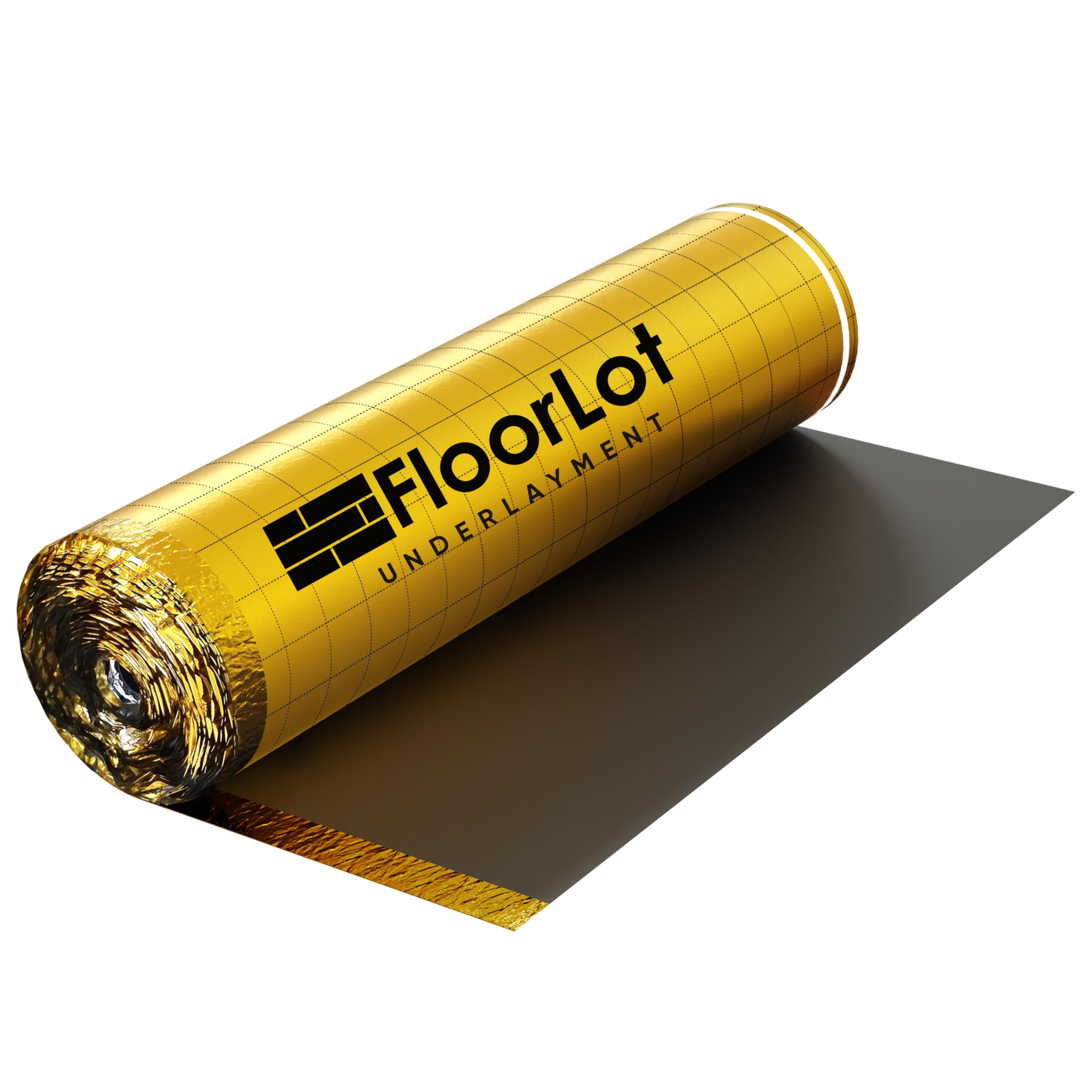
GoldMax offers a compelling mid-range option for floor prep, combining a built-in moisture blocking film with effective sound absorption. This roll is compatible with laminate, engineered wood, and solid hardwood flooring systems. The 3mm thickness provides enough cushion to smooth over minor subfloor dips, while the moisture barrier eliminates the need for a separate vapor barrier layer.
Users consistently praise the product’s ease of installation, noting that printed grid lines on the underlayment make fast, accurate cuts a breeze. The included seam tape ensures a continuous barrier across the entire floor. Many reviews highlight that it provides superior value over similar products from big-box retailers, offering comparable quality at a more accessible price point.
The IIC and STC ratings make this a viable option for homeowners dealing with condo or HOA noise requirements. It feels denser than cheap foam padding, which translates to a more solid-feeling floor. For a budget-conscious project that still demands professional performance, this is a reliable choice.
Why it’s great
- Built-in moisture barrier eliminates extra vapor film
- Printed grid lines aid in quick, straight cuts
- IIC & STC rated for sound compliance
Good to know
- Only 3mm thick, may not fill deeper subfloor gaps
- Not as heavy-duty as premium fiber options
- Coverage is 200 sq ft, may require multiple rolls for large rooms
4. Roberts Black Jack Underlayment

The Roberts Black Jack is a bulk-value champion for large flooring projects. With a 600 square foot roll, it is designed to cover expansive areas with minimal waste. This underlayment is favored by professional installers for its consistent 2.5mm thickness, which provides adequate cushioning and sound reduction without adding excessive height to the finished floor.
Installation is straightforward with a plastic overlap and adhesive strip to seal seams. Users have successfully used it under LVP to eliminate an annoying clicking sound, noting that the floor felt significantly quieter and softer underfoot. The IIC rating of 70 and STC rating of 66 confirm its effectiveness at dampening both impact and airborne noise, which is critical for multi-story homes.
One frequent observation is that the underlayment appears to be rolled in the wrong direction, requiring installers to unroll it by hand rather than letting it roll out naturally. Some users also reported issues with the pre-taped seams, where alignment can be tricky. Despite these minor inconveniences, the sound reduction and value make it a strong contender.
Why it’s great
- Excellent value per square foot for large areas
- High IIC and STC ratings for noise reduction
- Compatible with radiant heated floors
Good to know
- Roll direction can make installation awkward
- Pre-taped seams can be difficult to align perfectly
- Only 2.5mm thick, thinner than some alternatives
5. Henry, W.W. Co. 12064 Floor Patch
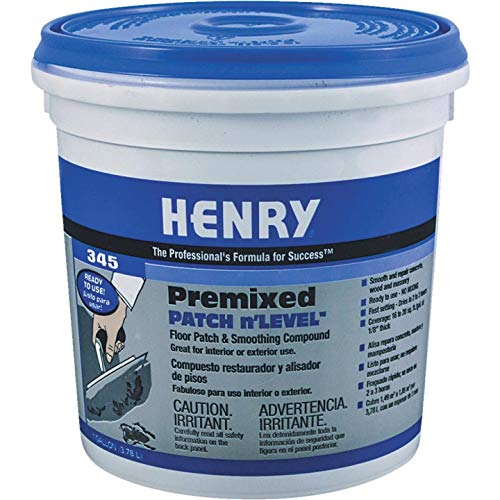
For small DIY repairs, the Henry 12064 pre-mixed floor patch offers unparalleled convenience. It comes ready-to-use in a one-gallon pail, eliminating the need for mixing and measuring. This is a trowel-on compound, not a true self-leveling liquid, meaning you apply it by hand and check your work with a level. It excels at filling small divots, old cabinet footprint indentations, and isolated low spots.
Users note that the compound dries to a light concrete hardness within 6-8 hours, allowing for relatively quick turnaround. It must be applied in thin coats of 1/8 to 1/4 inch per pass; pouring it on thicker will result in drastically extended drying times. Several reviews mention that while the product works perfectly for small patches, shipping can be problematic as the pails are prone to opening and leaking in transit.
This patch is ideal for homeowners tackling small-scale leveling jobs where precision is more important than speed. For patching a 2×4 foot depression or filling gaps after removing base cabinets, it provides a simple, effective solution. Just remember that this is a patch compound, not a full-room self-leveler, and should be reserved for targeted repairs.
Why it’s great
- No mixing required, use straight from the pail
- Dries hard and durable for permanent repairs
- Great for small, localized leveling tasks
Good to know
- Requires trowel-on application, not self-leveling
- Shipping can cause lid failure and leaks
- Must be applied in very thin coats
6. QuietWalk Plus Underlayment
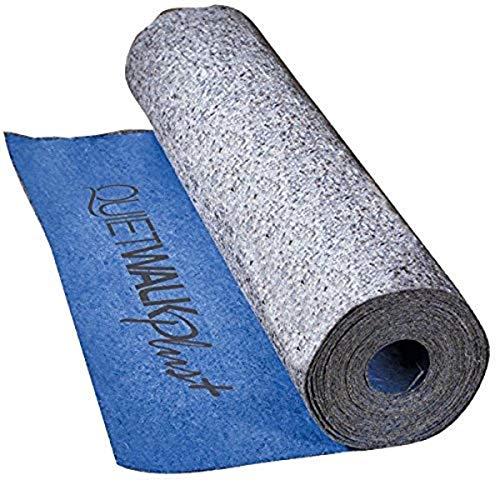
QuietWalk Plus is a premium underlayment that prioritizes indoor air quality and sound dampening. It is GREENGUARD Gold Certified for low chemical emissions, making it a top choice for bedrooms and nurseries. The dense recycled fiber core provides exceptional compression resistance, ensuring the underlayment doesn’t flatten and lose its acoustic properties under heavy furniture.
Installation is user-friendly, with pre-attached tape strips that seal seams for a continuous moisture barrier. Users recommend using a roller cutter or sharp scissors for cutting, as a box knife tends to struggle with the dense fibers. The material is sturdier than standard foam underlayments and has been praised for eliminating the hollow, echoey sound often associated with floating floors.
While the 100 sq ft roll is convenient for smaller rooms, larger projects will require multiple rolls. Some users have noted that the product is more expensive than basic foam options, but the improved comfort, soundproofing, and moisture protection justify the investment. It is also compatible with radiant floor heating systems, adding to its versatility.
Why it’s great
- GREENGUARD Gold Certified for low VOCs
- High density resists compression from furniture
- Excellent moisture barrier with pre-attached tape
Good to know
- More expensive than foam underlayments
- Requires scissors or roller cutter for clean cuts
- Coverage is limited to 100 sq ft per roll
7. QEP SuperFelt Underlayment

QEP SuperFelt is an eco-friendly underlayment made from recycled fibers that delivers deep, rich sound absorption. Unlike foam underlayments that deflect noise, this felt material absorbs sound energy, making it an excellent choice for reducing noise transmission between floors. The 3mm thickness also helps correct minor subfloor imperfections, providing a smoother surface for your final flooring.
Users find the material easy to lay down, noting it rolls out flat without curling. The adhesive strip and double-sided tape make seaming straightforward. However, cutting can be a challenge: utility knives tend to drag and tear, while sharp scissors provide a much cleaner edge. Several reviews highlight that it is tough to cut but exceptionally durable once installed, withstanding foot traffic and board repositioning without tearing.
With an IIC rating of 67 and STC rating of 66, this underlayment performs well in multi-family dwellings and condo buildings. It is a solid mid-range option for those who prioritize sound insulation and want to avoid petroleum-based foam. For basement floors or rooms with high noise transfer, this is a reliable choice.
Why it’s great
- High sound absorption from dense recycled fibers
- Rolls out flat and stays in place during installation
- Provides thermal insulation in addition to sound dampening
Good to know
- Difficult to cut with a utility knife
- Only 3mm thick, limited gap-filling capability
- Not a true vapor barrier on its own
FAQ
Can concrete self-leveler be applied over painted concrete?
Why does my self-leveler have pinholes after drying?
What thickness should I pour for tile vs. vinyl flooring?
Final Thoughts: The Verdict
For most users, the best concrete self-leveler winner is the Ardex Feather Finish because it provides a professional-grade, ultra-smooth finish that bonds to almost any subfloor in minutes. If you need a subfloor solution for luxury vinyl plank with sound dampening, grab the QuietWalk LV Underlayment. And for small patch repairs without the mess of mixing, nothing beats the simplicity of the Henry 12064 Pre-Mixed Patch.

Mo Maruf
I created WellFizz to bridge the gap between vague wellness advice and actionable solutions. My mission is simple: to decode the research and give you practical tools you can actually use.
Beyond the data, I am a passionate traveler. I believe that stepping away from the screen to explore new environments is essential for mental clarity and physical vitality.