Our readers keep the lights on and my smoothie glass nicely filled. As an Amazon Associate, I earn from qualifying purchases.
That stubborn, peeling layer of old sealer on your driveway or patio isn’t just an eyesore—it’s trapping moisture, hiding stains, and preventing a fresh coat from bonding properly. Removing it without damaging the concrete underneath requires the right chemistry, not a jackhammer.
I’m Mohammad Maruf — the founder and writer behind WellFizz. I’ve spent countless hours analyzing concrete sealer removal solutions, from caustic solvent-based strippers to bio-safe poultice cleaners, evaluating how each formulation interacts with porous masonry and cured concrete surfaces.
Finding the right concrete sealer remover means understanding the chemistry of bond-breakers versus penetrating solvents, knowing which formulas work on acrylic film sealers versus silane-siloxane impregnators, and matching the product strength to your specific project size.
How To Choose The Best Concrete Sealer Remover
Selecting an effective sealer remover depends almost entirely on the type of sealer currently on your surface and the nature of the stain or buildup you’re tackling. Film-forming acrylics require solvent strippers that soften and lift the coating, while penetrating silane-siloxane sealers that have failed or caused discoloration need a different approach—often a poultice or acidic cleaner. The wrong choice can etch the surface or fail to remove anything at all.
Match the Remover to the Sealer Chemistry
If the existing sealer is a solvent-based acrylic (often glossy or wet-look), you need a methylene chloride-free stripper or a high-solvent alkaline remover that can soften the film for scraping. If the sealer is a breathable, water-based penetrating type that has discolored or trapped efflorescence, look for a poultice cleaner that draws contaminants out of the pores rather than dissolving a surface layer. Using a deep-cleaning poultice on a thick acrylic film will yield little to no result.
Consider Application Method and Safety
Liquid removers applied via pump sprayer offer fast coverage for large driveways but require careful control of dwell time (the minutes or hours the product sits on the surface). Paste or thick-gel poultices stay wet longer, making them better for vertical surfaces, but they need to be applied thickly and may take 24-48 hours to dry. Strong chemical removers demand respiratory protection—especially solvent-based formulas—while water-based alternatives are safer for nearby plants and grass but may require repeated applications.
Evaluate Coverage Rate and Residue
Always check the square-foot coverage per gallon. A concentrated formula that makes multiple gallons (like a silane-siloxane concentrate) offers far better value for large areas. Some removers leave a powdery residue after drying that must be swept or pressure-washed away—this is normal for poultice cleaners and indicates the contaminants were pulled out of the concrete. Film-forming strippers usually leave a wet, slippery residue that needs to be neutralized and rinsed thoroughly before you can apply a new sealer.
Quick Comparison
On smaller screens, swipe sideways to see the full table.
| Model | Category | Best For | Key Spec | Amazon |
|---|---|---|---|---|
| PROSOCO O&G Stain Remover | Poultice Cleaner | Old oil/grease stains under failed sealer | 8–12 sq. ft/gal as poultice | Amazon |
| RID-O-RUST Outdoor Rust Remover | Acidic Liquid Cleaner | Rust and calcium stains on sealed concrete | 400 sq. ft/gal per bottle | Amazon |
| Lithi-Tek 9500 Ultra Concentrate | Penetrating Sealer | Preventing future stains by sealing clean concrete | Makes 5 gal; treats up to 1000 sq. ft. | Amazon |
| BEEST CS-9500 Concentrate | Penetrating Sealer | DOT-approved moisture protection after removal | Makes 5 gal; 150–400 sq. ft/gal | Amazon |
| MasonryDefender Silane Siloxane | Penetrating Sealer | Protecting clean, stripped concrete long-term | 90–150 sq. ft/gal coverage | Amazon |
| MasonryDefender All Purpose Sealer | Penetrating Sealer | Waterproofing brick, stone, and concrete after stripping | 90–150 sq. ft/gal coverage | Amazon |
| Armor AR350 Wet Look Sealer | Acrylic Film Sealer | Color enhancement and gloss after removal | 175–225 sq. ft/gal | Amazon |
In‑Depth Reviews
1. PROSOCO O&G Stain Remover

PROSOCO O&G is a specialized poultice cleaner designed to draw deeply embedded oil and grease stains up and out of porous concrete, brick, and stone surfaces. Unlike surface-level degreasers, this thick paste sits on the stain for 5 to 8 hours—longer in humid conditions—pulling the contaminant out as it dries. Users report removing 13-year-old car oil stains that pressure washing failed to touch, leaving clean concrete behind after the dried residue is swept away.
The application is straightforward: spread the poultice an inch beyond the stain edges at a thickness of about ¼ to ½ inch, let it dry completely, then sweep. One gallon covers just 8 to 12 square feet, so this is best for targeted stain removal rather than whole-driveway treatment. Multiple applications may be needed for deeply set stains, but the dried material can be rehydrated and reused.
Keep in mind that the poultice leaves a white, powdery residue that requires sweeping and sometimes a light pressure wash to fully remove. A few users noted that the residue itself can look like a white stain on dark pavers until it is rinsed away. Best applied when temperatures are above 50°F for optimal drying and stain-lifting performance.
Why it’s great
- Pulls deeply set oil stains that pressure washers cannot remove
- Dry residue is reusable with added water for extra applications
- No scrubbing or toxic solvent fumes required during application
Good to know
- Low coverage of 8-12 sq. ft/gal makes it costly for large areas
- White residual powder may need pressure washing to blend away
- Drying time extends to 24-48 hours in humid conditions
2. RID-O-RUST Outdoor Liquid Rust Stain Remover

RID-O-RUST targets a very specific problem: orange rust stains caused by high-iron water, metal furniture, or irrigation runoff on concrete, vinyl, and masonry surfaces. Its acidic liquid clings to vertical and horizontal surfaces without running off, dissolving rust on contact so you can simply spray, let it sit, and rinse. One gallon covers up to 400 square feet when applied with a pump sprayer, making it one of the most cost-effective options for whole-driveway rust removal.
The formula works best on stains that are on the surface or within the top layer of porous concrete. For thick, years-old rust deposits, a second application may be required. Users consistently report that it restores concrete and vinyl siding to a like-new appearance, though it should be kept away from grass and ornamental plants as it will burn vegetation on contact.
This is not a general-purpose sealer remover—it is specifically for rust, calcium, and limescale. If your concrete has a failed sealer that is simply discolored or peeling, you will need a different product. But if rust is the primary contaminant marring an otherwise sound sealed surface, RID-O-RUST delivers fast, minimal-effort results.
Why it’s great
- No scrubbing required—just spray, dwell, and rinse
- High coverage rate of 400 sq. ft/gal reduces total cost for large jobs
- Effective on multiple outdoor surfaces including vinyl, brick, and fiberglass
Good to know
- Kills grass and plants on direct contact; must protect landscaping
- Not effective on oil, grease, or general sealer film residue
- Stubborn rust may require a double application
3. Lithi-Tek 9500 Ultra Concentrate
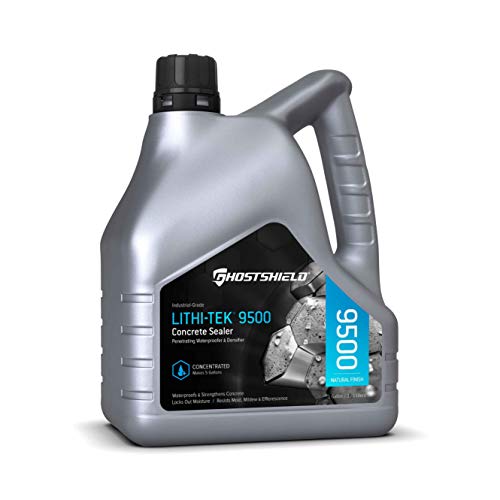
Lithi-Tek 9500 is not a remover—it is the post-removal protection you apply after stripping old sealer and cleaning the concrete. This water-based, ultra-concentrate formula densifies and waterproofs concrete, reducing porosity and preventing future moisture intrusion, efflorescence, and stain absorption. One gallon mixes with four gallons of water to make five gallons of sealer, treating up to 1,000 square feet per coat at a fraction of the cost of ready-to-use alternatives.
The lithium-silicate chemistry penetrates deep into the concrete matrix, bonding chemically to strengthen the surface by up to 50% while forming a hydrophobic barrier that repels water without creating a surface film. This is critical for anyone who has just removed a failed film-forming sealer and wants to switch to a breathable, long-term protection strategy. The natural finish leaves the concrete unchanged in appearance while dramatically reducing water absorption.
Application requires a clean, dry surface and two wet-on-wet coats using a pump sprayer. Avoid letting the product puddle, as it can leave dull spots when it dries. The low odor makes it suitable for indoor concrete floors and basements, though it should not be used on surfaces exposed to deicing salts. Users confirm that three years after application, treated areas still repel water and resist mold growth.
Why it’s great
- Ultra-concentrate yields 5 gallons of sealer from 1 gallon of product
- Densifies and strengthens concrete up to 50%
- Zero surface film; allows concrete to breathe naturally
Good to know
- Not recommended for surfaces exposed to deicing salts
- Requires diligent mixing and wet-on-wet technique to avoid spotting
- Concrete must be thoroughly cleaned and prepped before application
4. BEEST CS-9500 Concentrate

BEEST CS-9500 is a contractor-grade, water-based silane/siloxane penetrating sealer that excels as the final protective layer after you have stripped and cleaned your concrete. Its high-actives formula features smaller particles for deeper penetration into the concrete pore structure, and it is UV-stable and Department of Transportation approved for freeze-thaw protection and deicing salt resistance. One gallon of concentrate makes five gallons of ready-to-use sealer, covering 150 to 400 square feet per gallon depending on surface porosity.
The impregnating hydrophobic effect creates a strong water-beading surface that resists moisture intrusion, cracking, and spalling. Users report that up to 7,500 square feet of stamped concrete patio was sealed with just three gallons of concentrate, with water beading and no surface film. The formula is 100% breathable and non-film forming, meaning it will not peel or delaminate like acrylic sealers—ideal for anyone tired of repeat stripping and reapplication.
Application requires a clean, dry surface and two coats applied wet-on-wet. Avoid ponding; use a broom to spread any puddles immediately. The product slightly darkens bare concrete but leaves the natural texture intact. With proper application, BEEST CS-9500 lasts up to 5 years on horizontal surfaces and up to 10 years on vertical surfaces, making it a long-term solution after a successful removal job.
Why it’s great
- DOT approved for deicing salt and freeze-thaw protection
- Ultra-high active particles penetrate deeper than standard siloxane sealers
- Made in USA with 100% satisfaction guarantee and customer support
Good to know
- Must be mixed with distilled water (not tap water) for best results
- Ponding during application can cause dull spots and uneven beading
- Concrete must be thoroughly cleaned and dry for deep penetration
5. MasonryDefender Silane Siloxane Sealer
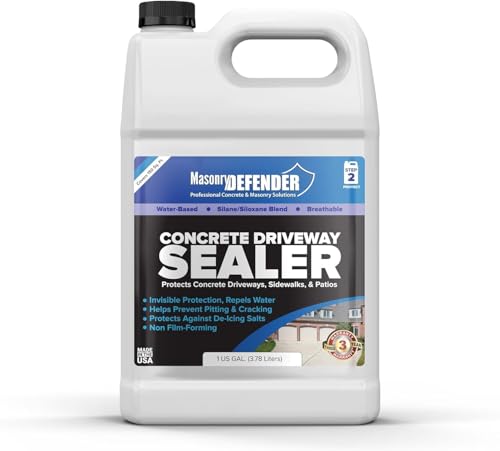
MasonryDefender’s Silane Siloxane formula is a breathable, penetrating sealer designed for driveways, sidewalks, and patios—perfect as the new protective layer after old sealer has been removed. The clear, non-glossy finish bonds chemically with the concrete to repel water without altering the surface appearance. Users in rainy climates confirm that water beads and rolls off treated surfaces, and that the sealer holds up for years against freeze-thaw cycles and efflorescence.
Application is straightforward with a low-pressure garden sprayer, and one gallon covers 90 to 150 square feet. The formula penetrates deep into the concrete pores, blocking water infiltration without forming a surface film that can peel. Reviews note that after three years, treated areas still repel dirt and mold better than untreated sections, and the concrete appears whiter and cleaner.
This is a pure protection product, not a remover. Use it only after you have successfully stripped the old sealer and cleaned the concrete surface. Overapplication can cause wet-looking stains that take time to even out, so apply in light, even coats. Yearly reapplication is recommended as a low-cost insurance policy for concrete longevity.
Why it’s great
- Breathable penetrating formula prevents peeling and delamination
- Clear finish preserves natural concrete appearance
- Proven long-term performance with users reporting 3+ years of protection
Good to know
- Coverage range of 90-150 sq. ft/gal is lower than some competitors
- Overapplication can create temporary wet-looking marks
- Requires yearly reapplication for maximum protection
6. MasonryDefender All Purpose Brick Stone & Concrete Sealer

This All Purpose formulation from MasonryDefender is essentially the same silane-siloxane technology but certified for a wider range of substrates including brick, stone, limestone, granite, and cultured sandstone. It is the right choice after removing sealer from mixed-masonry surfaces like a brick walkway with a concrete base. The waterproof barrier is clear and does not alter the natural appearance of any of these materials.
Coverage remains at 90 to 150 square feet per gallon, and the application method is identical to the standard MasonryDefender sealer—pump sprayer or roller. Users report solving basement water seepage from stone porch posts and preventing freeze-thaw damage on terra cotta pots. The product dries quickly, and multiple coats can be applied the same day for deeper protection.
As with the standard MasonryDefender, this is a post-removal sealer, not a stripper. Shake the bottle thoroughly before use to avoid clumping that can clog spray nozzles. The finish is slightly more water-repellent than the standard version, but the trade-off is that it may require more careful application to avoid footprints and uneven coverage if walked on before fully dry.
Why it’s great
- Approved for concrete, brick, stone, limestone, and granite surfaces
- True waterproof barrier with breathable, non-film-forming chemistry
- Quick-drying formula allows same-day multiple coats
Good to know
- Must be shaken vigorously to prevent nozzle-clogging clumps
- Same limited coverage range as the standard MasonryDefender
- Footprints and tracks show easily if surface is walked on before cure
7. Armor AR350 Low Gloss Wet Look Concrete Sealer

This is a film-forming sealer, not a penetrating one, meaning it sits on top of the concrete surface and creates a protective, low-gloss film. One gallon covers 175 to 225 square feet, which is competitive for a premium sealer.
Users consistently praise the visual transformation: gray pool coping becomes deep black, and stamped concrete lines become far more defined after one coat. A second coat can be applied for even deeper enhancement. The sealer is self-priming and easy to maintain—when it is time to reseal, simply clean the surface and apply a fresh coat. The formula is available in 700 VOC, 350 VOC, and 50 VOC variants to meet all state regulations.
The strong solvent odor requires a respirator for indoor or enclosed applications, though the smell dissipates within an hour outdoors. Rubber mats left on the surface for years may bond to the sealer, causing patches to peel on removal. For anyone stripping an old acrylic sealer and wanting to reapply a fresh wet-look finish, the AR350 is the top choice. For those switching to a breathable, non-film system, one of the penetrating sealers above is a better long-term strategy.
Why it’s great
- Dramatic color enhancement and deep wet-look finish
- High coverage rate of 175-225 sq. ft/gal reduces product cost
- Self-priming and easy to recoat for ongoing maintenance
Good to know
- Strong solvent fumes require a respirator during application
- Rubber mats and tires can bond to the film and peel it on removal
- Film-forming nature means it can peel or delaminate over time
FAQ
How do I know if my concrete has a film-forming sealer or a penetrating sealer?
Can I use a concrete sealer remover on stamped or decorative concrete?
How long should I let a poultice cleaner sit before removing it?
Is it safe to use a sealer remover near plants and grass?
Can I reuse dried poultice residue for another stain removal?
Final Thoughts: The Verdict
For most users, the concrete sealer remover winner is the PROSOCO O&G Stain Remover because it effectively pulls deeply embedded oil and grease stains that pressure washing cannot touch, leaving the concrete ready for a fresh sealer coat. If you need to remove rust stains from sealed concrete, grab the RID-O-RUST Outdoor Rust Stain Remover for its fast, no-scrub formula. And for protecting the freshly stripped concrete long-term, nothing beats the value and performance of the Lithi-Tek 9500 Ultra Concentrate penetrating sealer.

Mo Maruf
I created WellFizz to bridge the gap between vague wellness advice and actionable solutions. My mission is simple: to decode the research and give you practical tools you can actually use.
Beyond the data, I am a passionate traveler. I believe that stepping away from the screen to explore new environments is essential for mental clarity and physical vitality.