Our readers keep the lights on and my smoothie glass nicely filled. As an Amazon Associate, I earn from qualifying purchases.
A cracked driveway, a split garage floor, or a crumbling patio step isn’t just an eyesore—it’s an open door for water, frost, and weeds to deepen the damage. The wrong filler peels, cracks open again, or washes out within a season, leaving you back where you started. The right concrete repair epoxy bonds molecularly with the slab, flexes with thermal movement, and seals against moisture for years.
I’m Mohammad Maruf — the founder and writer behind WellFizz. I’ve spent countless hours researching polymer chemistry, cure times, and real-world adhesion data to separate sealants that merely sit on the surface from epoxies that actually fuse with the substrate.
Whether you’re patching hairline web cracks in your walkway or anchoring rebar into a foundation wall, the ideal concrete repair epoxy must balance elasticity for movement with compressive strength for traffic loads—this guide breaks down exactly how to match each product to your specific repair.
How To Choose The Best Concrete Repair Epoxy
Not every concrete filler is an epoxy. True epoxies are two-part systems that cure through a chemical reaction rather than simple evaporation, delivering vastly superior bond strength and dimensional stability. Before you pick a product, weigh three factors: the crack width, the load the repair must carry, and the environmental exposure it will face.
Elasticity vs. Rigidity for Structural Loads
A rigid epoxy on a driveway that expands and contracts with temperature swings will shear apart within months. Products with high elasticity—measured as elongation at break—absorb this movement. For non-load-bearing hairline cracks in a basement floor, a stiffer filler may suffice. For driveways, walkways, and slabs near trees, prioritize a formula that stretches without losing adhesion.
Cure Speed and Working Window
Fast-cure epoxies (under 15 minutes) are ideal for vertical cracks or anchoring tasks where you need immediate hold. Slow-cure formulations (several hours to tack-free) give you time to tool and smooth the surface, resulting in a more professional finish. Match the cure profile to your skill level and the complexity of the repair.
Quick Comparison
On smaller screens, swipe sideways to see the full table.
| Model | Category | Best For | Key Spec | Amazon |
|---|---|---|---|---|
| DCP Quickmast AE15 | Anchoring Epoxy | Rebar & threaded rod anchoring | 10.1 fl oz cartridge, 145-min full cure | Amazon |
| Wadities High Elasticity 2.65LB | Self-Leveling Sealant | Medium-width driveway cracks | 2.65 lb rubber-based, 4-6 hr tack-free | Amazon |
| Magic Crack Filler 2.5LB | Dry Granular Powder | Large irregular gaps & DIY simplicity | 32 fl oz powder, no-mix water activation | Amazon |
| MuzeFansi Polyurethane 2-Pack | Multi-Surface Sealant | High-traffic patio & sidewalk seams | 2 lb polyurethane, 2-3 hr tack-free | Amazon |
| Autosel Silane Resin 2-Pack | Budget Elastic Filler | Narrow hairline cracks on a budget | 2.2 fl oz gel per tube, 24-hr cure | Amazon |
In‑Depth Reviews
1. DCP Quickmast AE15 Concrete Epoxy
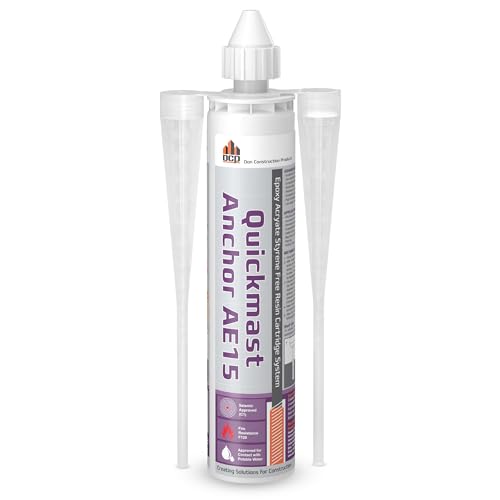
The DCP Quickmast AE15 is a two-part acrylate epoxy designed specifically for structural anchoring in concrete—think rebar dowels, threaded rods, and heavy machinery bases. Unlike surface-level crack fillers, this system delivers load-bearing capacity in as little as 40 minutes at warmer temperatures, with full cure at 145 minutes. The cartridge mixes the epoxy and hardener automatically through a static nozzle, eliminating guesswork and batch inconsistency.
Its working window (4 to 10 minutes) is tight by design, so you must have all anchors pre-positioned before dispensing. The cured epoxy drills cleanly if you need to relocate a hole—users report it sets harder than the surrounding concrete. The formula also bonds in wet or even flooded holes, a rare capability that makes it invaluable for below-grade foundation work or outdoor installations in damp climates.
On the downside, the cartridge is thick and requires a heavy-duty caulking gun; a standard lightweight model may struggle to push the material. The included nozzles are effective but can clog if you pause mid-application, so continuous one-shot use is best. One nozzle arrived damaged in some shipments due to minimal packaging. For homeowners, this is overkill for cosmetic crack filling—it’s a true professional-grade anchoring epoxy.
Why it’s great
- Bonds in wet/flooded holes—rare for a cartridge epoxy
- Full structural load capacity in under 2.5 hours
- Drills out clean if repositioning is needed
Good to know
- Requires a high-thrust caulk gun; standard ones won’t push it
- Nozzles can clog within minutes if you stop squeezing
- Overkill for simple crack sealing—targeted at anchoring jobs
2. Wadities High Elasticity 2.65LB Crack Filler
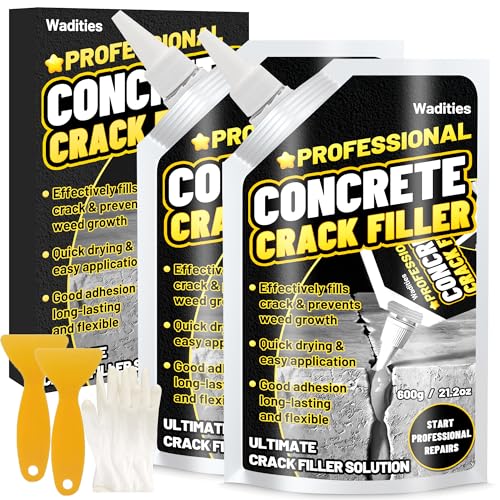
The Wadities High Elasticity filler hits the sweet spot between flexible sealant and structural repair. Its rubber-based formula pours as a liquid and self-levels, making it ideal for medium-width driveway cracks (up to about 1 inch) where you want the material to flow deep into the fissure without manual tooling. Surface drying begins in 4 to 6 hours, with full cure at 24 to 48 hours—a forgiving timeline that lets you work unhurriedly.
Real-world testing shows strong adhesion even when rain hits the surface within 24 hours. The cured material remains rubbery rather than brittle, allowing it to expand and contract with the slab through freeze-thaw cycles. Multiple users reported that the gray finish matches typical weathered concrete well, though it won’t perfectly match colored or stamped surfaces. The kit includes a scraper and gloves, saving a trip to the hardware store.
Because it’s a single-component liquid in a squeeze bottle rather than a two-part cartridge, you don’t need a caulking gun. The trade-off is that vertical or overhead applications may sag before the initial set. For horizontal cracks on driveways, patios, and walkways, this is the most balanced performer in the mid-range bracket.
Why it’s great
- Self-leveling pour reduces need for troweling
- Flexible cure—skins over in 4-6 hours even with rain
- No caulk gun required; simple squeeze application
Good to know
- Not for vertical surfaces—will sag before curing
- Gray color only; won’t match colored concrete
- Not suitable for structural anchoring
3. Magic Crack Filler 2.5LB Granular Powder
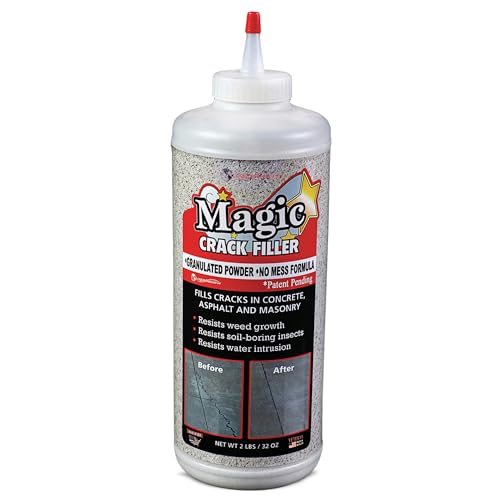
Magic Crack Filler takes a fundamentally different approach: a dry granular powder that you simply pour into the crack and then activate with water. There’s no mixing, no caulking gun, and no shelf-life expiry—the powder stays usable indefinitely as long as you keep it dry. This makes it the most forgiving option for DIY homeowners who want a clean, low-mess repair without measuring ratios or timing cure windows.
The applied material cures to a hard, rubbery finish that closely matches the texture and shade of weathered gray concrete. Users filling gaps up to 1 inch wide found it effective, especially when pre-filling deep voids with sand before topping with the powder. After misting the surface several times over 15-minute intervals, the filler sets rock-hard—one customer reported surviving a thunderstorm the same day without washout.
On the downside, the color may not match lighter or newer concrete slabs, and achieving a perfectly smooth finish requires careful troweling with a credit card or similar tool. For very large repairs (over 1 inch wide), you’ll need a base filler to avoid excessive shrinkage. It’s also not suitable for structural bonding or anchoring—strictly a cosmetic and water-sealing repair material.
Why it’s great
- Zero mixing—just pour, water, and smooth
- Unlimited shelf life when stored dry
- Excellent color match for worn gray concrete
Good to know
- Can’t be used for vertical or overhead repairs
- Wide cracks over 1 inch need a sand base layer
- Not a structural epoxy—cosmetic seal only
4. MuzeFansi Polyurethane 2-Pack Sealant
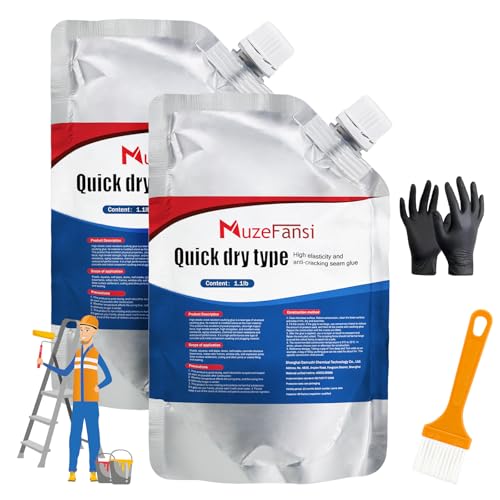
The MuzeFansi 2-pack delivers a polyurethane-based sealant that stands up to UV exposure and temperature swings better than many acrylic or latex alternatives. The formula becomes tack-free in just 2 to 3 hours and fully cures within 24 to 48 hours, making it one of the faster options for high-traffic areas like sidewalks, patios, and garage slabs. After curing, the material resists abrasion from foot traffic and tire contact.
Application requires mixing within the pouch before dispensing—some users noted the pouch was overfilled, making it tricky to squeeze out the last third of product without the seam leaking. The included nozzle, brush, and gloves add value, though the instructions are sparse. A few customers experienced cracking in extreme cold after initial sealing, but the manufacturer responded quickly with support, suggesting good customer service behind the product.
It bonds to concrete, brick, tile, metal, and wood, giving it versatility for gap sealing around flashings or between dissimilar materials. However, the consistency is slightly thicker than self-leveling formulas, so you may need to spread it with a spatula for an even finish. For homeowners who face harsh summers and freezing winters, this polyurethane offers better long-term weatherability than standard caulk.
Why it’s great
- UV-resistant polyurethane holds up better in direct sun
- Fast tack-free time (2-3 hours) for same-day use
- Bonds to multiple surfaces beyond concrete
Good to know
- Pouch can be difficult to fully empty without leaks
- May crack in extreme cold if applied thinly
- Thicker consistency doesn’t self-level perfectly
5. Autosel Silane Resin 2-Pack Sealant
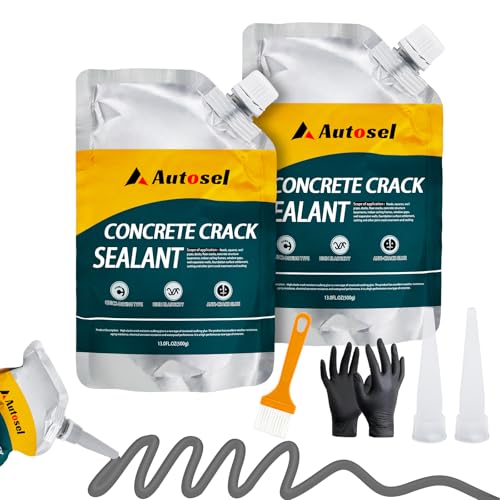
Autosel’s entry-level kit uses a silane-resin gel that self-levels into narrow cracks and dries to a flexible, waterproof seal. Each tube holds 2.2 fluid ounces, and the kit includes two tubes plus brushes, nozzles, and gloves, making it a low-commitment option for touching up hairline fissures in driveways or walkways before winter sets in. The gel is thin enough to flow deep into cracks without needing to widen the opening.
The cured material remains rubbery rather than rock-hard, which helps it survive thermal cycling without debonding. Users report that it holds up through rain without peeling or bubbling. However, the gray finish is noticeably darker than aged concrete, and the glossy surface can attract debris until it fully cures—which can take up to two weeks for a complete cure in cooler temperatures. For cracks wider than 1 inch, the lack of structural reinforcement means the filler may sink or require a backing rod.
Because it’s a rebranded generic formulation (labeled as CHEM PU), some users noted inconsistent quality and a need to heat the tube in warm water for easier flow. The price point is the lowest in this lineup, making it a reasonable trial product for first-time repairers, but for larger or critical repairs, a more robust system is advisable.
Why it’s great
- Low cost makes it easy to try before committing bigger budget
- Thin gel flows into hairline cracks without pre-widening
- Flexible cure handles seasonal expansion well
Good to know
- Full cure can take up to 2 weeks in cool weather
- Glossy finish collects dust and debris initially
- Not suitable for cracks wider than 1 inch
FAQ
Can concrete repair epoxy be applied in cold weather below 40°F?
Do I need to widen the crack before applying epoxy filler?
What’s the difference between a concrete epoxy and a polyurethane sealant?
Final Thoughts: The Verdict
For most users, the concrete repair epoxy winner is the Wadities High Elasticity 2.65LB because it combines a forgiving cure window, self-leveling flow, and rubberized flexibility that survives driveway traffic and thermal movement without cracking. If you need to anchor rebar or threaded rods into existing concrete, grab the DCP Quickmast AE15. And for large irregular gaps where you want a clean, no-mix DIY experience, nothing beats the Magic Crack Filler 2.5LB.

Mo Maruf
I created WellFizz to bridge the gap between vague wellness advice and actionable solutions. My mission is simple: to decode the research and give you practical tools you can actually use.
Beyond the data, I am a passionate traveler. I believe that stepping away from the screen to explore new environments is essential for mental clarity and physical vitality.