Our readers keep the lights on and my smoothie glass nicely filled. As an Amazon Associate, I earn from qualifying purchases.
Specs are compiled from manufacturer listings and verified buyer reviews and can change over time — please confirm the key details on the product page before buying.
Cleaning a concrete driveway, patio, or sidewalk with a weak spray is a losing battle. You need serious pressure and flow to lift embedded oil, tire marks, and moss that a garden hose just pushes around. This guide breaks down the gas-powered machines that actually handle the job, with real specs and honest trade-offs so you pick the right one the first time.
I’m Mohammad Maruf — the founder and writer behind WellFizz. This guide is built by comparing the manufacturers’ published specifications and the patterns across verified customer reviews, so you get each pick’s real strengths and trade-offs instead of marketing spin.
Whether you are cleaning a stained driveway or prepping a patio for sealing, finding the best concrete power washer means matching PSI, GPM, and build quality to your actual workload.
Our Picks at a Glance

How To Choose The Best Concrete Power Washer
Concrete is porous and tough, so cleaning it requires a machine that can push water deep into the surface without damaging the material. The two numbers that matter most are PSI and GPM, but the engine and pump quality decide how long the machine lasts.
PSI — The Blasting Power
PSI (pounds per square inch) measures the pressure of the water stream. For concrete, you generally want at least 3,000 PSI. Lower pressures work on wood or cars but struggle with embedded grime on a driveway.
GPM — The Rinsing Speed
GPM (gallons per minute) measures how much water flows through the nozzle. A higher GPM washes away the dirt you just loosened faster. On concrete, a machine with 2.5 GPM or more cleans noticeably quicker than one with lower flow.
Engine and Pump Quality
Gas engines and pumps vary widely. A Honda engine, for example, is known for starting easily and running for years. The pump type also matters — a triplex plunger pump (a pump with three plungers that provides higher pressure and longer life) outlasts a standard axial cam pump under frequent use.
Quick Comparison
| Model | Best For | Max PSI | Max GPM | Weight | Amazon |
|---|---|---|---|---|---|
| Westinghouse WPX3200★ Best Overall | Best all-around homeowner gas | 3200 | 2.5 | 63 lb | Amazon |
| Kärcher G 3600 PBalanced Pick | Balanced pressure and flow | 3600 | 2.6 | 64 lb | Amazon |
| Simpson PS3228 | Reliable mid-range power | 3300 | 2.5 | 74.8 lb | Amazon |
| VEVOR 4400 PSI | Budget-friendly high PSI | 4400 | 4.0 | 137 lb | Amazon |
| AACULPET 3500 PSI | Budget-friendly gas power | 3500 | 2.3 | 55 lb | Amazon |
| IvyBess 4800 PSI | Electric convenience for light concrete | — | 2.8 | 24 lb | Amazon |
In‑Depth Reviews
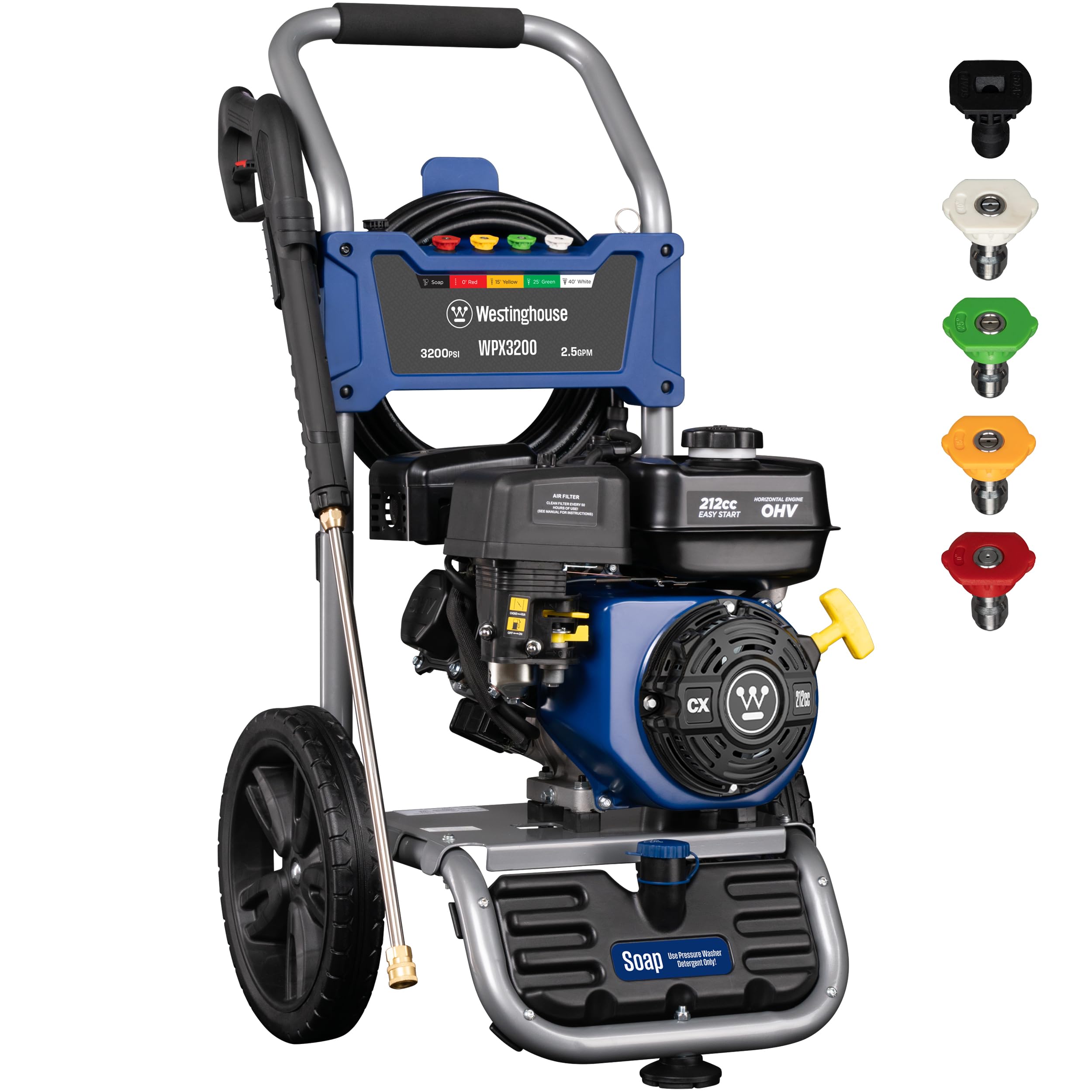
1. Westinghouse WPX3200 Gas Pressure Washer, 3200 PSI and 2.5 GPM
Our pick — over 4.5★ from 11,000+ verified ratings; the strongest balance of quality and price.
The rating champion that proves 3200 PSI is plenty for most concrete driveways.
With over 11,000 ratings and a 4.6-star average, this Westinghouse is the most trusted gas pressure washer in this guide. It delivers 3200 PSI and 2.5 GPM — a combination that is more than enough for homeowner concrete cleaning. This machine is heavier than the electric IvyBess at 63 pounds versus 24 pounds, but the difference in cleaning power on concrete is massive.
The 212cc Westinghouse OHV engine starts reliably, and the maintenance-free axial cam pump keeps things simple. The onboard 0.9-gallon gas tank and half-gallon soap tank are convenient for longer sessions. The 12-inch never-flat wheels make it easy to roll over bumpy concrete joints. One buyer shared a great real-world note: “Even with the lowest power nozzle I am able to strip old loose paint from my wood siding with no damage to the wood.” That shows the pressure is strong but controllable.
The 3-year limited warranty and nationwide customer service add confidence.
Reasons it outranks the competition
- Over 11,000 reviews with a 4.6-star average — proven buyer satisfaction
- 3200 PSI and 2.5 GPM is the balance for concrete without overkill
- Onboard soap tank and 5-nozzle set cover every cleaning angle
- 12-inch never-flat wheels roll smoothly over rough concrete
Minor downsides
- The hose routing over the rear wheel can wear through with heavy movement
- Manual choke requires a bit of learning for first-time gas owners
- At 63 pounds, it is still heavier than an electric unit
The verdict: This is the safest, most well-reviewed choice for any homeowner who needs reliable concrete cleaning power without spending a fortune.
The catch: Watch the hose routing over the rear wheel — a zip tie solves it before it wears through.
2. Kärcher G 3600 P Gas Pressure Washer, 3600 PSI, 2.6 GPM
The mid-weight contender that pairs solid pressure with a premium pump design.
This Kärcher delivers 3600 PSI and 2.6 GPM — a strong combo for concrete without the extreme weight of the high-flow machines. At 64 pounds, it is a manageable weight for a gas-powered concrete machine, making it easier to load into a vehicle or carry up stairs.
The triplex/crankshaft pump (a type of pump with three plungers and a crankshaft that is more durable for long-term use) is a key feature here — it is more sturdy than the axial cam pumps found on many similarly priced units. The 35-foot hose is longer than the standard 25-foot hose on most competitors, giving you extra reach on a large driveway without moving the machine. One buyer commented that the unit feels “substantial” and cleaned their concrete patio without streaks, even removing moss with the turbo nozzle.
The 5.9 HP, 212 cc engine is reliable, and owners mention it starts easily.
What works well
- 64 pounds — manageable weight for a gas-powered concrete machine
- Triplex/crankshaft pump outlasts standard axial cam pumps
- 35-foot hose reduces how often you need to reposition
- Strong 3600 PSI and 2.6 GPM for deep concrete cleaning
Trade-offs
- Only four nozzles included — no dedicated soap nozzle
- Smaller 3-inch wheels compared to the 10- or 12-inch wheels on competitors
- Fewer customer reviews available due to being a newer model
Reach for this if: You want a durable commercial-grade pump in a package that is still light enough to move around your property without a struggle.
Look elsewhere if: You need the absolute highest flow rate for industrial-scale concrete jobs.
3. Simpson Cleaning PS3228 PowerShot 3300 PSI Gas Pressure Washer, 2.5 GPM
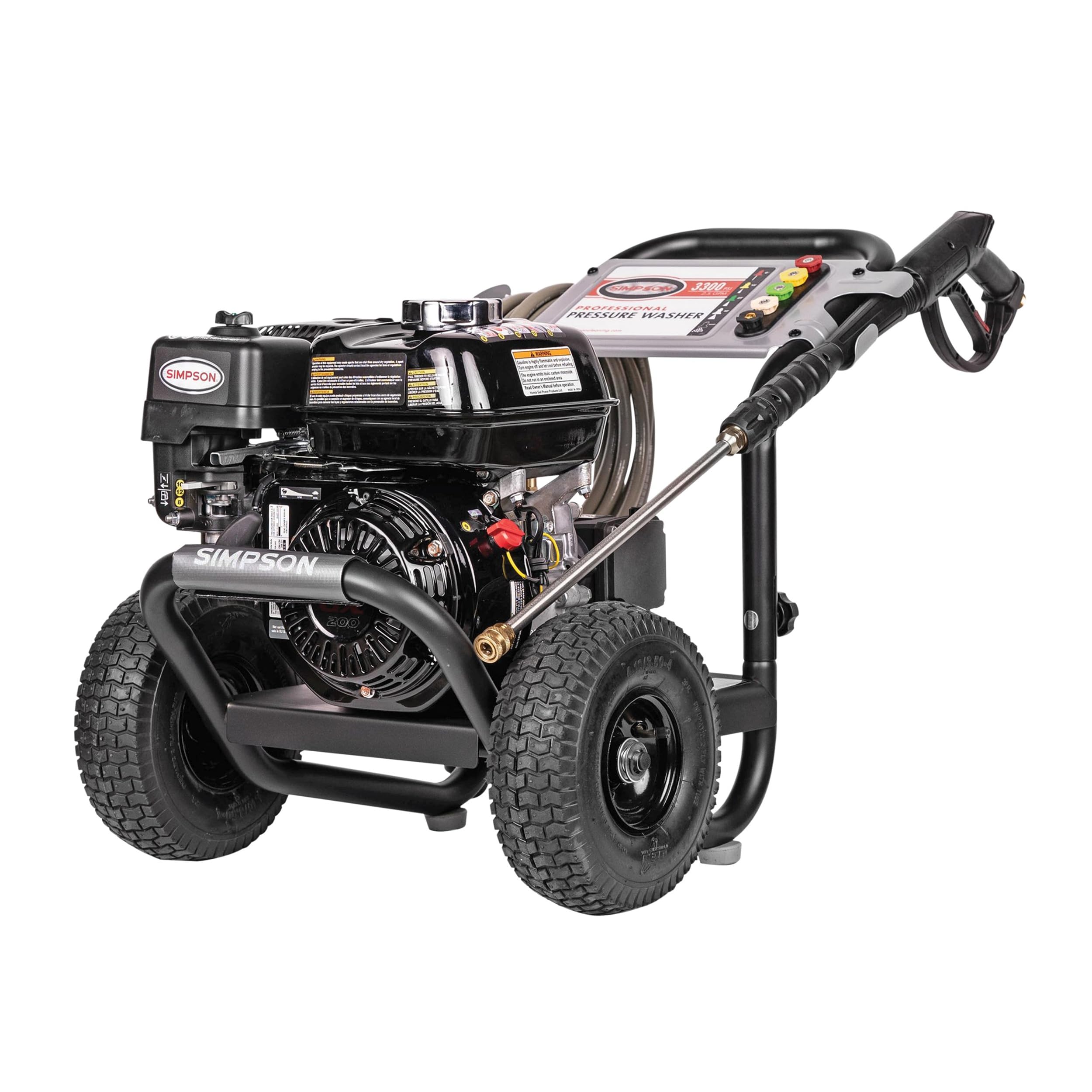
The entry into Honda-powered cleaning that proves why the engine matters more than the numbers.
This Simpson model uses the same Honda GX200 engine as the ALH3425 but wraps it in a welded steel frame rather than aluminum. It delivers 3300 PSI and 2.5 GPM — slightly less pressure than the 3600 PSI on the ALH3425, but still well above the threshold needed for concrete. The difference in max pressure: the PS3228 at 3300 PSI versus the AACULPET at 3500 PSI, but the Honda engine is the real reason buyers choose this one.
The AAA triplex plunger pump is maintenance-free and includes an integrated unloader and thermal relief. The 10-inch pneumatic tires roll well over gravel and grass, and the 25-foot Morflex hose is kink-resistant. One owner coming from an electric washer said, “I was blown away by the power and ease of cleaning.” Another noted that the Honda engine “started right up on the first pull.”
The main complaint is the poorly designed wand holder, which does not hold the wand securely when the hose is attached.
Why people buy it
- Honda GX200 engine starts easily and has a long lifespan
- Maintenance-free AAA triplex pump saves on upkeep
- 10-inch pneumatic tires roll over rough ground smoothly
- Proven track record with over 2,300 ratings and a 4.3-star average
Known issues
- Wand holder is poorly designed and does not hold the wand with the hose attached
- Some buyers wish the 25-foot hose were longer for larger areas
- Steel frame is heavier than the aluminum version
Who should pick it: A homeowner who wants a proven Honda engine in a well-reviewed package and is okay with a slightly lower PSI for a lower price.
Who should skip it: Anyone who needs a longer hose or a more refined wand storage system from the start.
4. VEVOR Gas Pressure Washer, 4400 PSI 4.0 GPM

The high-spec, low-cost option that makes you wonder how they hit those numbers at this price.
The VEVOR claims 4400 PSI and 4.0 GPM — the same peak specs as the premium Westinghouse WPX4400 — at roughly a third of the price. This makes it tempting for anyone on a budget who needs serious concrete cleaning power. It comes with a 50-foot abrasion-resistant hose and a copper pump, which is a nice material touch for longevity.
But the reality is mixed. Some customers note it works great for the money and cleans concrete effectively. One owner said it is “well worth the money.” Another, however, described a different experience: the tires are cheap plastic, the machine leaks from the hose connection, and the pump needed replacing after two months. The 137-pound weight also makes it a heavy machine to wrestle, especially on uneven ground.
The CETA certification (a recognized testing standard for pressure washers) is a positive sign, but the inconsistent build quality makes this a gamble.
What you get for the price
- 4400 PSI and 4.0 GPM — matches premium specs at a budget price
- 50-foot hose gives you plenty of reach on large concrete areas
- Copper pump is better than the plastic pumps on some cheap units
- CETA certified, which provides a quality baseline
Where it cuts corners
- Some units leak from the hose connection or have pump failures early on
- Small plastic tires make it harder to roll over rough terrain
- Heavy at 137 pounds with thin motor base material
Strong value if: You need the highest possible PSI and GPM on a tight budget and are willing to take a chance on consistency.
Not for you if: You need a machine you can rely on for years without repairs — consider spending more for a proven brand.
5. AACULPET 3500PSI Gas Pressure Washer, 212CC / 2.3GPM
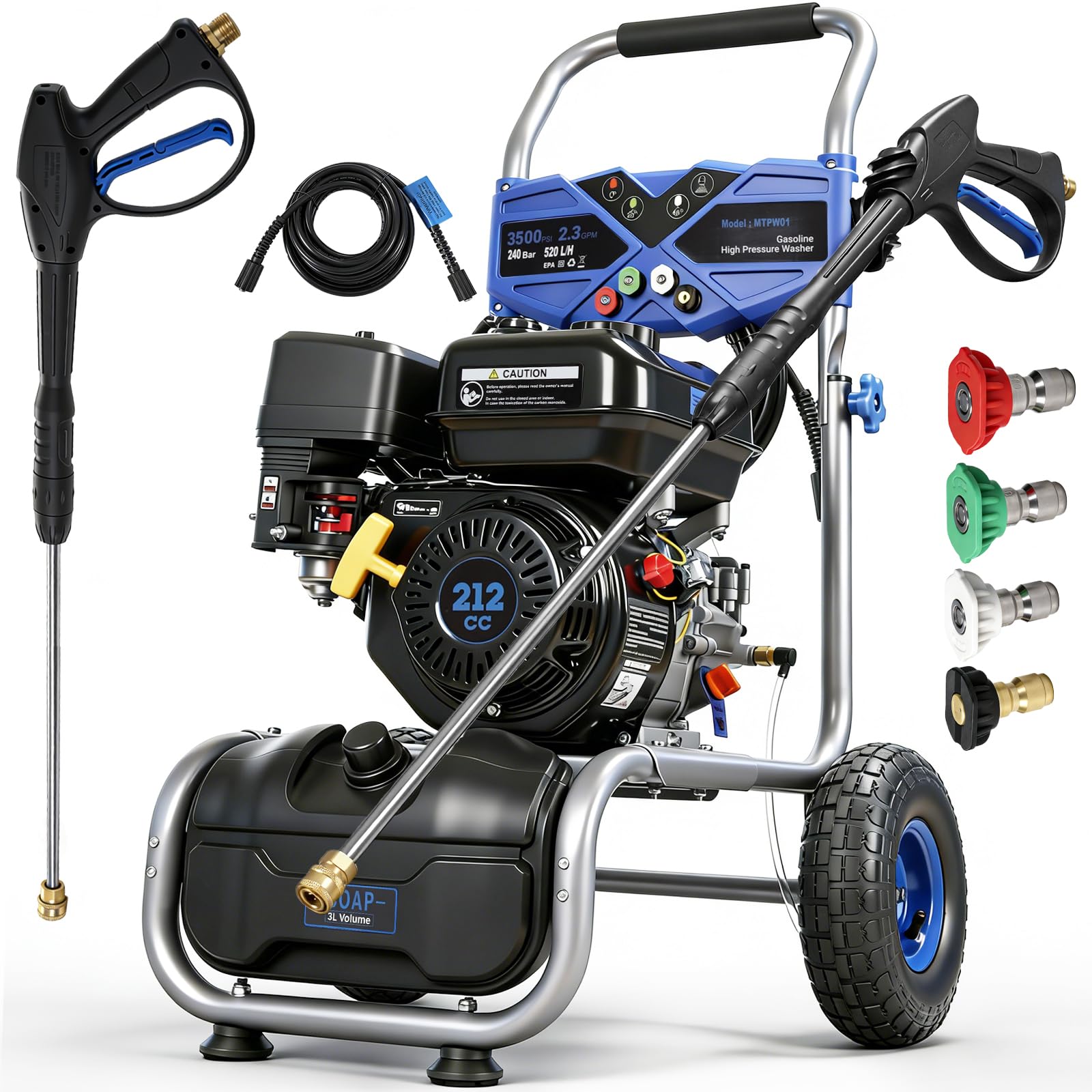
The lightest gas washer here, making it a good bridge from electric to gas for concrete work.
At 55 pounds, this AACULPET is the lightest gas-powered machine in the lineup, making it much easier to move around than the 137-pound VEVOR or the 142-pound Westinghouse WPX4400. It delivers 3500 PSI and 2.3 GPM — the same pressure as the Kärcher but with slightly less flow. This is still sufficient for concrete stains, though the lower 2.3 GPM means it will rinse a bit slower than the 2.5 GPM units.
The 212cc 4-stroke engine with an axial pump is simple and starts reliably. One owner reported it “starts 1st-2nd pull” and runs well. The 10-inch wheels and steel frame make it maneuverable on outdoor terrain. However, some reviewers noted the metal gas tank will corrode over time, and the unit has significant vibration during operation. Another buyer flagged a flooding issue when tilting the machine back on its wheels, which kills the engine and makes it hard to restart.
It includes four quick-connect nozzles and a 25-foot hose.
What you get
- 55 pounds — the lightest gas option for easy transport
- 3500 PSI is strong enough for concrete and heavy grime
- Starts on the first or second pull for a gas engine
- 10-inch wheels and steel frame handle outdoor terrain well
What you compromise
- 2.3 GPM is the lowest flow rate among these gas picks
- Metal gas tank may corrode over time
- Tilting the unit back can flood the engine, making it hard to restart
A good start if: You are moving from electric to gas and want the lightest, most affordable machine that still has enough pressure for concrete.
Consider a different option if: You need maximum flow for large concrete areas or plan to tilt the machine often while moving it.
6. IvyBess 4800 PSI Pressure Washer Electric Power Washer, 1800W 2.8GPM
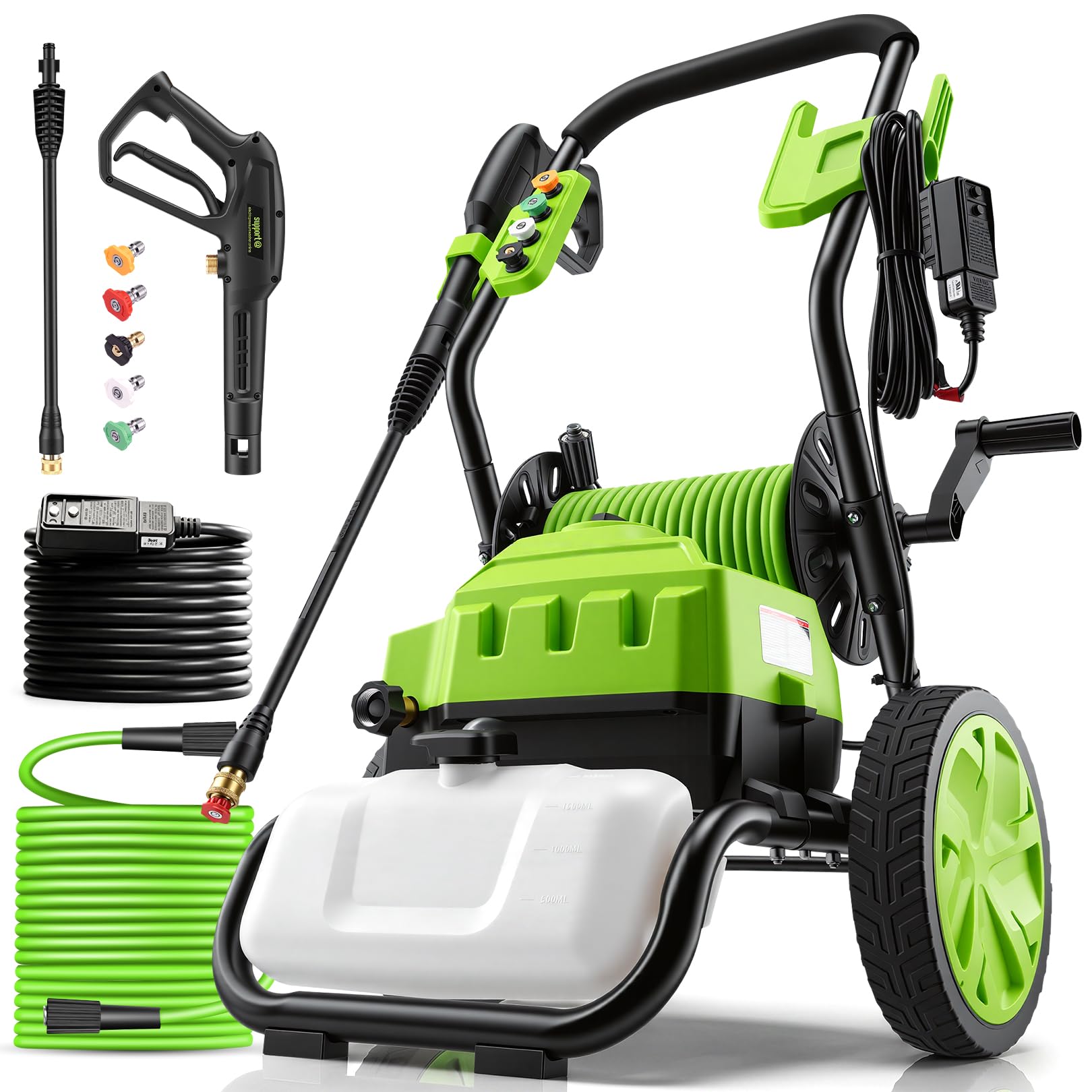
The lightweight electric that works for light concrete duty but cannot match a gas machine’s endurance.
This IvyBess electric unit is the only non-gas pick here, and it occupies a specific niche: light to medium concrete cleaning where an outlet is nearby. It is rated at 1800W and 2.8 GPM. While it claims 4800 PSI, this is likely a peak marketing number — real electric washers in this class typically deliver far less sustained pressure than a gas machine. The 2.8 GPM is actually higher than the gas-powered AACULPET’s 2.3 GPM, so the flow is decent for light concrete jobs.
At 24 pounds, it is dramatically lighter than every gas washer here — the Westinghouse WPX3200 weighs 63 pounds. This makes it easy to carry up stairs or store in a small garage. The integrated hose reel and 23-foot high-pressure hose keep things organized. The built-in 3-liter soap tank is good for car detailing. One buyer used the hose to replace a Craftsman hose that “exploded and snapped after a year.”
The GFCI plug and safety auto-stop system (which shuts off the pump when the trigger is not pulled) add safety, but electric washers cannot sustain the constant high pressure needed for large concrete areas without risk of overheating.
Why choose electric
- 24 pounds — easy to carry and store in tight spaces
- 2.8 GPM flow is higher than some gas models here
- Integrated hose reel and 3L soap tank add convenience
- GFCI plug and auto-stop system improve safety
Electric limitations
- Cannot sustain the high pressure of a gas machine for large concrete areas
- Requires a nearby outdoor power outlet
- Peak PSI claims are often exaggerated on electric models
This fits if: You only need to clean a small concrete patio or section of driveway and want a machine you can lift with one hand.
Not the one if: You need to tackle a large, heavily stained concrete driveway or plan to work for more than 30 minutes at a time.
Understanding the Specs
PSI — Pounds per Square Inch
PSI measures the pressure of the water stream. For cleaning concrete, you typically need at least 3000 PSI to effectively remove embedded oil, tire marks, and moss. A lower PSI works for cars or wooden decks, but concrete’s porous surface requires more force to push dirt out of the pores. Most gas power washers in this guide range from 3200 to 4400 PSI, which is the balance for concrete. Going much higher can damage the surface if you hold the nozzle too close.
GPM — Gallons Per Minute
GPM measures the volume of water flowing through the nozzle per minute. This is just as important as PSI for concrete because a higher GPM rinses away the loosened dirt faster. A machine with 2.5 GPM will clean a driveway noticeably quicker than one with 2.0 GPM, even if they have the same PSI. Think of PSI as the force that blasts dirt loose and GPM as the speed that sweeps it away — you need both for efficient concrete cleaning.
FAQ
What PSI do I need to clean concrete?
Is GPM or PSI more important for concrete?
Can I use an electric power washer on concrete?
How long does a gas pressure washer last?
What is a triplex pump and why does it matter?
How do I choose the right nozzle for concrete?
Can I use a surface cleaner on my pressure washer?
How much weight can I expect from a gas concrete power washer?
Final Thoughts: The Verdict
For the majority of shoppers, the best concrete power washer winner is the Westinghouse WPX3200 because it combines proven reliability with 3200 PSI and 2.5 GPM — everything a homeowner needs for effective concrete cleaning at a price that makes sense. If you want commercial-grade power and a Honda engine, grab the Simpson ALH4240 for its 4200 PSI and 4.0 GPM. And for the best balance of pump quality and weight, the Kärcher G 3600 P delivers a triplex pump in a 64-pound package.
How We Picked
We do not accept paid placement. Every pick is matched to a real buyer and a real use-case; we do not hands-on test units.
Sources & Methodology
Specifications: manufacturer listings and product documentation. Review insights: verified customer reviews, as of July 2026. Pricing: not shown on this page (it changes often); check the current price via the retailer link.
As an Amazon Associate, WellFizz earns from qualifying purchases. This does not affect which products we feature.
Related Guides

Mo Maruf
I created WellFizz to bridge the gap between vague wellness advice and actionable solutions. My mission is simple: to decode the research and give you practical tools you can actually use.
Beyond the data, I am a passionate traveler. I believe that stepping away from the screen to explore new environments is essential for mental clarity and physical vitality.