Our readers keep the lights on and my smoothie glass nicely filled. As an Amazon Associate, I earn from qualifying purchases.
Specs are compiled from manufacturer listings and verified buyer reviews and can change over time — please confirm the key details on the product page before buying.
Nothing kills the tranquillity of a garden pond faster than a slow, stubborn leak that drops the water level by inches every day. Finding the right sealer means choosing between a thick epoxy paint that bonds permanently underwater or a penetrating formula that disappears into the concrete without changing its look. This guide cuts through the chemical jargon to show you which products actually stop leaks, hold up to weather, and stay safe for fish and plants — so you can fix the problem once and forget about it.
I’m Mohammad Maruf — the founder and writer behind WellFizz. This guide is built by comparing the manufacturers’ published specifications and the patterns across verified customer reviews, so you get each pick’s real strengths and trade-offs instead of marketing spin.
After looking closely at concrete chemistry, real-world coverage rates, and thousands of owner experiences, these are the best options for a concrete pond sealer that holds water and holds up to the seasons.
Our Picks at a Glance


How To Choose The Best Concrete Pond Sealer
A concrete pond is essentially a large, porous stone bowl. Water molecules are tiny enough to wick through those microscopic channels, which is why a “sealer” is never optional — it’s the difference between a self-sustaining ecosystem and a constant top-up chore. The right choice hinges on three things: how you want the pond to look, whether you can drain it for repairs, and how much chemical odour you can tolerate during application.
Film-Forming vs Penetrating: The Two Families
Film-forming sealers (epoxies and solvent-based acrylics) sit on top of the concrete like a layer of flexible armour. They create a glossy or satin surface that gives you the “wet look” all year, but they also trap moisture that might be coming up from below — so any trapped water behind the film can cause it to peel. Penetrating sealers (silicones, silanes, and siloxanes) soak into the concrete pores and chemically bond with the substrate. They change nothing about the surface texture or colour while making the concrete itself water-repellent. For a natural pond that mimics a rock pool, a penetrating sealer is almost invisible. For a formal water feature where you want rich, dark colour, a film-forming epoxy or acrylic delivers that polished look.
Fish and Plant Safety
Not every waterproof coating is safe for living things. Solvents in acrylics and some epoxies off-gas volatile organic compounds (VOCs) as they cure. You need to let the sealer cure fully — usually 48 to 72 hours — then flush the pond thoroughly with fresh water before introducing fish or plants. Some products, like Pond Armor and Gold Label, are specifically formulated to be non-toxic and fish-safe once cured. If you have koi or goldfish, look for the phrase “fish safe” or “non-toxic” on the label, and never rush the cure time.
Application Temperature and Surface Prep
Almost all concrete sealers demand a clean, dry surface. That means pressure-washing away algae, letting the concrete dry for at least 24-48 hours, and patching any cracks larger than a hairline. Epoxy paints typically need temperatures above 50°F (10°C) to cure properly — applying in cold weather can ruin the adhesion. Penetrating silicones are more forgiving but still fail if the concrete is damp or dirty. Most DIYers make two mistakes: they do not clean deeply enough, and they try to apply too thick a coat in one pass. Multiple thin coats almost always outperform one thick coat.
Quick Comparison
| Model | Best For | Chemistry | Coverage | Finish | Amazon |
|---|---|---|---|---|---|
| Aquascape Black Silicone Sealant★ Best Overall | Fish-safe pond & liner sealing | Fish-Safe Silicone | 10.1 fl oz | Black, Flexible | Amazon |
| Bonda G4Budget Champion | Small decorative ponds & birdbaths | Polyurethane Plastic | 500g (17.6 oz) | Glossy | Amazon |
| Gold Label UnderwaterUnderwater Repair | Underwater crack repair | Silicone | 290 ml (9.5 fl oz) | Matte (Black) | Amazon |
| Pond Armor Epoxy | Full pond relining & large cracks | Epoxy | 1.5 Quart | High Gloss | Amazon |
| Aqua-X 11 | Invisible protection with no odour | Silicone (Water-based) | 1 Gallon | Natural / Clear | Amazon |
| Pond Armor Pond Shield Black | Full-surface fish-safe pond coating | Non-Toxic Epoxy | 1.5 Quart | Black | Amazon |
| MasonryDefender 2.5 Gal | Large masonry ponds & retaining walls | Silane Siloxane (Silicone) | 2.5 Gallons | Clear / Invisible | Amazon |
| Lithi-Tek 9500 Concentrate | Densifying & waterproofing old concrete | Lithium Silicate (Water-based) | Makes 5 Gal (1000 sq ft) | Natural / Clear | Amazon |
| MyPond MS300 Sealant | Underwater leak & seam repair | Fish-Safe MS Polymer | Cartridge | Cures underwater | Amazon |
In‑Depth Reviews
1. Aquascape Black Silicone Pond Sealant
Our pick — 4.6★ from 2,200+ verified ratings; a genuinely fish-safe seal and the most-trusted option here.
A fish-safe, waterproof silicone that seals concrete ponds, liners, and water features — safe for koi, plants, and wildlife.
This is the pick that gets the single most important thing right for a pond: it is genuinely safe for fish. Aquascape states plainly that the cured sealant is safe for fish, plants, and wildlife, and the product page describes it as 100% fish-safe and aquarium-ready — exactly what you want touching water that living things depend on. It is a black, waterproof silicone that bonds and seals concrete, pond liners, seams, rockwork, and water-feature joints, staying flexible so it moves with freeze-thaw cycles instead of cracking. With a 4.6-star average across more than 2,200 ratings, it is the most-trusted product in this roundup by a wide margin.
Owners use it to seal concrete pond shells, waterproof liner overlaps, bed rocks into waterfalls, and stop leaks around bottom drains and fittings. The silicone is UV-resistant and holds up to extreme temperatures, so it survives full-sun summers and hard winters outdoors. Because it cures to a flexible rubber rather than a rigid film, it will not peel or flake the way decorative surface coatings do on a moving pond structure.
The one thing to plan for is scale: a 10.1-ounce tube is sized for sealing seams, joints, rocks, and repairs rather than coating an entire large basin in one pass — for a full interior relining you would run several tubes or pair it with an epoxy pond coating. As with any sealant, let it cure fully before refilling and adding fish.
What Wins Owners Over
- Genuinely fish-, plant-, and wildlife-safe once cured — made for ponds and aquariums
- Bonds concrete, liners, rubber, rock, glass, and fittings, and stays flexible
- 4.6★ from 2,200+ ratings — the most-reviewed, most-trusted pick here
The Honest Trade-Offs
- A 10.1 oz tube seals seams and repairs — not a one-tube full-basin coating
- Black only; must cure fully before fish go back in the water
Reach for it if: you want a proven, fish-safe way to seal a concrete pond, bond a liner, or stop a leak without risking your koi or plants.
Look elsewhere if: you need to coat an entire large basin in one go — pair it with a fish-safe epoxy pond coating for that.
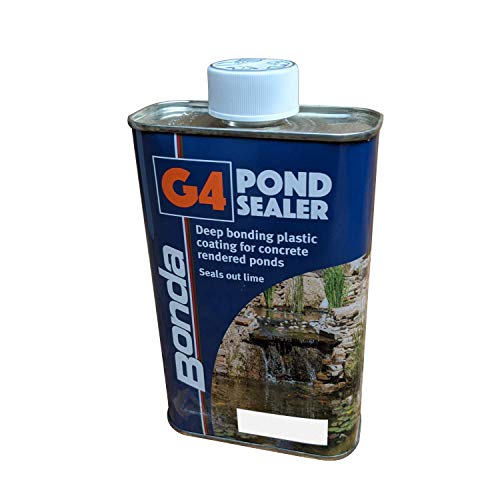
2. Bonda G4 Pond Sealer Clear 500g
A brush-on plastic coating that turns concrete and rendered ponds into a waterproof, glossy basin.
This is a small-format solution that punches above its weight for birdbaths, mini ponds, and concrete fountains. The Bonda G4 is a polyurethane-based paint that creates a thin, flexible sealing layer. One owner applied three thin coats on a rocky garden pool and described being “well pleased” — the water beaded off immediately after cure. The finish is glossy, giving slate and stone surfaces a “wet” look that mimics natural polished rock. Another owner used roughly 500 ml of a single pot to seal a concrete birdbath and achieved a high-gloss finish after four coats, noting the surface became slippery and would benefit from a light sanding for traction.
The item dimensions are a compact 4.33 x 4.33 x 4.33 inches, and the product weighs just 0.2 kilograms, while the Gold Label underwater sealant weighs 0.5 kilograms. That small size makes it easy to store but also means you will need multiple units for anything larger than a modest water feature. The product goes a long way in thin coats, but the requirement for multiple coats (three to four is common) means you should not underestimate how much total material a full pond lining will need. It eliminates the need for a primer, so you can apply it directly onto clean, dry concrete or rendered surfaces.
The main caveat is the gloss level: it creates a very shiny, slippery surface. That is fine for a vertical wall or the inside of a decorative basin, but for a shallow pond floor where frogs or birds may sit, the lack of grip could be a problem. One owner mitigated this by adding fine sand to the final coat, which is not documented in the official instructions but is a common DIY workaround. The smell is noticeable but not overwhelming, and thorough surface prep — pressure washing and degreasing — is absolutely non-negotiable for adhesion.
Who It Fits Best: Anyone with a small concrete birdbath, a backyard mini-pond, or a decorative fountain that needs a waterproof, glossy lining without the cost of a large epoxy kit.
The Real Limitation: Its small container size (500g) and the 3-4 coat recommendation mean it runs out fast on anything larger than a 3-foot basin — plan for multiple pots.
3. Gold Label Underwater Sealant, 290 ml, Black
A black silicone paste that cures underwater — so you can patch a leaking pond without actually draining it.
This is the emergency repair specialist. The Gold Label sealant is a solvent-free, isocyanate-free gel that you squeeze into cracks and holes while the pond is still full. One owner used it to “fill a crack and silver-dollar hole in cement pond without draining or removing fish” — the pond held water afterward and the fish survived, which is exactly the outcome anyone with live koi is hoping for. The product bonds to concrete, stone, butyl rubber, vinyl, glass, plastic, and ceramic, making it a versatile addition to any pond maintenance kit. It comes in a 290 ml tube that measures 1.97 x 1.97 x 9.45 inches, while the Pond Armor paint measures 11.5 x 5.5 x 5.5 inches, illustrating how compact and targeted this product is.
The aspect owners talk about most is effectiveness, and the feedback is genuinely mixed. Some call it “legit” and report a perfect seal that held for months; others found it did not work as advertised for their specific leak. The product is a paste-like gel, not a thin liquid, so it works best for filling discrete cracks and holes rather than coating a large porous surface. The quality rating is positive (5 mentions), and owners consistently highlight that it is fish-safe — even when applied directly into the water column. The black colour blends into most pond liners and concrete, though it will stand out against a light-coloured stone basin.
The honest limitation is that it is not a “slather it everywhere” repair. It is a bead-applied sealant, similar to a heavy-duty silicone caulk that cures while submerged. The tube is small (290 ml), and if your pond has multiple cracks or a large damaged area, you will need multiple tubes. The mixed effectiveness reviews suggest that surface preparation — cleaning the crack of algae and silt — is absolutely critical, and that the product may not hold on actively weeping or dirty concrete.
Best for the emergency kit: Any pond owner who wants a fish-safe, underwater-cure patch solution for specific cracks, especially if draining the pond is impractical or dangerous for the stock.
Think twice if: Your concrete has extensive crumbling or a network of fine cracks — this is a spot-fix, not a relining product.
4. Pond Armor Non-Toxic Pond Shield Epoxy Paint, 1.5-Quart
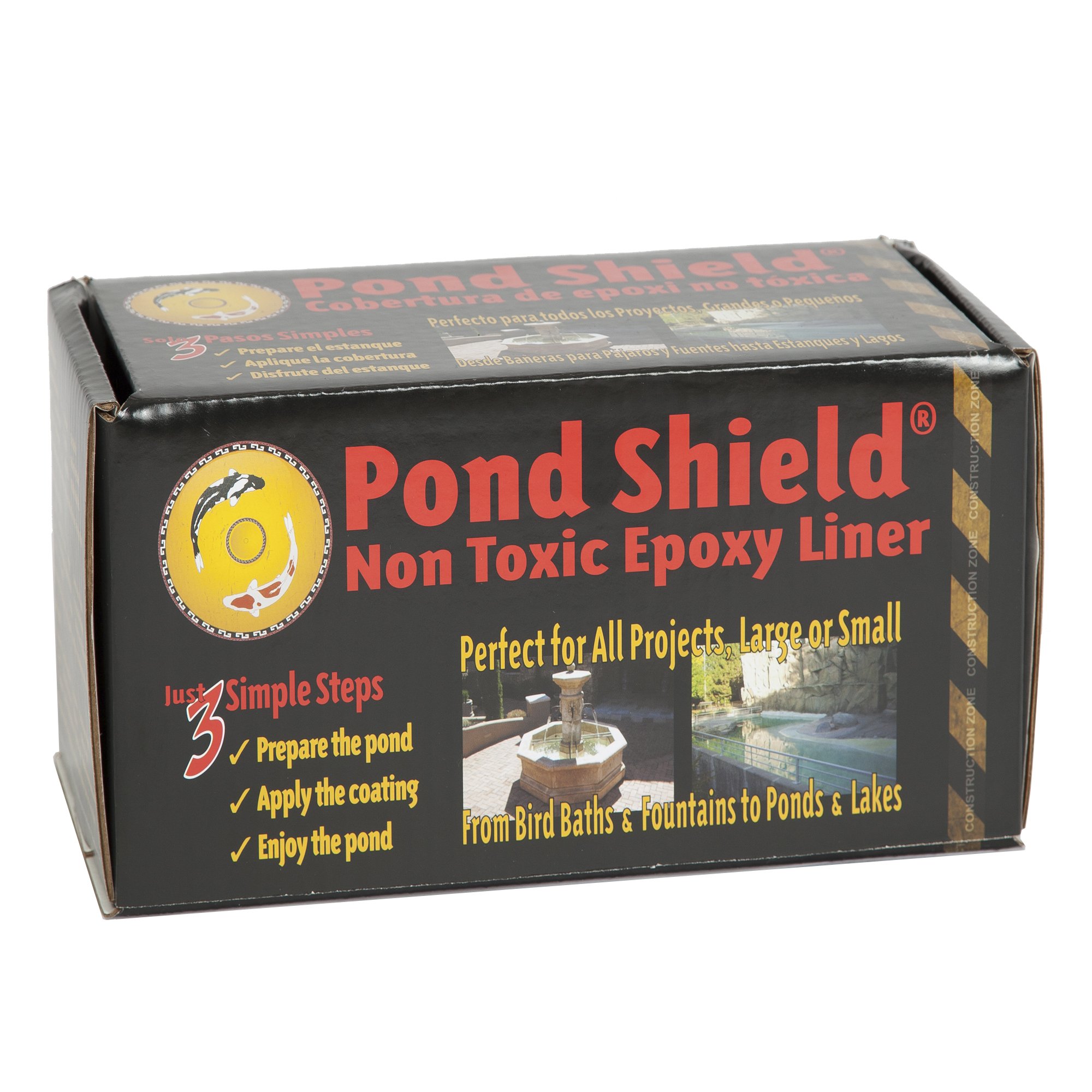
A thick, self-priming epoxy that forms a rubbery-hard plastic barrier — purpose-built for underwater pond lining.
This is the heavy lifter for pond restoration. The Pond Armor is a two-component epoxy that, once mixed, creates a tough, durable coating that is non-toxic to fish and plants after a 24-hour cure. One owner — who converted an old ice chest freezer into a cold plunge — reported that they covered the entire interior with roughly a quarter of the 1.5-quart bottle, and described the process as “easy to apply, quick to dry, and looked great.” Another owner patched freeze-damaged concrete fountains and birdbaths, noting the coating was tack-free in 2 hours and water-ready in 24 hours, forming a “rubbery-hard plastic lining” that stopped all leaks. The effectiveness score (59 positive mentions) leads all other aspects, followed by quality (39).
The epoxy is self-priming, so you apply it directly to a clean, dry surface without an extra undercoat. It works on wood, metal, stone, most plastics, and other coatings, and it is designed to handle freeze-thaw cycles without cracking. The item dimensions are 11.5 x 5.5 x 5.5 inches — a substantial container that, thanks to the epoxy’s high-build nature, goes further than you might expect. The pot life is about 30 minutes after mixing the two parts, so you need to work in small batches and use separate brushes (foam applicators tend to break down in epoxy). The 24-hour cure to full service is one of the fastest in this category, meaning you can refill the pond the next day rather than waiting the typical 72 hours.
The recurring negative point is colour change — the clear formula tends to develop a yellow tint soon after application. That amber shift is common with many epoxy systems exposed to UV light, but owners of clear birdbaths and fountains found it distracting. The product is also glossy, which gives a perpetually “wet” look that many love, but it can look artificial on a naturalistic rock pond. Another practical caution: the epoxy is thick, so fine details in carved stone may be filled in rather than enhanced.
Reach for it if: You are relining a concrete pond, fountain, or birdbath from scratch and want a thick, waterproof plastic coating that cures in one day and is safe for fish.
The one honest trade-off: The yellowing over time — expect a warm amber tint to develop on clear coatings, especially in direct sunlight.
5. AQUA-X 11 Clear Penetrating Concrete Sealer (1 Gal)

A water-based silicone sealer that soaks into concrete invisibly — no smell, no gloss, just waterproof concrete.
If you hate the smell of solvent-based sealers and you do not want a glossy “wet look” on your natural pond, this is the relief you have been searching for. The AQUA-X 11 is a silicone-based penetrating sealer that delivers a natural finish and low VOCs, meaning you can apply it without a mask and without driving neighbours away. The sealing performance (37 positive mentions) leads the reviews, with owners reporting that water beads up and runs off immediately after application. One owner used it on a newly poured backyard patio and confirmed that it enhanced the concrete stain colour without making the surface look plastic. The coverage is rated at 100-400 square feet per gallon on concrete and up to 800 square feet per gallon on stone. You get a 2-4 year lifespan before reapplication, heavily dependent on local weather conditions.
Application is straightforward: a single coat with a pump sprayer, then wait 1 hour for foot traffic and 2 hours for vehicle traffic. That fast dry time makes it a weekend-morning job — spray it on, let it dry, and you are walking on it by lunch. The product is water-repellent at the pore level, meaning it prevents staining, spalling, freeze-thaw damage, and salt damage without forming a surface film. Unlike the Pond Armor epoxy which sits on top, this soaks into the stone. That makes it the better choice for concrete that is exposed to heavy rain or irrigation, because there is no film layer to peel.
The catch is that coverage can be inconsistent. Some owners found that a single coat was not enough and needed 2-3 coats to create uniform water repellency, especially on very porous concrete. The appearance and value-for-money scores both sit in the mixed category, with some reporting blotchy results after application. The cold weather warning is important: do not apply if the temperature will drop below 50°F in the 48 hours after application — the silicone needs that warm window to bond properly.
Best for the natural look: Anyone who wants a clear, invisible sealer that repels water without changing the colour or texture of their concrete pond walls.
The biggest risk: Inconsistent coverage — highly porous concrete may need multiple coats, and a blotchy result is possible if the surface is not uniformly clean.
6. Pond Armor Pond Shield Black Epoxy (1.5 Quart)

A non-toxic epoxy liner in black that coats and waterproofs an entire concrete pond and is designed for underwater, fish-safe use.
Where the Best Overall silicone excels at seams and repairs, this Pond Armor epoxy is built to coat a whole surface. It is a non-toxic pond liner, made in the USA specifically for the pond and water-feature industry, and the manufacturer states it is designed for underwater use and is fish and plant safe. Rolled or brushed onto clean, dry concrete, it cures into a hard, waterproof shell that bonds directly to the substrate — no separate primer needed thanks to its self-priming formula. The black finish gives a pond a deep, natural-looking bottom while sealing the concrete completely.
It adheres to virtually any constructed surface — concrete, stone, wood, metal, and most plastics and existing coatings — so it works for formal concrete ponds, waterfalls, and fountains alike. It can be put into service in as little as 24 hours and is formulated to handle a wide range of climates, from high heat to freeze-thaw. Owners rate it 4.4 stars across more than 400 ratings, and it is a long-standing favorite for relining koi and goldfish ponds precisely because it is genuinely fish-safe once cured.
The trade-offs are those of any two-part epoxy: surface prep and mixing matter, so the concrete must be clean, dry, and oil-free, and you should follow the full cure time before filling and adding fish. A 1.5-quart kit covers a modest area, so measure your pond and buy enough to finish in one session for the best bond.
Reach for it if: you want to seal and waterproof an entire concrete pond interior with a proven, non-toxic, fish-safe coating.
Look elsewhere if: you only need to fix a seam or a small leak — a fish-safe silicone or underwater sealant is quicker for spot work.
7. MasonryDefender All Purpose Brick Stone & Concrete Sealer (2.5 Gal)

A deep-penetrating silane-siloxane spray that waterproofs concrete without changing a single grain of its texture.
For the big stuff — retaining walls, poured concrete pond shells, 30-foot patios — the MasonryDefender delivers an industrial-grade penetrating seal in a 2.5-gallon jug. The chemistry is a silane-siloxane blend, which means the molecules are small enough to penetrate deep into the concrete capillary structure and chemically bond with the substrate. The result is a waterproof barrier that lives inside the stone, not on top of it. The sealing performance (37 positive mentions) and easy application (27 positive mentions) are the two most-discussed strengths. One owner applied it to an entire flagstone, stamped concrete, and aggregate patio with a garden sprayer and described it as spraying “better than other brands we have used,” with water beading “very nicely” after the first rain. The coverage is rated at 90-150 square feet per gallon, which is lower than many penetrating sealers — a consequence of the high-solids formula that puts more active material into each spray pass.
The finish is completely invisible. Unlike the high-gloss acrylics, this leaves the concrete exactly as it looked before application — no shine, no darkening, no sheen. That is a major advantage for a naturalistic pond where you want the stone to look dry and uncoated even as it repels water. The product is ideal for clay brick walls, limestone, granite, and sidewalks, making it versatile beyond just pond edges. The unit count is 320 fluid ounces (2.5 gallons), and the item weight is 22.3 pounds, so this is a substantial purchase that is best suited for large-scale projects or future-proofing multiple structures at once.
The known downside is the discolouration risk. While the sealer dries clear on most surfaces, some owners mention a white stain or residue on certain types of brick or porous stone — 24 mentions cite discolouration as a concern. The product requires thorough shaking before use; the manufacturer warns that skipping the shake can lead to clumpy liquid that clogs spray nozzles. And because it is a penetrating sealer, it will not bridge or fill cracks — it only waterproofs the existing concrete structure, so any holes larger than a hairline must be patched separately.
The big-project advantage: One 2.5-gallon container treats a substantial area, and the deep-penetrating chemistry means the protection lasts through freeze-thaw cycles without a film to peel.
The thing to watch for: White residue on darker or highly textured stone — test on a hidden spot before coating your entire pond wall.
8. Lithi-Tek 9500 Ultra Concentrate Penetrating Concrete Sealer (1 Gal)
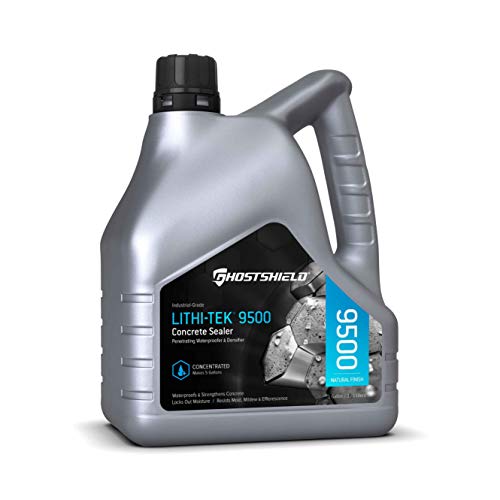
A lithium-based concentrate that densifies old, crumbly concrete while making it water-repellent from the inside out.
This is not just a sealer — it is a concrete hardener. The Lithi-Tek 9500 is a proprietary lithium silicate formula that reduces porosity and increases abrasion resistance by strengthening the concrete itself up to 50%. In practice, that means it is the right choice for an old concrete pond whose surface has started to dust, flake, or feel soft under a fingernail. The concentrate is mixed 4:1 with water (one gallon of concentrate makes five gallons of ready-to-use sealer), and that five-gallon batch can treat up to 1,000 square feet per coat — a huge area that is unrivalled in this list. One owner applied it to a 25-year-old exposed aggregate driveway and described the process as easy mixing and spraying with a garden sprayer, resulting in a clear, natural finish that repelled water immediately. Another owner used it on a 1,500-square-foot driveway and pavers, mixed it in minutes, and finished application in 90 minutes — water beaded beautifully afterward.
The densification effect is unique: the lithium silicate reacts with the free lime in the concrete to form a hard, crystalline structure within the pores. This not only waterproofs the surface but also prevents efflorescence (the white powdery salt deposits that plague many concrete ponds) and reduces water vapour transmission. The product is water-based and low-odour, so you can apply it without a respirator — a huge relief if you have ever worked with solvent-based acrylics. The clear finish means there is zero visual change to the pond walls, which is ideal if you want the concrete to look natural. One owner described the results as “no colour change or blotchiness,” calling it a high-performance penetrating sealer that forms a hydrophobic barrier.
The trade-off is that this is not a film-forming sealer. If your pond currently leaks through a visible crack, the Lithi-Tek will not bridge that crack — it only waterproofs the intact concrete around it. You will still need a filler or a patching compound for any fissures. The product also requires the concrete to be absolutely clean and dry before application, and the surface must not be exposed to deicing salts (the instructions explicitly note that). Finally, the price for a one-gallon concentrate is an investment, but mathematically it yields five gallons of mixed sealer, bringing the per-gallon cost down to roughly commodity territory.
Best for old, soft concrete: If your pond’s concrete surface is dusty, flaking, or showing signs of wear, this densifies it into a harder, water-resistant substrate — a genuine restoration tool.
Not for crack repair: This penetrates the pores but will not fill or cover cracks; use a patching compound alongside it for any visible damage.
9. MyPond MS300 Marine & Pond Sealant
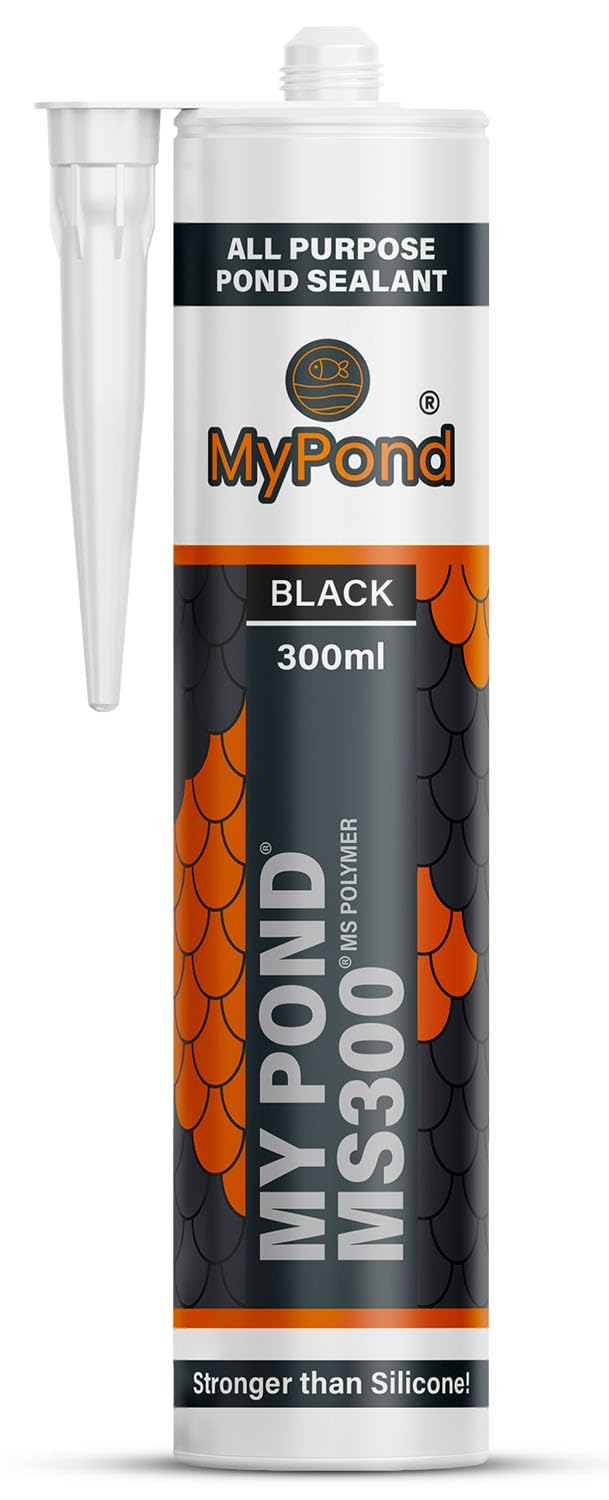
A fish-safe MS-polymer sealant that is four times stronger than silicone and cures underwater in 24 hours for leak repairs.
The MyPond MS300 is a heavy-duty hybrid pond sealant built for exactly the jobs a decorative surface sealer cannot do. The manufacturer states it is fish-safe and formulated to protect aquatic life, and it cures underwater in about 24 hours — so you can seal a leak, bond a bottom drain, or fix a liner without fully draining the pond. As an MS-polymer adhesive it is rated roughly four times stronger than ordinary waterproof silicone, and it bonds to concrete, stone, wood, glass, metal, rubber, and PVC.
That flexibility makes it a genuine problem-solver for concrete ponds and water features: seam sealing, viewing-panel installation, drain and fitting sealing, and general leak repair both above and below the waterline. Owners rate it 4.4 stars across more than 350 ratings, with the underwater-curing ability and bond strength drawing the most praise. Because it stays flexible after curing, it accommodates the small movements and freeze-thaw stresses that crack rigid coatings.
As with the other sealants, this is a targeted repair and bonding product rather than a whole-basin coating — a single cartridge handles seams, joints, and leaks. Prep the area as clean as conditions allow, and while it can cure underwater, following the full cure time before returning fish is still the safe practice.
Where It Shines
- Fish-safe and cures underwater in 24 hours — repair leaks without draining
- About 4x stronger than silicone; bonds concrete, rubber, PVC, glass, and metal
- Stays flexible to absorb movement and freeze-thaw stress
The Real Downsides
- A cartridge is sized for seams, joints, and leaks — not a full-basin coating
- Best results still need a reasonably clean surface and a full cure before fish return
Go for it if: you need to stop a leak or bond a fitting in a fish pond, even underwater, with a strong, fish-safe sealant.
skip it if: you want to coat and colour an entire pond interior — reach for the Pond Armor epoxy instead.
Understanding the Specs
Film-Forming vs Penetrating Chemistry
Film-forming sealers (epoxies like Pond Armor and flexible pond sealants like Aquascape and MyPond MS300) deposit a visible layer on top of the concrete. This gives you colour enhancement and a wet look, but the film can be worn away by foot traffic or peeled by moisture trapped below. Penetrating sealers (silanes, siloxanes, and lithium silicates like AQUA-X 11, MasonryDefender, and Lithi-Tek 9500) soak into the concrete pores and bond chemically. They change nothing about the surface appearance while making the concrete itself water-repellent — better for natural hides and areas where appearance matters less than longevity. Always match the chemistry to your concrete’s condition: film-formers work well on sound concrete, but penetrating sealers are safer for damp or aging substrates.
Coverage and Pot Life
Coverage is expressed in square feet per gallon, but the number varies drastically by porosity — a smooth trowelled surface soaks up far less sealer than a rough, broom-finished or stamped surface. The manufacturer’s numbers (200-400 sq ft/gal for most products) are ideal-world estimates; in practice, expect 30-50% less. Pot life matters for two-part epoxies like Pond Armor: you have roughly 30 minutes from mixing to apply the batch, so mix in small quarter-batches to avoid waste. Solvent-based and water-based products have no pot life constraint — you can reseal the lid and use them over multiple sessions, as long as you clean the nozzle after each spray application.
FAQ
Can I apply a concrete pond sealer without draining the pond first?
How long does a concrete pond sealer last before reapplication?
Is it safe to use a concrete pond sealer with koi fish and goldfish?
What is the difference between a wet-look sealer and a penetrating sealer for a pond?
Can I use a concrete pond sealer on a pond liner or butyl rubber?
How do I stop a concrete pond from efflorescence (white powdery salt deposits)?
What temperature should it be when I apply a concrete pond sealer?
Do I need to use a primer before applying a concrete pond sealer?
Final Thoughts: The Verdict
Across the board, the clear winner for a concrete pond sealer is the
Final Thoughts: The Verdict
For most users, the clear winner for a concrete pond sealer is the Aquascape Black Silicone Pond Sealant because it is genuinely fish-safe and seals concrete ponds, liners, and water features with a flexible, waterproof bond that will not crack or peel. If you value an invisible, odour-free treatment that preserves the natural stone look, the AQUA-X 11 is the smart pick. And for a complete pond relining that creates a rubbery-hard plastic barrier safe for fish, the Pond Armor Epoxy offers the thickest waterproof protection of the group.
How We Picked
We do not accept paid placement. Every pick is matched to a real buyer and a real use-case; we do not hands-on test units.
Sources & Methodology
Specifications: manufacturer listings and product documentation. Review insights: verified customer reviews, as of July 2026. Pricing: not shown on this page (it changes often); check the current price via the retailer link.
As an Amazon Associate, WellFizz earns from qualifying purchases. This does not affect which products we feature.
Related Guides

Mo Maruf
I created WellFizz to bridge the gap between vague wellness advice and actionable solutions. My mission is simple: to decode the research and give you practical tools you can actually use.
Beyond the data, I am a passionate traveler. I believe that stepping away from the screen to explore new environments is essential for mental clarity and physical vitality.