Our readers keep the lights on and my smoothie glass nicely filled. As an Amazon Associate, I earn from qualifying purchases.
Choosing the wrong coating for a concrete patio or driveway often means watching new paint bubble, peel, and wash away after the first hard rain. The chemistry between a water-based acrylic, an oil-based enamel, and a penetrating sealer differs significantly, and the wrong match for your surface’s porosity or sun exposure will fail fast.
I’m Mohammad Maruf — the founder and writer behind WellFizz. This guide analyzes adhesion chemistry, dry-film hardness, and UV-stability data across seven top contenders to separate coatings that form a genuine mechanical bond from those that simply sit on the surface.
After comparing VOC profiles, traction ratings, coverage yields, and real-world failure reports from hundreds of buyer experiences, I’ve compiled the definitive breakdown of the best concrete exterior paint for porches, pool decks, garages, and high-traffic walkways.
How To Choose The Best Concrete Exterior Paint
Concrete is a porous, alkaline substrate that expands and contracts with temperature. A paint that bonds mechanically to wood will simply delaminate from concrete if its chemistry doesn’t penetrate the pores or flex with the slab. The three variables that matter most are the binder type, the finish hardness, and the vapor transmission rate.
Binder Chemistry: Acrylic, Oil, or Silane-Siloxane
Pure acrylic latex forms a flexible film that moves with concrete and resists UV yellowing. Oil-based enamels cure to a harder, more chemical-resistant shell but yellow in direct sun and require mineral spirits for cleanup. Silane-siloxane sealers are not paints—they penetrate the capillary structure and repel liquid water while letting water vapor escape, making them ideal for basements and vertical walls where hydrostatic pressure is a factor.
Finish Texture and Slip Resistance
High-gloss and semi-gloss finishes look smooth but become dangerously slick when wet, especially on pool decks and steps. A textured, satin, or matte finish with added grip modifiers reduces slip risk without sacrificing durability. Some products permit broadcast of silica sand or traction additives into the wet coat, which improves coefficient of friction significantly.
Coverage and Film Build
Manufacturer coverage claims assume a perfectly smooth, non-porous substrate. On broom-finished or weathered concrete, expect to lose 30–50% of the stated coverage to absorption. Plan for two coats minimum, and always buy enough extra gallon to spot-repair high-traffic zones before the sheen shifts from UV exposure.
Quick Comparison
On smaller screens, swipe sideways to see the full table.
| Model | Category | Best For | Key Spec | Amazon |
|---|---|---|---|---|
| RUST BULLET DuraGrade | Premium Coating | Garage floors & vehicle traffic | 300-350 sq ft/gal, gloss, no etching needed | Amazon |
| Diamond Brite Oil Enamel | Premium Enamel | Industrial/commercial high-traffic floors | 300 sq ft/gal, high-gloss, oil-based | Amazon |
| Kelley Technical Olympic | Premium Acrylic | Pool decks & textured resurfacing | 90-125 sq ft/gal, textured, non-slip | Amazon |
| MasonryDefender Sealer | Waterproofer | Brick, stone & vertical concrete waterproofing | 90-150 sq ft/gal, clear, silane-siloxane | Amazon |
| EVOLVE Porch & Floor | Mid-Range Acrylic | Covered porches & basements | 300-400 sq ft/gal, semi-gloss, low VOC | Amazon |
| Glidden Porch & Floor | Mid-Range Acrylic | Wood decks & pool decks with cooling tech | 400 sq ft/gal, satin, cool-surface technology | Amazon |
| INSL-X Traffic Paint | Function Paint | Parking lot striping & line marking | 680-960 ft/4-in line, matte, fast-dry | Amazon |
In‑Depth Reviews
1. RUST BULLET DuraGrade Concrete Paint

RUST BULLET DuraGrade skips the acid-etch step entirely, adhering directly to clean, dry concrete through a proprietary bonding mechanism that creates a chemical weld rather than a surface film. The gloss finish cures to an impact-resistant shell that holds up under vehicle tires, oil drips, and pressure-washing cycles without lifting. Coverage sits at 300–350 square feet per gallon per coat, though porous or broom-finished slabs will pull more material into the surface pores.
Buyers report five-year longevity on Midwest driveways exposed to road salt and temperature swings, provided thin coats are applied to avoid bubbling. The odor is strong — a respirator and full ventilation are mandatory — and the paint will not wash off skin with soap; mineral oil or a citrus hand cleaner is required. Roller covers and brushes must be discarded after use because the cured film is too tough to clean out of fibers.
The quart size (this review unit) covers roughly 80 square feet per coat, so a two-car garage floor will require multiple gallon cans. Some users note that the coverage estimate is optimistic — actual yield on rough concrete runs closer to 250 square feet per gallon. For a coating that eliminates the etching step and delivers genuine industrial-grade chemical and stain resistance, RUST BULLET DuraGrade sets the durability benchmark for concrete paint.
Why it’s great
- No etching or primer needed, saving hours of prep work
- Gloss finish resists oil, grease, and UV degradation
- Proven five-year adhesion on salted, freeze-thaw concrete
Good to know
- Strong fumes require respirator and full ventilation
- Coverage often falls short of stated 300-350 sq ft on rough slabs
- Tools must be disposed after use; paint won’t wash out of rollers
2. Diamond Brite Oil-Based Enamel Paint

Diamond Brite’s oil-based enamel cures to a high-gloss, moisture-resistant shell that withstands household chemicals, scuffs, and repeated cleaning — characteristics that make it a go-to for garage cement floors, industrial workshops, and commercial building interiors. The one-gallon can covers roughly 300 square feet when applied in two light coats, and the formula adheres to wood, concrete, masonry, metal, and cinder block without needing a dedicated primer on most surfaces.
Dry time is the trade-off: the enamel takes 12 hours to recoat and a full 24 hours before light foot traffic, and several buyers note that adding a hardener accelerates the cure significantly. On exterior surfaces in direct sun, the high-gloss sheen can magnify surface imperfections, so thorough filling and smoothing of concrete cracks is essential before application. Oil-based cleanup requires mineral spirits, not water.
One-year outdoor exposure on T-111 siding and metal doors shows no fading or peeling, and the color — a warm silver gray — maintains its depth without the yellowing that plagues some oil whites. For projects where maximum hardness and chemical resistance outweigh convenience, Diamond Brite’s enamel delivers a finish that feels closer to industrial flooring than typical porch paint.
Why it’s great
- Hard, high-gloss shell resists rust, scuffs, and fading
- Adheres to multiple substrates without separate primer
- Excellent moisture and chemical resistance for garages
Good to know
- 12-hour recoat window slows project pace significantly
- Oil-based formula requires mineral spirits for cleanup
- High gloss highlights every surface imperfection
3. Kelley Technical Coatings Olympic Patio Tones
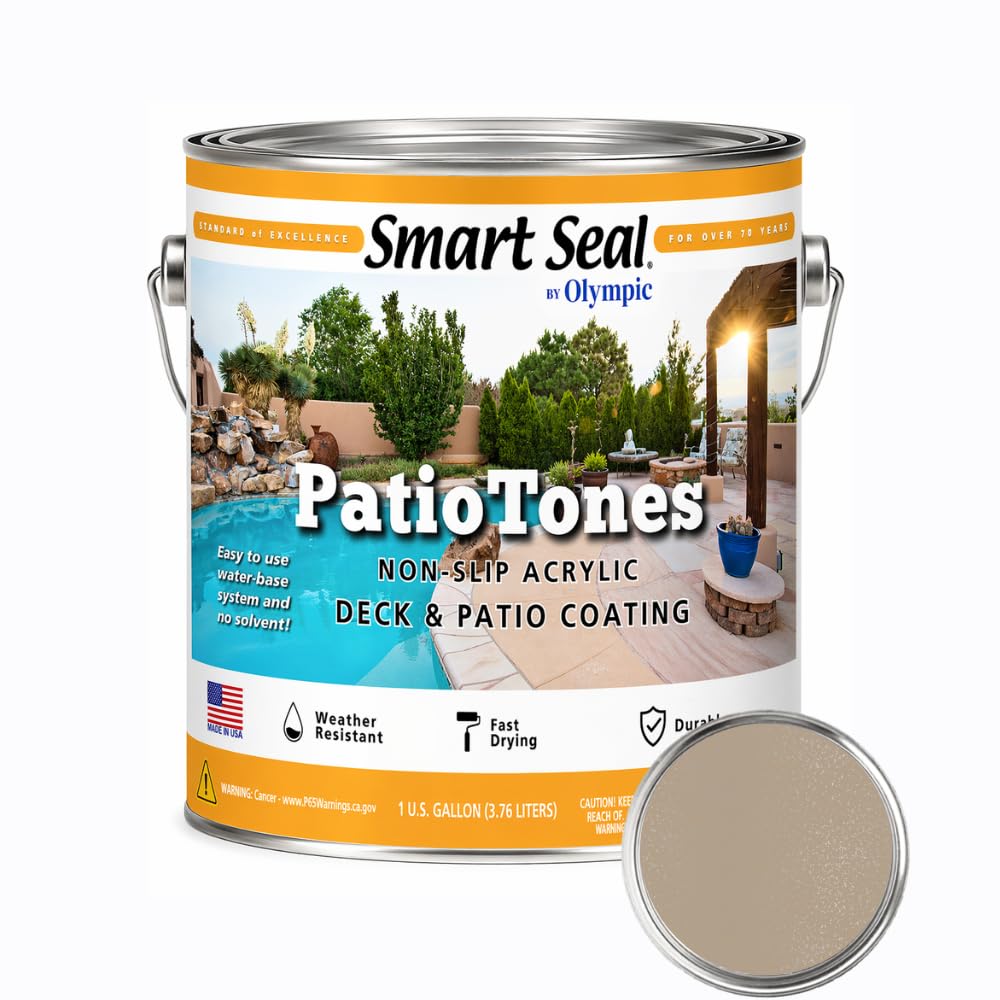
Kelley Technical’s Olympic Patio Tones is a heavy-bodied acrylic coating formulated specifically for resurfacing weathered concrete around swimming pools and patios. The textured finish — achieved through a silica-loaded formula — provides reliable slip resistance when wet, and the coverage range of 90–125 square feet per gallon reflects the thicker film build required to mask cracks and restore a uniform appearance.
Application requires two coats for full opacity, and the product demands clean, power-washed concrete applied in temperatures below 90°F to prevent skinning. The Desert Sun color reads slightly lighter after drying, so users matching existing surfaces should test a small patch first. Several buyers report that adding a small amount of white primer helps achieve a sand-like shade that blends with Florida pool surrounds.
The coating holds up well to chlorine exposure and dog traffic, but the rebranding from Olympic to Smart Seal means color consistency between batches may shift during the transition period. For homeowners willing to invest in a premium resurfacer that transforms cracked, stained concrete into a uniform, high-end patio finish, Olympic Patio Tones justifies its price with texture that stays grippy and color that resists fading over multiple seasons.
Why it’s great
- Textured finish provides genuine non-slip grip even when wet
- Thick body fills small cracks and restores worn concrete surfaces
- UV and chlorine resistant for pool-deck environments
Good to know
- Very low coverage yield (90-125 sq ft/gal) increases total cost
- Color appears lighter than swatch after full cure
- Brand rebranding may cause label/color variation between batches
4. MasonryDefender All Purpose Brick Stone & Concrete Sealer

MasonryDefender is not a paint — it is a penetrating silane-siloxane sealer that soaks into concrete, brick, and stone to form a chemical water barrier while leaving the surface appearance completely unchanged. This distinction matters for vertical surfaces like foundation walls, retaining walls, and brick facades where a film-forming paint would trap moisture and cause spalling during freeze-thaw cycles. Coverage runs 90–150 square feet per gallon depending on surface porosity.
Application requires a pump-up garden sprayer, and the sealer must be shaken vigorously before use to prevent the siloxane from clumping and clogging the nozzle. Drying time is rapid — typically one to two hours in moderate conditions — and a second coat should follow immediately if the surface absorbs the first coat completely. Buyers report immediate water beading on brick porch steps and terra cotta pots, with visible droplet formation that proves the hydrophobic barrier is active.
The product does not add slip resistance, gloss, or color, so it is not a substitute for paint on horizontal walking surfaces. However, for solving basement seepage under a stone porch or preventing moss growth on garden statues, MasonryDefender performs a task that no film-forming paint can: it stops liquid water without sealing in vapor. The trade-off is that the protection is invisible and requires reapplication every few years on high-exposure surfaces.
Why it’s great
- Penetrates pores without altering surface appearance or texture
- Allows water vapor to escape, preventing freeze-thaw spalling
- Easy spray-on application dries in one to two hours
Good to know
- Not a paint — provides no color, gloss, or slip resistance
- Must be shaken thoroughly to prevent clogging spray nozzles
- Reapplication needed every few years on exposed horizontal surfaces
5. EVOLVE Porch & Floor Paint
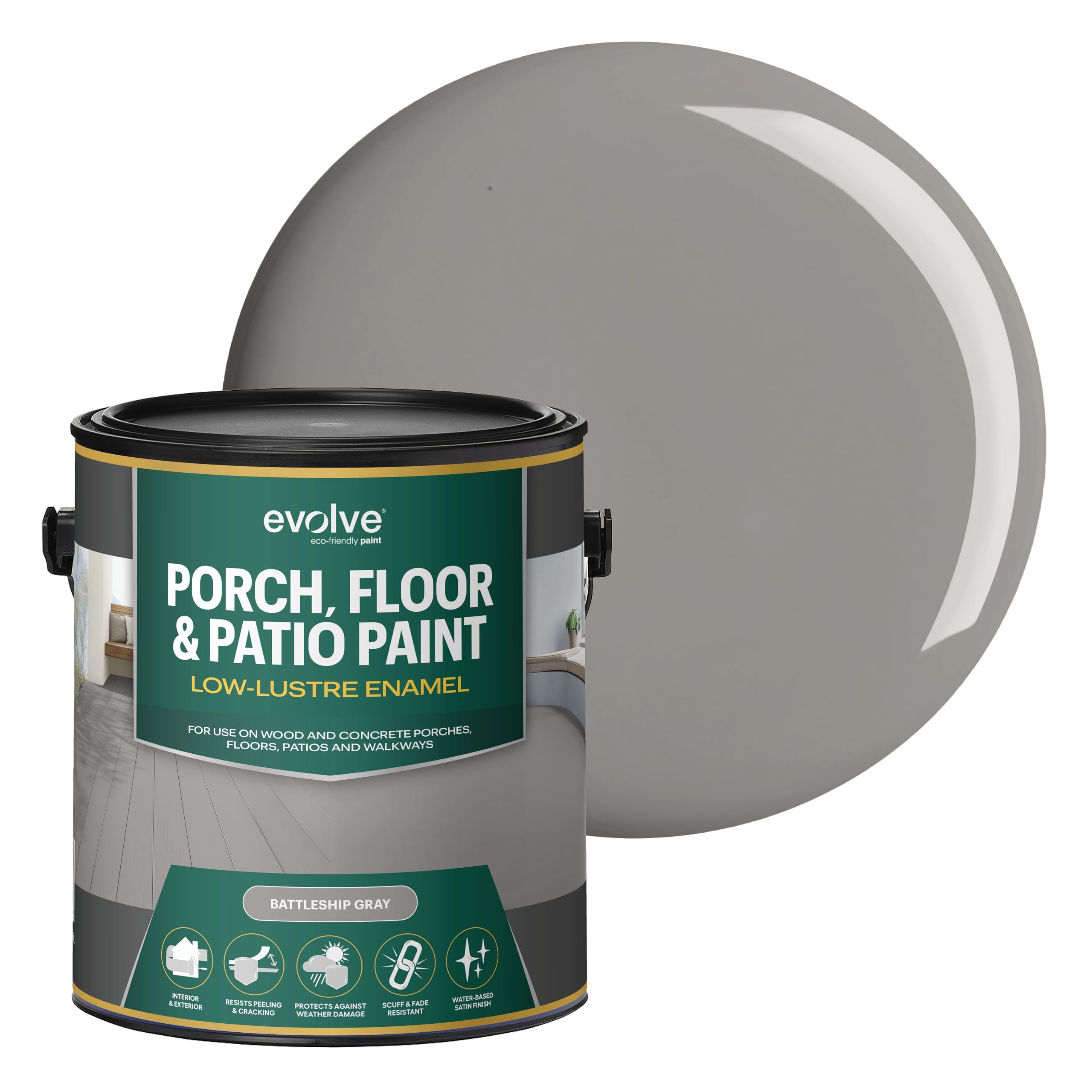
EVOLVE’s water-based acrylic latex formula positions itself as a low-VOC, fast-drying option for indoor-outdoor concrete floors, porches, and basements where odor sensitivity matters. The semi-gloss finish dries to the touch in about one hour and covers 300–400 square feet per gallon, making it one of the higher-coverage entries in this comparison. The Battleship Gray color reads slightly darker than the swatch suggests, but the high-hide pigment effectively masks old stains and minor surface discoloration.
Several buyers report excellent results on basement floors with minimal prep — just sweep, mop, and apply two coats — with the paint holding up well after six to seven months of light foot traffic. However, a small but consistent number of failure reports describe the film dissolving when exposed to standing water within 24 hours, even after a week of curing in hot weather. This suggests the coating may be less tolerant of moisture wicking from below or puddling than the “weather and moisture barrier” claim implies.
The paint is made in the USA with sustainable materials, and cleanup requires only soap and water. However, the can lid is notoriously difficult to open, and the product is not recommended for surfaces that experience direct rain pooling or frequent wetting. For covered patios, mudrooms, and basement slabs where convenience and low odor are priorities, EVOLVE delivers a solid mid-range finish with reasonable durability.
Why it’s great
- Low-VOC, low-odor formula ideal for enclosed or semi-enclosed spaces
- Fast drying — tack-free in about one hour
- High coverage (300-400 sq ft/gal) reduces number of cans needed
Good to know
- Some units fail when exposed to standing water after curing
- Can lid is extremely difficult to open without damaging the rim
- Not suited for surfaces with persistent moisture wicking or pooling
6. Glidden Porch and Floor with Cool Surface Technology
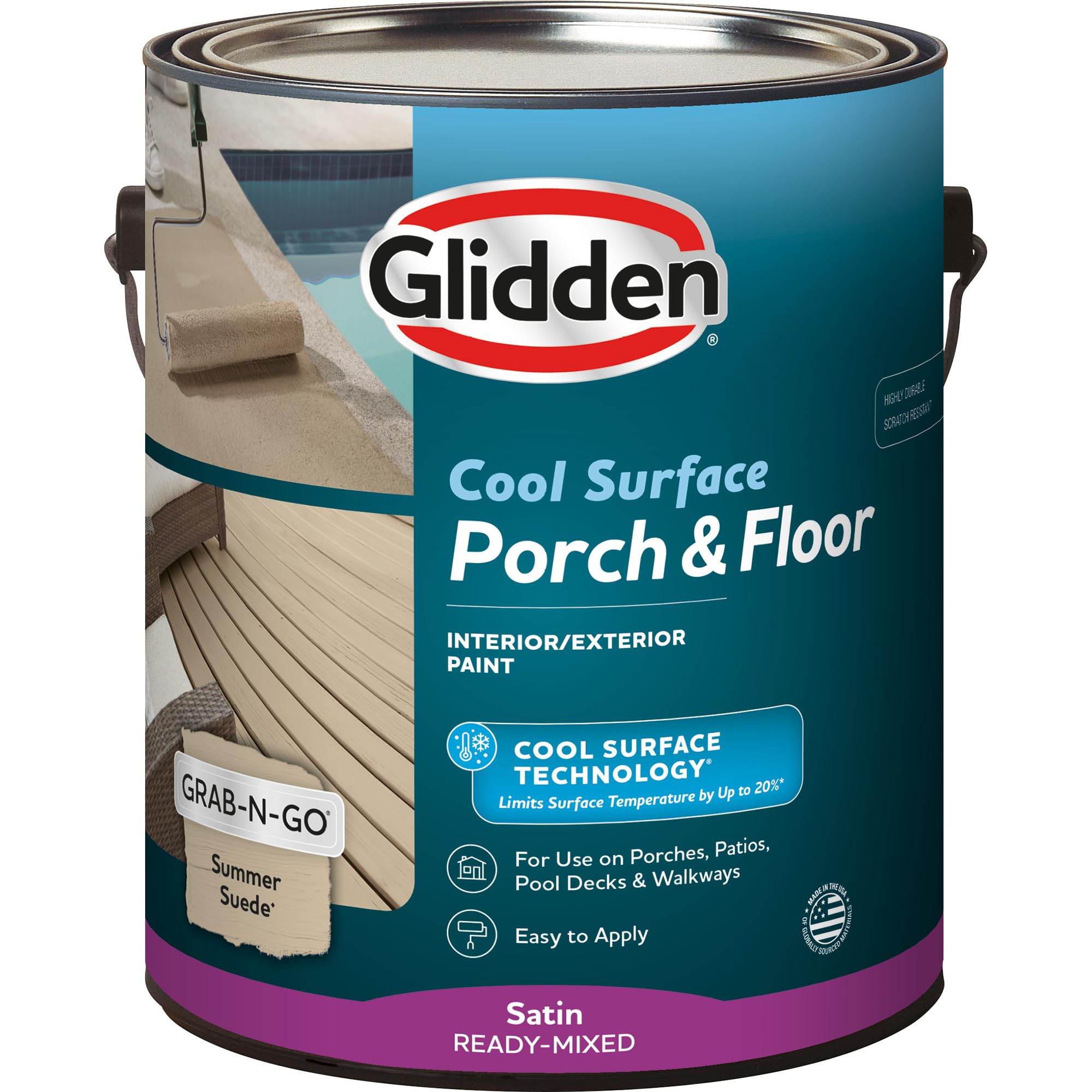
Glidden’s Cool Surface Technology formula uses reflective pigments to reduce surface temperature by up to 20% compared to standard porch paint — a meaningful advantage on barefoot-traffic pool decks and south-facing patios in hot climates. The satin finish provides a subtle sheen without the slickness of semi-gloss, and the paint covers up to 400 square feet per gallon, tying for the highest coverage rate in this roundup. The Summer Suede color is a warm, clay-inspired reddish tan that revitalizes weathered wood and concrete alike.
Buyers praise the one-coat coverage on wood decking and the fast drying time — direct sunlight at 70°F renders the surface walkable within a few hours. On concrete pool decks, two coats are recommended for uniform opacity, and the non-slip properties are confirmed by multiple reviewers who tested the finish barefoot. However, a significant quality-control issue has emerged: several customers received cans containing paint that had hardened into a lumpy, chunky consistency even after machine shaking at a hardware store, rendering the product unbrushable.
That batch inconsistency makes Glidden a riskier purchase sight-unseen. When the formula is correct, the cooling effect is real and the application is smooth. But the variability in can quality means buyers should inspect the paint upon arrival and be prepared to return defective units. For those who get a good can, this is a strong mid-range choice for wood and concrete decks where heat reflection is a priority.
Why it’s great
- Cool Surface Technology reduces deck temperature by up to 20%
- High coverage (400 sq ft/gal) and fast drying in sunlight
- Satin finish provides good slip resistance on pool decks
Good to know
- Quality control issues: some cans arrive with hardened, lumpy paint
- One-coat claim holds only on wood; concrete needs two coats
- Batch variability makes consistency unreliable across purchases
7. INSL-X Acrylic Latex Traffic Paint

INSL-X Traffic Paint is a specialized acrylic latex designed for marking parking lots, traffic lanes, warehouse aisles, and asphalt surfaces — not for broad brush coverage of a porch. The matte finish dries to the touch in 30 minutes and accepts reflective glass beads for night visibility, which makes it the only product in this comparison suited for functional line striping rather than decorative or protective coating. Coverage is measured by linear feet of a four-inch line: 680–960 feet per gallon, depending on surface texture and application tool.
Buyers report professional-looking results on uneven asphalt and concrete after a simple broom-cleaning and proper temperature (above 50°F). The water-based formula thins with water, and cleanup is soap-and-water simple. The paint arrives with a can opener and stir stick, which is a thoughtful touch for a functional product that often gets used by weekend DIYers rather than professional striping crews.
The black color reads as a very flat, dark grey on concrete rather than a pure jet black, which is a minor cosmetic quibble for those expecting high-contrast striping. After six months of exposure to rain and vehicle traffic, the paint shows no peeling or fading, and the low cost per linear foot makes it an economical alternative to thermoplastic marking. For its intended use — marking boundaries, not beautifying surfaces — INSL-X delivers reliable, fast-drying performance that holds up to tires and weather.
Why it’s great
- Dries to touch in 30 minutes for fast project turnaround
- Water-based formula with easy soap-and-water cleanup
- Accepts reflective beads for night-time line visibility
Good to know
- Not intended for broad surface coating — designed for line marking
- Black color reads as flat dark grey on concrete, not pure jet black
- Requires air/surface temperature above 50°F for proper adhesion
FAQ
Can I apply concrete exterior paint over an old coating that is peeling?
How long should I wait before parking a car on freshly painted garage concrete?
Final Thoughts: The Verdict
For most users, the best concrete exterior paint winner is the RUST BULLET DuraGrade because it eliminates the etching step, bonds chemically to the substrate, and delivers proven five-year durability on high-traffic garage and driveway slabs. If you need a hard, high-gloss finish for a workshop or commercial floor, grab the Diamond Brite Oil Enamel. And for resurfacing a pool deck with reliable slip resistance and UV stability, nothing beats the Kelley Technical Olympic Patio Tones.

Mo Maruf
I created WellFizz to bridge the gap between vague wellness advice and actionable solutions. My mission is simple: to decode the research and give you practical tools you can actually use.
Beyond the data, I am a passionate traveler. I believe that stepping away from the screen to explore new environments is essential for mental clarity and physical vitality.