Our readers keep the lights on and my smoothie glass nicely filled. As an Amazon Associate, I earn from qualifying purchases.
When a stubborn infestation hits your garden or lawn, the difference between a temporary fix and lasting relief often comes down to the concentrate you choose. Effective bug control starts with a formula that targets the specific pest without harming your plants, and the right concentrate saves serious time and money by treating large areas with a small bottle. I’m Mohammad Maruf — the founder and writer behind WellFizz. My research into garden pest control focuses on active ingredient concentration, safety certifications, and application coverage to ensure you get a formula that delivers real results without unnecessary guesswork. This guide breaks down five top-rated concentrate bug killers, comparing their strengths, use cases, and key specs so you can choose the one that fits your property and pest pressure. After hours of analysis and cross-referencing real user experiences, I’ve found the best concentrate bug killer for most homeowners balances broad-spectrum power with plant-friendly safety.
How To Choose The Best Concentrate Bug Killer
Selecting a concentrate bug killer means looking beyond the label’s promise to the active ingredients, dilution ratio, and target pest range. A mismatch between the formula and the insect you’re fighting can waste a full season of effort, so understanding the basics of each type is worth the few minutes it takes.
Match the Active Ingredient to Your Pest Type
Not all concentrates attack pests the same way. Malathion and permethrin are broad-spectrum options that handle many insects, but they may also affect beneficial bugs. Bacillus thuringiensis (BT) is highly specific to caterpillars and is gentle on pollinators, making it ideal for targeted outbreaks. Acephate (found in systemic formulas) works by being absorbed into the plant, killing sucking insects like scale and aphids from the inside. Check which active ingredient your main pest is susceptible to before buying.
Consider Dilution and Coverage Area
A 32-ounce concentrate that makes 6.4 gallons of finished spray covers a drastically different area than one that makes 16 gallons. Always verify the dilution rate — some require 2.5 ounces per gallon, others only 1 ounce. For large properties, a higher dilution yield per bottle saves money and reduces trips to the store. For small gardens, a lower-yield concentrate may be sufficient and easier to store.
Check the Plant Safety List
Every concentrate has a labeled list of safe plant types. Some are designed for ornamental flowers and shrubs only, while others are safe for vegetables and fruit trees up to the day before harvest. If you plan to treat edible crops, you must choose a product that explicitly allows that use. Systemic formulas often exclude edibles because the active ingredient can travel into the fruit.
Quick Comparison
On smaller screens, swipe sideways to see the full table.
| Model | Category | Best For | Key Spec | Amazon |
|---|---|---|---|---|
| Bonide Citrus, Fruit & Nut Orchard Spray | Fungicide/Insecticide/Miticide | Multi-purpose orchard & garden protection | Makes 6.4 gallons per pint | Amazon |
| Summit Caterpillar & Webworm Control | Targeted Caterpillar Killer | Gypsy moths, armyworms, hornworms | Hose-end applicator included | Amazon |
| Bonide Systemic Insect Control | Systemic Ornamental Insecticide | Scale, whiteflies, spider mites on ornamentals | Makes 16 gallons per 16 oz | Amazon |
| Hi-Yield 55% Malathion Spray | Broad-Spectrum Insecticide | Aphids, mites, lace bugs on vegetables & fruit | 55% Malathion active ingredient | Amazon |
| Martin’s Permethrin 13.3% Concentrate | Broad-Spectrum Indoor/Outdoor | Ticks, mosquitoes, perimeter control | Up to 4 weeks residual control | Amazon |
In‑Depth Reviews
1. Bonide Captain Jack’s Citrus, Fruit & Nut Orchard Spray, 32 oz Concentrate

This three-in-one concentrate tackles insects, mites, and fungal diseases in a single mix — a rare combo that makes it the most versatile option for orchard and vegetable growers. The active ingredient blend targets beetles, caterpillars, spider mites, and leaf spots while being gentle enough for use on apples, avocados, citrus, and ornamental plants up to the day before harvest. Each pint creates 6.4 gallons of finished spray, delivering excellent coverage for properties with multiple fruit trees.
Users report visible results within hours against Japanese beetles and saw leaf spot fading after a few applications on previously yellowing apple trees. The non-persistent formula requires reapplication after heavy rain, but that also means lower environmental accumulation. A slight powdery sulfur residue may appear on leaves, but it washes off easily and doesn’t harm the fruit.
For the home orchardist wanting a single bottle for both pest and disease control, this concentrate removes the guesswork of mixing separate treatments. It works with both hose-end and tank sprayers, and the cost per gallon of finished spray is remarkably low compared to buying ready-to-use bottles.
Why it’s great
- Triple action against insects, mites, and diseases
- Safe for edible crops up to day before harvest
- Economical — 6.4 gallons per pint
Good to know
- May leave white sulfur residue on leaves
- Needs reapplication after rain
2. Summit Caterpillar and Webworm Control-Hose End, 1 Qt Concentrate

This biological concentrate uses Bacillus thuringiensis (BT), a naturally occurring bacterium that only targets leaf-eating caterpillars by paralyzing their digestive system. It is completely harmless to humans, pets, bees, and beneficial insects — making it the safest choice for vegetable gardens where you want to avoid broad-spectrum chemicals. The integrated hose-end applicator simplifies spraying, allowing you to treat large areas without mixing in a separate tank.
Users with severe gypsy moth and armyworm infestations report total control after consistent applications during the critical instar window. One gardener noted that native butterfly populations seemed lower after two years of BT use, which is a consideration for those with butterfly-friendly landscapes. The formula works on tomato hornworms, cabbage loopers, and webworms with impressive speed, typically stopping feeding within hours.
For targeted caterpillar outbreaks, this concentrate delivers precise, low-impact control that won’t disrupt the broader ecosystem. It can be used on vegetables up to and including the day of harvest without any waiting period, making it ideal for the organic-minded gardener.
Why it’s great
- Safe for humans, pets, and pollinators
- Hose-end applicator reduces mixing hassle
- Works on vegetables up to harvest day
Good to know
- Only effective on caterpillars, not other pests
- May affect native butterfly populations over time
3. Bonide Systemic Insect Control, 16 oz Concentrate

Bonide’s systemic formula uses acephate, an active ingredient absorbed into plant tissue so pests that suck or chew on the leaves ingest it directly. This makes it exceptionally effective against hard-to-reach insects like scale, thrips, whiteflies, and spider mites that often survive surface sprays. The 16-ounce bottle produces a remarkable 16 gallons of finished spray, one of the highest dilution yields in this category.
The trade-off is a powerful odor that users compare to “actual poop” or “a dumpster in the sun,” so this is strictly an outdoor-use product. The smell fades after a few hours outdoors, but it’s strong enough to notice if spraying near windows or doors. Users on arborvitae and canna lilies saw bagworm and worm damage stop within days, though some leaf spotting occurred when applied under direct sun — spraying at dusk helps avoid that burn.
This concentrate is not labeled for edible crops, so reserve it for ornamental beds, roses, shrubs, and flower borders. The systemic action provides longer residual protection than contact sprays, reducing the need for frequent reapplication.
Why it’s great
- Systemic uptake kills sucking insects from inside
- Extremely high dilution — 16 gallons per bottle
- Immediate knockdown of thrips and whiteflies
Good to know
- Very strong, unpleasant odor
- Not safe for vegetable or fruit plants
4. Hi-Yield 55% Malathion Spray (32 oz)
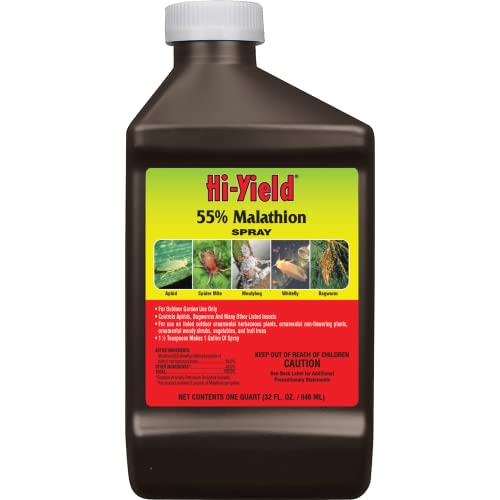
Malathion at 55% concentration is one of the most potent organophosphate insecticides available to home users, effective against a long list of pests including aphids, thrips, spider mites, lace bugs, and mosquitoes. This concentrate is labeled for herbaceous plants, ornamentals, vegetables, and fruit trees, making it highly versatile for edible gardens. The oil-based formula mixes easily and clings well to foliage for thorough coverage.
Due to its strength, users must exercise caution — malathion is a suspected carcinogen and requires protective gear during mixing and application. Several experienced gardeners recommend this only as a last resort after gentler options fail, and some suggest hiring a licensed professional for heavy infestations. When used correctly, it decimates scale and red spider mites that resist other treatments, and one user reported complete mosquito control around their property.
Apply in calm weather when no rain is forecast for 24 hours, and avoid spraying on windy days to prevent drift. This is the right choice for tough, persistent infestations on ornamentals and fruit trees where other concentrates have fallen short.
Why it’s great
- Extremely potent against hard-to-kill pests
- Works on vegetables, fruit trees, and ornamentals
- Oil-based formula sticks to foliage well
Good to know
- Requires protective gear; strong chemical
- Not safe for use near water or beneficial insects
5. Martin’s 32 oz Permethrin 13.3% Concentrate
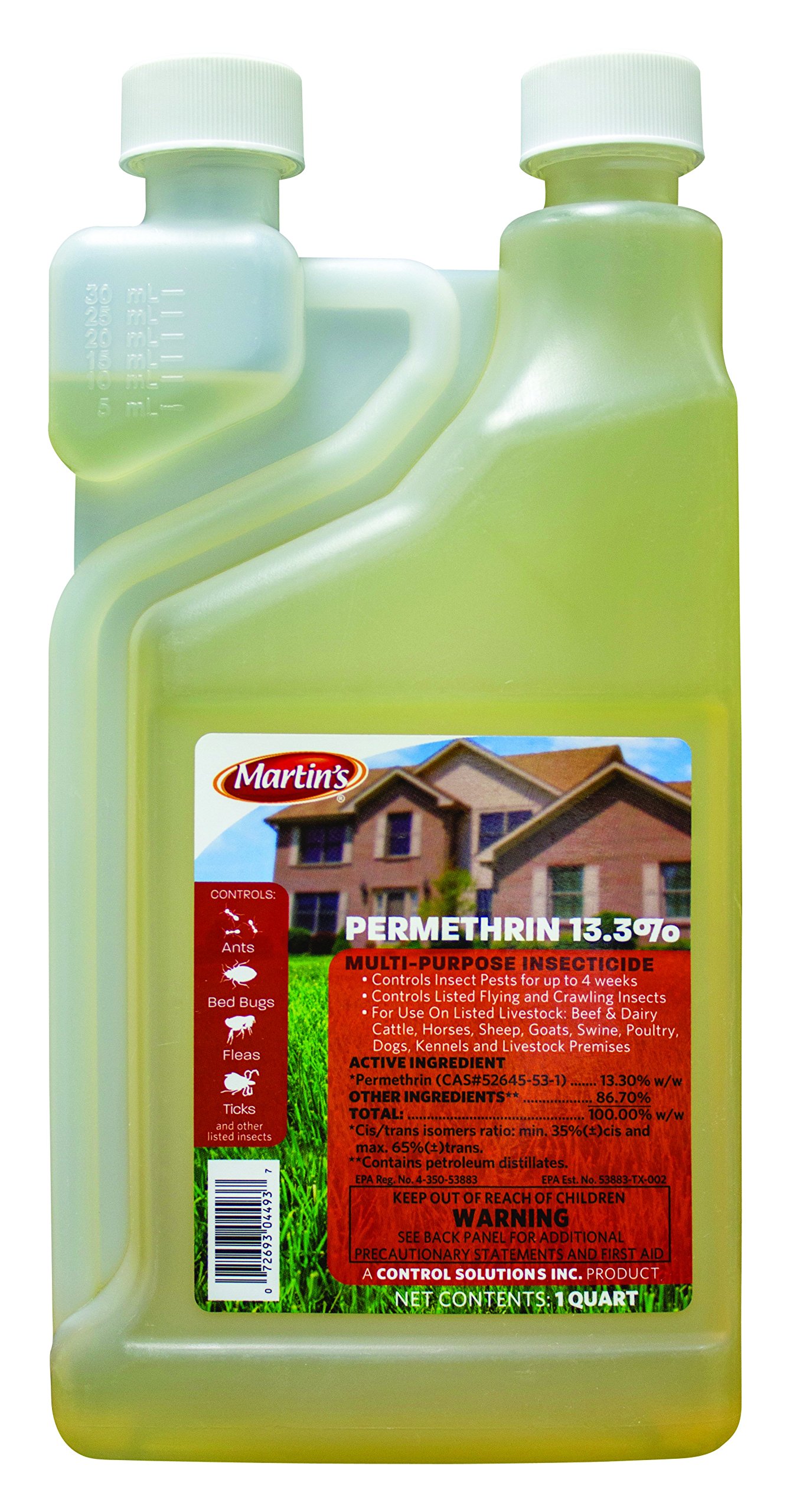
Permethrin at 13.3% is a synthetic pyrethroid that delivers long-lasting residual control — up to four weeks against ticks and about one week against mosquitoes. This concentrate is unique in its dual indoor/outdoor labeling, allowing use on perimeter foundations, in chicken coops, and even on clothing for personal tick protection. At just 1.5 ounces per gallon, a single 32-ounce bottle treats a massive area at an extremely low cost per application.
Users rave about its tick-killing ability, using it to treat perimeter brush, dog runs, and sheds with excellent results lasting a month per application. One reviewer noted the strong paint-thinner odor, which was much more intense than a previous bottle from four years ago, making indoor use uncomfortable. It works well on mosquitoes but is not effective against ants, roaches, crickets, or spiders based on field reports.
This is the best pick for tick-prone properties and those needing a budget-friendly option for large perimeter spray jobs. The long residual means fewer applications over the season compared to contact-only sprays.
Why it’s great
- Excellent tick control for 4 weeks per application
- Low dilution rate — huge coverage per bottle
- Dual indoor/outdoor label; safe on clothing
Good to know
- Strong chemical odor, best used outdoors
- Not effective on ants, roaches, or spiders
FAQ
Can I use a concentrate bug killer on vegetable plants?
How often should I reapply a concentrate bug killer?
What is the difference between a contact and systemic bug killer?
Final Thoughts: The Verdict
For most users, the best concentrate bug killer winner is the Bonide Captain Jack’s Orchard Spray because it combines insect, mite, and disease control in one mix that’s safe for both ornamentals and edibles. If you want a targeted caterpillar solution that’s harmless to bees and pets, grab the Summit Caterpillar Control. And for serious tick or mosquito perimeter control lasting up to a month, nothing beats the Martin’s Permethrin Concentrate.

Mo Maruf
I created WellFizz to bridge the gap between vague wellness advice and actionable solutions. My mission is simple: to decode the research and give you practical tools you can actually use.
Beyond the data, I am a passionate traveler. I believe that stepping away from the screen to explore new environments is essential for mental clarity and physical vitality.