Our readers keep the lights on and my smoothie glass nicely filled. As an Amazon Associate, I earn from qualifying purchases.
A motorcycle wheel that isn’t balanced properly sends a vibration through the handlebars and frame at highway speed—it wears tires unevenly and makes the ride feel unstable. A computerized wheel balancer replaces the guesswork of static balancing with a digital readout that tells you exactly where and how much weight to add, down to the gram.
I’m Mohammad Maruf — the founder and writer behind WellFizz. This buying guide is the result of dozens of hours comparing balancing accuracy, cycle times, motorcycle-specific modes, and build quality across seven of the most popular models available.
Whether you maintain a single street bike or run a shop servicing dual-sport and cruiser tires, finding the right computerized wheel balancer for motorcycle determines whether you fix a vibration or send a customer back with the same complaint.
How To Choose The Best Computerized Wheel Balancer For Motorcycle
Motorcycle wheels are narrower than car wheels and often use different mounting hardware. A balancer that works for a 20-inch car rim might not center a 17-inch sportbike wheel correctly. You need to check three specific areas before buying.
Motorcycle Mode and Adapters
A dedicated motorcycle mode adjusts the measurement algorithm for narrower rim widths and accounts for the different weight placement patterns used on moto wheels. Some balancers include a motorcycle mode but require a separate adapter kit to mount the wheel—verify the package includes the cones or adapters, or budget for them separately.
Balancing Accuracy and Repeatability
Look for a unit with a listed accuracy of +/- 1 gram. A balancer that can’t repeat the same reading on the same wheel forces you to chase weights. Consistent results from spin to spin are more important than a fast cycle time.
Cycle Time and Workflow Fit
A cycle time of 4-9 seconds is standard for computerized units. If you balance one set of tires per season, speed doesn’t matter. If you work through a stack of customer wheels every day, a balancer that finishes in six seconds instead of nine reduces fatigue.
Quick Comparison
On smaller screens, swipe sideways to see the full table.
| Model | Category | Best For | Key Spec | Amazon |
|---|---|---|---|---|
| XK 960-690 Combo | Premium Combo | Daily shop use with assist arm | 2.0 HP / 5600 lbf bead break | Amazon |
| XK 988-690 Combo | Premium Combo | High-volume car & motorcycle | Cycle 4-7 sec / +/-1g | Amazon |
| KATOOL T810+B700 Combo | Motorcycle Combo | Adventure & dual-sport bikes | 3mm steel chassis / 2.0 HP | Amazon |
| KATOOL 500combo | Mid-Range Combo | Home garage multi-tire use | Outside clamp 12-22″ | Amazon |
| KATOOL 24″ Combo | Mid-Range Combo | Mixed fleet & home shop | 2.0 HP / 143 lb capacity | Amazon |
| XK 580-690 Combo | Value Combo | Budget-conscious personal use | Dual turntable / 2.0 HP | Amazon |
| Mayflower 800 Red Edition | Standalone Balancer | Standalone precision balancing | Rim capacity 10-24″ | Amazon |
In‑Depth Reviews
1. XK 960-690 Rim Clamp Combo
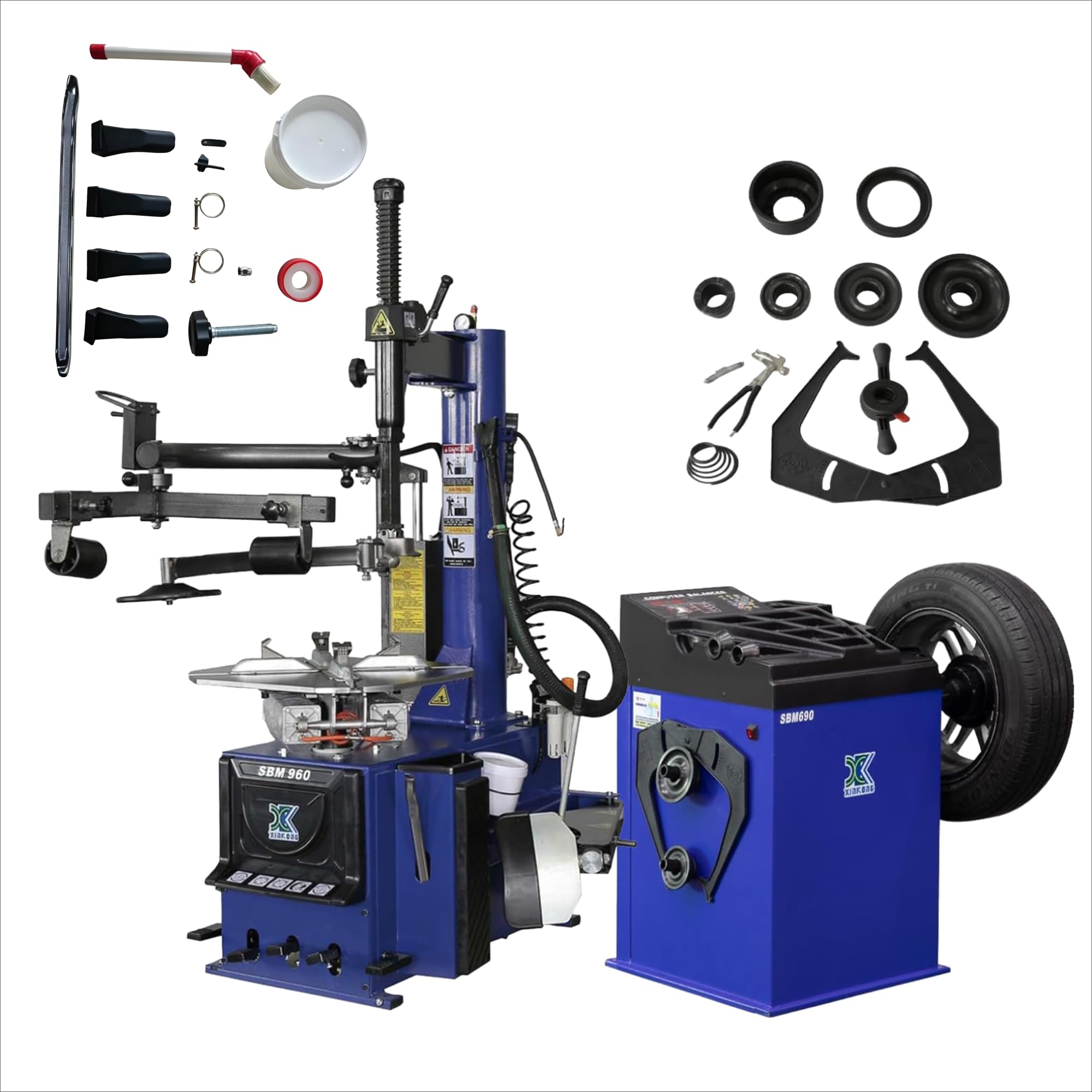
The XK 960-690 is the only combination in this list that includes a professional assist arm, a bead blaster, and a 690 computerized balancer with a motorcycle mode—all in one package rated for 5600 pounds of bead-breaking force. The assist arm makes run-flat and stiff-sidewall motorcycle tires manageable, which is critical when you’re dealing with a tall adventure touring tire.
The 690 balancer covers rim diameters from 10 to 24 inches and rim widths from 1.5 to 20 inches, so it handles everything from a small scooter wheel to a large cruiser rear. Balancing accuracy lands at +/- 1 gram, and the unit includes three centering cones and a quick-release wing nut to secure motorcycle wheels without adapters.
Reviewers note that the digital pressure gauge can read 3-5 PSI high, so cross-check with a trusted gauge, and the table rotation is stiff out of the crate. Once dialed in, owners report the balancer works flawlessly after the required calibration with a steel rim. This machine is built for a shop that changes a mix of car and motorcycle tires daily.
Why it’s great
- Professional assist arm handles stiff motorcycle tires easily
- Bead blaster seats beads without a separate tool
- Motorcycle mode and centering cones included
Good to know
- Gauge shows slightly high PSI readings
- Balancer requires steel-rim calibration procedure
- Table rotation can be stiff initially
2. XK 988-690 Rim Clamp Combo
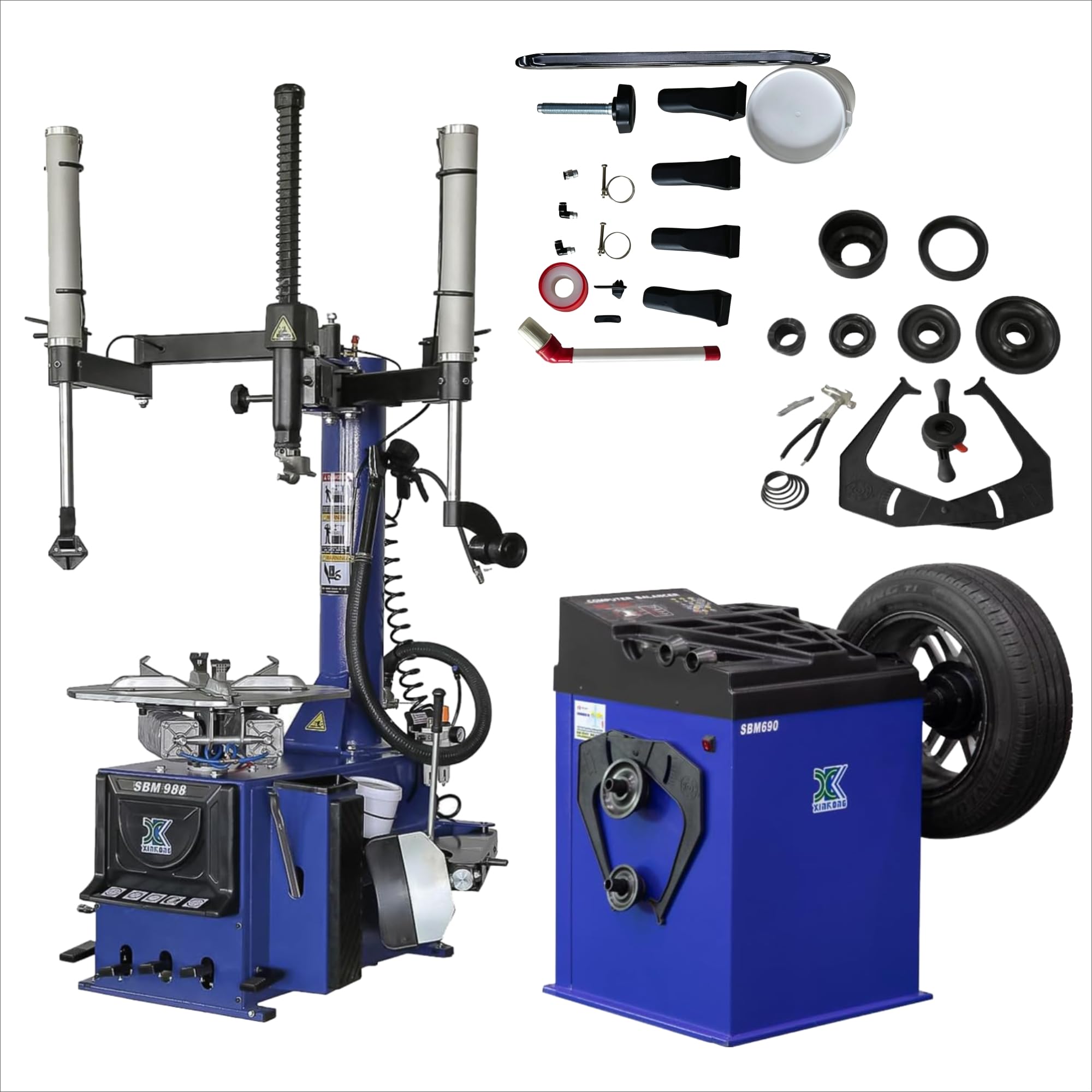
The XK 988-690 shares the same 690 balancer found on the higher-end XK models—rim diameter 10 to 24 inches, width 1.5 to 20 inches, balancing accuracy of +/- 1 gram—but pairs it with a 988 tire changer that skips the assist arm to bring the price down. The balancer includes motorcycle mode, static mode, and ALU 1-3 for alloy wheels, making it versatile for different rim materials.
Cycle time on the 690 balancer is 4 to 7 seconds, which is the fastest in this comparison. That speed helps when you’re running through multiple motorcycle wheels in a session. The unit includes four centering cones—more than most competitors—and a quick-release wing nut to hold the wheel securely.
Reviews are consistently positive about the machine’s build quality and ease of calibration, though several owners caution that the instructions are nearly useless and recommend watching setup videos. The bead blaster works well once it’s dialed in. This is the smart pick if you want the fast balancer and can work without an assist arm.
Why it’s great
- Fastest cycle time in the lineup at 4-7 seconds
- Includes four centering cones for versatility
- Motorcycle mode and ALU programs built in
Good to know
- Missing the assist arm found on the 960 model
- Instructions are vague and require video guidance
- Bead blaster may need thread sealing
3. KATOOL KT-T810 & KT-B700 Combo

The KATOOL T810 tire changer paired with the B700 balancer is specifically marketed as a motorcycle tire changer combo, and the balancer handles rim diameters up to 30 inches with a reported cycle time of 6-9 seconds. Owners confirm it handles 21-inch adventure bike wheels without requiring additional adapters, which is a genuine advantage for dual-sport riders.
The B700 balancer body uses 3-millimeter-thick steel for the chassis and a 36-millimeter shaft thread treated with quenching for strength. The computer board includes moistureproof and anti-static protection, which matters if your shop environment sees dust or humidity. The balancer reads in quarter-ounce increments, giving you finer control over weight placement.
Several reviewers report that the bead blaster hose has poorly made NPT threads that may need duct tape or Teflon to seal, and the instructions are almost nonexistent for the advanced menu options. Once assembled and sealed, the system balances accurately. This is the strongest choice for a shop focused exclusively on motorcycle wheels.
Why it’s great
- Handles 21-inch adventure wheels without extra adapters
- 3mm thick steel chassis for rigid, vibration-free readings
- Quarter-ounce incremental readout for precise weight
Good to know
- Bead blaster NPT threads may leak at the fitting
- Instructions are unclear for advanced menu settings
- Customer support response can be slow
4. KATOOL 500combo Tire Changer & Balancer
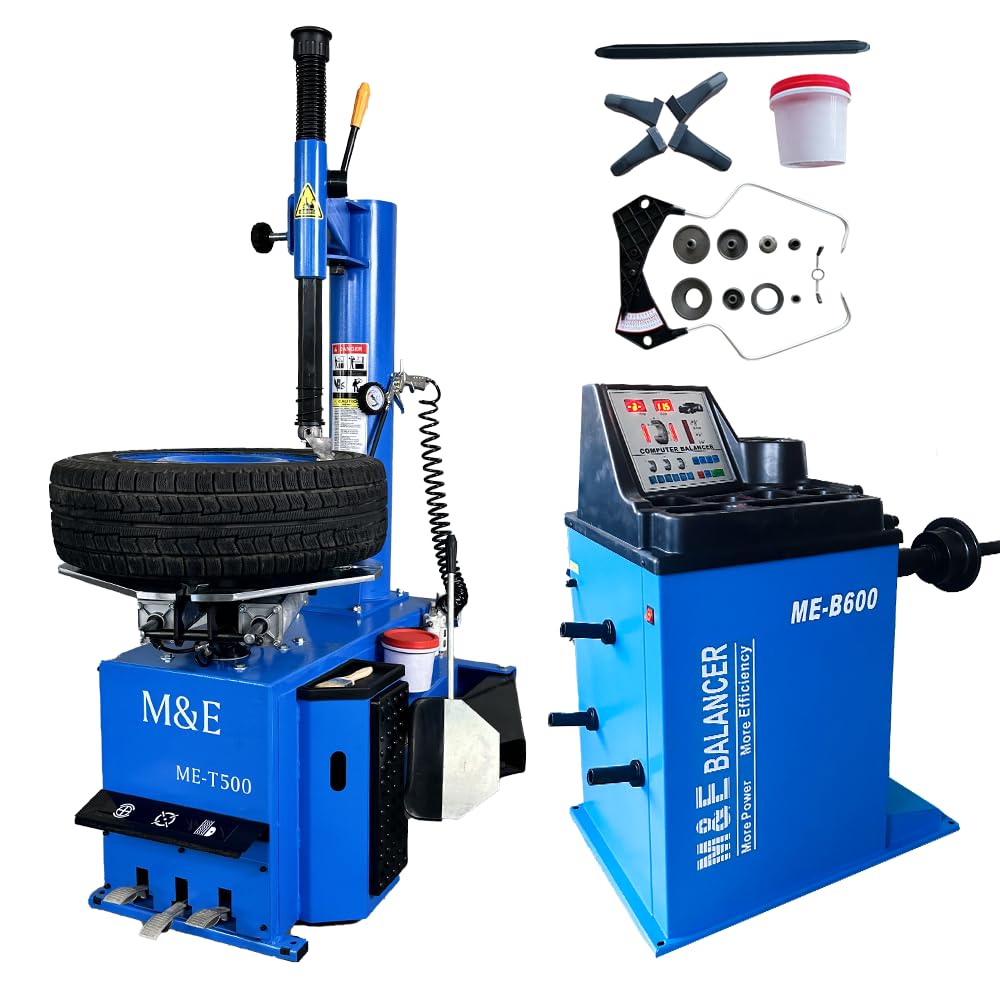
The KATOOL 500combo is an updated mid-range tire changer and balancer bundle that uses a pull-type pedal control system for easier operation. The balancer features laser-assisted weight placement—it projects a laser line to show exactly where the adhesive weight needs to go, which reduces the guesswork on motorcycle wheels with split spokes.
Outside clamping runs from 12 to 22 inches and inside clamping from 14 to 24 inches, so it accepts most motorcycle wheel sizes. The mounting head is stainless steel with a plastic rim protector, and the alloy steel jaws go through a carburization treatment for durability without scratching the rim. The 1.5 HP motor runs on 120V and is suitable for home garage circuits.
Buyers consistently mention that delivery was fast and the seller communicated well, but note that the balancer needs to be bolted to the floor for repeatable accuracy with heavier wheels. No weights are included, so plan to buy a wheel weight kit separately. For a home mechanic who wants a balancer with laser guidance, this is a strong mid-range pick.
Why it’s great
- Laser line guides exact weight placement on spokes
- Pull-type pedal control for smooth operation
- Stainless mounting head with plastic rim protector
Good to know
- Requires floor anchoring for heavy motorcycle wheels
- No weights included in the package
- Instructions are minimal and need online supplementing
5. KATOOL ME 2.0HP 24″ Combo
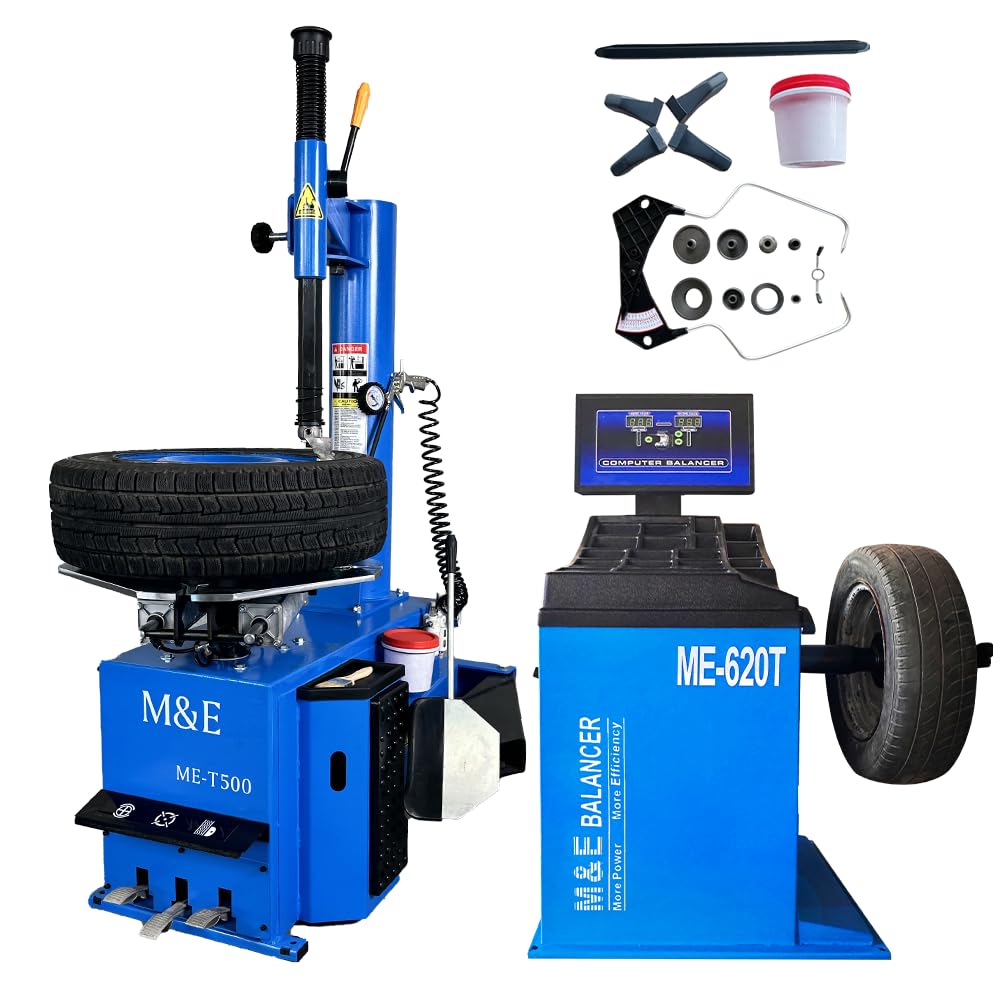
The KATOOL ME 24-inch combo uses a 2.0 HP motor—larger than the 1.5 HP found on the 500combo—and the balancer handles wheels up to 143 pounds and 44 inches in diameter. Rim width capacity goes from 1.5 to 20 inches, which covers the narrowest motorcycle fronts and the widest bagger rears without needing shims.
The tire changer features outside clamping from 12 to 22 inches and inside clamping from 14 to 24 inches. The spade cover is high quality and designed to prevent rim damage during mounting. The pneumatic system includes a high-quality filter and oiler to extend the life of internal seals—a detail that matters if your air supply isn’t filtered.
Owner reports are almost universally positive, with multiple users saying the machine balanced a tire on the first attempt within 40 minutes of assembly. A few note that the balancer must be leveled and anchored to the floor to get consistent results, and that no wheel weights are included. This unit represents a strong balance of power and price for the home shop.
Why it’s great
- 2.0 HP motor handles stiff motorcycle tires
- Balances wheels up to 143 pounds
- In-line air filter and oiler protect the pneumatics
Good to know
- Needs floor anchoring for heavy wheels
- No wheel weights included
- Instructions are confusing and require video help
6. XK 580-690 Tire Changer & Balancer Combo
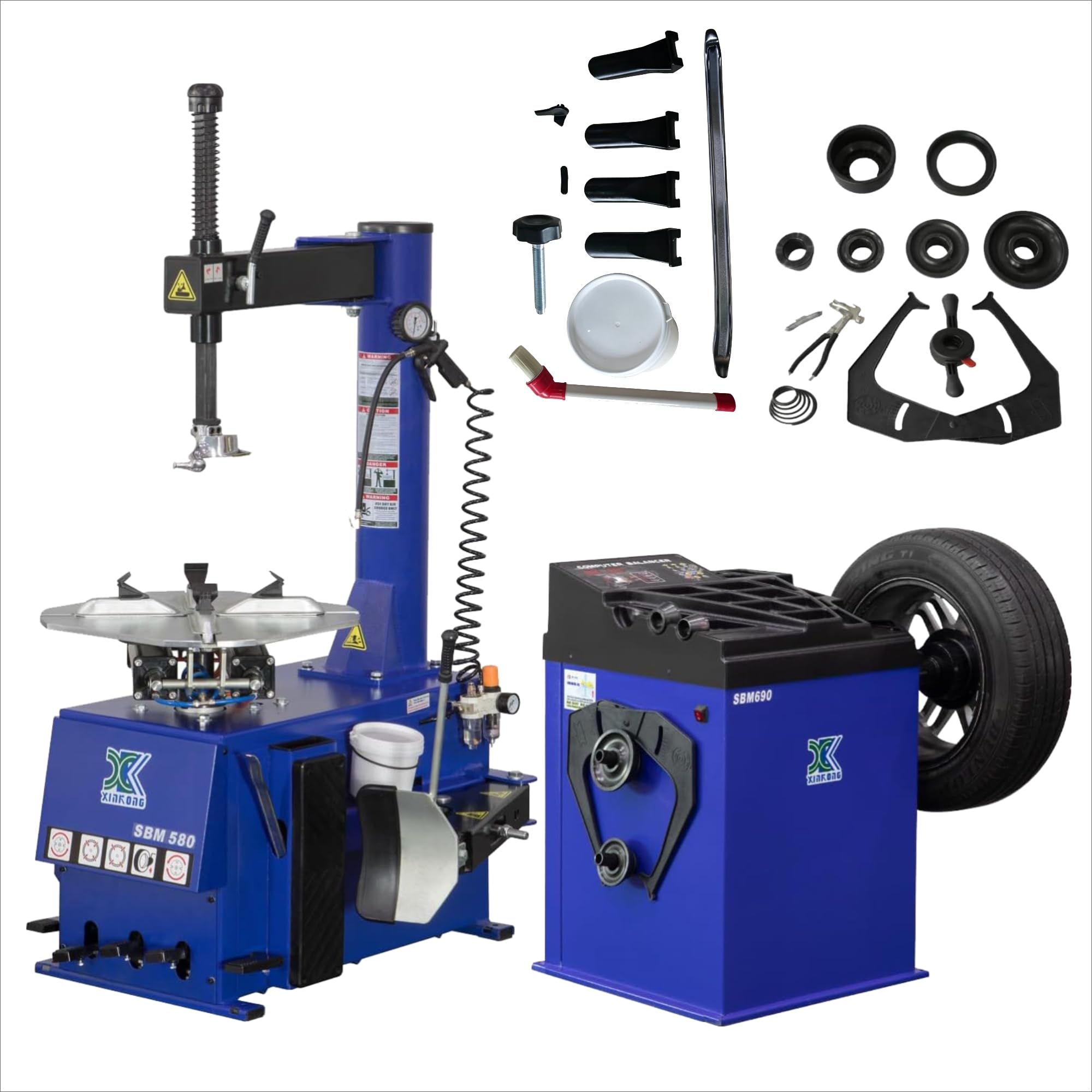
The XK 580-690 combo pairs a 2.0 HP tire changer with a dual turntable design—both upper and lower turntables move, making it easier to position a heavy motorcycle wheel during mounting. The 690 balancer is the same unit used on the more expensive XK models, with a 6-9 second cycle time and balancing accuracy of +/- 1 gram.
Rim clamping on the 580 changer covers outside from 10 to 18 inches and inside from 12 to 20 inches, which is slightly more limited than the wider range on the 988 model. The tire machine has a bead-breaking force of 5600 pounds, which is enough to break the bead on most stiff motorcycle tires. The blue powder coat finish resists corrosion in a garage environment.
Multiple long-term owners report that the combo has balanced well over a hundred tires without issues, and the calibration process is straightforward. The biggest complaint is that the included instructions are poor, and the balancer requires a calibration procedure with a steel wheel before use—plan to watch a few setup videos. This is the entry-level combo worth considering.
Why it’s great
- Dual turntable design aids heavy wheel positioning
- Same accurate 690 balancer as pricier XK models
- High bead-break force for stiff motorcycle tires
Good to know
- Narrower rim clamp range than other XK models
- Instructions are difficult to follow
- Steel wheel calibration required before use
7. Mayflower Heavy Duty 800 Red Edition

The Mayflower 800 is a standalone computerized wheel balancer, not a combo unit. That means you need a separate tire changer for mounting and dismounting, but the trade-off is a dedicated balancing machine that covers rim diameters from 10 to 24 inches and rim widths from 1.5 to 20 inches with a red powder coat finish that stands out in the shop.
It includes standard dynamic mode, static mode, ALU 1-3 mode, and a dedicated motorcycle mode. The unit comes pre-set to American standard measurements and includes centering cones and a quick-release wing nut for mounting. The built-in self-calibration routine is straightforward—owners report plugging it in, bolting it down, and balancing wheels within minutes of unboxing.
Long-term users report balancing well over one hundred tires across multiple vehicle types with no accuracy drift. One critical reviewer reported a unit that failed to balance after calibration requiring a return. Overall, the Mayflower 800 is the best option if you already own a tire changer or work in a shop where the changer and balancer are separate stations.
Why it’s great
- Dedicated balancer with no tire changer attached
- Self-calibration routine is quick and reliable
- Multiple ALU modes plus motorcycle mode
Good to know
- Requires a separate tire changer for mounting
- Must be bolted to the floor for accuracy
- Occasional reports of defective units
FAQ
Can a car tire balancer work for motorcycle wheels?
Do I need an adapter kit for sportbike wheels?
What is the difference between static and dynamic balancing?
Final Thoughts: The Verdict
For most users, the computerized wheel balancer for motorcycle winner is the XK 960-690 Rim Clamp Combo because it combines a professional assist arm, bead blaster, and the fast 690 balancer in a single machine that handles motorcycle and car tires without extra purchases. If you want a dedicated motorcycle-focused machine with a 3mm steel chassis, grab the KATOOL T810+B700 Combo. And for a budget-friendly entry point that still gets the job done, nothing beats the XK 580-690 Combo.

Mo Maruf
I created WellFizz to bridge the gap between vague wellness advice and actionable solutions. My mission is simple: to decode the research and give you practical tools you can actually use.
Beyond the data, I am a passionate traveler. I believe that stepping away from the screen to explore new environments is essential for mental clarity and physical vitality.