Our readers keep the lights on and my smoothie glass nicely filled. As an Amazon Associate, I earn from qualifying purchases.
A computerized telescope removes one of the steepest barriers in amateur astronomy: the manual hunt. Instead of wrestling with star charts and wobbly mounts, you can tell the scope what you want to see — Saturn’s rings, the Orion Nebula, the Andromeda Galaxy — and let the motorized GoTo system do the slewing. For a beginner, that’s the difference between a frustrating evening and a lifelong obsession with the night sky.
I’m Mohammad Maruf — the founder and writer behind WellFizz. I’ve spent hundreds of hours researching telescope specifications, analyzing customer feedback on mount stability, optical coatings, and database accuracy to help newcomers find a scope that won’t collect dust after one use.
This guide breaks down the nine best options for 2025, focusing on what actually matters for a first-time buyer: ease of alignment, app integration, optical quality, and long-term upgrade potential. Here is my honest take on the computerized telescope for beginners.
How To Choose The Best Computerized Telescope For Beginners
A computerized telescope pairs traditional optics with a motorized mount and a digital hand controller or smartphone app. The mount does the heavy lifting — it automatically slews to celestial objects after a quick alignment procedure. For a beginner, the biggest question isn’t “what can I see” but “how much work will it take to see it.” The best choices balance aperture, mount stability, database size, and ease of use.
GoTo Mount Accuracy and Alignment Speed
The core of any computerized telescope is its GoTo system. Alignment methods like Celestron’s SkyAlign let you center any three bright objects — even if you don’t know their names — and the scope calculates its position. For beginners, a mount that aligns in under five minutes and tracks accurately for at least an hour is non-negotiable. Faster alignment means more time observing and less time troubleshooting.
Aperture: The Real Light-Gathering Spec
Magnification is often the headline number, but aperture (the diameter of the main lens or mirror) determines how much light the scope collects. A 6-inch Schmidt-Cassegrain like the NexStar 6SE gathers enough light to resolve Jupiter’s cloud bands and reveal faint galaxies, while entry-level 114mm Newtonians show brighter planets and the Moon. For deep-sky objects like nebulae and star clusters, larger aperture directly translates to brighter, more detailed views.
Optical Design: Newtonian vs. Schmidt-Cassegrain vs. Smart Scope
Newtonian reflectors (like the Celestron 114LCM) offer the most aperture per dollar but require occasional collimation — a mirror alignment procedure. Schmidt-Cassegrains (like the NexStar 6SE) are closed-tube designs that hold collimation well and are more portable for their aperture. Smart telescopes (ZWO Seestar S30, DWARFLAB Dwarf 3) replace the eyepiece with a digital camera and screen, allowing you to capture astrophotographs without any eyepiece experience. Your choice depends on whether you prefer a traditional visual experience or a modern digital one.
Object Database and Sky Tour Features
A larger object database means more targets to explore without manual searching. The Celestron NexStar 6SE lists over 40,000 objects. The Sky Tour feature on many Celestron models automatically generates a list of the best objects currently visible from your location. For a beginner, a database above 4,000 objects combined with a tour function eliminates the “what do I look at next” paralysis.
Quick Comparison
On smaller screens, swipe sideways to see the full table.
| Model | Category | Best For | Key Spec | Amazon |
|---|---|---|---|---|
| Celestron NexStar 6SE | Premium | Serious beginners ready to grow | 6-inch aperture, 1500mm f/l | Amazon |
| DWARFLAB Dwarf 3 | Smart Scope | Astrophotography on the go | 3lb, 4K auto-tracking | Amazon |
| ZWO Seestar S30 | Smart Scope | Effortless deep-sky imaging | Dual lens, 1.65kg | Amazon |
| DWARFLAB Dwarf Mini | Smart Scope | Ultra-portable stargazing | 1.85lb, 90-sec exposures | Amazon |
| Celestron 114LCM | Entry-Level GoTo | First computerized telescope | 114mm aperture, 4,000 DB | Amazon |
| HSL 150EQ | Manual EQ | Learning equatorial tracking | 150mm aperture, 6 filters | Amazon |
| Gskyer 130EQ | Manual EQ | Value reflector with accessories | 130mm aperture, Bluetooth remote | Amazon |
| MEEZAA 150EQ | Manual EQ | Large aperture on a budget | 150mm aperture, carry bag | Amazon |
| Smart Telescope FASHIONARI | Smart Scope | Kids and families | Dual screen, 4K camera | Amazon |
In-Depth Reviews
1. Celestron NexStar 6SE

The NexStar 6SE sits at the sweet spot where beginner-friendly features meet serious optical performance. Its 6-inch Schmidt-Cassegrain design delivers 1500mm of focal length, enough to reveal Jupiter’s cloud bands and the Orion Nebula’s core without needing a second scope. The fully automated GoTo mount uses Celestron’s SkyAlign technology — you center any three bright objects, even if you don’t know their names, and the scope aligns in minutes. The 40,000+ object database means you’ll never run out of targets, and the Sky Tour button generates a curated list of what’s best to view from your exact location.
The optical tube uses Celestron’s StarBright XLT coatings for maximum light transmission, and the 25mm Plossl eyepiece provides a solid 60x starting magnification. The single-fork-arm mount is stable enough for visual use, and the adjustable tripod includes an accessory tray for eyepieces. Seasoned users note that adding a 32mm Plossl and an 8-24mm zoom eyepiece significantly enhances the experience, but the stock setup is fully capable out of the box. The mount does require an external power source for extended sessions — an AC adapter or a portable power tank is highly recommended.
At roughly the price of three entry-level scopes, the NexStar 6SE is an investment that eliminates the upgrade cycle. Beginners who start with this scope typically skip the “I wish I’d bought a bigger one” phase entirely. The 2-year US warranty and Celestron’s domestic tech support add peace of mind. If you’re serious about astronomy and want one telescope to last for years, this is the one.
Why it’s great
- 6-inch aperture provides bright, detailed views of planets and deep-sky objects
- SkyAlign alignment is fast and beginner-friendly — no star charts needed
- 40,000+ object database with Sky Tour feature eliminates target choice paralysis
- StarBright XLT coatings deliver industry-leading light transmission
Good to know
- Requires external power source — internal batteries drain quickly
- Mount tracking accuracy can drift over long sessions; periodic Sync helps
- Stock eyepieces are adequate but upgrading to premium Plossls improves views significantly
2. DWARFLAB Dwarf 3
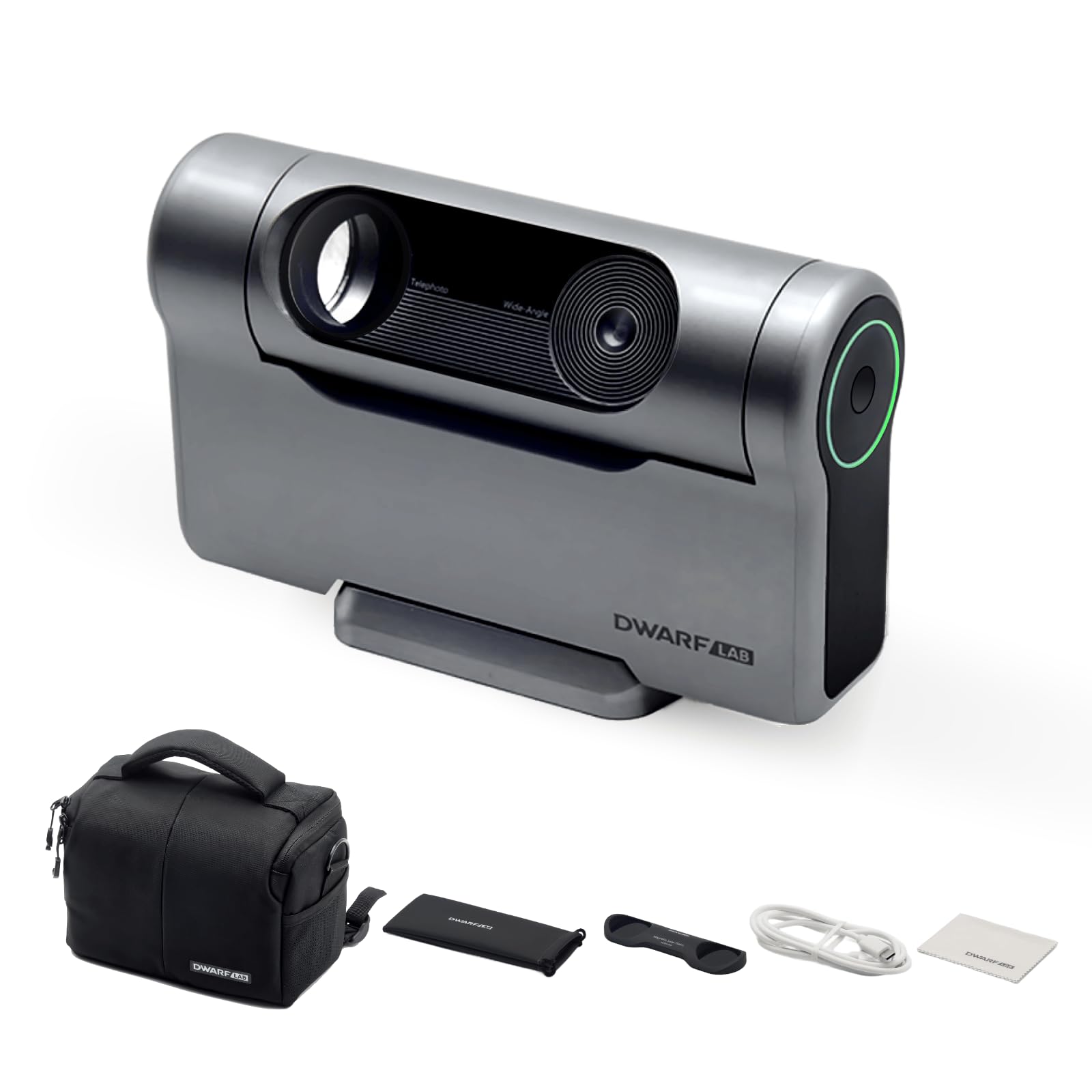
The DWARFLAB Dwarf 3 is a masterclass in what a modern smart telescope can achieve in a sub-3lb package. It combines a dual-lens imaging system — telephoto for deep-sky and wildlife, wide-angle for Milky Way panoramas and star trails — with professional-grade 4K auto-tracking. The dedicated DWARFLAB App handles alignment, target selection, and even cloud-powered post-processing, so you go from setup to a finished astrophotograph in minutes. The mount supports both Alt-Azimuth and Equatorial modes, the latter enabling single-frame exposures up to 90 seconds for deep-sky imaging.
What sets the Dwarf 3 apart from other smart scopes is its dual-camera daytime capability. During the day, you can use the telephoto lens for wildlife or landscape photography, while the wide-angle camera helps you locate your position. At night, the scope automatically switches to astrophotography mode, stacking frames internally to produce clean images of galaxies, nebulae, and star clusters. The built-in light pollution filter makes it usable from suburban backyards, and the carrying bag keeps everything organized for travel. Users report that the app interface is intuitive, though the initial WiFi connection can occasionally require a reset.
The Dwarf 3 is not a traditional visual telescope — there is no eyepiece. You view everything on your smartphone screen. This trade-off is ideal for astrophotographers and casual stargazers who want shareable results without learning complex camera settings. The price is a significant step up from entry-level smart scopes, but the dual-lens versatility and 4K resolution justify the premium. The 2.28kg total weight means you can take it on a hiking trip without a second thought.
Why it’s great
- World’s lightest smart telescope at 3lb — fits in any backpack
- Dual-lens system works for both astrophotography and terrestrial subjects
- Cloud-powered image processing delivers professional results without a PC
- EQ mode enables 90-second exposures for deep-sky imaging
Good to know
- No eyepiece — all viewing is done via smartphone app
- App can experience occasional WiFi connection glitches
- Not ideal for planetary detail due to short focal length
3. ZWO Seestar S30
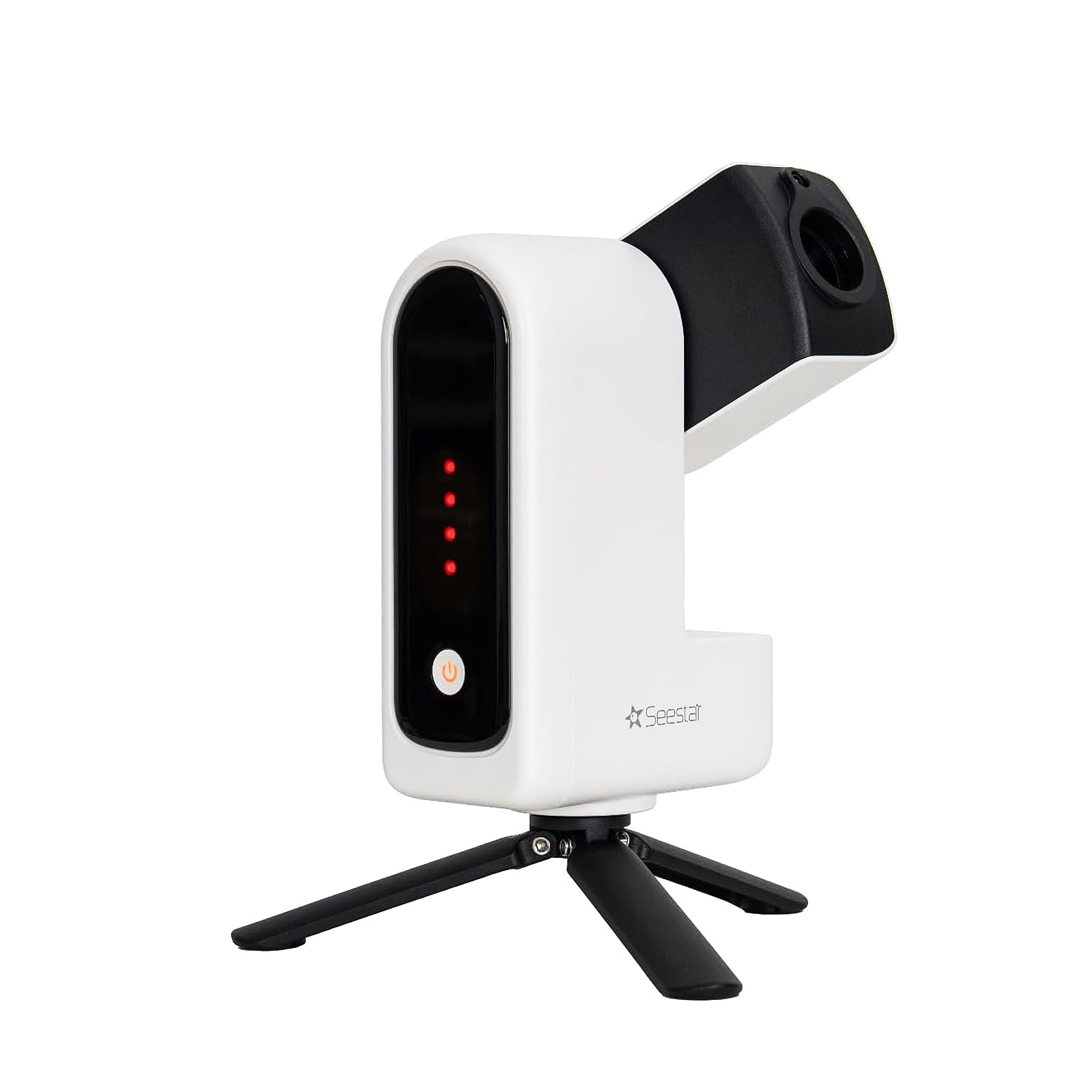
The ZWO Seestar S30 is an all-in-one digital telescope that prioritizes ease of use above all else. Weighing just 1.65kg — lighter than a typical laptop — it’s designed to be thrown in a backpack and set up anywhere. The integrated Seestar App handles automatic star finding, precision tracking, and one-tap shooting. The dual-lens system includes both a telephoto lens for close-up celestial shots and a wide-angle lens for landscapes and nightscapes. Three dedicated shooting modes — Stargazing, Scenery, and Solar System — switch the scope’s behavior automatically based on your target.
Image quality is impressive for the size. The light pollution filter with dual band passes allows only nebula emission lines to pass through, making it effective even from light-polluted urban locations. EQ mode, Plan mode, and Mosaic mode give advanced users more control — Plan mode lets you queue multiple targets for automated imaging throughout the night. Users consistently report that they were capturing publishable images within 30 minutes of unboxing. The 2-year warranty from a well-known astrophotography brand adds confidence.
The S30’s main limitation is its 30mm objective lens — it cannot match the light-gathering of larger smart scopes for faint objects. It also has no eyepiece, so viewing is entirely through the app. For beginners who want a “point and shoot” experience for deep-sky astrophotography without any setup complexity, the Seestar S30 is arguably the most user-friendly option available. It’s less versatile than the DWARFLAB Dwarf 3 for daytime use, but for pure night-sky imaging it’s remarkably capable.
Why it’s great
- Extremely portable at 1.65kg — carry it like a water bottle
- Automatic star-finding and tracking work straight out of the box
- Built-in dual-band light pollution filter works in suburban skies
- Plan mode lets you queue multiple targets for automated night-long imaging
Good to know
- 30mm aperture limits light-gathering for very faint deep-sky objects
- No optical eyepiece — all viewing is digital via app
- Scenery mode is less effective for terrestrial subjects than dedicated spotter scopes
4. DWARFLAB Dwarf Mini
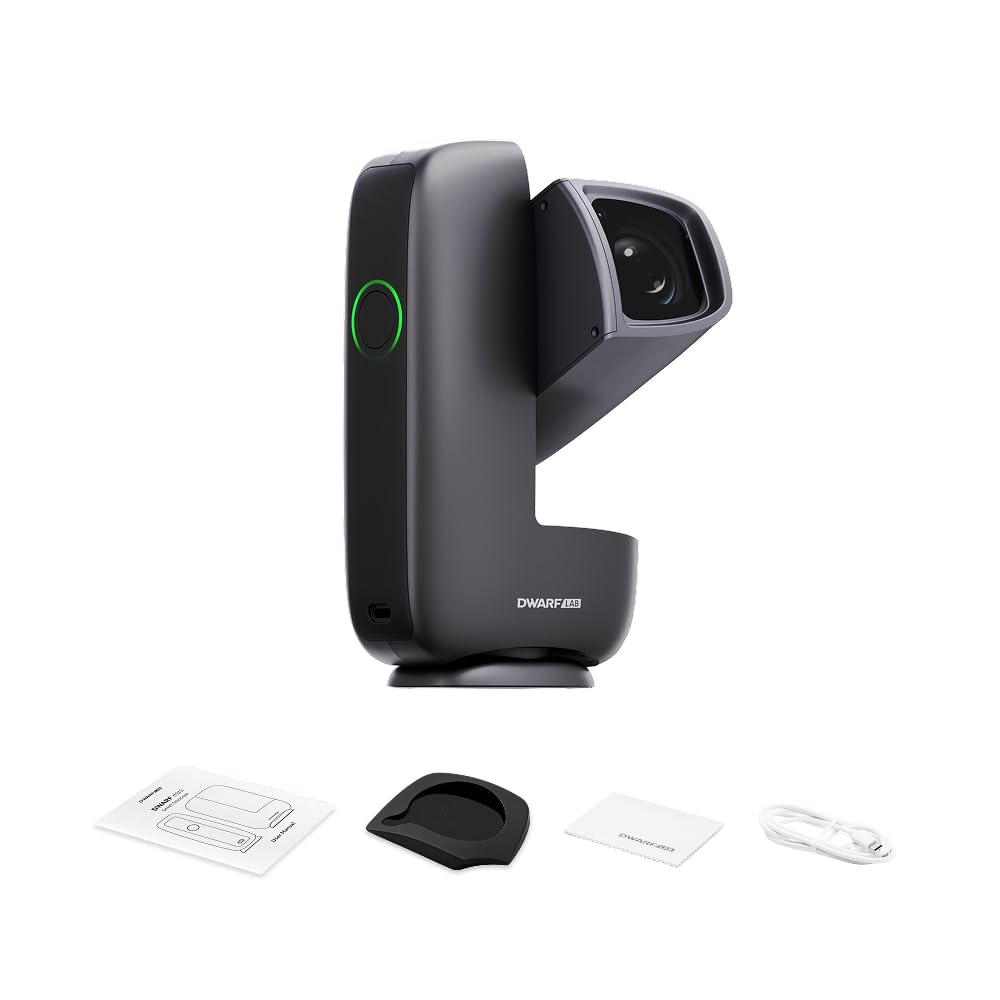
The DWARFLAB Dwarf Mini proves that astrophotography doesn’t require a heavy setup. At just 1.85lb (840g), it’s the lightest smart telescope on this list, fitting into a large jacket pocket. Despite its size, it houses a Sony IMX662 sensor with 2.9μm pixels, a built-in light pollution filter, and Auto GOTO with 360° pivot freedom. The DWARFLAB App provides an interactive star map — you tap a target, and the mount slews to it automatically. EQ mode unlocks single-frame exposures up to 90 seconds, enabling deep-sky imaging of nebulae and star clusters.
User feedback consistently praises the Dwarf Mini’s ability to produce high-quality images even from light-polluted locations. The cloud processing feature takes raw data and produces a finished image without needing a separate computer or software. The 2.45° field of view is wide enough to capture large objects like the Andromeda Galaxy, but it will struggle with smaller planetary details. The 360° pivot is genuinely useful for avoiding tripod leg obstructions — a thoughtful design detail. Setup is remarkably fast: most users go from unboxing to first image in under five minutes.
The trade-off for the ultra-light design is limited aperture and a plastic-bodied build that feels less robust than metal scopes. The Dwarf Mini also shares the Dwarf 3’s lack of an eyepiece — it’s a fully digital experience. For beginners who prioritize portability above all else and want to capture deep-sky images from camping trips or dark-sky excursions, the Dwarf Mini is a fantastic tool. It pairs well with a lightweight travel tripod, making the total kit weigh under 2.5lb.
Why it’s great
- Ultra-light at 1.85lb — the most portable smart telescope on the market
- Sony IMX662 sensor with 2.9μm pixels captures low-noise astro images
- Cloud processing produces finished images without a PC
- Auto GOTO with 360° pivot makes target selection effortless
Good to know
- Limited planetary detail due to short focal length
- Plastic construction feels less premium than metal-bodied scopes
- App can have minor quirks during initial WiFi connection
5. Celestron 114LCM
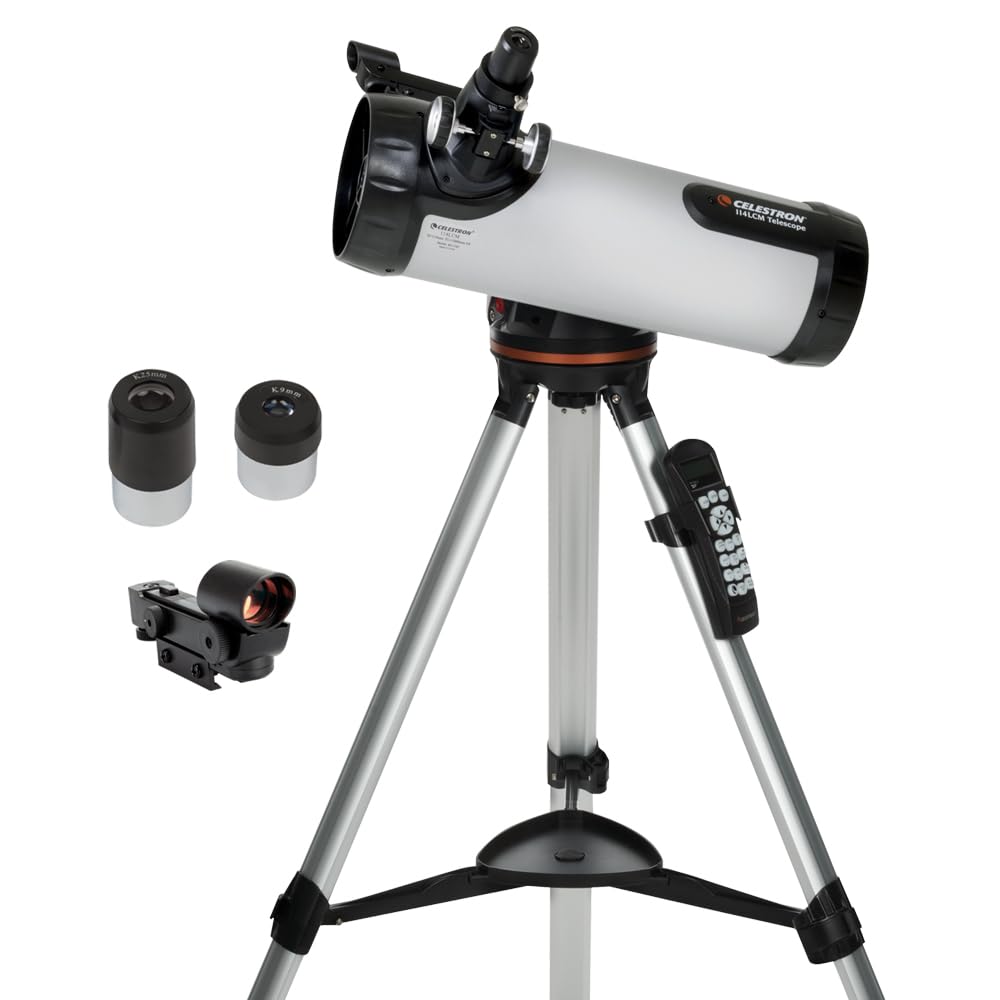
The Celestron 114LCM is the most affordable fully computerized telescope from a major brand, and it delivers exactly what a beginner needs: automated object location with a proven brand backing it. The 114mm Newtonian reflector collects enough light to show Saturn’s rings, Jupiter’s moons, and the brighter Messier objects. The GoTo mount has a 4,000-object database and a Sky Tour button that generates a list of the best available targets. The NexStar+ hand control is the same interface used on Celestron’s more expensive scopes, so if you upgrade later, the learning curve is minimal.
The optical tube uses a Bird-Jones design — a short tube with a built-in Barlow lens to achieve the effective focal length. This makes the scope compact and affordable, but it also means collimation is more complex than a standard Newtonian. User feedback indicates that the laser finderscope is accurate when properly aligned, but it can be knocked out of adjustment easily. The full-height tripod is stable for the weight of the scope, though the mount’s plastic gears can strip under rough handling. The 25mm and 9mm eyepieces provide 40x and 112.5x magnification respectively — adequate for lunar and planetary observation.
Battery life is a notable drawback: the mount drains AA batteries quickly. Most owners switch to a rechargeable lithium pack within the first few sessions. The lack of a moon filter is another omission that requires a separate purchase. Despite these quirks, the 114LCM remains a strong entry point into computerized astronomy simply because it works reliably. If you’re on a tight budget and want a genuine GoTo experience — not a smartphone-controlled toy — the Celestron 114LCM is the safe choice.
Why it’s great
- Lowest price for a fully computerized GoTo telescope from a trusted brand
- Sky Tour button generates a curated list of visible targets
- NexStar+ hand control is identical to higher-end Celestron models
- Compact optical tube is easy to store and transport
Good to know
- AA batteries drain quickly — a rechargeable lithium pack is essential
- Bird-Jones design makes collimation more difficult than standard Newtonians
- No moon filter included; must be purchased separately
6. HSL 150EQ
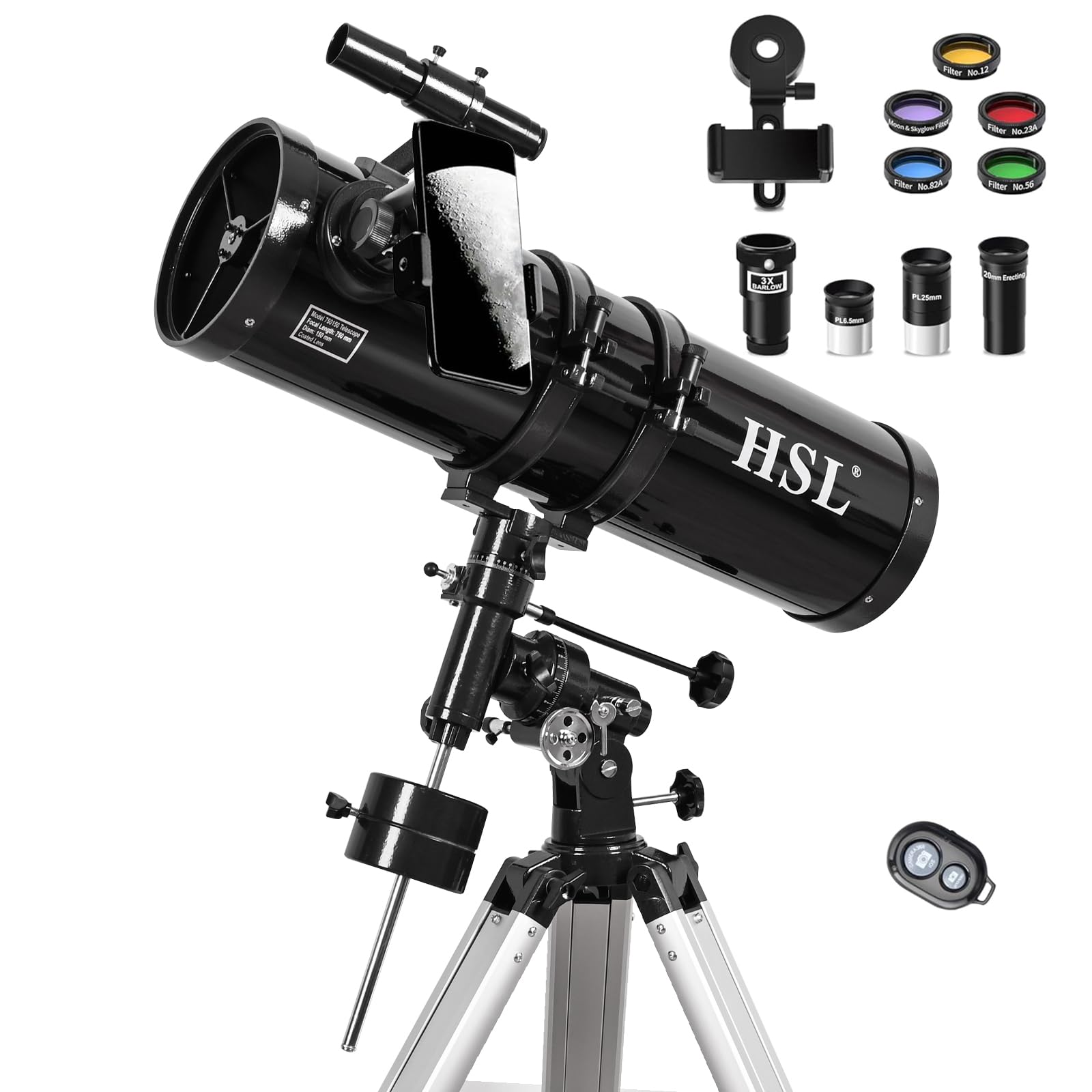
The HSL 150EQ delivers the largest aperture at a budget-friendly price point of any scope in this guide. The 150mm parabolic mirror collects significantly more light than 114mm or 130mm reflectors, making it a genuine deep-sky performer. The 700mm focal length provides a fast f/4.7 focal ratio, which is excellent for wide-field views of nebulae and star clusters. The manual German Equatorial mount includes slow-motion altitude and azimuth controls, allowing you to track celestial objects with practice. The inclusion of five color filters (red, blue, orange, green, yellow) helps bring out planetary details.
Setup complexity is the biggest hurdle. The EQ mount has multiple axes and counterweights that require careful balancing, and the assembly process is not intuitive for absolute beginners. Users report that the instruction manual is adequate but could be clearer, and the finder scope alignment can be frustrating. The included eyepieces (25mm, 20mm, 6.5mm) paired with the 3X Barlow lens offer a wide magnification range, but the Barlow introduces some image softness at high magnification. The carrying bag is a practical inclusion for storage and transport.
The HSL 150EQ is not a computerized telescope — it’s a manual EQ scope. I include it here because many beginners considering computerized telescopes may find that a large-aperture manual scope offers better visual performance at a lower price. The trade-off is a steeper learning curve for mount operation and object location. If you’re willing to invest an evening learning the EQ mount, the 150EQ will show you more astronomical detail than any comparably priced GoTo scope. It works best for patient beginners who want to learn the sky manually before automating it.
Why it’s great
- 150mm aperture provides excellent light-gathering for deep-sky observation
- Five color filters help reveal planetary cloud structure and surface details
- Fast f/4.7 focal ratio is ideal for wide-field nebula views
- Includes carry bag for easy transport and storage
Good to know
- Manual EQ mount has a steep learning curve for absolute beginners
- Assembly instructions could be clearer — expect a multi-step setup
- 3X Barlow lens introduces softness at high magnifications
7. Gskyer 130EQ

The Gskyer 130EQ is a well-rounded reflector telescope that punches above its price point for lunar and planetary observation. The 130mm (5.1-inch) aperture paired with a 650mm focal length gives a fast f/5 focal ratio, delivering bright, sharp views of the Moon’s craters and Saturn’s rings. The toothless focusing base is a real highlight — it eliminates the backlash common in rack-and-pinion focusers, providing smooth and precise focus adjustment. The manual German Equatorial mount allows for tracking, though multiple user reviews note that the mount can slip under heavier eyepieces and requires careful handling.
The accessory package is generous: three eyepieces (25mm, 20mm, 6.5mm), a 3X Barlow lens, a reflex finderscope, and a Bluetooth camera remote that works with iPhone and Android devices. The remote is a nice addition for capturing smartphone photos through the eyepiece without shaking the scope. The adjustable tripod is sturdy for the weight, but the telescope tube is heavy at 30.1 pounds total, making it less portable than the 114LCM. Users consistently praise the optical quality, with many reporting that the views of the Moon and Saturn exceed their expectations.
Two common complaints are worth noting: the instruction manual has some awkward English phrasing that can make assembly confusing, and the phone adapter attachment method is not clearly explained. The Gskyer 130EQ is a manual scope — it lacks GoTo functionality, so you’ll need to learn the night sky or use a star-hopping app to find objects. For a beginner who wants a solid optical performer and is willing to learn manual equatorial tracking, the Gskyer 130EQ offers tremendous value. The 1-year warranty and lifetime maintenance support add reassuring backup.
Why it’s great
- Toothless focusing base provides smooth, backlash-free focus adjustment
- 130mm aperture delivers sharp views of the Moon, planets, and bright deep-sky objects
- Bluetooth camera remote enables shake-free smartphone astrophotography
- Generous accessory set includes three eyepieces and a 3X Barlow lens
Good to know
- Manual EQ mount can slip with heavier eyepieces — needs careful balance
- Assembly instructions have awkward English that can cause confusion
- Total weight of 30.1lb makes it less portable than other entry-level scopes
8. MEEZAA 150EQ
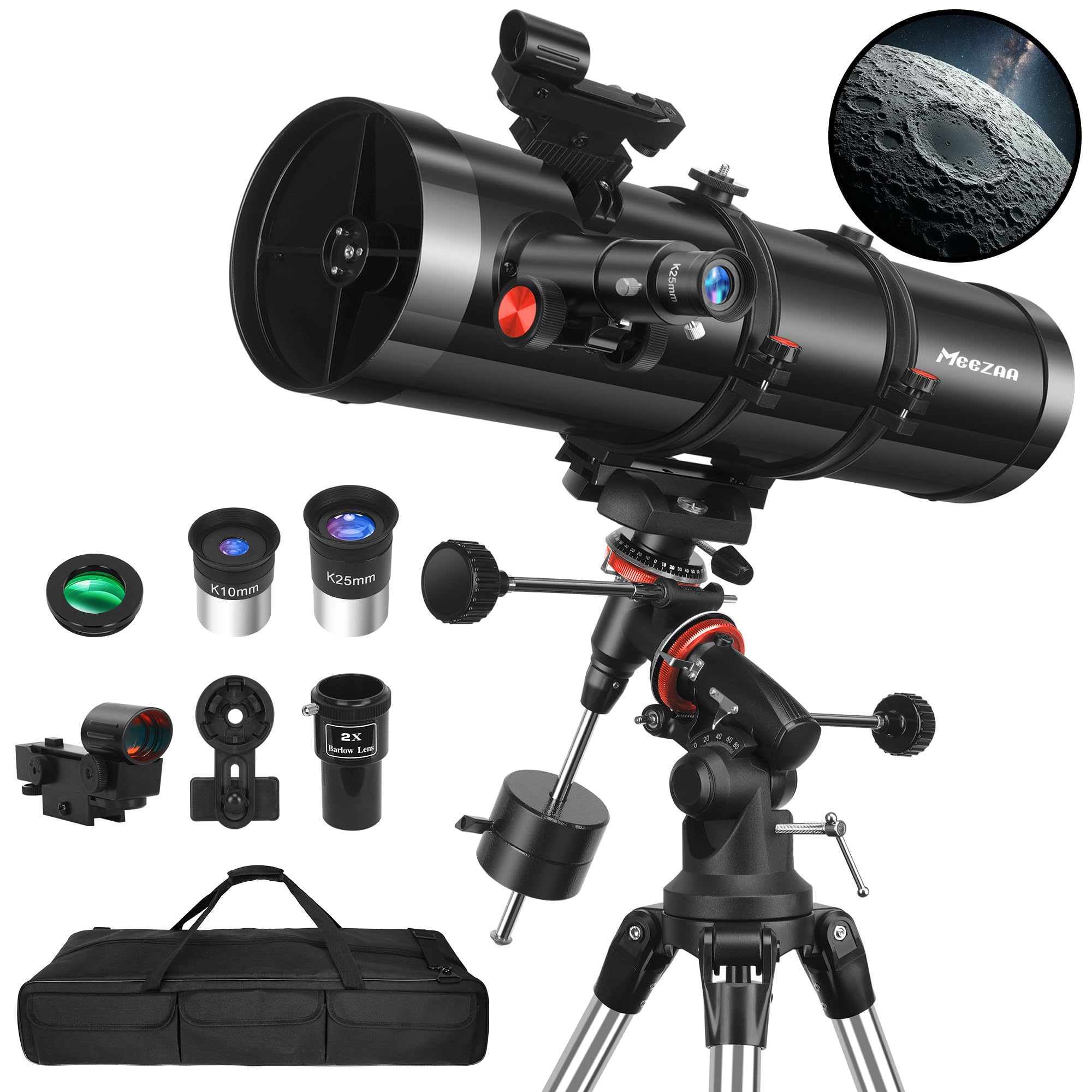
The MEEZAA 150EQ offers the same large 150mm aperture as the HSL 150EQ but packages it with a slightly different accessory set and a heavy-duty stainless steel tripod. The 650mm focal length at f/4.3 is among the fastest in this roundup, making it excellent for capturing faint deep-sky objects like the Orion Nebula and the Andromeda Galaxy. The German Equatorial mount includes precision dials and slow-motion control knobs for smooth manual tracking. The tripod features a built-in accessory tray to keep eyepieces organized during a session.
The accessory package includes two eyepieces (25mm and 10mm), a 2X Barlow lens, a red dot finderscope, and a moon filter to reduce glare during lunar observation. A phone adapter is included for smartphone astrophotography, and the large carry bag fits all components for easy transport. User feedback is largely positive, with many noting that the scope’s build quality feels more substantial than the price suggests. The color-coded assembly system is a thoughtful touch that helps beginners distinguish between similar-looking parts during setup.
The manual EQ mount requires patience to set up and use. Multiple users mention that assembly is complex and may require two people. The included eyepieces are functional but not premium — upgrading to Plossl eyepieces significantly improves image quality. The MEEZAA 150EQ is best suited for a beginner who values maximum aperture for the budget and is willing to learn manual equatorial tracking. It’s not a computerized scope, but the large aperture means that when you do find an object, the view will be impressively bright and detailed.
Why it’s great
- 150mm aperture at f/4.3 provides outstanding light-gathering for deep-sky viewing
- Heavy-duty stainless steel tripod offers excellent stability
- Moon filter reduces glare for comfortable lunar observation
- Color-coded assembly system simplifies the setup process
Good to know
- Manual EQ mount assembly is complex and may require two people
- Stock eyepieces are functional but upgrading to Plossls improves clarity
- Focuser is plastic — careful not to overtighten
9. Smart Telescope FASHIONARI
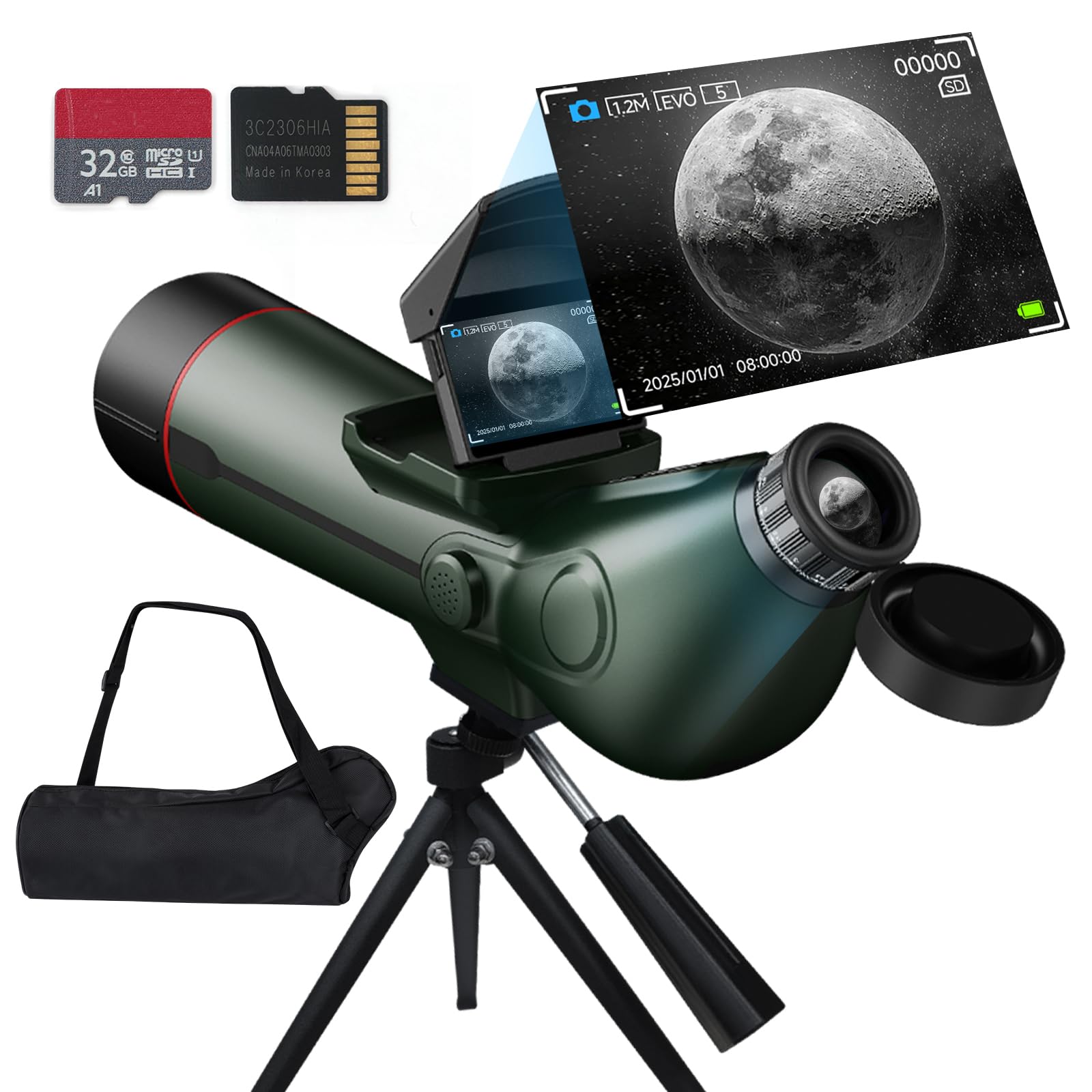
The FASHIONARI Smart Telescope is a fully digital refractor designed for families and casual users who want a screen-based viewing experience. It features an 80mm aperture with a 300mm focal length (f/3.75), a starlight-grade sensor capable of 4K image capture, and dual screens — a foldable external display and an eyepiece with adjustable diopter compensation for users who wear glasses. The built-in 4500mAh battery provides up to 6 hours of operation, and the auto-focus system handles focus adjustments automatically.
The one-touch photo and video capture modes make it simple for children to use — press a button and the scope captures the image. The starlight-grade sensor is sensitive enough to produce bright images of the Moon and bright planets, though the short 300mm focal length limits detail on smaller objects. The tripod mount is adequate for the lightweight optical tube, and the spotter-style design makes it usable for daytime terrestrial observation like birdwatching. The external sunshade helps maintain visibility even in daylight conditions.
The FASHIONARI Smart Telescope sits at a mid-range price point similar to a good pair of binoculars. It’s not a substitute for a larger reflector or a premium smart scope when it comes to deep-sky imaging, but it excels as an introductory tool for young astronomers. The dual-screen design lets a parent guide a child through the view, making it a genuinely social stargazing device. For an adult beginner who wants GoTo-level automation in a simple digital package, the FASHIONARI is a solid entry point, provided you understand that the visual experience is screen-based, not eyepiece-based.
Why it’s great
- Dual screens allow for shared viewing between parent and child
- Auto-focus system eliminates manual focus struggles
- 6-hour battery life supports extended observing sessions
- One-touch photo/video capture is genuinely simple for kids to use
Good to know
- Short 300mm focal length cannot resolve fine planetary detail
- No GoTo mount — you must manually aim the scope
- Some early units had misleading specification markings — buy from authorized sellers
FAQ
Can I use a computerized telescope without a smartphone?
How long does the battery last on a GoTo telescope?
Can I take pictures through a computerized telescope?
Which telescope is best for viewing planets?
Final Thoughts: The Verdict
For most users, the computerized telescope for beginners winner is the Celestron NexStar 6SE because its 6-inch Schmidt-Cassegrain optics and fully automated GoTo mount provide a genuine observing experience that grows with the user — no upgrade required for years. If you want the best portable astrophotography setup and don’t need an eyepiece, grab the DWARFLAB Dwarf 3 for its dual-lens versatility and 4K tracking. And for a rock-solid entry point into traditional GoTo astronomy at a lower price, the Celestron 114LCM offers the brand reliability and Sky Tour feature that keeps beginners engaged night after night.

Mo Maruf
I created WellFizz to bridge the gap between vague wellness advice and actionable solutions. My mission is simple: to decode the research and give you practical tools you can actually use.
Beyond the data, I am a passionate traveler. I believe that stepping away from the screen to explore new environments is essential for mental clarity and physical vitality.