Our readers keep the lights on and my smoothie glass nicely filled. As an Amazon Associate, I earn from qualifying purchases.
Moving from a mechanical machine to a computerized model unlocks a level of precision and automation that transforms how you approach garments, quilts, and home décor. The ability to store stitch sequences, adjust needle position with a button, and let the machine handle buttonhole sizing removes the frustration of manual guesswork, letting you focus on the fabric and the design.
I’m Mohammad Maruf — the founder and writer behind WellFizz. My research dives deep into the real-world trade-offs of motor torque, feed-dog systems, and frame construction to separate marketing claims from actual sewing performance.
Whether you are piecing a king-size quilt or sewing a silk blouse, finding the right computerized sewing machine depends on matching stitch capacity, build quality, and fabric handling to your specific projects.
How To Choose The Best Computerized Sewing Machine
A computerized sewing machine digitizes stitch selection, buttonhole sizing, and often needle positioning, but the hardware underneath — the frame material, feed-dog design, and motor torque — determines whether those digital features translate into consistent stitches on real fabrics. Understanding these physical specifications is more important than the stitch-count number.
Frame and Construction
A full metal internal frame keeps the needle bar and feed dogs in rigid alignment, preventing stitch skipping when you sew multiple layers of denim or heavy quilting. Machines with a predominantly plastic chassis tend to vibrate more at higher speeds and may struggle to maintain even tension on thick fabric stacks. Look for models that specify a metal frame or a metal needle-bar assembly.
Feed-Dog and Fabric Handling
The feed-dog system grips the fabric and advances it under the presser foot. A seven-piece feed-dog system (common on Janome and Juki models) distributes grip across a wider surface area, reducing fabric puckering on lightweight knits and preventing shifting on slippery materials. For quilters, a drop-feed mechanism or a dedicated even-feed (walking) foot is essential for matched seams on multiple layers.
Stitch Width, Speed, and Buttonhole Variety
Stitch width up to 7 mm gives you room for wide decorative stitches and satin stitching, while speed-control sliders let you cap the maximum speed when working on delicate fabrics. For garment sewers, the number of one-step buttonhole styles matters less than whether the machine reads the button size automatically — seven styles are usually sufficient to cover shirt, coat, and stretch-fabric buttonholes.
Quick Comparison
On smaller screens, swipe sideways to see the full table.
| Model | Category | Best For | Key Spec | Amazon |
|---|---|---|---|---|
| Juki HZL-F600 | Premium | Quilting & garment pro | 255 built-in stitches, 30 lbs | Amazon |
| SINGER Quantum Stylist 9985 | Premium | Stitch variety & touchscreen | 1,000+ stitch applications, 7 mm width | Amazon |
| Janome 3160QDC-G | Mid-Range | Quiet quilting with bonus kit | Superior Plus Feed System, 12.5 lbs | Amazon |
| Bernette B37 | Mid-Range | Beginner-friendly pro build | 50 stitches, 17.6 lbs metal frame | Amazon |
| Juki HZL-LB5100 | Mid-Range | Reliable straight stitch work | 100 stitches, 7 mm width | Amazon |
| Janome JW8100 | Mid-Range | Versatile quilting package | 7-piece feed dog, 12 lbs | Amazon |
| SINGER Heavy Duty 6700C | Mid-Range | Piercing power on thick fabrics | 411 stitch apps, 14.6 lbs metal | Amazon |
| Brother CP100X | Budget | Value & easy needle threading | 100 stitches, quick-set bobbin | Amazon |
| Brother CS7205 | Budget | Lightweight portability | 150 stitches, 2.2 lbs | Amazon |
In‑Depth Reviews
1. Juki HZL-F600 Computerized Sewing and Quilting Machine

The Juki HZL-F600 sits at the top of this list because it combines industrial-grade stitch quality with a feature set designed for serious quilters and garment sewers. Its 255 built-in stitches include stretch, decorative, and lettering patterns, and the separate bobbin-winding motor means you can wind a bobbin mid-project without stopping your sewing. The dual LED lights illuminate the work area far better than the single-bulb setups on cheaper machines, reducing eye strain during long sessions.
Reviewers consistently note the heavy-duty 30-pound weight and metal construction that eliminate vibration even at full speed. The machine handles thick upholstery fabric and lightweight jerseys with equal control, thanks to a robust feed-dog system and adjustable presser-foot pressure. The extension table included in the box gives quilters a substantial work surface for managing large quilt blocks.
The only trade-off is the premium price point, which makes this an investment for dedicated sewists rather than casual hobbyists. Beginners may find the manual slightly dense compared to Brother’s simplified guides, but the stitch quality and durability justify the learning curve over the long term.
Why it’s great
- Separate bobbin winder motor allows continuous sewing
- Dual LED lights provide bright, shadow-free illumination
- Metal frame and 30-lb weight eliminate vibration
Good to know
- Premium price point targets committed sewists
- Manual assumes intermediate sewing knowledge
2. SINGER Quantum Stylist 9985 Computerized Sewing & Quilting Machine

The SINGER Quantum Stylist 9985 is the machine for sewists who want maximum stitch variety without stepping into embroidery-only territory. With over 1,000 stitch applications, 13 one-step buttonhole styles, and a large color LCD touchscreen that previews stitches in actual size, this model turns stitch selection into an intuitive visual process. The 60 memory slots let you save custom stitch sequences, which is helpful if you frequently sew the same decorative borders or monogramming patterns.
In real use, the automatic needle threader works reliably on the first attempt, and the speed-control slider lets you cap the pace when working on tricky curves. The machine includes 15 presser feet straight out of the box, covering everything from a walking foot for quilting to a rolled-hem foot for delicate edges. Reviewers who upgraded from older Singer Heavy Duty models report a dramatic reduction in noise and vibration.
The main downside is that the machine requires Singer-brand Class 15 bobbins, not the generic 15J type, which means you need to source specific bobbins. The enclosed top housing also makes threading slightly cramped compared to open-arm designs on Juki or Janome models. For sewists who prioritize stitch selection and visual feedback over raw torque, this machine delivers exceptional value.
Why it’s great
- Color touchscreen with actual-size stitch preview
- 13 one-step buttonhole styles cover all garment needs
- 15 included presser feet reduce upfront accessory cost
Good to know
- Requires specific Singer Class 15 bobbins, not generic 15J
- Enclosed top makes threading area somewhat cramped
3. Janome 3160QDC-G Sewing and Quilting Machine

The Janome 3160QDC-G earns its reputation as the quietest machine in this lineup thanks to a refined motor and a sturdy metal chassis that absorbs vibration. Its Superior Plus Feed System (SFS+) uses a seven-piece feed-dog design that grips fabric evenly across the full width, preventing shifting on slippery silks and reducing puckering on knits — a common pain point on machines with standard four-piece feed dogs. The automatic thread cutter and built-in needle threader speed up workflow significantly, especially when switching thread colors for decorative stitching.
This machine ships with a bonus quilt kit that includes an extension table, a hard cover, an even-feed (walking) foot, and a quarter-inch piecing foot — accessories that typically cost extra on competing models. At 12.5 pounds, it is light enough to carry to a sewing class or retreat without strain, yet its metal internal frame keeps it stable at higher speeds. The intuitive LED control panel displays stitch length and width clearly, with simple button navigation that avoids the complexity of a touchscreen.
Experienced users note that the maximum sewing speed is slower than some industrial-derivative machines, so if you batch-sew long seams at full throttle, you may find the pace limiting. The light, while adequate, is not as bright as the dual-LED setup on the Juki HZL-F600. For quiet, precise stitching across a wide fabric range with minimal setup, this Janome is a strong mid-range contender.
Why it’s great
- Seven-piece feed dog prevents fabric shifting and puckering
- Bonus quilt kit with hard cover and walking foot included
- Exceptionally quiet operation suitable for late-night sewing
Good to know
- Maximum speed is slower than pro-grade machines
- Lighting could be brighter for detailed work
4. Bernette B37 Computerized Sewing Machine

Bernette, the affordable sibling of the Swiss Bernina brand, brings durable metal-frame construction to the mid-range market with the B37. At 17.6 pounds, this machine feels solid under the needle — the weight comes from a full metal chassis that keeps the needle bar rigid and delivers consistent stitch formation even when you push through multiple layers of fleece or denim. It offers 50 built-in stitches, including utility, stretch, and decorative patterns, plus five automatic one-step buttonholes that handle standard shirt and coat closures reliably.
Beginners benefit from the two-speed option that limits top speed while they build confidence, and the bright LCD screen shows stitch numbers and recommended presser feet clearly. The automatic needle threader works as intended, and the drop-in bobbin is jam-resistant. Reviewers who upgraded from budget plastic machines praise the B37’s stability and the precise stitch width adjustment up to 7 mm.
The limited 50-stitch library may feel restrictive if you plan to sew extensive decorative borders or monogramming — machines like the SINGER 9985 offer twenty times more stitch applications for a similar price. Some users also report that the machine struggles slightly with very heavy fabrics like thick denim, despite the metal frame. For sewists who prioritize build quality over stitch variety, the B37 is a reliable workhorse.
Why it’s great
- Full metal chassis provides vibration-free stability
- Two-speed mode helps beginners learn without frustration
- Five one-step buttonholes cover most garment needs
Good to know
- 50-stitch library is limited compared to similarly priced models
- May struggle with very heavy fabrics like thick denim
5. Juki HZL-LB5100 Computerized Sewing Machine

The Juki HZL-LB5100 distills Juki’s industrial sewing heritage into a compact home machine that excels at consistent, even stitches — especially on stretchy knits and lightweight wovens. Its 100 built-in stitches include three one-step buttonholes, and the 7 mm maximum stitch width gives you room for decorative satin stitching. The aluminum internal frame keeps the machine light enough to move around a sewing room while maintaining the rigidity needed for reliable tension control.
Users consistently highlight the machine’s quiet operation and the intuitive arrow-button stitch selection. The digital screen shows the correct presser foot for each stitch, removing the guesswork from foot changes. The drop-in bobbin system winds smoothly, and the automatic needle threader eliminates the most tedious part of setup. For garment sewers who mostly work with cotton, jersey, and lining fabrics, this Juki delivers professional stitch quality without the bulk of a full-size industrial machine.
The LB5100 is not designed for heavy fabrics — sewing four layers of denim or thick quilting batting produces noticeable vibration and noise, and the plastic outer shell amplifies the sound. If your projects regularly involve upholstery-weight materials or thick multiple-layer quilts, the HZL-F600 or a heavy-duty SINGER would serve you better. For everyday garment sewing and light quilting, this machine offers outstanding value.
Why it’s great
- Aluminum frame ensures consistent tension and stitch quality
- Digital screen shows recommended presser foot for each stitch
- Quiet and smooth on stretchy knits and lightweight fabrics
Good to know
- Not built for heavy fabrics like thick denim or multiple layers
- Plastic outer shell amplifies vibration on tough materials
6. Janome JW8100 Fully-Featured Computerized Sewing Machine

The Janome JW8100 is built for sewists who want a dedicated quilting tool without stepping into the premium price bracket. Its defining feature is the seven-piece feed-dog system that moves fabric evenly across the stitch plate, which directly reduces shifting when you are matching seams on patchwork blocks. The machine comes with an extra-wide extension table, an even-feed (walking) foot, and a quarter-inch piecing foot out of the box — three accessories that quilters typically buy separately.
With 100 built-in stitches and seven one-step buttonhole styles, the JW8100 handles garment construction and home décor projects just as comfortably as quilting. The start/stop button and speed-control slider let you sew without the foot pedal, which reviewers with mobility issues find invaluable. The jam-proof drop-in bobbin and built-in needle threader reduce downtime, and the free arm — revealed by removing the front drawer — makes sewing sleeves and cuffs straightforward.
The built-in LED light is functional but noticeably dimmer than what you get on the Janome 3160QDC-G or the Juki HZL-F600. Some users also note that the automatic threader can be fiddly until you learn the exact technique. For a mid-range machine that ships quilting-ready with minimal accessory spending, the JW8100 is a strong, practical choice.
Why it’s great
- Seven-piece feed dog prevents seam shifting in patchwork
- Quilting accessories (walking foot, extension table) included
- Free arm and start/stop button aid garment construction
Good to know
- LED light is dimmer than premium alternatives
- Automatic needle threader requires practice to master
7. SINGER Heavy Duty 6700C Computerized Sewing Machine

The SINGER Heavy Duty 6700C targets sewists who routinely work with thick materials — denim, canvas, leather, and multiple quilt layers — and need a motor with real piercing power. Its stainless steel bedplate and metal internal frame provide the rigidity required for dense fabric stacks, and the enhanced pierce-power motor punches through heavy materials without the needle deflection that plagues lighter machines. With 411 stitch applications and seven styles of one-step buttonholes, the decorative range is broad enough for garment sewing and home décor.
The LCD screen displays stitch length and width adjustments clearly, and the built-in speed control lets you limit the top speed when working on intricate areas. The machine comes with ten presser feet, including a walking foot and an open-toe foot, which covers the essentials for both quilting and general sewing. Reviewers consistently mention that the machine handles silky fabrics, stretch knits, and quilting cotton without tension issues, which is unusual for a model marketed as heavy-duty.
Compared to the SINGER Quantum Stylist 9985, the 6700C has a smaller throat space, which means managing large quilt rolls is more cumbersome. The foot lever is located on the right side, which can feel awkward if you are used to left-side controls on Brother or Janome machines. For sewists who prioritize raw power over stitch count and need a machine that can barrel through thick layers, this SINGER delivers.
Why it’s great
- Enhanced pierce-power motor handles denim and leather easily
- Stainless steel bedplate and metal frame prevent needle deflection
- Ten included presser feet cover quilting and garment sewing
Good to know
- Small throat space limits large quilt project management
- Foot lever on the right side may feel unnatural for some users
8. Brother CP100X Computerized Sewing and Quilting Machine

The Brother CP100X delivers the most value in the budget-friendly tier by pairing a durable metal frame with 100 built-in stitches, including utility, decorative, and heirloom patterns, plus eight auto-size buttonholes. Where many entry-level computerized machines use plastic internal components that flex under load, the CP100X uses a metal frame that keeps the needle bar stable when you sew through denim or heavy quilting cotton. The included wide table and ten sewing feet — including a walking foot and a quilting foot — mean you can start quilting projects immediately without buying additional accessories.
Users praise the quiet operation and the improved one-step automatic needle threader, which reliably pushes thread through the needle on the first try. The start/stop button and sliding speed control allow sewing without the foot pedal, which reviewers with back or foot pain find essential. The machine handles a wide fabric range — from cotton sheeting to webbing — without tension adjustments, and the drop-in bobbin system is genuinely jam-resistant.
The bobbin winding mechanism can be inconsistent; some users report needing to manually guide the thread to ensure even winding. The needle threader mechanism is also bulkier than on higher-end models, taking up more space near the needle area. For sewists on a budget who refuse to compromise on frame rigidity, the CP100X is a smart and capable choice.
Why it’s great
- Metal frame provides stability on thick fabrics and multiple layers
- Wide table and ten feet included for immediate quilting capability
- Start/stop button and speed control allow pedal-free sewing
Good to know
- Bobbin winding can be inconsistent and may need manual guidance
- Needle threader mechanism is bulkier than premium designs
9. Brother CS7205 Computerized Machine
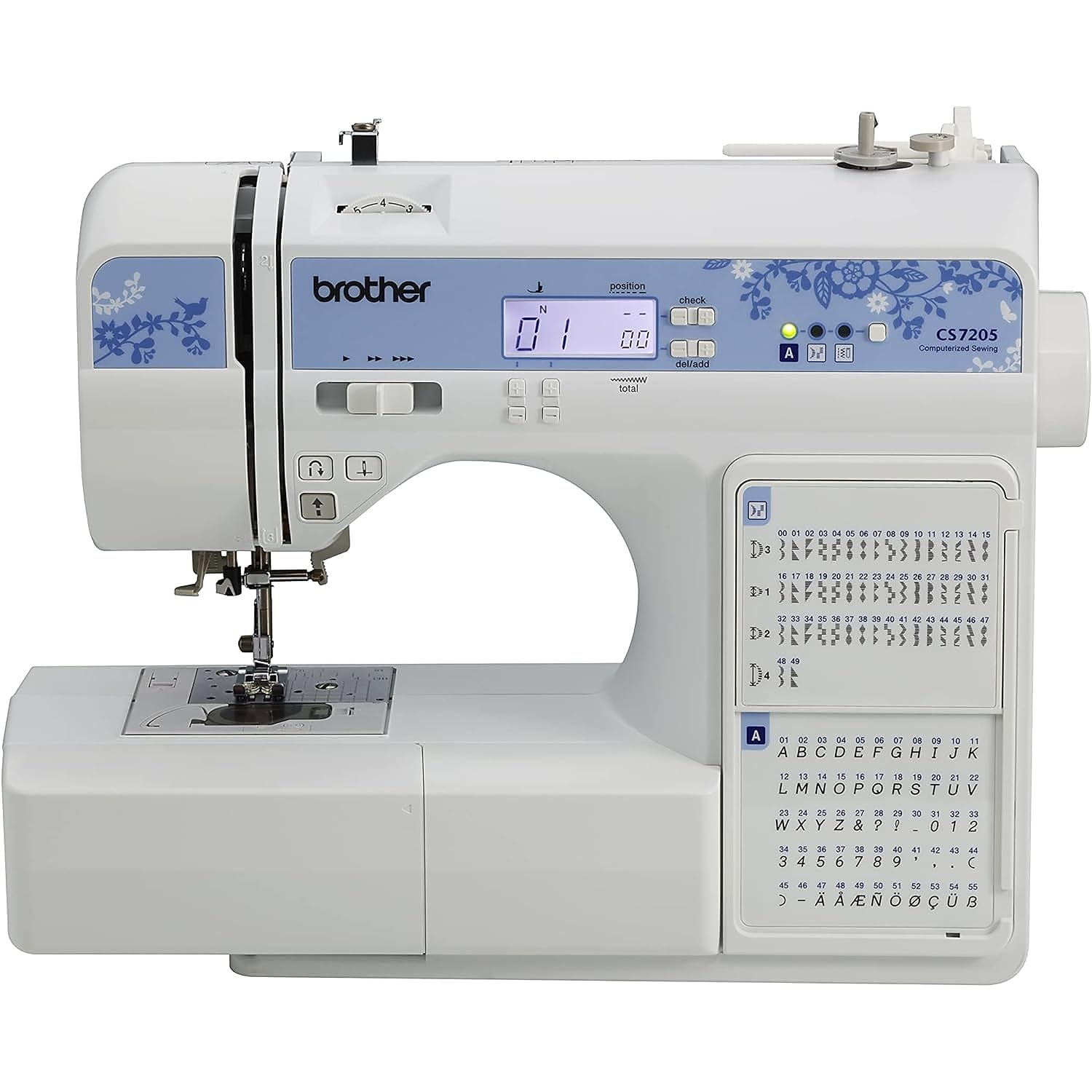
The Brother CS7205 is the lightest computerized machine in this roundup at just over 2 pounds, making it the obvious choice for sewists who carry their machine to classes, retreats, or small apartments where space is tight. Despite its featherlight body, it packs 150 built-in stitches — including one alphanumeric font for basic monogramming — and eight one-step auto-size buttonholes. The LCD display is clear and straightforward, showing stitch numbers and recommended presser foot settings at a glance.
The machine includes 11 sewing feet and a wide table, which is an unusually generous accessory package for a machine at this tier. The automatic needle threader works reliably, and the quick-set drop-in bobbin system is genuinely jam-resistant, which saves time when you are switching thread colors between projects. Reviewers consistently note that the machine produces clean, even stitches on cotton, quilting fabric, and light knits with minimal tension tweaking.
The ultra-lightweight construction comes with a trade-off: the plastic chassis lacks the vibration-dampening mass of metal-frame competitors, so sewing through multiple layers of thick fabric produces noticeable noise and bounce. This machine is best suited for light-to-medium weight fabrics, garment sewing, and craft projects. If your sewing diet consists mainly of quilting cotton, apparel fabrics, and home décor items, the CS7205’s portability and stitch variety make it a compelling entry-level option.
Why it’s great
- Ultra-lightweight at 2.2 lbs for easy transport to classes
- 150 stitches including alphanumeric font for basic lettering
- 11 sewing feet and wide table included in the box
Good to know
- Plastic chassis vibrates on thick or multiple fabric layers
- Best limited to light-to-medium weight sewing projects
FAQ
Can a computerized sewing machine handle thick fabrics like denim and leather?
What is the advantage of a seven-piece feed dog over a standard four-piece?
Do all computerized machines require the same type of bobbin?
Final Thoughts: The Verdict
For most users, the computerized sewing machine winner is the Juki HZL-F600 because it combines industrial-grade stitch quality, a separate bobbin winder, and dual LED lighting in a package that handles everything from silk to upholstery without breaking a sweat. If you want maximum stitch variety and a touchscreen interface for creative exploration, grab the SINGER Quantum Stylist 9985. And for quiet, precise quilting with a bonus accessory kit that saves you money on add-ons, nothing beats the Janome 3160QDC-G.

Mo Maruf
I created WellFizz to bridge the gap between vague wellness advice and actionable solutions. My mission is simple: to decode the research and give you practical tools you can actually use.
Beyond the data, I am a passionate traveler. I believe that stepping away from the screen to explore new environments is essential for mental clarity and physical vitality.