Our readers keep the lights on and my smoothie glass nicely filled. As an Amazon Associate, I earn from qualifying purchases.
A podcast microphone isn’t just a piece of gear — it’s the difference between a listener clicking away in the first five seconds or staying for the whole episode. The best condenser and dynamic mics for podcasting reject room echo, tame plosives, and capture your voice with clarity that makes every word land. But sorting through polar patterns, connectivity types, and capsule sizes can turn a simple purchase into a deep rabbit hole.
I’m Mohammad Maruf — the founder and writer behind WellFizz. I’ve spent hundreds of hours analyzing frequency response curves, A/D converter specs, and real-world pickup patterns to separate marketing hype from genuinely useful podcast microphones.
This guide cuts through the noise to help you find the right computer microphone for podcasting whether you need plug-and-play USB convenience or professional XLR broadcast quality.
How To Choose The Best Computer Microphone For Podcasting
Choosing the right microphone for podcasting comes down to three main decisions: the type of capsule, the connection format, and the polar pattern that matches your recording environment. Even the best-sounding mic will fail if it doesn’t fit your room’s acoustics or your workflow.
Dynamic vs. Condenser: Which Capsule Fits Your Room?
Dynamic microphones like the RØDE PodMic are forgiving in untreated rooms — they naturally reject ambient noise like air conditioners or computer fans. Condenser microphones like the Audio-Technica AT2020USB-X capture more detail and a wider frequency range, but they also pick up every click and hum unless your space is acoustically treated. If your podcast setup is in a living room or home office, lean toward a dynamic capsule.
USB vs. XLR: How Connectivity Shapes Your Workflow
USB microphones offer true plug-and-play simplicity — the Samson Q9U and Shure MV7+ give you both USB and XLR options in one body, letting you start simple and upgrade later. Pure XLR mics like the Neumann TLM 102 require an audio interface or mixer, which adds cost and complexity but opens the door to preamp upgrades and multi-mic setups. For solo podcasters on a budget, a USB/XLR hybrid mic is the smartest long-term buy.
Quick Comparison
On smaller screens, swipe sideways to see the full table.
| Model | Category | Best For | Key Spec | Amazon |
|---|---|---|---|---|
| Shure MV7+ | Premium Hybrid | Pro solo podcasters & streamers | 50 Hz – 16 kHz, Auto Level Mode | Amazon |
| SteelSeries Alias Pro Kit | Streaming Pro | Gaming & dual-PC streaming | 3x larger capsule, XLR + mixer | Amazon |
| Neumann TLM 102 | Studio Legend | Critical studio vocal recording | Large-diaphragm, transformerless | Amazon |
| Samson Q9U | Hybrid Value | Versatile USB/XLR podcasting | 24-bit/96 kHz, USB-C + XLR | Amazon |
| Audio-Technica AT2020USB-X | USB Condenser | Detail-rich solo recordings | 24-bit/96 kHz, cardioid condenser | Amazon |
| RØDE PodMic | Broadcast Dynamic | XLR broadcast setups | Internal shock mount, built-in pop filter | Amazon |
| Logitech Blue Yeti | Entry-Level Classic | First-time podcast & streaming | Four polar patterns, 20 Hz – 20 kHz | Amazon |
In‑Depth Reviews
1. Shure MV7+ Dynamic Microphone

The MV7+ builds on Shure’s broadcast legacy with dual USB-C and XLR outputs, a full-color LED touch panel with 16.8 million color options, and OBS certification that makes it a seamless fit for live streaming workflows. Its Auto Level Mode intelligently adjusts gain as you move closer or farther, so you don’t have to babysit levels during a long recording session.
The real-time denoiser and built-in reverb effects (Plate, Hall, Studio) let you polish raw vocal takes without post-processing. The cardioid dynamic capsule naturally rejects room noise, making this mic exceptional in untreated spaces. It’s lighter than the PodMic USB and sounds noticeably cleaner out of the box.
Setup is genuinely plug-and-play on Mac and Windows, and the Motiv desktop app gives you granular control over EQ and compression. The touch mute is a welcome modern touch for live streams, though the LED panel takes a moment to learn during quick muting. This is the most balanced premium hybrid mic you can buy for solo podcasting.
Why it’s great
- Auto Level Mode maintains consistent volume during dynamic podcast conversations
- USB-C and XLR give you flexibility to upgrade to an interface later
- Built-in denoiser removes background hum without sounding artificial
Good to know
- Light stays on even when the computer is off if powered via USB
- Touch mute takes a brief adjustment period for reliable muscle memory
2. SteelSeries Alias Pro Kit

The Alias Pro Kit combines a pro-grade XLR cardioid microphone with a dedicated Stream Mixer, giving you physical control over gain, mute, volume, and RGB monitoring at a glance. The capsule is three times larger than typical gaming mics, which translates to a noticeably wider and warmer vocal capture that competes with dedicated broadcast microphones.
The included XLR amp provides clean gain without introducing noise, and the Sonar software suite offers AI-powered noise cancellation, app-specific audio routing, and drag-and-drop mixing. For dual-PC streaming setups, the EZ Dual PC feature simplifies routing between a gaming rig and a streaming machine without extra hardware.
The build is solid, though the polycarbonate enclosure doesn’t feel as dense as all-metal alternatives. The cardioid pattern is tight — you need to speak directly into the capsule, or it will treat your voice as background noise. Setup isn’t fully plug-and-play; expect a learning curve with the Sonar software before everything runs smoothly.
Why it’s great
- Integrated Stream Mixer puts physical controls at your fingertips for real-time adjustments
- Dual-PC support eliminates complex audio routing for multi-machine streams
- 3x larger capsule delivers rich, full-bodied vocal presence
Good to know
- Sonar software can be bloated and may hijack default audio output after updates
- Requires careful placement directly in front of the mic to avoid off-axis attenuation
3. Neumann TLM 102 Large-Diaphragm Condenser
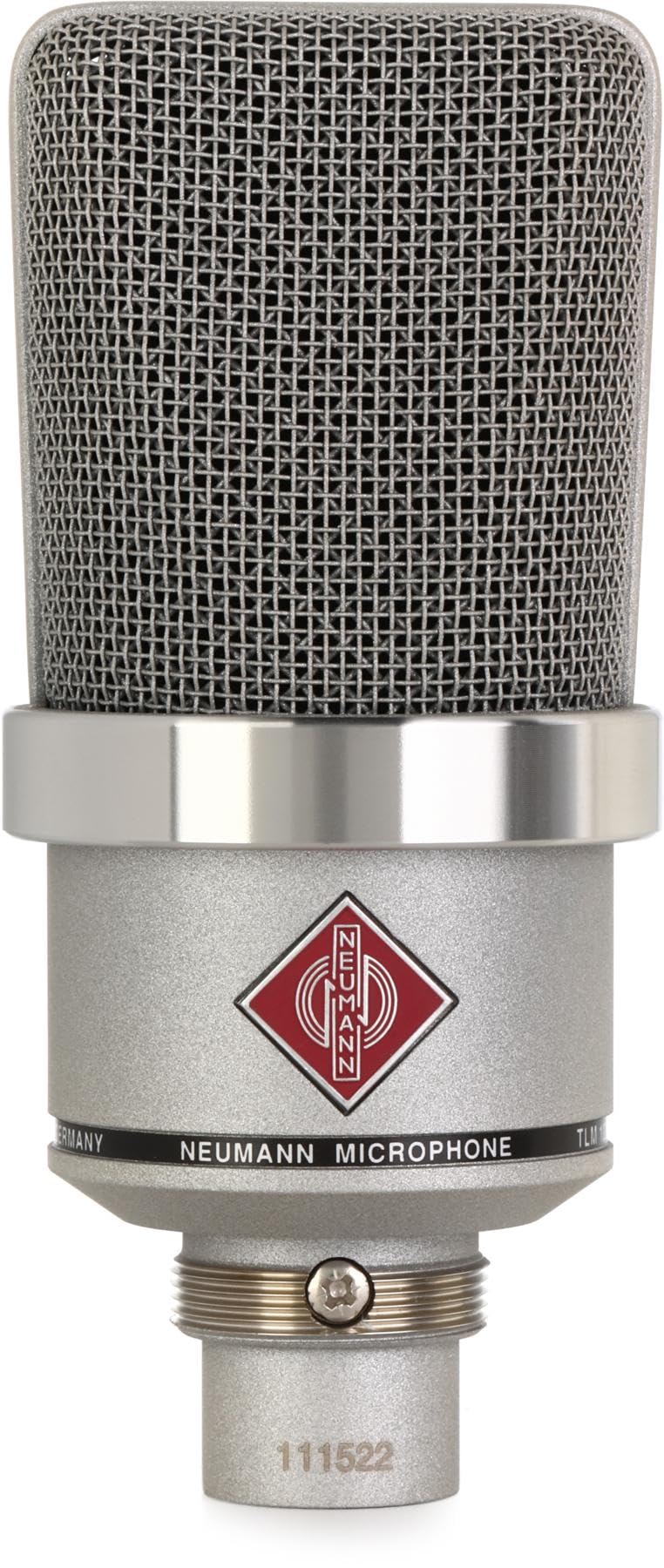
The TLM 102 is a reference-grade large-diaphragm condenser microphone in a compact satin nickel body. Its transformerless circuitry delivers an extraordinarily clean signal path with minimal self-noise at 21 dB-A, making it ideal for capturing subtle vocal nuance in professionally treated podcast studios.
The cardioid polar pattern is smooth and evenly off-axis, though this mic is merciless with untreated room reflections — every hard surface or ambient fan noise will be present in the recording. The frequency response lacks the hyped upper treble boost of cheaper condensers, which means your voice sounds natural rather than artificially crisp.
At this level, you are paying for the engineering that makes vocals sound honest and three-dimensional. The TLM 102 pairs beautifully with a Scarlett 2i2 or UA Volt interface. It does not include a shock mount or pop filter, so budget for those separately. This microphone is for podcasters who treat their recording space as seriously as their content.
Why it’s great
- Transformerless design eliminates coloration for pure, transparent vocal capture
- Extremely low self-noise (21 dB-A) means zero hiss in quiet passages
- Compact footprint fits easily on crowded studio desks
Good to know
- Requires a fully treated room — no forgiveness for background reflections
- No included shock mount or pop filter means additional upfront cost
4. Samson Q9U XLR/USB Dynamic Broadcast Microphone

The Q9U is a dynamic broadcast microphone with a rare combination: USB-C, USB-A, and XLR connectivity all in one body, plus a 24-bit/96 kHz analog-to-digital converter that delivers high-definition digital audio without needing extra hardware. The neodymium dynamic capsule provides plenty of output even without an external gain booster.
Its cardioid pattern offers excellent off-axis rejection, and the internal pneumatic shock mount isolates the capsule from desk vibrations. The dual-layer mesh windscreen is surprisingly effective at stopping plosives — many reviewers note they don’t need an external pop filter. The zero-latency headphone monitoring jack lets you hear your voice in real time, which is critical for pacing live podcast recordings.
The mute switch is physically satisfying and mutes both USB and XLR outputs simultaneously. The build is all-metal and heavy, though the included desk stand is just adequate — you’ll want a boom arm for proper placement. Reviewers consistently compare the sound quality to microphones costing twice as much, and the USB/XLR hybrid design future-proofs this mic for studio upgrades.
Why it’s great
- Dual USB-C and XLR outputs provide maximum setup flexibility for any budget
- Built-in pop filter and shock mount eliminate the need for common accessories
- Sound quality rivals microphones at double the price point
Good to know
- Stock desk stand is basic — a boom arm is a recommended upgrade
- Occasional USB grounding issues reported that may require a powered hub
5. Audio-Technica AT2020USB-X Cardioid Condenser

The AT2020USB-X is a side-address cardioid condenser that brings the legendary AT2020 sound into a modern USB-C package with 24-bit/96 kHz resolution. The stainless steel mesh grille and sturdy body give it the same professional aesthetic as its XLR sibling, while the built-in headphone jack provides direct zero-latency monitoring.
The soft-touch capacitive mute button with a two-state LED ring (blue when active, red when muted) is silent and responsive, ideal for live podcasting where audible switch clicks would ruin a take. The cardioid pickup pattern offers solid off-axis rejection, though as a condenser, it is highly sensitive — reviewers consistently note it picks up furnace vents, PC fans, and room echoes without careful mic positioning.
It includes a custom desk stand and USB-C to USB-A cable with a USB-A to USB-C adapter, so it connects to virtually any computer out of the box. The frequency response is smooth and extended, making this a strong choice for solo podcasters who record in a treated space and want the detail of a condenser without the complexity of XLR gear.
Why it’s great
- Silent capacitive mute button with clear LED status indicator for live recording
- 24-bit/96 kHz USB-C connection delivers studio-quality digital audio resolution
- Built-in headphone jack enables real-time monitoring without latency
Good to know
- Condenser capsule picks up significant background noise in untreated rooms
- LED ring stays illuminated even when the computer is powered off
6. RØDE PodMic Cardioid Dynamic Broadcast Microphone

The PodMic is built for one thing: delivering clean, present broadcast-style voice capture at a mid-range price. The all-metal construction and integrated yoke mount with dual 3/8-inch and 5/8-inch threads allow direct attachment to any boom arm without adapter fiddling. The internal shock mount does a commendable job isolating capsule vibrations from desk knocks.
The cardioid dynamic capsule requires significant gain, typically 3/4 of the way up on most audio interfaces, which means low-noise preamps matter. The white finish is smooth and minimalist, though the black version shares the same exact performance.
Reviewers consistently report that this mic sounds excellent with RØDECaster consoles, but it pairs just as well with standard interfaces like Focusrite or GoXLR. The main trade-off is weight — at over 900 grams, it will sag a cheap boom arm over time. This is a straightforward, no-frills dynamic that relies on good engineering rather than software gimmicks.
Why it’s great
- Dual-thread yoke mount attaches to any stand without adapters
- Internal shock mount and pop filter reduce setup effort and accessory costs
- All-metal construction built for years of daily use
Good to know
- Requires high gain from audio interface — low-noise preamps are important
- Heavy build can overpower lightweight or budget boom arms
7. Logitech Blue Yeti USB Microphone

The Blue Yeti is the microphone that introduced a generation of creators to better audio. Its custom three-capsule array enables four selectable polar patterns — cardioid, omnidirectional, bidirectional, and stereo — which means a single mic can handle solo voice, two-person interviews, or even ambient room capture without swapping hardware.
The onboard controls for headphone volume, pattern selection, instant mute, and mic gain put every essential adjustment at your fingertips. The Blue VO!CE software adds effects and advanced modulation, though many users find the raw sound quality more than sufficient without digital processing. The adjustable desktop stand allows you to tilt the mic to optimize sound from your specific seating position.
Setup is genuinely instantaneous on Mac and PC. The main caveat is that the Yeti is a condenser microphone with high sensitivity — it will pick up keyboard clacks, mouse clicks, and room echo unless you record in a quiet space with the gain dialed back. The micro-USB connection feels dated, and the mute button can feel flimsy over long-term use. For absolute beginners, it remains the safest and most versatile entry point.
Why it’s great
- Four polar patterns cover solo, interview, and multi-person recording scenarios
- Onboard gain, mute, and volume controls eliminate the need for software adjustments
- Broadcast-quality sound at a remarkably approachable price tier
Good to know
- Condenser design is sensitive to room noise and requires careful placement
- micro-USB connector and plastic-feeling mute button show age in design
FAQ
Why does my podcast microphone pick up so much background noise?
Can I use a USB microphone with an audio interface later?
Do I need a pop filter if my microphone has a built-in windscreen?
Final Thoughts: The Verdict
For most users, the computer microphone for podcasting winner is the Shure MV7+ because it combines dual USB-C/XLR connectivity, auto-leveling technology, and a dynamic capsule that forgives untreated rooms while delivering pro broadcast sound. If you want a hybrid microphone with stunning value at a lower entry point, grab the Samson Q9U. And for studio-grade vocal clarity where room acoustics are already controlled, nothing beats the Neumann TLM 102.

Mo Maruf
I created WellFizz to bridge the gap between vague wellness advice and actionable solutions. My mission is simple: to decode the research and give you practical tools you can actually use.
Beyond the data, I am a passionate traveler. I believe that stepping away from the screen to explore new environments is essential for mental clarity and physical vitality.