Our readers keep the lights on and my smoothie glass nicely filled. As an Amazon Associate, I earn from qualifying purchases.
Mechanical keyboards have taken over the typing world, but the sheer number of switch types, layouts, and connection options can turn a simple upgrade into a confusing decision tree. You need a keyboard that matches your typing style—fast, accurate, and comfortable for hours of work or writing.
I’m Mohammad Maruf — the founder and writer behind WellFizz. I’ve spent countless hours analyzing switch actuation forces, keycap materials, wireless latency figures, and ergonomic studies to build this guide around what actually matters for dedicated typists.
Whether you need a quiet office companion or a fully split ergonomic setup, this guide to the best computer keyboard for typing breaks down seven top contenders by feel, connectivity, and real-world daily use.
How To Choose The Best Computer Keyboard For Typing
Typing keyboards are distinguished from gaming keyboards by their focus on switch feel, key rollover, and layout ergonomics rather than macro buttons and aggressive RGB lighting. The wrong switch type can slow you down or cause finger strain over a full workday.
Switch Type & Actuation Force
Linear switches (like Cherry MX Red) offer a smooth keystroke ideal for fast typists who prefer no bump. Tactile switches (Cherry MX Brown, Kailh Box Brown) provide a noticeable bump at the actuation point, giving you physical confirmation of each keypress. Clicky switches (Cherry MX Blue) add an audible click alongside the bump. Lighter actuation forces (45g to 50g) reduce fatigue during long sessions, while heavier switches (60g+) offer more resistance and can feel more deliberate.
Layout Size: Full-Size vs. Compact
Full-size keyboards include a number pad which is essential for data entry but extends the desk footprint. Tenkeyless (TKL) layouts omit the numpad to bring the mouse closer, reducing shoulder reach. 96% and 75% layouts compress the numpad next to the main area, retaining number entry in a smaller space. Choose based on whether you need constant numeric input or prioritize desk space.
Keycap Material: ABS vs. PBT
ABS keycaps feel smooth initially but develop a shiny, greasy appearance over months of use as oils wear down the surface. PBT keycaps are more textured, resistant to shine, and have a denser sound when bottoming out. For a typing keyboard you’ll use daily, PBT caps offer better long-term durability and a more consistent texture under your fingertips.
Ergonomics & Tenting
Split keyboards separate the left and right halves to keep your shoulders back and wrists straight. Tenting (angling the inner edge upward) reduces forearm pronation. If you experience wrist, shoulder, or neck discomfort after long typing sessions, an ergonomic design with adjustable separation and tenting should be a top priority.
Quick Comparison
On smaller screens, swipe sideways to see the full table.
| Model | Category | Best For | Key Spec | Amazon |
|---|---|---|---|---|
| Keychron K4 | Compact Mechanical | Everyday typing with numpad | 4000 mAh battery, Super Brown switches | Amazon |
| Cherry KC 200 MX | Office Mechanical | Quiet office mechanical typing | MX2A Silent Red switches, aluminum top | Amazon |
| AULA F99 Pro | Silent Mechanical | Near-silent typing in shared spaces | Gasket structure, 8000 mAh battery | Amazon |
| Logitech Signature Slim K950 | Slim Membrane | Laptop-like quiet typing, multi-device | Membrane keys, multi-OS Bluetooth | Amazon |
| Logitech MX Mechanical | Premium Wireless Mechanical | Pro-grade wireless mechanical typing | Low-profile clicky switches, smart backlight | Amazon |
| KINESIS Freestyle2 | Split Ergonomic | Wrist pain relief with tenting | Up to 9″ separation, VIP3 lifters | Amazon |
| Kinesis Advantage2 | Contoured Ergonomic | Maximum ergonomic correction | Cherry MX Brown, thumb clusters | Amazon |
In‑Depth Reviews
1. Keychron K4 96% Layout 100 Keys Wireless Mechanical Keyboard
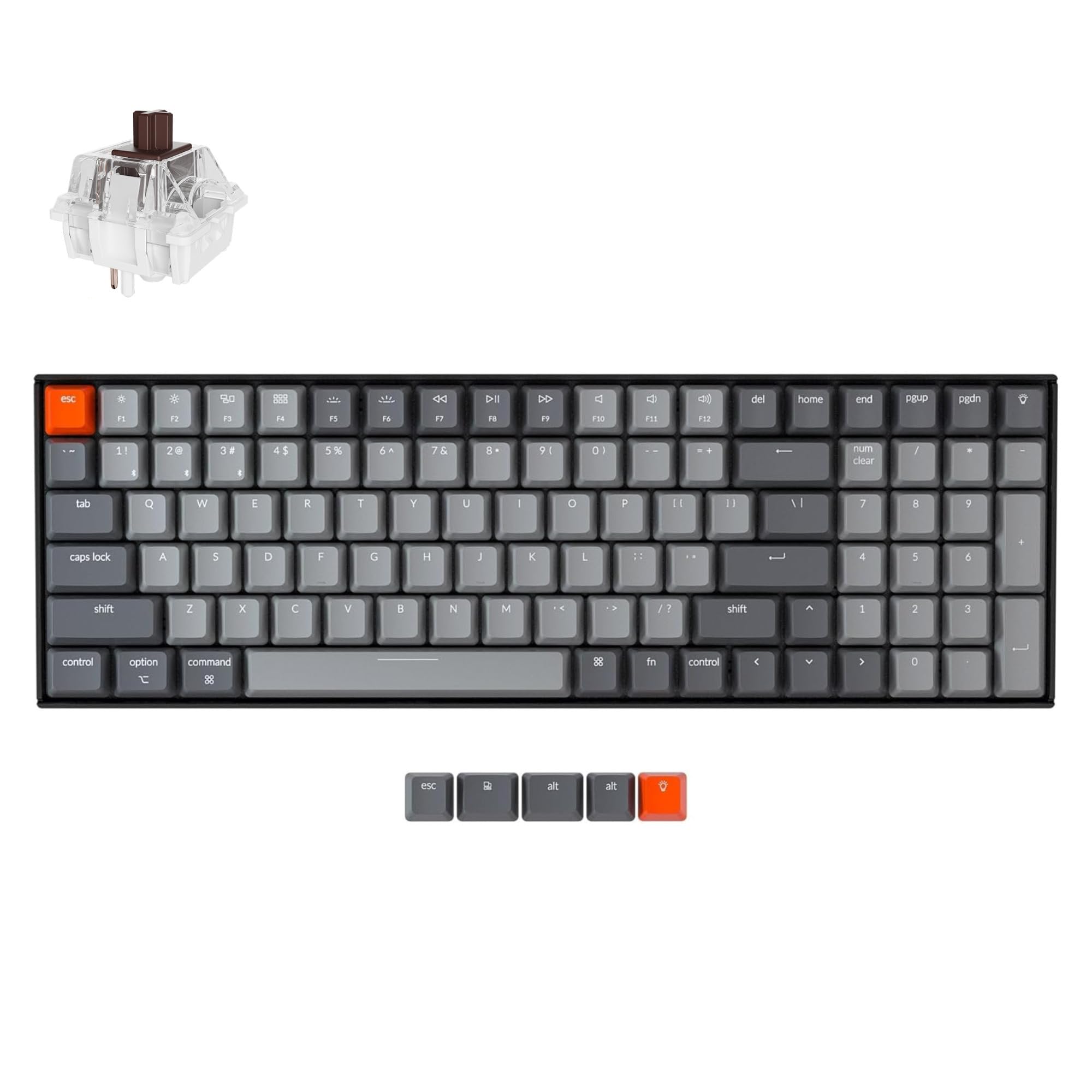
The Keychron K4 compresses a full number pad into a 96% frame, saving desk space without sacrificing numerical entry. The Super Brown switches provide a tactile bump at the actuation point, giving you clear feedback for each keystroke without the loud click of traditional Blue switches. The 4000 mAh battery is one of the largest in any mechanical keyboard, lasting up to 240 hours with backlighting disabled.
Bluetooth 5.1 connects to up to three devices, letting you switch between a laptop, desktop, and tablet with a single key press. The white LED backlight offers multiple modes from static to flashing, though the legends are slightly less crisp than higher-end dye-sublimated caps. The compact numpad requires a small adjustment period for the zero key, which is narrower than standard full-size keyboards.
Users report exceptional durability after three years of daily use, with no keycap wear or frame flex. The K4 is a reliable mid-range option that balances wireless freedom, tactile typing feel, and a condensed layout ideal for desk setups where every inch counts.
Why it’s great
- Massive 4000 mAh battery lasts weeks
- Compact 96% layout with full numpad
- Tactile Super Brown switches feel responsive
Good to know
- Tall profile requires a wrist rest for comfort
- Narrow zero key on numpad takes adjustment
2. Cherry KC 200 MX Wired Mechanical Office Keyboard
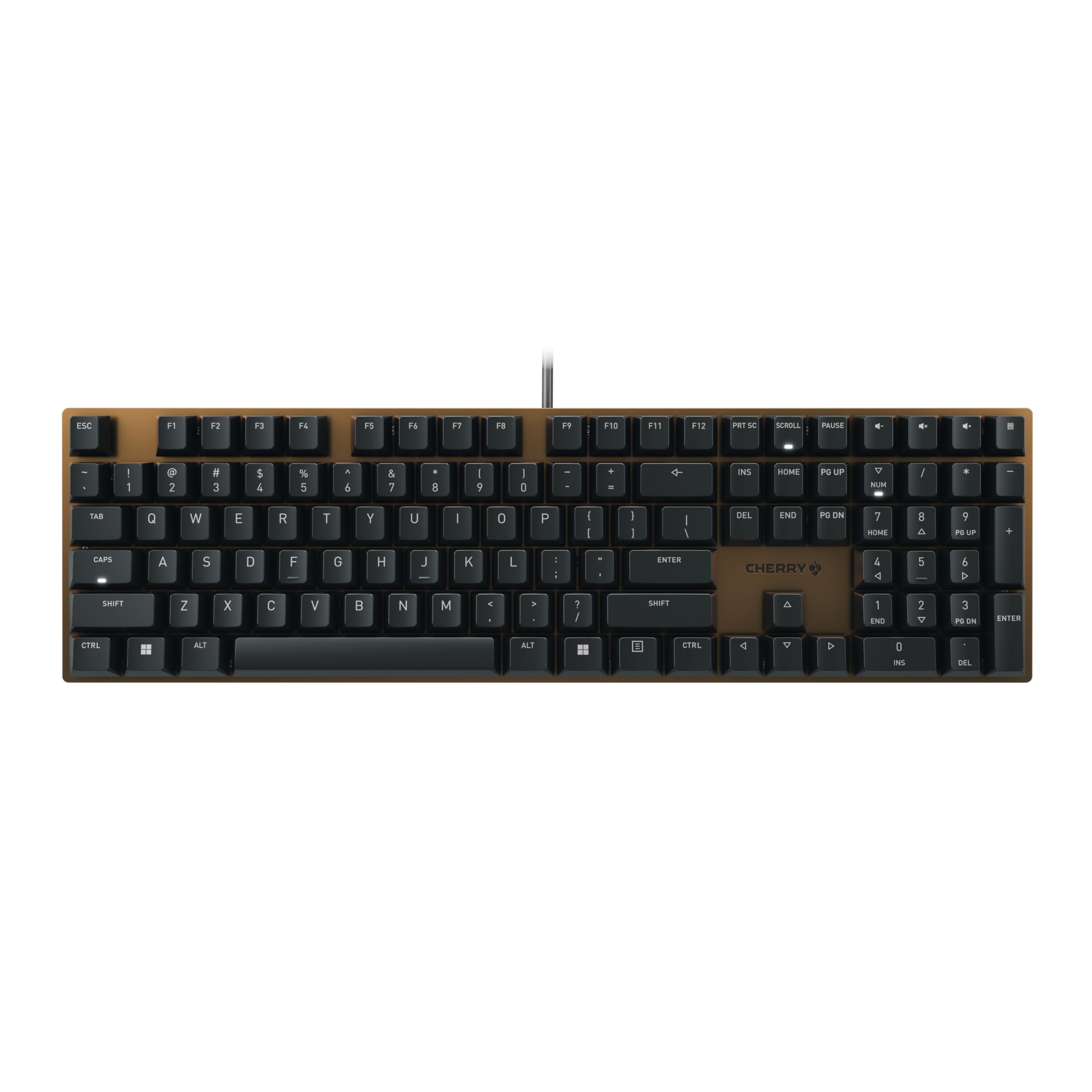
Cherry’s own MX2A Silent Red switches make this keyboard one of the quietest mechanical options for shared office spaces. The linear switch design has no tactile bump and no click, reducing noise to a soft bottom-out thud. The anodized aluminum top plate adds rigidity and a premium weight without making the keyboard excessively heavy on a desk.
The full-size layout includes 108 keys with dedicated calculator, volume, and media keys, plus white status LEDs for Caps Lock, Num Lock, and Scroll Lock. Laser-etched keycaps retain their legends even after years of heavy use, and the non-slip fold-out feet provide two stable typing angles. The wired USB-A connection ensures zero latency, but the cable is non-detachable, which limits custom cable routing.
Users consistently praise the buttery smoothness of the MX2A switches and the solid metal base that eliminates flex. The keyboard works best in a Windows environment and lacks Bluetooth, so it’s best suited for a single desktop setup where low noise and durability are priorities.
Why it’s great
- MX2A Silent Red switches are near-silent
- Solid aluminum top plate prevents flex
- Laser-etched keycaps resist wear
Good to know
- Non-detachable USB cable limits customization
- Rubber feet are small and prone to sliding
3. AULA F99 Pro Wireless Mechanical Keyboard Silent Version

The AULA F99 Pro uses a gasket mount structure with five layers of silicone damping inside the case, which nearly eliminates the hollow cavity noise common in budget mechanical keyboards. The pre-lubed linear switches are factory-lubricated for a smooth, quiet keystroke that reviewers describe as the sound of walking on snow. The 8000 mAh battery is the largest capacity in this guide, offering weeks of use even with the RGB lighting active.
This 96% layout keyboard keeps the number pad and arrow keys while trimming wasted space around the edges. A multifunction knob on the top right lets you adjust RGB brightness or volume depending on the mode selected. The hot-swappable PCB accepts both 3-pin and 5-pin switches, so you can swap in your preferred switch type without soldering. Side-printed PBT keycaps resist shine and show legends from an angle, though they are harder to read in dim lighting.
Tri-mode connectivity (wired, 2.4GHz dongle, Bluetooth 5.0) covers every use case, and the multi-device pairing works with PCs, tablets, and phones. The silent nature of this keyboard makes it ideal for open-plan offices, late-night writers, or anyone who needs a mechanical feel without disturbing coworkers.
Why it’s great
- Gasket structure produces near-silent typing
- 8000 mAh battery lasts multiple weeks
- Hot-swappable PCB for easy switch customization
Good to know
- Side-printed legends are hard to see in low light
- RGB dims automatically after 1 minute idle on wireless
4. Logitech Signature Slim K950 Wireless Keyboard

The Logitech Signature Slim K950 is a membrane keyboard designed for users who prefer the quiet, low-profile feel of a laptop keyboard. The scissor-switch mechanism provides a crisp, stable keystroke with minimal travel, making it a strong option for fast typists who don’t want the deeper travel of mechanical switches. The full-size layout includes a number pad and dedicated media keys, all packed into a slim frame that feels solid and weighted despite its thin profile.
Bluetooth and Logi Bolt wireless connectivity let you pair with up to three devices, with one-tap switching between a PC, Mac, tablet, or phone. The Logi Options+ app allows customization of the Fn row and other shortcuts, though the software is only available on Windows and macOS. The keyboard uses two AAA batteries rather than a rechargeable pack, which means battery life stretches for months without needing to plug in.
Users note that the K950 is quiet but not silent—the keys produce a soft tapping sound that isn’t disruptive in an office environment. The lack of backlighting is the biggest omission at this price point, making the keyboard less suitable for typing in low-light conditions. For someone juggling multiple devices and wanting a laptop-like typing experience, the K950 is a reliable daily driver.
Why it’s great
- Easy one-tap switching across three devices
- Quiet scissor-switch keys feel laptop-like
- AAA batteries last months between changes
Good to know
- No backlighting for low-light use
- Volume keys can interfere with backspace reach
5. Logitech MX Mechanical Wireless Illuminated Performance Keyboard

The Logitech MX Mechanical brings low-profile mechanical switches to the premium productivity segment, with clicky switches that offer a satisfying tactile bump and audible click without the harsh sound of full-height Blue switches. The low-profile design reduces key travel to 1.3mm, making transitions from a laptop keyboard feel natural while retaining the mechanical feedback that typists prefer. The smart backlight illuminates keys when your hands approach and adjusts brightness based on ambient light, saving battery during the day.
Connectivity covers Bluetooth Low Energy and Logi Bolt for up to three devices, with seamless switching across Windows, macOS, Linux, Chrome OS, iOS, and Android. The USB-C quick charge provides up to 15 days of use with backlighting on, or up to 10 months with it turned off. The metal top plate and recycled plastic construction give the keyboard a premium feel, though the keycaps collect fingerprints over time and are not replaceable due to the non-standard low-profile stems.
Users report excellent battery life, charging only four to six times per year with backlighting off. The clicky switches provide clear auditory feedback without being excessively loud, making this keyboard suitable for both home and office use. The MX Mechanical is a strong choice for professionals who want a wireless mechanical keyboard with premium materials and multi-device support.
Why it’s great
- Low-profile clicky switches with satisfying feedback
- Smart backlighting conserves battery life
- Pairs with up to 3 devices across any OS
Good to know
- Keycaps are non-replaceable due to low-profile stems
- Keycaps attract fingerprints easily
6. KINESIS Freestyle2 Ergonomic Keyboard with VIP3 Lifters

The KINESIS Freestyle2 is a split ergonomic keyboard that lets you rotate and separate the two key modules up to 9 inches apart, allowing you to type with your shoulders back and wrists straight. The VIP3 tenting accessory pre-installed on this model provides three tilt angles (5, 10, and 15 degrees) to reduce forearm pronation, a primary cause of typing-related wrist pain. The cushioned palm supports keep your wrists in a neutral position without pressuring the carpal tunnel.
The custom membrane key switches require a low activation force and provide a subtle tactile bump, reducing finger fatigue over long typing sessions. The standard Windows layout includes dedicated Cut, Copy, Paste, and Undo hotkeys that speed up document editing without reaching for a mouse. No software drivers are needed, so it works plug-and-play with any operating system. The embedded numeric keypad is accessed via a Fn layer, which may frustrate users who rely on a dedicated numpad for data entry.
Reviewers report instant relief from wrist and shoulder pain after switching to the Freestyle2, though the initial adjustment period typically takes a few days to a week. The Delete and Backspace keys are the same size and placed close together, causing occasional errors during fast typing. For users experiencing wrist or forearm discomfort, this keyboard is a targeted and affordable ergonomic solution.
Why it’s great
- Adjustable split width up to 9 inches
- VIP3 lifters offer 5, 10, and 15 degrees of tenting
- Low-force keys reduce finger fatigue
Good to know
- Delete and Backspace are same size—easy to mis-hit
- No dedicated number pad; uses Fn layer
7. Kinesis Advantage2 Ergonomic Keyboard

The Kinesis Advantage2 is the most ambitious ergonomic keyboard on this list, with contoured keywells that place each key in a concave depression shaped to fit the natural curl of your fingers. Cherry MX Brown switches provide tactile feedback with a low activation force, and the thumb clusters give your thumbs control over commonly used keys like Backspace, Delete, Enter, Space, and modifier keys—reducing the pinky strain of standard flat keyboards. The 20-degree fixed tenting angle and integrated palm supports keep your entire forearm in a neutral posture.
The onboard Smart Set engine allows full programmability without any software: you can remap keys, record macros on the fly, and switch between QWERTY, Dvorak, or Colemak layouts directly from the keyboard. The 4MB flash memory stores your custom layout, so it works across any computer you plug into. The wired USB connection guarantees zero latency, though the large footprint and fixed ergonomics mean the Advantage2 is not portable or adjustable for different body types.
Users describe a two-month adaptation period during which muscle memory re-learns the thumb cluster and columnar layout. After that, many report significant reductions in wrist, shoulder, and neck pain. The hollow plastic case feels less premium than the price suggests, and the lack of hot-swappable switches is a notable omission at this price point. For typists with chronic pain who are willing to invest in a dedicated learning curve, the Advantage2 is the most effective ergonomic solution available.
Why it’s great
- Contoured keywells match natural finger curvature
- Thumb clusters offload pinky strain
- Full onboard programmability with macro recording
Good to know
- Requires several weeks to relearn muscle memory
- Non-adjustable ergonomics and fixed tenting
FAQ
Are linear or tactile switches better for typing?
Should I get a wired or wireless keyboard for typing?
How important is keycap material for typing?
Final Thoughts: The Verdict
For most users, the best computer keyboard for typing winner is the Keychron K4 because it delivers a tactile mechanical typing feel, a compact layout with a full numpad, and outstanding battery life at a mid-range price. If you want near-silent operation in a shared office, grab the AULA F99 Pro with its gasket structure and massive battery. And for chronic wrist or forearm pain, nothing beats the Kinesis Advantage2 for long-term ergonomic correction.

Mo Maruf
I created WellFizz to bridge the gap between vague wellness advice and actionable solutions. My mission is simple: to decode the research and give you practical tools you can actually use.
Beyond the data, I am a passionate traveler. I believe that stepping away from the screen to explore new environments is essential for mental clarity and physical vitality.