Our readers keep the lights on and my smoothie glass nicely filled. As an Amazon Associate, I earn from qualifying purchases.
Your trading platform is only as fast as the hardware that runs it. Traders need systems built for relentless multi-monitor rendering, real-time data streaming, and zero-compromise stability under load.
I’m Mohammad Maruf — the founder and writer behind WellFizz. I’ve spent hundreds of hours analyzing processor architectures, memory bandwidth benchmarks, GPU multi-display outputs, and storage latency curves to isolate the specific specs that matter for active trading rigs.
This guide breaks down 13 rigorously vetted configurations to help you find the best computer for trading that matches your screen count, platform demands, and performance budget.
How To Choose The Best Computer For Trading
The wrong PC turns your trading desk into a source of anxiety. To avoid that, focus on four pillars: processor architecture that favors single-core burst performance, enough RAM to keep all your chart windows and data feeds resident, a graphics card with the correct number of physical video outputs for your monitor layout, and storage that never becomes a bottleneck when loading market data archives or platform logs.
Multi-Monitor Outputs and GPU Architecture
Trading doesn’t need a high-end gaming GPU, but it absolutely requires a card that can drive three, four, or even six displays at their native resolution without stuttering. Count the physical ports — HDMI, DisplayPort, USB-C with DisplayPort Alt Mode — and confirm the card’s maximum supported display count. Integrated graphics on modern Intel and AMD processors can handle two or three monitors, but for four or more, a dedicated GPU is the safer bet. Also look for VRAM: 4GB is the floor for 1080p quad setups, while 8GB or more ensures headroom for higher resolutions and future platform updates.
RAM Capacity and Speed
Active trading with multiple charting windows, a Bloomberg terminal, scanning software, and a web browser with dozens of tabs can consume 16 GB of RAM before you blink. 32 GB is the realistic sweet spot for a dedicated trading rig, letting you keep everything resident without paging to the SSD. Speed matters too — DDR5 at 5600 MT/s or higher improves latency for data-heavy applications that constantly refresh visual elements.
Processor Single-Core Performance
Trading platforms are notoriously single-threaded under the hood. A processor with a high turbo clock speed — ideally 5.0 GHz or more — and generous L3 cache (24 MB or higher) will render charts and execute scripts noticeably faster than a chip with many cores but lower clock speeds. The Intel Core i5-12600K and AMD Ryzen 7 7800X3D are examples of processors that excel in this exact workload profile.
Storage Type and Reliability
A fast NVMe SSD is non-negotiable. The difference between a SATA SSD and a PCIe Gen4 NVMe drive is seconds of load time for your trading platform and nearly instant recall of historical tick data. A secondary large-capacity HDD or SSD is useful for archiving, but the OS and all trading software must live on the NVMe drive. Look for drives with DRAM cache for sustained write performance during data logging.
Network Connectivity and Redundancy
Wired Ethernet is still the gold standard for trading — it offers lower latency and zero packet loss compared to Wi-Fi. Systems with dual Ethernet ports let you connect to two separate networks or ISPs for failover. If you must use Wi-Fi, ensure it supports Wi-Fi 6 or 6E for the best possible wireless latency.
Quick Comparison
On smaller screens, swipe sideways to see the full table.
| Model | Category | Best For | Key Spec | Amazon |
|---|---|---|---|---|
| TechMagnet HP Trading Desktop | All-in-One Kit | Ready out-of-box quad monitor setup | 4×27″ 1080p monitors + 512GB SSD + 4TB HDD | Amazon |
| HP Pro Tower 290 G9 | Business Tower | Dual-monitor office trading | Intel i5-12500, 32GB DDR4 RAM, 1TB SSD | Amazon |
| Dell Tower Desktop ECT1250 | Ultra 7 Tower | Four-monitor AI-enhanced productivity | Intel Core Ultra 7, 32GB DDR5, 1TB M.2 SSD | Amazon |
| KOOFORWAY Triple Screen Laptop | Portable Workstation | On-the-go multi-screen trading | 16″ + dual 10.5″ screens, Core i7-12700H | Amazon |
| Dell Precision T5500 Workstation | Refurb Workstation | Budget quad-monitor trading | Dual Xeon X5570, 32GB RAM, 4×24″ monitors | Amazon |
| Dell Pro Tower Plus (Ultra 5) | Pro Tower | 64GB RAM for data-heavy trading | Intel Core Ultra 5, 64GB DDR5, 2TB SSD | Amazon |
| Galaxy V3 Gaming PC | Gaming Rig | High-FPS chart rendering and scanning | Ryzen 7 9800X3D, 32GB DDR5, RX 9070XT 16GB | Amazon |
| MSI Aegis R2 AI | AI Gaming PC | VR-ready multi-monitor trading | Intel Core Ultra 9, RTX 5070 Ti, 32GB DDR5 | Amazon |
| Dell Tower Plus EBT2250 | Ultra 9 Tower | 4K multi-monitor with GPU acceleration | Intel Core Ultra 9, RTX 5070, 32GB DDR5 | Amazon |
| Skytech Gaming King 95 | High-End Gaming | Ultra 4K trading with liquid cooling | Ryzen 7 9850X3D, RTX 5080, 32GB DDR5 6000 | Amazon |
| Alienware Aurora ACT1250 | Premium Gaming | Marathon trading sessions | Intel Core Ultra 7, RTX 5070, 32GB DDR5 | Amazon |
| Thermaltake LCGS View 9580S | Top-Tier Workstation | Ultra-demanding multi-platform trading | Ryzen 9 9950X3D, RTX 5080, 32GB DDR5 6000 | Amazon |
| HP OMEN 45L | Ultimate Powerhouse | Highest-end multi-monitor with AI features | Intel Core Ultra 9 285K, RTX 5090, 64GB DDR5 | Amazon |
In‑Depth Reviews
1. TechMagnet HP Trading Desktop

This TechMagnet bundle is a true plug-and-play solution for active traders who want four monitors out of the box. The Core i5-9th Gen processor, while a few generations old, still offers the single-core burst speed that trading platforms like Thinkorswim and TradeStation rely on. The 16 GB of RAM is barely adequate for a heavy multi-app workflow, but the combination of a 512 GB NVMe SSD for the OS and a 4 TB HDD for archives provides practical storage balance. The inclusion of two wired network cards is a smart redundancy feature that serious traders will appreciate — it allows for dual ISP connections, which is a rarity in pre-built bundles at this level.
The four included 27-inch 1080p monitors give you a massive canvas for charts, scanners, order entry windows, and news feeds. The integrated Intel UHD Graphics 630 can drive all four displays at their native resolution, though you should expect occasional micro-stutter if you run GPU-accelerated charting on all screens simultaneously. The wired keyboard and mouse keep input latency under 100 ms, which matters for quick order entries. The system ships with Windows 11 Pro and minimal bloatware, a welcome change from consumer-grade pre-builts.
The caveat is that this is a renewed (refurbished) system, and quality can vary. Some buyers reported receiving units with older components than advertised, and the seller’s support response time is inconsistent. If you are comfortable with the refurbished market and want a turnkey four-monitor setup without sourcing individual parts, this bundle saves significant assembly time. For traders who prefer new hardware and the ability to customize, the individual component route may still be preferable.
Why it’s great
- Four 27″ monitors included with stand — truly ready out of the box
- Dual network cards for ISP failover, a rare feature in this price tier
- Balanced storage combo: fast 512GB SSD + spacious 4TB HDD
Good to know
- Refurbished unit; quality and component age can vary significantly
- Integrated UHD 630 GPU may struggle with GPU-accelerated charts on all four screens
- 16GB RAM is the minimum for serious multi-application trading
2. HP Pro Tower 290 G9
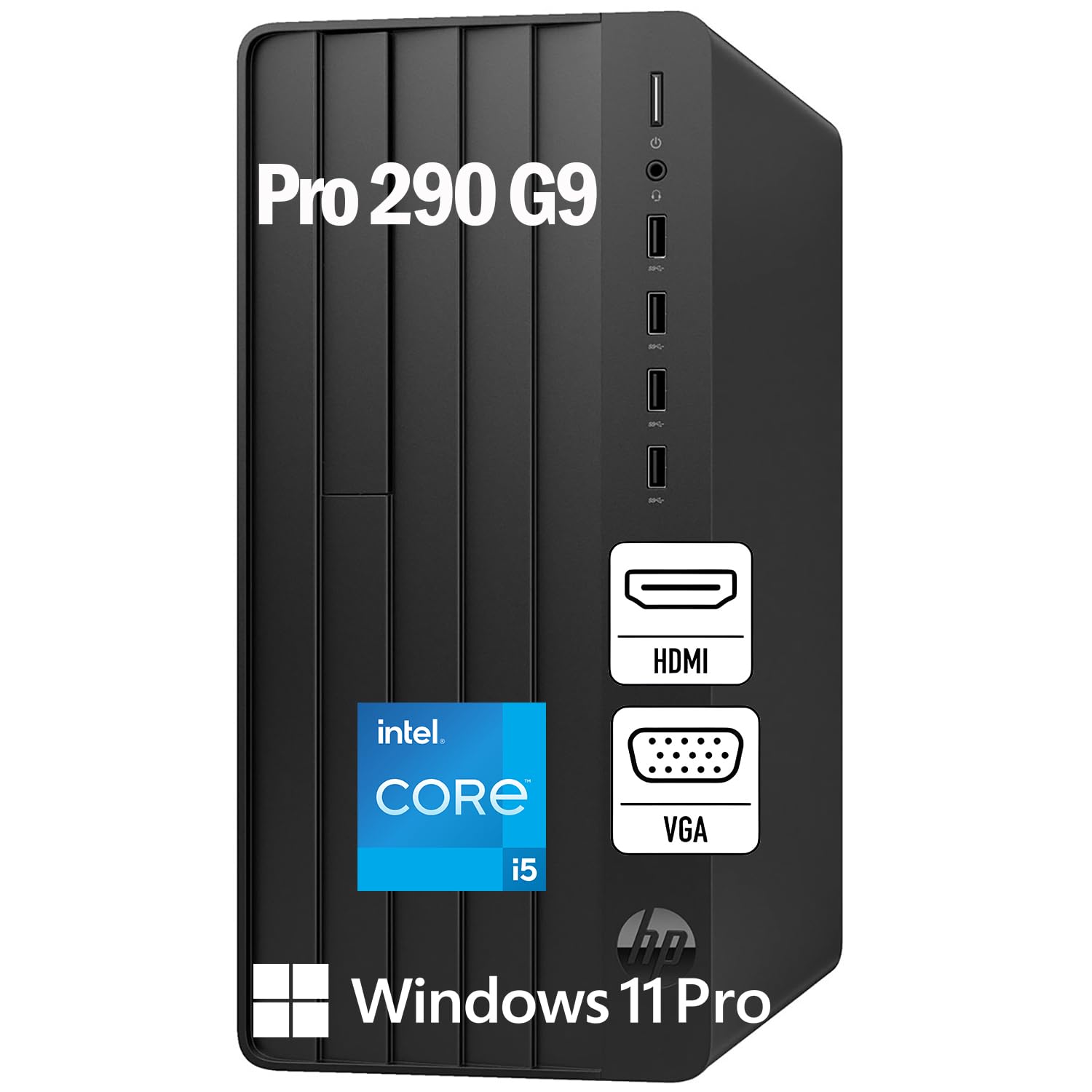
The HP Pro Tower 290 G9 hits a sweet spot for traders who need a reliable, expandable desktop without the premium of a gaming label. The 12th-gen Intel Core i5-12500 is a six-core processor with a turbo clock of 4.6 GHz — enough single-core horsepower to run most trading platforms snappily. The 32 GB of DDR4 RAM is a generous allocation that lets you keep multiple chart workspaces, a web browser with dozens of tabs, and a scanner all running without memory pressure. The 1 TB NVMe SSD provides fast boot times and quick loading of historical data, though it would be nice to see a second storage slot for archiving.
Where this tower shines for traders is its expandable design. The standard HP form factor gives you PCIe slots for adding a dedicated GPU if you want to go beyond dual monitors, and there is room for an extra internal drive. The integrated Intel UHD Graphics 770 can comfortably drive two 1080p monitors for basic charting, but you will want to add a discrete card if you plan to run three or four displays. The front-panel USB 3.0 ports are convenient for plugging in a data feed dongle or a backup drive, and the inclusion of both HDMI and VGA on the rear gives you flexible monitor connectivity options without adapters.
Customer feedback consistently highlights the quiet operation and trusted HP build quality. The main trade-off is that the integrated graphics are not suitable for gaming, but for a pure trading machine handling charting software and web-based platforms, this is rarely an issue. If you prefer to start with a clean, new business desktop and add a multi-monitor GPU later, this is one of the most cost-effective foundations available. The 180W power supply is adequate for the integrated setup but will need upgrading if you install a high-end graphics card.
Why it’s great
- Reliable HP business-class hardware with proven long-term durability
- 32GB DDR4 RAM handles heavy multi-app trading workloads easily
- Expandable tower design with PCIe slots for future GPU upgrade
Good to know
- Integrated graphics limited to dual monitors; a discrete GPU is needed for three or more
- 180W PSU is undersized for any significant GPU upgrade
- No secondary storage drive for large data archives out of the box
3. Dell Tower Desktop ECT1250

The Dell ECT1250 represents a forward-looking choice for traders who want the latest Intel Core Ultra 7 processor with its built-in AI acceleration. The 32 GB of DDR5 RAM operates at higher speeds than the DDR4 found in older systems, which translates to faster rendering of complex chart overlays and real-time data streams. The 1 TB M.2 SSD provides ample room for your OS, trading platform, and critical data files, with read speeds that drastically cut down platform load times. The tool-less chassis design makes it simple to upgrade RAM or storage as your needs evolve, a practical advantage for a machine that will serve as your trading command center for years.
For multi-monitor setups, this Dell supports up to four FHD displays through its DisplayPort and HDMI 2.1 outputs in a daisy-chain configuration, or two 4K displays simultaneously. This flexibility is excellent for traders who prefer a mix of high-resolution charts and lower-resolution auxiliary windows. The integrated Intel UHD Graphics handles these outputs without the need for a dedicated GPU, keeping power consumption and noise low. The 1-year onsite service from Dell is a significant bonus — if the system fails, a technician comes to you, which minimizes downtime for your trading operation.
The primary limitation is the single stick of 32 GB RAM, which runs in single-channel mode, slightly reducing memory bandwidth. Adding a second matching stick would unlock dual-channel performance and further improve system responsiveness. Some buyers have noted the 180W power supply limits future GPU upgrades, and the single M.2 slot means storage expansion requires an external drive. For traders focused on CPU-intensive tasks like scanning and backtesting with integrated graphics, this is a polished, modern foundation that can grow with you through a few strategic upgrades.
Why it’s great
- Latest Intel Core Ultra 7 with NPU for future AI-accelerated trading apps
- Daisy-chain support for four FHD or two 4K monitors via built-in outputs
- 1-year Dell onsite service provides peace of mind for critical trading uptime
Good to know
- Single 32GB RAM stick runs in single-channel mode; dual-channel upgrade recommended
- 180W PSU is too weak for adding a powerful dedicated GPU later
- Single M.2 slot limits internal storage expansion without using a SATA drive
4. KOOFORWAY Triple Screen Laptop

The KOOFORWAY Triple Screen Laptop is a unique solution for traders who need multi-monitor capability on the move. The 16-inch main display is flanked by two 10.5-inch foldable screens, giving you a combined canvas that rivals a desktop multi-monitor setup in a package that fits into a 17-inch laptop bag. The Core i7-12700H processor offers 14 cores (6 performance + 8 efficiency) with a 4.7 GHz turbo boost, providing the single-core speed needed for chart rendering and enough multi-core muscle for running virtual machines for data feeds. The 32 GB of DDR4 RAM is ample for keeping multiple trading platforms, scanners, and browser tabs resident simultaneously.
The built-in 2 TB SATA SSD provides generous storage for platform installations and data archives, though SATA speeds are slower than NVMe. For trading, this means platform load times and historical data recall will be slightly slower than an NVMe-equipped desktop, but the portability trade-off is clear. The laptop includes both facial recognition and fingerprint login for quick, secure access — useful for traders who step away from their desk frequently. The port selection is solid with HDMI, USB-A 3.0, and full-function USB-C, allowing you to connect additional external monitors or a docking station when you are at a fixed desk.
The hinge mechanism on the dual side screens feels sturdy, but the additional screen weight pushes the total to 5.7 lbs, making it heavier than a standard ultrabook. Battery life is predictably shorter when all three screens are active, so this is best used plugged in during trading hours. Customer reports indicate the hardware is generally reliable, though some units have had minor controller issues and keyboard defects. For the trader who travels frequently or works from multiple locations, the ability to deploy a triple-monitor setup from a single laptop is a significant productivity advantage over carrying separate portable monitors.
Why it’s great
- Three built-in screens from a single device — no external monitor setup required
- 32GB RAM and Core i7-12700H handle demanding multi-platform trading
- Biometric login (face + fingerprint) for secure, quick access
Good to know
- SATA SSD is slower than NVMe; noticeable during platform boot and data loads
- Heavy at 5.7 lbs; battery life suffers with all three screens on
- Some reports of quality control issues with keyboard and hinges
5. Dell Precision T5500 Workstation (Renewed)

The Dell Precision T5500 Workstation is an older workstation-class machine that has been refurbished and bundled with four 24-inch monitors specifically for trading. The dual Intel Xeon X5570 quad-core processors give you a total of 8 cores and 16 threads, which is more than enough for running multiple instances of trading software and data feeds. The 32 GB of RAM is a generous allocation for this generation, though it is DDR3, which has higher latency than modern DDR4 or DDR5. The inclusion of a new 500 GB NVMe SSD and a 4 TB HDD provides a practical split between a fast boot drive and a large archive drive.
The real appeal here is the four 24-inch monitors with a quad stand, giving you a full trading wall without having to shop for displays separately. The dual NVIDIA Quadro NVS 410 graphics cards provide four DisplayPort outputs, each with 512 MB of VRAM. For 1080p charting, this is sufficient, but do not expect smooth performance with GPU-accelerated charting across all four screens simultaneously due to the limited VRAM. The system ships with Windows 10 Pro, which is stable but no longer receives major feature updates. The 1-year warranty on the computer and longer warranties on the SSDs and HDDs provide some safety net for a refurbished purchase.
The major risk with this option is the refurbished nature of the hardware — reports of DOA units, missing cables, and inconsistent packaging are common. The Xeon processors, while capable, are power-hungry and generate more heat than modern chips. This is a budget-focused solution that prioritizes screen count over component modernity. If you are willing to troubleshoot occasional hardware quirks and want four monitors for the lowest possible upfront investment, this bundle delivers that specific value. If reliability and modern efficiency matter more, a newer system with a single powerful processor is the better long-term choice.
Why it’s great
- Four 24-inch monitors with stand included for a complete trading wall
- Dual Xeon processors with 16 threads for multi-instance trading platforms
- Fast 500GB NVMe SSD + large 4TB HDD storage combo
Good to know
- Refurbished workstation with potential for DOA units and inconsistent quality
- Older DDR3 RAM and Xeon architecture is power-hungry and runs warm
- Quadro NVS 410 with only 512MB VRAM per card limits GPU-accelerated charting
6. Dell Pro Tower Plus (Ultra 5, 64GB)
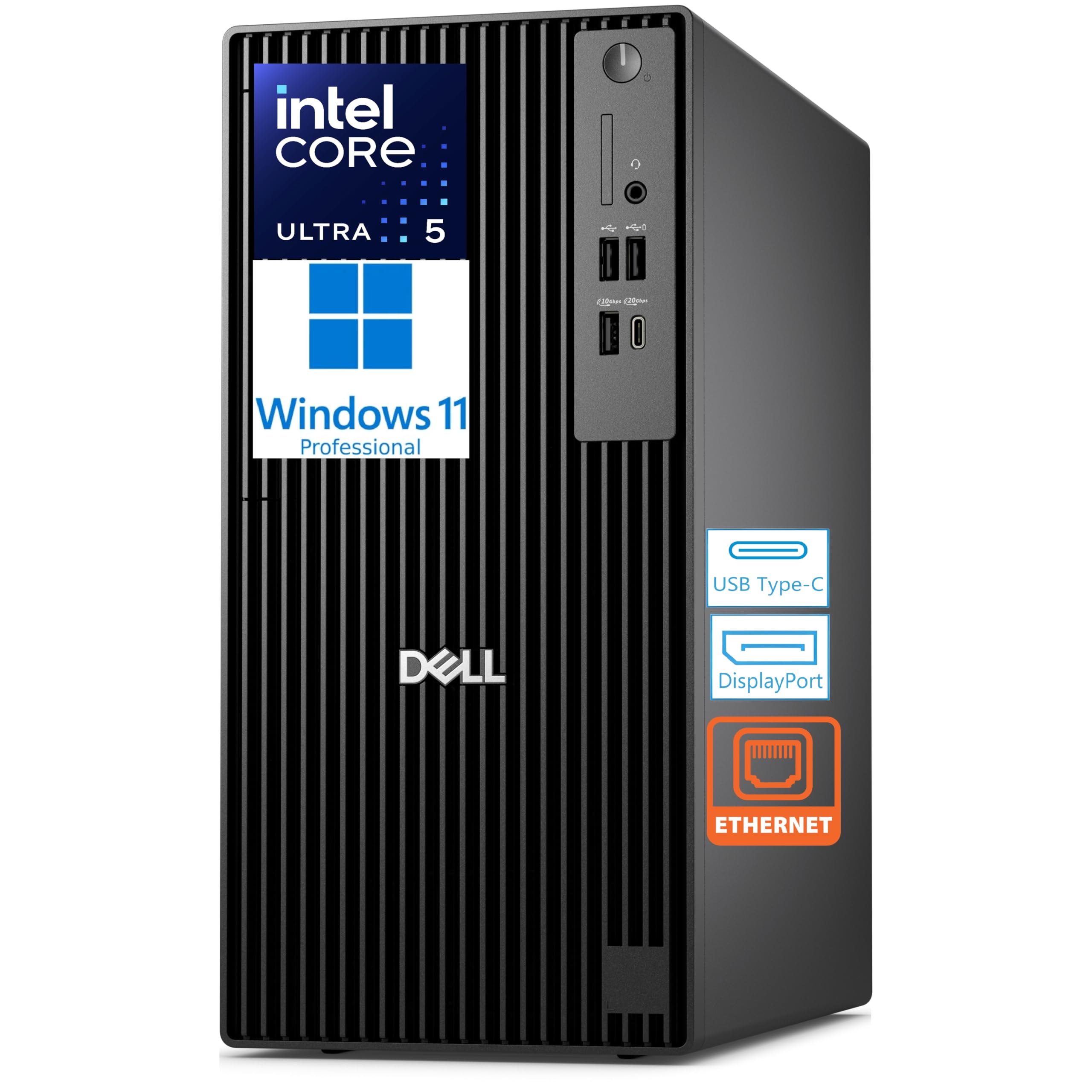
For traders who run memory-intensive applications — such as multiple instances of MetaTrader, a Bloomberg terminal, and several browser profiles simultaneously — the Dell Pro Tower Plus with 64 GB of DDR5 RAM is a standout option. The Intel Core Ultra 5 235 processor is a 14-core chip with a 5.0 GHz turbo boost, providing strong single-core performance for platform responsiveness. The 2 TB TLC M.2 PCIe 4.0 SSD offers enormous storage capacity with read speeds that keep platform and data loads near-instantaneous. The built-in NPU (Neural Processing Unit) provides 13 TOPS of AI acceleration, which future trading software may leverage for enhanced chart pattern recognition or risk analysis.
Connectivity is comprehensive for a wired trading desk. The rear I/O includes three DisplayPorts and one USB-C with display output, which means you can drive up to four 4K monitors directly from the integrated graphics without needing a discrete GPU. This is a rare and valuable feature for traders who want high-resolution charts across multiple screens. The inclusion of Gigabit Ethernet is standard, but note that this configuration does not include Wi-Fi or Bluetooth, so it is strictly for a wired networking environment. The tool-less chassis design and available PCIe slots allow for future expansion, such as adding a dedicated GPU or a 2.5 GbE network card.
The trade-off is the processor tier: the Core Ultra 5 235 sits below the Ultra 7 and Ultra 9 in Intel’s lineup, so if your trading platforms involve heavy local backtesting or complex algorithmic calculations, a higher-tier CPU may be worth the investment. Some buyers found the BIOS interface less intuitive than expected, and the system lacks front-panel USB-C. For traders who prioritize massive RAM capacity and native quad 4K output from a stable, wired-only machine, this Dell configuration delivers a very focused set of specifications.
Why it’s great
- 64GB DDR5 RAM handles the most memory-hungry trading workloads without breaking a sweat
- Native support for up to four 4K monitors via three DP + one USB-C output
- Large 2TB PCIe 4.0 SSD for massive data archive and fast platform loads
Good to know
- No Wi-Fi or Bluetooth included — strictly a wired networking machine
- Core Ultra 5 may feel underspecced compared to the 64GB RAM allocation
- BIOS navigation can be cumbersome; front-panel lacks USB-C port
7. Galaxy V3 Gaming PC (Andromeda Insights)
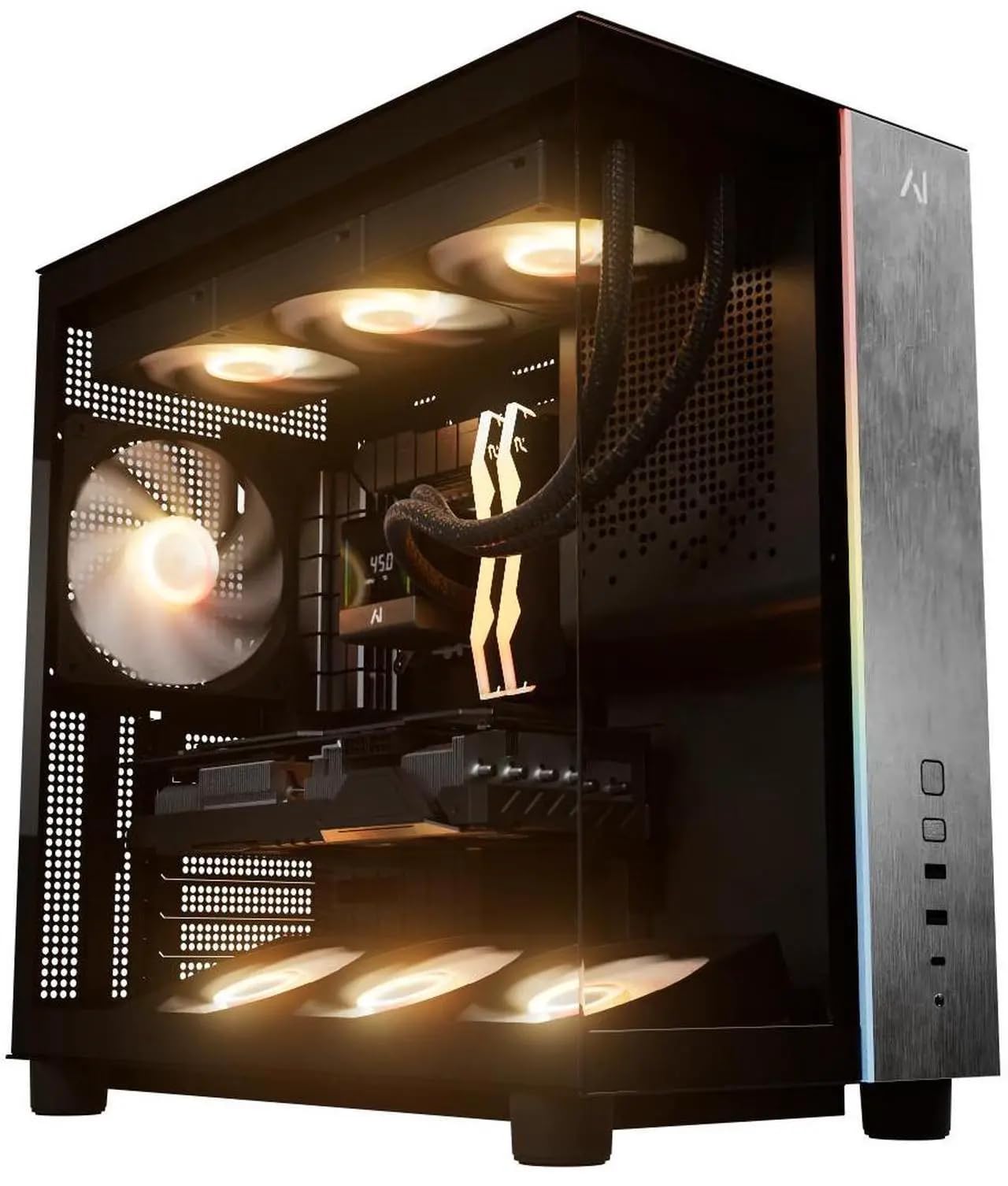
The Galaxy V3 from Andromeda Insights is a gaming PC that overdelivers for trading workloads, particularly for traders who use GPU-accelerated charting and scanning tools. The AMD Ryzen 7 9800X3D is one of the best processors for single-core performance available, with a massive 96 MB of L3 cache that dramatically reduces data access latency — a direct benefit for platforms that constantly load and render chart data. The 32 GB of DDR5 RAM running at 6000 MT/s is well-matched to the CPU’s memory controller, providing the bandwidth needed for smooth multi-tab trading across multiple monitors.
The Radeon RX 9070 XT with 16 GB of GDDR6 VRAM is serious overkill for standard trading, but it means your charts will render flawlessly across multiple 4K monitors without any frame drops or stuttering. The 2 TB Gen4 NVMe SSD offers read speeds over 7000 MB/s, so your trading platform will be fully loaded before you finish typing your password. The 850W Gold-rated power supply provides headroom for any future upgrades, and the B850 motherboard includes Wi-Fi 6 and Bluetooth for flexible connectivity. The build quality is notable for a pre-built, with clean cable management and effective ARGB fan cooling that runs quietly even under sustained load.
The main consideration is that this is fundamentally a gaming machine, with RGB lighting and a gamer-oriented aesthetic that may feel out of place in a professional trading office. The integrated AIO liquid cooler on the CPU is excellent for noise levels but adds a potential failure point over a simple air cooler. Customer feedback indicates excellent build quality and support, but one batch reported an unreliable AIO control software. If you want a system that can double as a gaming rig after market hours and deliver blistering chart performance during the trading day, this is a flexible and powerful choice.
Why it’s great
- Ryzen 7 9800X3D with 96MB L3 cache delivers chart-rendering speed unmatched in this category
- RX 9070 XT 16GB GPU ensures flawless multi-4K monitor performance
- 2TB Gen4 NVMe SSD and 850W Gold PSU provide modern, upgrade-ready foundation
Good to know
- Gaming aesthetics (RGB, aggressive case design) may not suit all trading desks
- AIO cooler adds complexity and a potential failure point vs. a high-end air cooler
- Higher upfront cost than a purpose-built trading PC with similar CPU/RAM
8. MSI Aegis R2 AI
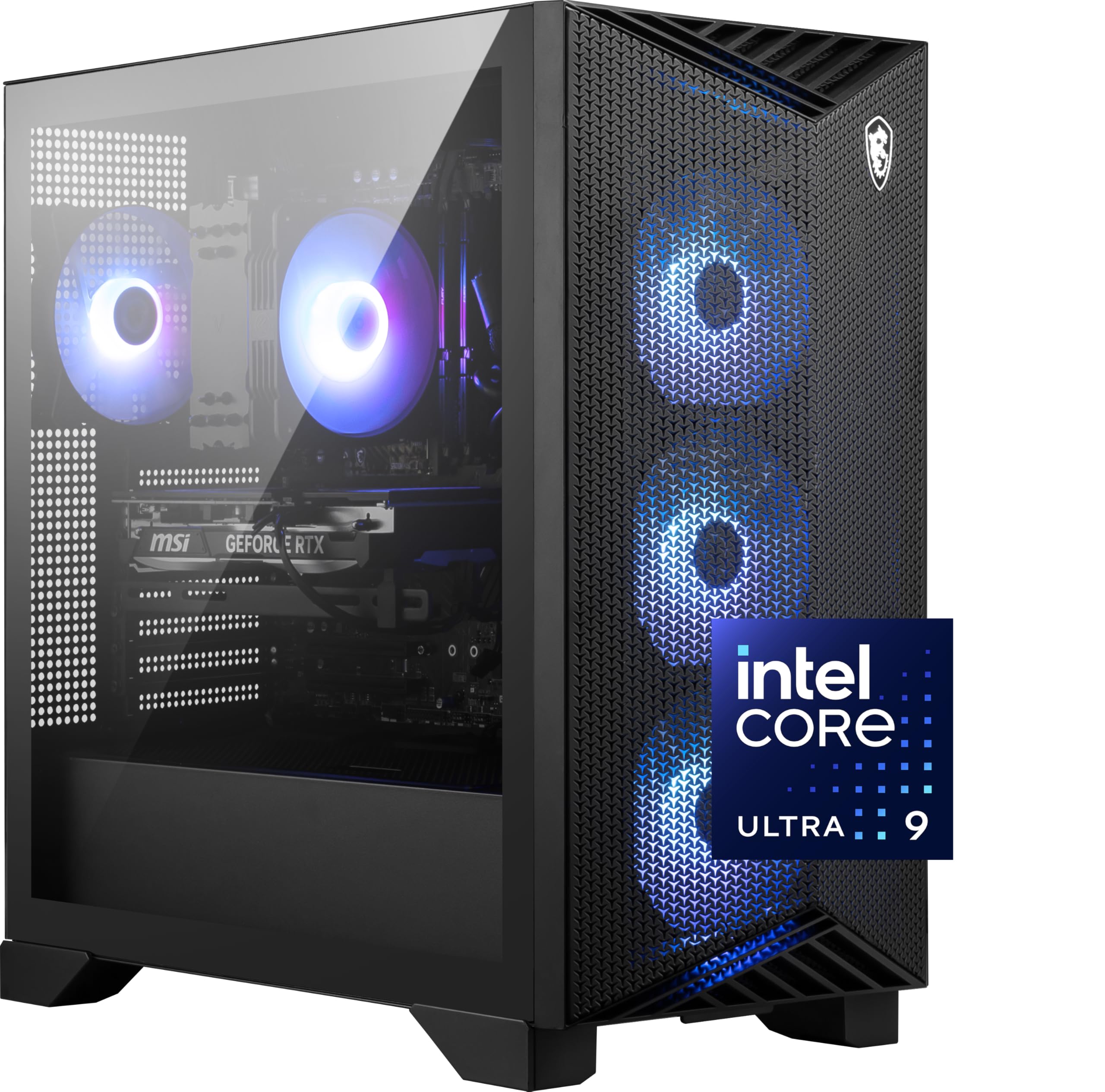
The MSI Aegis R2 AI brings Intel’s top-tier Core Ultra 9 285 processor together with NVIDIA’s RTX 5070 Ti, creating a system that can handle the most demanding trading software with ease. The Core Ultra 9 285 features 24 cores (8 performance + 16 efficient) with a 5.7 GHz turbo boost, making it one of the fastest processors available for single-threaded platform tasks. The 32 GB of DDR5 RAM provides the bandwidth needed for real-time data streaming, while the 2 TB NVMe SSD offers generous storage for platform installations and data logs. The RTX 5070 Ti, with its dedicated AI accelerators and ample VRAM, ensures that GPU-accelerated charting features run seamlessly across multiple high-resolution displays.
The Aegis R2’s thermal design is a highlight for traders who leave their system running all day. Four system fans (three front intake, one rear exhaust) combined with the RGB CPU air cooler keep temperatures low without excessive noise. This matters in a trading environment where fan hum can become distracting over long sessions. The case design is more understated than many gaming rigs, with customizable RGB lighting through MSI Center that can be turned off for a professional look. The inclusion of USB-C on the front panel makes it easy to connect external drives for data backups.
The main downside is the price — this is a premium configuration, and you are paying for gaming-grade graphics that exceed trading requirements. Some users have reported reliability issues, with units failing within weeks of purchase. The support experience for these failures has been mixed. For traders who want the absolute fastest CPU for backtesting and chart rendering, combined with the quiet cooling and modern connectivity of a well-built pre-built, the Aegis R2 delivers. If you are risk-averse, the consistent build quality of traditional business-class desktops may be a safer alternative at a lower cost.
Why it’s great
- Core Ultra 9 285 with 5.7 GHz turbo is one of the fastest CPUs for trading platforms
- Excellent cooling solution keeps the system quiet and cool during all-day trading
- RTX 5070 Ti ensures flawless multi-monitor output at high resolutions
Good to know
- Premium price for gaming-grade GPU power that exceeds trading requirements
- Reliability concerns reported by some users; support experience is inconsistent
- Air cooler is good but a liquid AIO would be expected at this price point
9. Dell Tower Plus EBT2250
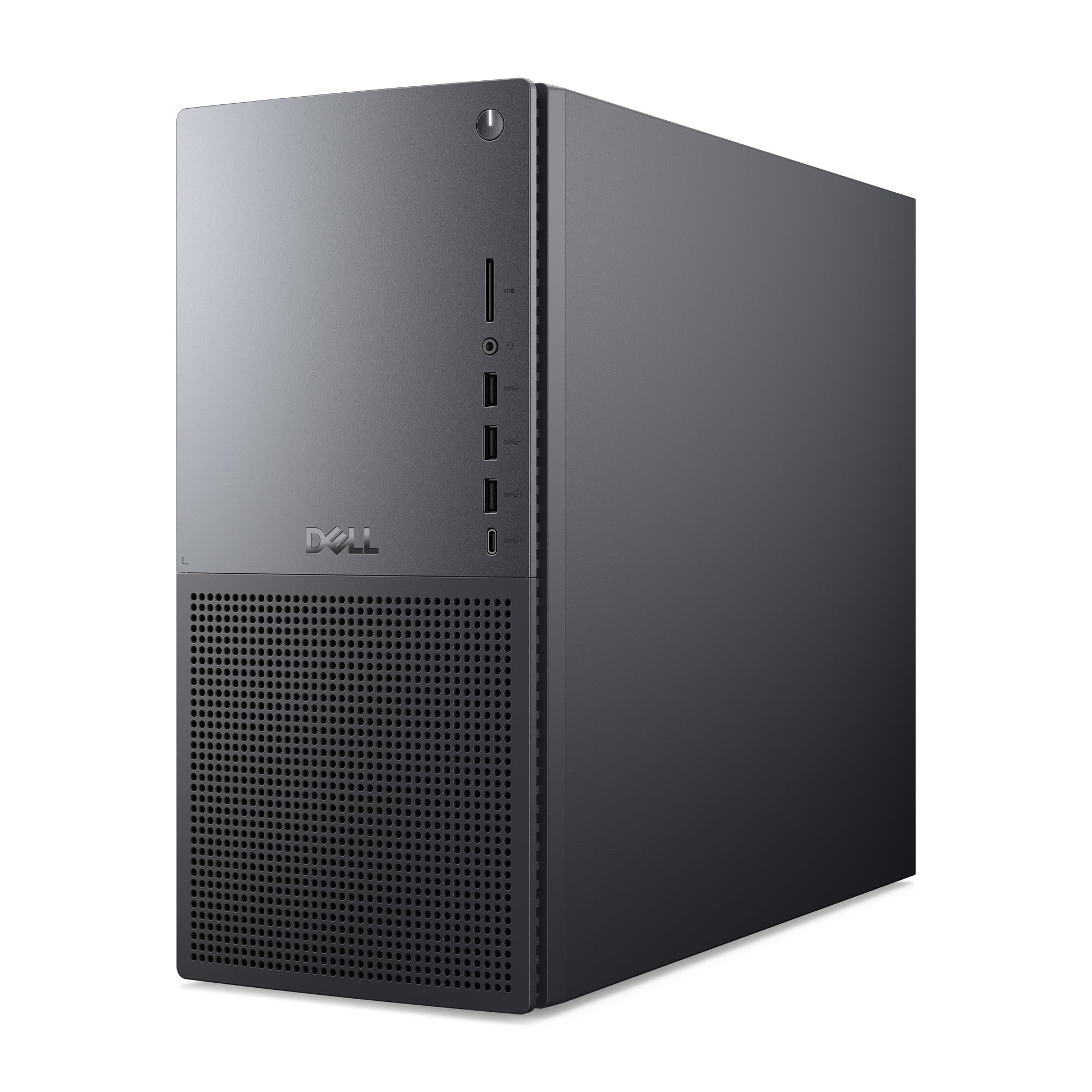
The Dell Tower Plus EBT2250 is a carefully balanced trading workstation that pairs Intel’s Core Ultra 9 285 processor with NVIDIA’s RTX 5070 GPU, providing a system that excels at driving multiple 4K monitors. The 32 GB of DDR5 RAM is well-suited for the real-time data demands of professional trading, and the 2 TB NVMe SSD ensures fast platform loading. The RTX 5070 with 12 GB of GDDR7 VRAM is a significant step up from integrated solutions — it can comfortably drive four 4K monitors with GPU-accelerated charting without any stutter, and the dedicated video encoding hardware speeds up any screen recording or streaming you might do.
The thermal design has been purpose-built to improve airflow and acoustics for the 65W CPU, and the system includes a memory card reader on the front panel — a small but useful convenience for traders who use SD cards for data transfer. The inclusion of Intel Wi-Fi 7 and Bluetooth provides the most modern wireless connectivity, though for critical trading, a wired Ethernet connection is still recommended. The 1-year Dell onsite service is a strong advantage — if the system develops a fault, Dell sends a technician to your location, minimizing the time your trading desk is offline.
The main concern reported by buyers is the storage configuration: the 2 TB is delivered as two separate 1 TB NVMe SSDs, which complicates management if you expect a single 2 TB drive. Some users also reported that the initial setup encountered driver issues with printers and that prices dropped significantly shortly after purchase. For traders who want a well-supported, Dell-serviced workstation with a powerful CPU and a dedicated GPU that can drive multiple 4K displays, this is a refined choice that offers peace of mind through its onsite service warranty.
Why it’s great
- Core Ultra 9 + RTX 5070 combo handles 4K multi-monitor trading without any graphics lag
- Dell onsite service provides critical support uptime for a trading machine
- Wi-Fi 7 and Bluetooth 5.4 for the fastest wireless connectivity available
Good to know
- 2TB storage is split into two separate 1TB drives, not a single drive
- Some buyers reported significant price drops shortly after purchase
- Driver issues reported with specific peripherals during initial setup
10. Skytech Gaming King 95
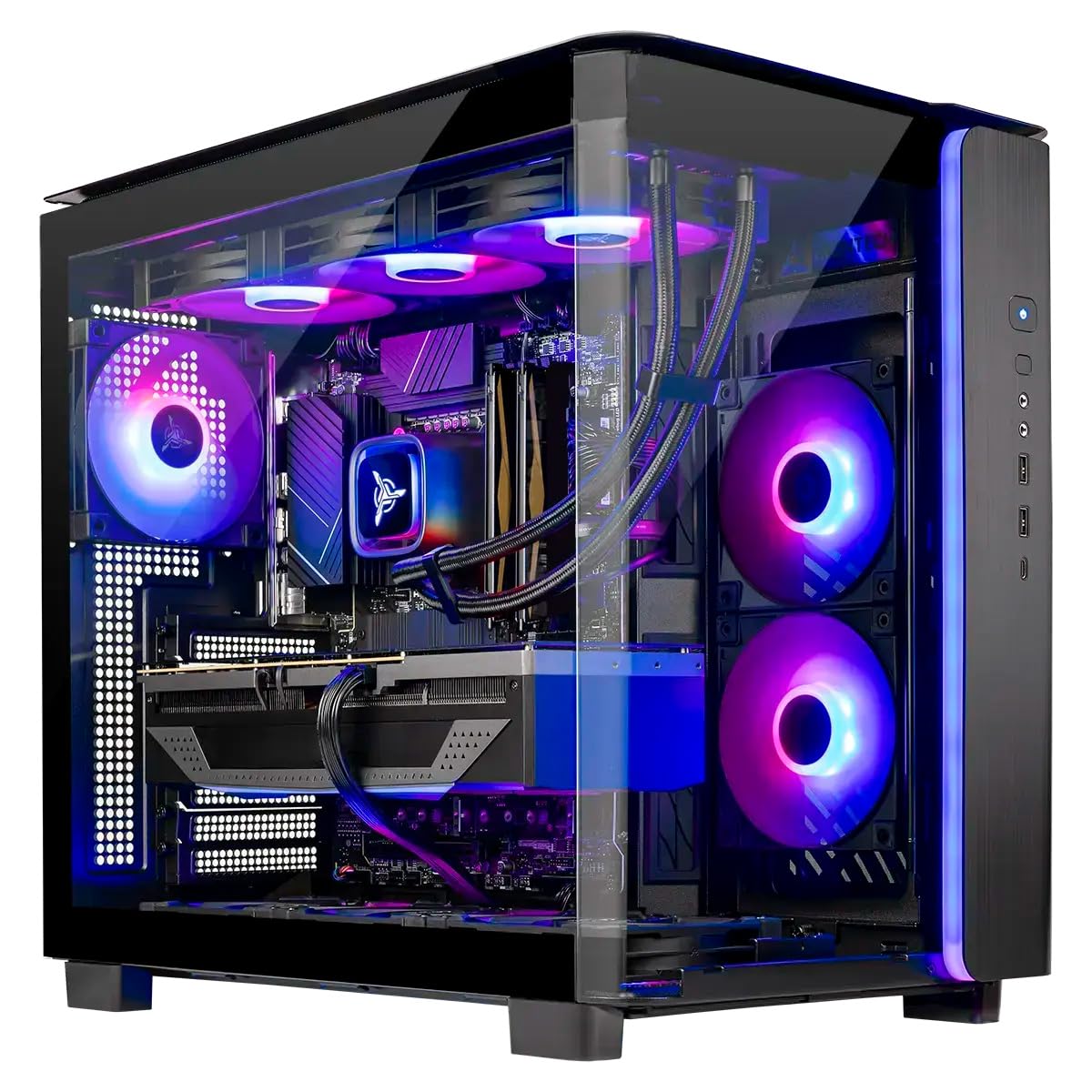
The Skytech Gaming King 95 is a high-end gaming PC that brings extreme performance to the trading desk. The AMD Ryzen 7 9850X3D processor is built on the same 3D V-Cache architecture as the 9800X3D, offering immense L3 cache that speeds up data-intensive trading applications. The 32 GB of DDR5 RAM running at 6000 MT/s is perfectly matched to the CPU, and the 2 TB NVMe SSD provides lightning-fast storage. The real star is the NVIDIA RTX 5080 with 16 GB of GDDR7 VRAM — this GPU is overkill for most trading setups, but it ensures that you can run multiple 4K or even 8K displays with GPU-accelerated charts, scanners, and video feeds all at maximum quality without any performance dips.
The King 95 case is designed with a stunning panoramic glass side panel and a 360mm AIO liquid cooler that keeps the CPU and GPU temperatures under control even during sustained heavy loads. For traders who run intensive backtesting algorithms or data processing scripts that can push the CPU to 100% for hours, the liquid cooling ensures consistent performance without thermal throttling. The system is assembled in the USA and backed by a 1-year warranty on parts and labor. Skytech is known for clean cable management and minimal bloatware, so the system boots up and runs smoothly out of the box. The included keyboard and mouse are basic but functional.
The downside is the cost — the King 95 is a significant investment, and you are paying for gaming-oriented RGB aesthetics and a GPU that far exceeds what any current trading software requires. The lack of a second internal storage bay might be a limitation for traders who need large archives, though the 2 TB NVMe is generous. Some early reviews noted minor issues like fan clicking or driver activation hiccups, but overall feedback is strongly positive. For the trader who also wants a machine capable of max-setting 4K gaming or VR, this system is a dual-purpose powerhouse that fills both roles with authority.
Why it’s great
- Ryzen 7 9850X3D with 3D V-Cache offers chart-rendering performance beyond almost any CPU
- RTX 5080 16GB delivers uncompromised multi-4K display output for any trading setup
- 360mm AIO liquid cooling prevents thermal throttling during heavy backtesting loads
Good to know
- High cost for GPU power that goes well beyond trading requirements
- Gaming-focused RGB design may not fit all professional trading environments
- Limited to single 2TB NVMe; adding a second internal drive may be challenging
11. Alienware Aurora ACT1250

The Alienware Aurora ACT1250 is a premium gaming desktop that brings Alienware’s legendary build quality and thermal engineering to the trading workstation. The Intel Core Ultra 7 265KF is a high-performance processor with a 5.5 GHz turbo boost, offering the single-core speed that trading platforms love. The 32 GB of DDR5 RAM is sufficient for heavy multi-app use, and the 2 TB SSD provides fast, spacious storage. The RTX 5070 with 12 GB of VRAM ensures smooth multi-monitor output for any number of high-resolution displays. The 1000W Platinum-rated power supply provides rock-solid power delivery with plenty of headroom for future upgrades.
Alienware’s focus on thermal management is evident here: the 240mm liquid cooling system keeps the CPU temperature low even during sustained loads, and the chassis is designed with airflow in mind. The Alienware Command Center software allows you to customize lighting and performance profiles, though this is more useful for gaming than trading. The clear side panel showcases the components with customizable AlienFX lighting zones, which can be set to a subtle glow or turned off entirely for a professional look. The 1-year onsite service from Dell provides the same peace of mind as other Dell offerings, with a technician coming to you if needed.
The trade-off is the premium branding cost — you are paying extra for the Alienware name and design language. Some users have reported fan noise issues developing after a few weeks of use, which is disappointing at this price point. The keyboard and mouse included are basic Dell peripherals, not the premium accessories you might expect. For traders who value the combination of extreme performance, excellent thermal management, and a design that can double as a high-end gaming rig, the Aurora ACT1250 is a capable and visually striking choice. For pure trading value, a business-class tower with similar specs can often be found for less.
Why it’s great
- Excellent thermal management with 240mm liquid cooling for sustained heavy loads
- Core Ultra 7 265KF provides top-tier single-core performance for trading platforms
- 1000W Platinum PSU and Dells onsite service provide long-term reliability
Good to know
- Alienware branding commands a premium; similar specs available for less
- Some users report fan clicking noises developing within the first month
- Included keyboard and mouse are basic Dell peripherals, not premium accessories
12. Thermaltake LCGS View 9580S
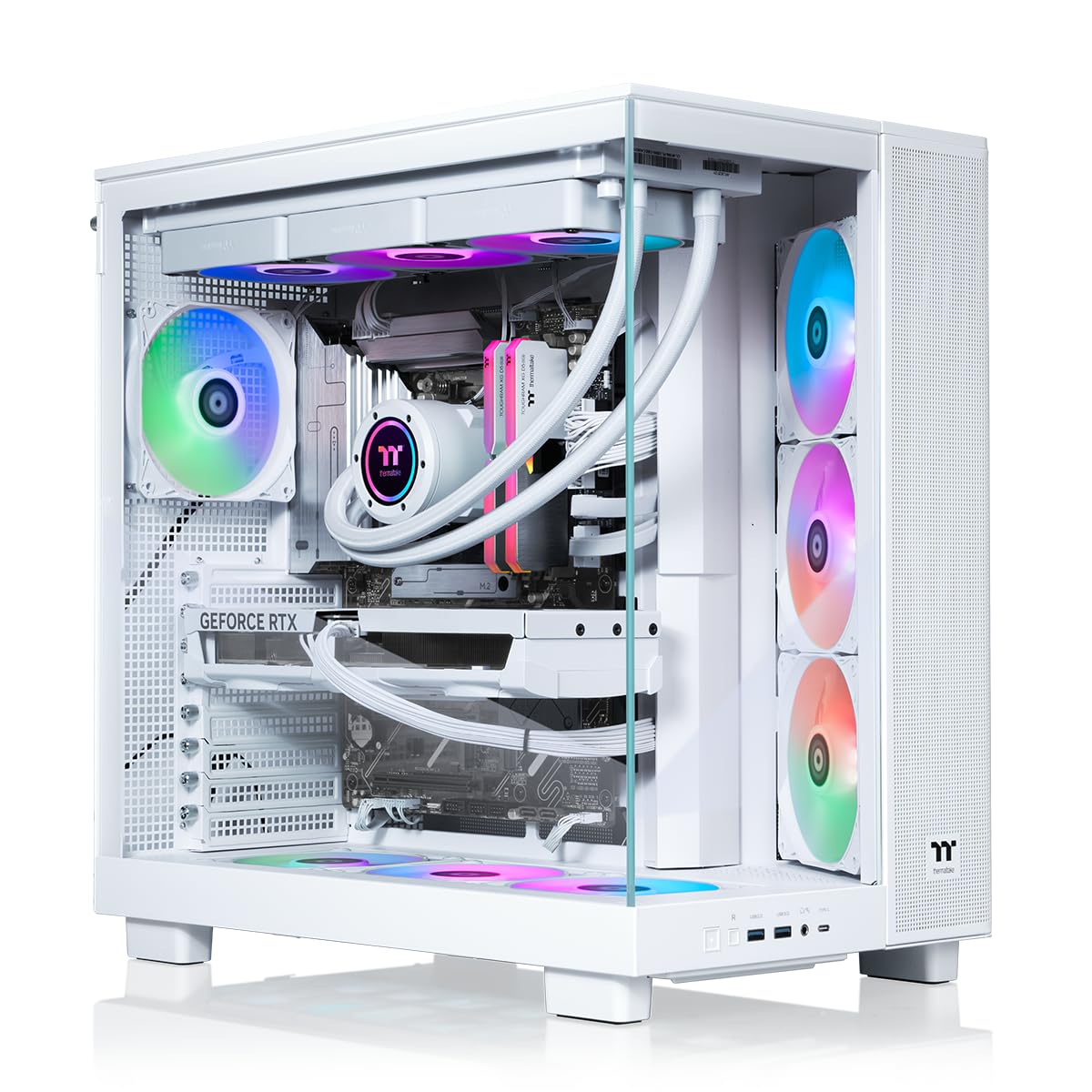
The Thermaltake LCGS View 9580S is the most uncompromising trading PC in this roundup, built around the flagship AMD Ryzen 9 9950X3D processor. This 16-core, 32-thread chip features the 3D V-Cache technology that dramatically accelerates data-heavy workloads — for trading, this means near-instantaneous chart rendering, lightning-fast backtesting, and effortless management of multiple real-time data streams. The 32 GB of DDR5 RAM at 6000 MT/s is well-specced, and the 2 TB NVMe M.2 SSD offers high-speed storage. The NVIDIA RTX 5080 with 16 GB of VRAM provides GPU power that can drive virtually any multi-monitor configuration, including multiple 4K and even 8K displays, without any performance compromises.
The thermal solution is a 360mm closed-loop liquid cooler with a panoramic tempered glass case that showcases the high-end components. Temperatures remain well-controlled even when the CPU and GPU are pushed to their limits by intensive backtesting algorithms or data analysis scripts. The build quality from Thermaltake is excellent, with careful cable management and sturdy construction. The system includes Wi-Fi support and a full array of USB ports, though the lack of front or top USB connections (the ports are on the rear) may be mildly inconvenient for a trading desk where you frequently plug in external devices.
The primary barrier is the price — this is a luxury-tier investment that most traders will not need, given that trading software rarely utilizes the full potential of a 16-core CPU and a top-tier gaming GPU. Some buyers reported DOA units and poor customer support, which is a significant risk at this price point. The system also includes a basic keyboard and mouse that feel out of place with the premium components. For the elite trader who wants the fastest possible hardware for local data analysis, algorithm development, or simply the peace of mind that no chart will ever stutter, the Thermaltake View 9580S represents the absolute top of the performance ladder.
Why it’s great
- Ryzen 9 9950X3D is the most powerful trading CPU available with massive 3D V-Cache
- RTX 5080 16GB handles any multi-monitor configuration at any resolution
- 360mm AIO liquid cooler and premium case provide top-tier thermal performance
Good to know
- Extremely high price far exceeds what trading software can utilize today
- Reports of DOA units and poor customer support response times
- Rear-only USB ports may be inconvenient for desk use; basic peripherals included
13. HP OMEN 45L

The HP OMEN 45L is the ultimate statement piece for a trader who demands the absolute best hardware available. It pairs the Intel Core Ultra 9 285K processor — a 24-core chip with a 5.7 GHz turbo boost and AI acceleration — with the flagship NVIDIA GeForce RTX 5090 GPU, which packs 32 GB of GDDR7 VRAM. The 64 GB of DDR5 RAM is the highest capacity in this roundup, ensuring that even the most memory-hungry multi-platform trading workflow will never encounter a slowdown. The 2 TB PCIe Gen4 NVMe SSD provides fast, spacious storage, and the system runs Windows 11 Pro with Microsoft Copilot integration for AI-assisted productivity.
The OMEN 45L features HP’s patented Cryo Chamber cooling system, which isolates the liquid cooler radiator from the main chassis, allowing it to draw fresh, cool air from outside the case directly onto the CPU. This innovative design keeps temperatures exceptionally low and noise levels minimal, even during the most intensive multi-threaded loads. The 360mm LCD liquid cooler adds customizable dynamic lighting effects through the OMEN Gaming Hub software. The system is built with a tool-less chassis that adheres to industry standard form factors, making future upgrades straightforward. HP also uses post-consumer recycled plastic in the construction and the system is EPEAT Gold and ENERGY STAR certified.
The barrier is the price — the OMEN 45L is the most expensive system here, and its RTX 5090 GPU is vastly more powerful than anything a trading application needs. Some buyers reported receiving units with incorrect components or DOA systems, which is unacceptable at this price point. The 2 TB SSD is also a bit small for the cost of the rest of the system. For the trader who wants a machine that can handle any current or future trading software with effortless grace, plus serve as the ultimate gaming or content creation rig, the OMEN 45L is the most powerful option available. For pure trading value, more affordable configurations with similar CPU and memory specs are more practical.
Why it’s great
- RTX 5090 32GB is the most powerful consumer GPU, handling any display configuration
- 64GB DDR5 RAM provides unmatched capacity for memory-intensive trading setups
- Patented Cryo Chamber cooling delivers exceptional thermal performance and low noise
Good to know
- Extremely high price is massive overkill for any current trading software
- Reports of incorrect components and DOA units at this premium price point
- Only 2TB SSD in a system at this price; storage could be more generous
FAQ
Do I need a dedicated GPU for trading with four monitors?
What RAM capacity is ideal for day trading with multiple platforms?
Is Wi-Fi fast enough for trading, or do I need wired Ethernet?
Should I buy a refurbished trading PC or a new one?
Can a gaming PC be used as a trading computer?
Final Thoughts: The Verdict
For most users, the best computer for trading winner is the TechMagnet HP Trading Desktop because it delivers a complete quad-monitor setup with dual network cards for ISP redundancy, all in a single package that requires minimal assembly. If you want a brand-new machine with modern architecture and room to grow, grab the HP Pro Tower 290 G9. And for the trader who needs ultimate CPU cache and GPU horsepower for intensive backtesting and flawless multi-4K output, nothing beats the Galaxy V3 Gaming PC.

Mo Maruf
I created WellFizz to bridge the gap between vague wellness advice and actionable solutions. My mission is simple: to decode the research and give you practical tools you can actually use.
Beyond the data, I am a passionate traveler. I believe that stepping away from the screen to explore new environments is essential for mental clarity and physical vitality.