Our readers keep the lights on and my smoothie glass nicely filled. As an Amazon Associate, I earn from qualifying purchases.
Specs are compiled from manufacturer listings and verified buyer reviews and can change over time — please confirm the key details on the product page before buying.
You do not want your computer to freeze in the middle of submitting a medical claim. You need a desktop or laptop that handles multiple patient records, spreadsheets, and browser tabs at once without that nagging wait. This guide breaks down seven options that fit the specific demands of coding work, from compact towers to all-in-ones, so you pick the right balance of RAM, storage, and processor power.
I’m Mohammad Maruf — the founder and writer behind WellFizz. This guide is built by comparing the manufacturers’ published specifications and the patterns across verified customer reviews, so you get each pick’s real strengths and trade-offs instead of marketing spin.
A computer for medical billing and coding with Windows 11 Pro keeps your workflow fast and your patient data secure. You want one that does not slow you down.
Quick Picks
- DELL Optiplex 7060 SFF Desktop Computer PC | Intel 8th Gen i7-8700 (6 Core) | 32GB DDR4 Ram 512GB NVMe M.2 SSD | Built-in WiFi & Bluetooth | Windows 11 Pro | Wireless Keyboard & Mouse(Renewed) — Best Overall
- HP 14″ Laptop 2025 Business Student Slim Computer, Lifetime MS Office, Copilot AI, Quad-Core Intel CPU, 16GB RAM, 628GB Storage (128GB UFS+500GB Ext), MarxsolAccessory, Wi-Fi 6, Win 11 Pro, Lavender — Top Performer
- Dell Tower Desktop Computer for Business & Home, Next Gen OptiPlex, 14th Gen Intel 4-Core Processor, 8GB DDR5 RAM, 256GB PCIe SSD, Type-C, HDMI + 1 DisplayPort, Windows 11 Pro — Best Value
- Lenovo 24″ FHD All-in-One Desktop Computer, Intel 4-Core Processor (Beats i3-1110G4), 16GB RAM, 512GB PCIe SSD, HDMI, WiFi 6, RJ45, Bluetooth, Business AIO, Vent-Hear, Keyboard & Mouse, Windows 11 Pro — Compact Pick
- Acer Aspire Business Desktop | 16GB DDR5 RAM, 1TB Storage(512GB SSD & 500GB HDD) | 14TH Intel 4-core i3 (Beat i5-12400T) | WiFi6+Bluetooth5.1 | Keyboard+Mouse | Windows 11 Pro — Premier Storage
- HP 2026 Pro Tower Business Desktop PC | 13th Gen Intel i3 Quad-Core up to 4.5GHz | 8GB RAM, 256GB SSD | Copilot AI | Windows 11 Home | WiFi Adapter | Ready-to-Work Office Computer with Accessories — Office Ready
- HP Prodesk Desktop Computers PC for Home & Office Business, Intel i5-10400F (32GB DDR4, 1TB PCIe SSD), Compact & Silent Design, Triple-Display Support, WiFi Adapter, Keyboard & Mouse, Windows 11 Pro — Power User
How To Choose The Best Computer For Medical Billing And Coding
Most coding software is not graphically intense, but it does rely on fast storage and plenty of memory to keep multiple windows open. Here is what you should look for in a medical billing machine.
RAM: The bigger the number, the more you can run at once
You will likely have your billing software, a browser with several tabs, an EHR portal, and maybe a spreadsheet all open at the same time. That is why 8GB of RAM is the absolute floor, 16GB is comfortable, and 32GB means you never think about it again. Machines with 32GB of DDR4 (like product 1 and product 7) let you keep dozens of patient records loaded without slowdowns.
Storage: SSD speed vs HDD space
A solid-state drive (SSD) loads your billing software and patient files in seconds. A traditional hard drive (HDD) is slower but holds more for less money. Most medical offices benefit from a 256GB to 512GB SSD for the operating system and apps, plus an external drive for archiving old records. Avoid any machine that still uses a spinning hard drive as its main boot drive.
Display: Resolution and multi-monitor support
Medical coding involves reading small diagnosis codes and procedure numbers. A 1080p (1920×1080) screen is the minimum, but a 4K display (3840×2160) lets you see more of a spreadsheet or a patient record at once. You also want a computer that supports two monitors so you can keep your coding software on one screen and a reference browser on the other.
Operating system: Windows 11 Pro for security and remote work
Windows 11 Pro includes BitLocker encryption (built-in drive encryption) and Remote Desktop, both useful for a medical office that handles sensitive patient data. Most of the picks here come with Windows 11 Pro, which also handles HIPAA-oriented workflows better than the Home edition.
Quick Comparison
| Model | Best For | RAM | Storage | Display Resolution | Amazon |
|---|---|---|---|---|---|
| DELL Optiplex 7060 SFF | Best Overall / Dual Monitor | 32GB DDR4 | 512GB NVMe SSD | 3840×2160 | Amazon |
| HP 14″ Laptop 2025 | Best for Portability | 16GB DDR4 | 128GB UFS + 500GB Ext | 1366×768 | Amazon |
| Dell Tower Desktop (Next Gen) | Best Value / SMB | 8GB DDR5 | 256GB PCIe SSD | 3840×2160 | Amazon |
| Lenovo 24″ All-in-One | Best All-in-One | 16GB DDR4 | 512GB PCIe SSD | 1920×1080 | Amazon |
| Acer Aspire Business Desktop | Premier Storage Capacity | 16GB DDR5 | 512GB SSD + 500GB HDD | — | Amazon |
| HP 2026 Pro Tower | Best for Small Office | 8GB DDR4 | 256GB PCIe SSD | — | Amazon |
| HP Prodesk 600 G6 SFF | Best for Heavy Multitasking | 32GB DDR4 | 1TB NVMe SSD | — | Amazon |
In‑Depth Reviews
1. DELL Optiplex 7060 SFF Desktop Computer PC | Intel 8th Gen i7-8700 (6 Core) | 32GB DDR4 Ram 512GB NVMe M.2 SSD | Built-in WiFi & Bluetooth | Windows 11 Pro | Wireless Keyboard & Mouse(Renewed)

The small-form-factor powerhouse that runs your billing software and a second monitor without breaking a sweat.
Open your billing software, an EHR portal, and a dozen browser tabs all at once with no slowdown — that is what the 32GB DDR4 RAM in this Dell Optiplex 7060 SFF delivers. That is a 4x RAM gap over the 8GB Dell Tower next on this list. It also packs a 512GB NVMe M.2 SSD, an Intel 8th Gen i7-8700 processor hitting up to 4.60 GHz, and two DisplayPort outputs that support dual monitors at a maximum display resolution of 3840×2160. That 4K resolution is 2.8x sharper than the HP laptop’s 1366×768 resolution, so diagnosis codes and procedure numbers are crisp at a glance.
Buyers report: “i couldn’t believe how small this tower is when i unboxed it.” The small form factor (SFF) case saves desk space, and built-in Wi-Fi and Bluetooth mean you need no extra dongles. The included wireless keyboard and mouse work from the start. The catch: the video ports are DisplayPort, not HDMI. The system includes one adapter, but you may need a second for dual monitors. One reviewer also noted the SSD was SATA on arrival, but the seller swapped it for the promised NVMe.
One owner mentioned: “the machine is lightning fast especially compared to my old one.” Several reviewers praised the performance and the clean condition of this refurbished unit. The main risks are the refurbished lottery — one buyer received a unit that failed after a year, though Amazon’s 3-year warranty plan (Asurion) covered the repair.
What Stands Out
- 32GB DDR4 RAM handles heavy multitasking for coding software
- 4K (3840×2160) resolution support for seeing more codes on screen
- Compact SFF design saves desk space
What to Watch For
- Uses DisplayPort outputs (not HDMI) for video
- Refurbished unit — quality varies; buy an extended warranty
- Included keyboard and mouse feel basic
Who should pick this: Anyone who wants a compact desktop with 32GB of RAM and dual 4K monitor support for under — the best raw specs for medical billing work in this list.
One real trade-off: Being a refurbished unit from 2018-2020, some units may arrive with minor issues like a SATA SSD instead of NVMe, or a non-functional mouse.
2. HP 14″ Laptop 2025 Business Student Slim Computer, Lifetime MS Office, Copilot AI, Quad-Core Intel CPU, 16GB RAM, 628GB Storage (128GB UFS+500GB Ext), MarxsolAccessory, Wi-Fi 6, Win 11 Pro, Lavender
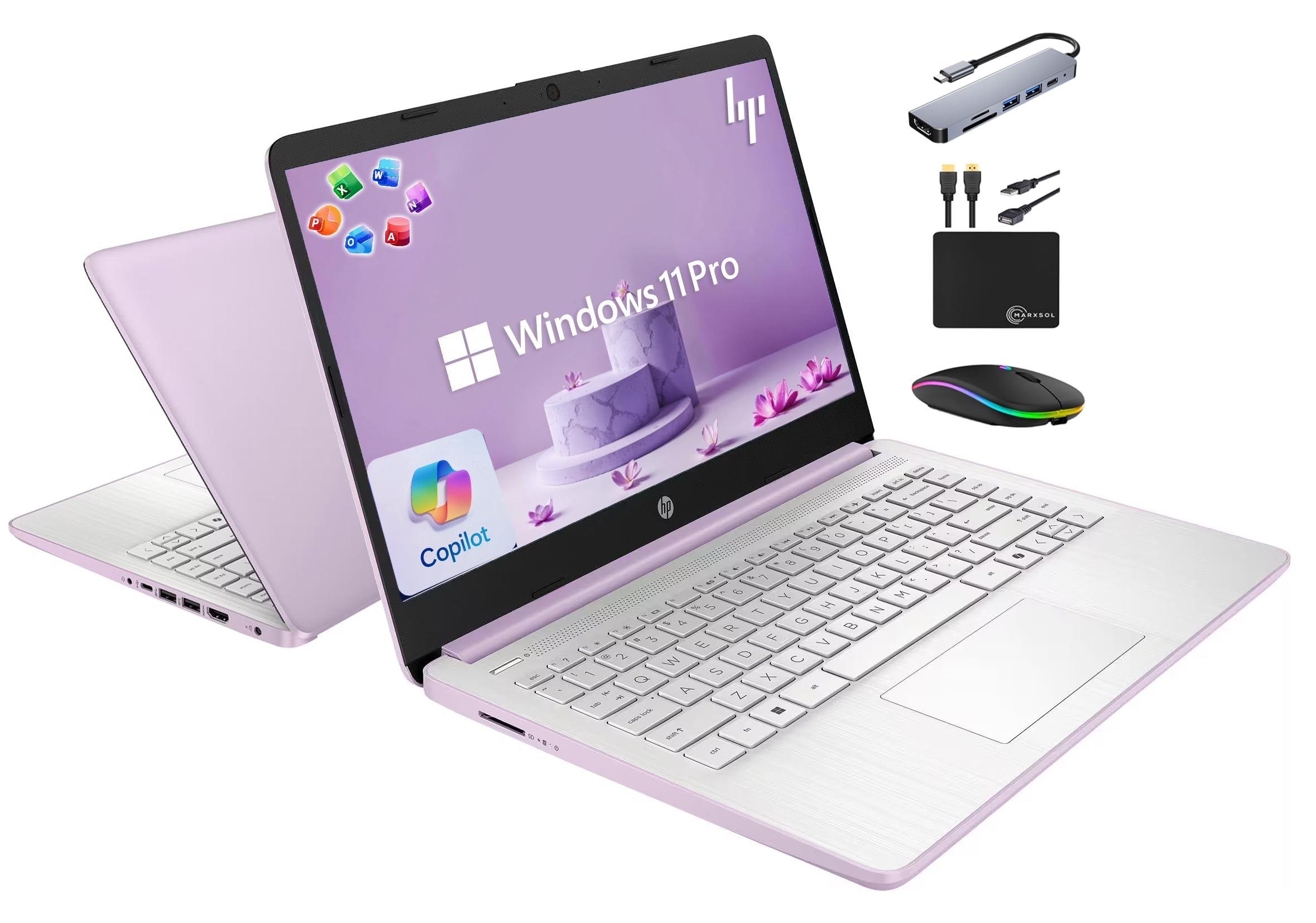
The portable pick that fits in your bag and comes with Microsoft Office for life.
You can run your billing software, a browser, and Office simultaneously on this HP 14-inch laptop without hitting a wall — unlike the 8GB desktops here. It uses a quad-core Intel Processor N150 (up to 3.6 GHz) with 16GB DDR4 RAM. It ships with a lifetime Microsoft Office 2024 license, a 128GB UFS storage for quick boot times, and a 500GB external drive for archived records.
Owners mention: “This little laptop is quick enough for most tasks and comes with real Windows 11 which is hard to find at this price.” The Windows 11 Pro edition gives you BitLocker encryption (drive encryption) and Remote Desktop for connecting from home. The battery life is rated at 9 hours, so you can move between exam rooms without an outlet. The bundle includes a 6-in-1 USB-C docking station hub with 4K HDMI output, a mouse, and a mouse pad.
The biggest trade-off is the display resolution: 1366×768 pixels — that is a 2.8x gap compared to the Dell Optiplex’s 3840×2160 resolution, meaning you will see fewer codes and spreadsheet cells on screen at once without a second monitor. Reviewers also note the included wireless mouse has a 15-30 second reconnection delay after a restart. The 9-hour battery life is decent, but one reviewer noted the charger is a non-USB-C barrel plug, so you will need to carry the specific brick.
Perfect match for: Remote medical coders who need a laptop to move between home and clinic. The lifetime Office license alone saves you a subscription cost.
Honest limit: The 1366×768 screen is the biggest compromise — you will want an external monitor for comfortable coding work.
3. Dell Tower Desktop Computer for Business & Home, Next Gen OptiPlex, 14th Gen Intel 4-Core Processor, 8GB DDR5 RAM, 256GB PCIe SSD, Type-C, HDMI + 1 DisplayPort, Windows 11 Pro
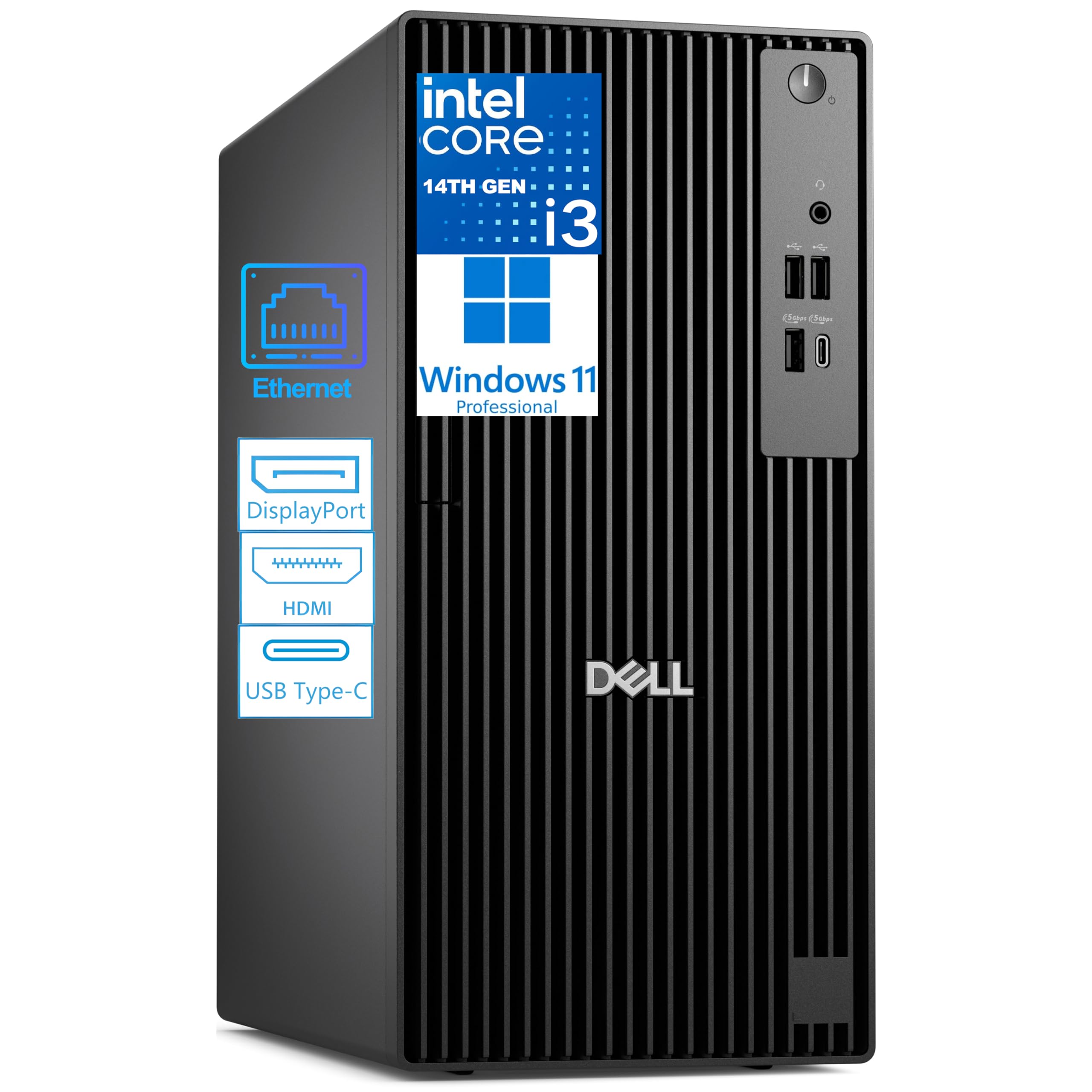
An entry-level tower with a brand-new 14th Gen Intel processor and dual 4K monitor support.
The Dell Next Gen OptiPlex runs on a 14th Gen Intel Core i3-14100 (4 cores, up to 4.7 GHz) with 8GB of DDR5 RAM — DDR5 is faster and more efficient than the DDR4 in many peers, but the 8GB capacity is a 4x gap compared to the 32GB Dell Optiplex above. For basic medical billing work with one or two apps open, it is plenty responsive. The 256GB PCIe SSD boots Windows 11 Pro quickly, and the HDMI 2.1 plus DisplayPort 1.4a let you connect two 4K monitors at 3840×2160 resolution.
The tower does not have built-in Wi-Fi, but a USB Wi-Fi adapter is included in the box. A wired keyboard is also bundled. Customers note: “very fast with current with Windows 11 updates frequently” and “great choice for people like me who don’t need graphics or gaming.” The built-in Intel UHD Graphics 730 is integrated (shares system memory), so you will not run a heavy video editing suite, but it handles coding software and video conferencing without trouble.
The main limitation is the 8GB RAM — if you keep your billing app, a browser with a dozen tabs, and a PDF reader open, you may notice lag. Buying this as a starter machine and planning a future RAM upgrade to 16GB or 32GB is a smart move since the DDR5 will still be relevant for years. Buyers consistently rate it 5/5 for basic needs.
Reasons to Choose
- Latest 14th Gen processor (faster per-core than an 8th Gen i7)
- Dual 4K monitor support via HDMI + DisplayPort
- DDR5 RAM for future upgrade potential
Reasons to Skip
- Only 8GB RAM — may struggle with heavy multitasking
- No built-in Wi-Fi (adapter included, but takes a USB slot)
- No dedicated graphics for any creative work
Who it is for: A budget-conscious buyer who wants a brand-new machine (not refurbished) with a modern processor and the ability to run two 4K screens for coding and reference material.
Where it falls short: The 8GB RAM will hit its limit quickly if you are the type to keep a dozen applications open at once.
4. Lenovo 24″ FHD All-in-One Desktop Computer, Intel 4-Core Processor (Beats i3-1110G4), 16GB RAM, 512GB PCIe SSD, HDMI, WiFi 6, RJ45, Bluetooth, Business AIO, Vent-Hear, Keyboard & Mouse, Windows 11 Pro

An all-in-one that turns your desk into a clean, single-cable work station with a sharp 1080p screen.
You get a clean desk with no separate tower — the Lenovo 24-inch All-in-One integrates everything behind a 23.8-inch FHD (1920×1080) IPS anti-glare display that runs 99% sRGB. The matte finish cuts down on office overhead-light reflections. Inside, it packs 16GB DDR4 RAM and a 512GB PCIe NVMe M.2 SSD — double the RAM of the Dell Tower above, giving you room to run your billing application, a browser with references, and an email client without swapping windows. The Intel Processor N100 has 4 cores hitting up to 3.40 GHz, plus Intel Wi-Fi 6 and Bluetooth 5.2 for wireless connections.
Reviewers point out: “Fast for web browsing and daily use. Clean, minimal wires, sharp screen, fast WiFi.” The all-in-one design means no separate tower cluttering your desk — just the monitor, a wired keyboard, and a wired mouse. The built-in HD camera and mono microphone make it ready for telehealth or video meetings with colleagues. Ports include two USB-A (3.2 Gen 2), two USB 2.0 ports, HDMI-out 1.4b, and an Ethernet RJ-45 jack.
The catch: this unit ships with a UK-layout keyboard (key caps are labeled as UK standard), though the Windows setting defaults to US layout. Some users may find the wired keyboard and mouse limiting. One reviewer received a damaged unit in shipping, and the stand does not offer height adjustment. The Windows 11 Pro operating system includes BitLocker encryption for patient data security.
Best suited for: A front-office billing station where you want one neat package with a good screen, no tower, and quiet operation (air-cooled ventilation).
One thing to check: The keyboard layout — if you are a touch typist who relies on key cap labels, the UK-style keys may trip you up initially.
5. Acer Aspire Business Desktop | 16GB DDR5 RAM, 1TB Storage(512GB SSD & 500GB HDD) | 14TH Intel 4-core i3 (Beat i5-12400T) | WiFi6+Bluetooth5.1 | Keyboard+Mouse | Windows 11 Pro
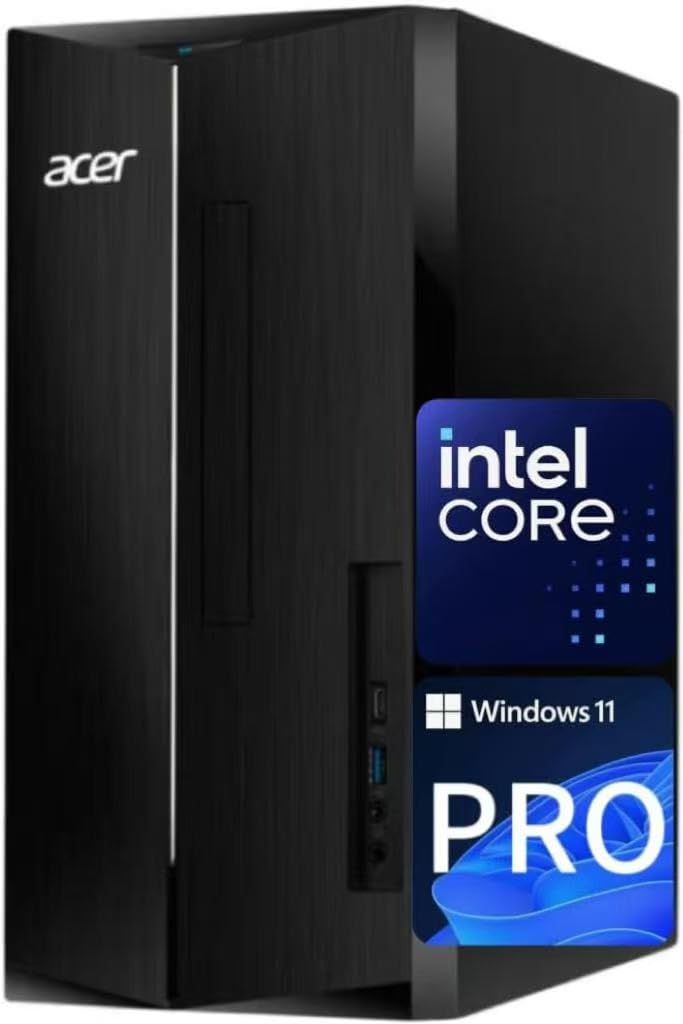
A mid-range tower with dual storage tiers — fast SSD for booting, large HDD for archiving patient records.
The Acer Aspire Business Desktop lets your billing software boot instantly from a 512GB PCIe SSD, while a separate 500GB HDD holds older charts and EOBs. It runs a 14th Gen Intel Core i3-14100T (4 cores, 4.4 GHz Turbo Boost) paired with 16GB of DDR5 RAM — that is faster memory than the DDR4 in many peers, and the 16GB capacity keeps your apps snappy when flipping between a coding platform and a reference browser. The Intel Wireless Wi-Fi 6E AX211 and Bluetooth 5.3 are built right in, not a dongle.
Buyers mention: “Great performance at a great price” and “very fast and affordable for the RAM and SSD.” The 16GB DDR5 RAM makes this a noticeable step up from the 8GB machines reviewed here, and the 1TB total storage (512GB SSD + 500GB HDD) means you will not be hunting for storage space for years. Ports include two HDMI outputs (one 1.4b and one 2.0) and a USB-C 3.2 Gen 1 port on the front for quick backups.
The 300-watt power supply is adequate but leaves little headroom for adding a dedicated graphics card later. The 500GB HDD sits loose in the box and needs to be installed inside the case or used as an external drive — not ideal for someone who hates opening a PC case. Dimensions are 22.1 x 16 x 10.8 inches (a standard mid-tower, not a compact SFF).
Strengths
- 16GB DDR5 RAM for smooth multitasking
- 1TB total storage (SSD + HDD) for years of files
- Built-in Wi-Fi 6E and Bluetooth 5.3
Weaknesses
- 500GB HDD arrives loose, needs manual installation
- 300W power supply limits future upgrades
- No dedicated GPU for any video work
Grab this if: You need a fast SSD for daily use plus extra HDD storage for archiving, and you prefer the latest DDR5 memory in a non-refurbished machine.
skip it if: You want a compact, plug-and-play setup without opening the case to install the extra hard drive.
6. HP 2026 Pro Tower Business Desktop PC | 13th Gen Intel i3 Quad-Core up to 4.5GHz | 8GB RAM, 256GB SSD | Copilot AI | Windows 11 Home | WiFi Adapter | Ready-to-Work Office Computer with Accessories
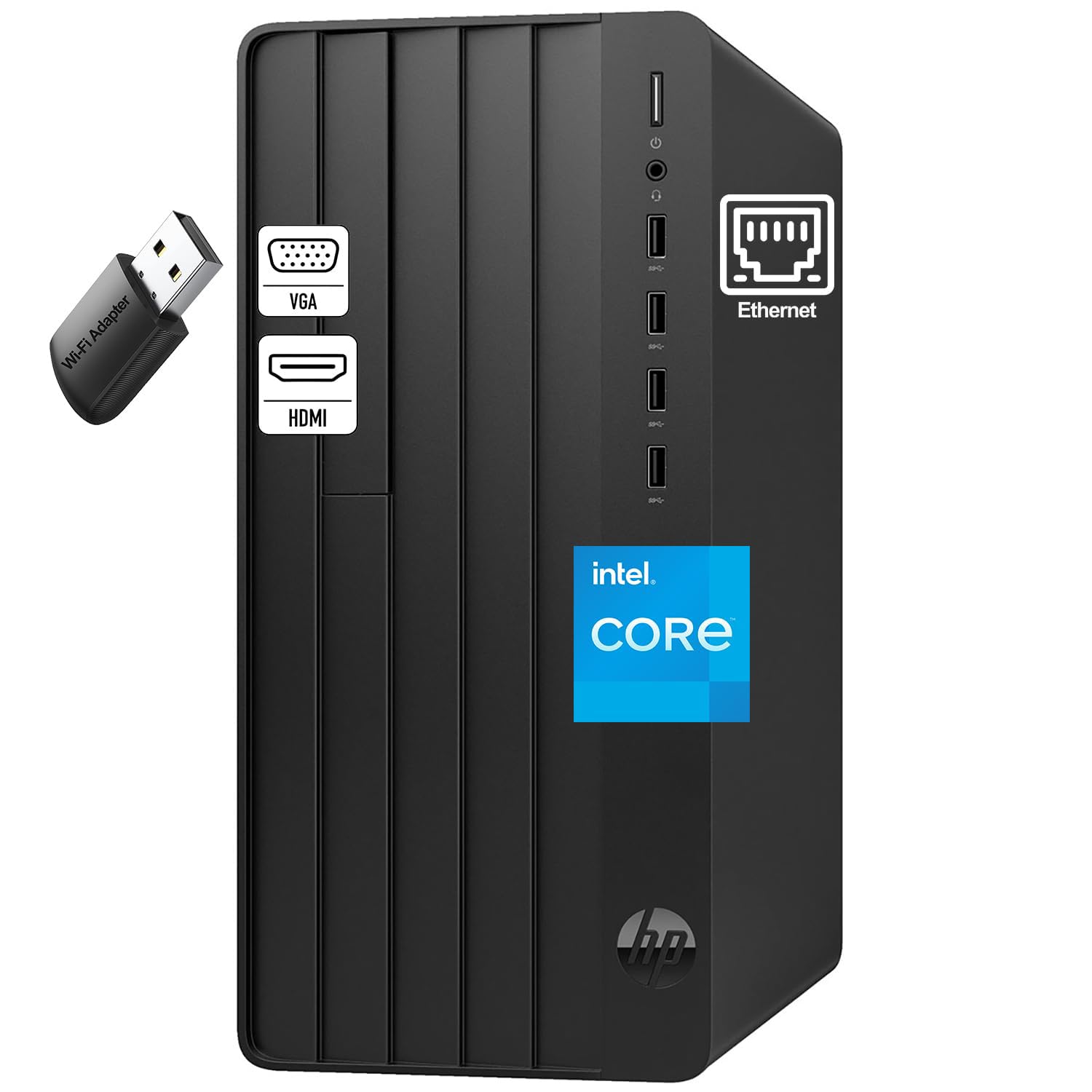
A straightforward business-grade tower with a modern 13th Gen processor and all the ports a medical office needs.
The HP 2026 Pro Tower runs a 13th Gen Intel Core i3-13100 (4 cores, 8 threads, up to 4.5 GHz) with 8GB DDR4 RAM and a 256GB PCIe SSD. The processor generation is newer than the Dell Optiplex 7060 (8th Gen vs 13th Gen), but the 8GB RAM is a 4x gap compared to the 32GB Optiplex — meaning this machine is best for light, single-application use rather than heavy multitasking. The Windows 11 Home edition lacks BitLocker encryption (unlike Pro), which may matter for HIPAA compliance in some setups.
This HP Pro Tower has 8 USB ports total (multiple on front and rear), plus HDMI and VGA outputs, and an Ethernet port. A USB Wi-Fi adapter is included for wireless connectivity. The wired keyboard and mouse are included. One buyer mentioned: “Nice replacement for my 9 yr old hp. Quiet & fast.” Another mentioned: “tower password was locked up on assembly, Had it repaired for.”
The integrated Intel UHD Graphics 730 handles video conferencing and 2D displays without issue. The 256GB SSD is enough for the operating system and your billing software, but you will need external storage for archived records. The tower is a standard mid-size design (carbon black) — not as space-saving as the Dell SFF or an all-in-one.
Good fit for: A small medical office that needs one dedicated desktop per station, with a modern processor and lots of ports for peripherals like printers and scanners.
The main trade-off: 8GB RAM and Windows 11 Home mean this is a starter machine — upgrade the RAM or look at the 16GB+ options if you multitask.
7. HP Prodesk Desktop Computers PC for Home & Office Business, Intel i5-10400F (32GB DDR4, 1TB PCIe SSD), Compact & Silent Design, Triple-Display Support, WiFi Adapter, Keyboard & Mouse, Windows 11 Pro
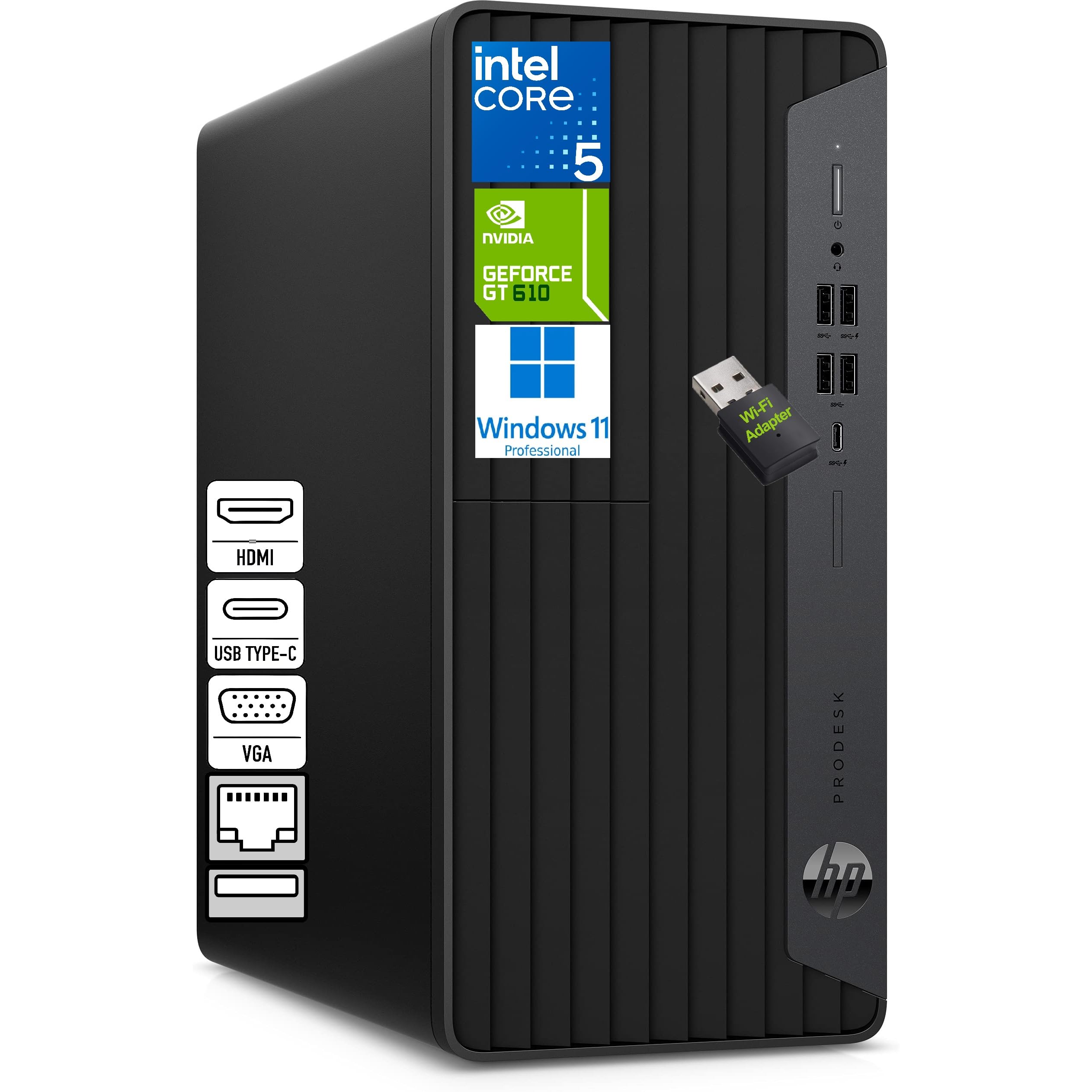
A compact but powerful workstation with the same RAM as the top pick, plus a terabyte of fast SSD storage.
The HP Prodesk 600 G6 SFF (small form factor) packs a 6-core Intel i5-10400F processor (up to 4.3 GHz, 12 threads) with 32GB DDR4 RAM and a 1TB NVMe SSD — the same generous RAM as the Dell Optiplex 7060 above, but double the storage (1TB vs 512GB). The 32GB RAM means you can run your billing software, a spreadsheet with thousands of rows, an EHR portal, and a dozen browser tabs simultaneously without slowdowns. The dedicated NVIDIA graphics card (1GB VRAM) is a genuine step up over the integrated graphics in every other pick — useful if your software uses any 2D/3D mapping or if you run a separate claims-analysis tool.
Shoppers say: “Came in like new, perfect condition” and “PC arrived on time and undamaged. Fired up right away.” The compact microtower design and silent operation mean it sits quietly under a desk. It supports triple-display output via USB-C and multiple USB-A ports. A USB Wi-Fi adapter and a wired keyboard and mouse are included. The Windows 11 Pro operating system gives you BitLocker encryption and Remote Desktop — important for any medical data security plan.
The i5-10400F is a 10th Gen processor (released in 2020), so its single-core speed is slower than the 13th or 14th Gen chips in newer models. It does not have built-in Wi-Fi (the included adapter works fine but takes a USB port). There is no optical drive, so you will need an external USB disc reader if your practice still uses CD-ROM-based coding resources.
Why It Stands Out
- 32GB DDR4 RAM and 1TB SSD — top-tier for this price bracket
- Dedicated graphics (1GB) for any 2D/3D medical software
- Triple-display support for a multi-screen coding setup
Why It May Not Fit
- 10th Gen processor is older than the 13th/14th Gen alternatives
- No built-in Wi-Fi (adapter included)
- No optical drive for legacy CD-based tools
Ideal for: A multi-tasker who juggles EHR, billing, and analytics software on two or three screens, and wants a compact tower with a dedicated GPU.
Real limit: The older processor generation means you may see a slight gap in single-app responsiveness compared to a 14th Gen machine, but the huge RAM and SSD compensate.
Understanding the Specs
RAM (Memory)
RAM is the space your computer uses to keep active programs ready. Think of it like a desk — the bigger the desk, the more files you can spread out at once. For medical billing, 8GB is the starter size (one app plus a browser). 16GB lets you run your coding software, a spreadsheet, and an EHR portal together. 32GB means you can leave everything open all day without closing anything. DDR5 is the newest generation of memory, slightly faster than DDR4 but the benefit is minor unless you are doing heavy data processing.
Storage (SSD vs HDD)
An SSD (solid-state drive) loads your billing software and patient files in seconds with no moving parts — it is the standard for any modern machine. Storage sizes like 256GB, 512GB, or 1TB tell you how many documents and programs you can keep on the computer itself. Some machines pair a fast 512GB SSD with a slower 500GB HDD (hard disk drive) for archiving old records. For medical work, a 256GB SSD is the minimum — 512GB gives you comfortable room for software, and 1TB means you probably never worry about space.
Display Resolution
Resolution is the number of pixels on your screen — more pixels means you see more detail and more information at once. 1366×768 is the low end (you will scroll a lot in spreadsheets). 1920×1080 (1080p) is the standard today and plenty for reading codes. 3840×2160 (4K/UHD) shows four times as much detail, letting you view a full patient record and a reference sheet side by side without shrinking text. A 4K screen can make small diagnosis codes and procedure numbers look crisp and readable.
Windows 11 Pro vs Home
Windows 11 Pro adds BitLocker (a feature that encrypts your entire drive so patient data is safe if the computer is stolen) and Remote Desktop (allows you to securely connect to your office computer from home). Windows 11 Home lacks both. For medical billing work that touches protected health information (PHI), Pro is the safer bet. Some offices also need Pro to join a domain or use group policies.
FAQ
How much RAM do I really need for medical billing and coding?
Can I use a refurbished computer for medical coding?
Is the HP 14-inch laptop good enough for remote coding work?
What is the difference between Windows 11 Home and Pro for a medical office?
Do I need a dedicated graphics card for billing software?
Can I run two monitors for medical coding on any of these computers?
How much storage do I need for patient records and billing files?
What is the best form factor for a medical billing desk?
Which of these computers is quiet enough for a shared office?
Will Microsoft Office run on these computers?
Final Thoughts: The Verdict
For most buyers, the computer for medical billing and coding winner is the DELL Optiplex 7060 SFF because it gives you 32GB of RAM, a 512GB NVMe SSD, 4K dual-monitor support, and a compact footprint at a refurbished price that dramatically undercuts any new machine with similar specs. If you want portability for a remote coding role, grab the HP 14″ Laptop 2025 which includes a lifetime Microsoft Office license. And for a premium, future-proof tower with dedicated graphics and a full terabyte of SSD storage, the standout is the HP Prodesk 600 G6 SFF.
How We Picked
We do not accept paid placement. Every pick is matched to a real buyer and a real use-case; we do not hands-on test units.
Sources & Methodology
Specifications: manufacturer listings and product documentation. Review insights: verified customer reviews, as of July 2026. Pricing: not shown on this page (it changes often); check the current price via the retailer link.
As an Amazon Associate, WellFizz earns from qualifying purchases. This does not affect which products we feature.

Mo Maruf
I created WellFizz to bridge the gap between vague wellness advice and actionable solutions. My mission is simple: to decode the research and give you practical tools you can actually use.
Beyond the data, I am a passionate traveler. I believe that stepping away from the screen to explore new environments is essential for mental clarity and physical vitality.