Our readers keep the lights on and my smoothie glass nicely filled. As an Amazon Associate, I earn from qualifying purchases.
Choosing a laptop for an elementary student means balancing durability, battery life, and simplicity against the reality of small hands, accidental drops, and short attention spans. The right machine keeps a child focused on learning, not troubleshooting a slow operating system or hunting for a charger mid-afternoon.
I’m Mohammad Maruf — the founder and writer behind WellFizz. I spent countless hours analyzing processor benchmarks, storage configurations, build materials, and real-world feedback from parents and educators to find the machines that hold up to daily classroom and homework use.
Whether your child needs a Chromebook for Google Classroom or a Windows laptop for typing practice, the best computer for elementary students balances portability, rugged design, and enough performance to keep up with third-grade math apps and digital storybooks.
How To Choose The Best Computer For Elementary Students
Children in elementary school have very different needs than high school or college users. The operating system, durability, and screen size matter far more than raw processing power. Here are the key decisions you’ll face.
Chromebook vs. Windows Laptop
Chromebooks run Chrome OS, a lightweight operating system that boots in seconds, updates automatically, and is nearly immune to viruses. They excel in school environments that use Google Classroom, Google Docs, and educational web apps. Windows laptops offer broader software compatibility, including traditional desktop programs like Microsoft Office, but they require more management and are more prone to slowdowns over time. For a student in grades K–5, a Chromebook is often the simpler, safer choice.
Durability and Build Quality
Look for laptops that meet military-grade durability standards (MIL-STD-810H), which certify resistance to drops, vibration, and temperature extremes. Spill-resistant keyboards, reinforced hinges, and rubber bumpers around the edges add significant protection. An accidental drop from a desk to a tile floor is a real risk — a durable chassis can mean the difference between a scrape and a cracked screen.
Display Size and Resolution
An 11-inch to 14-inch screen is ideal for small desks and backpacks. FHD (1920 x 1080) resolution provides sharper text than HD (1366 x 768), reducing eye fatigue during reading assignments. Anti-glare coatings help when the student works near a window or under bright overhead lights. Touchscreens can be helpful for younger children who are still learning to use a trackpad.
Battery Life and Charging
An elementary student’s school day runs six to seven hours. A laptop with at least 8 hours of real-world battery life can last the full day without needing a charger. USB-C charging is convenient because a single charger can power both the laptop and a tablet or phone. Avoid machines with less than 6 hours of advertised battery life — real-world use is always shorter than the manufacturer’s estimate.
Quick Comparison
On smaller screens, swipe sideways to see the full table.
| Model | Category | Best For | Key Spec | Amazon |
|---|---|---|---|---|
| Lenovo IdeaPad 3i Chromebook | Chromebook | Classroom & homework | 8GB RAM, 15.6″ FHD | Amazon |
| HP Chromebook 14 | Chromebook | Portability & fast boot | Intel N100, 128GB UFS | Amazon |
| ASUS Chromebook CX15 | Chromebook | Durability & large display | MIL-STD-810H, 15.6″ FHD | Amazon |
| Acer Chromebook Plus 515 | Chromebook Plus | Touchscreen & AI features | Intel i3, 256GB SSD | Amazon |
| ASUS 14″ Laptop | Windows | Windows familiarity & Office | 4GB RAM, 64GB eMMC | Amazon |
| HP Portable Laptop | Windows | Basic Windows tasks | 8GB DDR4, 64GB eMMC | Amazon |
| Acer Chromebook (2023) | Chromebook | Budget classroom use | 15.6″ HD, 4GB RAM | Amazon |
| Dell 15 Laptop | Windows | Performance & storage | Ryzen 5, 512GB SSD | Amazon |
| Apple MacBook Neo 13 | macOS | Premium eco-system & battery | A18 Pro, 512GB SSD | Amazon |
In‑Depth Reviews
1. Lenovo IdeaPad 3i Chromebook

The Lenovo IdeaPad 3i Chromebook strikes the ideal balance between classroom-ready performance and a large, easy-on-the-eyes 15.6-inch FHD display. With 8GB of RAM and a 64GB eMMC drive, this Chromebook handles a dozen browser tabs, Google Docs, and educational apps without the lag that plagues 4GB machines. The Intel Celeron N4500 processor is modest, but Chrome OS is so lightweight that boot times stay under 10 seconds and the system never bogs down with background maintenance tasks.
Battery life is the standout feature here — real-world testing shows 9 to 10 hours of mixed use, which means a full school day plus after-school homework on a single charge. The Dolby Audio speakers produce clear sound for video lessons and read-aloud apps, and the 720p camera is adequate for video calls. The 15.6-inch screen gives young students plenty of space to see worksheets, typing prompts, and web pages without constant zooming.
The Abyss Blue color is eye-catching for kids, and the lightweight design (around 3.5 pounds) makes it easy to carry in a backpack. The lack of a backlit keyboard is the main compromise, but in a well-lit classroom that rarely matters. For parents who want a reliable, low-maintenance Chromebook with excellent battery life, this is the safest pick on the list.
Why it’s great
- 8GB RAM provides smooth multitasking for educational apps and browser tabs
- 15.6″ FHD display reduces eye strain during long reading sessions
- Reliable 10-hour battery lasts the entire school day
Good to know
- No backlit keyboard for low-light typing
- Chrome OS limits compatibility with some Windows-only educational software
- 64GB eMMC storage fills quickly with offline content and downloads
2. HP Chromebook 14 inch Laptop

The HP Chromebook 14 brings a more modern processor — the Intel N100 — and faster UFS storage to the budget Chromebook segment, making it a noticeable step up from older Celeron-powered machines. The 8GB of LPDDR5 RAM is energy-efficient and responsive, and the 128GB of UFS storage boots apps in a fraction of the time eMMC drives require. For an elementary student who needs to load Google Classroom, Khan Academy, and typing games quickly, this translates to less waiting and more learning.
At 14 inches, the HD display (1366 x 768) is smaller and lower resolution than the Lenovo’s FHD panel, but the anti-glare coating helps outdoors and in bright rooms. The Chalkboard Gray finish is subdued and professional, which some parents prefer. The battery consistently delivers 8-plus hours of web browsing and video playback, enough for a full school day with a little margin for after-school use.
The port selection is the main limitation — only one USB-A, one USB-C, and a headphone jack. A USB hub may be needed for connecting a mouse and a flash drive simultaneously. The build is all-plastic but feels solid, with no creaking or flex in the keyboard deck. For families who prioritize fast boot times and a compact 14-inch form factor over a larger screen, this HP is an excellent mid-range choice.
Why it’s great
- Intel N100 processor offers noticeably faster performance than Celeron CPUs
- 128GB UFS storage provides fast boot and app loading
- 8GB LPDDR5 RAM is power-efficient and responsive
Good to know
- Limited port selection requires a USB hub for multiple accessories
- HD resolution is less sharp than FHD for reading small text
- No backlit keyboard for typing in dim lighting
3. ASUS Chromebook CX15 Laptop
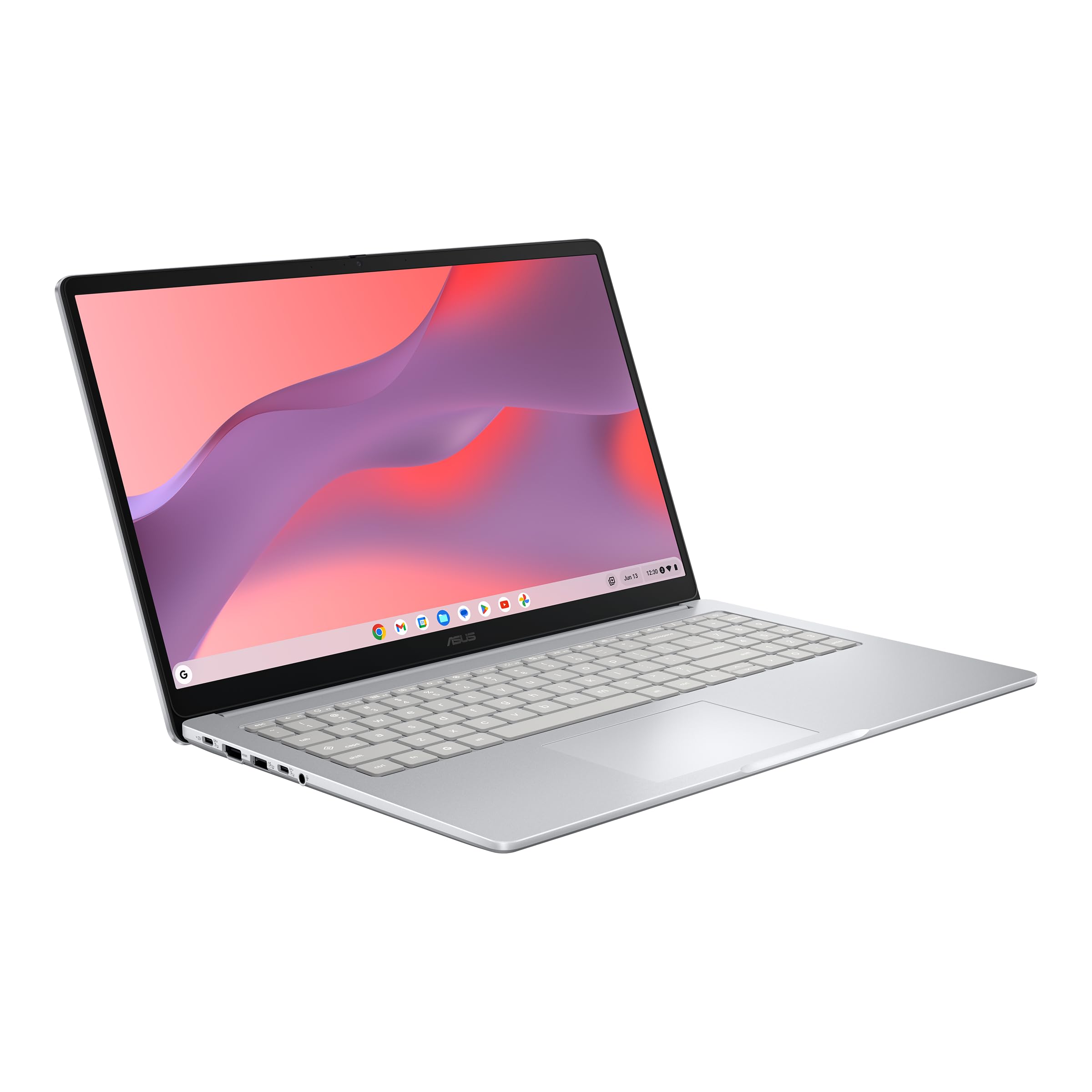
The ASUS Chromebook CX15 is built for the backpack-and-desk life of a young student. It meets the MIL-STD-810H military-grade durability standard, meaning it can survive drops, vibrations, and temperature extremes that would crack a standard consumer laptop. The 15.6-inch FHD NanoEdge anti-glare display is bright and sharp, and the narrow bezel keeps the overall footprint manageable despite the large screen. At 3.53 pounds, it’s light enough for a child to carry without complaint.
Under the hood, the Intel Processor N50 is a step up from the Celeron N4500, with better single-core performance for responsive web browsing and app switching. The 8GB of LPDDR5 memory and 128GB of storage provide ample room for educational apps, offline Google Docs, and downloaded videos. The numeric keypad is a bonus for students who are beginning to work with spreadsheets or math drills that require number entry.
The Chromebook includes 3 months of Google AI Pro and 2TB of cloud storage, which is useful for backup but not essential for most elementary-age users. Battery life is rated at up to 10 hours, though some users report quicker drain under heavy use. The lack of Bluetooth is a notable omission for connecting wireless headphones or a mouse. For parents who want a durable, large-screen Chromebook that can handle the bumps of elementary school life, the CX15 is a top contender.
Why it’s great
- MIL-STD-810H certification provides exceptional drop and vibration protection
- 15.6″ FHD anti-glare display is sharp and reduces reflections
- Numeric keypad helps with math and data entry tasks
Good to know
- No Bluetooth support for wireless headphones or peripherals
- Battery life can dip below 8 hours with heavy use
- Not a touchscreen, which some younger students may prefer
4. Acer Chromebook Plus 515
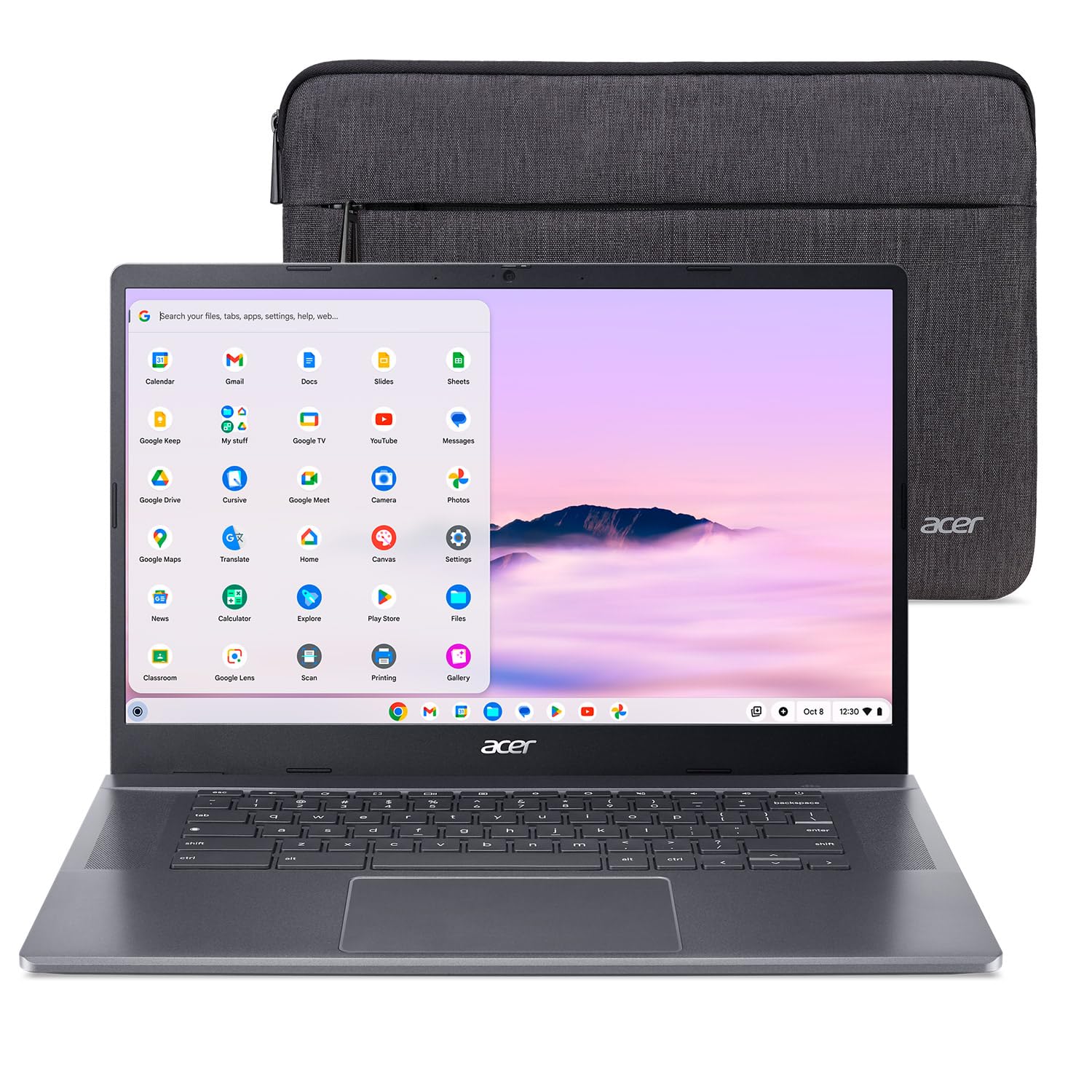
The Acer Chromebook Plus 515 is the most powerful Chromebook on this list, with a 13th-gen Intel Core i3-1305U processor, 8GB of LPDDR5X RAM, and a 256GB PCIe Gen4 SSD. This is a premium configuration that runs educational apps, video editing tools, and even light gaming with no hesitation. The 15.6-inch FHD IPS touch display is bright, colorful, and responsive — a real advantage for younger students who are still developing fine motor control and find touch navigation more intuitive than a trackpad.
The Chromebook Plus designation means it comes with Google AI features like Gemini, which can summarize text, remove photo distractions, and convert handwriting into digital text. For an older elementary student who is writing reports or doing research, these tools can be genuinely helpful. The 10-hour battery life is realistic for mixed use, and the included protective sleeve is a nice touch for daily transit.
The main downside is that the operating system’s advanced features can be complex for a young child to navigate without supervision. Some users report that settings and file management are less intuitive than on a standard Chromebook. The lack of a backlit keyboard is a puzzling omission at this price point. For families who want a premium Chromebook that will serve a student from elementary through middle school, the Acer Chromebook Plus 515 is a future-proof investment.
Why it’s great
- Intel Core i3 processor delivers desktop-class performance for multitasking
- 15.6″ FHD IPS touch display is vibrant and responsive
- 256GB PCIe SSD provides fast storage and ample space for files and apps
Good to know
- Chrome OS advanced features may be confusing for very young users
- No backlit keyboard despite the premium price
- Settings and file management can feel less intuitive than standard Chromebooks
5. ASUS 14″ Laptop for Business & Student

For families who prefer Windows over Chrome OS, the ASUS 14-inch laptop is an entry-level machine that includes a full year of Microsoft 365, making it ready for word processing and spreadsheet work right out of the box. The Intel Celeron N4500 processor and 4GB of RAM are enough for basic tasks — web browsing, typing in Word, and light educational apps — but the 4GB memory limit means you should keep expectations modest.
The 14-inch FHD display is the standout feature at this price point, with 1920 x 1080 resolution that makes text crisp and easy to read. The 64GB eMMC storage is sufficient for cloud-centric use but fills up fast if you download apps or save files locally. The battery life is solid, lasting around 10 hours in real-world use, which covers a full school day. The ASUS brand has a strong reputation for durability — several reviewers report these laptops lasting five years or more with normal use.
The keyboard includes a touch NumberPad, which is a clever space-saving feature, though it takes some practice to use accurately. The webcam is adequate for video calls, and the port selection includes HDMI and USB-C for connecting to external displays or accessories. For a family that wants a budget-friendly Windows machine with a sharp screen and Office included, this ASUS delivers solid value.
Why it’s great
- 14″ FHD display provides sharp, readable text for educational content
- Includes a full year of Microsoft 365 for Office apps
- ASUS build quality is known for lasting 5+ years with normal use
Good to know
- 4GB RAM limits multitasking and heavier applications
- 64GB eMMC storage fills quickly with downloaded content
- Intel Celeron N4500 is a basic processor, not suited for demanding tasks
6. HP Portable Laptop, Student and Business

The HP Portable Laptop offers a step up in RAM compared to the ASUS entry-level — 8GB of DDR4 memory — which makes a real difference for Windows multitasking. The Intel Celeron N4120 processor is a quad-core chip, which handles basic office tasks and educational software more comfortably than the dual-core N4500. The 14-inch HD display (1366 x 768) is lower resolution than the ASUS, but for a student doing math drills, reading ebooks, and typing, it’s perfectly adequate.
The inclusion of a 1-year Office 365 subscription adds immediate value for families who need Word and Excel. The port selection includes USB-C, HDMI, and even an RJ-45 Ethernet port, which is rare on budget laptops and can be useful for a stable internet connection during online classes. At just over 3 pounds, it’s light enough for a child to carry in a backpack without strain.
The battery life is the weakest point — only around 3 hours of real-world use, which means the charger needs to come along for a full school day. Some users report screen glitches and keyboard delay after extended use, though these issues are not universal. The HP build quality is serviceable but not as rugged as the ASUS or Lenovo options. For families on a tight budget who need 8GB of RAM and Windows compatibility, this HP is a functional pick with clear battery limitations.
Why it’s great
- 8GB DDR4 RAM allows smoother Windows multitasking than 4GB models
- Includes 1-year Office 365 subscription for Microsoft apps
- Port selection includes USB-C, HDMI, and Ethernet for versatile connectivity
Good to know
- Battery lasts only about 3 hours, requiring frequent charging
- 1366 x 768 HD display is less sharp than FHD alternatives
- Some users report occasional screen and keyboard glitches
7. Acer Chromebook 2023 Flagship Laptop

The Acer Chromebook is the most budget-friendly option on this list, and it includes a 5-in-1 accessory bundle with wireless earbuds, a mouse, mouse pad, HDMI cable, and USB cable — everything a student needs to get started. The 15.6-inch HD anti-glare display is large and works well in bright classrooms, though the 1366 x 768 resolution is noticeably less sharp than FHD. The Intel Celeron N4020 with 4GB of RAM is the baseline for Chrome OS, handling two or three browser tabs without issue but struggling with more.
At 3.59 pounds, it’s not the lightest Chromebook, but the large screen makes it easier for young students to see worksheets and web pages without squinting. The battery life is rated at 12 hours, and in real-world use it comfortably lasts a full school day. The dual USB-C and dual USB-A ports provide good connectivity for accessories and flash drives.
The 64GB eMMC storage is enough for cloud-based schoolwork, but offline content and downloaded apps will fill it quickly. The HD 720p webcam is standard for the price. The included accessories are basic but functional — the earbuds and mouse save a separate purchase. For families who need the lowest possible entry point and appreciate the bundle, this Acer Chromebook delivers the essentials for classroom use.
Why it’s great
- Comes with a 5-in-1 accessory bundle including earbuds and mouse
- 15.6″ anti-glare display works well in bright classrooms
- Battery life lasts a full school day with margin to spare
Good to know
- 4GB RAM limits multitasking beyond a few browser tabs
- 1366 x 768 HD resolution is less sharp than FHD displays
- Intel Celeron N4020 is a basic processor for light use only
8. Dell 15 Laptop DC15255
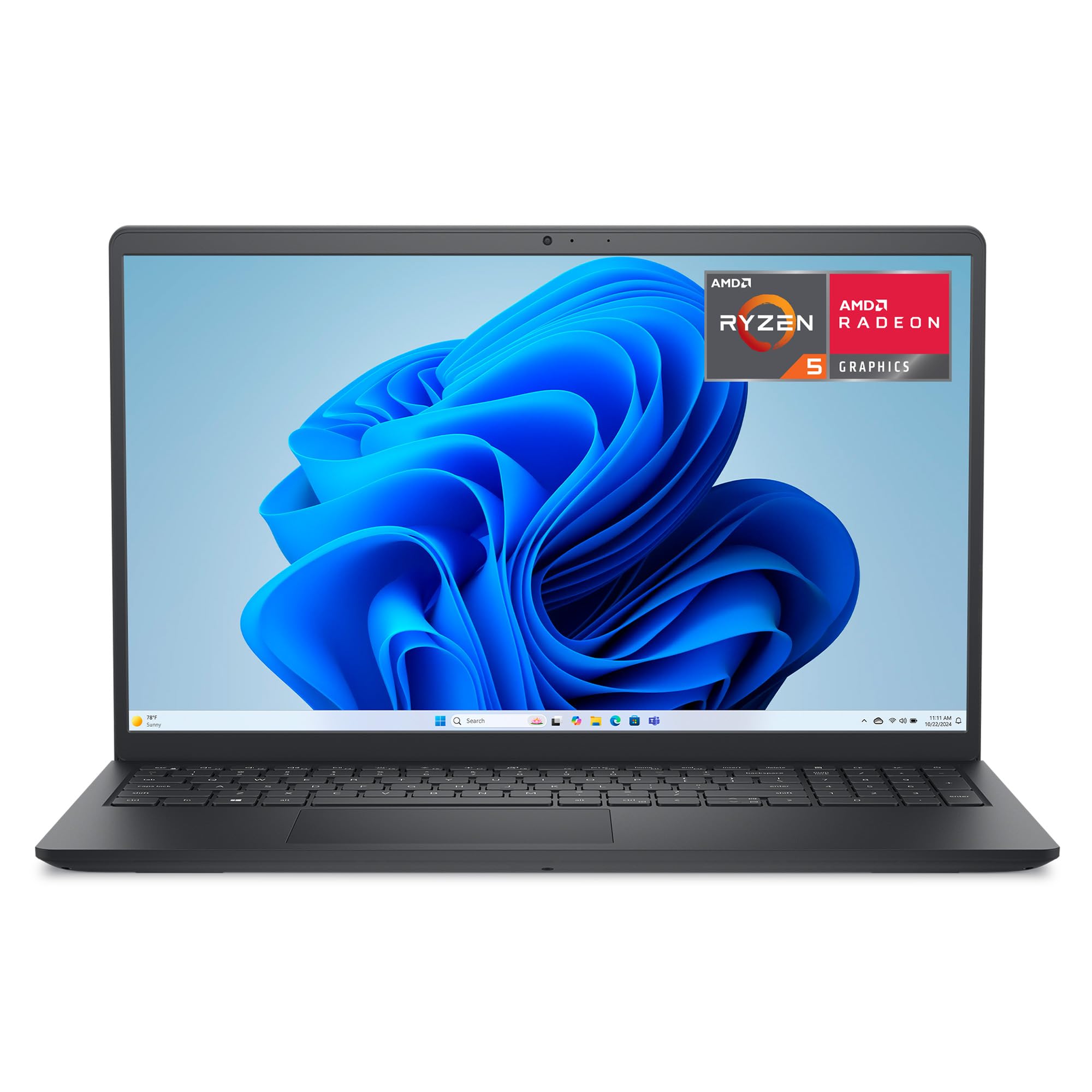
The Dell 15 Laptop brings genuine desktop-grade performance to the elementary student category with an AMD Ryzen 5-7520U processor, 8GB of LPDDR5 RAM, and a massive 512GB PCIe SSD. This is a Windows laptop that won’t slow down as the student grows into more demanding software — it handles web research, word processing, video streaming, and even light coding or video editing without breaking a sweat. The 15.6-inch FHD display with a 120Hz refresh rate is smoother than typical 60Hz laptop screens, making scrolling through documents and web pages feel fluid.
The ergonomic lifted hinge design keeps wrists comfortable during typing, and the separate numeric keypad is useful for math assignments. Dell includes 1 year of onsite service, which means a technician will come to your home if hardware issues arise — a reassuring safety net for a family’s investment. The adaptive thermal system keeps the laptop cool whether it’s on a desk or a child’s lap.
The main trade-off is the build quality — some users report that the chassis feels less premium than the price suggests, with occasional reports of intermittent freezing and less-than-ideal battery life. The AMD Radeon 610M graphics are not suitable for gaming, so parents should set expectations accordingly. For families who want a Windows machine with enough storage and performance to last through middle school, the Dell 15 is a capable choice with excellent service support.
Why it’s great
- AMD Ryzen 5 processor delivers strong multitasking performance for Windows apps
- 512GB PCIe SSD provides fast storage and ample space for files and programs
- 1-year onsite Dell service offers in-home support if issues arise
Good to know
- Chassis build quality feels less premium than the price suggests
- Integrated Radeon graphics are not suitable for gaming
- Some users report intermittent battery life and performance issues
9. Apple 2026 MacBook Neo 13-inch

The Apple MacBook Neo 13 is the premium outlier on this list, offering the A18 Pro chip, a gorgeous 13-inch Liquid Retina display with 500 nits of brightness, and up to 16 hours of battery life. This is a machine that will handle any educational task with effortless speed and will remain relevant for a student through high school and beyond. The Liquid Retina display renders text with exceptional sharpness — reading ebooks, articles, and worksheets is a genuinely pleasant experience compared to lower-resolution panels.
The all-day battery life is unmatched — 16 hours means a student can forget the charger entirely on a school day and still have plenty of power for evening homework. The durable aluminum chassis is lighter than many plastic Chromebooks (2.71 pounds) and is available in fun colors like Blush and Citrus that appeal to younger users. The 1080p FaceTime HD camera and dual-mic array provide excellent video call quality for virtual learning sessions.
The cost is the obvious barrier, and the fixed 8GB of RAM (non-upgradable) means there’s no expansion path as software demands grow. The base model lacks Touch ID and has no backlit keyboard, which is disappointing at this price. For families already in the Apple ecosystem who want a device that will serve a child for years, the MacBook Neo offers a premium experience. For most elementary school budgets, however, a Chromebook remains the more practical choice.
Why it’s great
- A18 Pro chip delivers exceptional performance for educational and creative apps
- 13″ Liquid Retina display with 500 nits is bright, sharp, and easy on the eyes
- Up to 16 hours of battery life easily outlasts a full school day
Good to know
- 8GB of RAM is non-upgradable, limiting future-proofing
- Base model lacks Touch ID and a backlit keyboard
- Price is significantly higher than Chromebook and Windows alternatives
FAQ
Is 4GB of RAM enough for an elementary student’s Chromebook?
Should I buy a Chromebook or a Windows laptop for my child?
What does MIL-STD-810H certification mean for a student laptop?
How much storage does an elementary student actually need?
Final Thoughts: The Verdict
For most families, the best computer for elementary students winner is the Lenovo IdeaPad 3i Chromebook because it combines 8GB of RAM, a bright 15.6-inch FHD display, and reliable 10-hour battery life at a price that doesn’t strain the household budget. If you want the fastest boot times and a compact 14-inch form factor, grab the HP Chromebook 14. And for premium durability that can survive the rough-and-tumble world of elementary school, nothing beats the ASUS Chromebook CX15 with its MIL-STD-810H certification.

Mo Maruf
I created WellFizz to bridge the gap between vague wellness advice and actionable solutions. My mission is simple: to decode the research and give you practical tools you can actually use.
Beyond the data, I am a passionate traveler. I believe that stepping away from the screen to explore new environments is essential for mental clarity and physical vitality.