Our readers keep the lights on and my smoothie glass nicely filled. As an Amazon Associate, I earn from qualifying purchases.
Specs are compiled from manufacturer listings and verified buyer reviews and can change over time — please confirm the key details on the product page before buying.
Picking a computer for 3D printing is really about picking the engine that turns a mesh into a finished part without freezing every other app you have open. The wrong machine makes every layer a waiting game, while a well-matched one lets you slice complex models, run dual screens for the printer’s feed, and still keep browser tabs alive.
I’m Mohammad Maruf — the founder and writer behind WellFizz. This guide is built by comparing the manufacturers’ published specifications and the patterns across verified customer reviews, so you get each pick’s real strengths and trade-offs instead of marketing spin.
If you want a computer that handles the heavy math of slicing and the visual load of CAD without choking, you need a machine with a fast multi-core CPU and dedicated graphics. That is exactly what this guide to the best computer for 3d printing delivers — real specs, real buyer feedback, and a direct comparison of four purpose-built desktops.
Quick Picks
- STORMCRAFT Skyhawk PRO Gaming PC — Best Overall
- Cooler Master NR2 Pro Gaming PC — Compact Pick
- Skytech Gaming O11 Vision Gaming PC — Performance Pick
- WIWB Gaming Desktop PC, Ryzen 7 9800X3D — Budget Champion
How To Choose The Best Computer For 3D Printing
Choosing the right desktop for 3D printing means matching the hardware to the two jobs it must do: slicing a digital model into layers, and then driving the printer via USB or network while you do other things. The CPU handles the slicing math, and the GPU (graphics card) handles what you see on screen.
Prioritize a High Single-Core CPU Clock Speed
Slicing software like Cura or PrusaSlicer mostly uses one or two cores at a time. That means a CPU with a high “boost clock” (measured in GHz) often finishes slicing faster than a CPU with many slower cores. Look for a chip that hits at least 4.5 GHz or higher for a snappy workflow.
Don’t Skimp on GPU Memory (VRAM)
When you rotate, zoom, and edit a high-polygon STL file in your slicer, the graphics card’s dedicated video memory handles the heavy lifting. 12 GB of VRAM is a good starting point for complex models, and 16 GB gives you room to run a second monitor with a printer camera feed or a design app open at the same time.
Fast Storage Is Non-Negotiable
A large 3D model file can easily top 100 MB. Loading that into your slicer from a slow hard drive can take minutes. An NVMe SSD (a solid-state drive that plugs directly into the motherboard’s fast lane) cuts that load time to seconds and makes the whole system feel snappier.
Quick Comparison
| Model | Best For | CPU Boost Clock | GPU VRAM | System RAM | Amazon |
|---|---|---|---|---|---|
| WIWB Gaming Desktop, Ryzen 7 9800X3D | Budget entry | 5.7 GHz | 12 GB | 16 GB DDR5 | Amazon |
| STORMCRAFT Skyhawk PRO | Premium performance | 5.2 GHz | 16 GB | 32 GB DDR5 | Amazon |
| Cooler Master NR2 Pro | Compact power | 5.2 GHz | 16 GB | 32 GB DDR5 | Amazon |
| Skytech Gaming O11 Vision | High-end workstation | 5.6 GHz | 16 GB | 32 GB DDR5 | Amazon |
In‑Depth Reviews
1. STORMCRAFT Skyhawk PRO Gaming PC

The extra VRAM and huge storage make it the true slicer’s workstation.
This desktop gives you 16 GB of dedicated graphics memory (GDDR7 on the RTX 5070 Ti) compared to 12 GB on the entry-level model — a 33% gap that matters when you are rotating a dense model in a preview window. The CPU boost clock tops out at 5.2 GHz, which is fast enough to crunch through most slicing jobs in under a minute. You also get 32 GB of DDR5 system memory running at 6000 MHz, so you can keep a browser with multiple research tabs open, a printer monitor app running, and music playing without any lag.
The storage is a 2 TB NVMe Gen4 SSD — double the space of budget options — giving you room for dozens of large model files, firmware backups, and project folders without ever hitting the gas pedal on speed. Buyers report this machine “runs Star Citizen at Ultra on 1080p: 48 FPS in cities, 200+ FPS in space,” which tells you the cooling and power delivery (850W Gold PSU) keep components stable under sustained load. The 360mm AIO liquid cooler keeps the CPU from thermal-throttling during a long render or slice session.
One small trade-off is the case size: 16.9 x 9 x 18.5 inches is larger than compact ITX builds, so it takes up a proper footprint on your desk. Also, a few buyers noted the top headphone jack had buzzing interference (the rear jack worked fine). For the price, you get serious capacity for both slicing and the occasional simulation run.
Why it works for 3D printing
- 16 GB VRAM handles large STL previews without slowdown
- 2 TB NVMe storage fits huge libraries of model files
- 32 GB DDR5 memory keeps multitasking fluid during long prints
Things to watch
- Bulkier case uses more desk space than compact alternatives
- A headphone jack issue reported by a few, though rear port works
Best for intensive workflows: If you slice complex multi-part assemblies and keep design software open alongside, the Skyhawk PRO has the VRAM and RAM to keep everything snappy.
skip it if: You need the smallest possible footprint — the Cooler Master NR2 Pro takes up less space.
2. Cooler Master NR2 Pro Gaming PC
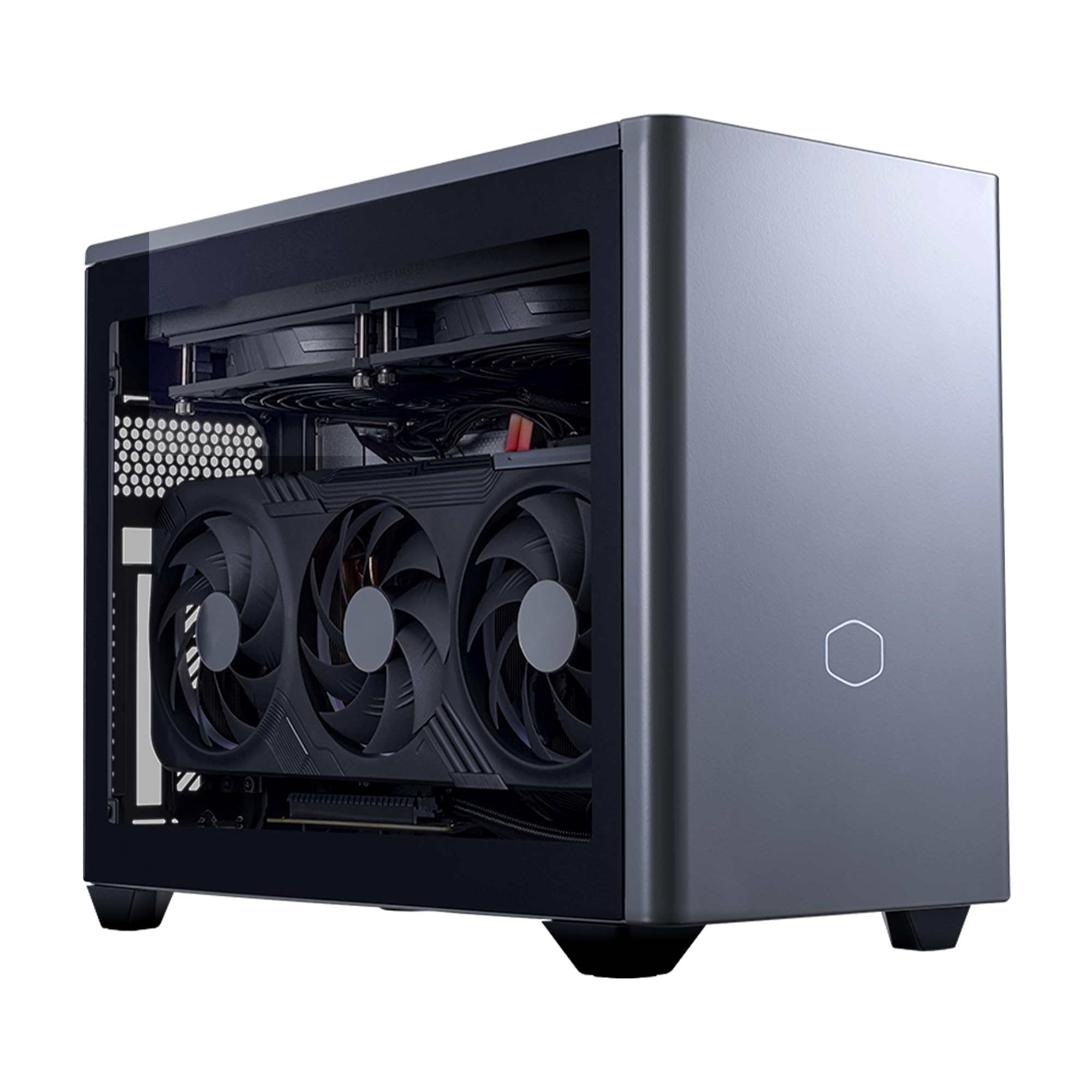
A 18.25-liter powerhouse that slips into tight workspaces.
Unlike the full-tower STORMCRAFT above, this Cooler Master fits into a roughly shoebox-sized chassis (18.25 L total volume) that you can tuck on a corner desk or even pack into a small duffel bag without sacrificing performance. Inside you get the same Ryzen 7 9800X3D CPU hitting up to 5.2 GHz and a full 16 GB of VRAM on the RTX 5070 Ti, which is the same amount of graphics memory as the Skyhawk PRO in a much smaller package. The trade-off is that the 2 TB storage and 32 GB of DDR5 RAM match the Skyhawk, but the cache memory installed is 32 GB compared to the Skyhawk’s 96 MB L-cache — the direct numeric comparison here is about the system RAM in this context, and both have 32 GB.
Owners mention that this PC runs “Cyberpunk 2077 at 4K RT Ultra: ~76 avg FPS, ~68 min, no frame gen, DLSS auto” and note it stays “very quiet, barely audible hum 2 feet away.” For 3D printing, that quiet operation means you can leave the machine running through a long slice or while you monitor a print overnight without fan noise bothering you. One reviewer noted that upgrading the M.2 slot is tricky due to the compact layout, so plan ahead if you think you will add storage later. The case comes with both a glass panel and a mesh panel, so you can prioritize either looks or airflow depending on your room temperature.
Small size, big specs
- Very compact footprint for desk-constrained shops
- Quiet operation even under load, good for overnight prints
- Same 16 GB VRAM and 5.2 GHz CPU as larger competitors
Minor compromises
- M.2 drive is harder to reach for future upgrades
- Runs warm under sustained load, though customers note solid build
Reach for this if: Desk space is tight but you refuse to compromise on GPU power — the NR2 Pro packs a full RTX 5070 Ti into a mini-ITX frame.
Look elsewhere if: You plan to swap drives often — the tight layout makes upgrades more involved.
3. Skytech Gaming O11 Vision Gaming PC
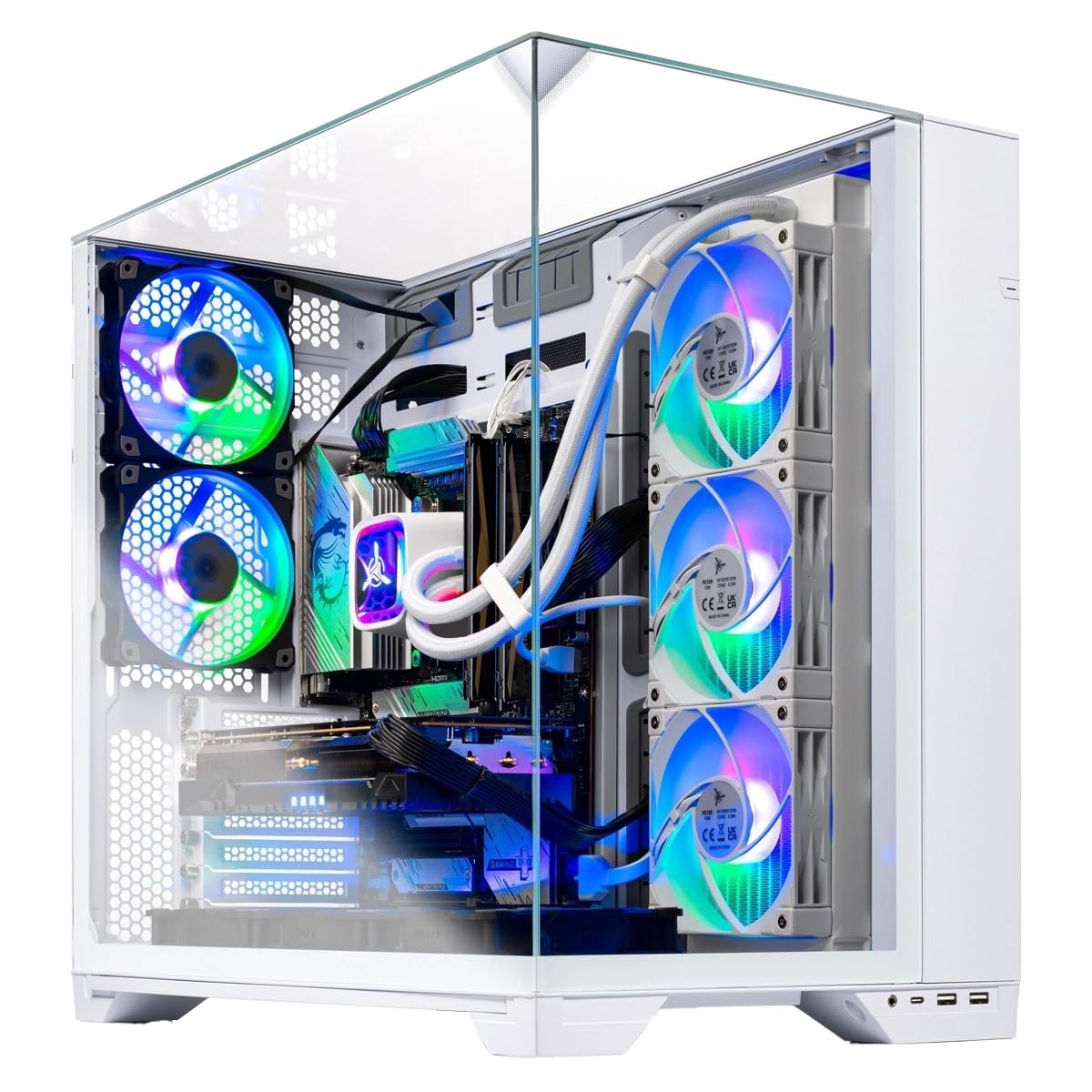
A 5.6 GHz turbo boost that slices through models in seconds.
This Skytech machine swaps the 9800X3D for the newer Ryzen 7 9850X3D, which boosts to a higher 5.6 GHz versus the 5.2 GHz ceiling on the other picks — a 10% higher peak speed that directly translates to faster single-core slicing. The RTX 5070 Ti still gives you 16 GB of GDDR7 VRAM, and the 32 GB of DDR5 RAM runs at 5600 MHz. That combination means you can load a 200 MB model into your slicer, preview it at high resolution, and then hit slice without the interface ever stuttering.
The case is the Lian Li PC-O11 Vision in white, which uses a 360mm AIO liquid cooler to keep the CPU temp in check during sustained rendering. Reviewers point out the setup is easy and the case looks stunning on a desk. A couple of important caveats: the system ships with Wi-Fi 5 (802.11ac) rather than the faster Wi-Fi 6 found on the WIWB model, and the cache memory installed is 8 MB L-cache, which is smaller than the 96 MB on the STORMCRAFT — but for slicing (which cares more about raw clock speed than cache depth), the higher boost clock pulls ahead.
Blazing clock speed
- 5.6 GHz boost is the fastest single-core of any pick here
- 16 GB VRAM handles complex model previews and dual monitors
- Large 360mm AIO cooler keeps temps stable during long sessions
Notable trade-offs
- Wi-Fi 5 instead of Wi-Fi 6, slower for network file transfers
- Smaller cache (8 MB) compared to the 96 MB on the Skyhawk
Go this route if: You want the highest possible slicing speed — the 5.6 GHz boost clock is the top single-core performer here.
pass on it if: You rely heavily on fast Wi-Fi for uploading large STL files to a network drive.
4. WIWB Gaming Desktop PC, Ryzen 7 9800X3D
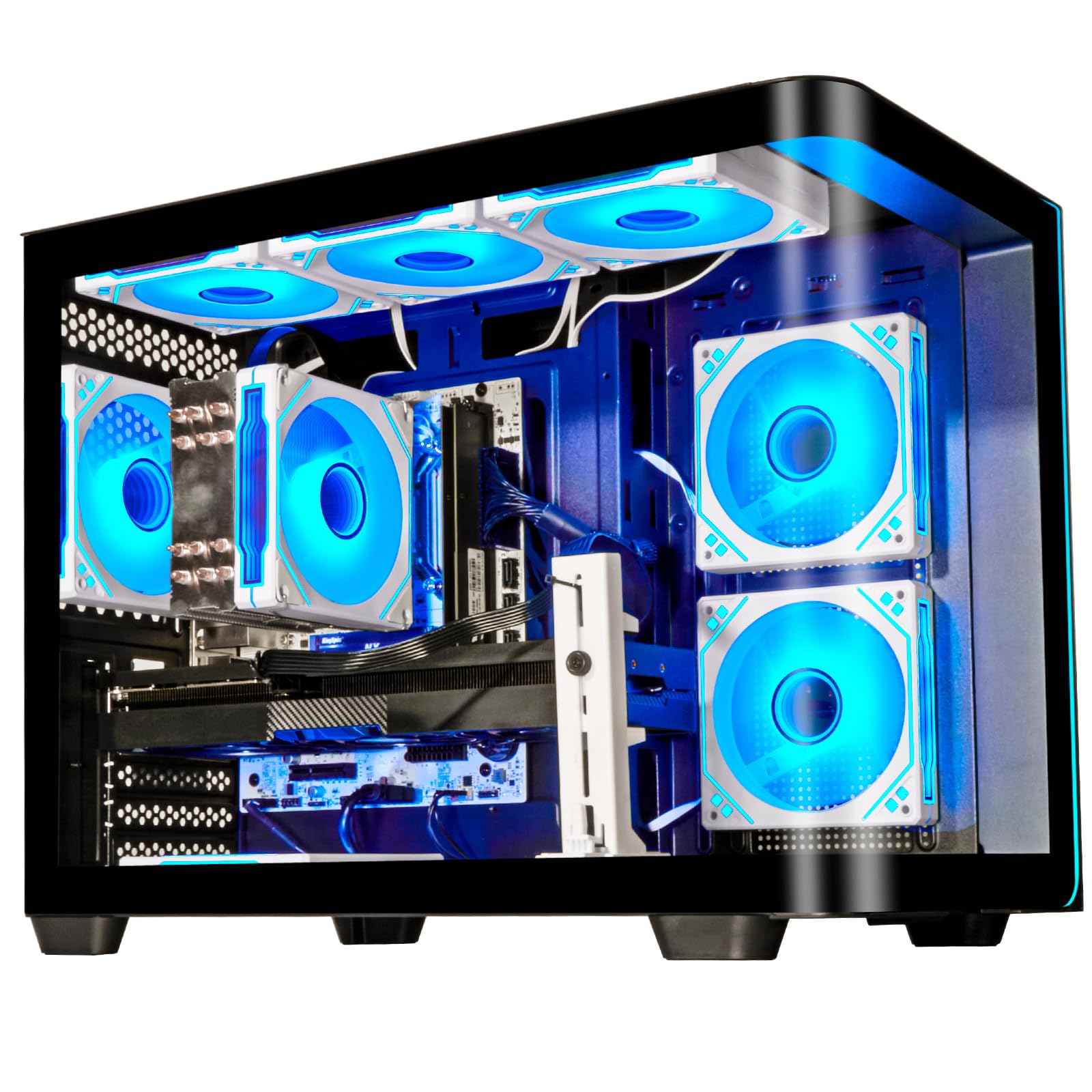
The budget door into 3D printing that still packs a 5.7 GHz CPU.
At a lower sticker price than all the other picks, this WIWB desktop gives you the fastest CPU boost clock of the entire group — 5.7 GHz — which is the top speed here for slicing single-threaded tasks. For slicing smaller to medium-sized models, that is plenty; for assembling a multi-part assembly with a hundred thousand polygons in the preview, you will feel the memory ceiling.
The storage is a 1 TB NVMe Gen4 SSD — half the space of the premium picks, but enough for many projects if you rotate files off to an external drive. Shoppers say it is “affordable, works well, neatly packaged” and that it plays games without lag. However, there are multiple reports of units arriving with cosmetic damage to the case, and a few buyers mention crashing issues or missing Bluetooth hardware. In this price tier, you trade some build quality and support for the raw CPU speed — fine for a secondary shop machine or a first upgrade from a laptop.
Great CPU, low cost
- 5.7 GHz boost is the fastest single-core speed in the roundup
- 12 GB VRAM is enough for most hobbyist slicing tasks
- Wi-Fi 6 is faster for network file transfers than the Skytech’s Wi-Fi 5
Real trade-offs
- Only 16 GB RAM may slow multitasking with large models
- Multiple reports of case damage and missing Bluetooth in reviews
Best for beginners on a budget: The 5.7 GHz CPU gives you the slicing speed of a premium machine at a fraction of the cost.
Not for you if: You need rock-solid reliability from the start or plan to handle very large multi-part assemblies right away.
Understanding the Specs
CPU Boost Clock
This is the maximum speed (in GHz) a single processor core can reach under load. Slicing software like Cura mostly uses one or two cores, so a higher boost clock — like 5.7 GHz on the WIWB — finishes slicing faster than a lower one, even if the CPU has many cores. Look for at least 4.5 GHz for comfortable slicing speeds.
GPU VRAM
Video RAM is the dedicated memory on your graphics card. When you zoom, rotate, or preview a high-polygon model in your slicer, the GPU uses this memory to hold the mesh data. More VRAM (16 GB vs 12 GB) means you can work with larger, more detailed models without the viewport becoming choppy.
FAQ
Do I need a dedicated graphics card for 3D printing?
How much RAM do I need for 3D printing?
Is a gaming PC good for 3D printing?
Does CPU speed matter more than core count for slicing?
Can I use a laptop for 3D printing?
How much storage do I need for 3D printing files?
Will a computer with 12 GB of VRAM be enough for 3D printing?
What is the difference between a Ryzen 7 9800X3D and a 9850X3D for 3D printing?
Do I need liquid cooling for a 3D printing computer?
Is Wi-Fi 5 enough for 3D printing work?
Final Thoughts: The Verdict
For most buyers, the computer for 3d printing winner is the STORMCRAFT Skyhawk PRO because it gives you 16 GB of VRAM, 32 GB of fast DDR5 RAM, and a 2 TB NVMe SSD in a balanced package that handles both slicing and multitasking without compromise. If you want the smallest footprint possible, grab the Cooler Master NR2 Pro. And for the absolute fastest single-core slicing speed on a budget, the WIWB Gaming Desktop delivers a 5.7 GHz CPU at the lowest entry price.
How We Picked
We do not accept paid placement. Every pick is matched to a real buyer and a real use-case; we do not hands-on test units.
Sources & Methodology
Specifications: manufacturer listings and product documentation. Review insights: verified customer reviews, as of July 2026. Pricing: not shown on this page (it changes often); check the current price via the retailer link.
As an Amazon Associate, WellFizz earns from qualifying purchases. This does not affect which products we feature.
Related Guides

Mo Maruf
I created WellFizz to bridge the gap between vague wellness advice and actionable solutions. My mission is simple: to decode the research and give you practical tools you can actually use.
Beyond the data, I am a passionate traveler. I believe that stepping away from the screen to explore new environments is essential for mental clarity and physical vitality.