Our readers keep the lights on and my smoothie glass nicely filled. As an Amazon Associate, I earn from qualifying purchases.
Specs are compiled from manufacturer listings and verified buyer reviews and can change over time — please confirm the key details on the product page before buying.
Painting a car demands an air compressor that delivers steady, high-volume airflow without constantly cycling on and off — otherwise your paint finish gets blotchy or you burn up the motor mid-project. A compressor for auto painting needs enough tank capacity and cubic feet per minute (CFM — the volume of air it pushes per minute) to run a spray gun continuously, plus the portability to move around the garage or shop without a forklift.
I’m Mohammad Maruf — the founder and writer behind WellFizz. This guide is built by comparing the manufacturers’ published specifications and the patterns across verified customer reviews, so you get each pick’s real strengths and trade-offs instead of marketing spin.
Picking the right compressor for auto painting depends on matching tank size, CFM at 90 PSI (pounds per square inch — the working pressure), and horsepower to the air tools you run, while filtering out exaggerated airflow claims that only show up in customer reports.
Quick Picks
- Klutch 29-Gallon Air Compressor — Best Overall
- Stark USA 3.5HP 10-Gallon Air Compressor — Most Versatile
- 13 Gallon Air Compressor (WIILAYOK) — Best Value
- California Air Tools 4620AC Ultra Quiet Air — Quietest Pick
- MZB 6.4 Gallon Ultra Quiet Air Compressor — Budget Champion
How To Choose The Best Compressor For Auto Painting
Auto painting is among the most demanding tasks for an air compressor because spray guns need a steady, high-volume air supply — if the pressure drops mid-stroke, the paint texture changes and you get tiger stripes or orange peel. Here is what actually moves the needle for a paint job.
CFM at 90 PSI — the real number that matters
Horsepower ratings are loosely regulated and often exaggerated. The spec that determines whether your spray gun keeps running is CFM (cubic feet per minute) at 90 PSI (pounds per square inch — the working pressure). Most HVLP (high volume low pressure) spray guns need 5-8 CFM at 90 PSI so they keep a consistent paint flow. If the compressor’s CFM rating is only listed at 40 PSI, that number will be higher than what you actually get at 90 PSI — so always look for the 90 PSI figure.
Tank size — your buffer against bogging down
A larger tank does not make the CFM higher, but it gives you a bigger reserve of compressed air. For auto painting, a 10-gallon or larger tank lets you spray a hood or door without the compressor cycling on mid-pass. Smaller 4-6 gallon tanks work for touch-ups but will cycle more frequently, which can be disruptive in a quiet garage.
Oil-free vs oil-lubricated pumps
Oil-free pumps require less maintenance and produce cleaner air (no oil mist in your paint), but they tend to be louder and have shorter lifespans. Oil-lubricated pumps run quieter, last longer, and are generally preferred for continuous-use painting, but you must check the oil level regularly and change it per the schedule.
Quick Comparison
| Model | Best For | Tank Capacity | Max PSI | CFM @ 90 PSI | Amazon |
|---|---|---|---|---|---|
| Klutch 29-Gallon | Continuous shop painting | 29 gallons | 175 PSI | 5.1 SCFM | Amazon |
| Stark USA 3.5HP 10-Gallon | HVLP gun work | 10 gallons | 125 PSI | 8.37 CFM* | Amazon |
| WIILAYOK 13-Gallon | DIY painting at home | 13 gallons | 115 PSI | 6.5 CFM | Amazon |
| California Air Tools 4620AC | Noise-sensitive garages | 4.6 gallons | — | 5.30 CFM | Amazon |
| MZB 6.4-Gallon Ultra Quiet | Budget light painting | 6.34 gallons | 115 PSI | 7.41 CFM* | Amazon |
* CFM rating at unknown PSI — buyer reports suggest real output at 90 PSI is significantly lower.
In‑Depth Reviews
1. Klutch 29-Gallon Air Compressor
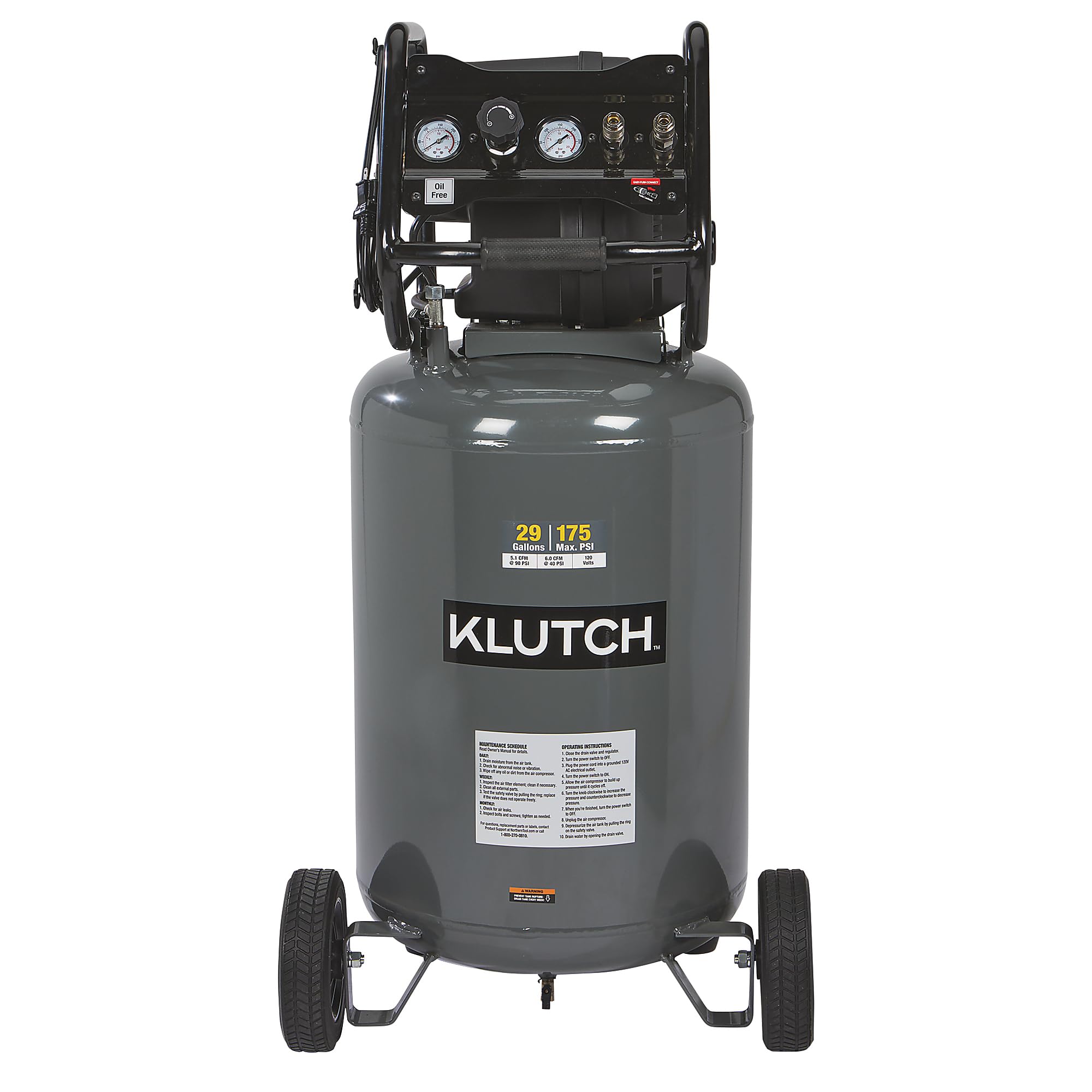
The big-tank workhorse that keeps your spray gun fed without mid-job cycling.
Auto painting calls for a compressor that does not run out of breath halfway through a hood, and the Klutch delivers that with a massive 29-gallon steel tank. It creates a 175 PSI maximum pressure reserve — 40% more headroom than the 125 PSI of the Stark USA unit lower down the list. So you get more usable air before the motor kicks back on. At 5.1 SCFM (standard cubic feet per minute — CFM adjusted for standard conditions) at 90 PSI, it covers most HVLP guns for continuous spraying. The oil-free pump means you never mess with oil changes or worry about oil mist contaminating your paint. The vertical footprint (23.2 by 21.1 inches on the floor, 45.3 inches tall) saves floor space in a crowded shop, and the large flat-free tires make it possible to roll the 127-pound unit to the next bay.
Buyers report daily shop use with no issues after months — one owner noted it is “relatively quiet” for its size and holds pressure well. The honest catch is portability: the same reviewer points out “don’t count on it being portable” despite the wheels, and one unit arrived with a bent foot that caused a wobble. If you need a stationary shop compressor that handles continuous painting and pneumatic tools without breaking a sweat, this is the one.
Shop-Ready Strengths
- 29-gallon tank provides a deep air reserve for long spray passes
- 175 PSI max gives 40% more headroom than a typical 125 PSI unit
- Oil-free design eliminates maintenance and oil-in-paint risk
Heads Up
- Still 127 pounds even with wheels, one buyer called it “not portable”
- Minor assembly quality issues reported (bent foot on arrival)
- 5.1 SCFM is marginal for high-consumption spray guns
Reach for this if: you have a dedicated shop space and want a large air reserve for painting full vehicles without waiting on the pump.
Look elsewhere if: you need to haul the compressor between job sites — the weight and vertical design make that a grind.
2. Stark USA 3.5HP 10-Gallon Air Compressor
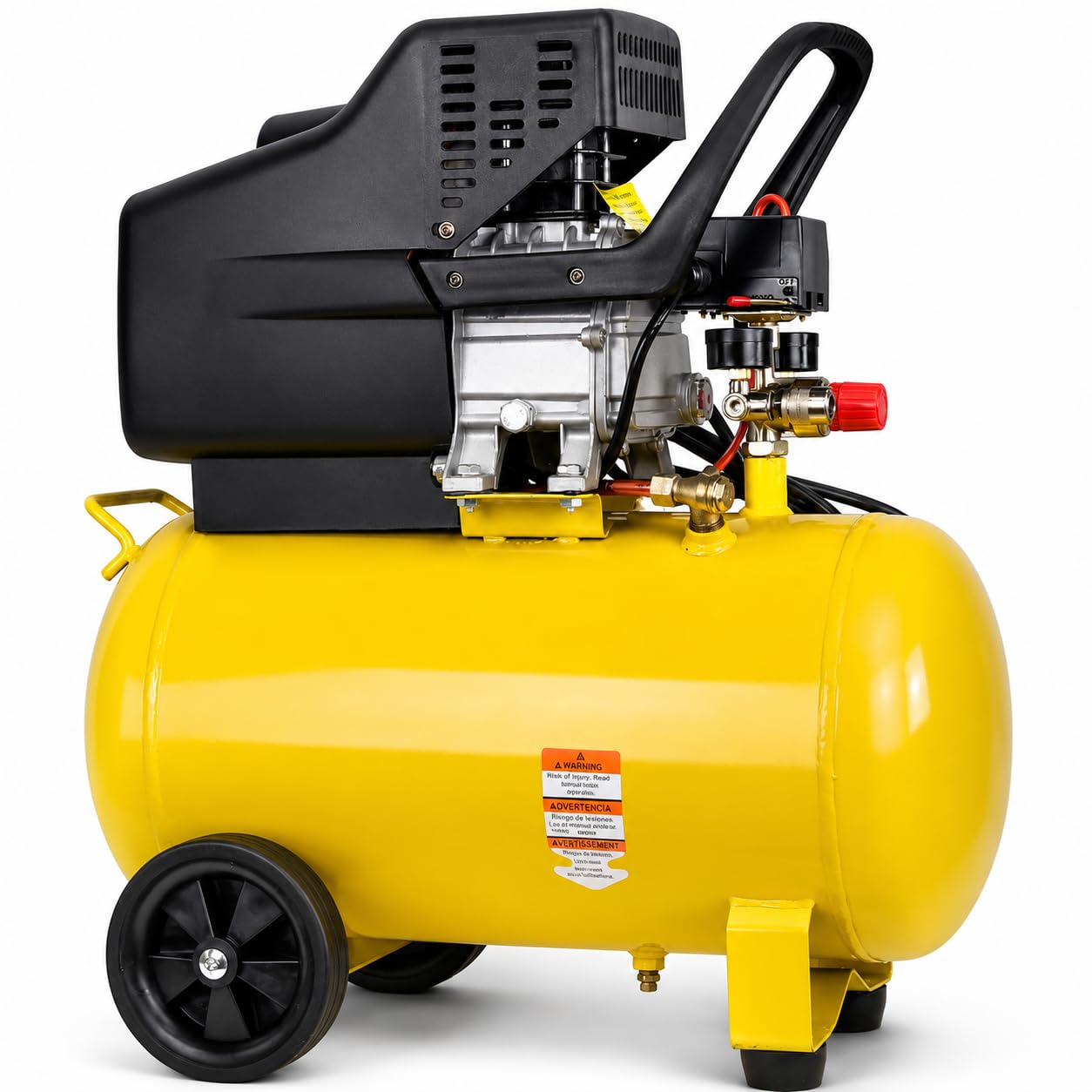
The mid-size unit that bridges garage work and residential noise limits.
Where the Klutch excels on sheer volume, the Stark USA wins on quiet operation and HVLP gun compatibility at a mid-range entry point. The 3.5 HP motor delivers 8.37 CFM at the advertised specs — enough to keep spray guns fed. The 10-gallon horizontal tank stores enough air for painting panels without constant pump cycling, and at 61.05 pounds this is 30% lighter than the Klutch. Buyers specifically report it is “suitable for HVLP guns up to 8.5 CFM (e.g., guitar painting)” and that it “runs flawlessly with synthetic oil.” The 62 dB noise claim is noticeably quieter than the 70 dB California Air Tools, making it viable inside a residential garage without angering the neighbors.
The trade-off appears in build quality reviews: one buyer called the plastic handle “fragile,” and another noted the “pot metal manifold breaks easily with a wrench.” The fittings are described as “China-grade” but acceptable for the price. If you are painting guitars, furniture, or smaller vehicle panels and want a compressor that fits in a home garage without drowning out conversation, this is a smart pick.
Quiet Performer
- 62 dB operation — easy to talk over and quiet in a residential garage
- 8.37 CFM rating covers most HVLP and LVLP spray guns
- 10-gallon tank provides a solid reserve for panel painting
Build Caution
- Plastic handle reported as fragile by buyers
- Manifold fittings are fragile pot metal — handle with care
- Packaging often arrives damaged; scratches on tank are common
Best for: garage DIYers who want spray-painting capability without ear protection and without disturbing the house.
Skip if: you plan to wrench on the fittings aggressively — the manifold metal is soft and breaks easily.
3. 13 Gallon Air Compressor (WIILAYOK)
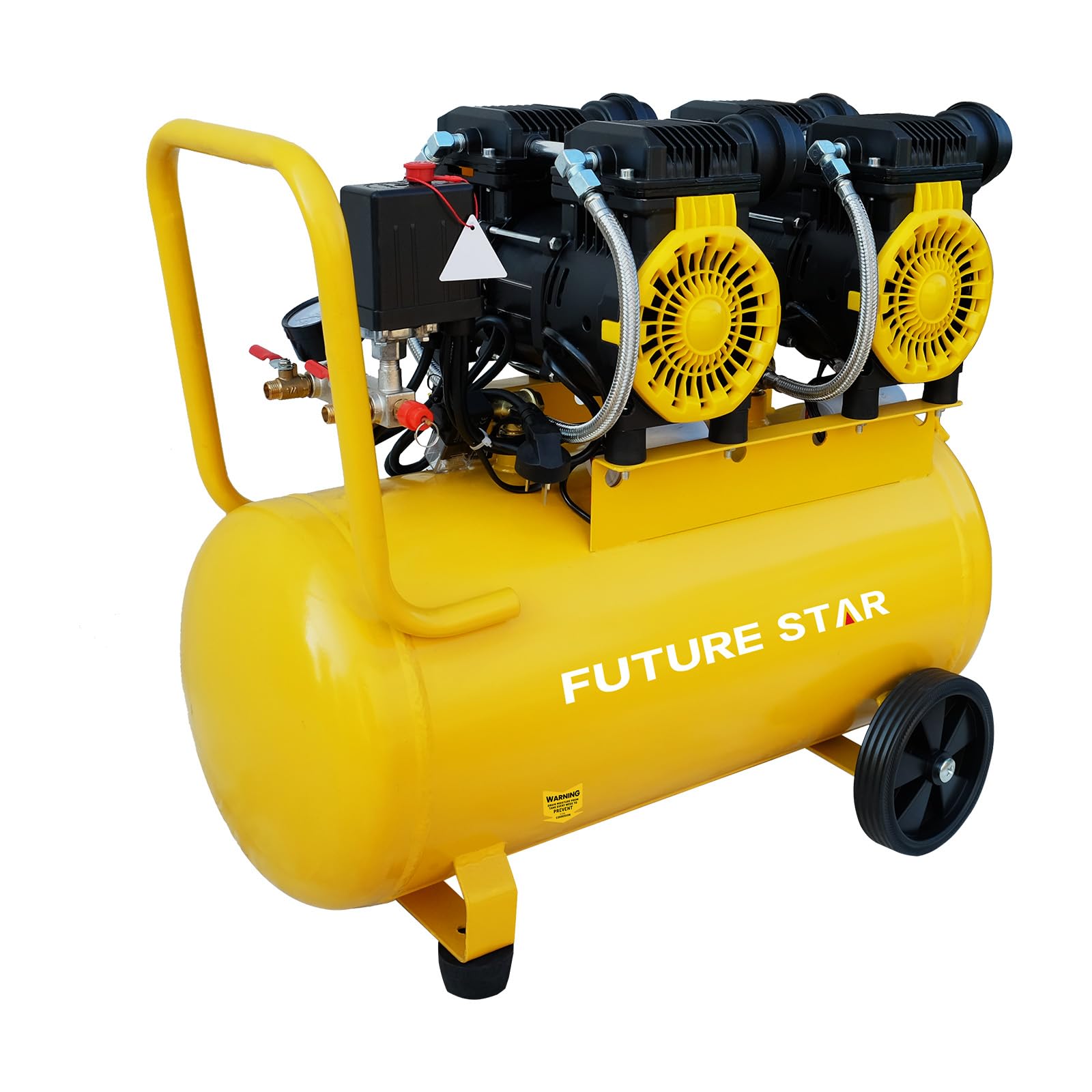
Surprising CFM output at a price that undercuts bigger brands by hundreds.
The WIILAYOK 13-gallon delivers 6.5 CFM at 90 PSI — 14% more airflow than the Klutch’s 5.1 SCFM — from a 4.5 HP motor, all at a price point that makes it the value champion for DIY painters. One experienced buyer who previously owned a Craftsman compressor measured it carefully: “I have been looking for a compressor that could produce 6 scfm at 90 psi. Checked various compressors, including those being sold at Harbor Freight, Home Depot, etc. This is a great price for a compressor that produces 6.5 scfm at 90 psi with over 4.5 hp engine.” At 64 pounds with a top handle and wheels, it is portable enough to move around the garage but stable enough not to tip over.
The honest caveat is fit and finish. Multiple owners mention arrival scratches, missing screws, and a design where “the capacitors are double side taped to the frame.” One owner described it as “cheap design — be aware when buying this its not a finished design.” It lacks hose connections, so you will need to supply your own fittings. But for the CFM-to-dollar ratio, especially if you are upgrading from a small pancake compressor that could not keep up with a spray gun, this delivers real painting performance.
CFM Bargain
- 6.5 CFM at 90 PSI genuinely supports continuous spray gun use
- 13-gallon tank gives good reserve for painting panels
- 4.5 HP motor fills tank in about 1 minute per buyer reports
Raw Edges
- Arrives with cosmetic damage (scratches, tape residue) frequently
- Missing screws and no hose connections included from the start
- Capacitors taped to frame — not a polished industrial design
Grab this if: you are a DIYer on a budget who needs real 6+ CFM for painting and can handle a few assembly quirks.
Pass if: you expect showroom-condition packaging and ready-to-run from the start — this unit needs some setup love.
4. California Air Tools 4620AC Ultra Quiet Air Compressor

Conversation-level noise from a premium brand that runs spray guns all day.
California Air Tools built its reputation on ultra-quiet compressors, and the 4620AC is their mid-size painting solution. The 2.0 HP motor spins at just 1680 RPM (revolutions per minute — a slow rotational speed that reduces vibration and noise) and delivers 5.30 CFM at 90 PSI. The 4.6-gallon aluminum twin tank keeps weight at 68 pounds — practically the same as the 64-pound WIILAYOK despite having a smaller tank. The oil-free dual piston pump is rated for over 3,000 hours of life. One reviewer noted after 6 years: “still quiet, runs 2 framing guns full speed, texture hopper nearly non-stop. Much quieter than pancake compressor.” Its 70 dB rating is louder than the Stark USA’s 62 dB, but the low-pitch tone makes it easier to talk over.
The main trade-off is tank size. At 4.6 gallons, the California Air Tools has less than half the reserve of the 10-gallon Stark USA, which means it will cycle more frequently during painting. The control panel is thin and flex-prone, and the pressure regulator is reported to make “large jumps” rather than smooth adjustments. If noise sensitivity is your top priority — you want to paint inside a garage shared with a home office, for example — this is the quietest option on the list that still has the CFM for a spray gun.
Silent Running
- 70 dB noise level with low-pitch tone — easy to talk over
- 3000+ hour pump life backed by years of buyer reports
- Aluminum tank resists rust and saves weight
Tank Trade-off
- 4.6-gallon tank cycles frequently during continuous spray work
- Thin control panel flexes under pressure gauge torque
- Pressure regulator has coarse jumps, not fine adjustments
Choose this for: indoor painting in noise-sensitive environments where nothing matters more than keeping the decibels down.
Consider another if: you need to paint large sections without the compressor kicking on mid-pass — the small tank runs out fast.
5. MZB 6.4 Gallon Ultra Quiet Air Compressor
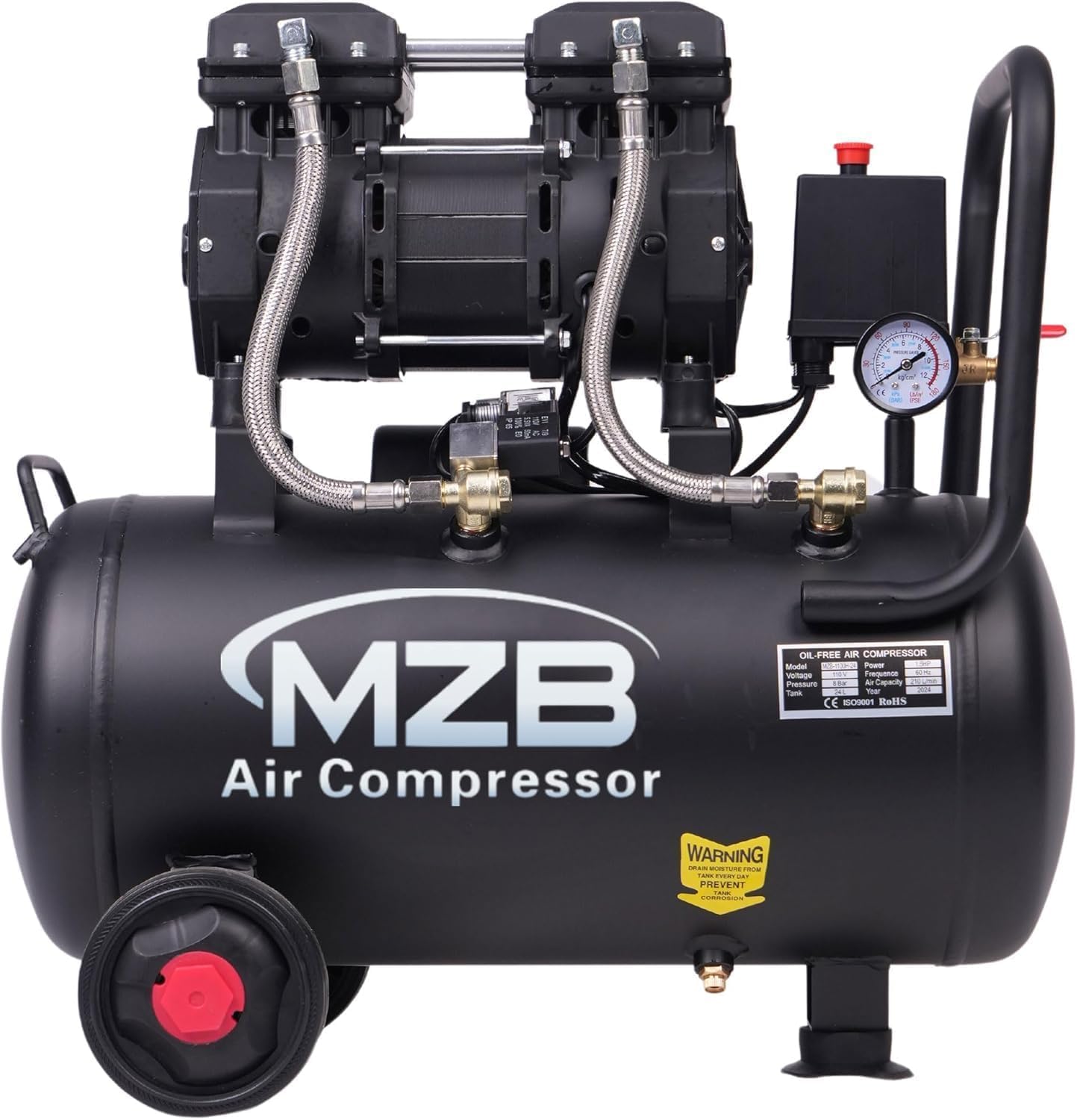
Budget-friendly entry that proves 7.4 CFM marketing rarely survives real-world testing.
The MZB is the most affordable option here, and it shows in both the price and the real buyer experience. Its spec sheet claims 7.41 CFM and 1.5 HP with a 6.34-gallon tank — but one verified buyer measured the real output and reported bluntly: “One buyer measured the real output at 1–1.5 CFM, far below the advertised 7.4 CFM.” That is a massive gap between advertised and actual airflow. For light painting tasks — small touch-ups, detail guns, or inflating tires — the MZB works fine and is genuinely quiet at 70 dB. Several buyers said it is “great little compressor does not take up much room and very quiet.” The oil-free pump avoids oil mess in small workshops.
The reliability picture is mixed. One unit arrived with a cracked muffler, and another had the motor hum instead of start when the tank was at partial pressure — a classic sign a small motor cannot restart against residual tank pressure. The tank is only 6.34 gallons, which is a 4.6x smaller reserve than the 29-gallon Klutch. For auto painting beyond extremely small projects, the CFM shortfall and restart issues make this a risky primary choice. Consider it a backup or a tire/ detail-gun compressor.
Easy on the Wallet
- Lowest entry price of any compressor on this list
- Compact size (22 by 10 by 22 inches) fits under a workbench
- Quiet 70 dB operation for small workshop spaces
CFM Reality Check
- Real airflow measured at 1-1.5 CFM by a buyer — not the advertised 7.4 CFM
- Motor struggles to restart against residual tank pressure
- Small 6.34-gallon tank runs out fast during spray painting
Best for: budget-limited buyers who need a quiet compressor for light tasks and occasional touch-up painting.
Not for: anyone planning full-panel auto painting — the real-world CFM is far too low for continuous spray gun work.
Understanding the Specs
CFM at 90 PSI — the spec that makes or breaks a paint job
CFM stands for cubic feet per minute — the volume of air the compressor can push out at a given pressure. The number at 90 PSI is what matters for auto painting because spray guns are designed to work at roughly that pressure. A compressor that only publishes CFM at 40 PSI is inflating the number by 30-50% versus what you get at 90 PSI. For any HVLP spray gun, look for at least 5 CFM at 90 PSI as a bare minimum. Below that, the gun starves for air and the paint finish suffers.
Tank capacity — your air reservoir explained
Tank size is measured in gallons and acts as a buffer between the pump and your tool. A larger tank does not increase CFM, but it stores more compressed air so you can keep spraying while the pump refills. For auto painting, a 10-gallon or larger tank gives you roughly 30-60 seconds of continuous spray before the pump needs to kick back in. Smaller 4-6 gallon tanks cycle more frequently, which can be annoying in quiet spaces and may cause pressure fluctuations that show up in the paint finish.
FAQ
What CFM do I need for auto painting with an HVLP gun?
Is a larger tank always better for painting?
Can I use an oil-free compressor for auto painting?
What does PSI mean and is higher always better?
How loud is too loud for a residential garage?
Can a small 6-gallon compressor handle auto painting?
Is it worth buying a used compressor for painting?
Do I need a moisture filter for painting?
What is the difference between SCFM and CFM?
How long should an air compressor last if I use it for painting?
Final Thoughts: The Verdict
For most buyers, the compressor for auto painting winner is the Klutch 29-Gallon because its massive 29-gallon tank, 175 PSI max pressure, and oil-free pump deliver uninterrupted paint passes and zero oil contamination in your finish. If you want the quietest option for a residential garage, grab the California Air Tools 4620AC. And for the best value-to-CFM ratio on a budget, the standout is the WIILAYOK 13-Gallon.
How We Picked
We do not accept paid placement. Every pick is matched to a real buyer and a real use-case; we do not hands-on test units.
Sources & Methodology
Specifications: manufacturer listings and product documentation. Review insights: verified customer reviews, as of July 2026. Pricing: not shown on this page (it changes often); check the current price via the retailer link.
As an Amazon Associate, WellFizz earns from qualifying purchases. This does not affect which products we feature.
Related Guides

Mo Maruf
I created WellFizz to bridge the gap between vague wellness advice and actionable solutions. My mission is simple: to decode the research and give you practical tools you can actually use.
Beyond the data, I am a passionate traveler. I believe that stepping away from the screen to explore new environments is essential for mental clarity and physical vitality.