Our readers keep the lights on and my smoothie glass nicely filled. As an Amazon Associate, I earn from qualifying purchases.
Standing up should not mean your blood pressure drops and your vision tunnels. For those managing orthostatic hypotension, the morning battle is real: every time you rise, gravity pulls blood into your legs, and your body struggles to keep it circulating upward. Medical-grade compression stockings apply precise, graduated pressure from the ankle upward, physically forcing blood back toward the heart and brain.
I’m Mohammad Maruf — the founder and writer behind WellFizz. I’ve spent hundreds of hours analyzing compression garment specifications, pressure ratings, yarn durability, and clinical recommendations to build this guide around the specific needs of orthostatic hypotension.
These are not the flimsy drugstore sockettes that barely squeeze your ankle. The stockings that make a measurable difference sit at 30-40 mmHg — a therapeutic zone that lifts blood pressure by compressing the leg veins. This review ranks the top options for the best compression stockings for orthostatic hypotension based on pressure retention, fabric quality, and real-user feedback.
How To Choose The Best Compression Stockings For Orthostatic Hypotension
Orthostatic hypotension demands more than a light squeeze. You need a garment that generates enough external pressure to counteract the gravitational pooling of blood in your legs and abdomen. Here are the critical factors to evaluate before buying.
Pressure Rating: Why 30-40 mmHg is the Baseline
Over-the-counter stockings at 15-20 mmHg are meant for travel fatigue and mild ankle swelling. For orthostatic hypotension, clinical guidelines point to 30-40 mmHg as the effective therapeutic range. This level of compression mechanically narrows the leg veins, reducing their capacity to store blood and increasing the volume that reaches the heart. Anything lower may look medical but won’t reliably prevent blood pressure drops when you stand.
Length and Coverage: Knee-High vs. Thigh-High vs. Waist-High
Knee-high stockings compress the calves and offer basic support, but they leave the thighs and abdomen unaddressed — a problem if blood pools higher up. Thigh-high versions capture the entire leg and stay in place better with a silicone band. Waist-high pantyhose-style garments cover the abdomen and provide the most comprehensive hemodynamic support, which is why they are frequently prescribed for pronounced orthostatic hypotension.
Graduated Compression: The Ankle-to-Thigh Gradient
True medical stockings deliver the highest pressure at the ankle and gradually decrease as they move up the leg. This gradient pushes blood upward instead of trapping it at the foot. Any stocking that claims “uniform compression” or skips the graduated design will not support blood return effectively — it simply squeezes everywhere equally, which is useless for orthostatic hypotension.
Quick Comparison
On smaller screens, swipe sideways to see the full table.
| Model | Category | Best For | Key Spec | Amazon |
|---|---|---|---|---|
| Mediven Classic | Premium | Daily wear with dress socks | 30-40 mmHg, ribbed dress pattern | Amazon |
| JOBST Relief Pantyhose | Premium | Waist-high support | 30-40 mmHg, full pantyhose | Amazon |
| SIGVARIS DYNAVEN | Premium | Moisture-wicking, travel | 30-40 mmHg, open toe pantyhose | Amazon |
| NuVein Medical | Mid-Range | Thigh-high coverage | 30-40 mmHg, closed toe, thigh length | Amazon |
| JOBST Relief Knee-High | Mid-Range | Budget-friendly knee-high | 30-40 mmHg, open toe | Amazon |
In‑Depth Reviews
1. Mediven Classic – 30-40 mmHg Calf High
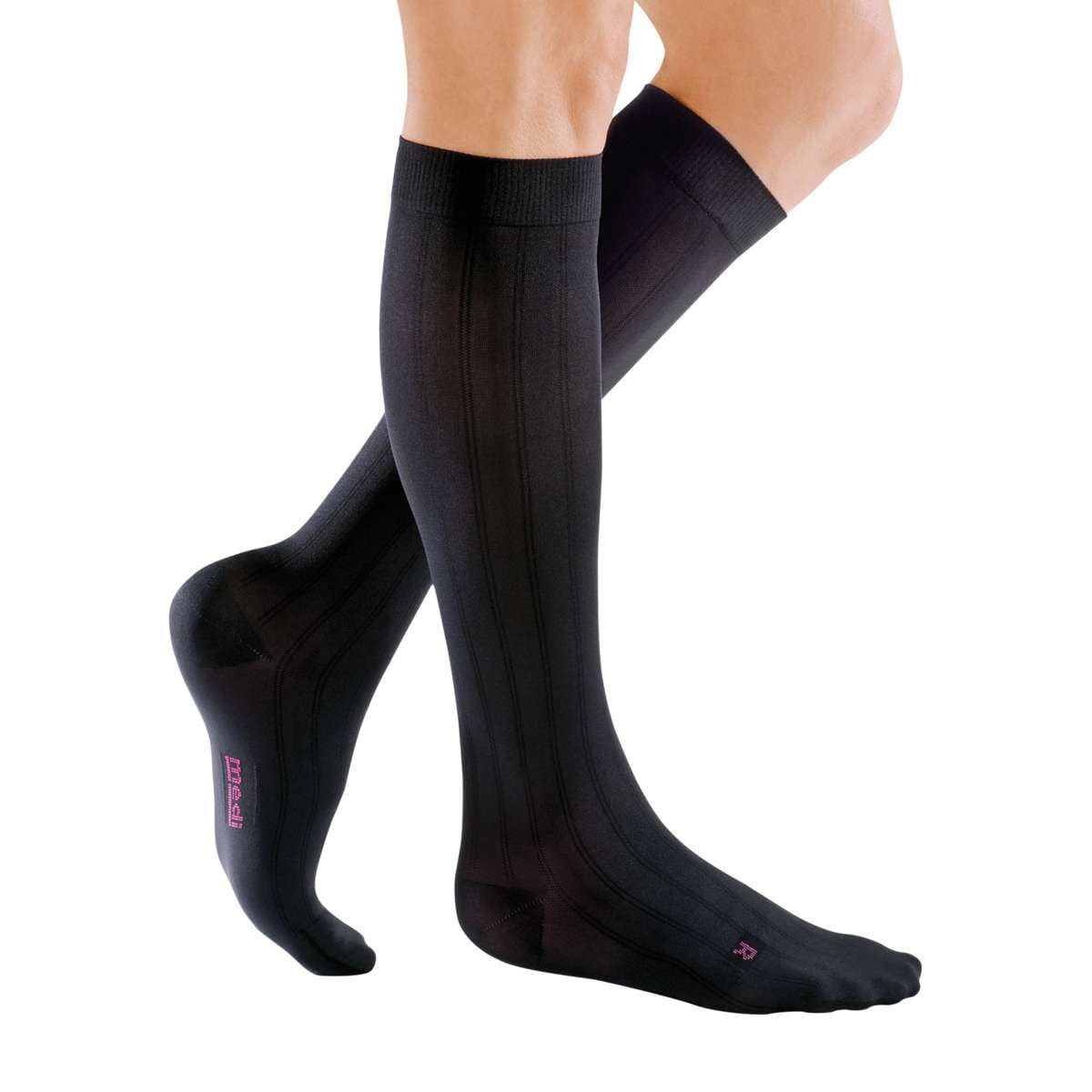
The Mediven Classic is the most durable calf-high stocking in this lineup, built by a German manufacturer with over 80 years of compression technology experience. Its ribbed dress sock pattern means you can wear it with slacks or business attire without the medical look. The 30-40 mmHg compression is true to rating — real users with chronic venous insufficiency and severe swelling report that this is the only stocking that works for them, outlasting cheaper options by months.
What sets the Mediven apart is its Clima-Comfort fabric technology, which regulates temperature during all-day wear. If you spend long hours on your feet and need orthostatic hypotension support that doesn’t feel suffocating, this is your pick. The tight weave and ribbed texture hold their shape through repeated machine washing, though hand washing extends the life further.
The main catch is the price — it sits at the premium end. But users who have tried other brands for severe symptoms consistently come back to Mediven because the pressure profile is reliable and the yarn does not fatigue. For someone who needs consistent 30-40 mmHg compression daily, this is the most cost-effective option in the long run.
Why it’s great
- True medical-grade graduated compression that holds pressure for months
- Temperature-regulating fabric keeps legs comfortable all day
- Ribbed dress pattern looks professional, not clinical
Good to know
- Premium pricing may be hard to swallow upfront
- Calf-high only — offers no thigh or abdominal support
2. JOBST Relief Waist High Pantyhose
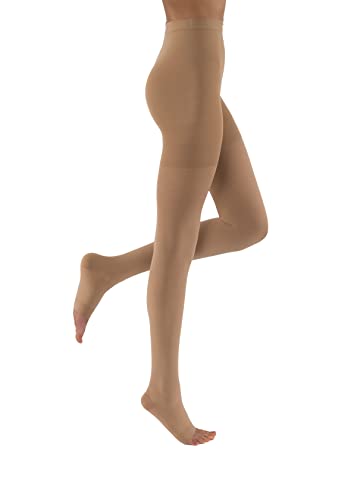
When orthostatic hypotension is severe enough that blood pools in the thighs and abdomen, a waist-high garment is the correct clinical choice. The JOBST Relief Pantyhose delivers 30-40 mmHg graduated compression from ankle to waist, enclosing the entire lower body. This design mechanically supports the veins in the abdomen, which knee-high stockings cannot touch.
JOBST is the number one physician-recommended brand in the US, and the Relief line is built with long-lasting fibers that retain compression after repeated wear. The open toe design is a smart feature — it avoids the “foot strangulation” problem some users experience with closed-toe stockings, and it lets you wiggle your toes freely. Users report that these stockings last two years with proper care, making the higher price a value investment.
The trade-off is the difficulty of putting them on. Waist-high stockings require rolling up the leg and pulling over the hips — a challenge for anyone with limited mobility. Donning gloves help. Also, the open toe means you’ll need to wear socks or shoes that cover the gap if you want full foot warmth. For comprehensive orthostatic hypotension support that stays up all day, this is the best full-coverage option.
Why it’s great
- Full waist-high compression supports blood return from abdomen
- Open toe prevents foot pinching and allows freedom
- Extremely durable — users report 2 years of daily wear
Good to know
- Very difficult to put on; donning gloves recommended
- Open toe may not suit cold environments or sensitive feet
3. SIGVARIS DYNAVEN Open Toe Pantyhose
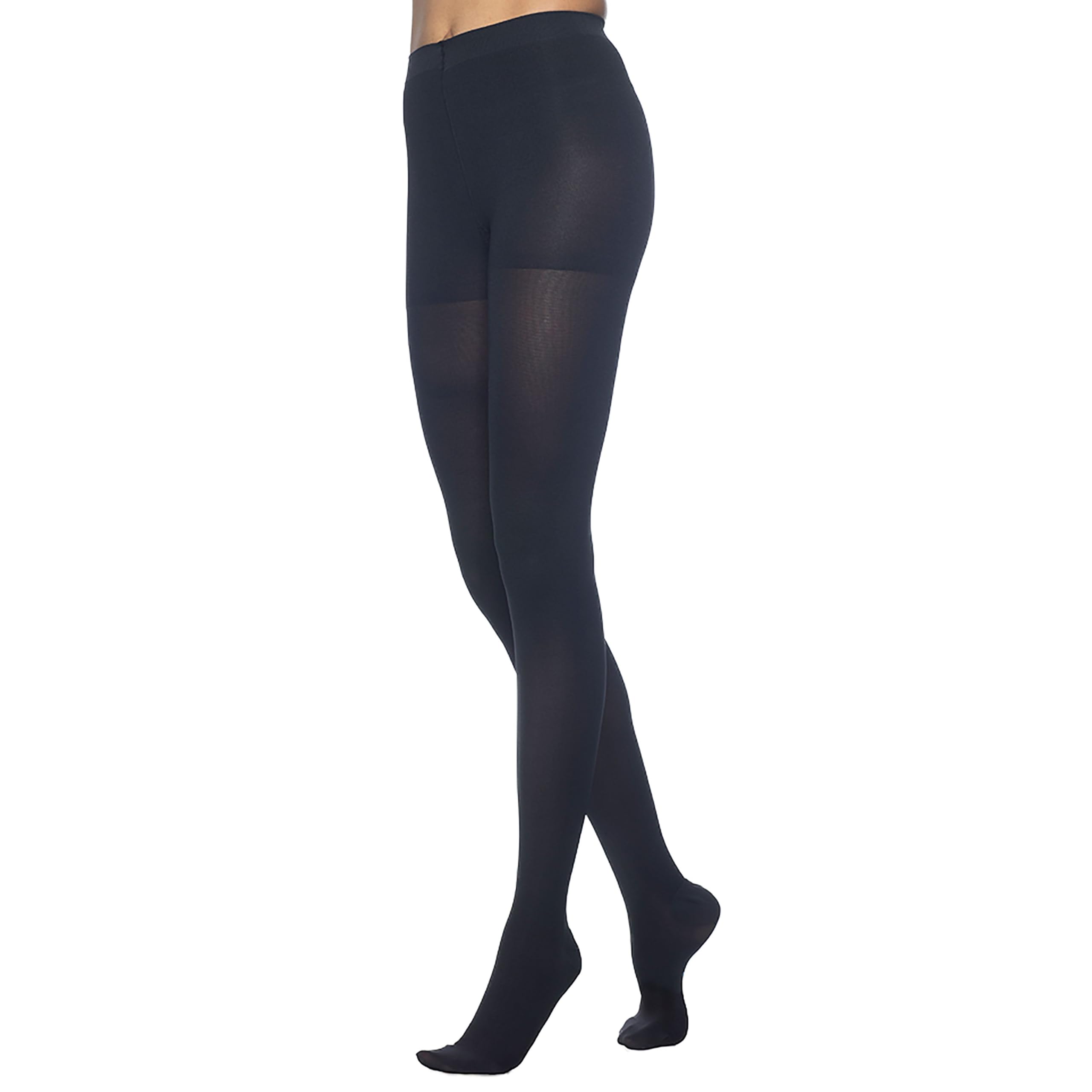
Sigvaris is a premium Swiss brand known for high-quality compression yarns, and the DYNAVEN Open Toe Pantyhose continues that reputation. Made from 79% Nylon and 21% Spandex with double-covered inlay yarns, this stocking is designed to wick moisture away from the skin, making it the best option for warm climates or active days. The wide toe area and reinforced heel add durability where stockings typically tear first.
At 30-40 mmHg, the DYNAVEN provides the same therapeutic pressure as the JOBST pantyhose, but the material feels noticeably softer against the skin. Users with curvy body types report that the sizing system (which includes both length and width options like “LL” or “LT”) accommodates fuller thighs without rolling. The open toe design allows you to wear sandals or open-toe shoes, which is a practical advantage during summer.
The downside is that some users find the foot section too narrow for wide feet, and the lower compression zones may feel looser in the abdomen compared to JOBST. A single user reported a tear on the second wear, though Sigvaris customer service replaced it quickly. If you prioritize softness and moisture control over absolute abdominal compression, this is a solid premium pick.
Why it’s great
- Moisture-wicking fabric keeps legs cool and dry
- Soft, comfortable feel against skin — less clinical
- Wide sizing accommodates curvy body types
Good to know
- Foot section may be too narrow for wide feet
- Some users report looser abdominal compression vs. JOBST
4. NuVein Medical Thigh High Stockings
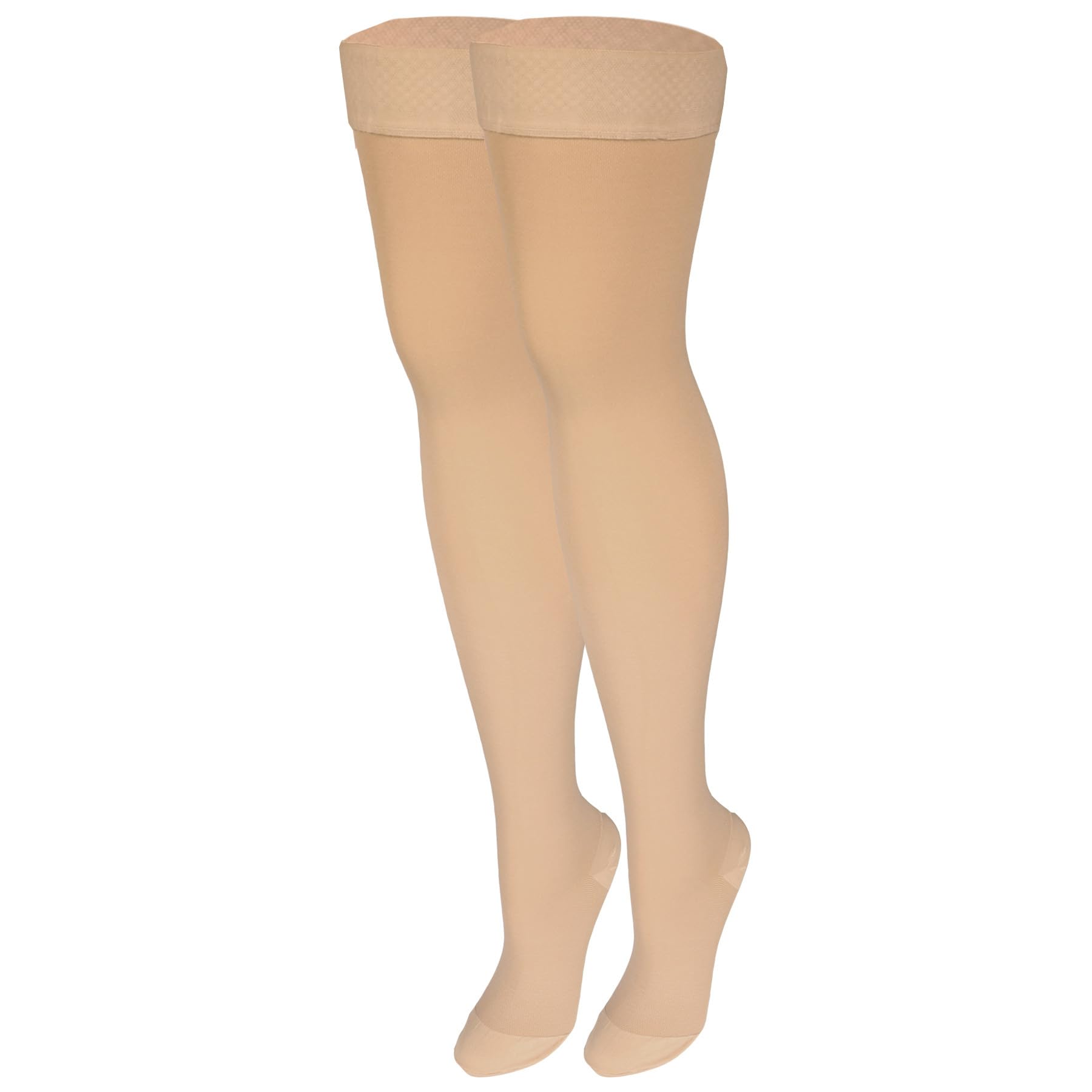
The NuVein Medical Thigh High Stockings offer 30-40 mmHg compression in a thigh-high length at a significantly lower cost than the premium pantyhose options. Made in the USA from nylon and spandex, these stockings include a wide top band that helps keep them from sliding down — a common frustration with thigh-high garments. The closed toe design is favored by users who want full foot coverage, especially those dealing with blood clots or post-surgical edema.
What makes this a strong value pick is the pressure retention. Users report that the silicone dots on the band prevent rolling early in the lifespan, though after about six washes some pairs begin to slide. At this price point, you can afford to buy multiple pairs to rotate. The beige color is sheer enough to look natural under shorts, and the graduated compression is clinically effective for orthostatic hypotension when measured correctly.
The main weakness is that the silicone grip band loses effectiveness after a few months, which may require pulling up the stockings during the day. Also, the thigh-high length means the upper legs are compressed but the abdomen is not — a consideration if you experience pooling above the groin. For a budget-friendlier entry into thigh-high 30-40 mmHg compression, this is the best choice.
Why it’s great
- Affordable entry into 30-40 mmHg thigh-high compression
- Wide top band with silicone dots reduces sliding initially
- Closed toe design prevents foot strangulation
Good to know
- Silicone grip may weaken after 6 months of washing
- Thigh-high only — no abdominal compression
5. JOBST Relief Knee High Stockings

The JOBST Relief Knee High is the most affordable way to get into physician-recommended 30-40 mmHg compression. Despite the lower price, it comes from the same brand as the premium pantyhose and shares the same durable fiber construction. Users report that these stockings outlast competitors from Carolon and TruForm by several months, with no compression loss or tearing after six months of daily use.
This knee-high version is ideal if your orthostatic hypotension symptoms are primarily calf-related and you do not experience blood pooling in the thighs. The open toe design is a favorite among users with larger feet because it avoids the pressure points that closed-toe stockings create. It also fits well for tall individuals — reviewers at 6′ with 19.5-inch calves found the XL size worked well and stayed in position.
The limitation is clear: knee-high coverage means zero support for the thighs and abdomen. If your blood pressure drops significantly upon standing despite knee-high compression, you likely need a longer garment. Also, some users find that the stockings slide down during the day, especially after multiple washes. For mild to moderate orthostatic hypotension on a budget, this is the most reliable knee-high option.
Why it’s great
- Lowest price point for 30-40 mmHg physician-recommended brand
- Very durable — outlasts cheaper brands by months
- Open toe fits larger feet comfortably
Good to know
- Knee-high only — no thigh or abdominal support
- May slide down during the day with repeated wear
FAQ
How tight should 30-40 mmHg stockings feel when I first put them on?
Can I wear open-toe stockings if I have neuropathy in my feet?
Do I need a prescription for 30-40 mmHg compression stockings?
Final Thoughts: The Verdict
For most users, the best compression stockings for orthostatic hypotension winner is the JOBST Relief Waist High Pantyhose because it provides full-leg and abdominal compression, stays in place without rolling, and is built to last two years with proper care. If you want a knee-high option that offers the same brand reliability at a lower cost, grab the JOBST Relief Knee High. And for those who need premium durability and a professional dress-sock look, nothing beats the Mediven Classic — it holds its rated pressure longer than any other stocking in this review.

Mo Maruf
I created WellFizz to bridge the gap between vague wellness advice and actionable solutions. My mission is simple: to decode the research and give you practical tools you can actually use.
Beyond the data, I am a passionate traveler. I believe that stepping away from the screen to explore new environments is essential for mental clarity and physical vitality.