Our readers keep the lights on and my smoothie glass nicely filled. As an Amazon Associate, I earn from qualifying purchases.
Specs are compiled from manufacturer listings and verified buyer reviews and can change over time — please confirm the key details on the product page before buying.
If your doctor has told you to watch for deep vein thrombosis, you know the stakes are high — a clot in the leg can travel and become dangerous fast. Graduated compression stockings — tightest at the ankle, lighter up the leg — prevent blood from pooling where DVT clots form. This guide cuts through the medical jargon and sizing confusion to help you find compression stockings for DVT that actually fit, stay put, and deliver the pressure you need all day.
I’m Mohammad Maruf — the founder and writer behind WellFizz. This guide is built by comparing the manufacturers’ published specifications and the patterns across verified customer reviews, so you get each pick’s real strengths and trade-offs instead of marketing spin.
You will find six carefully matched options here, from thigh-high sleeves to knee-high socks and full pantyhose, with compression levels between 15-20 mmHg and 20-30 mmHg — the two ranges doctors most often recommend for DVT risk. The goal is to let you compare these compression stockings for dvt side by side and walk away knowing exactly which pair fits your body and your daily routine.
Our Picks at a Glance

How To Choose The Best Compression Stockings For DVT
Not every “compression sock” delivers the graduated pressure a DVT risk needs. A 20-30 mmHg stocking applies firmest pressure at the ankle and decreases upward, supporting your one-way vein valves. Uniform compression cannot effectively move blood upward.
The Compression Level: 15-20 vs 20-30 mmHg
The mmHg number measures the pressure the fabric applies to your leg. 15-20 mmHg is a mild, comfortable range often used for travel, pregnancy, or mild swelling. 20-30 mmHg is the firmer range most doctors recommend for existing DVT history, significant edema, or post-surgical recovery. Your doctor and your tolerance determine the right level — firmer compression works better but takes a few days to adjust to.
Length: Knee-High vs Thigh-High
Knee-high stockings cover the calf and ankle, which is where most DVT clots form. They are easier to put on and less likely to roll down. Thigh-high options and full pantyhose cover the whole leg, offering more comprehensive support for people with swelling above the calf or who are bedridden. The trade-off is comfort: thigh-high bands can slip or pinch if the sizing is not exact.
Fit Is Everything — Measure Twice
Sizing is the most common complaint across all compression stockings. Measure your ankle (narrowest point above the bone) and calf (widest part) first thing in the morning before swelling. If between sizes, choose the larger size — a too-tight stocking can restrict circulation.
Quick Comparison
| Model | Best For | Compression Level | Length | Weight | Amazon |
|---|---|---|---|---|---|
| MGANG Plus Size Wide Calf★ Best Overall | Broader calves & plus sizes | 20-30 mmHg | Knee High | 1.59 oz | Amazon |
| Truform 15-20 mmHgEntry-Level Workhorse | Mild support & daily wear | 15-20 mmHg | Knee High | 2.65 oz | Amazon |
| KEKING Thigh High Footless | Full leg coverage, no foot | 15-20 mmHg | Thigh High | 3.53 oz | Amazon |
| Mojo 20-30 mmHg Knee High | Strong compression, all day | 20-30 mmHg | Knee High | — | Amazon |
| beister Thigh High | Anti-slip silicone grip | 15-20 mmHg | Thigh High | 4.59 oz | Amazon |
| Myshear Compression Tights | Waist-to-ankle coverage | 20-30 mmHg | Pantyhose / Waist High | 5.29 oz | Amazon |
In‑Depth Reviews
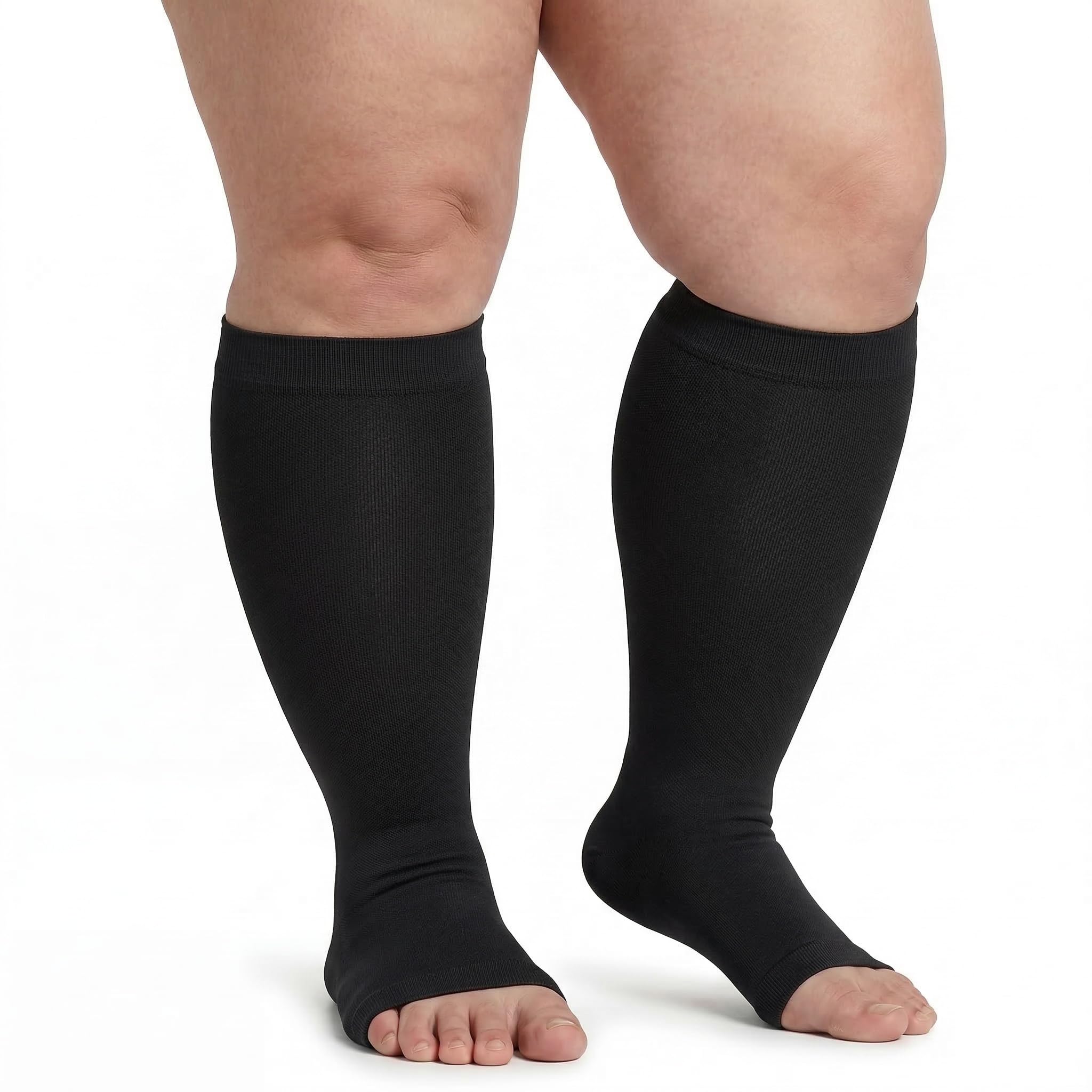
1. MGANG Plus Size 4XL Wide Calf Compression Socks 20-30 mmHg
Our pick — over 4★ from 900+ verified ratings; the strongest balance of quality and price.
The firmest grasp on circulation at a price that keeps the rest of your wallet open.
A 20-30 mmHg compression level is the gold standard for DVT prevention, and this knee-high from MGANG delivers it without demanding a premium. The graduated profile is specific: 25-30 mmHg at the ankle, tapering to 15-20 mmHg at the mid-calf, and down to 10-15 mmHg below the knee. That dropping pressure is exactly what pushes blood back toward the heart and stops it from settling in the deep veins where clots form.
The fabric is a 70% nylon and 30% lycra spandex blend, which owners say feels breathable and holds shape after washing. And it is notably lighter than a leading name-brand alternative — the crowd who has worn both note that this pair is 34.7g versus 37.6g for the equivalent Jobst model. That may not sound like much on paper, but over a 12-hour nursing shift or an eight-hour flight, a few grams of weight savings translates to less tugging and sagging.
The real edge here is the size range. The 4XL wide-calf fit accommodates legs that many standard compression socks simply will not reach, and the non-slip silicone band at the top keeps everything in place. The most-discussed trade-off is the open toe: one owner found the edge pulled at foot hair, which is easily solved by shaving the top of the foot. For the combination of clinical-grade pressure, plus-size availability, and a weight that beats the competition, this is the pair most people with DVT risk should start with.
What wins people over
- 20-30 mmHg graduated compression with a precise ankle-to-knee drop in pressure
- Lighter than a major name-brand alternative — a real difference on long days
- Wide calf sizing up to 4XL that fits legs other socks miss
The honest catch
- Open toe design can pinch if you have hair on your foot — a quick shave solves it
- A small number of buyers report sensitivity to the nylon-spandex fabric blend
Reach for this pair if: your doctor has recommended 20-30 mmHg compression and you have bigger calves or want the strongest pressure for travel or recovery.
Think twice if: the open toe style sounds uncomfortable to you — a closed-toe stocking might suit you better.
2. Truform 15-20 mmHg Compression Stockings
A solid, made-in-the-USA start for mild DVT risk that does not overwhelm you with tightness.
Truform is the entry-level pick that gets the fundamentals right. The 15-20 mmHg compression is the lighter side of the therapeutic range, which makes it ideal for someone who is new to compression or whose DVT risk is moderate — long flights, desk jobs, or pregnancy swelling. The stocking is knit from 85% nylon and 15% spandex, and it comes with a defined heel pocket that keeps the fabric from twisting around your ankle.
You get a lighter squeeze here — 15-20 mmHg (a moderate compression level) versus the firmer 20-30 mmHg of the MGANG pair — and a slightly heavier feel at 2.65 ounces. The trade-off is price: this is among the most affordable Class II medical devices (a regulated medical-grade compression garment) on the market, and it carries its weight with decent comfort. Many owners find the 15-20 mmHg snug enough to reduce swelling without the intense squeeze that can make sleeping in them uncomfortable.
There is a durability concern that pops up consistently: several owners mention that the compression loosens after about two weeks, causing the stocking to slip down, and the heel area can fray with hand washing. If you need a stocking for a short-term recovery or occasional travel, this will do the job. For someone who needs daily wear for months, the MGANG or the Mojo below will hold up longer.
Best for short-term needs: the 15-20 mmHg level is gentle enough for a first-time user and works well for travel or pregnancy.
Fair warning: the lighter compression and thinner fabric mean the stocking does not hold its shape as long as firmer options — plan on replacing it monthly if you wear it daily.
3. KEKING Thigh High Compression Stockings Footless, 15-20 mmHg
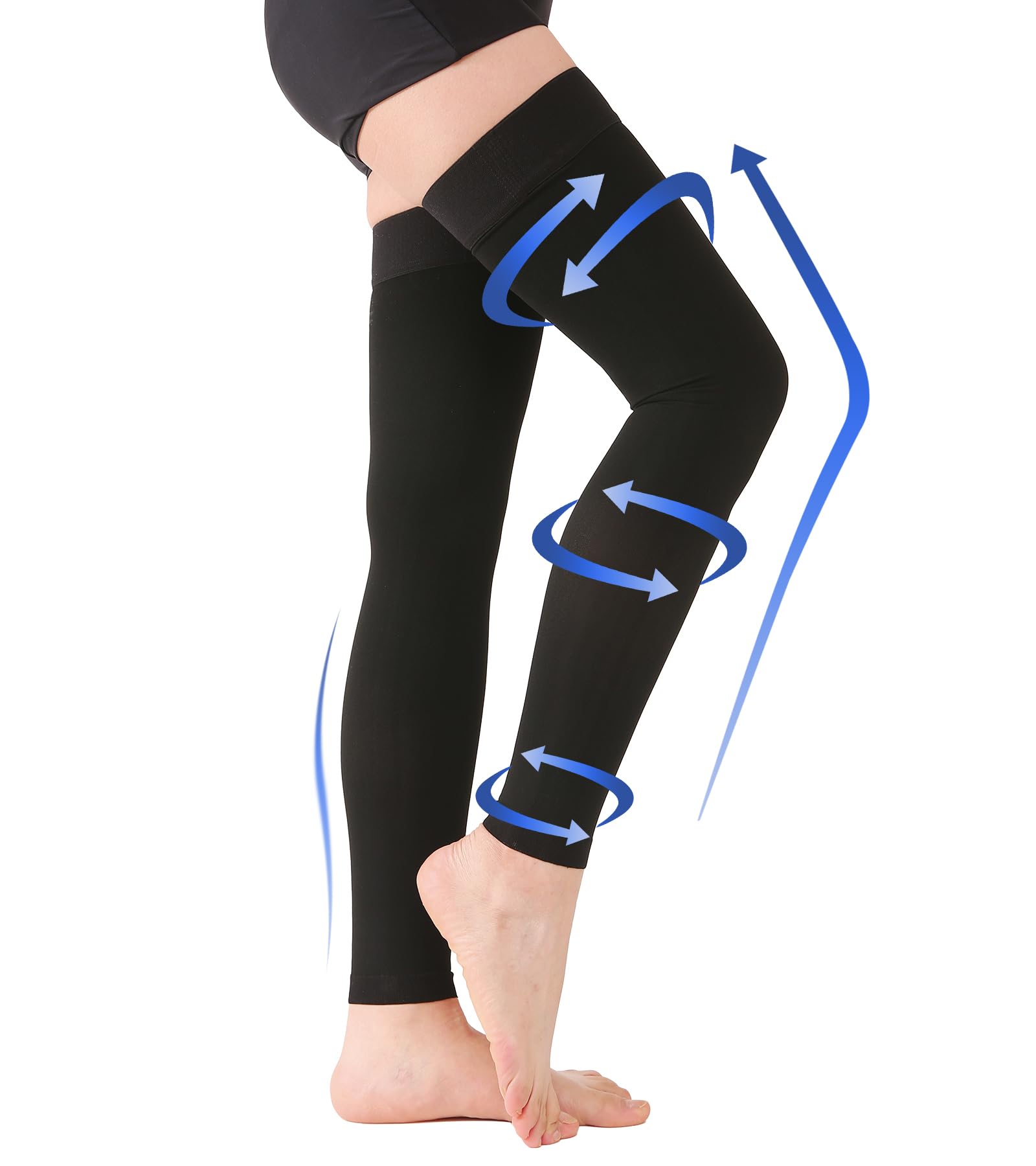
Thigh-high coverage for post-surgery recovery or anyone who needs compression above the calf.
After knee surgery or for someone whose swelling travels above the knee, a knee-high sock simply leaves too much leg unsupported. The KEKING thigh-high solves that by extending compression all the way to the top of the thigh while keeping the foot completely bare — no toes squeezed, no heel bunching. That footless design is a real advantage for people whose feet swell separately or who simply hate the feeling of enclosed toes.
The 15-20 mmHg compression is moderate, and the fabric is a 77% nylon and 23% spandex blend. What owners praise most is the silicone band at the top of the thigh — a wide strip that keeps the sleeve from rolling down during walking. That is the single biggest failure mode of thigh-high stockings, and KEKING addresses it well. The reviews are clear that the sizing runs small; if your measurement lands near the top of a size range, order one step up. The band sits securely enough that even a larger user at a 3XL build found the fit comfortable and the compression effective for vein issues.
The catch is that the ankle band can feel very tight — it is the narrowest part of the sleeve by design — and a few owners found the stockings slip down when they walk around the house, despite staying put while seated. If you are mostly stationary during recovery or on a long-haul flight, these are excellent. If you plan to move a lot, the silicone grip on the beister thigh-high below might hold more reliably.
Best for bed rest and surgery recovery: the full leg coverage without a foot enclosure makes it easy to wear under loose pants or a hospital gown.
Size with caution: the ankle is the tightest point, and the sleeves can slip during active walking — this is a stay-put model mostly for sitting or lying down.
4. Mojo Compression Socks 20-30 mmHg Knee High

Strong, steady 20-30 mmHg compression that the long-haul crowd swears by for eight-hour shifts.
If the MGANG is the best all-rounder for DVT, the Mojo is the specialized pick for someone who needs firmer compression and has already gotten used to the sensation. The 20-30 mmHg level is the same strength as the MGANG, and Mojo has been in this space since 2013 — the design is mature. The knit uses 80% nylon and 20% lycra spandex, and the owners consistently describe the compression as “strong but comfortable,” meaning it provides real squeeze without cutting off circulation.
A distinctive detail here is the toe area: it is generous and roomy, which matters a lot when you wear compression for twelve hours. Too many stockings pinch the toes; the Mojo leaves space for them to spread naturally. The reinforced heel and toe add durability, and the non-slip cuff at the top prevents the sock from sliding down inside your shoe. Some owners note a minor irritation from the toe seam — the stitching can feel unfinished on the inside — but it is a small trade-off for a stocking that otherwise holds up well through repeated wash cycles.
The honest difference from the MGANG is that the Mojo does not offer the same wide-calf sizing. It fits standard to slightly larger calves, but if you need a 4XL, you need the MGANG. For standard legs, the Mojo delivers the same 20-30 mmHg compression with a slightly more durable build and a toe box that actually feels comfortable at the end of the day.
What owners appreciate
- Roomier toe box than most compression socks — your toes are not crushed after hours of wear
- Longstanding design with consistent 20-30 mmHg pressure that stays strong through many washes
- Non-slip cuff stays put during a full day of walking or standing
What to watch for
- Toe seam may have unfinished stitching that can bother sensitive skin
- No wide-calf or plus-size option — standard fit only
Make it your daily pair if: you have standard calf measurements, need 20-30 mmHg for DVT prevention, and want a sock that does not pinch your toes by 5 PM.
Look elsewhere if: you have very large or very small calves — the sizing is not as inclusive as the MGANG or the beister.
5. beister 15-20 mmHg Medical Compression Stockings with Dot Silicone Band

The dot-silicone grip band is the detail that finally keeps thigh-highs where they belong.
The beister thigh-high solves the most persistent problem of long compression stockings: falling down. Instead of a simple elastic band, this one uses a wider cuff with silicone dots that grip the skin without the tight pinch that makes some bands cut off circulation. If you find the band squeezing too hard, a quick flip of the cuff resolves the pressure without losing grip. That is a thoughtful touch you do not see on most thigh-high models.
The compression level is 15-20 mmHg, which is the lighter end of the therapeutic range, and the graduated pressure runs from the ankle upward. The fabric blend is 80% nylon, 15% spandex, and 5% silicone, and the manufacturer sources the medical-grade material from Germany. Owners who have tried both the beister and more expensive pairs say this one holds up well and stays in place if you apply lotion to your legs first — dry skin can cause the silicone to slide.
The sizing is the odd point: the measurement chart can produce confusing results — one owner fed in their numbers and got suggestions for S, L, and 3XL all at once. The general advice from the reviews is to order your upper thigh measurement and trust the larger end of your range. If the band is too tight, folding it down below the knee makes the stocking useless, so getting the size right matters.
Best for active wear: the silicone dot grip keeps this thigh-high in place when you walk, unlike other models that slip during movement.
The sizing hurdle: the chart can be confusing — measure your thigh carefully and if the numbers are ambiguous, go for the larger size to avoid a cutting band.
6. Myshear Medical Compression Tights 20-30 mmHg, High Waist

Waist-to-toe compression in a single garment that does not ride up or roll down.
The Myshear tights are the most comprehensive pick on this list. They cover the entire leg and the lower abdomen, delivering 20-30 mmHg graduated compression from the ankle upward with a high-waist waistband that stays put without rolling. The footless design means your toes are free — no pinching, no bunching at the heel — and the opaque medical-grade fabric looks like regular black tights under skirts, dresses, or pants.
The fabric is 75% nylon and 25% spandex, and the construction includes a reinforced gusset that resists tearing. Owners who work retail and stand all day say these tights provide reliable support from ankle to mid-thigh, and the high waist keeps the garment anchored. A detail that matters for POTS and post-surgery wearers: there is no abdominal compression, so the stomach is not squeezed — only the legs. The elastic waistband is wide and comfortable.
Sizing is the biggest note of caution. The chart is non-standard: a medium in this brand fits much smaller than a medium in other compression leggings. A 5’5″, 140-pound owner found the medium too small and needed an XL or 2XL. Measure carefully and ignore your usual leggings size. The footless style also means you need to wear a sock over the tights like a thin liner, or they can feel a bit loose at the bottom of the foot — the fabric has nothing to grip against bare skin.
The strong points
- 20-30 mmHg from ankle to high waist, covering the entire leg in one piece
- No foot enclosure for complete toe and heel freedom
- Reinforced gusset and wide waistband for durability and stay-put fit
What you need to know
- Sizing runs extremely small across the board — ignore your usual size and follow the chart closely
- Footless design can feel loose at the bottom without a sock or liner over the foot
Choose these if: you want a single garment that covers the whole leg and stays in place without rolling, and you are OK with a footless style.
Size up: this is the unanimous advice from owners — if your measurement is between sizes, go two sizes up for a comfortable fit.
Understanding the Specs
Graduated Compression (mmHg)
The “mmHg” number on the box stands for millimeters of mercury — it measures how much pressure the fabric applies to your leg. Graduated means the pressure is strongest at the ankle and gets lighter as it moves up. A 20-30 mmHg stocking might squeeze at 28 mmHg near your ankle, 18 mmHg at mid-calf, and 12 mmHg at the knee. That downward slope is what helps your vein valves push blood upward instead of letting it pool in your lower leg, where clots form.
Knee-High vs Thigh-High Length
Knee-high stockings stop just below the knee and cover the ankle and calf. They are the most common choice for DVT prevention because most deep vein clots form in the calf. Thigh-high stockings go all the way up to the upper thigh and are useful for people who have swelling above the knee, are recovering from surgery, or spend long periods lying down. The trade-off is that thigh-highs need an anti-slip band to stay up, and a poorly fitted band can cut off circulation.
FAQ
Can I wear compression stockings for DVT if I have never worn them before?
What is the difference between 15-20 mmHg and 20-30 mmHg for DVT prevention?
How do I measure my legs for the right size?
How long does a pair of compression stockings last before losing effectiveness?
Can I wear compression stockings on a long flight for DVT prevention?
Should I choose open-toe or closed-toe compression stockings?
Do thigh-high compression stockings stay up on their own?
What happens if I choose the wrong size?
Final Thoughts: The Verdict
For most people, the right answer among these compression stockings for dvt is the MGANG Plus Size 4XL because it delivers the doctor-recommended 20-30 mmHg in a lightweight, wide-calf-friendly design that has won over a large crowd of long-haul wearers. If your calf is standard and you want a durable daily sock with a roomy toe box, reach for the Mojo 20-30 mmHg. And for anyone who needs coverage from the waist down or who wants a footless option for full-leg support, the Myshear tights are the most coverage you can get in a single garment.
How We Picked
We do not accept paid placement. Every pick is matched to a real buyer and a real use-case; we do not hands-on test units.
Sources & Methodology
Specifications: manufacturer listings and product documentation. Review insights: verified customer reviews, as of July 2026. Pricing: not shown on this page (it changes often); check the current price via the retailer link.
As an Amazon Associate, WellFizz earns from qualifying purchases. This does not affect which products we feature.
Related Guides

Mo Maruf
I created WellFizz to bridge the gap between vague wellness advice and actionable solutions. My mission is simple: to decode the research and give you practical tools you can actually use.
Beyond the data, I am a passionate traveler. I believe that stepping away from the screen to explore new environments is essential for mental clarity and physical vitality.