Our readers keep the lights on and my smoothie glass nicely filled. As an Amazon Associate, I earn from qualifying purchases.
Specs are compiled from manufacturer listings and verified buyer reviews and can change over time — please confirm the key details on the product page before buying.
You want a compression sock that works for long shifts, flights, or recovery — and you want it built here, not shipped from overseas and marked up. With medical-grade gear, athletic socks, and everyday support hose all claiming to help, it is hard to separate effective compression from a nylon tube with a label. This guide names nine picks that genuinely earn the “Made in USA” claim, so you can choose the right compression, fabric, and durability without gambling on a return.
I’m Mohammad Maruf — the founder and writer behind WellFizz. This guide is built by comparing the manufacturers’ published specifications and the patterns across verified customer reviews, so you get each pick’s real strengths and trade-offs instead of marketing spin.
Whether you are on your feet for twelve-hour nursing shifts, recovering from an injury, or heading into a long-haul flight, the right compression socks made in usa can mean the difference between arriving swollen and arriving fresh — every pick below checks the domestic manufacturing box and delivers on its compression promise.
Our Picks at a Glance

How To Choose The Best Compression Socks Made In USA
Picking the right pair means matching compression level to your activity, fabric to your climate, and size to your actual calf and foot measurements — not just your shoe size. Here are the three decisions that matter most.
Compression Level: 15-20 mmHg vs 20-30 mmHg
The number tells you how much pressure the sock applies — measured in millimeters of mercury (mmHg), the same unit used for blood pressure. A 15-20 mmHg sock (often called “moderate”) is what most people need: enough to stop flight-related swelling, ease tired legs during a standing shift, or help recovery after a hard run. Step up to 20-30 mmHg (“firm”) if you have diagnosed edema (swelling from fluid retention), varicose veins, or post-surgical needs. That higher band provides significantly more push against the leg, and it is harder to pull on and off.
Fabric: Natural Fiber Blends Keep You Comfortable
Most compression socks are built on a base of nylon and spandex — that stretch is what creates the compression. But the real difference in comfort comes from the fiber blended in. Merino wool regulates temperature well, resists odor, and handles heat without feeling sticky. A bamboo rayon blend (rayon from bamboo) is silky and wicks moisture fast. Alpaca wool is warmer and softer than merino and naturally resists bacteria. Pure synthetics can trap sweat, so look for a natural-fiber blend if you plan to wear them all day or in warm weather.
Fit Is Everything — Measure Your Calf and Ankle
A compression sock that does not fit right will not work right. Measure your ankle circumference (the distance around the narrowest point), your calf circumference at the widest point, and your foot length. Every brand publishes a size chart keyed to those measurements, not just “size L.” Ignore your shoe size — if your calf is larger than typical for your shoe, you need a wide-calf or plus-size option. A sock that slips down at the top or pinches behind the knee is a fit failure, not a product failure. Buying the right size the first time saves you a return.
Quick Comparison
| Model | Best For | Compression | Fabric | Weight | Amazon |
|---|---|---|---|---|---|
| Sockwell Women’s Micro Grade★ Best Overall | All-day comfort / travel | Graduated (unstated mmHg) | 32% Merino Wool / 31% Rayon from Bamboo | Non-cushion | Amazon |
| Absolute Support Cotton 15-20 mmHgBest Value Cotton | Cotton preference / travel | 15-20 mmHg | Cotton blend (unstated %) | Opaque, reinforced heel/toe | Amazon |
| CloudLine Merino WoolTrail Pro | Hiking / outdoor activity | 15 mmHg | 56% Merino Wool / 29% Nylon / 15% Spandex | Ultralight | Amazon |
| EvoNation Men’s Classic Ribbed | Firm support / work | 20-30 mmHg | 85% Nylon / 15% Spandex | Rib-knit, balloon toe | Amazon |
| Ames Walker 120/125/150 Coolmax | Medical / firm compression | 20-30 mmHg | Coolmax (synthetic) | Thick, cushioned | Amazon |
| Sockwell Men’s Pulse OTC | Athletic / firm wool | Firm graduated (unstated mmHg) | Merino Wool / Rayon from Bamboo blend | OTC (over-the-calf) | Amazon |
| Absolute Support Sheer 3-Pack | Sheer / under dresses | 15-20 mmHg | 80% Nylon / 20% Spandex | Sheer, reinforced heel/toe | Amazon |
| Zensah Alpaca Compression Socks | Odor resistance / travel | 15-20 mmHg | Premium Alpaca Fiber | Knee-high, lightweight | Amazon |
| Pure Athlete Alpaca Compression Socks | Maximum alpaca content | 15-20 mmHg | 64% Alpaca Wool | Knee-high, cushioned | Amazon |
In‑Depth Reviews
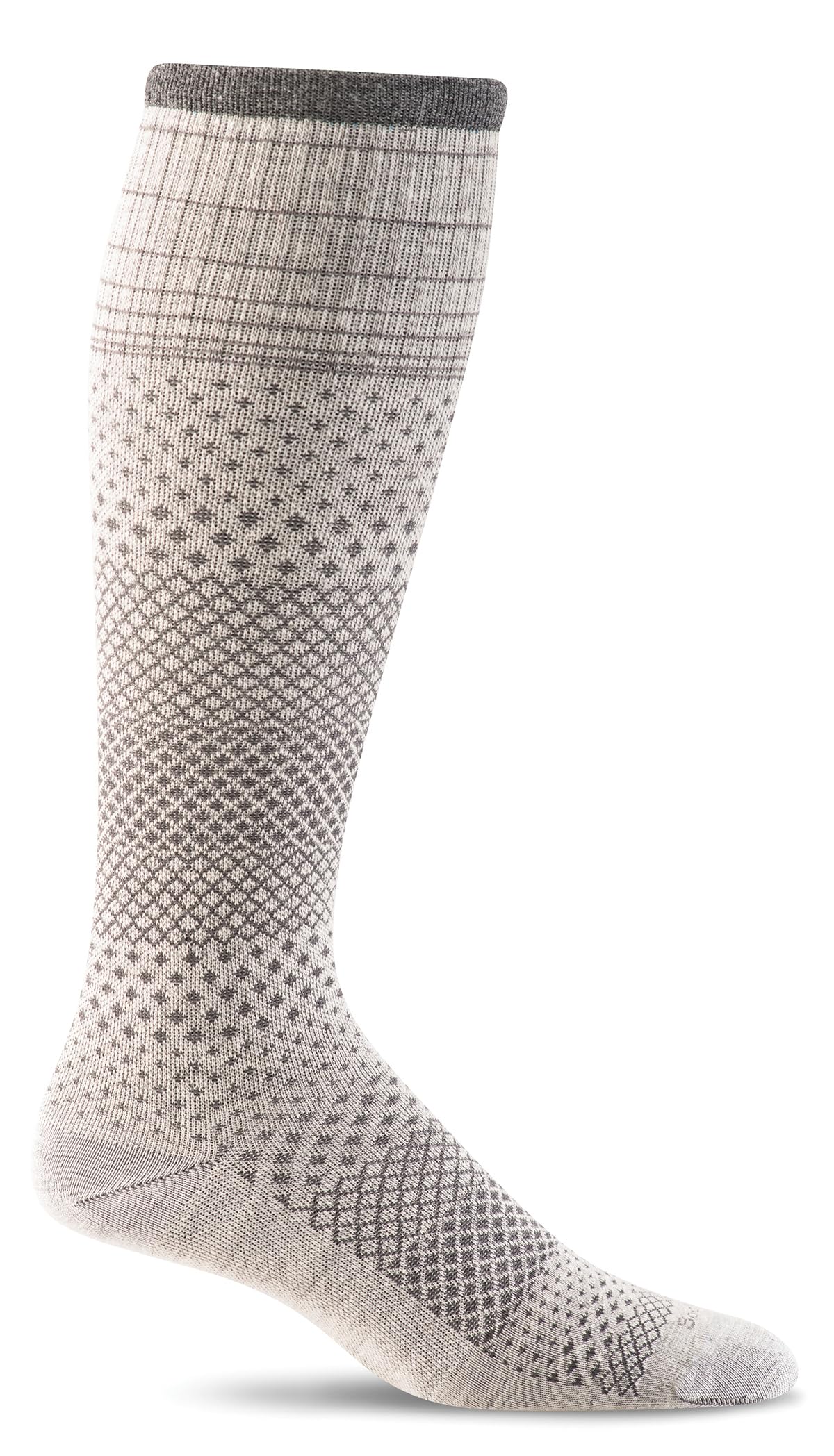
1. Sockwell Women’s Micro Grade
Our pick — over 4.5★ from 850+ verified ratings; the strongest balance of quality and price.
The wool-blend compression sock that feels like a leg massage — owners mention comfort over 120 times in reviews.
Riders, nurses, and hikers all land on this pair. The fabric — 32% Merino Wool, 31% Rayon from Bamboo, 32% Stretch Nylon, 5% Spandex — strikes the rare balance of being breathable enough for desert heat and warm enough for cold mornings, all without itching. Buyers report that after a 10.5-hour plane ride, their ankles arrived “non-swollen,” which is the exact outcome you want from a travel sock. The four zones of graduated compression (gradually tighter at the ankle and looser up the calf) feel noticeable but not punishing, and the smooth toe closure (no rough ridge at the toe box) means no irritating line at the end. Comfort is the thing owners praise most — by a wide margin — and the crowd-rating sits high enough that this is the safest bet for anyone unsure which fabric or compression level to start with.
The catch: some buyers with larger calves find the compression mild rather than firm. If you need a serious 20-30 mmHg squeeze for a medical condition, this sock may not push hard enough — it is tune for what the brand calls “Lifestyle Compression,” meaning sit, stand, travel, and recover rather than clinical-grade use. The Merino Wool blend also means it is not the cheapest pair on the shelf, but the durability (24 durability mentions, mostly positive) suggests they outlast bargain-bin alternatives. For everyday wear, this is the one that gets the most consistent praise across the most reviews — a true crowd favorite.
Sockwell micro relief: The graduated compression works across four zones, so the ankle feels firmest and the calf gets progressively lighter — exactly the gradient that keeps blood moving without cutting off circulation at the top band.
four-zone relief: You want a sock that disappears from your mind after you put it on — breathable, itch-free, and effective for long days on your feet or in a seat.
size check: Not enough compression for serious edema or post-op recovery. Go for a 20-30 mmHg sock if you need firm pressure.
2. Cotton Compression Socks for Women and Men 15-20mmHg, Made in USA – A1010
A cotton-based compression sock that owners mention lasts 5-10 years — not the typical 12-18 months for synthetics.
If synthetics make your feet feel clammy, this pair’s cotton construction changes the daily-wear equation. The 15-20 mmHg graduated compression targets tired legs, varicose veins, and swelling from prolonged sitting or standing. What wins people over is the claimed longevity — customers note that these hold up for half a decade or more, compared to cheaper alternatives that break down in just over a year. The reinforced heel and toe back that durability claim, and the opaque, professional look slides under work slacks or dress pants without looking medical. For anyone who stands all day — nurses, retail workers, warehouse staff — the comfort rating of 6 positive mentions backs up the all-day wear claim.
The fit picture is mixed, however, and that is the real story here. The toe box runs large for some, and a few owners note the sizing has changed recently compared to older batches. Because fit is everything in a compression sock — a baggy toe or a loose heel means the gradient does not work — measuring your foot length and calf girth against the size chart is essential before clicking buy. The cotton fabric also means these run warmer than a synthetic mesh, so they are better suited to cooler environments or air-conditioned workplaces. A dedicated pick if cotton is your non-negotiable and you plan to match the size chart closely.
cotton lovers: Prefer natural cotton over synthetics and want a compression sock that outlasts the typical annual replacement cycle.
durability doubt: You have a tricky calf-to-ankle ratio or you need a sheer sock for dresses — cotton is opaque and the fit fairness is a real checkpoint.
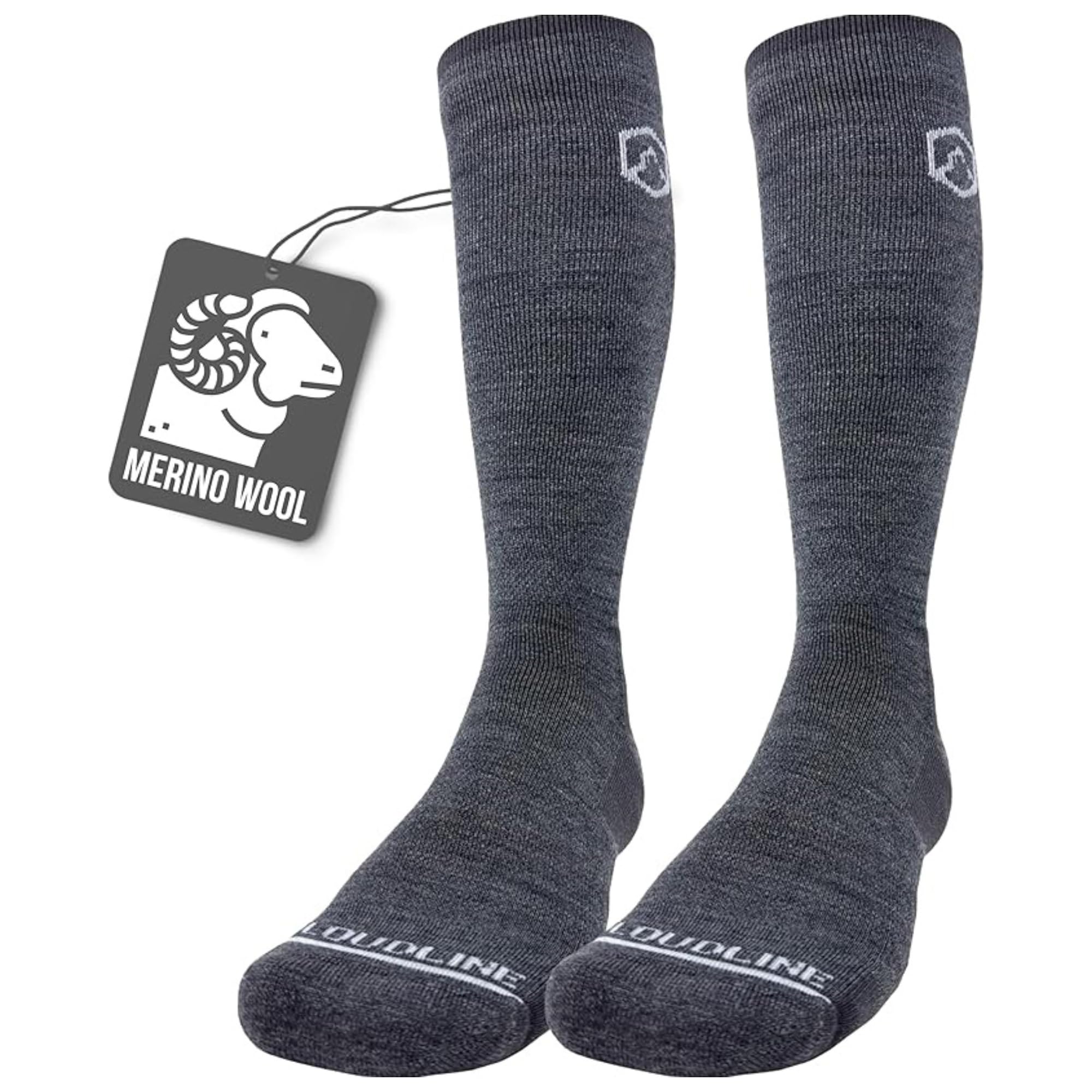
3. CloudLine – Merino Wool Graduated Compression Socks 15 mmHg
The ultralight hiker’s companion — tested on the Appalachian and Pacific Crest Trails, according to the brand.
This sock wears its outdoor credentials openly: it was tested on the longest thru-hikes in the United States, and the 15 mmHg compression is moderate enough to wear all day without your feet feeling clamped. The 56% Merino Wool, 29% Nylon, 15% Spandex blend is what makes the difference — it wicks sweat, resists odors, and retains warmth when cold while staying cool in summer heat. The smooth toe construction protects against blisters on long days, and the over-the-calf height stays up without bunching behind the knee. Owners of size 12 feet report the XL fits well, and the light compression is ideal for running, hiking, and travel where firm medical-grade pressure is not needed.
The downside is that the fit runs long and narrow. Several owners with larger calves found the top band uncomfortably tight, and the foot bed extends past the heel for some by up to 4-5 inches — a serious sizing quirk. If you have very large or muscular calves, this may not work. The material is also thin; that is great for breathability but means less padding, so a few reviewers with peripheral neuropathy (nerve pain in the feet) found the lack of cushioning uncomfortable. This is a targeted sock for active, moderate-compression needs, not a universal fix.
cold weather: You are hiking, trail running, or flying and want a light, breathable sock that fights blisters and odor without squeezing too hard.
budget limit: You have large calves, need thick cushioning, or require 20-30 mmHg compression for a medical condition.
4. EvoNation Men’s Classic Ribbed Knee High, 20-30 mmHg Firm Compression Socks

The firmest squeeze on this list — 20-30 mmHg for swelling control that actually stays put, with 51 positive mentions for compression.
This is the compression sock you reach for when moderate is not enough. At 20-30 mmHg, it delivers firm graduated pressure that targets post-surgical swelling, edema, and long-haul flight recovery. Compression is the most-praised aspect — 51 positive mentions — and owners consistently report that it works “as intended” for all-day wear and transatlantic flights. The design includes a roomy balloon toe that gives your toes space to splay, which is unusual in firm socks, plus a reinforced heel that survives repeated wear cycles. The rib-knit texture and 85% nylon / 15% spandex construction make it look polished enough for dress shoes, and the computer-controlled manufacturing keeps the compression gradient consistent from ankle to calf.
The major caveat: at 20-30 mmHg, these are difficult to get on. The brand publishes a donning diagram (a guide to pulling them on), and you will need it — owners describe needing “the right technique” and finding the first few wears a genuine struggle. The firmness also landed some buyers in the wrong size; because the compression is so high, a slightly too-small sock becomes unwearably tight. Measure your ankle and calf precisely before buying. Also note this is a men’s sock in sizing and styling (rib-knit, neutral colors), so women looking for a firm option may prefer the Absolute Support sheer set or the Sockwell Men’s Pulse.
firm support: Your doctor or surgeon prescribed 20-30 mmHg and you need a durable, polished sock that delivers real pressure.
narrow calves: Getting them on requires patience and practice — if you have limited hand strength or dexterity, consider a sock aid.
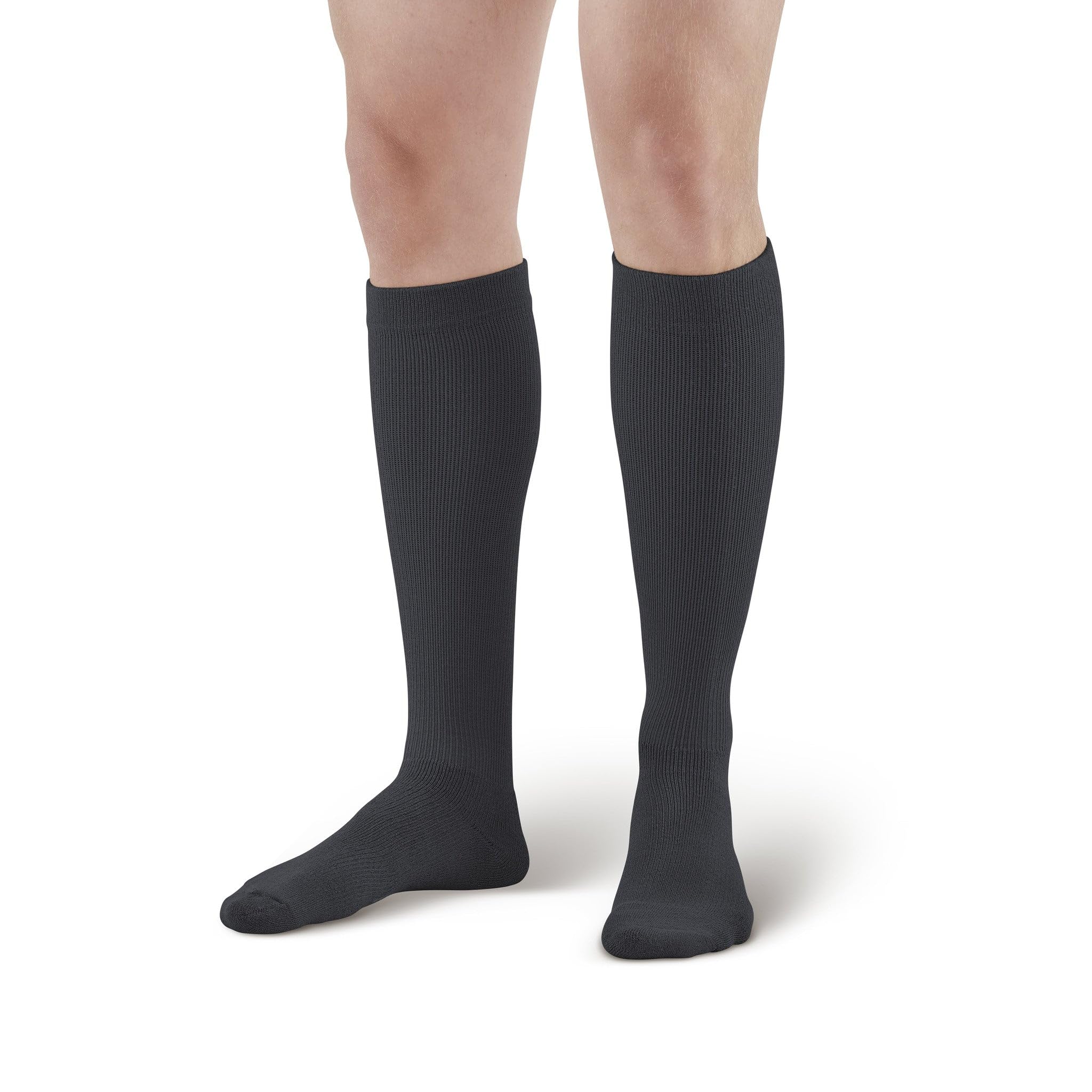
5. Ames Walker AW Styles 120/125/150 Coolmax 20-30 mmHg Firm Compression Knee High Socks
Nearly two decades on the market — a Coolmax firm sock that owners say “lasts forever,” with a reinforced heel and toe for durability.
Ames Walker has been selling compression hosiery from Asheboro, North Carolina since 1997, and this 20-30 mmHg knee-high is their workhorse. The Coolmax fabric (a synthetic designed to wick moisture) adds a thick, cushioned feel that separates it from thinner sheers — owners describe it as “like Gold Toe Fluffies” with serious compression. For people managing blood clot risks (Factor V Leiden, a genetic clotting disorder), post-surgical edema, or chronic swelling, the firm compression delivers consistent therapy. And the durability is not just talk: one review notes the socks “lasted nearly 2 years with weekly wear” without runs or tears, making this a legitimate long-term investment compared to brands that lose compression after a few washes.
The flip side: not every medical professional agrees on the quality. One physician-reviewer rated it poorly, citing unrealistic sizing and a tendency to slip down — though that single voice is balanced by many more who find the compression effective and the fit reliable for their anatomy. The foot section is notably more like a gym sock than a dress stocking, so it may look bulky under thin dress pants. If you need a semi-medical-grade firm sock with a thicker, more rugged feel, this is a proven contender; if you need a sleek dress sock, look at the EvoNation or the Absolute Support sheers instead.
active use: Long-term daily wear at 20-30 mmHg where you want a sock that feels substantial and survives wash after wash without losing shape.
natural fiber: The thick cushioned foot may feel bulky in slim shoes, and sizing is not forgiving — measure carefully against the brand’s chart.
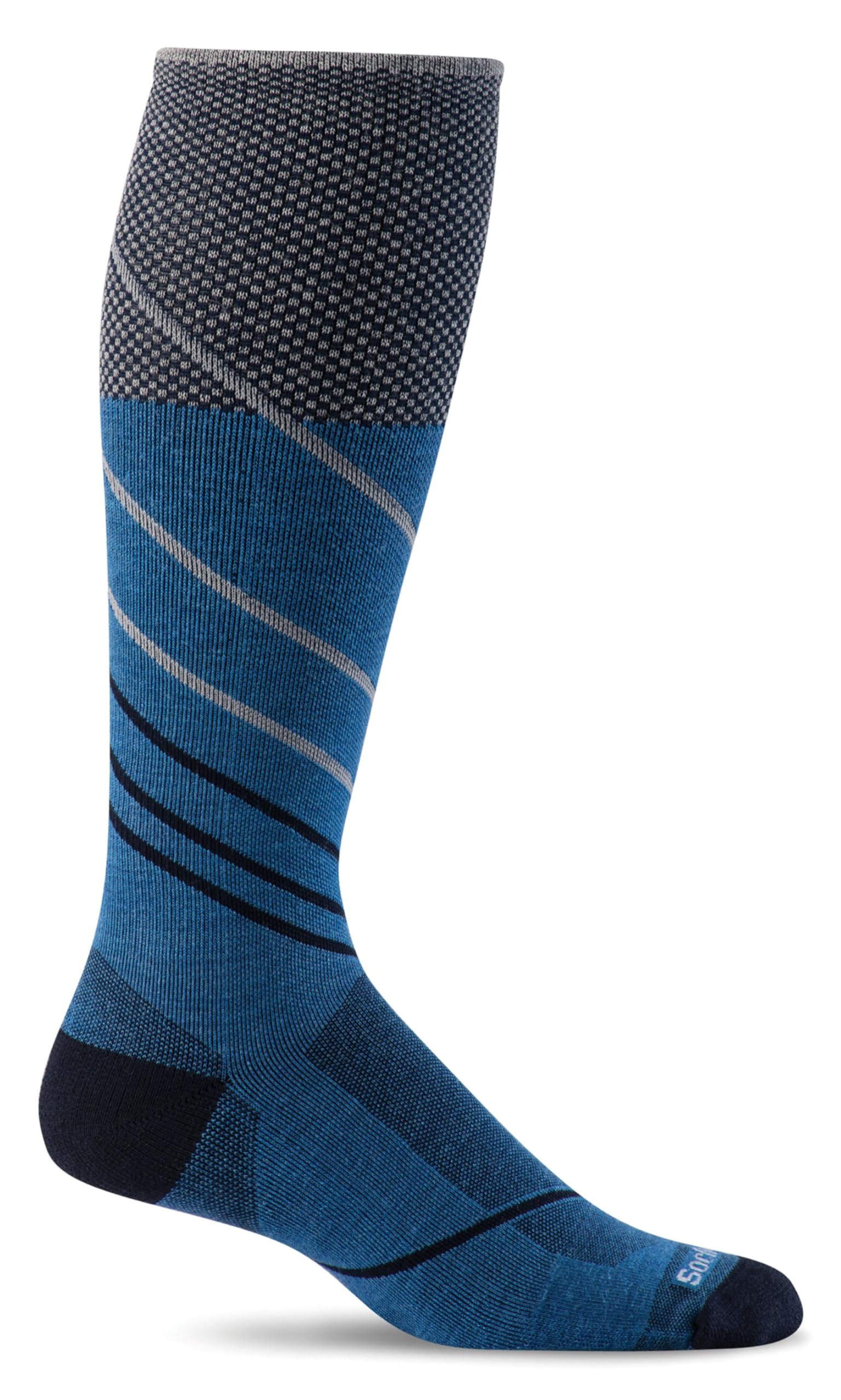
6. Sockwell Men’s Pulse OTC Firm Graduated Compression Sock
A longtime compression-hose user called this the best pair he has worn in 30 years — and he keeps buying them, praising the consistent pressure.
If you want the Sockwell Merino Wool experience but need a firmer grade, this is the men’s version that delivers. The fine Merino Wool and Rayon from Bamboo blend gives you the same temperature regulation and moisture wicking as the women’s Micro Grade, but with noticeably more compression. Reviewers point out that the graduated pressure “maintains all day” and eliminates the swelling and burning sensation in the heel and ankle, even after 90 minutes of rollerblading or a full day in a surgical setting. The over-the-calf (OTC) height stays put, and the fabric is not bulky — it fits under pants without looking like medical gear. The look and color options get positive mentions too.
The sizing is the weak point here. A few owners found the socks run nearly two sizes too small, making them nearly impossible to get over the toes — a frustrating experience for the price. If your foot is larger or wider than average, size up or consider a different brand. The firm compression also means these are not an easy pull-on; even satisfied owners note they are “tight but that’s why I bought them.” If you love the Sockwell material but need a medically firm gradient, this is your match — but do not skip measuring your foot and calf before ordering.
daily firm: You are a man who wants the temperature-regulating comfort of Merino Wool with a firm, all-day compression that actually reduces edema and leg fatigue.
style picky: You are between shoe sizes or have a wide foot — the sizing runs small and returns are a hassle. Measure twice.
7. (3 Pairs – Closed Toe) Made in USA – Sheer Compression Stockings for Women 15-20mmHg
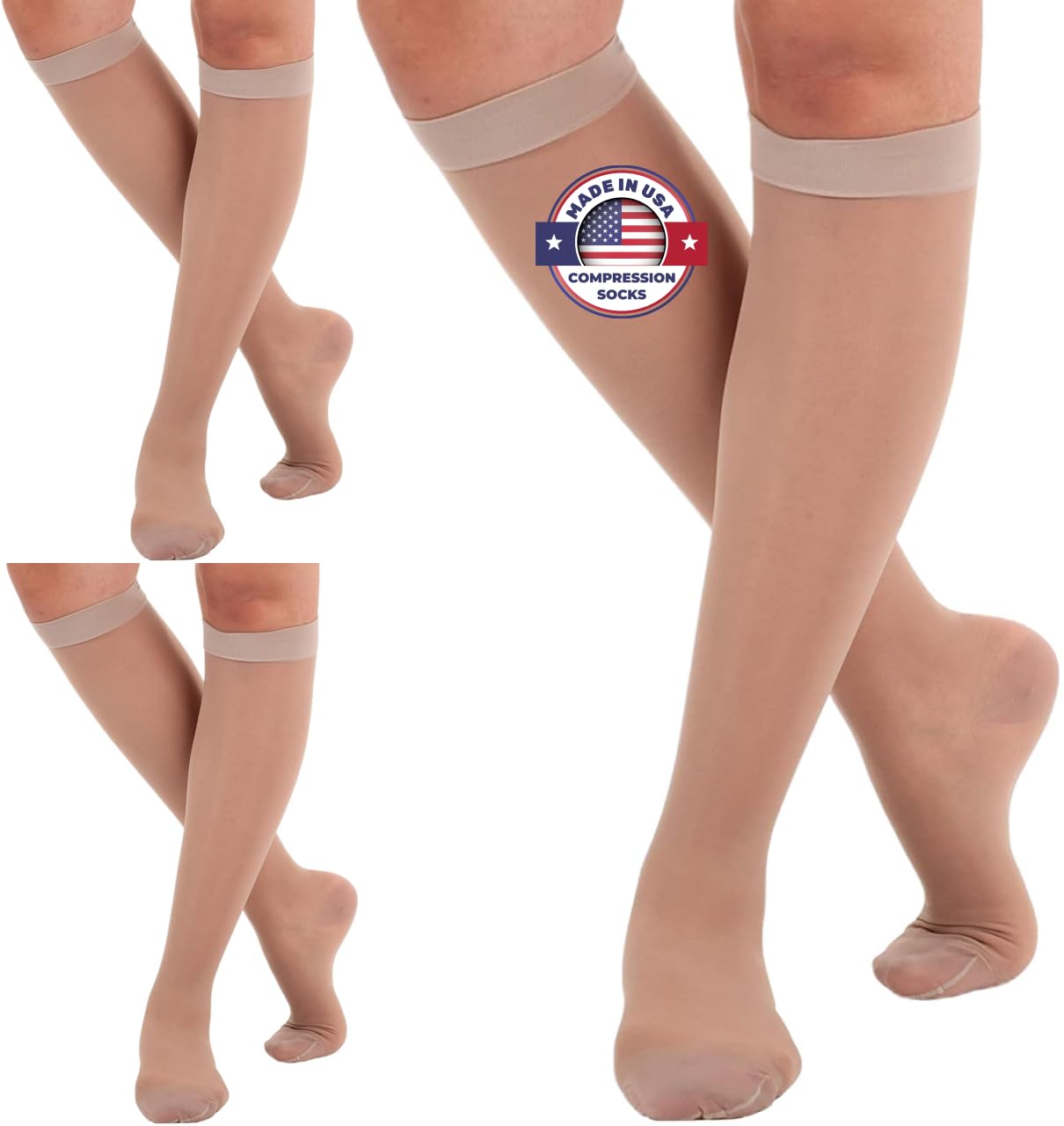
The painless pick for dresses: a sheer 15-20 mmHg stocking that looks like hosiery but works like compression, in a 3-pack for daily rotation.
Most compression socks are opaque — they hide your skin and only work under pants. This 3-pack of closed-toe sheers solves that problem. At 80% Nylon / 20% Spandex with a reinforced heel and toe, these deliver 15-20 mmHg graduated compression in a skin-tone shade that disappears under a dress. That is a big deal for women who need circulation support but do not want to wear opaque athletic socks with a skirt. Owners confirm the reinforced construction holds up well, the compression is moderate and noticeable, and the fit stays true to size — the most common praise is that they are “almost like nothing on” yet effective. The 3-pack pricing makes this a better daily value than single-pair sheers.
The main complaint: the top band can slip down during the day — especially for taller women or those above average height — dropping about 3 inches below the knee bend. The brand’s non-slip top could be more aggressive. Also, these are sheer stockings, not cushioned athletic socks. They provide zero padding and negligible warmth. If you are looking for hiking compression or winter leg warmth, these are not the pair. But for office wear, flights, and nights out where you want your legs to look good and feel supported, this is a category-specific solution that few other USA-made brands offer in a 3-pack.
light wear: You need compression under dresses, skirts, or formal wear and want the convenience of three pairs in one order.
heavy use: The top band may slip if you are tall, and there is zero foot cushioning — this is a sheer stocking, not a hiking sock.
8. Zensah Alpaca Compression Socks (15–20 mmHg)
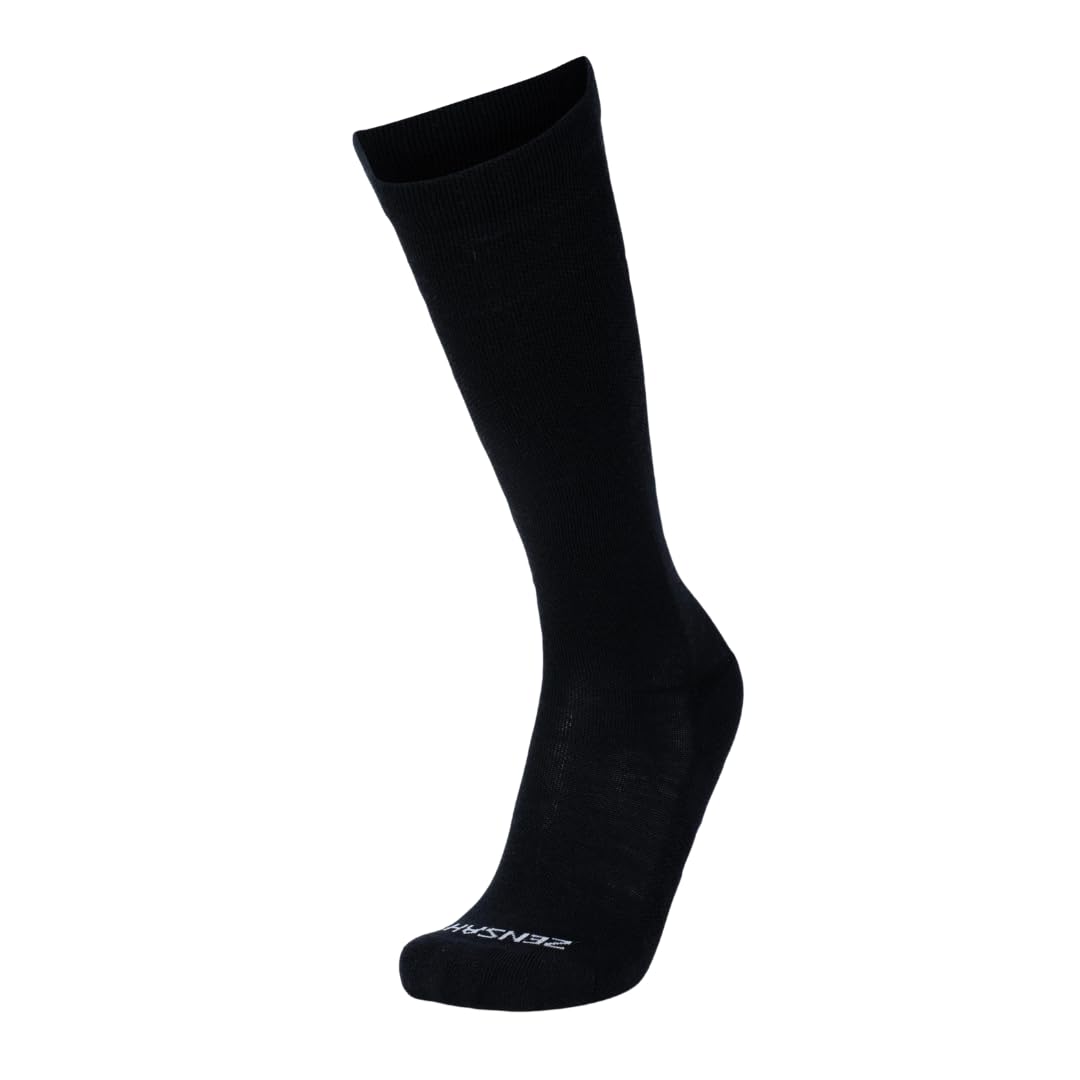
Alpaca fiber that fights smell — owners say 24 hours of travel does not leave a trace of odor, making this a premium choice for long-haul trips.
Alpaca wool is the outlier here and for good reason: it is warmer than Merino, softer against the skin, and naturally resists bacteria. That translates directly into a compression sock that stays fresh for days — not just hours. The 15-20 mmHg graduated compression is moderate enough for daily wear, and the knee-high height fits comfortably, expanding above the calf for a non-restrictive contour. Owners praise the feel as “expensive” but worth it, and the moderate compression was enough to help dissipate a hematoma (a bruise from collected blood) while remaining easy to slip on. For travelers who spend 24 hours in transit, The odor resistance alone makes it a standout for multi-day travel..
The price is the most obvious friction point. This is not an everyday-stocking budget pick; it is a premium specialty item. The alpaca fiber also attracts carpet lint and can be damaged by dryer static if not air-dried carefully. A few owners found the large size fits a 6-foot, 250-pound person well, but the sizing range is narrower than the big players — if you have very small or very large legs, compatibility is not guaranteed. This is for the buyer who prioritizes natural fiber performance and odor control over price and needs a compression sock that feels luxurious on the skin.
gentle support: You travel long-haul, want a sock that resists odor for days, and value alpaca’s natural softness and warmth over nylon sheerness.
firm needed: Budget buyers, those needing a cushioned athletic sock, or anyone who wants a wide sizing range — this is a specialty pick.
9. Pure Athlete Alpaca Compression Socks – 15-20mmHg
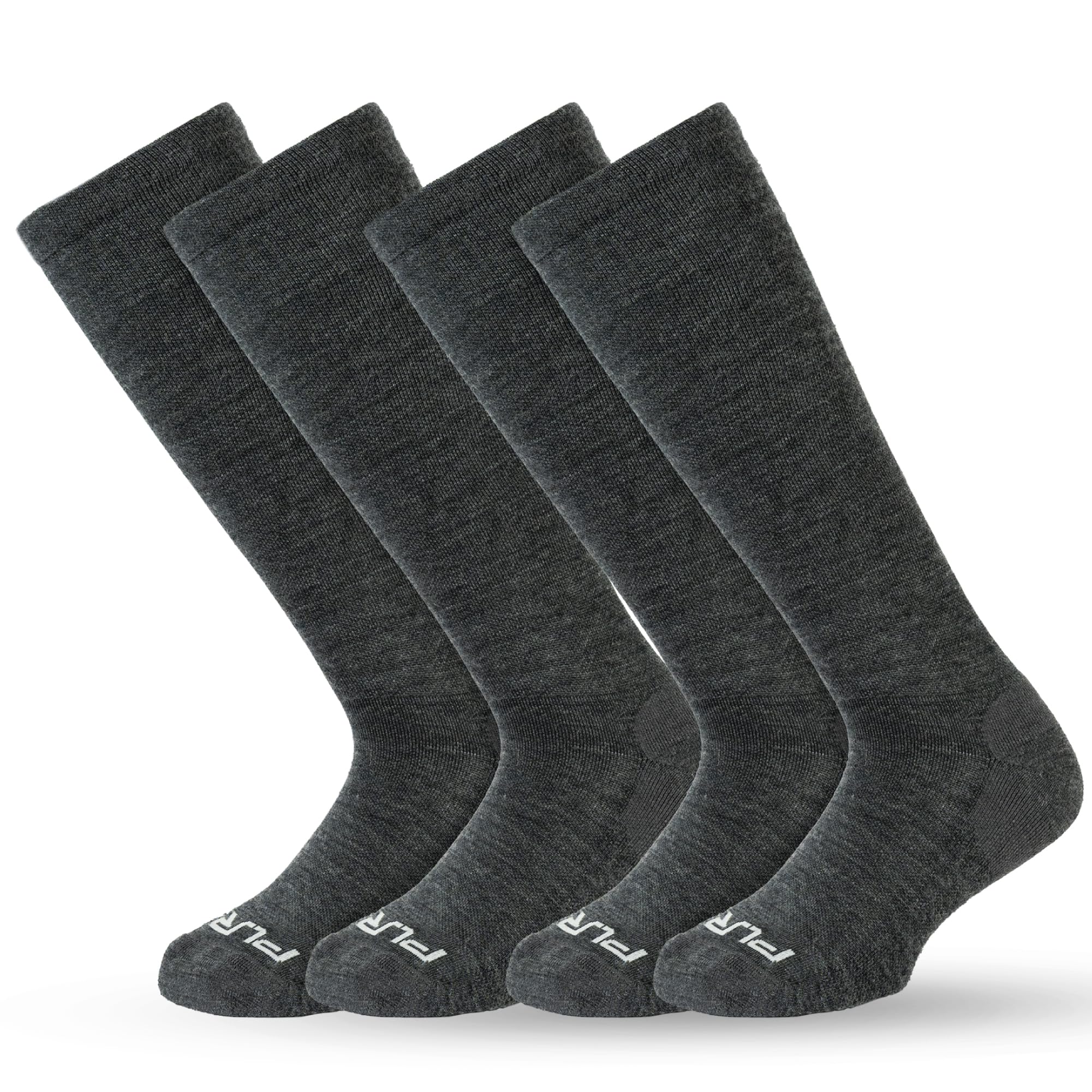
At 64% alpaca wool, this is the highest natural-fiber content of any compression sock here — and owners say it out-cushions them all for winter warmth.
Pure Athlete pushes the alpaca percentage to 64%, which means these socks are noticeably warmer, softer, and more moisture-wicking than anything built on a synthetic base. The 15-20 mmHg graduated compression is the moderate range, ideal for travel, running, and daily recovery — and owners confirm that leg and foot pain reduced within an hour of wearing, with swelling gone by morning in some cases. The large size fits a 12-inch foot comfortably, and the fabric does not leave deep marks or itching after a full day of wear. Comfort is the most-praised aspect by a clear margin. For someone who wants a compression sock that doubles as a warm, cushioned layer for cold-weather runs or recovery, this hits a unique intersection.
The big flag here is fit inconsistency. The top aspect count shows “Fit” as a mixed category with 28 mentions — roughly as many people find the sizing off as find it perfect. One owner with a size 10.5 foot could not even get the largest size over their foot, calling it “not flexible.” That is a higher proportion of fit complaints than any other sock on this list. The 64% alpaca also makes these significantly warmer than synthetic blends, so they are not ideal for hot climates or summer-only use. If you are between sizes, err toward the larger option, and check the return policy before buying.
eco material: Maximum natural fiber is your priority — 64% alpaca gives you warmth, odor resistance, and moisture wicking that synthetics cannot match.
cost check: Fit is unpredictable for some; if your foot or calf falls at the top of the size range, consider a different pick to avoid a return.
Understanding the Specs
Graduated Compression (mmHg)
This is the spec that makes or breaks a compression sock. “Graduated” means the sock is tightest at your ankle and gradually loosens as it moves up your calf — that gradient pushes blood upward, fighting swelling and fatigue. The number (measured in mmHg, the same unit as blood pressure) tells you how much pressure the sock applies. A 15-20 mmHg sock is moderate, good for travel, daily wear, and light swelling. A 20-30 mmHg sock is firm, used for diagnosed edema (swelling), varicose veins, or post-surgical recovery. Higher numbers feel significantly harder to pull on and may require a sock aid (a plastic frame that helps you slide the sock on).
Fabric Blend
Compression socks stretch because of nylon or spandex, but the comfort comes from whatever is blended with them. Merino Wool regulates temperature and resists odor — ideal for all-day wear and hiking. Rayon from Bamboo feels silky and wicks moisture fast. Alpaca Wool is warmer and softer than Merino, with natural antibacterial properties, but it is less breathable in heat. Cotton feels familiar and breathable but holds moisture longer than synthetics. A higher natural-fiber percentage usually means better comfort but less stretch recovery, so the sock may lose its snap sooner if not cared for properly.
smooth Toe Closure
A rough seam across the toes is the fastest way to hate a compression sock, especially if you have neuropathy (nerve pain in the feet) or sensitive feet. “smooth toe” means the sock is knit in a way that eliminates that ridge. It matters most during high-mileage activities (hiking, running) or if you plan to wear the sock for 12+ hours straight. Most Merino Wool and alpaca socks on this list include smooth toes as a standard feature; cheaper synthetics often skip it.
Reinforced Heel and Toe
Compression socks take the most abuse at the heel and toe — pulling them on stresses those areas. A reinforced heel and toe means the knit is tighter or doubled in those zones. This directly affects how long the sock lasts before developing holes or thinning out. If durability is your priority (and you plan to wear the same pair weekly for years), look for socks that explicitly mention reinforced heel and toe construction. The Absolute Support and Ames Walker models are strong examples.
FAQ
What does “Made in USA” actually mean for compression socks?
How tight should a 15-20 mmHg compression sock feel?
Can I wear compression socks for running or hiking?
How do I know my correct size for a compression sock?
How long does a pair of compression socks typically last?
What is the difference between closed toe and open toe compression socks?
Can I sleep in compression socks?
How do I wash compression socks without ruining them?
Will these socks help if I have varicose veins?
Which sock is best for hot weather?
Final Thoughts: The Verdict
For most people, the {“@context”: “https://schema.org”, “@graph”: [{“@type”: “ItemList”, “name”: “9 Best Compression Socks Made In USA”, “url”: “https://wellfizz.com/best-compression-socks-made-in-usa/”, “numberOfItems”: 9, “itemListElement”: [{“@type”: “ListItem”, “position”: 1, “name”: “Sockwell Women’s Micro Grade”, “url”: “https://wellfizz.com/best-compression-socks-made-in-usa/#product-1”}, {“@type”: “ListItem”, “position”: 2, “name”: “Cotton Compression Socks for Women and Men 15-20mmHg, Made in USA – A1010”, “url”: “https://wellfizz.com/best-compression-socks-made-in-usa/#product-2”}, {“@type”: “ListItem”, “position”: 3, “name”: “CloudLine – Merino Wool Graduated Compression Socks 15 mmHg”, “url”: “https://wellfizz.com/best-compression-socks-made-in-usa/#product-3”}, {“@type”: “ListItem”, “position”: 4, “name”: “EvoNation Men’s Classic Ribbed Knee High, 20-30 mmHg Firm Compression Socks”, “url”: “https://wellfizz.com/best-compression-socks-made-in-usa/#product-4”}, {“@type”: “ListItem”, “position”: 5, “name”: “Ames Walker AW Styles 120/125/150 Coolmax 20-30 mmHg Firm Compression Knee High Socks”, “url”: “https://wellfizz.com/best-compression-socks-made-in-usa/#product-5”}, {“@type”: “ListItem”, “position”: 6, “name”: “Sockwell Men’s Pulse OTC Firm Graduated Compression Sock”, “url”: “https://wellfizz.com/best-compression-socks-made-in-usa/#product-6”}, {“@type”: “ListItem”, “position”: 7, “name”: “(3 Pairs – Closed Toe) Made in USA – Sheer Compression Stockings for Women 15-20mmHg”, “url”: “https://wellfizz.com/best-compression-socks-made-in-usa/#product-7”}, {“@type”: “ListItem”, “position”: 8, “name”: “Zensah Alpaca Compression Socks (15–20 mmHg)”, “url”: “https://wellfizz.com/best-compression-socks-made-in-usa/#product-8”}, {“@type”: “ListItem”, “position”: 9, “name”: “Pure Athlete Alpaca Compression Socks – 15-20mmHg”, “url”: “https://wellfizz.com/best-compression-socks-made-in-usa/#product-9”}]}, {“@type”: “Product”, “position”: 1, “name”: “Sockwell Women’s Micro Grade”, “image”: “https://m.media-amazon.com/images/I/81UC9rkstXL.jpg”, “brand”: {“@type”: “Brand”, “name”: “Sockwell”}, “url”: “https://www.amazon.com/dp/B01M6E6ZVP/?tag=wellfizzmo-20”, “offers”: {“@type”: “Offer”, “url”: “https://www.amazon.com/dp/B01M6E6ZVP/?tag=wellfizzmo-20”}}, {“@type”: “Product”, “position”: 2, “name”: “Cotton Compression Socks for Women and Men 15-20mmHg, Made in USA – A1010”, “image”: “https://m.media-amazon.com/images/I/71HX7+jfloL.jpg”, “brand”: {“@type”: “Brand”, “name”: “Cotton”}, “url”: “https://www.amazon.com/dp/B0184SBHKQ/?tag=wellfizzmo-20”, “offers”: {“@type”: “Offer”, “url”: “https://www.amazon.com/dp/B0184SBHKQ/?tag=wellfizzmo-20”}}, {“@type”: “Product”, “position”: 3, “name”: “CloudLine – Merino Wool Graduated Compression Socks 15 mmHg”, “image”: “https://m.media-amazon.com/images/I/81k9nAyZTNL.jpg”, “brand”: {“@type”: “Brand”, “name”: “CloudLine”}, “url”: “https://www.amazon.com/dp/B01MG0HHOO/?tag=wellfizzmo-20”, “offers”: {“@type”: “Offer”, “url”: “https://www.amazon.com/dp/B01MG0HHOO/?tag=wellfizzmo-20”}}, {“@type”: “Product”, “position”: 4, “name”: “EvoNation Men’s Classic Ribbed Knee High, 20-30 mmHg Firm Compression Socks”, “image”: “https://m.media-amazon.com/images/I/516nixDeH-L.jpg”, “brand”: {“@type”: “Brand”, “name”: “EvoNation”}, “url”: “https://www.amazon.com/dp/B01J8WZ960/?tag=wellfizzmo-20”, “offers”: {“@type”: “Offer”, “url”: “https://www.amazon.com/dp/B01J8WZ960/?tag=wellfizzmo-20”}}, {“@type”: “Product”, “position”: 5, “name”: “Ames Walker AW Styles 120/125/150 Coolmax 20-30 mmHg Firm Compression Knee High Socks”, “image”: “https://m.media-amazon.com/images/I/712Qfultn2L.jpg”, “brand”: {“@type”: “Brand”, “name”: “Ames”}, “url”: “https://www.amazon.com/dp/B001200138/?tag=wellfizzmo-20”, “offers”: {“@type”: “Offer”, “url”: “https://www.amazon.com/dp/B001200138/?tag=wellfizzmo-20”}}, {“@type”: “Product”, “position”: 6, “name”: “Sockwell Men’s Pulse OTC Firm Graduated Compression Sock”, “image”: “https://m.media-amazon.com/images/I/81+XEiMGIPL.jpg”, “brand”: {“@type”: “Brand”, “name”: “Sockwell”}, “url”: “https://www.amazon.com/dp/B01N3KJCUH/?tag=wellfizzmo-20”, “offers”: {“@type”: “Offer”, “url”: “https://www.amazon.com/dp/B01N3KJCUH/?tag=wellfizzmo-20”}}, {“@type”: “Product”, “position”: 7, “name”: “(3 Pairs – Closed Toe) Made in USA – Sheer Compression Stockings for Women 15-20mmHg”, “image”: “https://m.media-amazon.com/images/I/51raemgHcXL.jpg”, “brand”: {“@type”: “Brand”, “name”: “(3”}, “url”: “https://www.amazon.com/dp/B0B5BC4QH9/?tag=wellfizzmo-20”, “offers”: {“@type”: “Offer”, “url”: “https://www.amazon.com/dp/B0B5BC4QH9/?tag=wellfizzmo-20”}}, {“@type”: “Product”, “position”: 8, “name”: “Zensah Alpaca Compression Socks (15–20 mmHg)”, “image”: “https://m.media-amazon.com/images/I/41ayFNBXoSL.jpg”, “brand”: {“@type”: “Brand”, “name”: “Zensah”}, “url”: “https://www.amazon.com/dp/B0FW1RS5PD/?tag=wellfizzmo-20”, “offers”: {“@type”: “Offer”, “url”: “https://www.amazon.com/dp/B0FW1RS5PD/?tag=wellfizzmo-20”}}, {“@type”: “Product”, “position”: 9, “name”: “Pure Athlete Alpaca Compression Socks – 15-20mmHg”, “image”: “https://m.media-amazon.com/images/I/912YQeJhmOL.jpg”, “brand”: {“@type”: “Brand”, “name”: “Pure”}, “url”: “https://www.amazon.com/dp/B0FQ6YYJ9Q/?tag=wellfizzmo-20”, “offers”: {“@type”: “Offer”, “url”: “https://www.amazon.com/dp/B0FQ6YYJ9Q/?tag=wellfizzmo-20”}}, {“@type”: “FAQPage”, “mainEntity”: [{“@type”: “Question”, “name”: “What does \”Made in USA\” actually mean for compression socks?”, “acceptedAnswer”: {“@type”: “Answer”, “text”: “For the picks in this guide, it means the socks are knit and finished in American factories — typically in North Carolina, Alabama, or the Midwest — using domestic and imported yarns. Some brands list \”Made in USA\” with yarns from other countries; that is standard. The key is that the manufacturing labor is domestic, which supports tighter quality control and shorter supply chains than a fully imported sock.”}}, {“@type”: “Question”, “name”: “How tight should a 15-20 mmHg compression sock feel?”, “acceptedAnswer”: {“@type”: “Answer”, “text”: “You should feel a firm, even squeeze around your ankle that gradually lessens as it moves up your calf. It should not be painful, and it should not leave deep red marks after removal. If the sock feels unbearably tight or you cannot get it over your heel, the size is wrong. If it feels like a regular sock, the compression may be too low for your needs.”}}, {“@type”: “Question”, “name”: “Can I wear compression socks for running or hiking?”, “acceptedAnswer”: {“@type”: “Answer”, “text”: “Yes — several picks on this list, especially the CloudLine and the Sockwell Men’s Pulse, are designed specifically for athletic use. Look for moisture-wicking fabric (Merino Wool or Coolmax), a smooth toe to prevent blisters, and a compression level of 15-20 mmHg so the sock does not restrict movement. A firmer 20-30 mmHg sock is generally too restrictive for high-cadence activity.”}}, {“@type”: “Question”, “name”: “How do I know my correct size for a compression sock?”, “acceptedAnswer”: {“@type”: “Answer”, “text”: “Measure your ankle circumference (the distance around the narrowest point above the bone), your calf circumference at the widest point, and your foot length from heel to toe. Compare all three against the brand’s size chart — do not rely on your shoe size alone. Many brands also list a \”calf fit\” range; if your calf is at the top of the range, size up for comfort.”}}, {“@type”: “Question”, “name”: “How long does a pair of compression socks typically last?”, “acceptedAnswer”: {“@type”: “Answer”, “text”: “With rotation (wearing different pairs on different days) and proper care (air drying, no fabric softener), a well-made USA pair lasts 1-2 years for synthetic blends and up to 5-10 years for heavy-duty cotton or Coolmax options, per owner reports. The compression gradient (the gradual decrease in pressure from ankle to calf) naturally weakens over time, so replace any pair that no longer feels snug at the ankle.”}}, {“@type”: “Question”, “name”: “What is the difference between closed toe and open toe compression socks?”, “acceptedAnswer”: {“@type”: “Answer”, “text”: “Closed-toe socks cover the entire foot, which provides full gradient compression from the toes upward. Open-toe stockings leave the toes exposed, which can be more comfortable for people with toe sensitivity or long toenails, but the compression may not extend as far. The Absolute Support sheer set uses closed-toe, while some medical brands offer open-toe for hospital use.”}}, {“@type”: “Question”, “name”: “Can I sleep in compression socks?”, “acceptedAnswer”: {“@type”: “Answer”, “text”: “Only if a doctor specifically prescribes it. Most compression socks (including all picks here) are designed for daytime wear when you are upright and blood pools in your legs. Wearing them in bed is not dangerous for most people, but it is unnecessary and can be uncomfortable, especially at 20-30 mmHg. Take them off before sleep unless instructed otherwise.”}}, {“@type”: “Question”, “name”: “How do I wash compression socks without ruining them?”, “acceptedAnswer”: {“@type”: “Answer”, “text”: “Machine wash in cold water on a gentle cycle or hand wash. Never use fabric softener — it breaks down the spandex fibers that give the sock its compression gradient. Air dry flat; do not put compression socks in a dryer, as heat damages the elastic. Owners who follow these rules report socks lasting several years; those who machine-dry often lose compression within months.”}}, {“@type”: “Question”, “name”: “Will these socks help if I have varicose veins?”, “acceptedAnswer”: {“@type”: “Answer”, “text”: “Graduated compression socks are a standard first-line management tool for varicose veins. The 20-30 mmHg firm options (EvoNation, Ames Walker) are more commonly recommended for this purpose than the 15-20 mmHg moderate options. However, your doctor should confirm the appropriate compression level for your specific condition — self-diagnosing too high or too low a pressure can be ineffective.”}}, {“@type”: “Question”, “name”: “Which sock is best for hot weather?”, “acceptedAnswer”: {“@type”: “Answer”, “text”: “The Sockwell Women’s Micro Grade and the CloudLine Merino Wool both use a high percentage of Merino Wool, which wicks moisture and regulates temperature better than synthetics in heat. The Pure Athlete Alpaca and Zensah Alpaca, while soft and warm, retain more heat and are better for cool climates. If you live in a hot area, stick with socks that explicitly mention breathability or ultralight weight.”}}]}]}
Related Guides

Mo Maruf
I created WellFizz to bridge the gap between vague wellness advice and actionable solutions. My mission is simple: to decode the research and give you practical tools you can actually use.
Beyond the data, I am a passionate traveler. I believe that stepping away from the screen to explore new environments is essential for mental clarity and physical vitality.