Our readers keep the lights on and my smoothie glass nicely filled. As an Amazon Associate, I earn from qualifying purchases.
Specs are compiled from manufacturer listings and verified buyer reviews and can change over time — please confirm the key details on the product page before buying.
If your legs ache after a long shift, swell on a flight, or feel heavy by mid-afternoon, the right pair of socks is the fix you have been missing — not a luxury, but a genuine daily tool. The key is getting the compression level and fit right, because the wrong pair is either useless or uncomfortable, and the right one makes you forget you are wearing it.
I’m Mohammad Maruf — the founder and writer behind WellFizz. This guide is built by comparing the manufacturers’ published specifications and the patterns across verified customer reviews, so you get each pick’s real strengths and trade-offs instead of marketing spin.
Choosing the right compression socks for women depends on knowing which level of pressure and which material actually match your daily routine — whether you are a nurse on your feet all day, a frequent flyer, or managing pregnancy swelling.
Our Picks at a Glance

How To Choose The Best Compression Socks For Women
Compression socks work by squeezing your legs with graduated pressure — tighter at the ankle and looser toward the knee — to push blood upward and prevent it from pooling. That simple mechanism is what reduces swelling, fatigue, and that heavy feeling by the end of the day. But not all socks squeeze the same way, so the choice depends on three things: the pressure level, the material, and the fit around your calf and foot.
Compression Level
The number you see — 15-20 mmHg or 20-30 mmHg — tells you how firm the squeeze is. Think of 15-20 mmHg as everyday, light-to-moderate support: it works for pregnancy swelling, long flights, and general tiredness. The 20-30 mmHg range is noticeably firmer and is the choice for nurses on 12-hour shifts, people with chronic venous insufficiency, or anyone whose legs swell significantly. Picking the lighter level when you need firm support leaves you disappointed; picking firm when you just want light relief can feel like a tourniquet.
Material and Breathability
Most compression socks are made from nylon and spandex — they are durable, thin, and dry quickly, but they trap heat. Cotton blends are softer and more breathable, which matters if you wear socks all day or have sensitive skin. Merino wool blends (like those from Sockwell) regulate temperature and resist odor, making them ideal for long-haul travel or multi-day wear. The trade-off is that cotton and wool are thicker and can feel warmer; nylon is cooler but less absorbent. Think about your climate and how many hours you plan to wear them.
Fit Around the Calf and Foot
Compression socks only work if they fit your calf circumference. Most brands offer sizing based on shoe size and calf measurement — ignore the shoe size and measure your calf at its widest point. If your calf is 18 inches or more, look for socks labeled “wide calf” or “plus size.” A sock that is too tight at the top will cut off circulation and leave a painful ridge; one that is too loose will slide down and provide zero compression. Many of the best-rated socks on this list are praised specifically because the top band stays put without digging in.
Quick Comparison
| Model | Best For | Compression Level | Material | Pairs | Amazon |
|---|---|---|---|---|---|
| Benirap Breathable Compression Socks★ Best Overall | Overall best, all-day standing | 20-30 mmHg | Nylon/Spandex | 2 | Amazon |
| Compression Socks (3 Pairs) 15-20 mmHgTop Performer | Pregnancy & everyday support | 15-20 mmHg | Nylon/Spandex | 3 | Amazon |
| 4 Pairs Plus Size Compression SocksWide Calf Pick | Wide calf & firm support | 20-30 mmHg | 75% Nylon, 25% Spandex | 4 | Amazon |
| CHARMKING Compression Socks (8 Pairs) | Best multi-pack value | 15-20 mmHg | Nylon/Spandex | 8 | Amazon |
| Thick Soft Cotton Compression Socks | Soft cotton comfort & warmth | 15-20 mmHg | Cotton | 2 | Amazon |
| Cute Compression Socks for Women (3 Pairs) | Firm support with cute patterns | 20-30 mmHg | Polyester | 3 | Amazon |
| LEVSOX Cotton Compression Socks | Cotton comfort with firm compression | 20-30 mmHg | Cotton | 1 | Amazon |
| Sockwell Women’s Pulse Knee High | Premium merino wool & long durability | 20-30 mmHg | Merino Wool & Rayon | 1 | Amazon |
| Copper Fit Mobilizer Compression Socks | Easiest on/off & premium build | — | Nylon/Spandex | 1 | Amazon |
In‑Depth Reviews
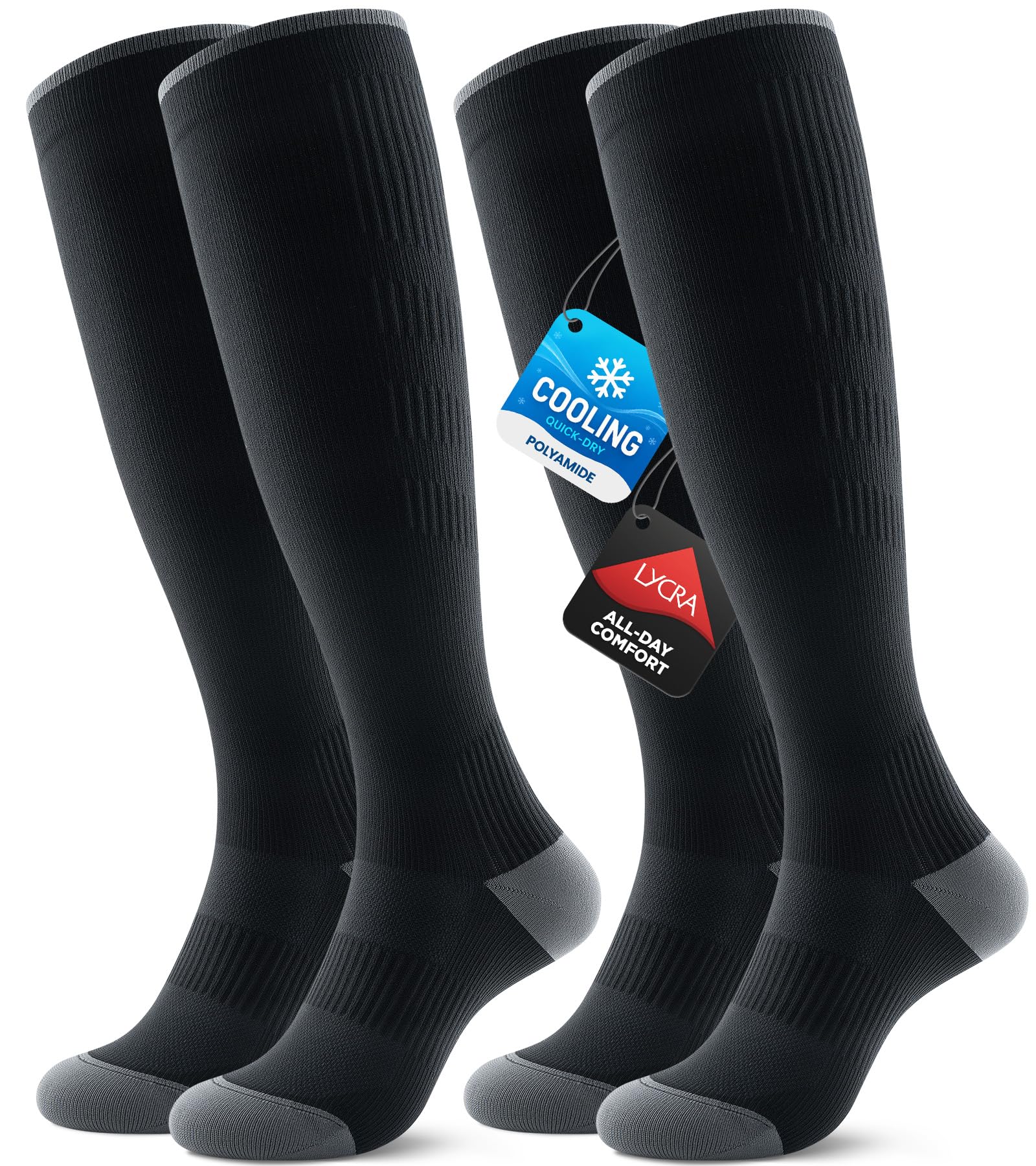
1. Benirap Breathable Compression Socks for Women Men, 20-30mmHg Knee High
Our pick — over 4.5★ from 500+ verified ratings; the strongest balance of quality and price.
Firm 20-30 mmHg support that stays comfortable all day, even in summer.
This Benirap pack delivers firm 20-30 mmHg pressure — the highest level on this list — but what makes it stand out is that owners say it stays comfortable without that suffocating feeling. One family member on their feet for hours saw swelling and rashes vanish: as buyers report, “these fixed all his problems faster than any cream ever could.” The real win is breathability — several owners mention wearing them in hot weather without overheating, which is rare at this pressure.
At 3.53 ounces per pack, these are lightweight and compact, making them a natural travel companion. That makes them a natural travel companion. The fit is generous enough for work boots, so your legs get firm medical-grade support without the heavy feeling of bulkier socks.
Breathable support
- Firm 20-30 mmHg compression that genuinely reduces leg fatigue and swelling.
- Breathable enough for summer wear — owners say they do not get too hot.
- Easy to put on and take off, with a soft material that is comfortable all day.
Firm fit
- Only two pairs per pack — less value if you need a weekly rotation.
- The beige color has a slight pink undertone, which may not suit every preference.
Active recovery: you need firm 20-30 mmHg compression for standing all day, travel, or circulation issues and want a sock that breathes.
Sensitive legs: you want the highest pair count or only need light everyday support — the 15-20 mmHg options below may suit you better.
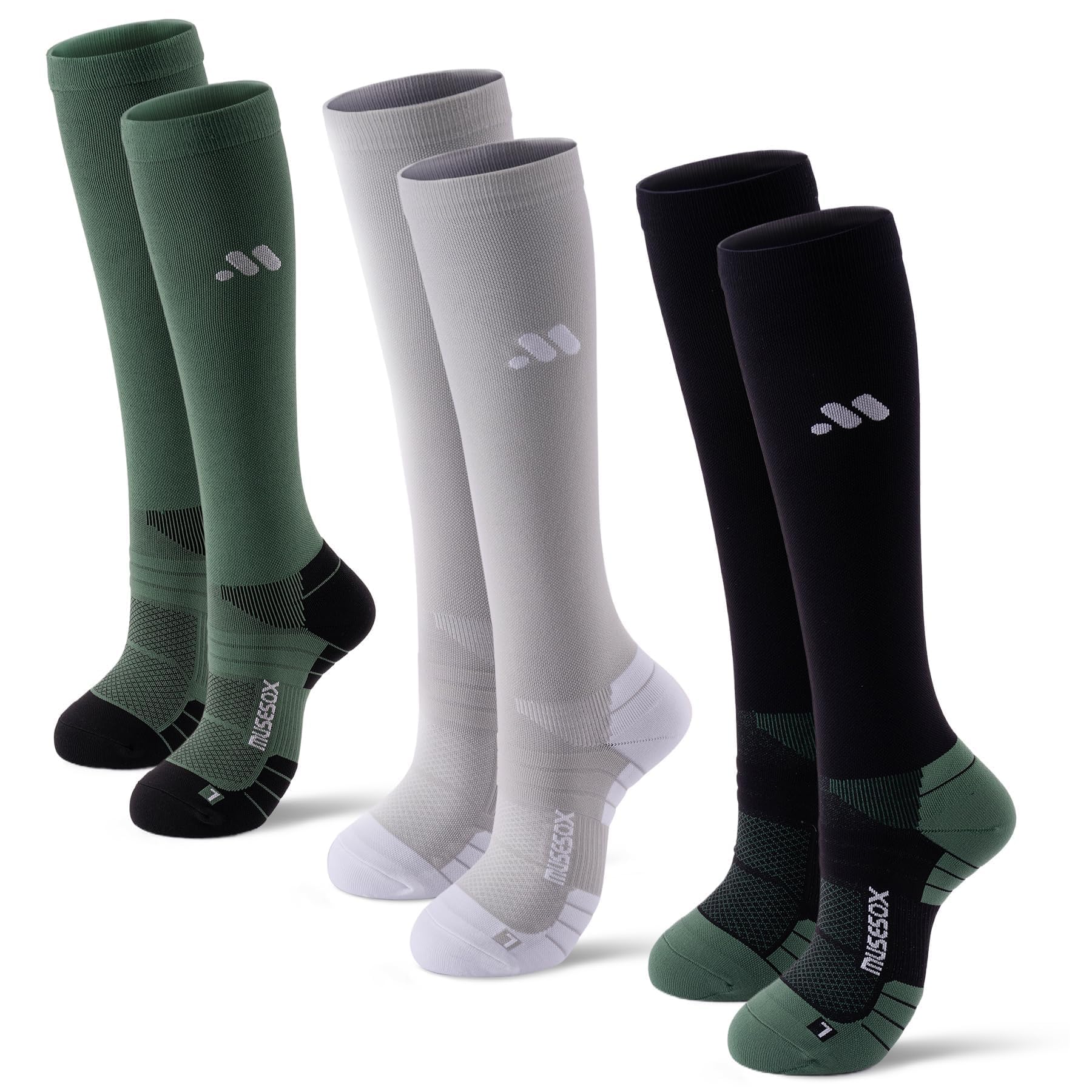
2. Compression Socks for Women and Men, Knee High 15-20mmHg Graduated Support (3 Pairs)
Light-to-moderate compression that is just right for pregnancy, flights, and daily wear.
At 15-20 mmHg, this three-pack is a gentle option that is exactly right if you need help with swelling and tiredness but want a sock that does not feel medical. One owner said “I got this for the swelling in my legs due to pregnancy… the compression is just right.” Comfort is the most-discussed feature across the reviews, and buyers consistently say these socks stay put without rolling down.
The ankle-to-calf pressure gradient is noticeable but gentle, and the socks are thin enough to wear under work pants. A few owners note the left and right foot labels, which help maintain the correct fit. The only gap versus the top pick is the lower compression level — if your legs swell significantly, you may want the 20-30 mmHg of the Benirap. But for everyday tiredness, travel, and pregnancy, this trio delivers a proven solution at a friendly price point.
Daily wear: pregnancy swelling, long flights, and anyone who spends the day on their feet but only needs light-to-moderate support.
High activity: if you need firm compression for chronic swelling or varicose veins, the 20-30 mmHg options will serve you better.
3. 4 Pairs Plus Size Compression Socks, Extra Wide Calf 20-30 mmHg Knee High
Firm 20-30 mmHg compression that finally fits a wider calf without digging in.
If your calf is 18 inches or more, standard compression socks either dig in at the top or slide down — this four-pack is built to solve that. Owners with an 18-inch calf found the 2XL fits well, and the phrase “finally found these, they fit perfectly without digging into your skin” comes up repeatedly. At 20-30 mmHg, this is the same firm level as the Benirap but designed for larger legs, making it a direct alternative if calf circumference is your main concern.
The trade-off is that these are constructed with denser fabric needed for plus-size construction. A few owners note that the sock can be snug pulling up to the knee, but once in place, the comfort and effective compression win them over. The pack includes four pairs with different patterns, which adds enough variety for a work week rotation.
Plus sizes: your calf circumference is 16 inches or more and you need firm 20-30 mmHg compression that stays in place without a harsh top band.
Narrow calves: you have standard or slim calves — the plus-size construction may feel baggy or loose.
4. CHARMKING Compression Socks for Women & Men Circulation (8 Pairs) 15-20 mmHg

Eight pairs of light compression at a price that makes daily rotation easy.
This is the most-reviewed compression sock on this list with well over 89,000 ratings, and the reason is fit — fit is the most-mentioned aspect, with over 5,400 owners singling it out. Owners say these feel like normal socks with a gentle squeeze, not like medical stockings, and the copper-infused fabric stays soft and breathable.
At 15-20 mmHg this is the same light-to-moderate level as the three-pack above, so it will handle daily tiredness and travel but not heavy swelling. The catch is that some owners mention patterns fade after washes, and the sock can feel slightly short on longer legs. But for someone who just wants an affordable, comfortable pair to wear every day without overthinking it, the CHARMKING offers 8 pairs for around the same tier as the Benirap’s 2 pairs, making it the best value for a daily rotation.
Travel use: a no-brainer daily wear rotation at a light compression level, especially if you want normal-looking socks that blend in.
Cold weather: you need firm medical-grade compression or have very long calves — the sock length may come up short.
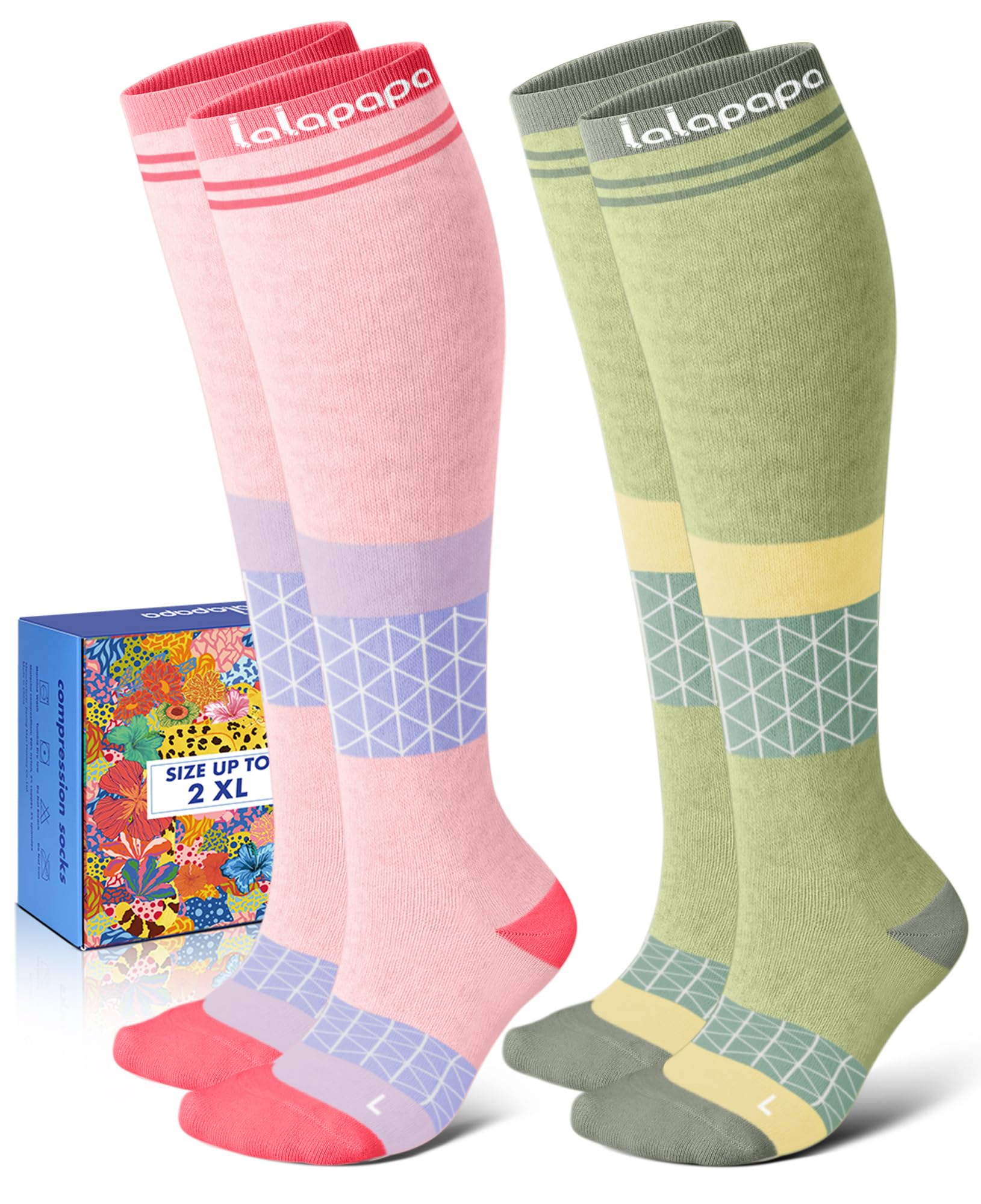
5. Thick Soft Cotton Compression Socks for Women Men 15-20mmHg Knee High Breathable Cotton Socks
Cotton-soft feel with a cushioned sole that people with diabetes or sensitive skin love.
Most compression socks are made from nylon and spandex — they work but can feel slick and warm. This pair uses cotton as the primary material, which owners say is noticeably softer and becomes even more comfortable after a few washes. A diabetic user specifically praised the softness and the lack of pinky-toe discomfort, and the cushioned bottom adds a layer of comfort for walking or standing that thinner socks lack.
At 15-20 mmHg the compression is light, and the cotton construction means these run slightly warmer than nylon alternatives — a few owners found them too warm for summer. The fit runs snug: a 5’1″ owner with a 14-inch calf found the S/M tight, recommending sizing up. But if you prioritize a natural fiber feel and extra padding over maximum breathability, these deliver a cozier compression experience than anything else here. The cushioned sole is a distinct advantage over the 3-pack, which lacks this padding.
Sensitive skin: people who hate the slick feel of nylon compression socks and want a soft, cushioned cotton alternative for light daily support.
Firm compression: you need firm compression or live in a very warm climate — the cotton traps more heat than synthetic blends.
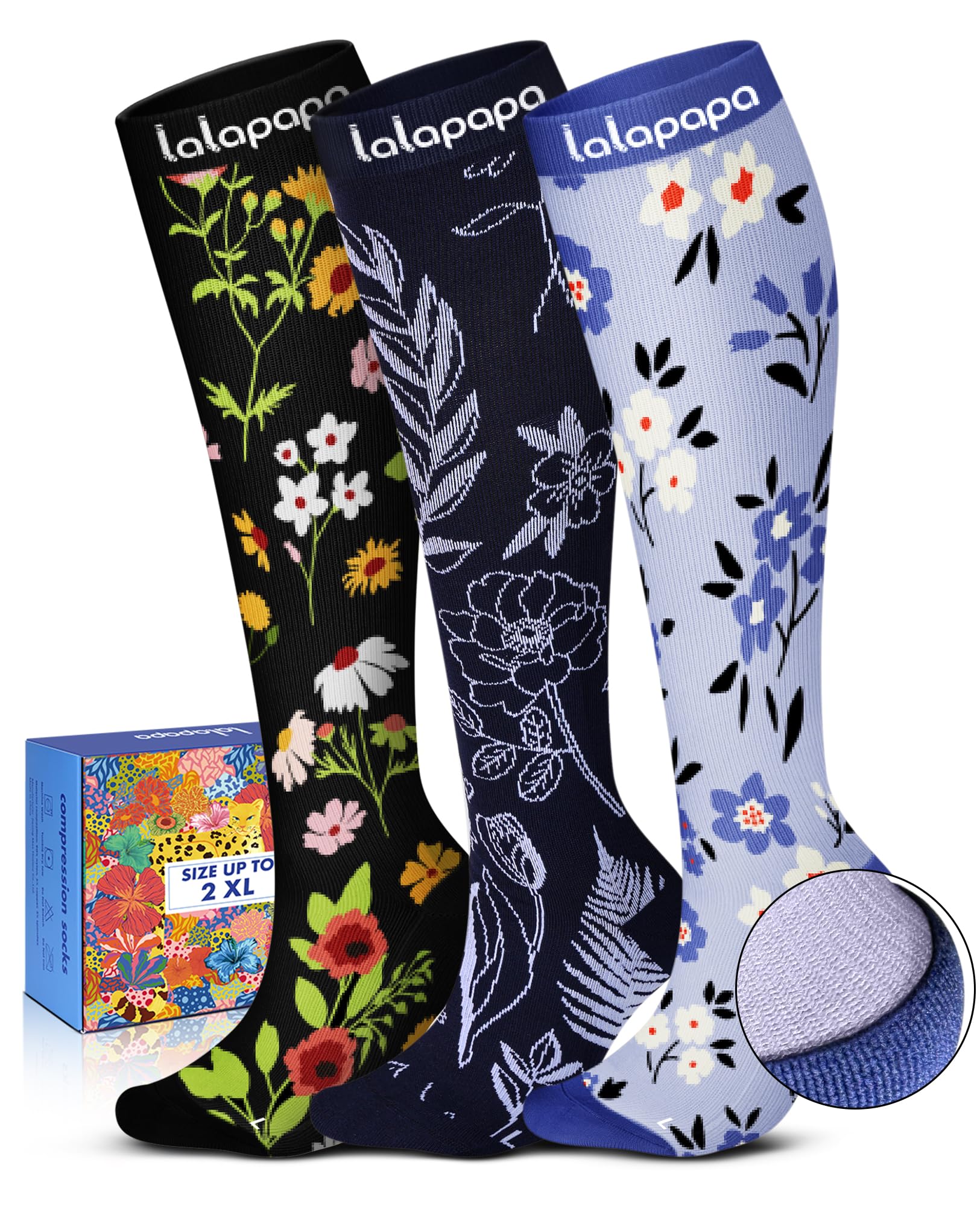
6. Cute Compression Socks for Women – 3 Pairs 20-30 mmHg Graduated Support
Appearance is the most-praised feature — firm 20-30 mmHg in patterns that do not look medical.
Appearance is the standout here, with 80 owners specifically praising the look of these socks, which is rare in a category where most people just want them to work. The patterns are woven in (not printed), so they do not fade, and several owners mention that they look like regular fashion socks until you feel the firm 20-30 mmHg compression. The cushioning on the sole is another winner — 24 owners call it out as noticeably soft, giving it a distinct underfoot comfort.
The fit is the mixed point: while many find the compression perfect, some customers note the ankle is too loose, causing wrinkling. One reviewer noted the box said “extra wide” while the description did not, which may explain the variability. If you have slim ankles and large calves, the proportions may not work. But for someone who wants firm compression and refuses to wear boring white medical socks, this three-pack solves both problems at once.
Fashion: you want 20-30 mmHg compression in cute patterns that pass as regular fashion socks and include a cushioned footbed.
Rugged use: you have narrow ankles or very large calves — the fit is designed for average proportions and may wrinkle at the ankle.
7. LEVSOX Cotton Compression Socks for Women&Men 20-30mmHg Knee High

Firm 20-30 mmHg compression in a cotton fabric that owners with allergies specifically seek out.
Cotton compression socks at 20-30 mmHg are rare — most cotton options top out at lighter compression because the material is harder to engineer for firm pressure. The LEVSOX manages it, and owners with sensitive skin or allergies to synthetic fibers call it out as their favorite. One owner with a skin rash said the cotton helped clear it up. The absence of a toe seam is another detail owners mention: no irritating ridge pressing on toes during a 12-hour shift or a 9-hour flight.
Because cotton is less elastic than nylon, some owners find the socks run long — the ankle-to-knee length can cause bunching if you have shorter legs. The top band is comfortable and does not cut into the leg, which is a common complaint with firm socks. At a single pair per purchase, this is not a bulk value option, but for someone who needs the firmest cotton compression available, it is the only real choice on this list. It is a cotton option for those who need the higher pressure.
Eco-choice: anyone with sensitive skin or allergies who needs 20-30 mmHg compression without synthetic fibers touching their legs.
Budget buy: you have shorter legs — the length may be too tall between ankle and knee, requiring folding that can restrict circulation.
8. Sockwell Women’s Pulse Knee High Firm Graduated Compression Socks
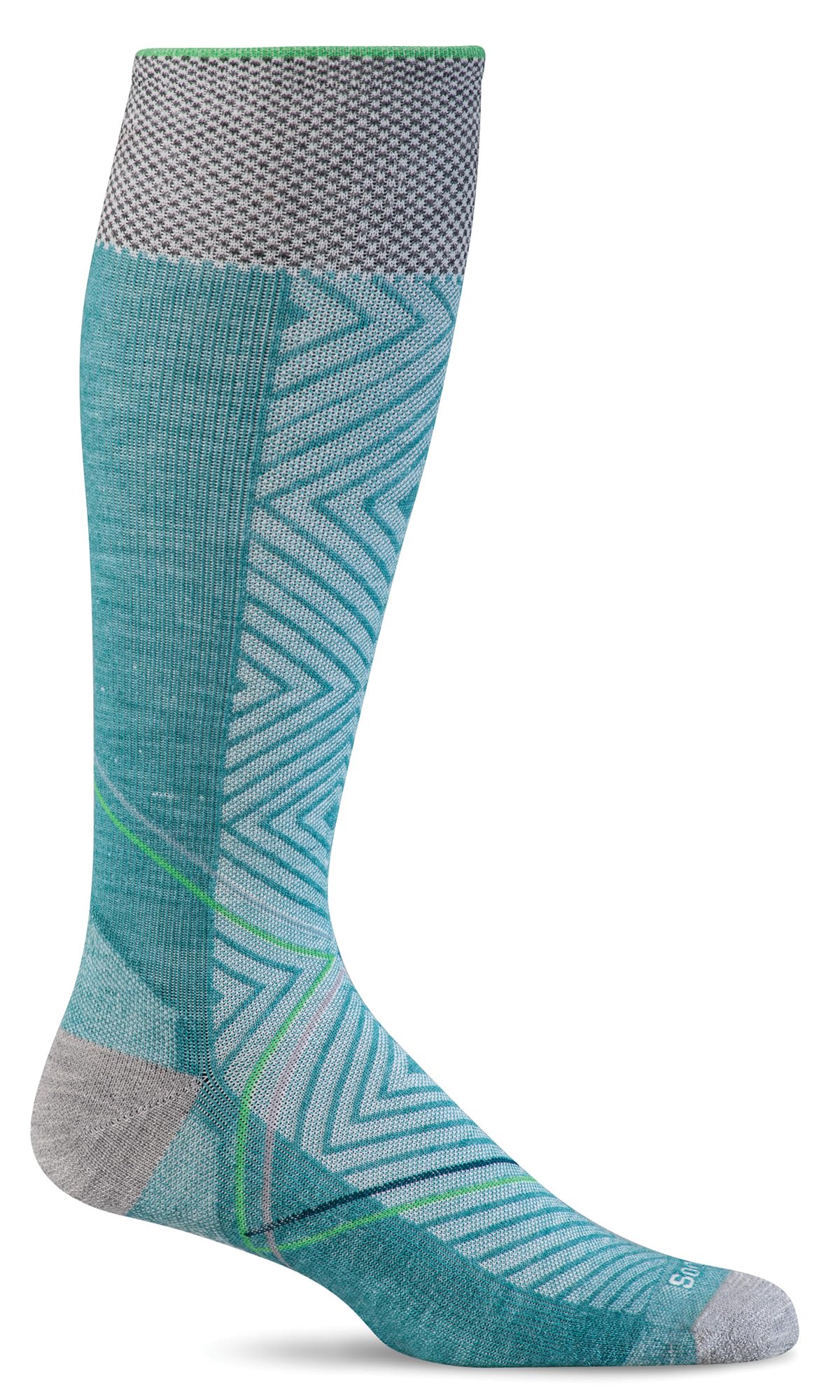
Made in the USA from Merino wool and rayon — the pair that outlasts every other sock on this list.
The Sockwell Pulse is the premium outlier here, and for good reason: it is made from a signature blend of Merino wool (sourced from the USA) and rayon, which naturally manages moisture and regulates temperature. Owners who have worn compression socks for decades call this the best they have found, noting that a single pair lasts years with daily wear and 10,000+ steps. The “Firm” level equates to 20-30 mmHg, and the triple-zone technology targets compression at the foot, ankle, and calf differently — a graduated approach.
The main hurdle is the price: a single pair costs more than many multi-packs here. Getting them on takes practice — the Merino wool blend is less stretchy than nylon. But owners consistently say the durability, odor resistance, and comfort make them worth the premium. As owners put it after 30 years of use, these are “the best compression socks on the market.” If you want a pair that feels like an investment rather than a disposables, this is the one.
Medical need: you want the longest-lasting, most comfortable compression socks available, with natural fiber temperature regulation that nylon cannot match.
Casual use: you need multiple pairs on a budget or want maximum stretch for easy on/off — these require patience to pull on.
9. Copper Fit Mobilizer Compression Socks Easy On & Off
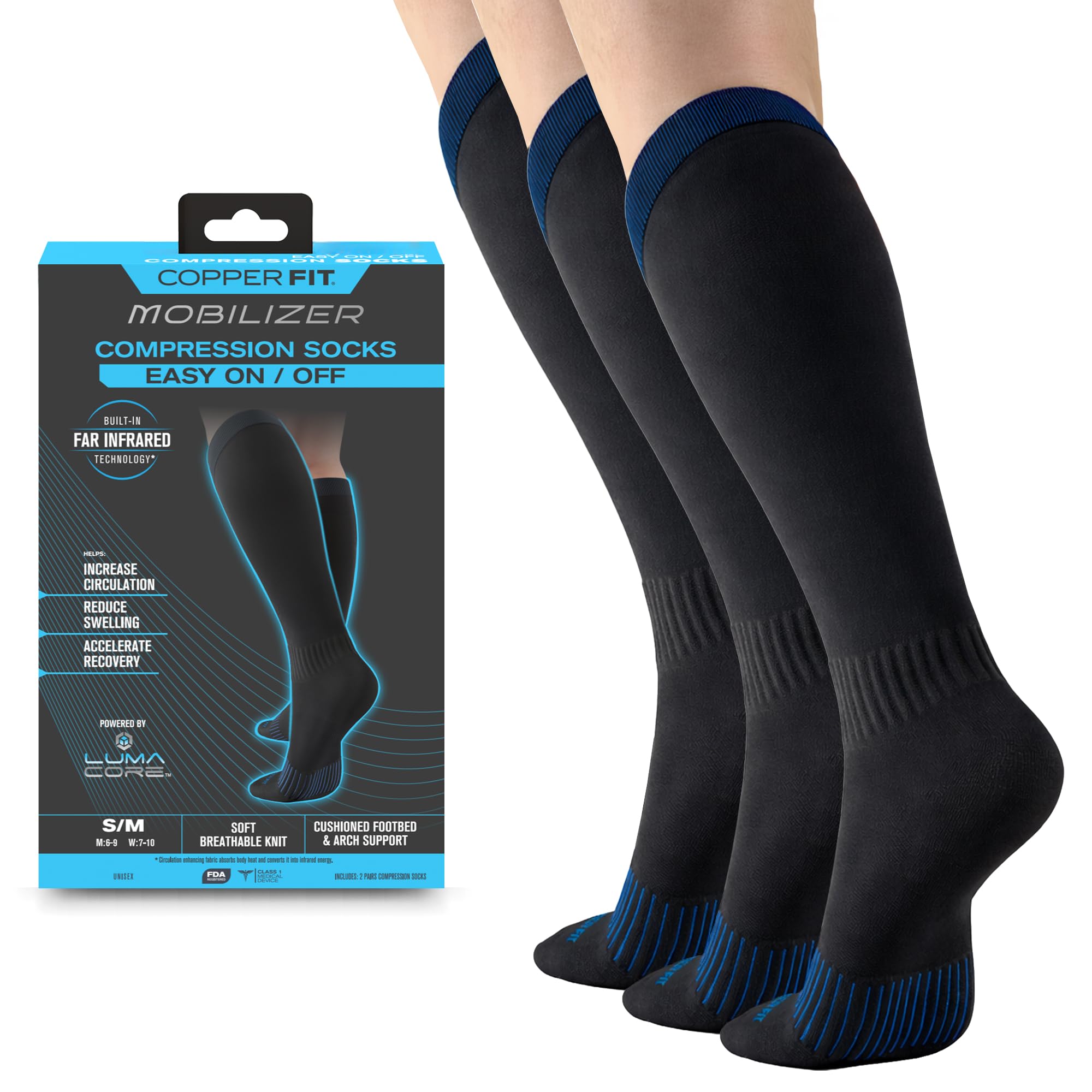
The easy on/off design actually works — no wrestling to get compression socks on or off.
The biggest barrier to wearing compression socks is the struggle of putting them on. Copper Fit designed the Mobilizer specifically to solve that, with a construction that several owners — including one who bought them for an elderly father — confirm makes the process genuinely easier. The fabric is soft and stretchy, and the takeoff method is just as simple. One owner summed it up: “he doesn’t struggle to put them on anymore.”
The compression level is not explicitly stated in mmHg in the data, but owners describe it as firm enough to reduce lower leg swelling during long days of sitting or standing. The socks run long — below-average-height users may find the extra length requires folding, which is not ideal. And despite the “easy on” marketing, a few owners still found them difficult to pull on. At a premium price for a single pair, this is a targeted option for people who have given up on compression socks because of the hassle of wearing them. This pair is explicitly designed for easier handling.
Mobility aid: people with limited hand strength, arthritis, or anyone who has tried compression socks before and found them too difficult to put on.
Athletic use: you are below-average height and do not want to fold the extra length, or if you are on a strict budget — the single-pair cost is the highest here.
Understanding the Specs
mmHg Compression Level
The mmHg measurement tells you how much pressure the sock applies to your leg. Think of it like a gentle, continuous squeeze starting at your ankle (tightest point) and loosening as it goes up your calf — that is “graduated compression.” 15-20 mmHg is a light-to-moderate squeeze, ideal for pregnancy swelling, long flights, and general leg fatigue. 20-30 mmHg is a firm squeeze that is better for chronic swelling, varicose veins, and recovery after surgery. Going too firm when you only need light support can be uncomfortable, so match the level to your actual need.
Material Blend
Nylon and spandex make up the majority of compression socks because they do the best job of holding their shape and applying even pressure. Cotton adds softness and breathability but reduces elasticity, which is why most cotton blends cap out at 15-20 mmHg. Merino wool blends, like the ones Sockwell uses, naturally wick moisture and resist odor — ideal for travel or long wear — but they cost more. If you have sensitive skin or allergies, look for cotton or wool options; if you want the strongest and most durable squeeze, stick with nylon.
FAQ
What does 15-20 mmHg mean in plain English?
How do I measure my calf for the right size?
Can I wear compression socks to bed?
How tight should compression socks feel?
Can I machine wash compression socks?
How long do compression socks last before they lose their stretch?
Is 20-30 mmHg safe for pregnancy?
What is the difference between graduated and uniform compression?
Can compression socks help with running or athletic recovery?
Final Thoughts: The Verdict
For most people, the compression socks for women winner is the Benirap 20-30 mmHg because it delivers firm medical-grade pressure in a breathable design that owners wear comfortably all day — even in summer. If you want a lighter everyday option with more pairs, the 15-20 mmHg three-pack is the crowd favorite. And for those with a wider calf who need the same firm compression without the digging, the Plus Size four-pack is the one to reach for.
How We Picked
We do not accept paid placement. Every pick is matched to a real buyer and a real use-case; we do not hands-on test units.
Sources & Methodology
Specifications: manufacturer listings and product documentation. Review insights: verified customer reviews, as of July 2026. Pricing: not shown on this page (it changes often); check the current price via the retailer link.
As an Amazon Associate, WellFizz earns from qualifying purchases. This does not affect which products we feature.
Related Guides

Mo Maruf
I created WellFizz to bridge the gap between vague wellness advice and actionable solutions. My mission is simple: to decode the research and give you practical tools you can actually use.
Beyond the data, I am a passionate traveler. I believe that stepping away from the screen to explore new environments is essential for mental clarity and physical vitality.