Our readers keep the lights on and my smoothie glass nicely filled. As an Amazon Associate, I earn from qualifying purchases.
Specs are compiled from manufacturer listings and verified buyer reviews and can change over time — please confirm the key details on the product page before buying.
Long flights and road trips do a number on your legs. Without movement, blood pools in your lower legs, leaving you with swollen ankles, heavy calves, and that “cankle” look no one wants at baggage claim. A good pair applies graduated pressure to keep blood moving, so you step off the plane feeling refreshed. This guide compares seven top-rated pairs by compression level, material, and buyer feedback to help you choose.
I’m Mohammad Maruf — the founder and writer behind WellFizz. This guide is built by comparing the manufacturers’ published specifications and the patterns across verified customer reviews, so you get each pick’s real strengths and trade-offs instead of marketing spin.
The right pair makes the difference between recovering in your hotel and exploring right after you land. Here is everything you need to choose the best compression socks for women travel.
Quick Picks
- Votprof Compression Socks 20-30 mmHg — Best Overall
- Physix Gear Compression Socks 20-30 mmHg — Top Performer
- PULIOU Cooling Compression Socks 20-30 mmHg — Great Value
- XZD Compression Socks 15-20 mmHg (3 Pairs) — Budget Champion
- Benirap Breathable Compression Socks 20-30 mmHg — Athletic Pick
- LALAPAPA Cute Compression Socks 20-30 mmHg — Style Pick
- Merino Wool Compression Socks 15-20 mmHg — Natural Fiber Pick
How To Choose The Best Compression Socks For Women Travel
Compression socks look simple, but picking the wrong pair means you either feel nothing or you are fighting to pull them up in an airport bathroom. Here are the three specs that decide whether a pair helps or hurts.
Compression level (mmHg) — the number that does the work
This number tells you how much pressure the sock applies. Mild compression (15-20 mmHg) is great for long flights if you just want to prevent light swelling. Moderate compression (20-30 mmHg) is what frequent flyers and anyone prone to swelling should reach for — it gives significantly more squeeze that keeps blood moving. The key is matching the level to your travel duration and personal swelling tendency.
Graduated compression — tighter at the ankle, looser at the calf
Every real compression sock should be tighter at your ankle and gradually release pressure as it goes up your calf. This design pushes blood upward toward your heart instead of letting it pool. Without graduated compression, you are just wearing a tight sock that might actually cut off circulation at the knee band.
Material and breathability — what you will actually wear for hours
You are putting these on for 6, 10, maybe 14 hours straight. Nylon and spandex blends are standard, but some add cooling fibers or merino wool for temperature regulation. If you tend to overheat on planes, look for lightweight, breathable fabric rather than thick cotton blends that trap heat.
Quick Comparison
| Model | Best For | Compression Level | Pairs Included | Material Feel | Amazon |
|---|---|---|---|---|---|
| Votprof 20-30 mmHg | Frequent flyers needing proven results | 20-30 mmHg | 1 Pair | Lightweight fabric | Amazon |
| Physix Gear 20-30 mmHg | All-day wear on feet at work or travel | 20-30 mmHg | 1 Pair | Breathable, durable | Amazon |
| PULIOU Cooling 20-30 mmHg | Warm-weather travel and long days | 20-30 mmHg | 2 Pairs | Cooling, lightweight | Amazon |
| XZD 15-20 mmHg 3-Pack | Budget-friendly mild compression | 15-20 mmHg | 3 Pairs | Soft, butter-like feel | Amazon |
| Benirap Breathable 20-30 mmHg | Active recovery and athletic travel | 20-30 mmHg | 2 Pairs | Silky, breathable | Amazon |
| LALAPAPA Cute 20-30 mmHg | Style-focused travelers who need compression | 20-30 mmHg | 3 Pairs | Woven design, padded heel | Amazon |
| Merino Wool 15-20 mmHg | Natural fiber lovers and cool-weather travel | 15-20 mmHg | 1 Pair | Wool blend, moisture wicking | Amazon |
In‑Depth Reviews
1. Votprof Compression Socks 20-30 mmHg

Frequent flyers swear by these for escaping the dreaded post-flight cankle.
This is the pair travelers keep coming back to. The 20-30 mmHg compression level (moderate, firm squeeze) is what you want for flights longer than four hours, and the lightweight fabric means you will not overheat in a stuffy cabin. One reviewer noted wearing them on a 5 1/2-hour flight and arriving with “no cankles,” which is exactly the outcome you are paying for. Another frequent flyer who takes four-plus flights a month said these eliminated the calf pain they used to feel upon landing.
Compared to the PULIOU pair below, which some reviewers feel runs closer to 15-20 mmHg, the Votprof delivers the advertised 20-30 mmHg pressure consistently. The trade-off is you get only one pair for the price, and a minority of buyers found them too tight — one reviewer and their companion both had to remove them. For most travelers, though, the compression is right on the mark.
Real-world winner: A well-proven, no-gimmick pair that does what it promises — fresh legs on arrival, even after a transatlantic flight.
The one catch: The single pair count is stingy for the price, and the tight fit does not work for every calf shape.
Reach for these if: You fly often or take long-haul trips and need reliable 20-30 mmHg compression that has been tested by hundreds of real travelers.
Look elsewhere if: You have very sensitive legs or prefer a softer, easier-to-pull-on compression experience.
2. Physix Gear Compression Socks 20-30 mmHg

Nurses and runners love these for a reason — they offer support without feeling restrictive.
Physix Gear designed these for anyone who stands or walks all day, which makes them a natural fit for travel days that involve long security lines and gate sprints. The 20-30 mmHg compression delivers the same moderate squeeze as the Votprof above, but buyers consistently note the top band is nicer — comfortable and stays put without digging in. One reviewer dealing with knee arthritis and daily swelling said these “gave my legs new life,” noting they could finally see their ankle bones after a shift.
The unisex sizing works well for women, but you need to measure your calf first because these are notoriously hard to get on. A senior buyer mentioned needing her husband’s help to pull them up, though once on they were comfortable all day. If you are between sizes or have larger calves, the extra effort to get them on pays off in all-day wear.
Where they shine
- Excellent graduated compression that does not feel overly tight
- Comfortable top band that stays up without slipping or digging in
- Durable material that holds up to multiple washes
Where they struggle
- Very hard to pull on — some buyers need a second person to help
- Only one pair per purchase
Best for: Travelers who also are on their feet at work all day and want one pair that does double duty.
Skip if: You have limited hand strength or arthritis — putting these on solo will frustrate you.
3. PULIOU Cooling Compression Socks 20-30 mmHg (2 Pairs)
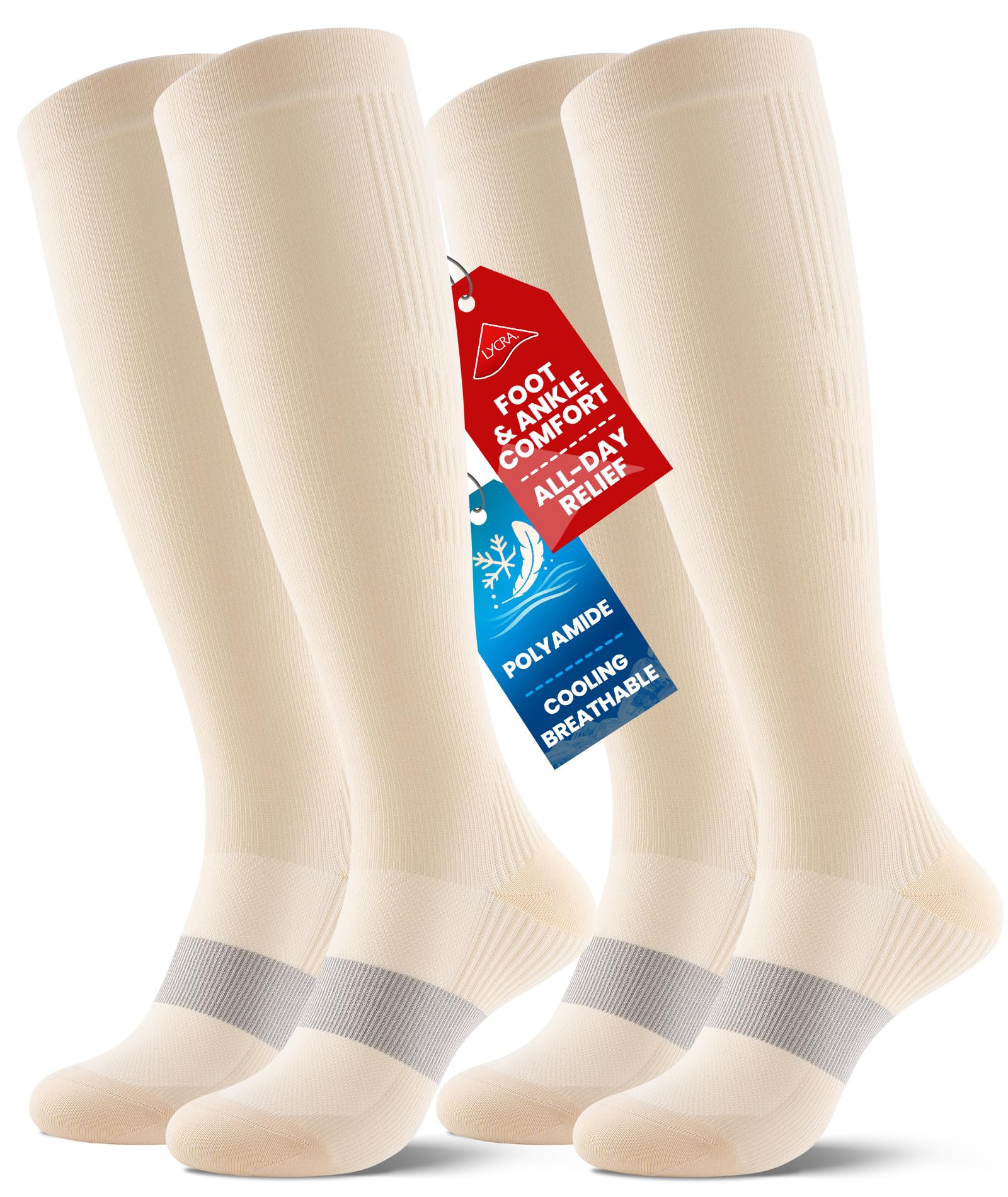
Cooling fabric makes these the go-to for tropical travel and warm-weather trips.
If you run hot on planes or are heading somewhere sunny, these two pairs use a cooling, lightweight material that keeps your feet feeling fresh. One buyer mentioned the cooling effect is a “huge plus” on warmer days and that the socks stay up without sliding or digging in. You get two pairs at a competitive price, which gives you a backup for a longer trip or a second pair to rotate in after washing.
The honest catch: several buyers question whether these are truly 20-30 mmHg. One reviewer stated plainly, “I don’t think these are truly 20-30 mmHg more like 15-20 mmHg,” noting the knee cuff feels tighter than the rest of the sock, which is not how graduated compression should work. Compared to the Votprof above, which delivers a more consistent squeeze from ankle to calf, the PULIOU pair gives a gentler compression that some will prefer and others will find insufficient.
Cool comfort, mild squeeze: For travelers who prioritize breathability and leg freshness over maximum compression, these are a smart two-pack buy.
Know before you buy: If “20-30 mmHg” is non-negotiable for medical reasons, choose a more consistent pair like Votprof or Physix Gear.
Get these for: Warm destinations, travelers who hate sweaty socks, and anyone wanting a second pair without paying double.
Pass on these if: You need the full 20-30 mmHg compression that is written on the label — the actual squeeze reportedly runs softer.
4. XZD Compression Socks 15-20 mmHg (3 Pairs)
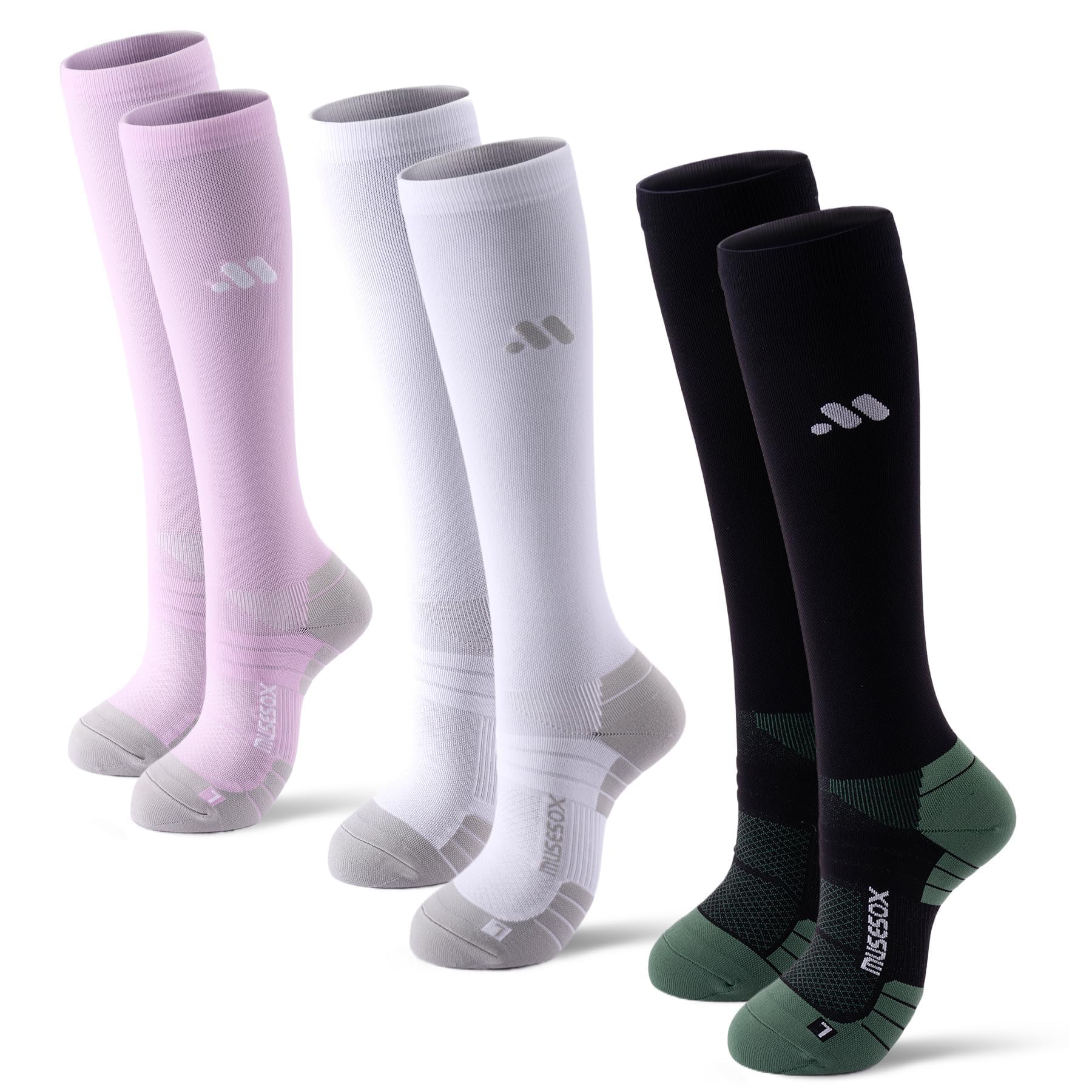
Three pairs at a bargain price, and the soft fabric feels like butter against your skin.
If you want a gentler squeeze and three pairs for the price of one, this three-pack delivers. Its 15-20 mmHg compression (the pressure rating, measured in millimeters of mercury) is 33% lighter than the 20-30 mmHg on the Votprof or Physix Gear, so it suits shorter flights or anyone who finds firm compression uncomfortable. One buyer with a 12-inch calf circumference wears a size medium and reports the compression feels “perfect without feeling too tight.”
Buyers consistently praise the softness of the fabric, with one calling it “butter soft” and another reporting dramatic pain relief after 8-hour shifts on their feet. Each sock is labeled with which foot it goes on, a small detail that removes the guesswork. The only grumble is limited color and pattern variety — if you want bright designs, the LALAPAPA pair below is a better match.
Why they stand out
- Three pairs for the price of one premium pair — unbeatable value
- Extremely soft fabric that does not irritate or feel stiff
- Clearly marked left/right socks for easy morning routine
The trade-offs
- 15-20 mmHg is mild compression, not enough for significant swelling on very long flights
- Fewer color and pattern options compared to cute competitors
Reach for these when: You want a soft, affordable multi-pack for daily travel or short-haul flights and do not need the heavy squeeze.
Skip them for: Long-haul international travel or if you know you swell easily — step up to 20-30 mmHg for real prevention.
5. Benirap Breathable Compression Socks 20-30 mmHg (2 Pairs)
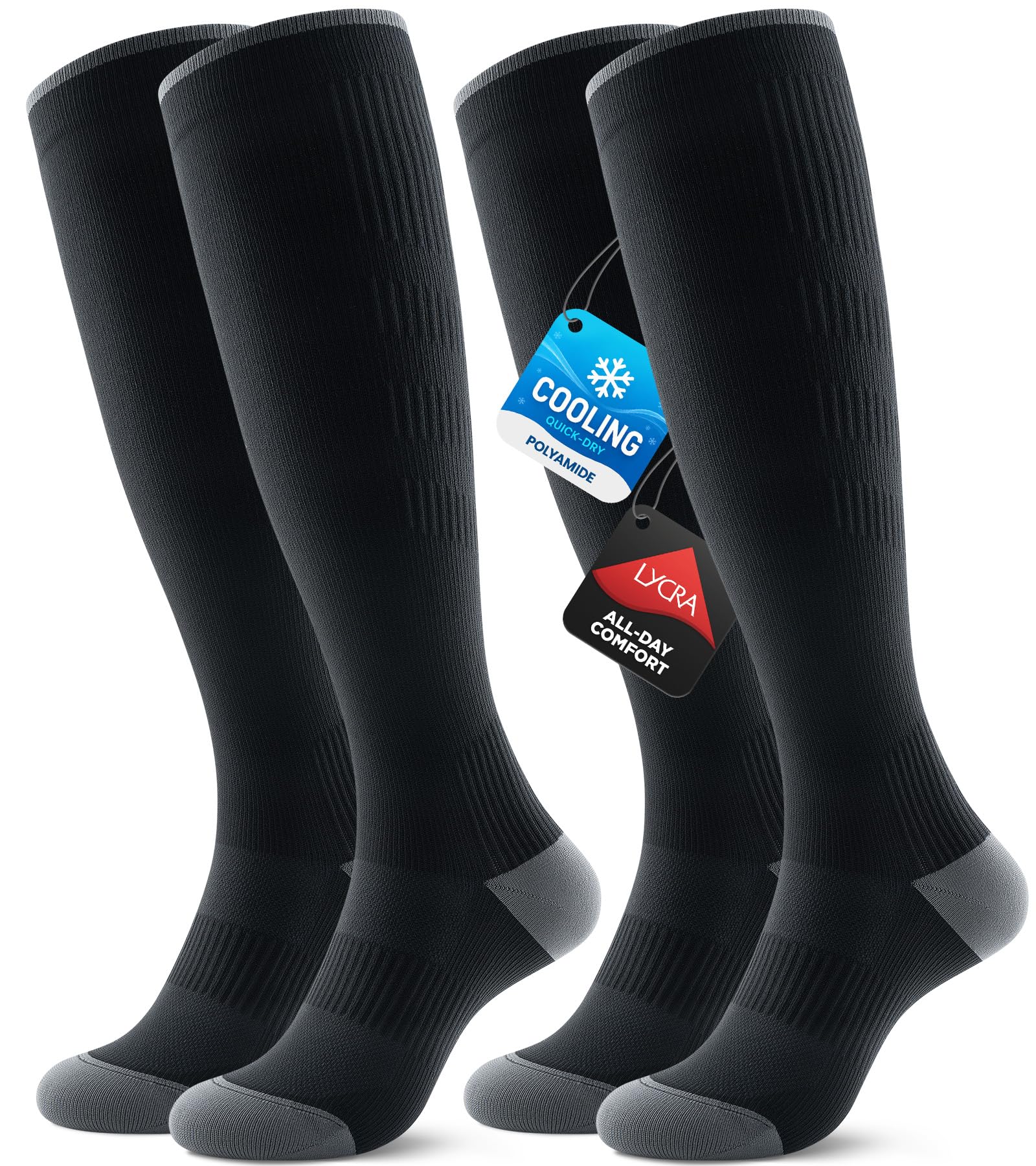
Silky, breathable fabric that slides on easier than most 20-30 mmHg socks you have tried.
Benirap brings a two-pack of moderate-compression socks with a focus on breathability and ease of use. The 20-30 mmHg level matches the Votprof and Physix Gear, but the material is noticeably smoother — buyers describe it as “silky” and say it goes on without the wrestling match typical of this compression tier. The brand also backs it with a 180-day guarantee, which is rare at this price point and signals confidence in durability.
One reviewer who uses them for running and recovery noted the graduated compression provides “excellent support for blood flow and reduced muscle oscillation” during high-mileage training. The fabric’s breathability was a consistent theme: users reported no marks on the skin from the pressure band, and the socks stayed comfortable even through long active days. At 3.53 ounces for the package, they are light enough to pack without adding weight to your carry-on.
Active traveler’s choice: For someone who wants moderate compression without the struggle of putting them on, plus a two-pack for rotation.
The fine print: The sizing range is wide but the socks run slightly small, so size up if you are between sizes for the intended compression fit.
Grab these if: You want the full 20-30 mmHg benefit but have struggled with other brands being too hard to pull on.
Skip these if: You have narrow calves — the slightly smaller fit might not work well if you are on the small end of the size chart.
6. LALAPAPA Cute Compression Socks 20-30 mmHg (3 Pairs)
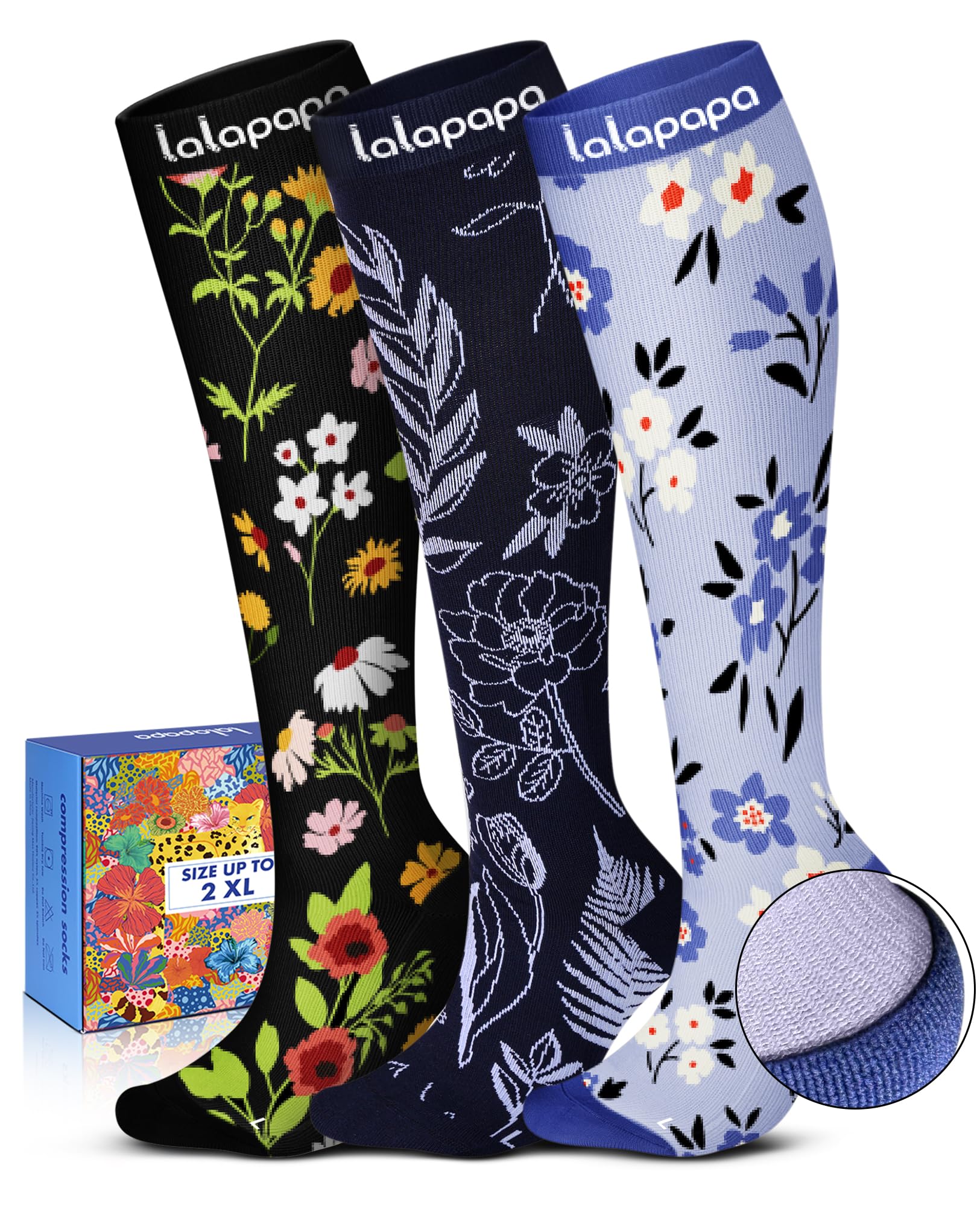
Compression you actually want to show off — woven designs that survive stretching without fading.
Most compression socks are purely functional and look it. LALAPAPA flips that with adorable patterns that are woven into the fabric rather than printed, so they look crisp even when stretched over your calf. You get three pairs at 20-30 mmHg compression, which is the same moderate level as the top picks. One owner reported they could “feel the difference in comfort right away” for deep soreness and blood pooling, and the cute packaging even includes a little keychain.
The woven design is a meaningful upgrade over printed patterns — it does not crack or fade when the sock stretches. A heel and foot pad adds a bit of cushion that most compression socks lack. However, one reviewer who received a box marked “extra wide” (not stated in the listing) found the ankle too loose and wrinkled, suggesting the sizing or labeling could be inconsistent. If you have very narrow ankles, this might not form a tight seal.
Best parts
- Woven patterns that look good and do not peel or fade like printed designs
- Three pairs at 20-30 mmHg compression with a padded heel for comfort
- Cute packaging and included keychain make gift-giving easy
Watch out for
- Potential sizing inconsistency — some units ship marked “extra wide” despite standard sizing on the listing
- Ankle fit may be too loose for very slender legs, creating wrinkles
Ideal for: The traveler who wants fashionable compression socks they can wear with skirts, leggings, or shorts without hiding them.
Not for: Anyone who needs a predictable, snug ankle fit — the loose ankle issue is a real risk.
7. Merino Wool Compression Socks 15-20 mmHg
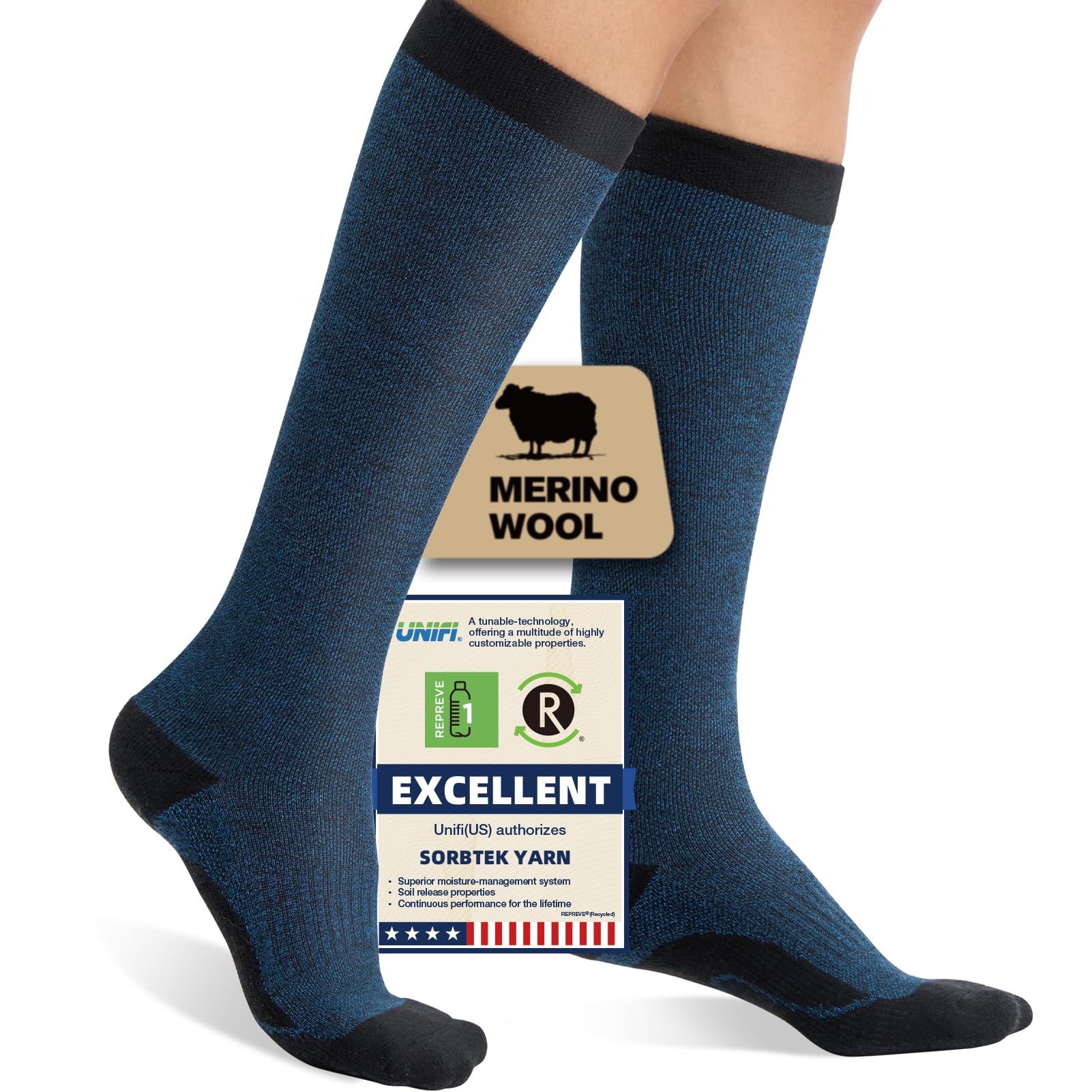
Merino wool makes these the first compression sock that actually breathes and stays cool.
If synthetic fabrics make your feet sweat and smell after a long travel day, these are your answer. The merino wool blend is naturally moisture-wicking and temperature-regulating, so you stay dry and odor-free. One nurse reviewer who struggled with smelly feet during shifts said these were “much cooler than the polyester products” and noticed a real difference in her shoes. The 15-20 mmHg compression is mild, matching the XZD three-pack above and offering a softer squeeze than the 20-30 mmHg options.
A thickened pad under the foot, heel, and toe area provides noticeable cushioning when walking, which is unusual for compression socks. Buyers rave about the comfort — one owner says they “feel invisible” during wear and do not dig in at the top band. The sizing is described as spot-on, and the merino blend does not shrink in the wash. The trade-off is mild compression means it is less effective for serious swelling, and merino wool requires more careful laundering than synthetics.
Cool, dry, and comfortable: The best choice for travelers who prioritize natural fibers and moisture control over maximum compression pressure.
Heads up: At 15-20 mmHg, this is a comfort and recovery sock, not a heavy-duty anti-swelling tool for ultra-long flights.
Choose these for: Cool-weather travel, winter hiking, or any trip where you need compression plus natural temperature regulation.
Pick something else if: You need the stronger 20-30 mmHg compression to prevent significant leg swelling on long-haul flights.
Understanding the Specs
Compression Level (mmHg)
This measures pressure. Mild compression (15-20 mmHg) is a light squeeze suitable for prevention of minor swelling on short trips or for first-time wearers. Moderate compression (20-30 mmHg) provides firmer pressure that actively pushes blood upward, making it the go-to for long flights, frequent flyers, and anyone prone to edema (fluid buildup). The higher number means more pressure, not better — match it to your actual need.
Graduated Compression
Genuine compression socks are tightest at the ankle and gradually loosen as they go up the calf. This design pushes blood and fluid upward toward your heart instead of letting it pool in your lower legs. A sock that feels equally tight all the way up — or has a tight knee band — is not true graduated compression and may actually restrict circulation rather than help it.
FAQ
How tight should compression socks feel for travel?
What is the difference between 15-20 mmHg and 20-30 mmHg compression?
How do I measure my calf and ankle to get the right size?
Can I wear compression socks overnight on a flight?
Will compression socks prevent blood clots on a long flight?
How do I put on tight compression socks without struggling?
How many pairs of compression socks do I need for a week-long trip?
Are cute compression socks with patterns as effective as plain ones?
Do merino wool compression socks feel hotter than synthetic ones?
How long do compression socks typically last before losing their elasticity?
Final Thoughts: The Verdict
For most travelers, the compression socks for women travel winner is the Votprof 20-30 mmHg because it delivers consistent, reliable moderate compression that frequent flyers have tested and trusted for years. If you want a softer, budget-friendly multi-pack, grab the XZD 15-20 mmHg three-pack for gentle compression every day of your trip. And for warm-weather destinations or if you just hate sweaty feet, the PULIOU Cooling 2-Pack combines breathability with value.
How We Picked
We do not accept paid placement. Every pick is matched to a real buyer and a real use-case; we do not hands-on test units.
Sources & Methodology
Specifications: manufacturer listings and product documentation. Review insights: verified customer reviews, as of July 2026. Pricing: not shown on this page (it changes often); check the current price via the retailer link.
As an Amazon Associate, WellFizz earns from qualifying purchases. This does not affect which products we feature.
Related Guides

Mo Maruf
I created WellFizz to bridge the gap between vague wellness advice and actionable solutions. My mission is simple: to decode the research and give you practical tools you can actually use.
Beyond the data, I am a passionate traveler. I believe that stepping away from the screen to explore new environments is essential for mental clarity and physical vitality.