Our readers keep the lights on and my smoothie glass nicely filled. As an Amazon Associate, I earn from qualifying purchases.
By the third hour of a twelve-hour shift, your calves start to ache. By hour six, your ankles begin to swell. By hour ten, you are bargaining with yourself to sit down for five minutes. This is the daily reality of nursing, and the right pair of compression socks is not a luxury—it is a tool that keeps your legs functional from the moment you clock in to the moment you finally sit down at home.
I’m Mohammad Maruf — the founder and writer behind WellFizz. I spent dozens of hours combing through spec sheets, measuring fabric blends, analyzing pressure gradients, and mapping real-world customer experiences to find the compression socks that actually hold up to the demands of nursing.
Whether you are powering through back-to-back rounds sprinting down hallways or standing still during a long surgery, the right pair can make or break your day. This guide breaks down the top contenders for the best compression socks for women nurses on the market right now.
How To Choose The Best Compression Socks For Women Nurses
Nursing is uniquely demanding on your legs—long hours of standing and walking create venous pressure that leads to swelling, fatigue, and even varicose veins over time. Choosing the right compression sock means understanding the numbers behind the fabric and the fit.
Compression Level: The mmHg Rating
Compression socks are rated in millimeters of mercury (mmHg), which measures the pressure they apply to your legs. For nurses, 15-20 mmHg provides mild compression that reduces fatigue and minor swelling—ideal if you are new to compression or have mild symptoms. The 20-30 mmHg range offers moderate compression that controls more significant swelling and deep leg soreness. Anything above 30 mmHg requires a prescription and is rarely necessary for shift work.
Fabric and Breathability
A twelve-hour shift generates heat and moisture inside your shoes. Nylon and spandex blends provide durability and compression retention, but they trap heat. Merino wool blends—like those found in premium socks—regulate temperature and wick moisture naturally. Bamboo viscose offers softness and breathability but may wear out faster under heavy use. The ideal nurse sock balances compression retention with enough airflow to keep your feet dry.
Graduated Compression and Fit
True medical-grade compression socks are graduated, meaning they are tightest at the ankle and gradually loosen as they move up the calf. This design pushes blood upward against gravity. If a sock applies uniform pressure throughout, it can actually restrict circulation. Look for explicit graduated compression labeling and check the size chart carefully—most brands require both shoe size and calf circumference to ensure proper fit.
Quick Comparison
On smaller screens, swipe sideways to see the full table.
| Model | Category | Best For | Key Spec | Amazon |
|---|---|---|---|---|
| Sockwell Women’s Micro Grade | Premium | 12-hour shifts & hot environments | 32% Merino Wool blend | Amazon |
| Wellow Knee High | Premium | Comfort-first compression | Bamboo viscose, 18-25 mmHg | Amazon |
| Physix Gear Compression Socks | Mid-Range | High swelling & pain relief | 20-30 mmHg graduated | Amazon |
| fenglaoda 6 Pairs | Mid-Range | Budget-friendly bulk buy | 6 pairs, 15-20 mmHg | Amazon |
| Compression Socks 3 Pairs | Budget | Entry-level compression | 15-20 mmHg, 3 pairs | Amazon |
In‑Depth Reviews
1. Sockwell Women’s Micro Grade
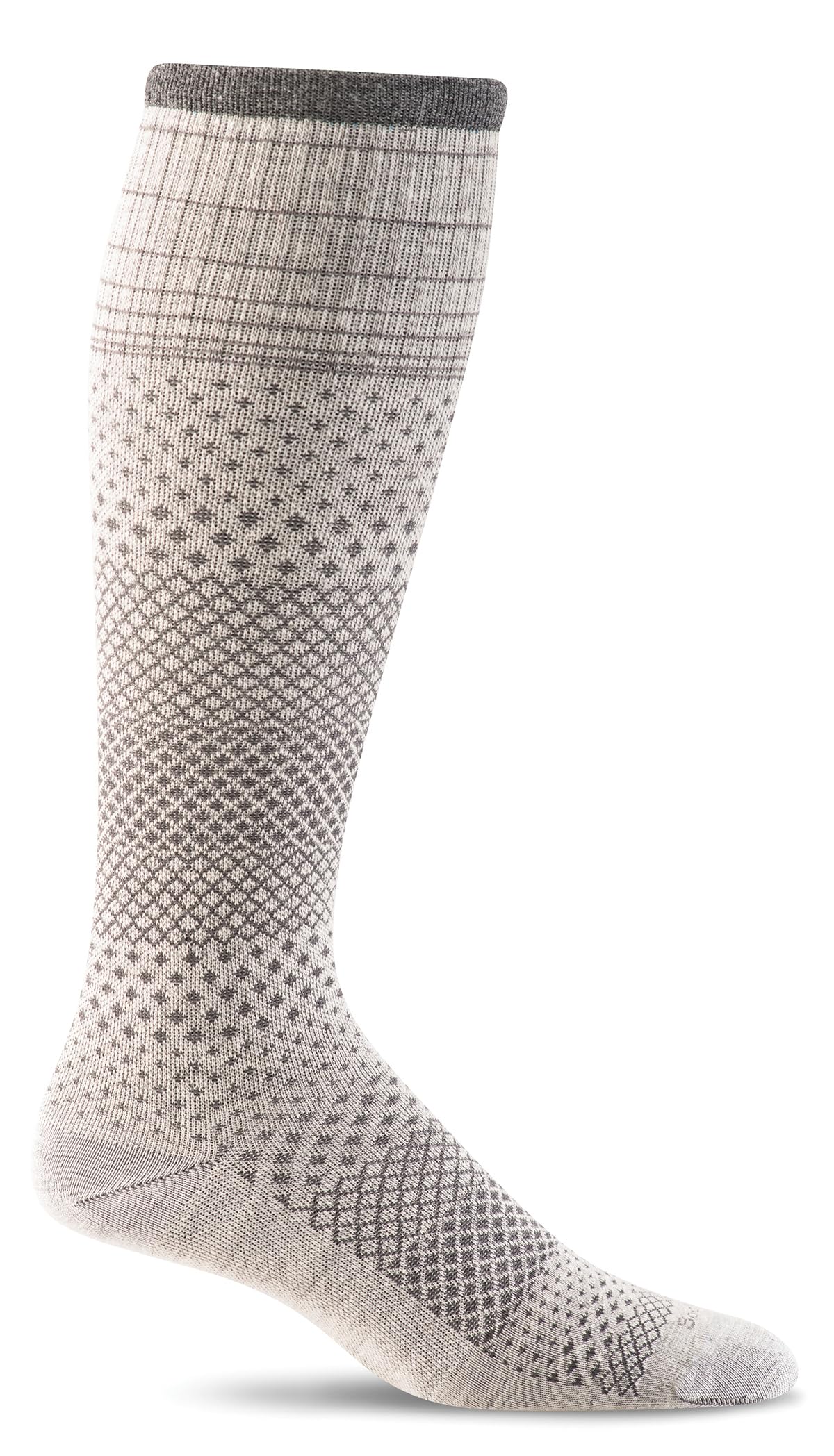
The Sockwell Women’s Micro Grade sock brings a merino wool blend that sets it apart from the nylon-heavy competition. With 32 percent merino wool, 32 percent stretch nylon, and 31 percent rayon from bamboo, this sock breathes exceptionally well even during long shifts in warm environments. The four-zone graduated compression system applies pressure where you need it most—tight at the ankle, lighter at the calf—without feeling restrictive.
Nurses working twelve-hour hospital shifts report zero swelling and excellent leg comfort throughout the day. The seamless toe closure prevents irritation on sensitive toes, a common complaint with cheaper compression socks. The fabric manages moisture effectively, keeping feet dry even during busy rounds. Multiple users noted that the sock retains its shape and compression after many washes, unlike budget options that loosen quickly.
On the downside, the calf compression is moderate rather than firm, which may not satisfy nurses who need maximum squeeze to control severe swelling. The sizing can also be tricky for those between sizes—some users found the M/L slightly loose in the calf while the S/M was too short in the foot. At a premium price point, this is an investment, but the merino wool thermoregulation and durable construction make it the standout pick for daily shift work.
Why it’s great
- Merino wool blend regulates temperature and resists odors during 12-hour shifts
- Seamless toe closure eliminates irritation for sensitive feet
- Breathable fabric keeps feet dry even in warm hospital environments
Good to know
- Calf compression feels moderate—may not be enough for severe swelling
- Sizing between M/L and S/M can be tricky for in-between measurements
- Premium price compared to multi-pack options
2. Wellow Knee High Compression Socks
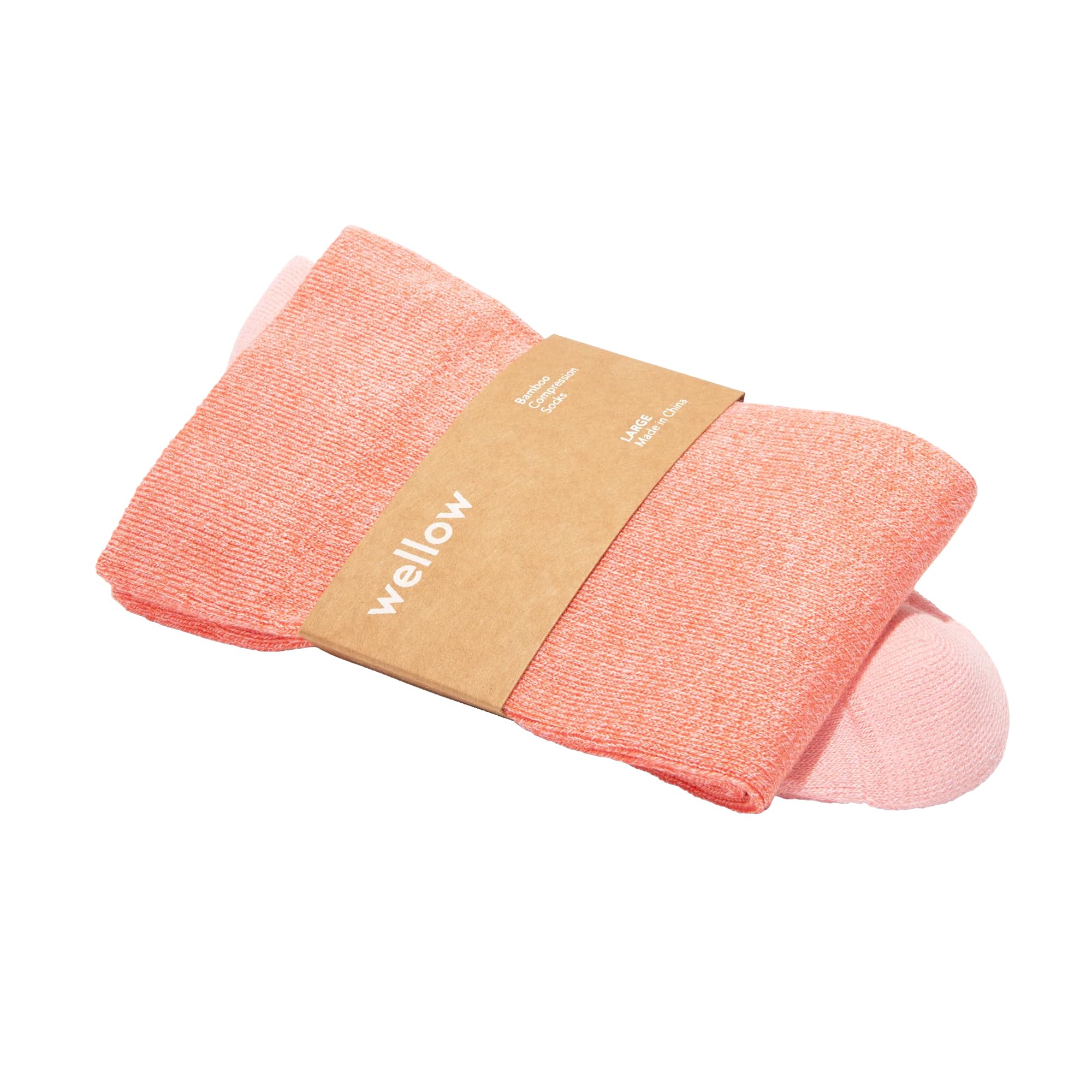
Wellow takes a different approach to compression—instead of squeezing hard, these socks rely on bamboo viscose fabric to deliver a gentler, more comfortable pressure that still prevents swelling. The 18-25 mmHg rating places them right in the moderate compression sweet spot, but the feel is noticeably less restrictive than comparable nylon socks. Nurses who hate the constricted feeling of traditional compression socks may find these much more tolerable for full shifts.
The bamboo viscose material is thick and incredibly soft against the skin. Users report that after a twelve-hour plane ride or a long hospital shift, their legs show no signs of swelling despite the sock feeling comfortable enough to forget they are wearing compression. The fabric is durable and holds its shape through repeated washes. Multiple reviewers mentioned that these socks soothe varicose vein pain and prevent that heavy, tired feeling that usually sets in by mid-shift.
Because the socks are thick and soft, they run warmer than thinner nylon blends. This makes them less ideal for summer shifts or naturally hot feet. The compression level, while effective, may not be strong enough for nurses with advanced venous issues who need the firmer squeeze of a 20-30 mmHg sock. If you prioritize comfort over maximum compression strength, these are an excellent daily companion.
Why it’s great
- Thick, soft bamboo viscose feels comfortable against skin all day
- Light compression effectively prevents swelling without feeling restrictive
- Durable fabric maintains shape after multiple wash cycles
Good to know
- Thick material runs warmer—less ideal for hot environments
- 18-25 mmHg may not provide enough support for severe swelling
- Limited color options compared to other brands
3. Physix Gear Compression Socks 20-30 mmHg

Physix Gear delivers a firm 20-30 mmHg compression that works hard for nurses dealing with significant swelling, knee pain, or recovering from injury. The graduated design applies strong pressure at the ankle that gradually releases up the calf, effectively pushing blood upward and reducing fluid buildup. Multiple nurses report that these socks eliminated ankle swelling entirely during twelve-hour shifts with over twelve thousand steps.
The fabric quality stands out in this mid-range price bracket. Users consistently mention that the socks hold up well to machine washing and even survive aggressive chewing from dogs without losing compression. The floral pattern is woven directly into the fabric rather than printed, so it does not fade or peel over time. Cushioning is noticeable but not bulky, and the arch support provides additional comfort for feet that ache after hours of standing.
The biggest drawback is sizing precision—the socks run long, and some users with standard calf measurements found them reaching the knee bend, causing wrinkles at the ankle that dig into the skin. The toe area also runs slightly small, leaving little room for toes to spread, which can create a noticeable seam across the pinky toe for size 10-11 feet. Measure carefully and consider sizing up if you are near the upper end of a size range.
Why it’s great
- Strong 20-30 mmHg compression effectively eliminates ankle and leg swelling
- High-quality fabric withstands heavy washing and wear
- Arch support adds extra comfort for standing shifts
Good to know
- Socks run long—may reach knee bend and cause ankle wrinkles for some users
- Toe area runs small, creating a tight fit for larger shoe sizes
- Strong compression makes them harder to put on, best applied in the morning
4. fenglaoda 6 Pairs Compression Socks

The fenglaoda 6-pack delivers serious value for nurses who want a rotation of compression socks without spending premium prices. At 15-20 mmHg, these provide mild-to-moderate compression suitable for general shift fatigue, pregnancy-related swelling, and post-operative recovery. Users consistently describe the fit as comfortable and true to size, with the socks staying in place all day without rolling down or bunching at the ankle.
The compression feels close to medical-grade 20-30 mmHg socks according to experienced users, though it is slightly less snug. The striped design options add a touch of personality to the standard clinical look. Nurses report that after long shifts, their legs feel significantly better than working without compression. The six-pair count means you can wear a fresh pair every shift and still have backups for laundry day.
These socks run slightly warmer than thinner athletic socks because of the denser knit. The sizing recommendation to order up is common feedback—some users found the standard fit too snug and recommended going one size larger. Over time, the compression may loosen slightly compared to more expensive options, but given the price per pair, the value proposition remains strong for nurses on a budget.
Why it’s great
- Six pairs provide a full rotation for a work week at a low per-pair cost
- Compression feels effective and stays in place without rolling down
- Cute striped designs break up the monotony of solid medical socks
Good to know
- Runs a bit warm—less breathable than wool or bamboo blends
- May need to size up for the best fit
- Compression may loosen slightly over time compared to premium options
5. Compression Socks for Women and Men 15-20mmHg 3 Pairs
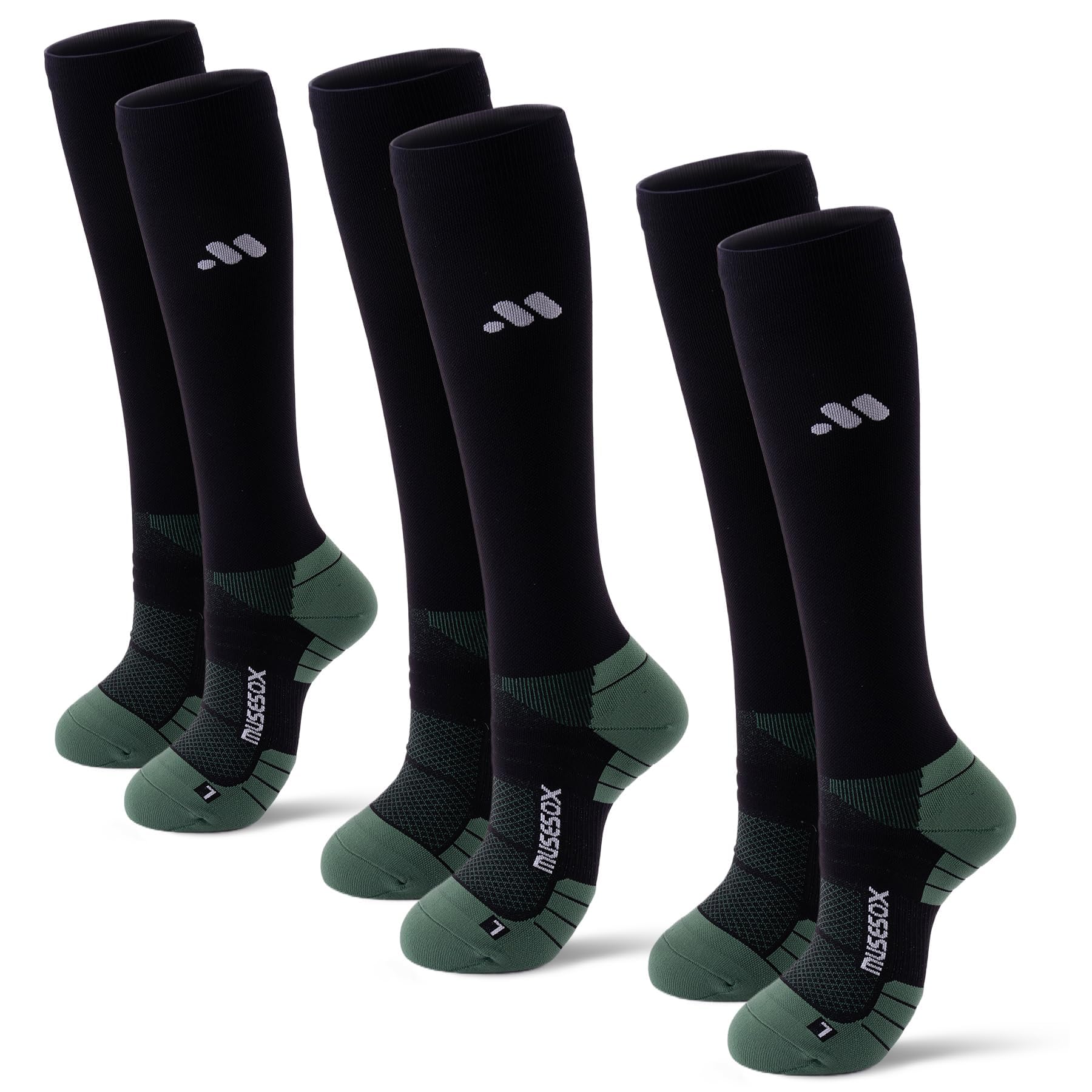
This three-pair set from an unbranded manufacturer represents the most budget-friendly entry point into compression socks for nurses who want to try compression without a large investment. The 15-20 mmHg graduated compression provides a noticeable squeeze that effectively relieves calf pain and leg heaviness after eight-hour shifts. Users in food service and salon work report dramatic pain reduction after standing all day.
The socks are labeled left and right, which indicates thoughtful design—each sock is shaped to match the natural curve of your foot for better fit and comfort. The fabric feels butter-soft according to users, and the compression prevents that heavy-leg feeling without being difficult to put on. The instructions included for applying socks with arthritic hands show attention to usability that even entry-level options sometimes lack.
Color and pattern variety is extremely limited, which may feel restrictive for nurses who want more personality in their work wear. The three-pair count also means more frequent laundry cycles if you wear compression socks every shift. While the compression is effective, the long-term durability remains unproven compared to established brands, and the fabric may not hold its shape across many washes.
Why it’s great
- Lowest cost option makes compression accessible for anyone trying it for the first time
- Left and right foot labeling improves fit and comfort
- Soft fabric feels comfortable against skin during long shifts
Good to know
- Limited color and pattern variety—mostly solid options
- Only three pairs means more frequent washing
- Long-term durability is unproven compared to established medical brands
FAQ
Should I wear compression socks while sleeping after a shift?
How do I know if my compression level is too tight?
How many pairs of compression socks do I need as a nurse?
Final Thoughts: The Verdict
For most nurses, the best compression socks for women nurses winner is the Sockwell Women’s Micro Grade because its merino wool blend delivers the ideal balance of thermoregulation, moisture management, and graduated compression that holds up through full shifts. If you want softer, gentler compression with bamboo viscose comfort, grab the Wellow Knee High. And for maximum swelling relief on a mid-range budget, nothing beats the Physix Gear 20-30 mmHg.

Mo Maruf
I created WellFizz to bridge the gap between vague wellness advice and actionable solutions. My mission is simple: to decode the research and give you practical tools you can actually use.
Beyond the data, I am a passionate traveler. I believe that stepping away from the screen to explore new environments is essential for mental clarity and physical vitality.