Our readers keep the lights on and my smoothie glass nicely filled. As an Amazon Associate, I earn from qualifying purchases.
Your legs feel heavy and achy by the end of a long shift, or you dread the swollen ankles that come with every 8-hour flight. You need socks that squeeze back with a precise, medical-grade force — the “20-30 mmHg” rating (millimeters of mercury, the unit that measures pressure) is the exact range that tells you the sock is firm enough to push blood up from your lower legs and prevent it from pooling. Picking a pair that actually delivers that pressure without slipping down or losing shape is what separates real relief from wasted money.
I’m Mohammad Maruf — the co-founder and writer behind WellFizz. This guide is built by comparing the manufacturers’ published specifications and the patterns across verified customer reviews, so you get each pick’s real strengths and trade-offs instead of marketing spin.
After looking at dozens of options, five models stand out as the best compression socks for women 20-30 mmhg you can buy right now, and we will walk through exactly why each one earns its spot.
How To Choose The Best Compression Socks For Women 20-30 MmHg
Not every sock labeled “20-30 mmHg” is built the same. Some deliver firm graduated pressure that pushes blood back toward your heart, while others just feel tight at the top of the cuff. Here are the three things to check before you click “buy.”
Look for Graduated Compression, Not Uniform Squeeze
A true medical-grade compression sock applies its strongest pressure at the ankle, then gradually eases up as it moves toward the calf. This gradient is what pumps blood upward and prevents it from pooling in your feet. If the pressure feels the same all over—or worse, tighter at the top band—the sock is not doing its job. Every product on this list uses a graduated design.
Check the Fabric Blend for Breathability and Durability
You will be wearing these socks for hours, sometimes 12 at a stretch. A blend of nylon and spandex is common, but some socks add moisture-wicking fibers to keep your feet dry during a long shift or a hot run. Reviewers consistently praise socks that feel “soft” and “breathable” and that hold their elasticity after many washes. Avoid anything that feels stiff or papery out of the package.
Do Not Ignore the Toe Seam and Heel Pocket
Nothing ruins a day faster than a seam that rubs against your toes or a heel pocket that sits halfway up your calf. A “seamless toe” closure is widely considered the gold standard for comfort during all-day wear. Also check that the heel is distinctly shaped rather than a straight tube—shaped heels prevent the sock from twisting and bunching as you move.
Quick Comparison
On smaller screens, swipe sideways to see the full table.
| Model | Category | Best For | Key Spec | Amazon |
|---|---|---|---|---|
| Physix Gear | Best Overall | All-day shifts and serious swelling relief | 20-30 mmHg graduated; XL fits 15-16 inch calves | Amazon |
| FITRELL 3-Pair | Best Value | Long-haul travel and daily comfort | 13.4-14.2 inch relaxed shaft height; seamless toe | Amazon |
| WAKEFEET 3-Pair | Premium Pick | Wide calves and easy rotation between washes | 3 pairs per box; thick knitting around sole and heel | Amazon |
| PULIOU Cooling | Best for Hot Days | Running and warm-weather wear | 2 pairs; cooling fabric; firm but comfortable compression | Amazon |
| Benirap Breathable | Budget Friendly | Light activity and everyday use | 2 pairs; breathable mesh top; 3.53 oz total weight | Amazon |
In‑Depth Reviews
1. Physix Gear Compression Socks 20-30 mmHg

20-30 mmHg graduated compression makes this the top pick for anyone who works 12-hour shifts on their feet, because it stays put and buyers report it “eliminated ankle swelling” and “reduced pain” during long days. The strongest pressure at the ankle gradually releases toward the knee, which is the mechanism that moves blood back upward and keeps legs from feeling heavy.
Buyers specifically noted effective arch and toe support, and that the fit stayed in place without sliding down after hours of walking. The XL size fits up to 15-16 inch calves and a size 10 shoe, which is wider than the FITRELL’s calf fit. Reviewers mention it holds up to regular washing and even “dog attacks.” The main limit is that some buyers with shorter legs found the sock too long, reaching the back of the knee and causing wrinkles at the ankle — so measure your calf length before buying.
If you need firmer, dependable medical-grade compression for all-day wear, this is a stronger choice than the FITRELL.
Why it’s great
- Proven 12-hour shift performance with no sliding
- Effective arch and toe support for foot pain relief
- Generous XL calf fit of 15-16 inches
Good to know
- May be too long for shorter legs, causing ankle wrinkles
- Toe area can feel small if you have wider toes
2. FITRELL 3 Pairs Compression Socks 20-30 mmHg

You get 3 pairs for a price close to what the Physix Gear charges for a single pair, so this is a clear win if you want to rotate socks between washes. However, owners mention the compression feels less firm than a true 20-30 mmHg rating — one reviewer who wore them on an 8-hour flight said they worked perfectly to prevent swelling and leg aches, while another noted they are “not firm enough for flying” and feel closer to 15-20 mmHg (lighter support, good for mild swelling).
Where these socks truly shine is in everyday comfort. Reviewers praise the soft, cotton-like fabric, the smooth top band that does not dig in, and the seamless toes that prevent rubbing. The S/M size works well for women’s size 8-8.5 shoes with a calf measurement of 13.75 inches.
If you want a gentle, comfortable compression for daily wear and travel and you prefer having multiple pairs ready to rotate, pick this over the Physix Gear. But if you need the maximally firm medical-grade pressure for a condition like POTS (a disorder that affects blood flow) or chronic swelling, the Physix Gear delivers a more reliable squeeze.
Where it shines
- 3 pairs for a budget-friendly price point
- Soft, breathable fabric with seamless toes
- Proven effective on 8-hour flights for swelling prevention
Worth noting
- Compression may feel weaker than a full 20-30 mmHg rating
- Difficult to put on, typical for this grade of sock
3. WAKEFEET Medical Compression Socks, 3 Pairs 20-30 mmHg
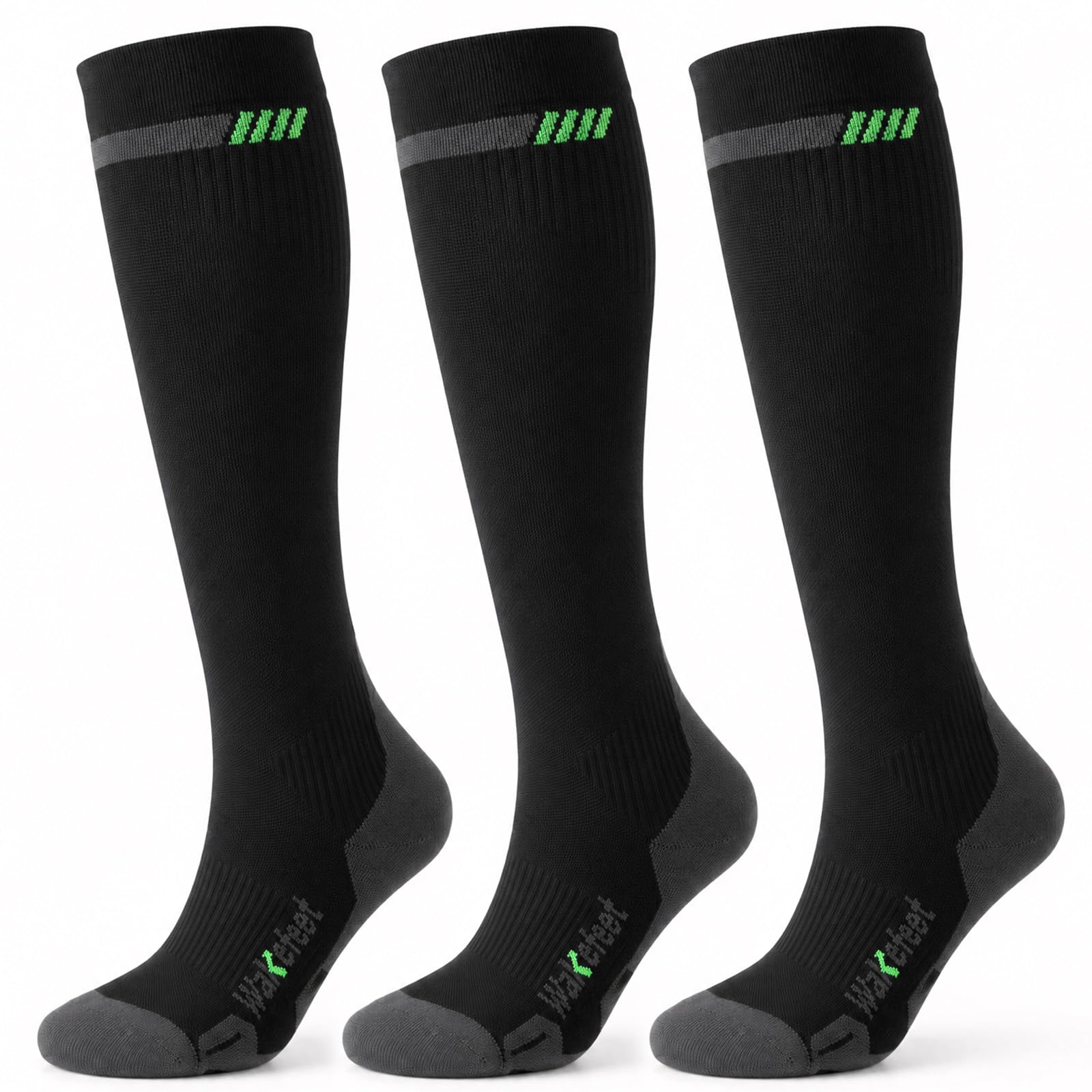
If you have wider calves or you want robust cushioning underfoot, this is the pair for you. It has thick knitting around the sole and heel to reduce friction during exercise, plus a “high-elasticity” cuff designed to fit a wider calf range without slipping — a better option than the FITRELL if you have found other socks too tight at the top. The graduated pressure design delivers the full 20-30 mmHg where it counts.
Customers note that these socks fit well and feel comfortable, with one reviewer noting they were “well worth” the price for a box of 3 pairs. The socks also come in an elegantly designed gift box. The package size is 8.66 x 5.11 x 2.55 inches, so it clearly holds three substantial pairs. If you need to rotate socks across a work week and want consistent pressure every time, this multi-pack offers a premium feel. The catch is limited long-term durability data in reviews, and the thick sole may feel less breathable in summer heat.
Three pairs in a gift box, each delivering 20-30 mmHg of graduated pressure — that’s a full rotation of consistent compression in one purchase.
What stands out
- Thick cushioning at the sole and heel for comfort
- High-elasticity cuff fits wider calf sizes securely
- 3 pairs in a premium gift box for easy rotation
The trade-offs
- Limited customer reviews available for long-term durability check
- Some users may find the thick sole less breathable in summer
4. PULIOU Cooling Compression Socks 20-30 mmHg, 2 Pairs
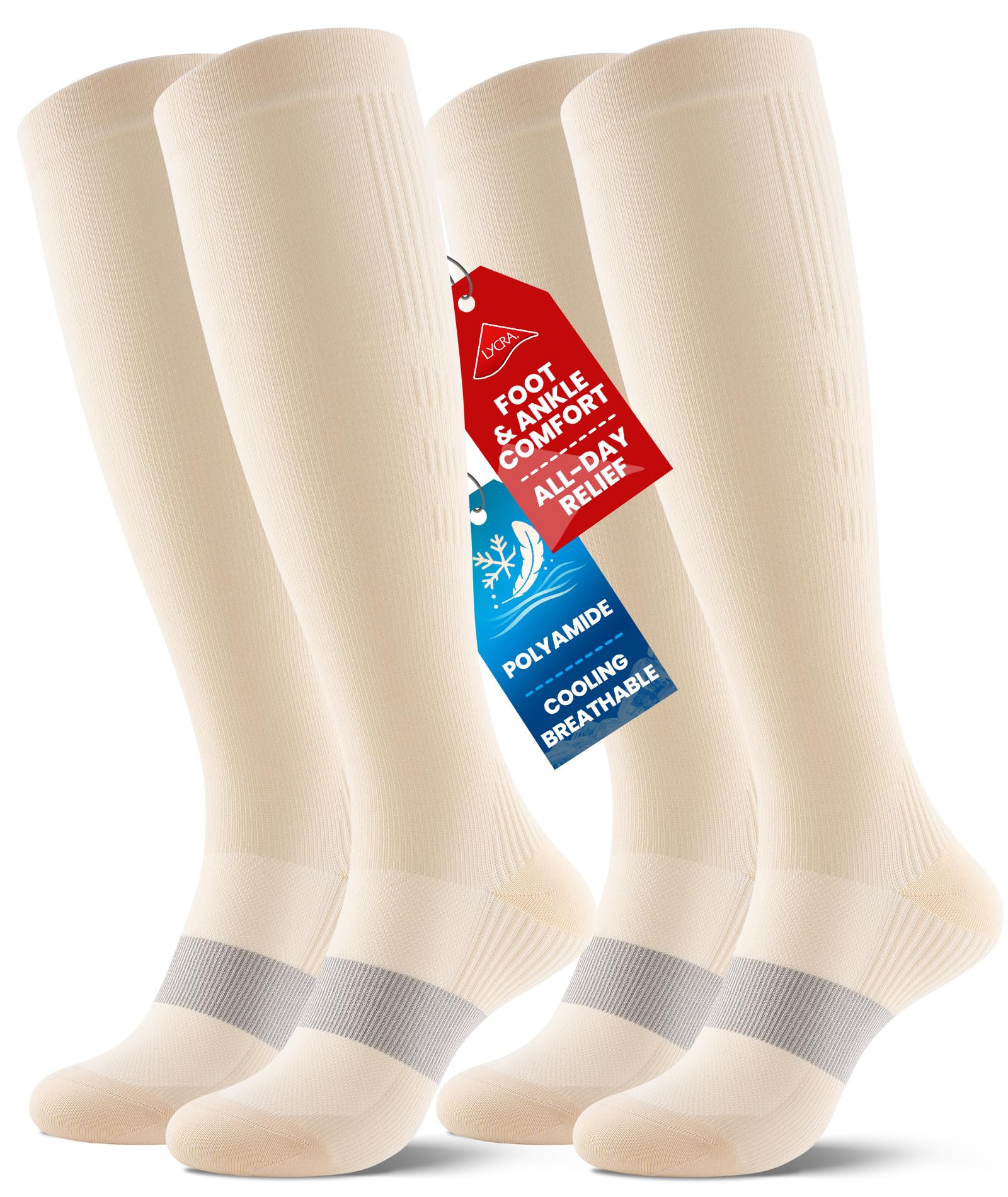
The single number that matters most in this category is 20-30 mmHg, and this pair scores a qualified hit: reviewers point out the compression may not reach a full 20-30 mmHg, with one noting the knee cuff feels tighter than the rest and another reviewer saying it feels more like 15-20 mmHg.
For runners or anyone who wears compression socks in warm weather, the key spec is the “cooling fabric” that keeps feet dry during exercise. Shoppers say the material feels “soft” and “cooling,” which prevents the sweaty, clammy feeling that heavier socks can cause. That said, for standard wear like daily errands, a light jog, or a desk job, the comfort and breathability outweigh this. Reviewers also praise the “durable stitching” and that the socks “stay in place” without sliding.
If you run hot or live in a sunny climate, this is a cooler, more breathable choice than the Physix Gear or the Benirap. skip it if you require verified maximum medical-grade firmness for a diagnosed circulation condition. The price-to-value read is that you trade some compression consistency for superior breathability and comfort at a lower cost than medical-grade alternatives.
The upsides
- Cooling fabric keeps feet dry and comfortable in heat
- Stays in place at the knee without sliding down
- Durable stitching that holds up well after washing
Keep in mind
- Compression may feel weaker than a true 20-30 mmHg rating
- Sizing tends to run small, so check the chart carefully
5. Benirap Breathable Compression Socks 20-30 mmHg, 2 Pairs
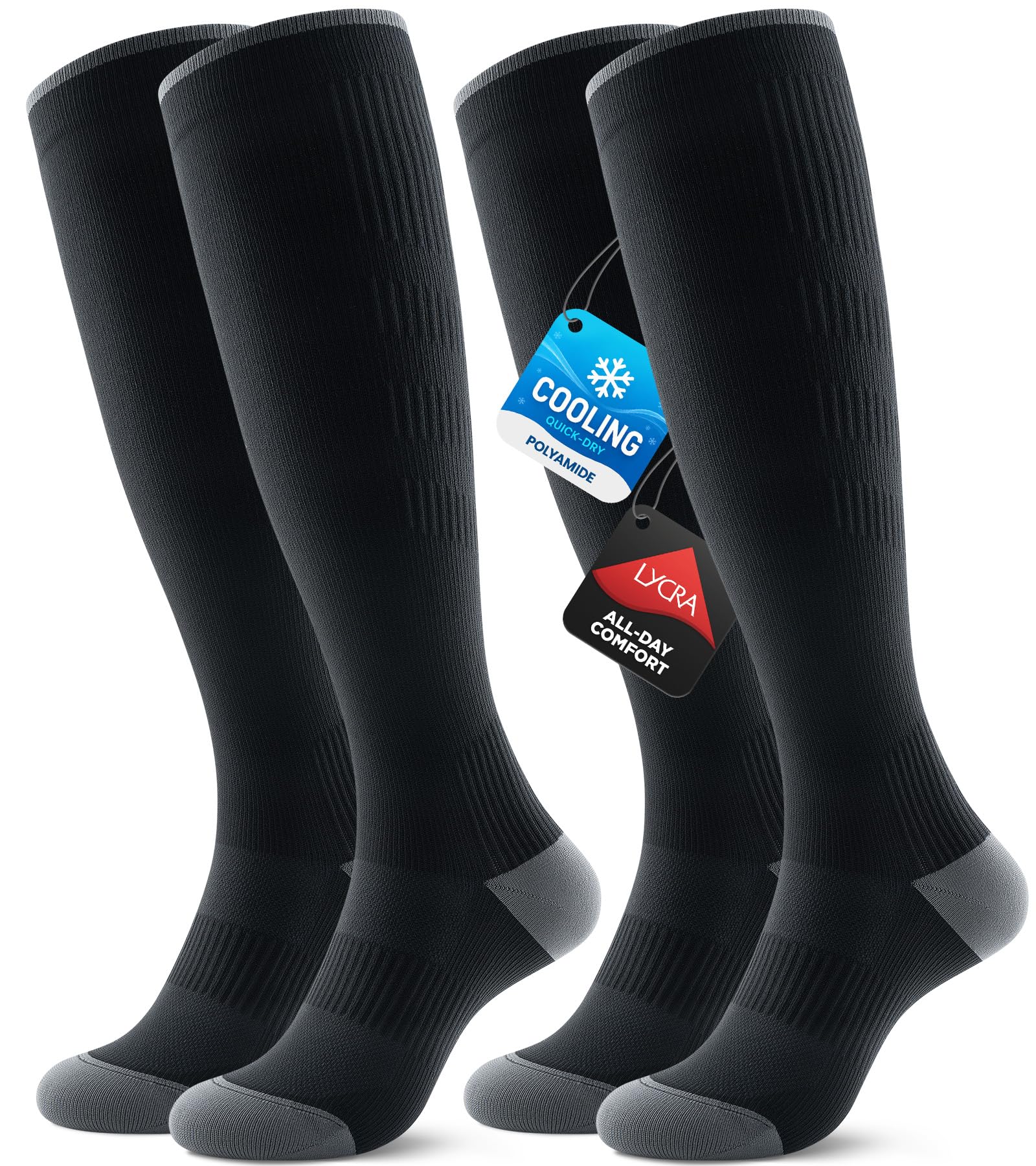
At the lowest entry price, you get two pairs that still carry a 20-30 mmHg rating. The socks have a breathable mesh top for ventilation, reinforced heels and toes, and terry sole cushioning (a soft, looped fabric for padding). Each pair weighs 3.53 ounces, making them light enough for packing. The downside is that buyers describe them as “thick and warm,” better for winter than summer. The product description emphasizes hand washing, less convenient than machine washing. Reviews are mixed on whether the compression truly reaches 20-30 mmHg, with some international reviews focusing on sports use rather than medical circulation support. If you want a very budget-friendly introduction to this compression level for light daily activity or cooler-weather walks, the Benirap socks get the job done without a big upfront investment.
Why we’d pick it
- Lightweight at 3.53 ounces per pair, easy to pack
- Breathable mesh top for ventilation
- Reinforced heel and toe for durability
A few caveats
- Described as thick and warm, potentially too hot for summer
- Hand wash recommended, less convenient for daily rotation
Understanding the Specs
20-30 mmHg Compression Level — What It Actually Means
This number (millimeters of mercury) is the unit of pressure the sock applies to your leg. 20-30 mmHg is considered “medical grade Class 1″—firm enough to push blood out of your lower legs and prevent it from pooling, but not so tight that it cuts off circulation. For reference, 15-20 mmHg is light support (great for flying or mild swelling), while 30-40 mmHg requires a doctor’s prescription. If you are dealing with moderate swelling, varicose veins (twisted, enlarged veins), or long shifts on your feet, 20-30 mmHg is the sweet spot you are looking for.
Graduated Compression vs. Uniform Tightness
A true graduated compression sock measures its highest pressure at the ankle and gradually reduces that pressure as it moves up toward the knee (your fabric tends to be tightest around the ankle, then looser near the top of the calf). This gradient is what “milks” blood upward against gravity, preventing it from settling in your feet. If a sock feels equally tight all the way up, or tighter at the top band, it is not graduated—and it will not give you the circulation benefits you need. Every product on this list uses graduated compression, but some do it more effectively than others.
FAQ
Can I wear 20-30 mmHg compression socks to bed?
How do I know if a 20-30 mmHg sock fits correctly?
Why does my 20-30 mmHg sock feel like it’s only 15-20 mmHg?
Final Thoughts: The Verdict
For the majority of shoppers, the compression socks for women 20-30 mmhg winner is the Physix Gear Compression Socks because it delivers reliable medical-grade pressure that buyers have proven holds up through 12-hour shifts and multiple washes, with effective arch and toe support. If you want a 3-pack for rotating between washes at a similar per-pair price, grab the WAKEFEET 3-Pair set. And for hot weather or running, the standout is the cooling fabric of the PULIOU Cooling Compression Socks.

Mo Maruf
I created WellFizz to bridge the gap between vague wellness advice and actionable solutions. My mission is simple: to decode the research and give you practical tools you can actually use.
Beyond the data, I am a passionate traveler. I believe that stepping away from the screen to explore new environments is essential for mental clarity and physical vitality.