Our readers keep the lights on and my smoothie glass nicely filled. As an Amazon Associate, I earn from qualifying purchases.
Specs are compiled from manufacturer listings and verified buyer reviews and can change over time — please confirm the key details on the product page before buying.
That heavy, tight feeling in your lower legs by midday is a signal that your circulation needs a hand. The right pair of socks pushes fluid back up toward your heart, and the key number to look for is 20-30 mmHg — the medical-grade zone that eases swelling without cutting off movement. This guide breaks down six real-world contenders so you can pick the one that actually fits your calves, your day, and your discomfort.
I’m Mohammad Maruf — the founder and writer behind WellFizz. This guide is built by comparing the manufacturers’ published specifications and the patterns across verified customer reviews, so you get each pick’s real strengths and trade-offs instead of marketing spin.
Whether you stand for hours at work, sit through long flights, or just want to come home with lighter legs, this roundup of the best compression socks for swollen feet spares you the trial-and-error of buying blind.
Quick Picks
- NEENCA Copper Compression Socks, Medical Graduated Socks with Patented Design — Best Overall
- Physix Gear Compression Socks 20-30 mmHg — Nurse Favorite
- PULIOU Cooling Compression Socks 20-30 mmHg, 2 Pairs — Best Value Pack
- Benirap Breathable Compression Socks 20-30 mmHg, 2 Pairs — Easiest to Put On
- LEVSOX Cotton Compression Socks 20-30 mmHg — Natural Fiber Pick
- Ailaka Zipper Compression Socks 20-30 mmHg — Elderly & Recovery
How To Choose The Best Compression Socks For Swollen Feet
Not all compression socks are the same. A pair built for marathon runners is different from one designed for a nurse on a twelve-hour shift. Here are the three specs that decide whether a sock actually helps your swollen feet or just squeezes in the wrong places.
Compression Level: Stick to 20-30 mmHg
This is the medical-grade range. It delivers firm pressure at the ankle that gradually releases as it goes up your calf — that graduated squeeze is what pumps fluid out of your feet. Lower levels (15-20 mmHg) are better for travel or prevention, not active swelling.
Material: Breathability vs. Durability
Nylon and spandex blends hold their shape and provide consistent compression wash after wash, but they can trap heat. Cotton blends are cooler and more comfortable for all-day wear, though they may lose some elasticity over time. Copper-infused fabric is a premium touch that adds antimicrobial benefits.
Ease of Donning: Slide-On vs. Zipper
If your hands are weak or your swelling makes bending difficult, a zippered compression sock is a standout. It lets you put the sock on without wrestling — just zip it up. Slide-on styles are more traditional and often feel sleeker under pants, but require more effort to get on and off.
Quick Comparison
| Model | Best For | Compression | Pairs | Key Material | Amazon |
|---|---|---|---|---|---|
| NEENCA Copper | All-day wear & recovery | 20-30 mmHg | 1 | Copper-infused nylon | Amazon |
| Physix Gear | Heavy-duty nursing shifts | 20-30 mmHg | 1 | Nylon / Spandex | Amazon |
| PULIOU Cooling | Warm weather & travel | 20-30 mmHg | 2 | Cooling fabric | Amazon |
| Benirap Breathable | Easy-on comfort | 20-30 mmHg | 2 | Nylon blend | Amazon |
| LEVSOX Cotton | Natural-fiber feel | 20-30 mmHg | 1 | Cotton | Amazon |
| Ailaka Zipper | Limited mobility / elderly | 20-30 mmHg | 1 | Nylon / Spandex | Amazon |
In‑Depth Reviews
1. NEENCA Copper Compression Socks, Medical Graduated Socks with Patented Design
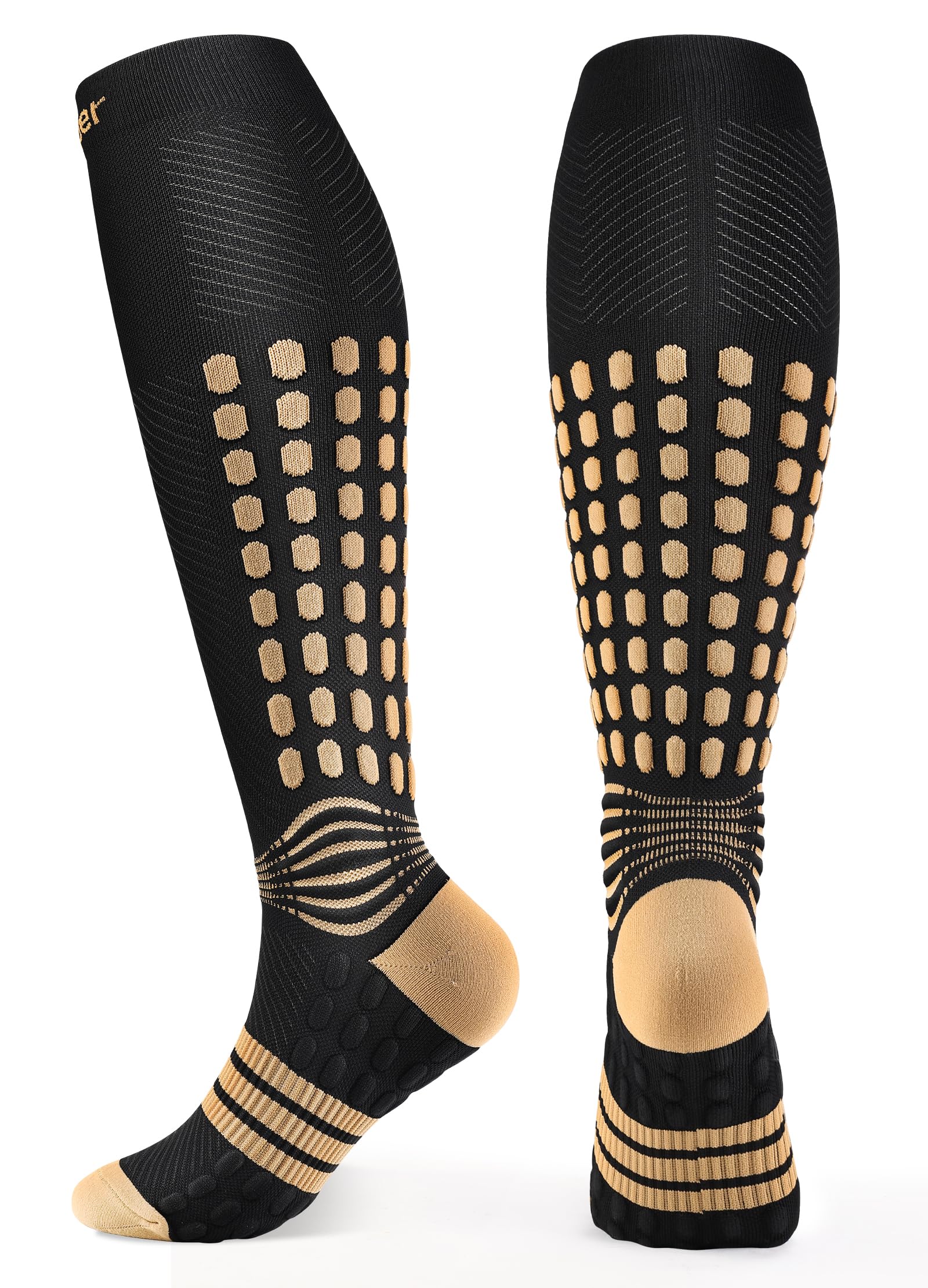
The copper-charged pair that impressed a buyer within eight hours of wear.
The NEENCA socks integrate six compression rings at your ankle — they call it their patented Ankle Tuck Compression Tech — so the squeeze is concentrated exactly where fluid pools first. At 20-30 mmHg, the graduated pressure pushes upward, and the copper-infused fabric (a feature unique to this pick among the list) is meant to keep the knit breathable and potentially speed recovery.
Buyers report a dramatic effect: one reviewer noted that after wearing them for just eight hours they noticed an improvement, and on the second day they felt even more relief. Another noted the sock stayed in place all day with no rolling or slipping. Because this is a single pair, the price is lower than the two-pack options, making it easy to try one without a big commitment. The main trade-off is that the copper-infused fabric, while praised for breathability, adds a slightly different texture that not everyone may prefer against bare skin.
What stands out
- Six compression rings at the ankle for targeted fluid control
- Copper-infused fabric improves breathability and skin feel
- Consistent, evenly distributed compression praised in multiple reviews
The honest limit
- Single pair only — no backup for daily rotation
- Copper fabric may feel different than standard nylon blends
Best for: Anyone who wants a thoughtful, medically-angled design that backs up its claims with real buyer results — the copper thread is a genuine differentiator, not a gimmick.
Consider the trade-off: If you need two pairs to rotate, you will have to buy two separate units; there is no multi-pack option here.
2. Physix Gear Compression Socks 20-30 mmHg

A shift-ready sock that buyers praise for keeping legs going all day.
Physix Gear has been on the market for years, and it shows in the polish of the design.
The 20-30 mmHg compression is steady from arch to calf, and reviewers consistently call out how it reduces leg fatigue during long periods of standing or walking. One buyer who wears them for 12-hour hospital shifts reports that her legs still do not hurt when she gets home — proof of the durability of the compression knit.
Unlike the NEENCA above which uses copper fiber, the Physix Gear socks use a standard nylon and spandex blend that is soft and breathable. They come in a single pair. The main complaint from some buyers is that the length can run a touch long, bunching at the top of the knee if your legs are shorter. The maker recommends checking the sizing chart carefully, and owners mention that the XL fits a 15-16 inch calf well without cutting in at the back of the knee.
Why buyers love it
- Excellent support for 12-hour standing shifts without feeling restrictive
- Soft, breathable knit that holds up well after multiple washes
- Cute floral/pattern options for the foot and ankle area
Size caveat
- Can be too long for shorter legs, needing a roll-down at the top
- Single pair only; no multi-pack
The verdict: A proven workhorse with a track record of heavy-duty relief — reach for these if you are on your feet for a living and want a sock that is as durable as it is comfortable.
Watch for this: If you have shorter legs or a calf circumference on the lower end, size down to avoid wrinkling at the ankle.
3. PULIOU Cooling Compression Socks 20-30 mmHg, 2 Pairs
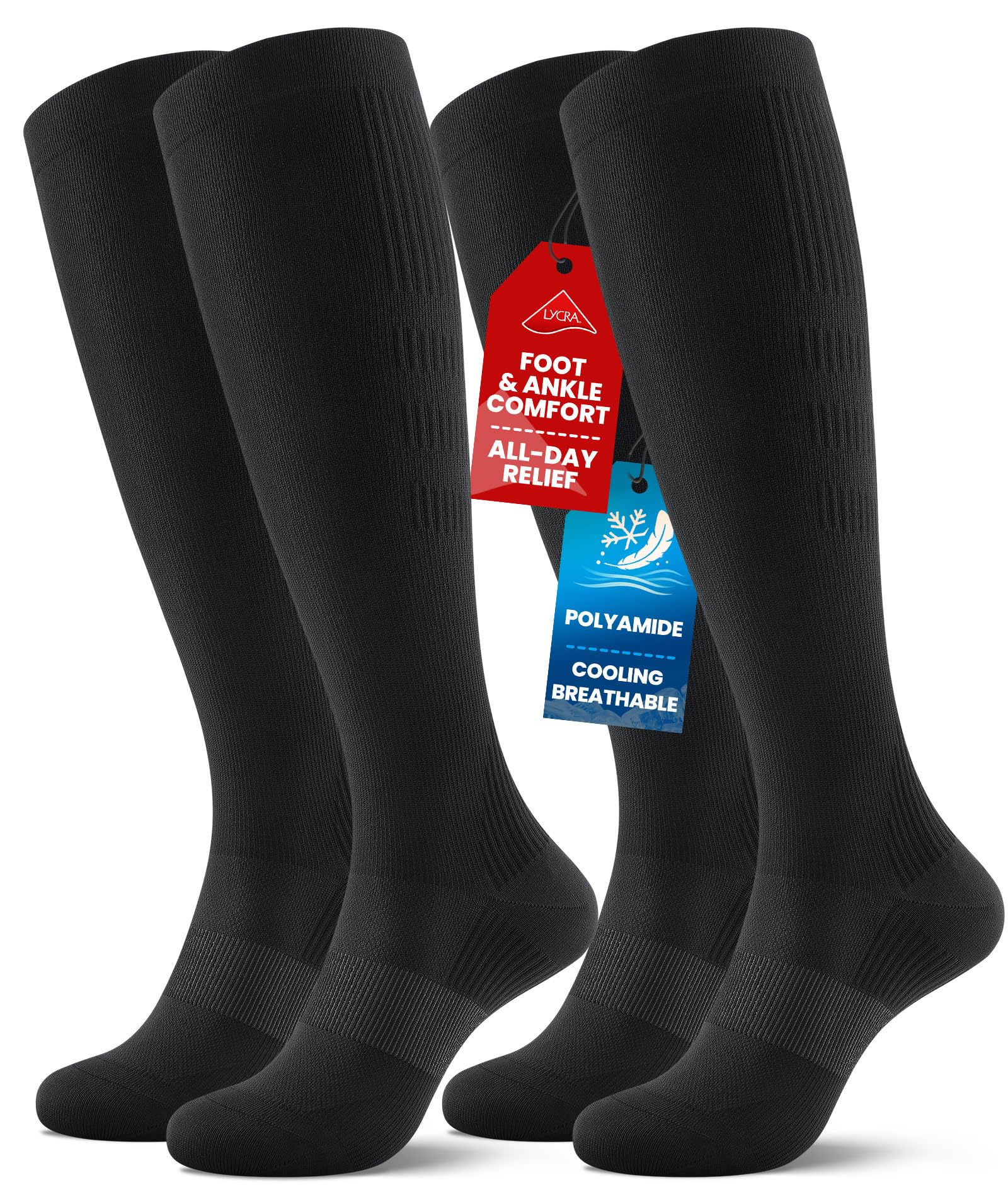
A two-pack that focuses on keeping your feet cool while the 20-30 mmHg squeeze works on swelling.
PULIOU stands apart with a specific “cooling fabric” that multiple reviewers mention helps during warmer days. The 20-30 mmHg compression feels firm but not restrictive, and the knit is described as soft, breathable, and lightweight. Customers note it stays up at the knee without sliding down or digging into the skin — a common annoyance with less thoughtfully designed compression socks.
Unlike the single-pair Physix Gear and NEENCA picks, this one comes with two pairs of knee-high socks, making it ideal for daily rotation or travel. The material feels durable, and after several washes it holds its shape well. The only real limit is that the cooling effect, while praised, is a subtle fabric property — it will not feel like air conditioning, just less sweaty than a standard nylon/spandex blend.
What you get
- Two pairs of 20-30 mmHg socks for the same price as many single pairs
- Cooling fabric keeps feet fresh during long wear
- Firm compression that stays in place without sliding down
The trade-off
- Cooling effect is mild, not dramatic
- Limited color/pattern options compared to some other brands
Reach for these if: You want a no-compromise everyday option that gives you a spare pair for rotation and costs less than buying two of almost any other pick here.
Keep in mind: The cooling fabric is a nice bonus, but if you need ultra-warm socks for winter, look elsewhere.
4. Benirap Breathable Compression Socks 20-30 mmHg, 2 Pairs
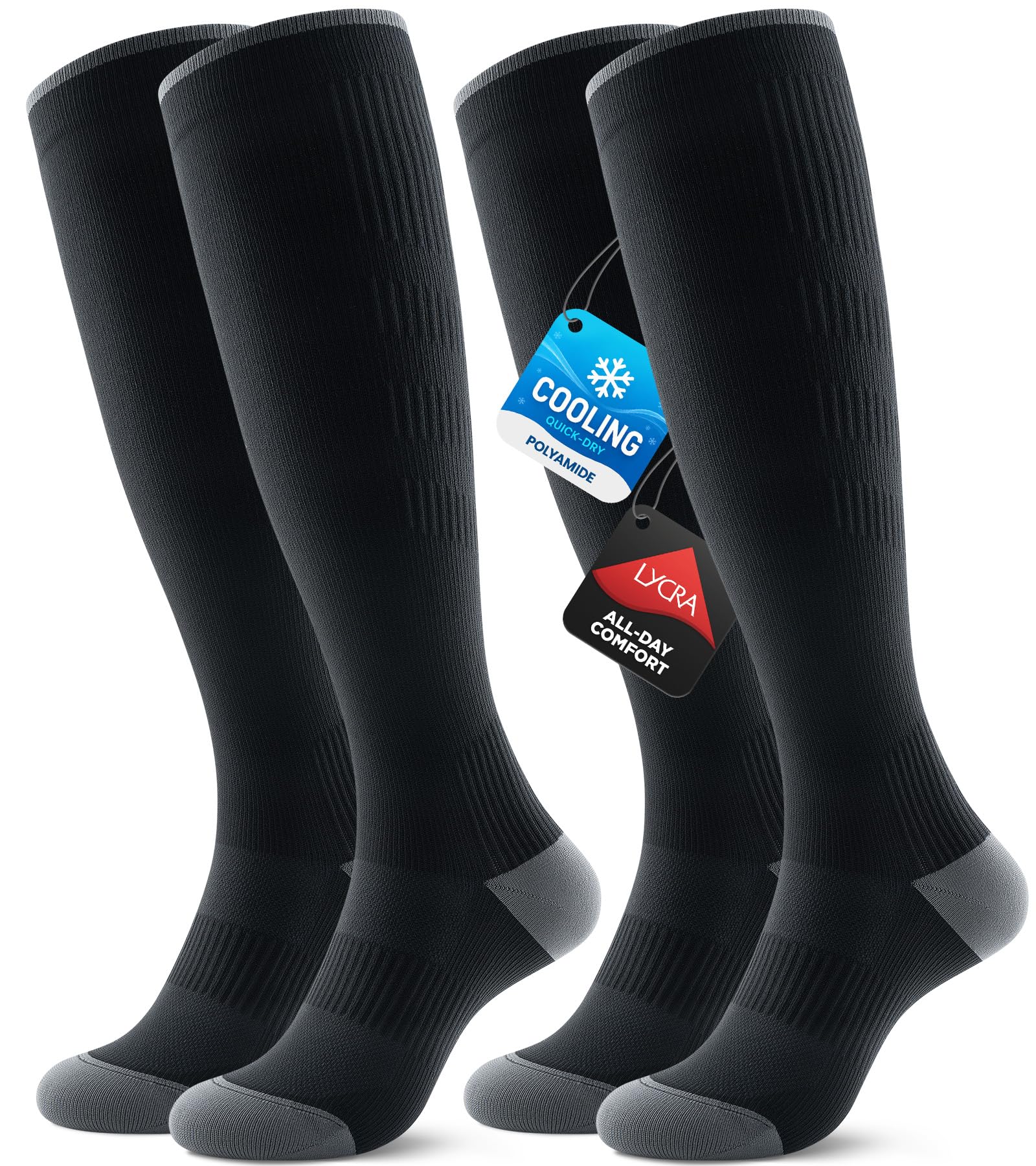
The pair that one buyer mentioned came on without “struggling like a wrestler in a cage match.”
Benirap’s design philosophy seems to center on the donning experience. The 20-30 mmHg compression provides graduated pressure from the foot up, and a targeted band around the arch gives an immediate supportive squeeze. One buyer with “huge skaters calves” found that the L/XL size worked smoothly — the sock slid up without binding at the calf or cutting into the back of the knee.
At two pairs for the price, this is a low-risk, high-comfort option for people who have struggled with getting compression socks on in the past. It lacks the specialized fabric treatments of the NEENCA or PULIOU, sticking to a standard breathable nylon blend, but that simplicity means it fits smoothly under pants and shoes without bulk.
Why it wins
- Noticeably easier to put on than other 20-30 mmHg socks
- Two pairs included
- Stays in place all day without slipping or binding
Its limits
- Standard nylon blend lacks cooling or copper-infused features
- Some users find the knit thick and prefer it only for winter
Who it fits: Anyone who has abandoned compression socks because the struggle to get them on was worse than the swelling itself — this pair removes that barrier.
One note: If you run hot, the thicker sock may be too warm for summer; check the size chart closely for your calf and shoe size.
5. LEVSOX Cotton Compression Socks 20-30 mmHg

A mostly-cotton sock that breathes like a normal dress sock while delivering 20-30 mmHg compression.
LEVSOX uses a cotton primary material with a thicker cushioned sole. The toe area has no noticeable seam — one reviewer who has worn compression socks for 50 years called it the best toe design they have ever bought, with no rubbing or cutting across the toes. Reviewers point out that the socks reduce swelling effectively while feeling softer and more natural than the synthetic medical-grade alternatives from a doctor’s office.
At 20-30 mmHg, the compression is firm, and some shoppers say that the length from ankle to knee can be too long for shorter legs — one reviewer had to roll the top down about 3 inches to keep it from pulling behind the knee. It is a single pair, and the cotton blend, while cooler, may not hold its compression elasticity as long as a nylon-spandex mix if you machine-dry it (the maker suggests air drying).
What makes it unique
- Primarily cotton fabric feels like a normal sock, not a medical garment
- No visible or palpable seam on the toes for zero irritation
- Thicker cushioned sole adds comfort for walking and standing
The honest limits
- Single pair at a higher price than multi-pair options
- Cotton can lose compression faster if put in the dryer
Ideal for: People with sensitive feet who find synthetic fabric sweaty or irritating — the cotton feel and seam-free toe are real comfort wins.
Watch out for: If you are tall or have long legs, the length may be fine; shorter buyers should size mindfully or be prepared to roll the top.
6. Ailaka Zipper Compression Socks 20-30 mmHg

The zip-up design that turns a daily wrestling match into a simple slide-and-zip routine.
Made from 70% nylon and 30% spandex, the Ailaka socks deliver the full 20-30 mmHg graduated compression with a YKK zipper that runs up the side. The zipper handle is extended so you can reach it easily without bending. Buyers with edema, foot injuries, or limited mobility report that the zipper makes a massive difference: one elderly user said standard stockings were too tight to put on due to swelling, but the zippered version went on and off with no struggle and managed the leg swelling effectively all day.
It comes in sizes from medium all the way up to 5X-Large, which is important if your calf swelling is severe. It is a single pair. The zipper sits snug against the leg and does not dig in or cause discomfort, though it adds a slight visible line under tight pants.
Why the zipper matters
- YKK zipper eliminates the struggle of pulling on tight compression
- Sizes up to 5X-Large fit very large or swollen calves
- Effective for edema, post-surgery recovery, and elderly users
Consider this
- Single pair only; no multi-pack option
- Zipper is visible and may add slight bulk under tight clothing
Who should reach for these: Anyone with arthritis, limited hand strength, post-surgery restrictions, or calf swelling so significant that standard slide-on socks are impossible.
Keep in mind: If you need a completely invisible sock profile under pants, the zipper might show; it is a functional design that prioritizes accessibility over stealth.
Understanding the Specs
Graduated Compression (20-30 mmHg)
Think of it as a one-way street for blood flow. The sock is tightest at the ankle (20-30 mmHg of pressure, measured in millimeters of mercury) and gradually loosens as it moves up your calf. That gradient pushes fluid upward, preventing it from pooling in your feet. The 20-30 mmHg range is considered medical-grade in many countries — strong enough for edema, varicose veins, and post-surgery swelling, but not so tight that it cuts circulation off completely.
Copper-Infused Fabric
Copper ions are woven into the fibers during manufacturing. The idea is that copper has natural antimicrobial properties that reduce odor-causing bacteria, and some users feel it helps with skin comfort and recovery. It does not make the sock electrically conductive or change the compression level — it is purely a material upgrade that may keep the sock fresher and feel smoother against sensitive skin.
FAQ
What does 20-30 mmHg mean for my swollen feet?
How tight should compression socks feel?
Can I wear compression socks for swollen feet overnight?
How do I measure my calf for the right size?
Will compression socks help with diabetic foot swelling?
How long do compression socks typically last?
Is a zipper on a compression sock comfortable?
Do copper-infused socks really work better for swelling?
Final Thoughts: The Verdict
For the majority of shoppers, the compression socks for swollen feet winner is the NEENCA Copper Compression Socks because the combination of six compression rings at the ankle, copper-infused breathable fabric, and fast-acting buyer results makes it the most thoughtfully engineered pick in the lineup. If you want a two-pack for daily rotation that stays cool, grab the PULIOU Cooling Compression Socks. And for anyone who struggles to get socks on due to limited mobility or severe swelling, the standout is the Ailaka Zipper Compression Socks.
How We Picked
We do not accept paid placement. Every pick is matched to a real buyer and a real use-case; we do not hands-on test units.
Sources & Methodology
Specifications: manufacturer listings and product documentation. Review insights: verified customer reviews, as of July 2026. Pricing: not shown on this page (it changes often); check the current price via the retailer link.
As an Amazon Associate, WellFizz earns from qualifying purchases. This does not affect which products we feature.

Mo Maruf
I created WellFizz to bridge the gap between vague wellness advice and actionable solutions. My mission is simple: to decode the research and give you practical tools you can actually use.
Beyond the data, I am a passionate traveler. I believe that stepping away from the screen to explore new environments is essential for mental clarity and physical vitality.