Our readers keep the lights on and my smoothie glass nicely filled. As an Amazon Associate, I earn from qualifying purchases.
Swollen ankles, tight calves, and that heavy, tired feeling in your legs after a long day aren’t something you just have to live with. For men dealing with edema, prolonged standing, or circulation issues, the right pair of compression socks can mean the difference between dragging through the afternoon and feeling light on your feet from morning to night. The science is clear: graduated pressure that’s strongest at the ankle and gently releases up the calf actively pushes fluid back toward the heart, reducing the puffiness and aching that can sideline you.
I’m Mohammad Maruf — the founder and writer behind WellFizz. My deep dives into medical-grade compression gear focus on the measurable differences in pressure gradients, fabric density, and real-world durability that actually determine whether a sock helps or just squeezes.
After combing through hundreds of verified reviews and manufacturer specifications, I’ve narrowed the field to the five most reliable options in the compression socks for swelling men category, ranked by fit accuracy, compression consistency, and all-day comfort.
How To Choose The Best Compression Socks For Swelling Men
Not all compression socks are created equal, especially when the goal is reducing visible swelling in the feet, ankles, and lower legs. The difference between a sock that delivers genuine medical-grade relief and one that just feels tight comes down to a few critical specifications you need to understand before buying.
Understand the mmHg Pressure Rating
This is the single most important number on the package. Measured in millimeters of mercury (mmHg), the rating tells you how much pressure the sock applies at the ankle. For swelling that needs active reduction, 15-20 mmHg is considered mild to moderate support — good for travel or mild fatigue. The 20-30 mmHg range is the clinical standard for significant edema, varicose veins, and post-surgical recovery. Anything below 15 mmHg is not likely to make a real difference for swollen legs.
Graduated Compression vs. Uniform Pressure
A true medical compression sock uses graduated pressure — tightest at the ankle, then gradually loosening as it moves up the calf. This design actively assists blood flow upward against gravity. Uniform compression socks, which apply the same pressure everywhere, can actually impede circulation and worsen swelling. Always check that the product description specifies graduated or gradient compression.
Fabric, Fit, and Toe Construction
Swelling often makes the feet and ankles sensitive, so the fabric feel matters. Look for a blend of nylon, spandex, and microfiber for breathability and moisture wicking — cotton blends can trap heat and sweat. A seamless toe closure is critical for preventing blisters and irritation, especially if you have diabetic concerns or neuropathy. The top band should hold the sock in place without digging in or leaving red marks, which indicates the sizing is correct.
Quick Comparison
On smaller screens, swipe sideways to see the full table.
| Model | Category | Best For | Key Spec | Amazon |
|---|---|---|---|---|
| Physix Gear Compression Socks | Unisex / Premium | All-day wear & swelling reduction | 20-30 mmHg graduated | Amazon |
| CASMON Zipper Compression Socks | Unisex / Premium | Easy on/off & post-surgery | 15-20 mmHg with YKK zipper | Amazon |
| Wakefeet Medical Compression Socks | Unisex / Mid-Range | Value pack & daily rotation | 20-30 mmHg, 3 pairs | Amazon |
| BBFREY Medical Compression Socks | Unisex / Mid-Range | Firm support & wide sizing | 20-30 mmHg, 3 pairs | Amazon |
| Yomandamor Over the Calf Dress Socks | Men / Budget | Gentle support for sensitive feet | Non-binding top, seamless toe | Amazon |
In‑Depth Reviews
1. Physix Gear Compression Socks 20-30 mmHg

Physix Gear nails the balance between aggressive compression and wearability. With a true 20-30 mmHg graduated pressure profile, these socks deliver the firm ankle support necessary to push swelling out of the lower leg while the pressure eases predictably as you move up the calf. Verified buyers with severe knee edema and long nursing shifts consistently report visible reductions in ankle puffiness — one noted their ankle bones became visible again after a single 12-hour wear cycle.
The fabric is a dense microfiber blend that feels substantial without overheating, and the cushioned sole and arch support add a layer of walking comfort that bare-bones medical stockings lack. The toe area is seamless, though a few users with wide feet noted the toe cap can feel a bit snug, so sizing up if you wear a size 10 or larger may be wise. The size chart accommodates calf circumferences up to 15-16 inches in the XL range, which covers most larger builds.
These socks hold up well to repeated machine washing — multiple review accounts mention surviving dozens of wash cycles and even dog attacks without losing elasticity or pilling. The floral and patterned designs are a nice touch if you want something that doesn’t look purely clinical, though the core value is in the consistent, clinical-grade compression that actually reverses lower-leg swelling.
Why it’s great
- True 20-30 mmHg graduated compression visible on wearers
- Cushioned sole and arch support for all-day standing comfort
- Durable construction that survives dozens of wash cycles
Good to know
- Toe cap may feel short for men with size 10+ wide feet
- Can be difficult to pull on; best applied first thing in the morning when swelling is lowest
2. CASMON Zipper Compression Socks 15-20 mmHg

For men who struggle with the sheer effort of pulling on standard compression socks — especially those with arthritis, limited mobility, or post-surgical restrictions — the CASMON zipper design is a genuine innovation. The YKK zipper runs the full length of the calf, backed by a soft fabric flap that prevents the metal from pinching skin. This allows you to fully open the sock, position your foot, and zip it closed with zero wrestling. Verified users report their elderly fathers went from avoiding compression entirely to wearing these daily because the struggle was removed.
The pressure rating is 15-20 mmHg, which places this in the moderate compression tier. This is effective for mild to moderate swelling, varicose veins, and fatigue from prolonged sitting or standing, but may not be strong enough for significant edema that requires a 20-30 mmHg rating. The fabric is thin and opaque, made using German machinery, and feels soft against the skin. The closed toe design wraps the toes snugly without bunching, though the lack of a true seamless toe may bother some users with high sensitivity.
One trade-off: the zipper adds slight bulk at the calf, so if you wear slim-fit trousers or boots, you may feel the zipper ridge. But for anyone who prioritizes ease of application over discretion, this trade is well worth it. The extended handle on the zipper pull makes it usable without assistance, a detail that matters for independent daily wear.
Why it’s great
- Full-length YKK zipper eliminates the struggle of putting on compression socks
- Soft fabric flap under zipper prevents pinching or irritation
- Thin, opaque fabric fits easily under most shoes
Good to know
- 15-20 mmHg pressure may be insufficient for severe edema requiring 20-30 mmHg
- Zipper adds visible bulk at the calf when wearing slim pants
3. Wakefeet Medical Compression Socks 20-30 mmHg (3 Pairs)
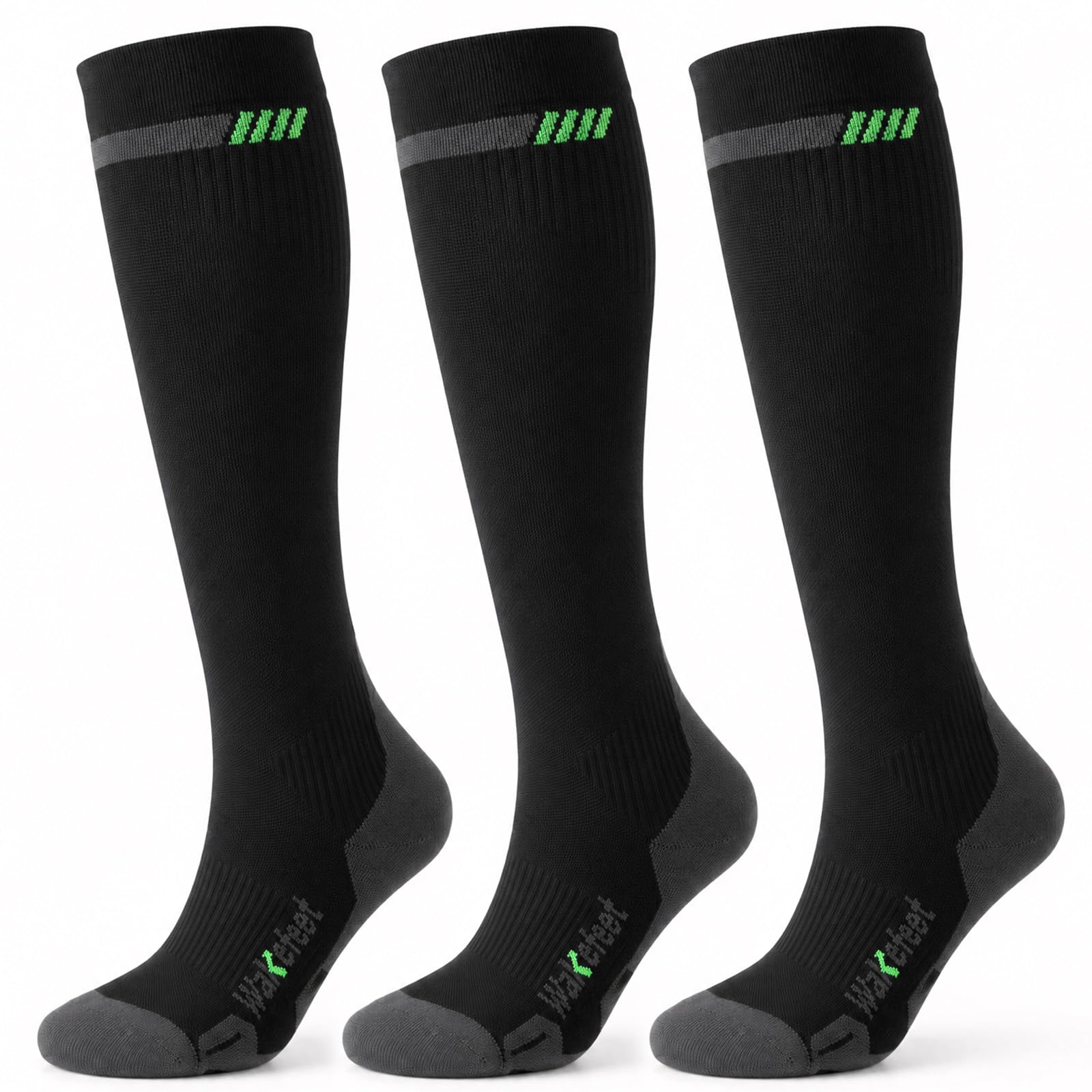
The Wakefeet offering is the most straightforward value proposition in this roundup: three pairs of 20-30 mmHg graduated compression socks in a single box, priced well below what single pairs from clinical brands command. Each pair delivers firm graduated pressure starting at 20 mmHg at the ankle and easing to roughly 15 mmHg at the calf, which aligns with the therapeutic range needed to actively reduce edema in the lower leg. Reviewers consistently note that these socks “work” for swelling, with multiple customers describing them as durable enough to outlast their first set and earn a repeat purchase.
The construction details are solid for the tier. The toe features a smooth closure that reduces friction and blister risk, and the heel and sole areas use a thicker knit for added cushioning during walking. The high-elasticity cuff is designed to grip the upper calf without slipping down, a common failure point in budget compression socks. The fabric is breathable and the socks come in a range of colors plus optional scents — a quirky addition, though the scented versions may not appeal to everyone.
The main drawback is sizing consistency. A few users found the fit ran slightly small, so measuring your ankle and calf circumference against the size chart before ordering is essential. The 3-pair format means you can rotate through washes without wearing out a single set quickly, making this an excellent choice for daily wearers who need multiple pairs on hand.
Why it’s great
- Three pairs at a price that beats most single-pair medical brands
- True 20-30 mmHg graduated pressure effective for edema
- Reinforced heel and sole cushioning for walking comfort
Good to know
- Sizing can run small; measure carefully before ordering
- Scented versions may feel gimmicky for clinical use
4. BBFREY Medical Compression Socks 20-30 mmHg (3 Pairs)
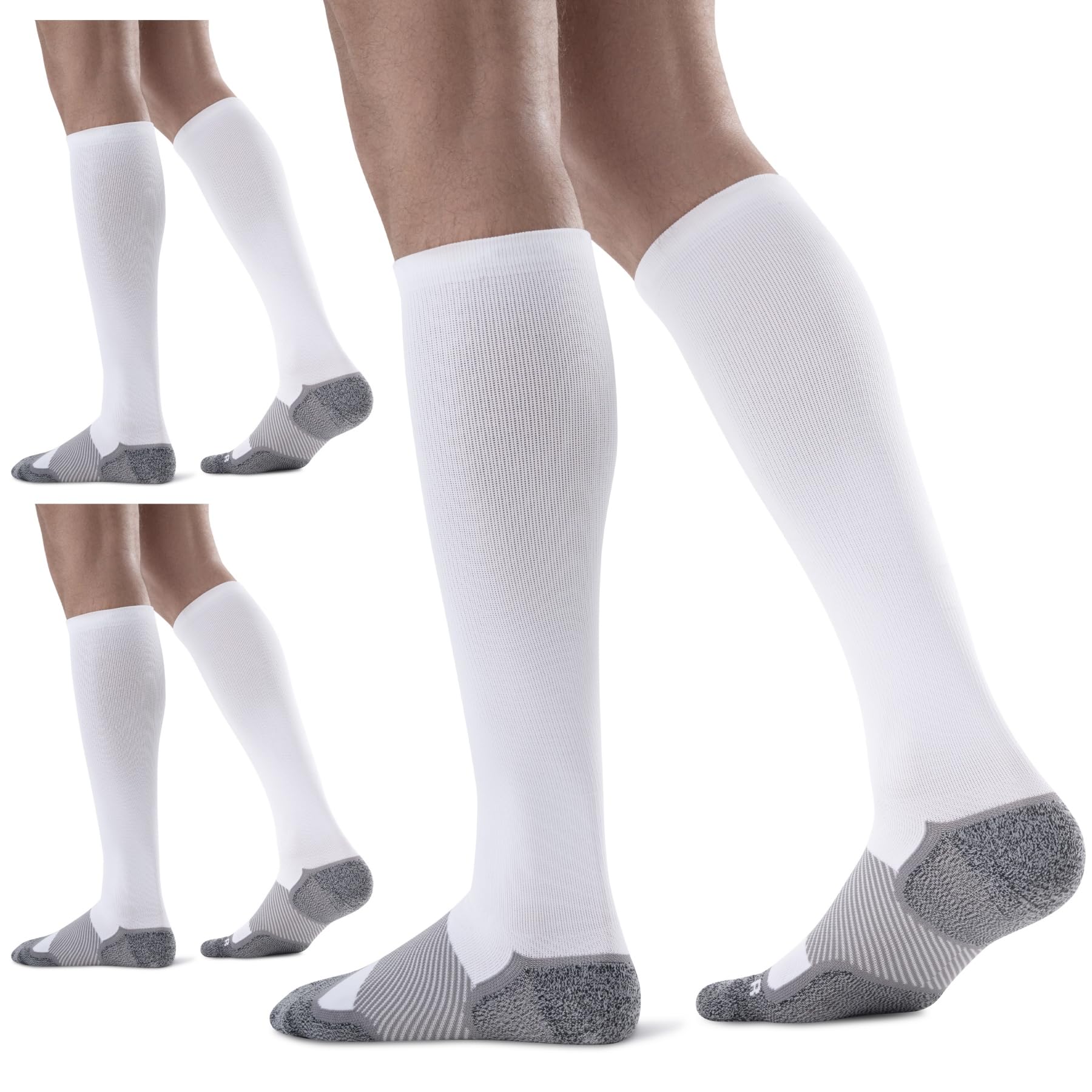
BBFREY brings a level of manufacturing precision that sets it apart in the mid-range segment. These socks are produced on German medical sock machines using an inlay knitting method designed to maintain consistent pressure across the life of the garment. The result is a 20-30 mmHg graduated compression profile that holds its integrity wash after wash — something cheaper socks lose after a few cycles. Verified wearers with significant edema report visible reduction in swelling and a noticeably snug arch support that helps with plantar fasciitis symptoms.
The toe area is a standout feature: a truly seamless closure with left-foot and right-foot anatomical shaping, which prevents blisters and allows the toes to splay naturally. The fabric blend of microfiber nylon is moisture-wicking and breathable, avoiding the clammy feeling that plagues denser synthetics. Light cushioning at the heel and toe pads adds comfort without making the sock too thick for shoes. The top band is wide and holds position without cutting into the skin or leaving deep grooves — a complaint that surfaced with some competitors.
The main limitation is color variety. The available options are more muted and athletic-looking compared to the patterns offered by Physix Gear or Wakefeet. For men who want plain, functional socks that look like medical gear, this is fine. The XL size fits larger calves comfortably, and the 3-pair pack offers good rotation value, though the per-pair cost is higher than the Wakefeet set.
Why it’s great
- German-engineered knit maintains consistent 20-30 mmHg pressure over time
- Anatomically shaped left/right seamless toe prevents blisters
- Excellent moisture management for all-day wear
Good to know
- Limited color and pattern options compared to competitors
- Higher per-pair cost than other 3-pack options
5. Yomandamor Over the Calf Diabetic Dress Socks (4 Pairs)

The Yomandamor socks occupy a different niche than the others on this list. They are not true graduated compression socks — they lack an mmHg pressure rating — but they are designed for men with sensitive feet, diabetic concerns, or mild swelling who find traditional compression stockings too constrictive. The key feature is the non-binding top that stays up without elastic pressure, and a truly seamless toe that eliminates the friction and pressure points that can cause blisters or infections in vulnerable feet.
Made from rayon derived from bamboo, the fabric is exceptionally soft, moisture-wicking, and thermoregulating — keeping feet cool in summer and warm in winter. The over-the-calf height means they cover the lower leg fully, which can provide light support for mild fluid retention, though they won’t actively push fluid upward the way a 20-30 mmHg graduated sock does. Multiple verified buyers with diabetes report these are the only socks that don’t leave red marks or cause irritation, even after 12 hours of wear.
These are best understood as a daily comfort sock for men who need gentle support and protection for sensitive skin, not as a medical intervention for significant edema. The 4-pair pack offers great value for rotation, and the dress-sock appearance means they work under slacks and business casual attire. If your swelling is mild and your primary concern is skin irritation and comfort, these are an excellent choice. If you need active edema reduction, look at the Physix Gear or BBFREY options instead.
Why it’s great
- Non-binding top and seamless toe ideal for diabetic and sensitive skin
- Soft bamboo-rayon fabric is breathable and thermoregulating
- 4-pair pack offers excellent value for daily rotation
Good to know
- No graduated compression — not effective for significant edema
- Thin dress-sock construction, not cushioned for heavy activity
FAQ
What mmHg level should a man choose for significant ankle and foot swelling?
How do I measure my leg to get the right compression sock size?
Can I wear compression socks overnight for swelling?
Why do my compression socks leave red marks or indentations on my calves?
Final Thoughts: The Verdict
For most men dealing with swelling, the compression socks for swelling men winner is the Physix Gear Compression Socks because they deliver consistent 20-30 mmHg graduated compression with cushioned comfort that holds up through long shifts and repeated washing. If you need easy on/off access due to limited mobility, grab the CASMON Zipper Compression Socks. And for a budget-friendly 3-pack that still hits the therapeutic 20-30 mmHg range, the Wakefeet Medical Compression Socks offer the best rotation value for daily wearers.

Mo Maruf
I created WellFizz to bridge the gap between vague wellness advice and actionable solutions. My mission is simple: to decode the research and give you practical tools you can actually use.
Beyond the data, I am a passionate traveler. I believe that stepping away from the screen to explore new environments is essential for mental clarity and physical vitality.