Our readers keep the lights on and my smoothie glass nicely filled. As an Amazon Associate, I earn from qualifying purchases.
Aching calves, restless legs, and that sinking feeling of waking up with swollen ankles can turn a good night’s rest into a battle. The right sleep socks do more than just squeeze — they apply precise, graduated pressure that encourages blood return toward the heart, reducing fluid pooling and the nighttime discomfort that keeps you tossing.
I’m Mohammad Maruf — the founder and writer behind WellFizz. I’ve spent hundreds of hours filtering through fabric blends, compression ratings, and real user testimonials to separate the socks that merely fit from the ones that genuinely deliver therapeutic relief while you sleep.
This guide breaks down the five top contenders for the best compression socks for sleeping, focusing on what makes each pair suitable for overnight wear versus daytime use.
How To Choose The Best Compression Socks For Sleeping
Selecting sleep-specific compression socks is different from buying athletic or travel pairs. The main goal at night is gentle, sustained pressure that prevents fluid from settling in your lower legs without restricting circulation or causing enough discomfort to wake you up. Focus on three key factors: compression level, fabric feel, and design features like toe coverage.
Compression Level: Light to Moderate
For sleeping, most sleep specialists and podiatrists recommend a light compression range of 8-15 mmHg or a moderate 15-20 mmHg. This range is strong enough to combat mild edema and restless leg sensations but gentle enough that it won’t cut into your skin during eight hours of horizontal wear. High-pressure medical-grade socks (20-30 mmHg) are typically reserved for daytime use or specific doctor recommendations.
Fabric Composition and Breathability
Overnight socks trap more heat than daytime socks because your body temperature drops during sleep. Bamboo viscose and high-nylon blends wick moisture better than thick cotton or wool knits. If you sleep in a warm room or live in a humid climate, prioritize lightweight, breathable material over thick cushioning to avoid waking up with sweaty feet.
Toe Design and Fit
Closed-toe socks provide warmth and full-foot compression, which is excellent for general edema. Open-toe designs are ideal if you have neuropathy, sensitive toes, or bunions — they remove pressure from the toe bed and allow you to monitor for any discoloration or numbness. Always check the sizing chart carefully: a sock that is too tight at the ankle can act as a tourniquet, while one that is too loose offers no benefit.
Quick Comparison
On smaller screens, swipe sideways to see the full table.
| Model | Category | Best For | Key Spec | Amazon |
|---|---|---|---|---|
| BraceAbility 20-30 mmHg | Medical-Grade | Edema & Neuropathy | 20-30 mmHg / Open Toe | Amazon |
| Doctor’s Select® Bamboo Viscose | Light Support | Gentle Overnight Wear | 8-15 mmHg / Bamboo Viscose | Amazon |
| Compression Socks 15-20 mmHg (3 Pairs) | Mid-Range | All-Day & Sleep Comfort | 15-20 mmHg / L/R Foot Label | Amazon |
| Iseasoo Copper Infused 8 Pairs | Value Pack | Week-Long Rotation | 15-20 mmHg / 8-Pack | Amazon |
| Bluemaple Copper Compression | Budget-Friendly | Mild Circulation Boosts | Graduated / 6-Pack | Amazon |
In‑Depth Reviews
1. BraceAbility Compression Socks 20-30 mmHg Open Toe
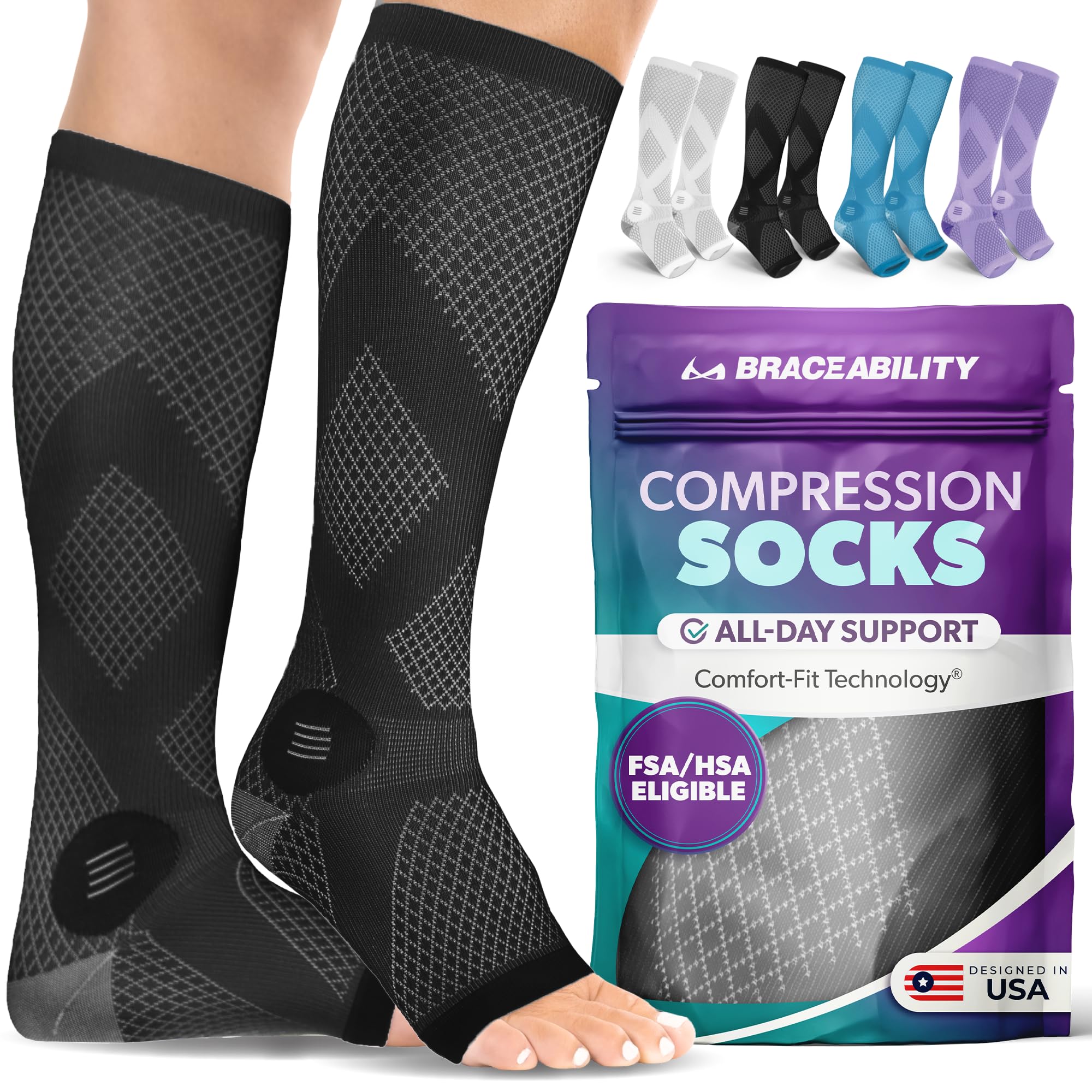
BraceAbility brings a medical-grade 20-30 mmHg rating that is unusually firm for a sleep sock, but it works exceptionally well for specific conditions. This is the pair to reach for if you wake up with significant lower-leg swelling, varicose vein pain, or restless leg syndrome that light socks cannot touch. The open-toe design is a major advantage for neuropathy sufferers — it keeps pressure off sensitive toes while still delivering therapeutic compression across the calf and ankle.
The fabric is noticeably thicker and warmer than other options on this list. It feels sturdy and supportive rather than delicate, which makes it durable for repeated nightly wear. Users with edema report that swelling subsides completely within one night, and the compression does not pinch or bind behind the knee, maintaining a comfortable fit through the full night’s rest.
Breathability is this sock’s one trade-off. The material runs warm, and users in temperate climates may find it too hot for year-round use. If you prioritize maximum edema control or have been prescribed high-level compression by a doctor, this is your best bet for overnight relief.
Why it’s great
- 20-30 mmHg eliminates severe edema in a single night
- Open-toe design perfect for neuropathy and sensitive toes
- Non-binding top band stays up without digging in
Good to know
- Thick, warm material — not ideal for hot sleepers
- Difficult to pull on; takes practice to get the right fit
2. Doctor’s Select® Bamboo Viscose Light Compression Socks
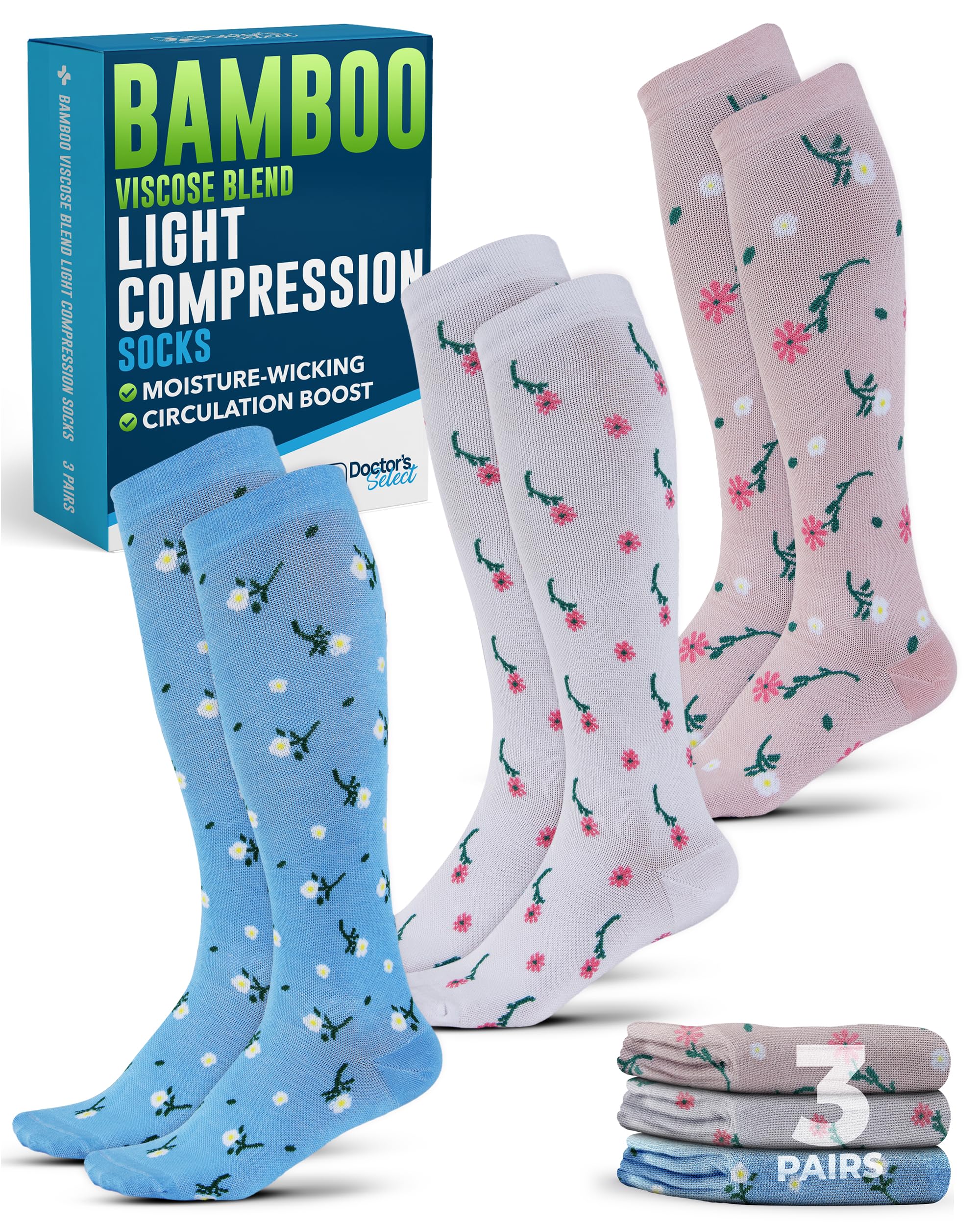
The Doctor’s Select Bamboo Viscose sock stands out for its fabric. Bamboo viscose is naturally cooler and softer than standard nylon blends, and it breathes significantly better than cotton-heavy socks. At just 8-15 mmHg, this is the mildest compression option here — ideal for people who want a gentle “hold” on their lower legs rather than a firm squeeze. It is the best pick for first-time sleep sock users who are worried about discomfort or feeling restricted.
Multiple reviewers noted that these socks do not leave deep imprints or pinch marks after hours of wear, a common complaint with tighter alternatives. The lightweight knit also means they go on and off without wrestling, which matters for anyone with arthritis or reduced hand strength. The floral print adds a touch of style that makes them feel less clinical.
The biggest limitation is that the compression is too light to tackle moderate or severe edema. If your legs swell noticeably during the day, you will need a higher-pressure sock. Also, some users in warm climates still found the fabric too hot — bamboo viscose is cooler than wool but not as cooling as sheer mesh alternatives.
Why it’s great
- Ultra-soft bamboo viscose fabric that breathes well
- Very easy to put on and take off
- Gentle compression that does not pinch or strangle
Good to know
- 8-15 mmHg is too light for significant swelling
- Floral pattern may leave slight imprints on sensitive skin
3. Compression Socks 15-20 mmHg Graduated Support (3 Pairs)
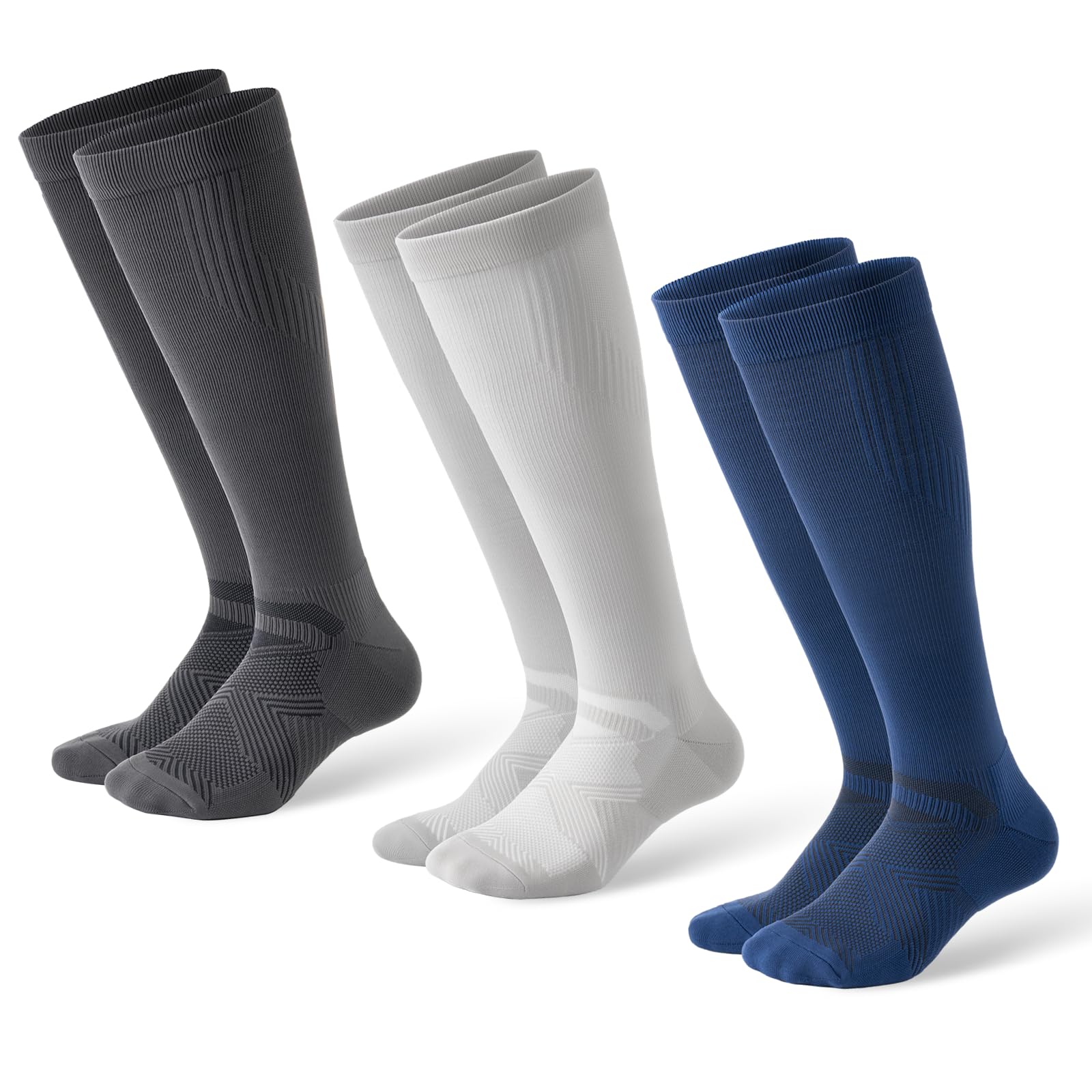
This 3-pair set from XZD hits the sweet spot for most sleepers. The 15-20 mmHg level is neither too soft nor too aggressive — it provides enough pressure to reduce morning ankle puffiness and soothe tired calves without making you feel like you are wearing a medical device. The fabric feels buttery soft against the skin, and the socks are marked for left and right feet, which improves fit precision and reduces bunching around the toes.
Users who stand for long shifts in food service or salon work reported that these socks drastically reduce calf pain after an 8-hour day, and the transition to overnight wear is seamless. The compression holds its shape well through washes without shrinking, and the grip of the knit prevents them from sliding down during sleep.
The one reported shortfall is a limited color palette. If you prefer bold patterns or bright hues, these socks stick to neutral tones. Additionally, people with larger calves (over 16 inches) should measure carefully — the size guide runs snug, especially in the calf panel.
Why it’s great
- Butter-soft fabric with good breathability for overnight wear
- Left/right foot markings for a tailored fit
- Effective 15-20 mmHg relieves post-shift leg heaviness
Good to know
- Limited color and pattern variety
- Runs snug for larger calf sizes
4. Iseasoo Copper Compression Socks 15-20 mmHg (8 Pairs)

The Iseasoo pack delivers 8 pairs of 15-20 mmHg compression socks at a per-pair cost that makes it one of the most economical options for sleep rotation. The copper-infused fabric is marketed for odor control and moisture management, and the knit is lightweight enough to avoid overheating during the night. The 8-pair volume means you can wear a fresh pair every night for a full week without doing laundry.
Reviewers with existing edema noted that wearing these socks to bed with their feet elevated eliminated morning swelling entirely. The compression is consistent across the calf, and the ribbed material does not cause deep, painful indentations. The wide toe box is a plus for people with wider feet, though the foot section appears designed more for a male foot shape according to some female reviewers.
The main drawback is the inconsistent sizing for athletic calves. The L/XL option fits standard calves well, but users with muscular or very large calves found the top band too restrictive. The fabric also feels slightly less soft than pure nylon blends, and the “athletic look” may not appeal to everyone.
Why it’s great
- 8 pairs for a full week of nightly use
- Copper-infused fabric reduces odor and wicks moisture
- Wide toe box accommodates different foot shapes
Good to know
- Foot section may feel roomy for smaller women’s feet
- Top band can be tight for large or athletic calves
5. Bluemaple Copper Compression Socks Graduated (6 Pairs)

Bluemaple’s copper compression socks offer a graduated pressure design at a price point that makes them extremely accessible. The compression level is not explicitly stated in mmHg but is described as graduated — strongest at the ankle and decreasing up the calf. This is a solid entry-level pick for people who want to test whether compression socks help their sleep without committing to a medical-grade product.
Reviews highlight that the socks fit well for small feet (size 6 women’s) and come in cute patterns. The material does not shrink in the dryer, and the knit provides a nice balance of squeeze and stretch. Users wearing them for 12-hour flights reported no rubbing or irritation, which translates well to overnight use if you find the pressure comfortable.
Two consistent issues: the fabric lacks the softness of bamboo or premium nylon blends, and some pairs arrive with an initial chemical smell that takes a few washes to dissipate. The compression is also gentler than the 15-20 mmHg options, so if you have moderate edema, you may find it insufficient for overnight swelling control.
Why it’s great
- Very affordable for a 6-pair set
- Fits small feet well; stays in place all night
- Cute patterns and color variety
Good to know
- Fabric feels less soft than premium blends
- Initial chemical odor requires a few washes to remove
FAQ
Can I wear 20-30 mmHg compression socks to sleep every night?
Will compression socks help with restless leg syndrome at night?
Is it safe to sleep in compression socks with diabetes?
Do copper-infused compression socks really help with circulation?
How tight should sleep compression socks feel?
Final Thoughts: The Verdict
For most users, the best compression socks for sleeping winner is the Doctor’s Select Bamboo Viscose 8-15 mmHg because it offers the perfect balance of gentle overnight pressure, breathable fabric, and easy on-off access. If you need stronger edema control and have medical clearance, grab the BraceAbility 20-30 mmHg. And for a versatile all-week rotation that handles both daytime standing and nighttime recovery, nothing beats the 15-20 mmHg 3-Pair Set.

Mo Maruf
I created WellFizz to bridge the gap between vague wellness advice and actionable solutions. My mission is simple: to decode the research and give you practical tools you can actually use.
Beyond the data, I am a passionate traveler. I believe that stepping away from the screen to explore new environments is essential for mental clarity and physical vitality.