Our readers keep the lights on and my smoothie glass nicely filled. As an Amazon Associate, I earn from qualifying purchases.
Recovery from long runs, standing shifts, flights, or surgery hinges on one thing: blood flow. Without proper circulation, lactic acid pools, swelling sets in, and your legs feel like lead. The right compression socks deliver graduated pressure—tightest at the ankle, easing up the calf—to physically push blood back toward your heart, speeding up recovery and reducing next-day soreness.
I’m Mohammad Maruf — the founder and writer behind WellFizz. I’ve spent countless hours analyzing medical-grade fabric blends, mmHg ratings, and real user data to separate socks that actually work from those that just look the part.
Whether you’re an athlete, a traveler, or someone on their feet all day, this guide breaks down the top-performing models so you can confidently choose the best compression socks for recovery without second-guessing the specs.
How To Choose The Best Compression Socks For Recovery
Recovery-focused compression socks differ from everyday travel socks. You need a pressure range that actively moves fluid, a fabric that breathes during rest, and a fit that stays put without digging in. Here are the three factors that separate a recovery tool from a basic leg sleeve.
Compression Level (mmHg)
For recovery, the sweet spot is 20-30 mmHg. This range is firm enough to reduce edema and muscle vibration after exercise but mild enough for all-day wear. Lower levels (8-15 mmHg) feel like a snug sock but lack the therapeutic push needed for true recovery.
Fabric and Moisture Management
Nylon-spandex blends offer durability and a smooth, non-itchy feel against the skin. Merino wool blends add natural thermoregulation and odor resistance, making them ideal for multi-day use. Look for reinforced heels and toes to prevent blowouts during repeated wear cycles.
Fit and Sizing Precision
Measure your calf circumference at the widest point and match it to the brand’s size chart—not your shoe size alone. Socks that are too narrow will roll at the top band and cause constriction rings. Wide-calf options exist and are critical for comfort if your calf measurement exceeds 16 inches.
Quick Comparison
On smaller screens, swipe sideways to see the full table.
| Model | Category | Best For | Key Spec | Amazon |
|---|---|---|---|---|
| SB SOX (20-30mmHg) | Mid-Range | All-day recovery + DVT prevention | 80% nylon / 20% spandex, XXL up to 24″ calf | Amazon |
| BBFREY 3-Pair (20-30mmHg) | Mid-Range | Multi-pack value for athletes | German machine knit, seamless toe | Amazon |
| Dr. Motion Women’s (8-15mmHg) | Budget | Mild swelling, daily wear | 8-15 mmHg graduated, lightweight dress-sock thickness | Amazon |
| JOBST Relief (15-20mmHg) | Premium | Physician-recommended daily use | Open toe, reinforced heel pocket | Amazon |
| Sockwell Men’s Pulse (firm gradient) | Premium | Natural fiber comfort + firm compression | Merino wool / rayon from bamboo, USA-made | Amazon |
In‑Depth Reviews
1. SB SOX Compression Socks (20-30mmHg)

The SB SOX delivers the gold-standard recovery pressure of 20-30 mmHg in a durable nylon-spandex knit that has proven to retain its elasticity for over six years in real-world use. The reinforced heel and toe add cushioned durability without adding bulk, and the wide calf sizing—up to 24 inches in the XXL—accommodates larger legs that other brands simply constrict.
Customer feedback consistently highlights how these socks outperform prescription-grade brands at a fraction of the cost, particularly for DVT recovery and post-surgical edema prevention. The top band stays up without digging, and the graduated compression is noticeable from ankle to knee without feeling like a tourniquet.
For athletes and recovery-focused users, the combination of proven longevity, effective pressure, and broad size range makes this the most reliable single pair you can buy. Users report that air drying (never machine drying) preserves the elastic integrity indefinitely.
Why it’s great
- Lasts 6+ years with no loss of compression
- XXL fit for calf circumferences up to 24″
- Cushioned foot padding without excessive thickness
Good to know
- Must air dry to maintain elasticity
- Some users with sensitive skin may need to size up for comfort
2. BBFREY Medical Compression Socks 3-Pair (20-30mmHg)
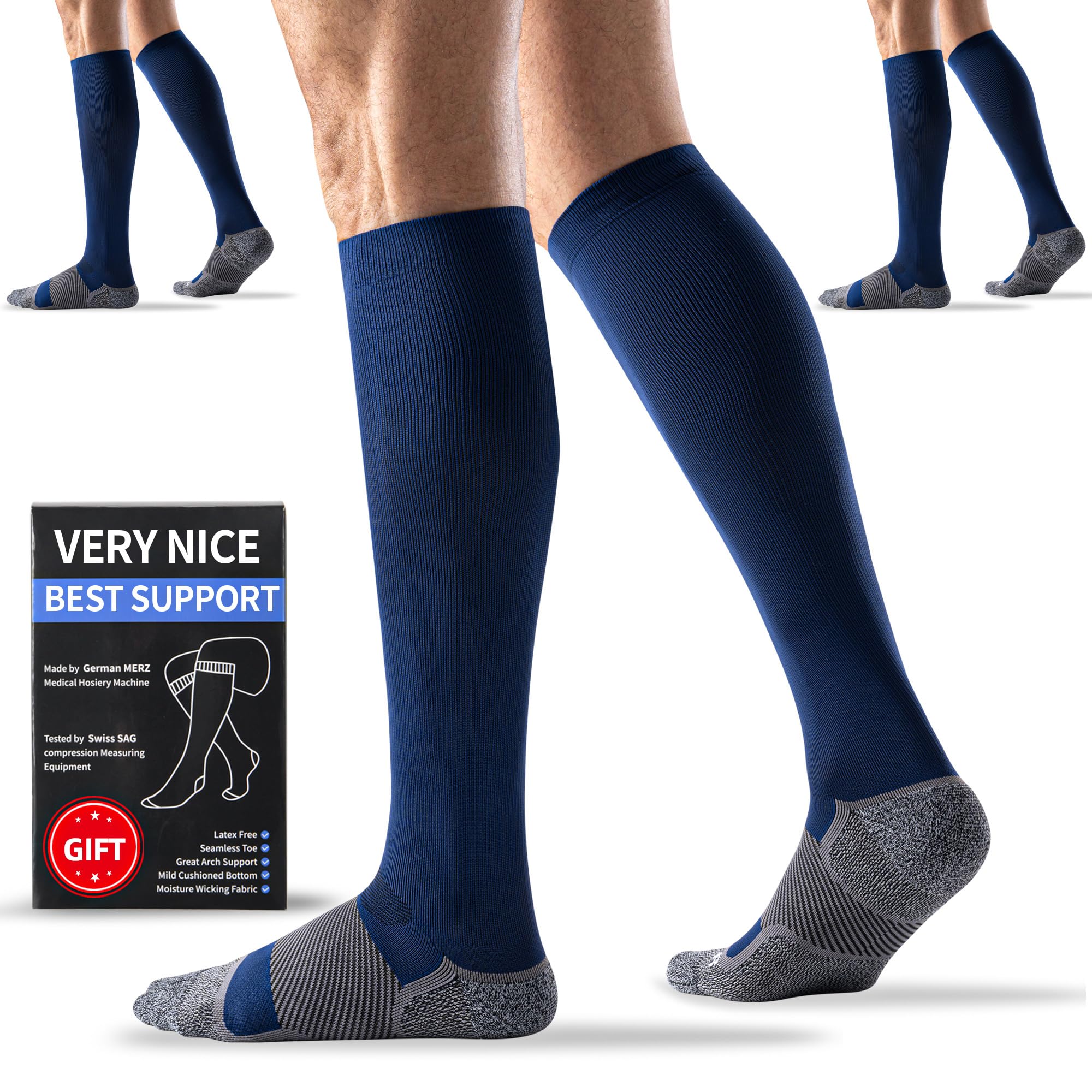
The BBFREY 3-pair set brings the same 20-30 mmHg therapeutic pressure as premium singles but at a per-pair cost that makes rotation practical for daily recovery use. Each sock is knitted on German medical machines with a unique inlay method that maintains long-lasting pressure, and the toe is seamlessly stitched with a left-right anatomic fit to prevent blisters.
Reviewers note that the S/M size accurately fits a women’s 10.5 shoe with 14.5-inch calves, and the socks hold firm without slipping after 11+ hours of wear. The fabric blend includes moisture-wicking fibers that keep feet dry, and the light cushioning at the toe and heel adds comfort without making the sock feel bulky inside a shoe.
This is the strongest option for athletes, nurses, or travelers who need a fresh pair daily without washing the same socks every night. The only trade-off is a narrower color range compared to single-pair models.
Why it’s great
- Three pairs for rotation at a lower per-unit cost
- German medical knitting for consistent, durable compression
- Seamless toe prevents friction and blisters
Good to know
- Limited color and pattern options
- Must follow sizing chart precisely to avoid tightness at calf
3. JOBST Relief Knee High Graduated Compression Socks (15-20mmHg)
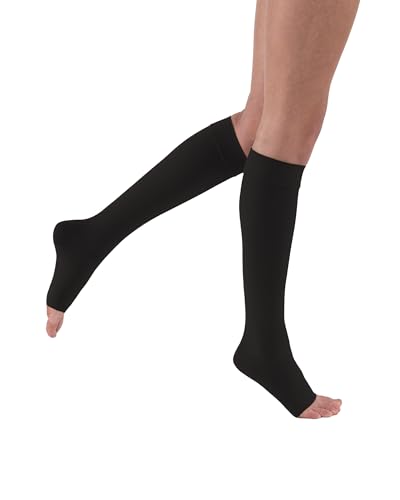
JOBST is a physician-recommended brand with decades of clinical use, and the Relief model offers a softer 15-20 mmHg compression level that suits users who need therapeutic support without the firmness of 20-30 mmHg. The open-toe design eliminates pinching and toe discomfort, making it the top choice for users with sensitive toes or those who wear sandals.
The fabric blend of nylon and spandex is smooth and gentle on the skin, and the reinforced heel pocket ensures the stocking holds its shape through repeated machine washing. Users report that the elastic band stays up for 16+ hours without rolling or bruising, a common complaint with cheaper brands that use less flexible bands.
This is the right pick for daily wear—especially for office workers or mild edema management—where you need reliable compression from a trusted medical brand but don’t require the highest pressure tier.
Why it’s great
- Open toe design prevents pinching and allows sandal wear
- Physician-recommended with decades of clinical trust
- Smooth, non-irritating fabric stays up all day
Good to know
- Only 15-20 mmHg, not strong enough for post-exercise recovery
- Users with larger calves must order wide-calf version
4. Sockwell Men’s Pulse OTC Firm Graduated Compression Sock
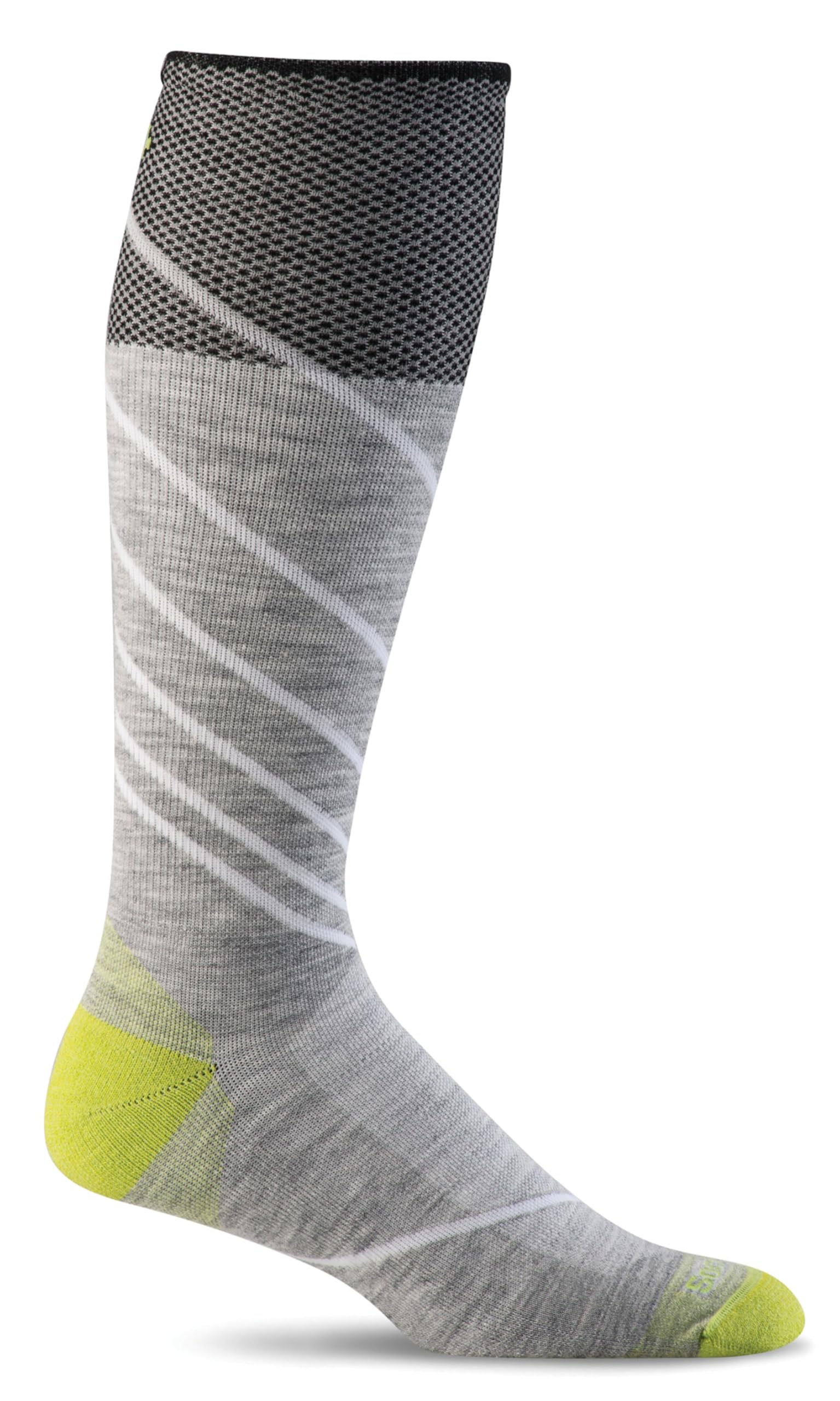
The Sockwell Pulse stands alone in this roundup for its natural fiber construction—a blend of Fine Merino Wool and Rayon from Bamboo that provides thermoregulation, moisture wicking, and odor resistance. The firm graduated compression is tight enough to support recovery after surgery or intense exercise but remains comfortable enough for all-day wear thanks to the breathable knit structure.
Users with wide feet and large calves (size 12W and above) report that these are easier to put on and take off than synthetic alternatives, and the color options look like stylish dress socks rather than medical garments. The Made in USA manufacturing adds a level of quality control that cheaper imports often lack, though the price reflects that premium.
The trade-off is durability—some users note that after months of regular wear, the internal graduation seams can loosen and cause indentations. For those who prioritize natural fiber comfort and thermoregulation over synthetic longevity, this is the top choice.
Why it’s great
- Merino wool blend naturally regulates temperature and resists odor
- Made in USA with high-quality control standards
- Comfortable for wide calves and easy to don/doff
Good to know
- Internal seams may loosen after months of daily use
- Premium price compared to synthetic alternatives
5. Dr. Motion Therapeutic Graduated Compression Women’s Knee-hi Socks (8-15mmHg)
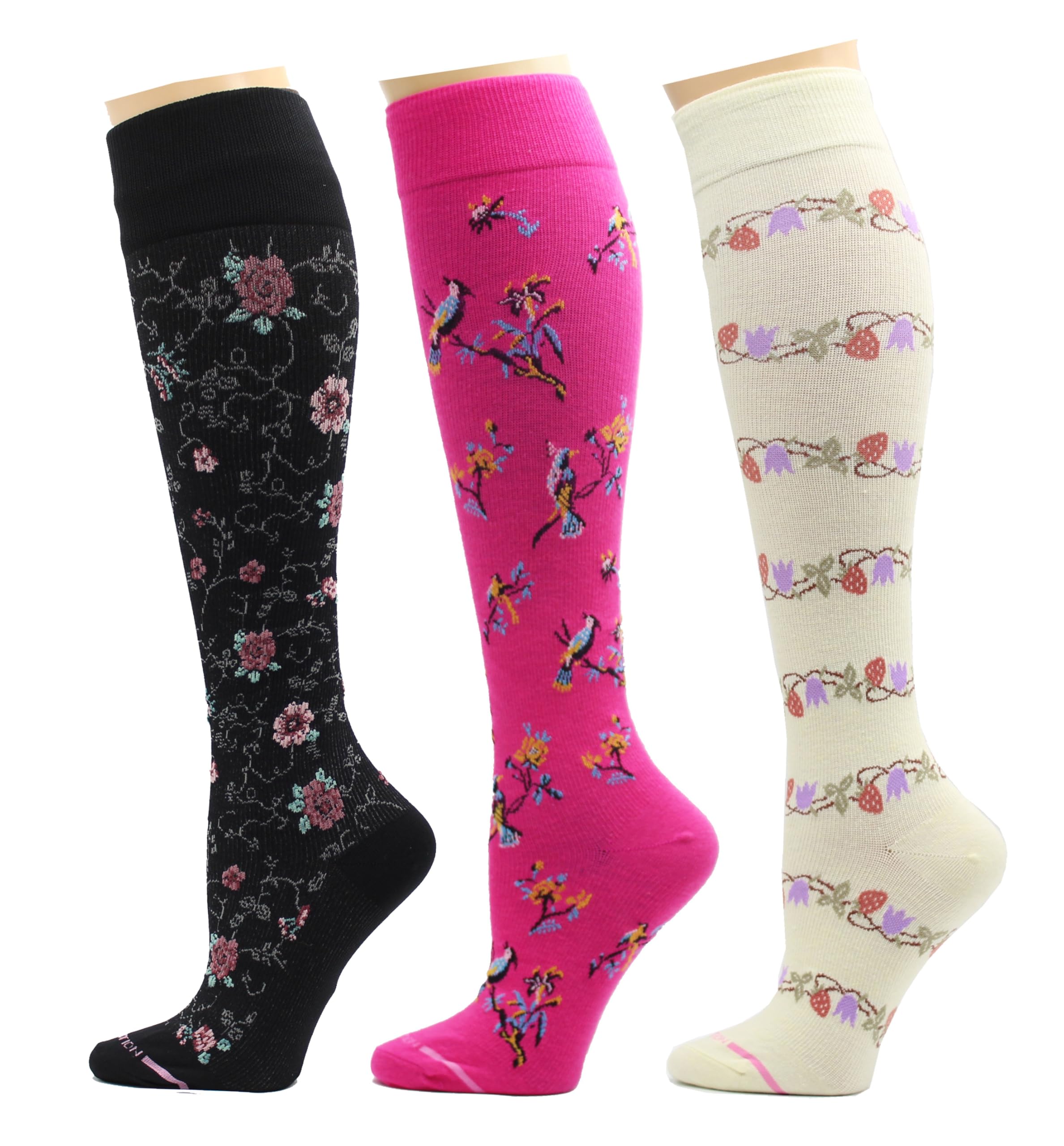
The Dr. Motion knee-hi socks offer a mild 8-15 mmHg compression level that is best suited for light edema and all-day comfort rather than post-workout recovery. The fabric has a dress-sock thickness and texture—similar to a trouser sock—making them stylish enough for office wear or casual outfits with a wide variety of colors and patterns.
Users report that these socks hold their form and compression for over five years, which is exceptional longevity for a budget-priced sock. The graduated compression is gentle, with minimal ankle squeeze, so it works well for those who find 20-30 mmHg socks too restrictive or uncomfortable.
The limitation is clear: at 8-15 mmHg, the pressure is insufficient for serious recovery needs like post-run swelling or DVT prevention. If you need mild support for long sits at a desk or short flights, these are a reliable and durable choice, but they cannot replace a true recovery sock.
Why it’s great
- Extremely durable—holds form for 5+ years
- Stylish patterns and colors for everyday wear
- Very mild compression ideal for beginners or sensitive legs
Good to know
- Only 8-15 mmHg, not strong enough for athletic recovery
- Minimal ankle compression; foot/heel may require adjustment
FAQ
Can I sleep in 20-30 mmHg compression socks?
How do I know if my calf is too big for standard sizes?
How long do compression socks typically last before losing elasticity?
Final Thoughts: The Verdict
For most users, the best compression socks for recovery winner is the SB SOX (20-30mmHg) because it combines proven durability, the ideal therapeutic pressure range, and the widest calf sizing on the market. If you want a multi-pack for rotation at a lower per-pair cost, grab the BBFREY 3-Pair set. And for natural fiber comfort that regulates temperature during all-day wear, nothing beats the Sockwell Pulse.

Mo Maruf
I created WellFizz to bridge the gap between vague wellness advice and actionable solutions. My mission is simple: to decode the research and give you practical tools you can actually use.
Beyond the data, I am a passionate traveler. I believe that stepping away from the screen to explore new environments is essential for mental clarity and physical vitality.