Our readers keep the lights on and my smoothie glass nicely filled. As an Amazon Associate, I earn from qualifying purchases.
Specs are compiled from manufacturer listings and verified buyer reviews and can change over time — please confirm the key details on the product page before buying.
Waking up multiple times a night to pee is exhausting, but what often goes unnoticed is how poor leg circulation feeds that cycle. Compression socks create steady blood flow from calves upward, helping your body hold fluid longer instead of routing it to the bladder. This guide ranks nine compression socks for nocturia based on pressure level, overnight comfort, and verified owner feedback.
I’m Mohammad Maruf — the founder and writer behind WellFizz. This guide is built by comparing the manufacturers’ published specifications and the patterns across verified customer reviews, so you get each pick’s real strengths and trade-offs instead of marketing spin.
if you need a mild daytime pair or a firm sleeping sock that keeps fluid from pooling in your legs, these are the compression socks for nocturia that make a genuine difference in your quality of rest.
Our Picks at a Glance

How To Choose The Best Compression Socks For Nocturia
Nocturia socks need a balance: firm enough to push fluid out of legs yet comfortable enough for all-night wear.
Compression Level: 15-20 mmHg vs 20-30 mmHg
The number measures how much pressure the sock applies, in millimeters of mercury (mmHg). For nocturia relief during sleep, 15-20 mmHg is the balance for most people — it is strong enough to prevent fluid pooling but gentle enough that it won’t wake you up. The 20-30 mmHg level is more aggressive and works well if you already have noticeable leg swelling (edema) during the day, but some find it too tight for overnight use.
Material and Breathability
You are wearing these for hours in bed, so fabric matters. Bamboo viscose and cotton blends breathe better than pure nylon-spandex mixes, which can trap heat. Look for a moisture-wicking (fabric that pulls sweat away from your skin) label if you tend to sleep warm. A smooth toe also prevents irritation when you are shifting positions all night.
Fit and Graduated Compression
Graduated compression means the sock is tightest at your ankle and gradually gets looser as it moves up your calf. This design pushes blood and fluid upward, which is the entire point for nocturia. Measure your calf circumference and ankle circumference using a measuring tape before you buy — a sock that is too loose slides down and loses effectiveness, while one that is too tight can cut circulation. Most brands provide a size chart based on these two measurements.
Quick Comparison
| Model | Best For | Compression Level | Material | Pairs | Amazon |
|---|---|---|---|---|---|
| Compression Socks 15-20 mmHg★ Best Overall | Best Overall for Night Wear | 15-20 mmHg | Nylon-Spandex | 3 | Amazon |
| NEENCA Copper 20-30 mmHgFirm Night Guard | Firmer Overnight Support | 20-30 mmHg | Copper Infused Nylon | 1 | Amazon |
| NEWZILL 20-30 mmHgStandout Style | Performance & Travel | 20-30 mmHg | Polyamide-Spandex | 1 | Amazon |
| LEVSOX Cotton 20-30 mmHg | Cotton Preference | 20-30 mmHg | Cotton | 1 | Amazon |
| CHARMKING 15-20 mmHg | Budget Multi-Pack | 15-20 mmHg | Nylon-Spandex | 8 | Amazon |
| +MD Bamboo 15-20 mmHg | Soft Fabric for Sleep | 15-20 mmHg | Bamboo Viscose | 3 | Amazon |
| +MD Open Toe 20-30 mmHg | All-Day & Bedtime Combo | 20-30 mmHg | Nylon-Spandex | 2 | Amazon |
| Doc Miller Open Toe 15-20 mmHg | Open-Toe Flexibility | 15-20 mmHg | Nylon-Spandex | 1 | Amazon |
| Ailaka Zipper 20-30 mmHg | Easiest On/Off (Low Mobility) | 20-30 mmHg | Nylon-Spandex | 1 | Amazon |
In‑Depth Reviews
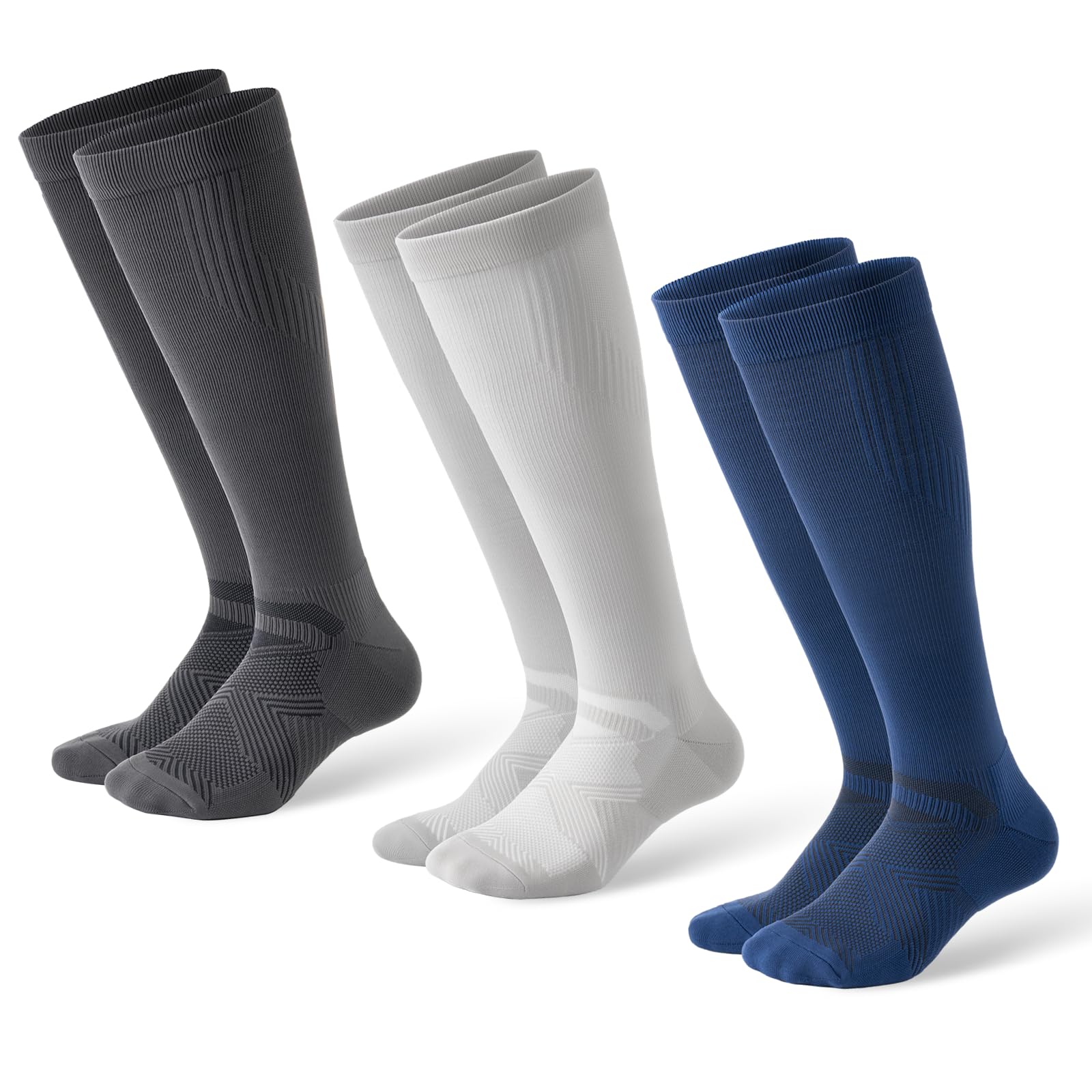
1. Compression Socks for Women and Men, Knee High 15-20 mmHg Graduated Support (3 Pairs)
Our pick — over 4.5★ from 950+ verified ratings; the strongest balance of quality and price.
The 3-pack that nails the pressure balance for sleeping, backed by hundreds of relieved owners.
This pick balances a moderate 15-20 mmHg compression that is gentle for all-night wear yet effective at stopping fluid from settling in legs. Owners praise the comfort: thin, smooth fabric that avoids tight bands digging into calves during sleep. Owners consistently mention that their feet and back hurt less after wearing these, and a crowd of buyers specifically notes they work for 11-hour flights and help with leg pain after long shifts, which translates directly to how they perform overnight.
The three-pair pack is a smart buy because you can rotate a clean set every night without worrying about washing a single pair daily. Each sock is marked left and right, which sounds minor but makes a real difference in fit consistency.
Why Owners Stick With These
- Comfort is the most-praised feature — over 120 owners call it out as the reason they keep wearing them
- Graduated compression from ankle to calf stays consistent without rolling down or bunching
- Easy to put on and remove, even for people with arthritis, thanks to the included instruction guide
The One Trade-Off
- Limited color variety — some owners wish there were more than a few neutral shades
- No grippy bottom, so they may slide slightly on smooth floors if you get up at night
Your best starting point: If you want a proven, comfortable 15-20 mmHg sock that supports circulation overnight without feeling restrictive, this 3-pack is the one to buy first.
Think twice if: You already have significant daytime swelling and need a firmer 20-30 mmHg level — in that case, the NEENCA or NEWZILL below is a better fit.
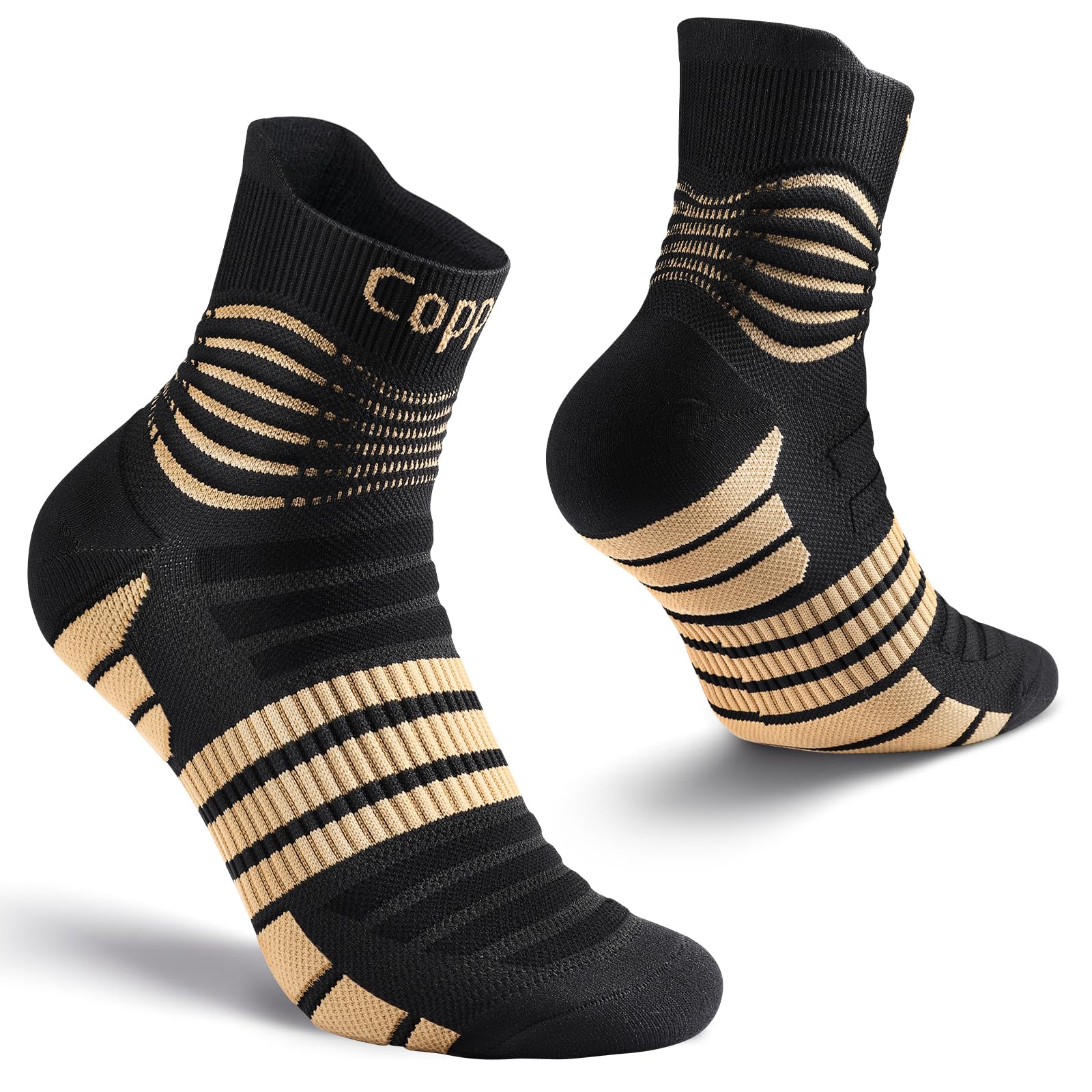
2. NEENCA Copper Compression Socks, 20-30 mmHg, 1 Pair
Tighter squeeze that stops stubborn fluid, with a surprising warmth that helps cold feet at night.
This is the pick for anyone who has tried a milder compression sock and found it did not cut the nighttime bathroom trips. The 20-30 mmHg level is a step up in firmness, and the copper-infused fiber (24% copper ions blended with nylon and spandex) adds a warmth-retaining quality that owners with cold feet rave about. One size-9 buyer described buying medium for work compression and large for lounging and sleeping — a smart two-size strategy that shows how important getting the fit right is for overnight wear.
The sock uses a patented ankle tuck compression technique with six compression rings around the ankle, which creates the graduated pressure needed to push fluid out of your lower legs while you sleep. Comfort is the most-praised aspect, and owners consistently say these feel thick and supportive without being heat-retaining. The single-pair format means you are paying for the copper technology and the higher pressure, not for a bulk discount.
One honest note: the fit gets mixed feedback because the firm compression means sizing matters more here than with looser socks. If you are between sizes, going up one size for sleeping is a common owner trick that works well.
What Excites Owners
- Quality and comfort are the top two praised aspects — over 60 owners call out the comfort
- Copper-infused fabric keeps feet warm without overheating, ideal for cold-sleepers with nocturia
- 3D knitting technology creates a more structured fit than thin nylon alternatives
Fit Consideration
- Fit is the most-discussed aspect and it is mixed — careful measuring is essential to get it right
- Only one pair per purchase; if you want multiple pairs you will need to buy several
Reach for it if: You need a firm 20-30 mmHg sock that warms your feet and actively pushes fluid upward while you sleep.
skip it if: You prefer a looser compression for overnight use or have very sensitive legs that react to tight fabrics.
3. NEWZILL Medical Compression Socks, 20-30 mmHg, 1 Pair
Bold patterns and a strong 20-30 mmHg squeeze that makes leg fatigue vanish.
This is the sock that proves compression gear does not have to look medical. The 20-30 mmHg level matches the NEENCA in firmness, but the NEWZILL sets itself apart with graphic patterns (think swag purple spider designs) that owners genuinely love wearing. The material is a 35% spandex, 65% polyamide blend that is latex-free, and the construction is made in the USA — a detail that matters to buyers who prioritize domestic manufacturing.
What owners consistently report is that these socks prevent blood pooling in the feet and legs, which is exactly the mechanism that helps with nocturia. The socks are easier to put on than other 20-30 mmHg options because of the heel-tab design that allows you to turn them inside-out for insertion. They are also breathable despite the firm compression, which matters for overnight wear when your body temperature changes.
Compared to the 15-20 mmHg level of the top pick, the NEWZILL delivers a 20-30 mmHg compression compared to the 15-20 mmHg of the top pick — noticeable when you first pull them on, but owners say the shock absorption effect kicks in quickly and reduces fatigue in the lower leg within minutes.
Bold and effective: Owners call these breathable yet sturdy, and the fun colors are a genuine mood-lifter when you have to wear compression socks daily. The single-pair format and the stronger compression make this a better choice for daytime-plus-sleeping wear rather than a dedicated night-only sock.
One size note: The socks leave impression marks on the legs after removal, which is normal for 20-30 mmHg — it does not mean they are too tight. If that sensation bothers you, the 15-20 mmHg option above is a gentler alternative.
Perfect for: Anyone who wants a conversation-starting design with serious 20-30 mmHg compression that works for both day shifts and overnight wear.
Not ideal if: You prefer plain neutral socks that disappear under clothing, or you want a multi-pack for rotation.
4. LEVSOX Cotton Compression Socks, 20-30 mmHg, 1 Pair

The cotton sock that breathes, supports, and skips the itch of synthetic blends.
If your legs react to nylon or spandex with itching or rashes, this is your pick. The main material is cotton, which changes the feel completely — it is softer against the skin and breathes better than the polyamide-heavy competition. The 20-30 mmHg level is the same firmness as the NEENCA and NEWZILL, but the cotton construction makes it feel more like a thick everyday sock than a medical device. Owners with allergy-prone skin specifically report that their rashes cleared up after switching to these.
What stands out in owner feedback is the no-toe-seam design — a small detail that makes a huge difference when you are wearing socks for 8+ hours in bed. The top band does not cut into circulation, even for people who describe themselves as having “fat legs.” The compression holds up well after 12+ hours of wear, which is the timeframe that matters most for overnight fluid management.
One thing to note: because the cotton is thicker than synthetic blends, the fit runs closer to medium within the medium/large range. If you have large calves, measure carefully against the size chart. Some owners find the length from ankle to knee slightly too long, causing the fabric to bunch behind the knee unless rolled down.
Skin-friendly support: The cotton construction is the deciding factor for anyone with sensitive skin or allergies — the breathable fabric stays comfortable even after hours of wear. No toe seam and a non-rolling top band make this easy to forget you are wearing compression at all.
Durability note: Cotton compression socks generally need gentle washing and air drying to maintain elasticity. Owners who hand-dry theirs report the socks maintain compression well over time.
Best for: Anyone with sensitive skin, cotton allergies to synthetics, or a preference for natural fibers against the skin during sleep.
Consider skipping if: You have very long calves (above-knee length may bunch) or prefer the thinner feel of nylon-spandex socks.
5. CHARMKING Compression Socks, 15-20 mmHg, 8 Pairs

Eight pairs of reliable 15-20 mmHg support that gets the job done while staying affordable.
This is the volume play — eight pairs for roughly the same cost as a single premium sock, and the numbers back it up. The 15-20 mmHg level is identical to the top overall pick, making this a strong alternative if you want to stock a week’s worth of socks in one order. Fit and comfort are the two most-praised aspects by a massive margin (over 5,000 owners call out the fit), and owners consistently say these look and feel like normal socks rather than medical compression wear.
The breathable fabric keeps legs energized and pain-free during long shifts on concrete floors, which translates well to overnight wear for nocturia — the same mechanism that prevents daytime swelling also stops fluid from pooling while you sleep. Owners with chronic conditions like POTS report wearing these 10-18 hours daily without the socks strangling their legs, which is a strong testament to the graduated compression design.
Compared to the higher-priced options, the CHARMKING delivers a gentler squeeze at 15-20 mmHg. It is not medical-grade firm, but for mild to moderate nocturia this is often the perfect level. The patterns may fade after several washes, and the fit varies by calf size — some owners with wider calves find them slightly snug.
Why It Wins on Value
- Eight pairs mean you never worry about laundry — just grab a fresh pair every night
- Over 5,000 owners praise the fit, making this among the most size-consistent options available
- Light enough for sleeping but supportive enough for all-day standing or travel
Honest Limits
- Patterned designs can leave indentations on sensitive skin — solid colors are a safer bet for sleep
- Not as firm as 20-30 mmHg options, so if you need stronger compression, look at the top three picks
Perfect for: Budget-conscious buyers who want a full week’s rotation of reliable 15-20 mmHg compression without spending a premium.
Not for: Anyone who needs the firmer 20-30 mmHg level for significant edema or who prioritizes natural fiber materials.
6. +MD 3 Pairs Bamboo Viscose Compression Socks, 15-20 mmHg
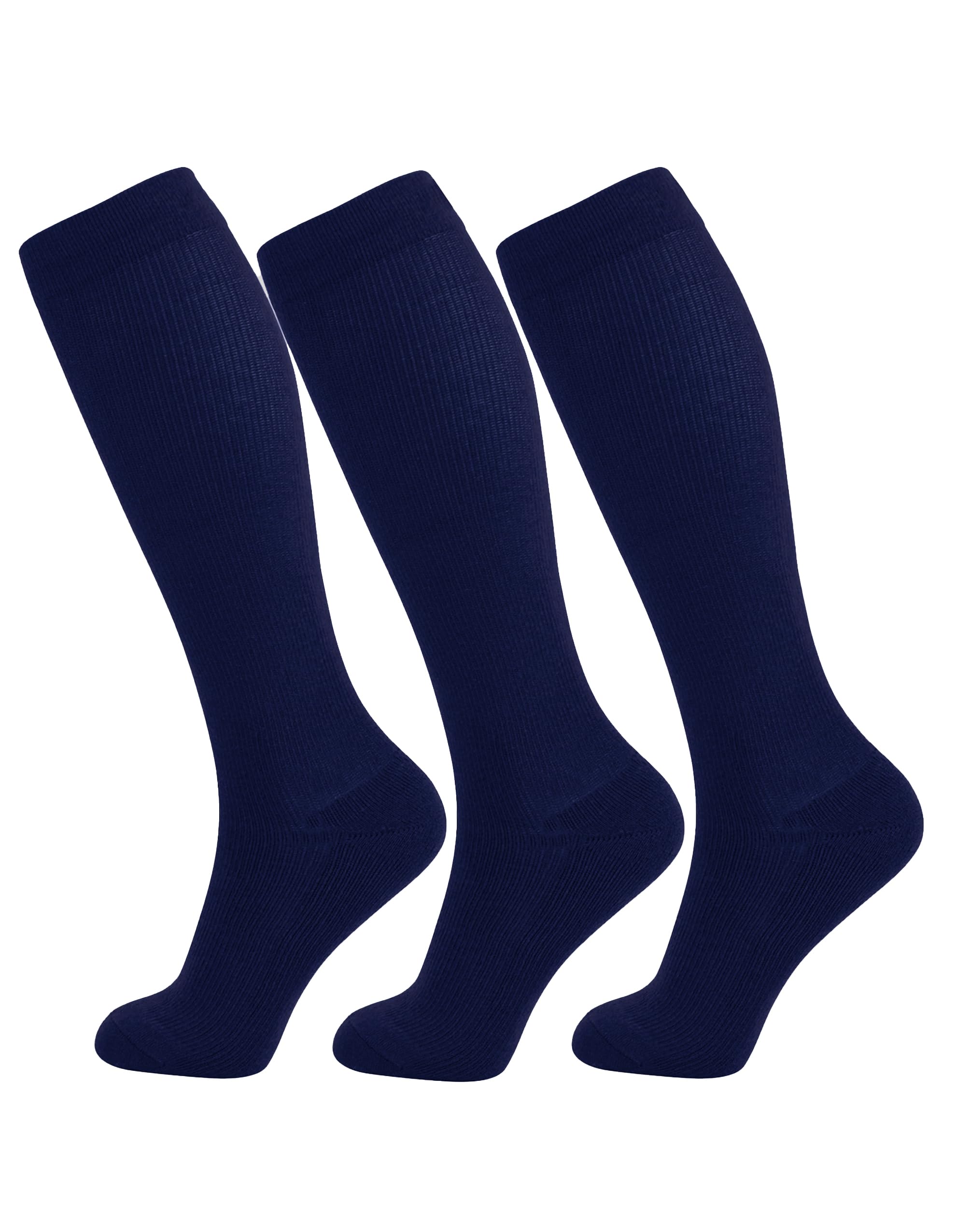
Bamboo viscose fabric so soft you might forget you are wearing compression at all.
If the biggest barrier to wearing compression socks for nocturia is the scratchy feel of synthetic materials, the +MD bamboo viscose socks solve that completely. The bamboo fiber is class-leading in softness — owners describe them as the softest compression socks they have ever tried, and the material wicks moisture (pulls sweat away from the skin) so your legs stay dry through the night. The compression level is a gentle 15-20 mmHg, which is the ideal entry point for overnight use.
The three-pair pack gives you rotation flexibility similar to the top pick, and the padded sole adds a layer of comfort that helps if you get up to walk during the night. The wide top band keeps the socks in place without digging in, and the fabric does not lose elasticity after repeated washing — a durability point that matters because the bamboo fiber construction is different from standard nylon blends.
One trade-off that owners flag is that the foot section runs long for larger shoe sizes — if you wear size 10-12 shoes, the toe area can flop and slide inside your footwear. For sleeping, this is less of an issue since you are not walking in shoes, but it is worth noting. The compression is on the milder side within the 15-20 mmHg range, so it is best for mild nocturia rather than significant fluid retention.
Bamboo advantage: The softness and moisture-wicking properties make this the most comfortable sock for all-night wear. Owners with neuropathy specifically mention these do not aggravate nerve sensitivity, which is rare for compression socks. The three-pair format and the gentle squeeze make this a strong second option if the top pick’s material does not work for your skin.
Watch out for: Fabric shrinkage after washing — some buyers report the socks shorten from knee-high to crew-high after the first cold wash. Air drying is strongly recommended.
Ideal for: Anyone who prioritizes softness and breathability above all else, especially those with sensitive skin or neuropathy.
Not the best fit for: Larger shoe sizes (10-12) where the toe section may be too long, or anyone needing firm 20-30 mmHg compression.
7. +MD 2 Pairs 20-30 mmHg Compression Socks, Open Toe
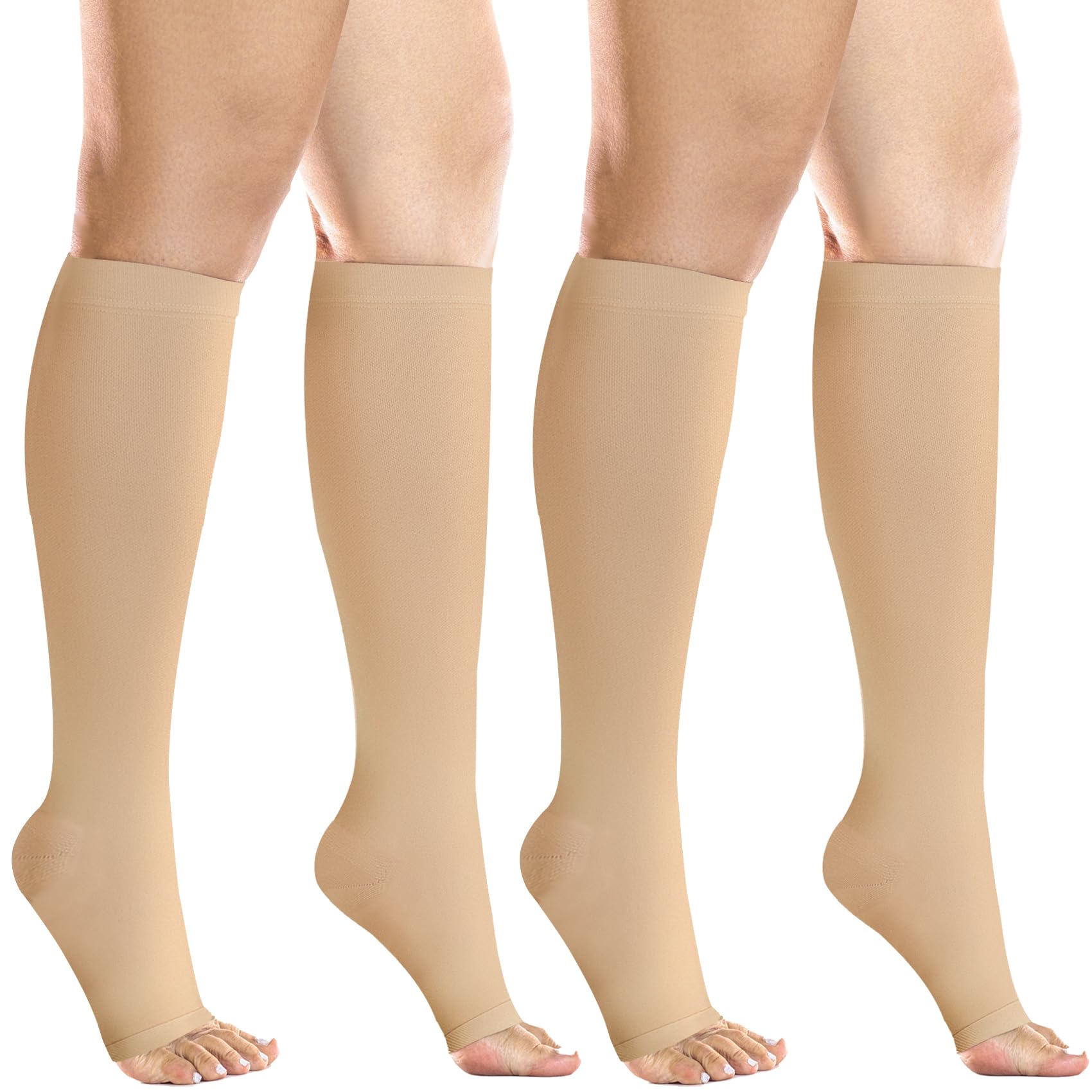
Firm 20-30 mmHg support with an open toe that frees your feet while you sleep.
Open-toe compression socks solve a specific problem — if you hate the feeling of fabric wrapped around your toes all night, this design leaves them free. The 20-30 mmHg level is the same firmness as the NEENCA and NEWZILL options, making this a strong candidate for moderate to significant nocturnal fluid retention. The graduated compression technology is strongest at the ankle and gradually decreases up the calf, which is the exact mechanism that combats the fluid shift that triggers nighttime urination.
What owners consistently report is that these socks stop leg swelling effectively and last a long time without losing elasticity. The open-toe design also means you can wear them with sandals or slippers when you get up at night, which is a practical bonus. The fabric is medium thickness — breathable enough for all seasons, according to the manufacturer, and the spiral knit construction resists snagging and abrasion.
The honest reality is that the fit is polarizing. Fit is the most-discussed aspect, and it is rated as mixed — some owners find the top band too tight and uncomfortable, while others say the socks fit perfectly. The manufacturer actually advises first-time compression sock users to choose a size larger to ensure comfort. The open-toe design also means some owners experience the toe opening rolling up after washing, which can be tricky to manage inside shoes.
Why Owners Like It
- Compression is the most-praised aspect — over 60 owners confirm firm, effective support
- Open-toe design lets toes breathe and move naturally, ideal for sensory-sensitive sleepers
- Two pairs included, which is good value for a premium 20-30 mmHg product
The Fit Reality
- Fit is the most-discussed aspect and it is mixed — sizing up is recommended for first-timers
- Toe opening can roll up after washing, creating a ridge that is noticeable in shoes
Great for: Anyone who wants firm 20-30 mmHg compression but cannot stand fabric covering their toes overnight.
Consider carefully if: You have large calves or are between sizes — the top band tightness is the most common reason for returns.
8. Doc Miller Open Toe Compression Socks, 15-20 mmHg, 1 Pair
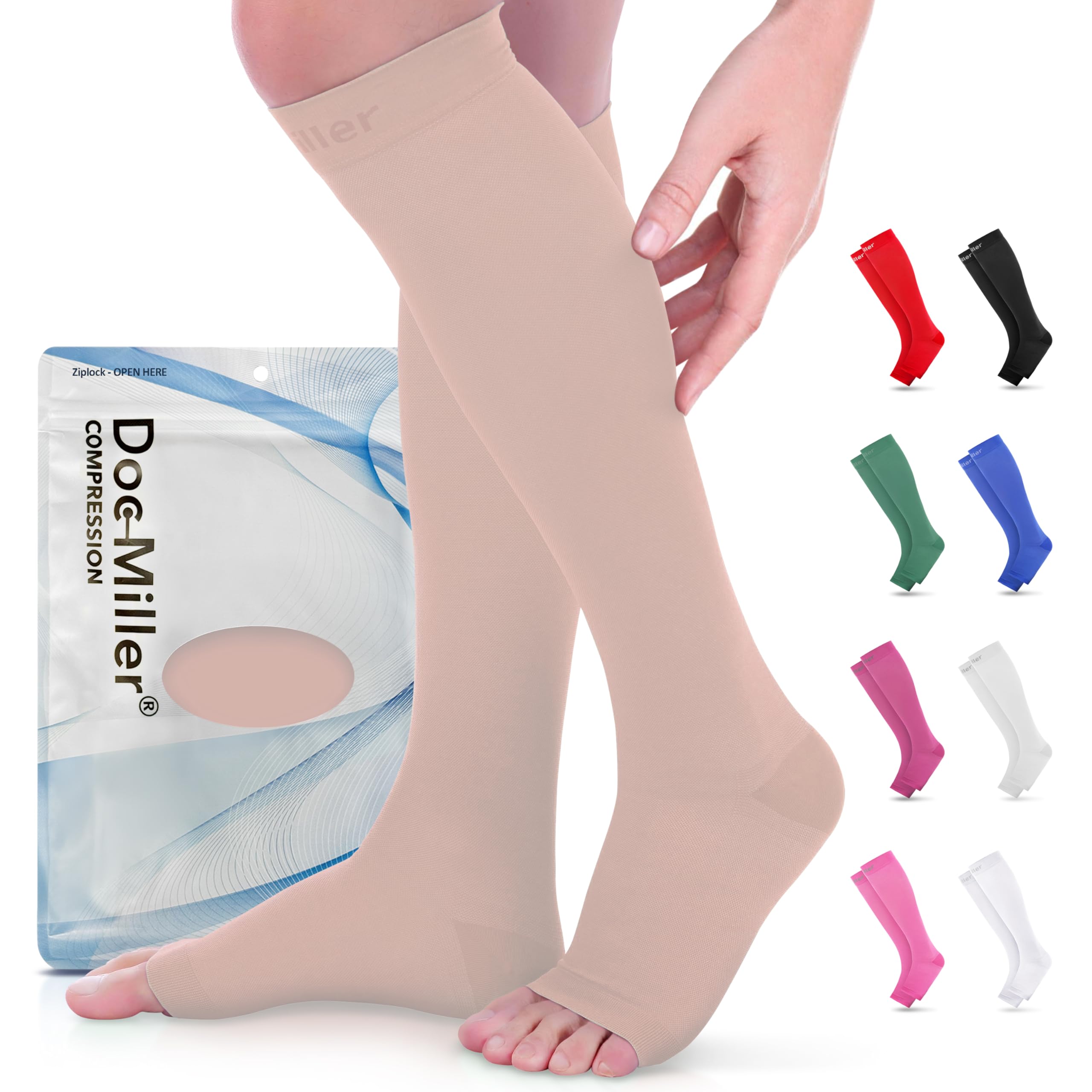
A lighter 15-20 mmHg open-toe option that pairs easily with sleep-time freedom.
This is the milder sibling to the +MD open-toe sock above, trading firmness for a gentler 15-20 mmHg squeeze that is more forgiving for overnight use. The open-toe construction frees your toes completely, and the nylon-spandex blend creates a slick knit that slides easily under blankets without catching. Owners with post-surgery swelling specifically report that the graduated compression reduces edema without the discomfort of a closed-toe sock.
The wide top band is a real plus — it does not dig into your leg or leave red marks, which is a common complaint with narrower bands. The sock is true to size and does not slide down or bunch up during the night. The 15-20 mmHg level is the same as the top overall pick, making this a direct competitor if you specifically want an open-toe design. The sock comes in a range of sizes up to 3X-Large, which accommodates larger calves better than most options.
One issue that comes up in owner feedback is that the open-toe area can be too loose for some foot shapes, causing the sock to ride up and form wrinkles around the arch. This seems to depend on individual foot anatomy — some owners have no issues, while others find the toe opening slips out of position during the night. The single-pair format also means you pay more per pair relative to the multi-pack options.
Comfortable and simple: Owners praise how easy these are to put on compared to tighter compression socks, and the wide top band is a standout feature that prevents the dreaded band-dig. The open-toe design lets you show off a pedicure or simply enjoy toe freedom while sleeping.
One size caution: If you have very wide feet or a high instep, the toe opening may feel loose. Ordering the correct size from the chart is critical — some owners initially ordered too large and had to reorder a smaller size.
Best for: Sleepers who want open-toe freedom with a gentle 15-20 mmHg compression and a non-digging top band.
pass on it if: You have narrow heels or a low instep that may cause the open toe to slip out of position during the night.
9. Ailaka Zipper Compression Socks, 20-30 mmHg, 1 Pair

The zipper is the hero here — firm compression without the wrestling match.
If putting on compression socks feels like a workout, the Ailaka zipper design changes everything. A YKK zipper runs up the back of the sock, so you zip it on and off instead of pulling and tugging. This is a standout for anyone with arthritis, limited hand strength, or post-surgery recovery. The compression level is a firm 20-30 mmHg — the same strength as the NEENCA and NEWZILL — and the full toe design keeps your toes covered and warm.
The ease of use is the most-praised aspect by a wide margin, with over 50 owners specifically calling it out. The extended zipper handle makes it easy to grab and zip up yourself, and the inner fabric stretch weave lets you slip the sock up smoothly before zipping. Owners with serious swelling report that these socks help keep lower leg swelling down better than their old pull-on styles, and the zipper means they actually wear them consistently instead of skipping them out of frustration.
The honest trade-off is that the fit runs small for some people. Size is the second most-discussed aspect and it carries a negative rating — multiple owners mention that the socks are too small even when following the size chart. The socks also run long, which can be a problem for petite women who find the fabric extends too far above the knee. The 20-30 mmHg compression is firm, so if you are between sizes, going up one size is a safer bet than going down.
Why the Zipper Wins
- Easiest on/off of any sock on this list — ideal for low-mobility or post-surgery users
- Full toe design keeps feet warm, unlike open-toe options
- High-quality YKK zipper stays snug and does not pop open during sleep
Sizing Reality
- Size runs small — measure carefully and consider sizing up if between sizes
- Too long for shorter individuals; the fabric may extend past the knee for petite frames
Perfect for: Anyone who struggles to pull on traditional compression socks due to arthritis, hand weakness, or post-surgery limitations.
Not for: Petite women or anyone with short legs — the length may be excessive — or if you prefer a looser, non-zippered fit.
Understanding the Specs
mmHg — What the Numbers Mean
The mmHg rating (millimeters of mercury) measures the pressure the sock applies to your leg. Think of it like a blood pressure reading for your legs. A 15-20 mmHg sock is considered light to medium compression — it is firm enough to prevent fluid pooling but gentle enough for all-night wear without discomfort. A 20-30 mmHg sock is medium to firm — it pushes harder and is better for significant swelling or varicose veins, but some people find it too tight for sleeping. For nocturia, most people do best starting with 15-20 mmHg and only moving up to 20-30 mmHg if the milder option does not help.
Graduated Compression — The Direction Matters
Graduated compression means the sock is tightest at your ankle and gradually loosens as it moves up your calf. This is not just a design detail — it is the mechanism that actually works. The tight ankle pushes fluid out of your foot and lower leg, and the looser upper part encourages that fluid to keep moving upward instead of pooling. A non-graduated sock (one that squeezes evenly everywhere) can actually trap blood and make swelling worse. Every sock on this list uses graduated compression, which is the standard for medical-grade support.
Materials — Nylon vs Bamboo vs Cotton
Each material changes how the sock feels against your skin and how it performs during sleep. Nylon-spandex blends are the most common — they are durable, maintain shape well, and dry quickly, but they can feel warm and slick. Bamboo viscose is softer and more breathable, making it ideal for sensitive skin or night sweats, but it can shrink more in the wash. Cotton is the most breathable and natural-feeling option, great for allergy-prone skin, but it absorbs moisture and takes longer to dry, which can be an issue if you tend to sweat at night.
Open Toe vs Closed Toe
This is a personal preference that has real consequences for sleep. Closed-toe socks keep your feet fully covered and warm, which is helpful if you have cold feet at night. Open-toe socks leave your toes free, which improves airflow and prevents the feeling of fabric bunching around your toes — a common complaint for side-sleepers who curl their feet. The trade-off is that open-toe socks can slip out of position if the opening is too loose for your foot shape, creating wrinkles under the arch that can be uncomfortable.
FAQ
Can compression socks really help reduce nighttime bathroom trips?
Should I wear compression socks to bed or only during the day?
What is the difference between 15-20 mmHg and 20-30 mmHg for nighttime use?
How do I measure my legs to get the right size?
Will compression socks help with cold feet at night?
How many pairs of compression socks do I need for nocturia management?
Can I wear compression socks if I have diabetes or peripheral artery disease?
How do I put on tight compression socks without struggling?
How long do compression socks typically last before losing elasticity?
Is it safe to wear the same compression socks day and night?
Final Thoughts: The Verdict
For most people dealing with nocturia, the Compression Socks for Women and Men 15-20 mmHg (3 Pairs) is the smartest starting point because it balances a gentle overnight-friendly pressure level with a three-pair rotation at a fair price. If you have noticeable daytime swelling and need a firmer squeeze, the NEENCA Copper Compression Socks 20-30 mmHg delivers stronger support with the bonus of warmth for cold feet. And if putting on socks is a daily struggle due to arthritis or limited mobility, the Ailaka Zipper Compression Socks 20-30 mmHg makes firm compression easy with its zippered design. Whichever you choose, measuring your legs correctly and starting with the right compression level makes all the difference between a sock that helps and one that collects dust in a drawer.
How We Picked
We do not accept paid placement. Every pick is matched to a real buyer and a real use-case; we do not hands-on test units.
Sources & Methodology
Specifications: manufacturer listings and product documentation. Review insights: verified customer reviews, as of July 2026. Pricing: not shown on this page (it changes often); check the current price via the retailer link.
As an Amazon Associate, WellFizz earns from qualifying purchases. This does not affect which products we feature.
Related Guides

Mo Maruf
I created WellFizz to bridge the gap between vague wellness advice and actionable solutions. My mission is simple: to decode the research and give you practical tools you can actually use.
Beyond the data, I am a passionate traveler. I believe that stepping away from the screen to explore new environments is essential for mental clarity and physical vitality.