Our readers keep the lights on and my smoothie glass nicely filled. As an Amazon Associate, I earn from qualifying purchases.
The heaviness, the ache, the way your shoes feel tighter by midday—leg swelling isn’t just uncomfortable, it’s your body signaling poor circulation. A well-chosen compression sock applies precise pressure from the ankle upward, acting as a physical pump that moves fluid out of your tissues and back into your bloodstream. This isn’t about fashion; it’s about measurable relief from edema, varicose vein discomfort, and the fatigue that comes from long hours on your feet or in a seated position.
I’m Mohammad Maruf — the founder and writer behind WellFizz. My research for this guide involved cross-referencing hundreds of verified buyer experiences and dissecting the technical specifications behind each pair to separate marketing claims from genuine therapeutic value.
Finding the right pair means looking beyond a one-size-fits-all approach to evaluate compression level, fabric construction, and fit precision. This guide cuts through the noise to help you confidently choose the best compression socks for leg swelling that match your specific needs.
How To Choose The Best Compression Socks For Leg Swelling
Every swollen leg responds differently. The most effective compression sock matches your exact symptoms, activity level, and body measurements. Focusing on these four factors will guide you to the right pair.
Compression Level (Measured in mmHg)
The millimeter of mercury (mmHg) rating indicates how much pressure the sock applies. For noticeable leg swelling, the 20-30 mmHg range is the therapeutic sweet spot—firm enough to combat edema and fatigue without restricting natural movement. Lower pressures (15-20 mmHg) suit mild puffiness from travel or light activity, while any grade above 30 mmHg typically requires a medical professional’s guidance.
Graduated Compression Design
Look for socks that are tightest at the ankle and gradually release pressure as they move upward. This “graduated” design leverages gravity and muscle contraction to push blood and lymphatic fluid upward, directly countering the pooling that causes swelling. Uniform compression or bands that pinch at the top are red flags—they can actually worsen circulation.
Fabric and Moisture Management
A sock that traps heat and sweat becomes unwearable within hours, especially in warm environments or during physical activity. Blends of nylon, spandex, and microfiber offer the necessary stretch and durability while remaining breathable. Copper-infused or cooling fabrics add antimicrobial and temperature-regulating properties, but the core requirement remains consistent compression retention after repeated washing.
Fit and Sizing Precision
Unlike regular socks, compression socks require exact measurements of your ankle circumference, calf circumference, and shoe size. A sock that is too long can bunch behind the knee, causing skin irritation and pressure points. A sock that is too short may not cover the full calf, reducing its effectiveness. Always consult the brand’s specific size chart—don’t rely solely on shoe size.
Quick Comparison
On smaller screens, swipe sideways to see the full table.
| Model | Category | Best For | Key Spec | Amazon |
|---|---|---|---|---|
| Physix Gear Compression Socks | Premium | Extended standing and medical recovery | 20-30 mmHg, cushioned sole | Amazon |
| Medical Compression Socks by BBFREY | Premium | All-day edema management | 20-30 mmHg, 3 pairs | Amazon |
| NEENCA Copper Compression Socks | Mid-Range | Travel and moderate swelling | 20-30 mmHg, patented ankle tuck | Amazon |
| PULIOU Cooling Compression Socks | Mid-Range | Active use in warm conditions | 20-30 mmHg, cooling fabric | Amazon |
| Bluemaple 6 Pack Copper Compression Socks | Budget | Everyday basic compression and value | Graduated, copper-infused | Amazon |
In‑Depth Reviews
1. Physix Gear Compression Socks 20-30 mmHg

The Physix Gear Compression Socks are built for serious wear—verified users report twelve-hour shifts and twelve-thousand-step days with swelling completely eliminated. The 20-30 mmHg graduated compression does the heavy lifting, actively reducing edema at the ankle and foot while the cushioned sole and reinforced arch provide a layer of comfort that prevents foot fatigue. One user recovering from a knee ligament injury noted that their ankle bones became visible again after wearing these, a clear sign the swelling was being managed effectively.
The fabric quality stands out in this premium tier. The knit is soft against the skin yet durable enough to withstand repeated machine washing without losing its shape or compression properties. The floral pattern woven into the fabric adds a touch of style, but the real story is the stay-put design—the sock does not slide down or bunch at the knee, even after hours of walking. For those with calf measurements around 15-16 inches and a women’s size 10 shoe, the fit is particularly well-documented by buyers.
A common point of feedback involves the toe area, which some users describe as slightly smaller than expected, covering from the big toe to the fourth toe and leaving a noticeable seam. This is a minor consideration for most, but anyone with wide or sensitive toes should take note. The sock’s length can also be an issue for those with shorter legs, as it may reach the bend of the knee and create skin grooves at the ankle if not properly sized.
Why it’s great
- Proven to eliminate swelling during 12-hour shifts and high-step days
- Cushioned sole and arch support add real comfort for long wear
- Holds compression after repeated washing without losing shape
Good to know
- Toe area runs slightly small and has a noticeable seam
- May be too long for individuals with shorter legs, causing ankle bunching
2. Medical Compression Socks 20-30 mmHg by BBFREY (3 Pairs)
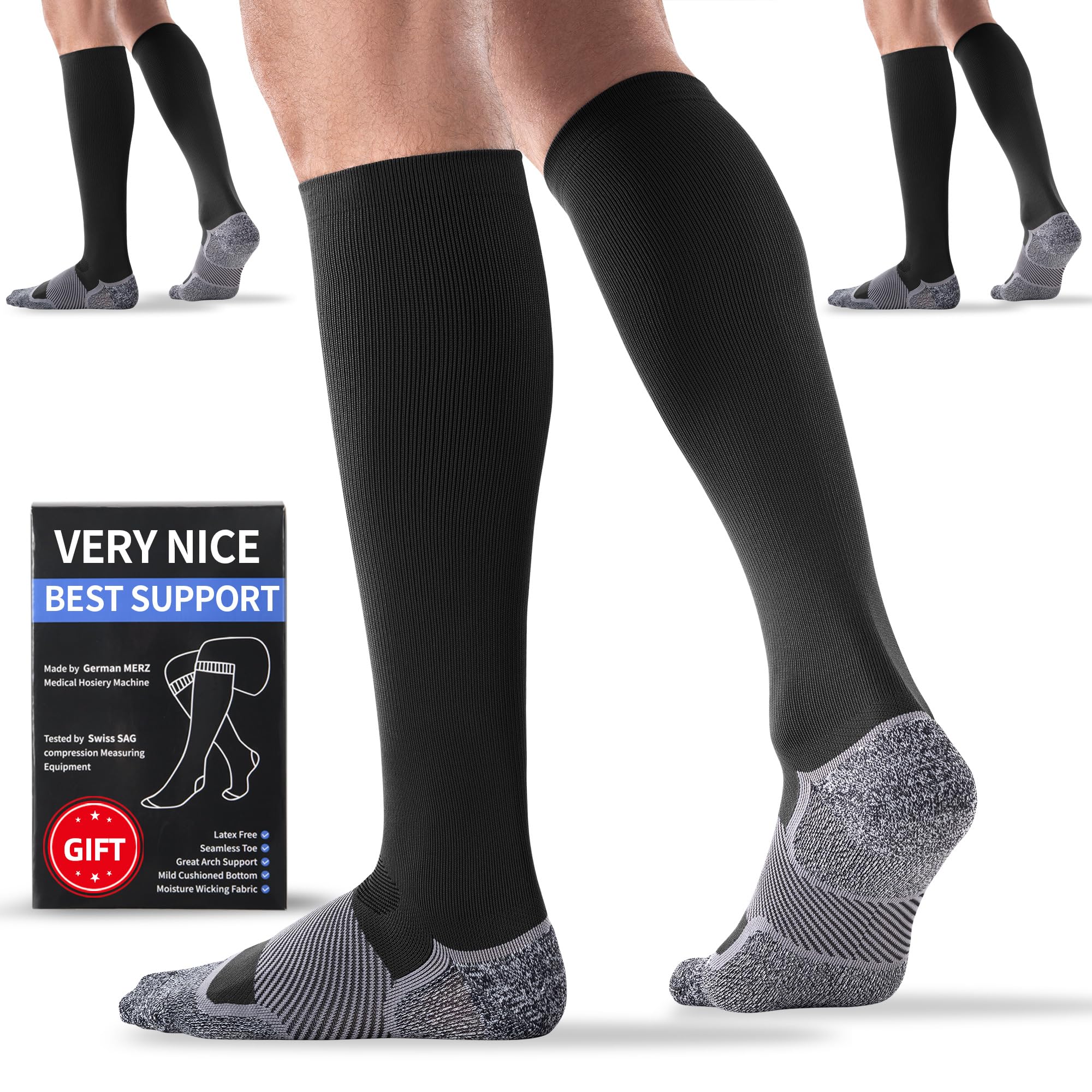
The BBFREY Compression Socks arrive as a three-pack, offering a rotating supply of consistent 20-30 mmHg pressure without needing to reorder every few weeks. Made on German medical sock machines with rigorous pressure testing, each pair delivers a precise graduated compression that users describe as “firm like expensive brands” at a more accessible investment. The anatomical design includes a left-right fit and a seamlessly stitched toe that prevents blisters—an often-overlooked detail that makes a significant difference during all-day wear.
Buyers with edema report that these socks “effectively reduce swelling” and that the foot area feels like a padded regular sock, providing warmth and arch support without the bulk that can make shoes feel tight. The top band holds securely without cutting into the skin or bruising, a complaint common with cheaper alternatives. The unisex sizing is accommodating, with the S/M size fitting a women’s shoe 10.5 and calves up to 14.5 inches, and the XL option garnering positive feedback from men with larger legs.
One area where these socks fall short is variety—the color and pattern options are limited, which may disappoint those looking for more expressive designs. Additionally, while the fabric is breathable and moisture-wicking, some users in very hot climates have noted that the material runs slightly warmer than ultralight alternatives. The inlay knitting method ensures long-lasting pressure, but proper care (cold wash, air dry) is necessary to maintain that durability.
Why it’s great
- Three-pair pack provides consistent rotation and extended use
- German medical machinery construction ensures precise, durable compression
- Seamless toe and left-right fit design minimize irritation and blisters
Good to know
- Limited color and pattern options compared to competitors
- Fabric runs slightly warm for some users in hot environments
3. NEENCA Copper Compression Socks 20-30 mmHg
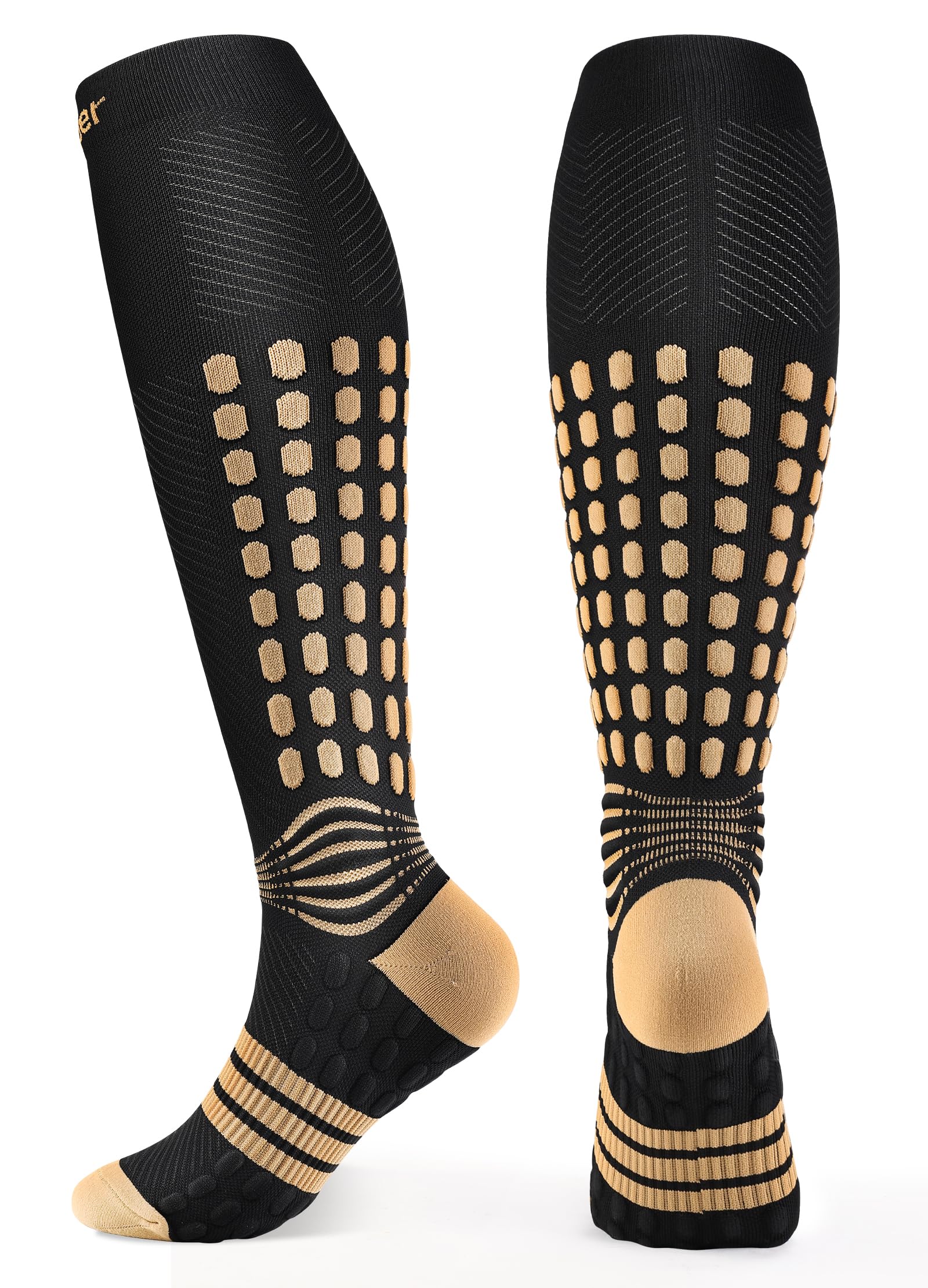
The NEENCA Copper Compression Socks stand out for their patented Ankle Tuck Compression Tech, which integrates six compression rings at the ankle using high-precision 3D knitting. This design specifically targets the area where swelling typically begins, providing reinforcement without creating a tourniquet effect. The 20-30 mmHg rating is consistent, and users on 8-hour flights report that ankle swelling was completely eliminated—a strong indicator of the sock’s efficacy against travel-induced edema.
Copper-infused fiber runs through the entire fabric, offering natural antimicrobial properties and helping to keep the feet warm without overheating. The reinforced muscle massage dots apply pressure at ergonomic points, adding a subtle massaging sensation that reduces muscle fatigue over long periods of standing or sitting. Buyers consistently mention the “evenly distributed compression” that feels supportive rather than restrictive, and the durability has held up well in both machine and hand washing.
On the aesthetic side, some users describe the socks as “kinda ugly,” noting that the design is function-first rather than fashion-forward. While this is a non-issue for those prioritizing medical efficacy, it’s worth considering if you plan to wear them visibly in a professional setting. A few reviews also mention that the sizing runs slightly more accurately than some competitors, so measuring your calf and ankle carefully before ordering is essential.
Why it’s great
- Patented ankle compression rings target swelling at its primary source
- Copper-infused fabric provides antimicrobial protection and warmth
- Massage dots reduce muscle fatigue during extended wear
Good to know
- Aesthetic design is plain and function-focused, not stylish
- Sizing is accurate, requiring careful measurement to avoid a poor fit
4. PULIOU Cooling Compression Socks 20-30 mmHg (2 Pairs)
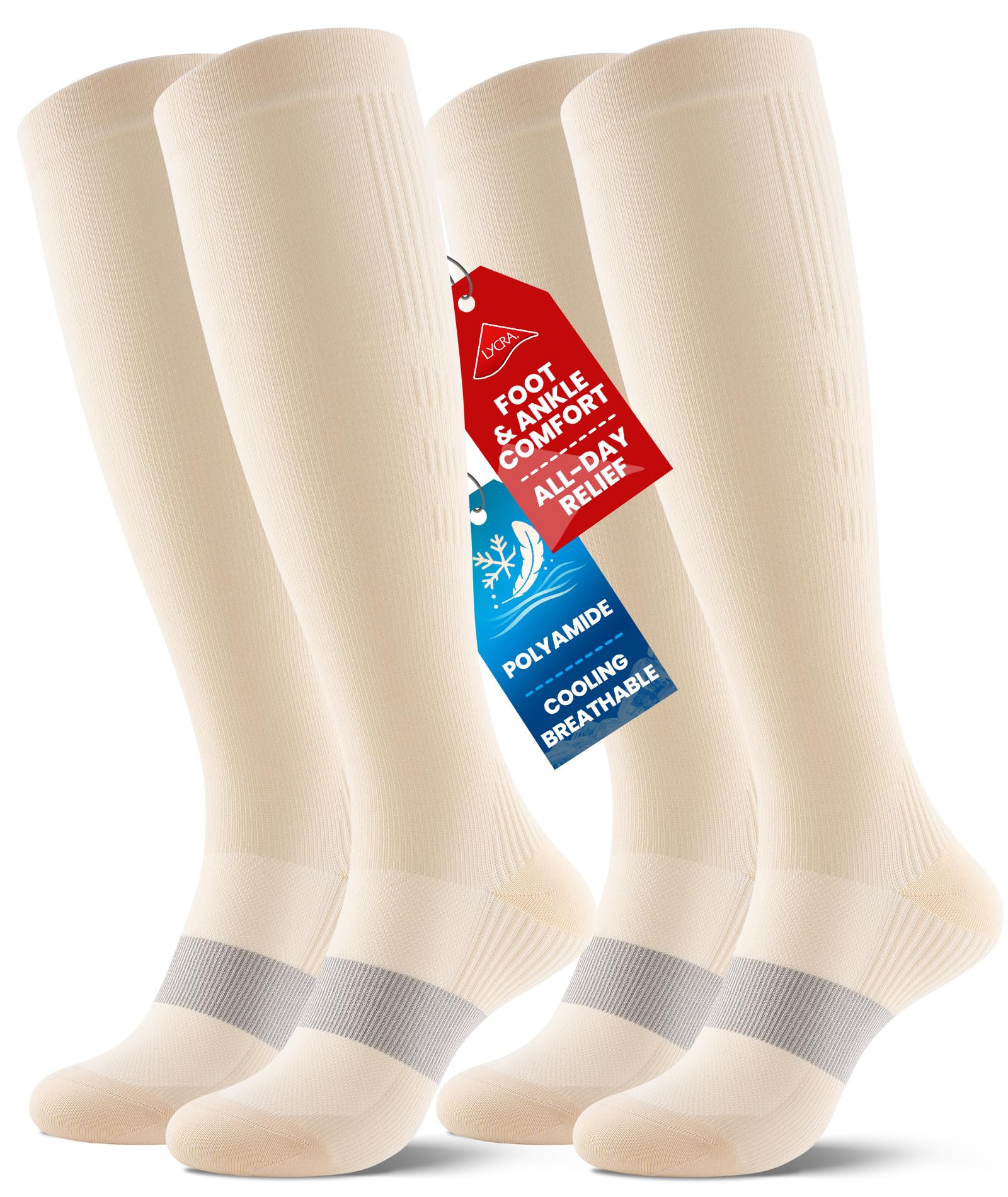
The PULIOU Cooling Compression Socks are engineered for warm conditions, using a specially developed fabric that feels cooler against the skin compared to standard nylon-spandex blends. The 20-30 mmHg compression is firm enough to reduce leg fatigue and swelling, but a notable number of experienced users suspect the actual pressure is closer to 15-20 mmHg, making these a better fit for moderate rather than severe edema. For daily use—work, light travel, or casual wear—this level of support is comfortable and effective.
The durability of the stitching and the fact that the color does not run during cold washes are consistently praised. The arch support is a subtle but welcome addition, providing extra stability for the foot’s midsole without adding bulk. Buyers also appreciate that the sock stays up at the knee without sliding down, a common failure point in cheaper models. The cooling effect is genuine, making these a strong option for summer months or for anyone who naturally runs warm.
The primary caveat is the sizing: many reviews indicate that the socks run small, so a women’s size 11 may need to size up. Additionally, the color accuracy is an issue—the “beige” option is described by multiple buyers as more of an ivory or cream, which may not match expectations. If you are looking for a true 20-30 mmHg therapeutic compression for serious swelling, the slightly lower perceived pressure means these may not be your first choice.
Why it’s great
- Cooling fabric design genuinely reduces heat buildup during wear
- Arch support and durable stitching hold up well over time
- Stays in place at the knee without slipping throughout the day
Good to know
- Compression feels closer to 15-20 mmHg than the advertised 20-30 mmHg
- Sizing runs small, and the beige color is actually ivory or cream
5. Bluemaple 6 Pack Copper Compression Socks

The Bluemaple 6 Pack offers an entry point into compression therapy without breaking the bank. The graduated compression design is strongest at the ankle and gradually eases upward, which is exactly the right biomechanical approach for encouraging circulation. The copper infusion adds antimicrobial properties, and the wide top band is designed to prevent rolling—a common pet peeve that the manufacturer clearly addressed. Buyers with small feet (women’s size 6) report a good fit, and the cute patterns add a touch of personality.
Customer feedback emphasizes comfort, with multiple users describing the socks as “perfect” for all-day wear, including during 12-hour flights and pregnancy. The thin spandex material is breathable and does not cause skin irritation, even after extended use. One pregnant user noted that the socks were easy to put on even at nine months, stayed in place all day, and did not cause the calf itching that often accompanies heavier compression fabrics. The compression is strong enough to be noticeable but not painful, striking a balance that works for general fatigue and mild to moderate swelling.
The main trade-off for the low cost is material quality. A few buyers noted an initial chemical smell after opening, which washes out but is off-putting at first. The fabric, while comfortable, is not as durable as premium offerings, and some users wish the material were softer against the skin. For those with severe edema or specific medical needs, the lower price point may also correlate with less precise compression consistency across the six pairs. This is a solid daily driver, not a heavy-duty medical device.
Why it’s great
- Six-pair pack offers the best value for daily rotation
- Wide top band prevents rolling and irritation at the knee
- Breathable spandex material works well for all-day wear, including during pregnancy
Good to know
- Initial chemical smell upon opening requires washing before first use
- Material is not as durable or soft as premium-priced alternatives
FAQ
How tight should compression socks feel for leg swelling?
Can I wear compression socks all day and overnight?
How do I clean compression socks to maintain their pressure?
Final Thoughts: The Verdict
For most users, the best compression socks for leg swelling winner is the Physix Gear Compression Socks because they deliver proven edema control through a full 12-hour workday with cushioned comfort and durable construction. If you want a rotating three-pair supply with German-engineered precision, grab the BBFREY Medical Compression Socks. And for travelers needing reliable ankle swelling prevention with patented technology, nothing beats the NEENCA Copper Compression Socks.

Mo Maruf
I created WellFizz to bridge the gap between vague wellness advice and actionable solutions. My mission is simple: to decode the research and give you practical tools you can actually use.
Beyond the data, I am a passionate traveler. I believe that stepping away from the screen to explore new environments is essential for mental clarity and physical vitality.