Our readers keep the lights on and my smoothie glass nicely filled. As an Amazon Associate, I earn from qualifying purchases.
That sharp muscle vibration in your calf after three miles of steep descent isn’t just fatigue — it’s micro-trauma from your foot striking the ground, amplified by blood pooling in your lower legs. A proper pair of compression hiking socks manages that hydrostatic pressure, keeping your vascular system from working against you on the trail.
I’m Mohammad Maruf — the founder and writer behind WellFizz. I’ve spent hundreds of hours cross-referencing fiber composition, graduated compression ratings, and real-world durability reports to separate genuine trail performance from marketing hype in this crowded category.
The right sock either prevents the deep ache that cuts a hike short or lets you tack on another summit, making this guide to the best compression socks for hiking essential reading before you buy anything off the shelf.
How To Choose The Best Compression Socks For Hiking
Selecting the right compression sock for hiking isn’t about grabbing the tightest sleeve you can find. The wrong mmHg rating or fabric blend can cause overheating, circulation restriction, or blisters that end your day early. Focus on four variables that define trail performance.
Compression Level: The 15-20 mmHg Standard
Hiking compression socks typically deliver 15-20 mmHg of graduated compression, meaning the pressure is strongest at the ankle and decreases as the sock moves up the calf. This range improves venous return without cutting off circulation during extended downhill walking. Anything over 25 mmHg is considered medical-grade and is too restrictive for dynamic trail movement.
Fiber Composition: Natural vs. Synthetic Blends
Merino wool offers natural temperature regulation and odor resistance, but blended with nylon or spandex prevents the sock from losing its shape in wet conditions. Alpaca fiber provides similar thermal benefits with a hollow-core structure that wicks moisture faster than wool. Pure synthetic socks dry quickly but trap odor and don’t regulate temperature in cold alpine environments.
Padding Zones and Seam Construction
Look for targeted cushioning at the heel, ball of the foot, and Achilles tendon — these are high-impact zones that absorb shock with every step. A seamless toe construction is non-negotiable on long hikes: even a single stitch ridge can produce a blister within three miles of continuous movement.
Quick Comparison
On smaller screens, swipe sideways to see the full table.
| Model | Category | Best For | Key Spec | Amazon |
|---|---|---|---|---|
| Zensah Tech+ Compression Socks | Premium | Long-distance trail running & shin splint prevention | Graduated compression, 82% polyamide / 18% elastane | Amazon |
| HOLLOW Alpaca Compression Socks | Premium | All-day circulation support in variable temperatures | 15-20 mmHg, alpaca blend with hollow fibers | Amazon |
| WSX Outdoor & Sports Socks | Mid-Range | Work boots & hot-weather hiking | Medium compression, moisture-wicking synthetic blend | Amazon |
| ANTSANG Merino Wool Quarter Ankle Socks | Budget-Friendly | Cool-weather hiking with thermal cushioning | Merino wool blend, thick cushion, quarter ankle height | Amazon |
| GermaPro Women’s Compression Hiking Socks | Budget-Friendly | Short hikes & daily wear with odor control | Germanium & Coolmax fibers, mild compression | Amazon |
In‑Depth Reviews
1. Zensah Tech+ Compression Socks
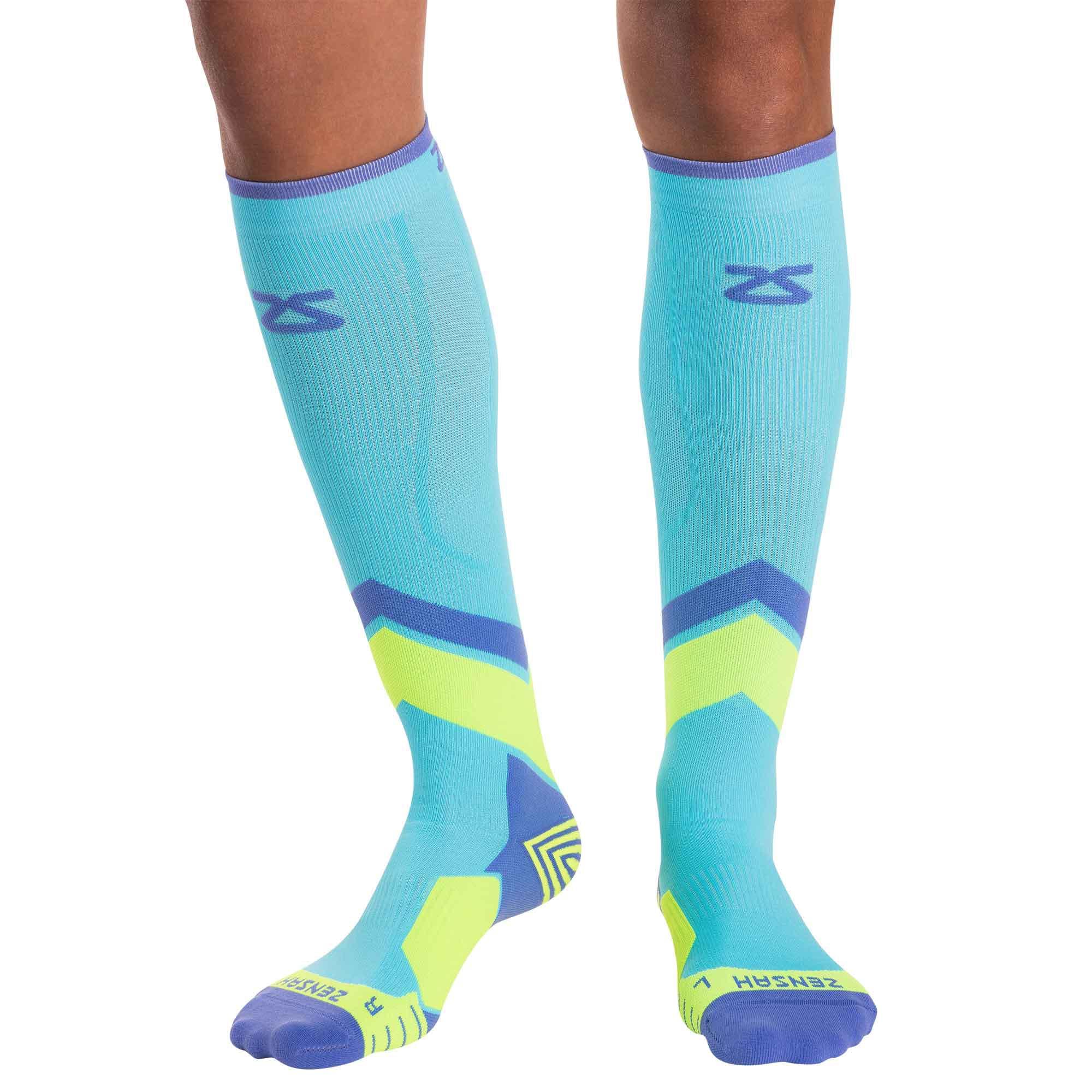
The Zensah Tech+ delivers true graduated compression from ankle to knee, with 82% polyamide and 18% elastane providing a snug anatomical fit that doesn’t bag at the heel. The seamless toe construction eliminates the stitch ridge that causes hot spots on long descents, and the lightweight fabric wicks moisture effectively even during sustained aerobic effort on the trail.
Multiple reviews confirm this sock prevents shin splints and calf strain during runs and hikes, with users reporting excellent durability after 100+ uses. The wide top band stays positioned without rolling, though the initial fit is tight enough that most users need to use an inside-out donning technique for the first few wears.
Made in Italy with a durable nylon blend, this sock holds its compression properties wash after wash. The visible logo alignment mark helps you center the sock correctly, a small detail that matters when you’re pulling them on by headlamp before a dawn start.
Why it’s great
- Graduated compression reduces shin splint symptoms on uneven terrain
- Seamless toe design virtually eliminates blister formation
- Retains structure and compression after repeated wash cycles
Good to know
- Very tight to put on; requires inside-out technique initially
- Top band width has been reduced in recent versions, can dig into calf
2. HOLLOW Alpaca Compression Socks
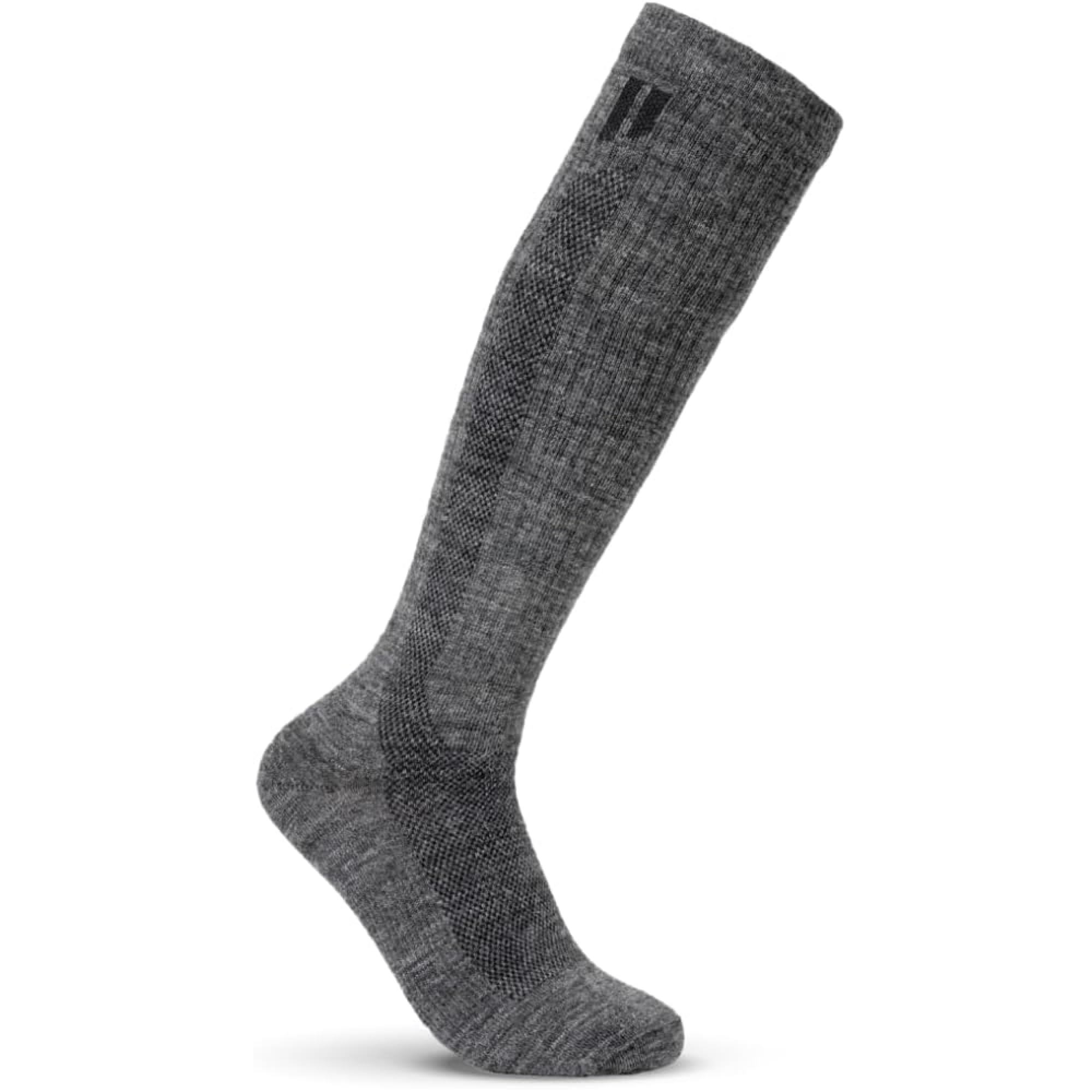
The HOLLOW Alpaca Compression Socks use a premium alpaca blend with hollow-core fibers that trap warm air in cold conditions while remaining breathable when temperatures climb. The 15-20 mmHg graduated compression is calibrated for all-day wear — noticeable enough to reduce foot and ankle swelling during long hikes but gentle enough that users report easy on-and-off compared to tighter medical-grade socks.
Reviews consistently highlight the moisture-wicking performance and the absence of lanolin, making these suitable for sensitive skin that reacts to traditional wool. The stretch knit accommodates a wider range of calf sizes, though one user with a 17.5-inch calf found the wide size barely fit. The gray variant appears softer and less restrictive than the black version, suggesting some color-to-color variance in the knitting process.
USA-made construction with reinforced heel and toe areas contributes to durability, though machine washing can cause fuzziness — hand washing is recommended. The price is premium-tier, but the combination of temperature regulation and gentle compression fills a specific niche for hikers who need circulation support without the tourniquet feel.
Why it’s great
- Hollow alpaca fibers regulate temperature across cold and warm conditions
- Gentle 15-20 mmHg compression is easy to put on and remove
- Reinforced heel and toe zones add longevity for daily trail use
Good to know
- Compression is mild; not suitable for those needing strong graduated pressure
- Color consistency may vary; gray reported as softer and more stretchable than black
3. WSX Outdoor & Sports Socks
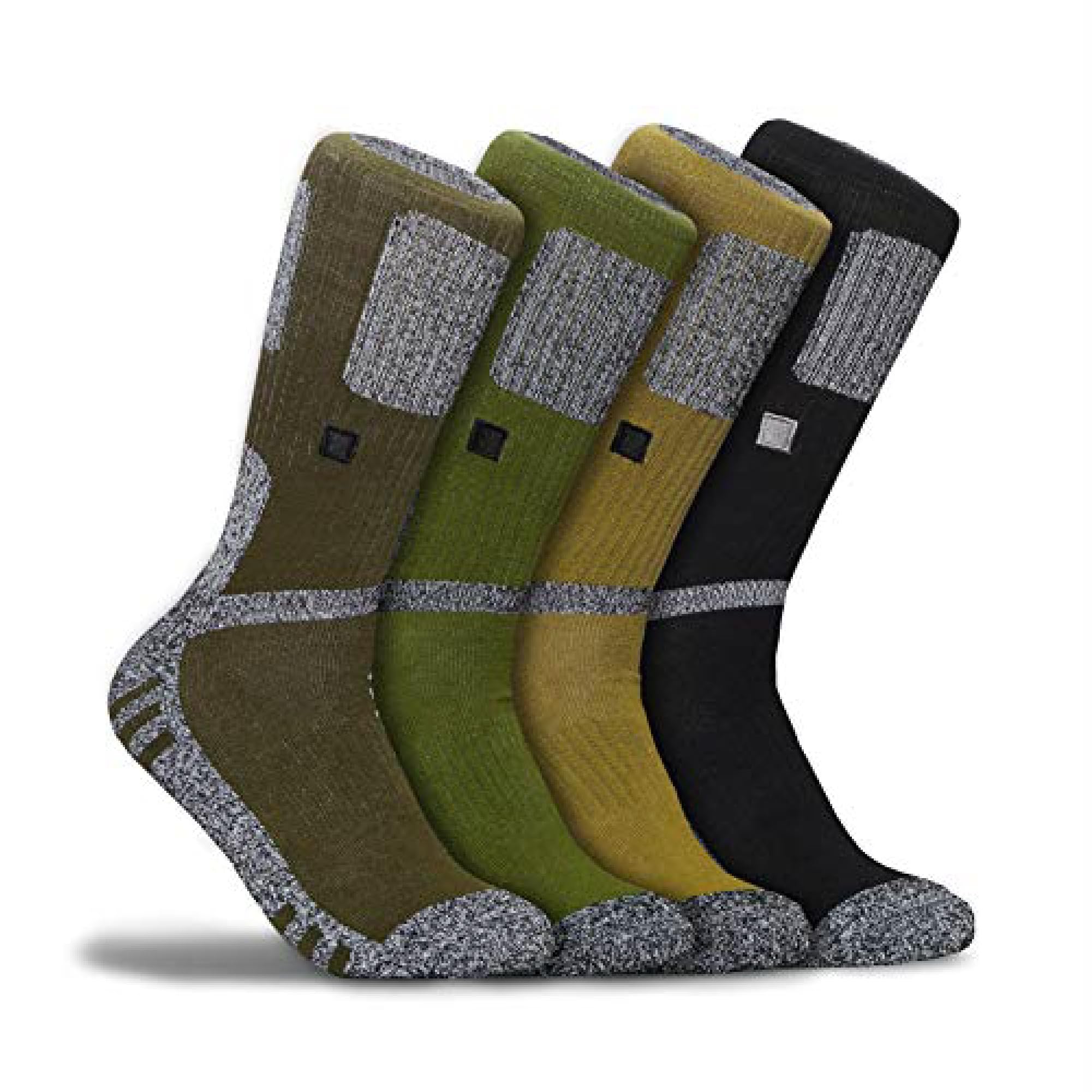
The WSX Outdoor & Sports Socks occupy a strong mid-range position with medium compression that provides arch support and moisture-wicking performance without the high price of premium blends. Users report excellent moisture management in extreme heat — one reviewer noted completely dry feet after a full workday in 112°F Phoenix desert conditions with tactical boots, a testament to the synthetic fiber’s wicking speed.
Durability is a recurring theme in reviews, with multiple customers buying second batches to replace older socks from competing brands. The mid-calf height works well with high-top hiking boots and work boots, though the calf fit runs tight — one construction worker at 5’8″ and 180 pounds found the compression level restrictive, suggesting this sock favors slimmer calf profiles.
The bottom cushioning could be thicker for rocky terrain, but the temperature regulation and sweat management are exceptional for warm-weather hiking. This is a solid choice for day hikers who prioritize dry feet over maximum padding and don’t need the cold-weather insulation of a wool blend.
Why it’s great
- Exceptional moisture wicking tested in extreme desert heat
- Durable construction holds up to repeated work/hike use
- Arch support reduces foot fatigue on uneven trails
Good to know
- Calf band is tight; best for slimmer or average calf circumference
- Bottom padding could be more generous for rocky trails
4. ANTSANG Merino Wool Quarter Ankle Socks
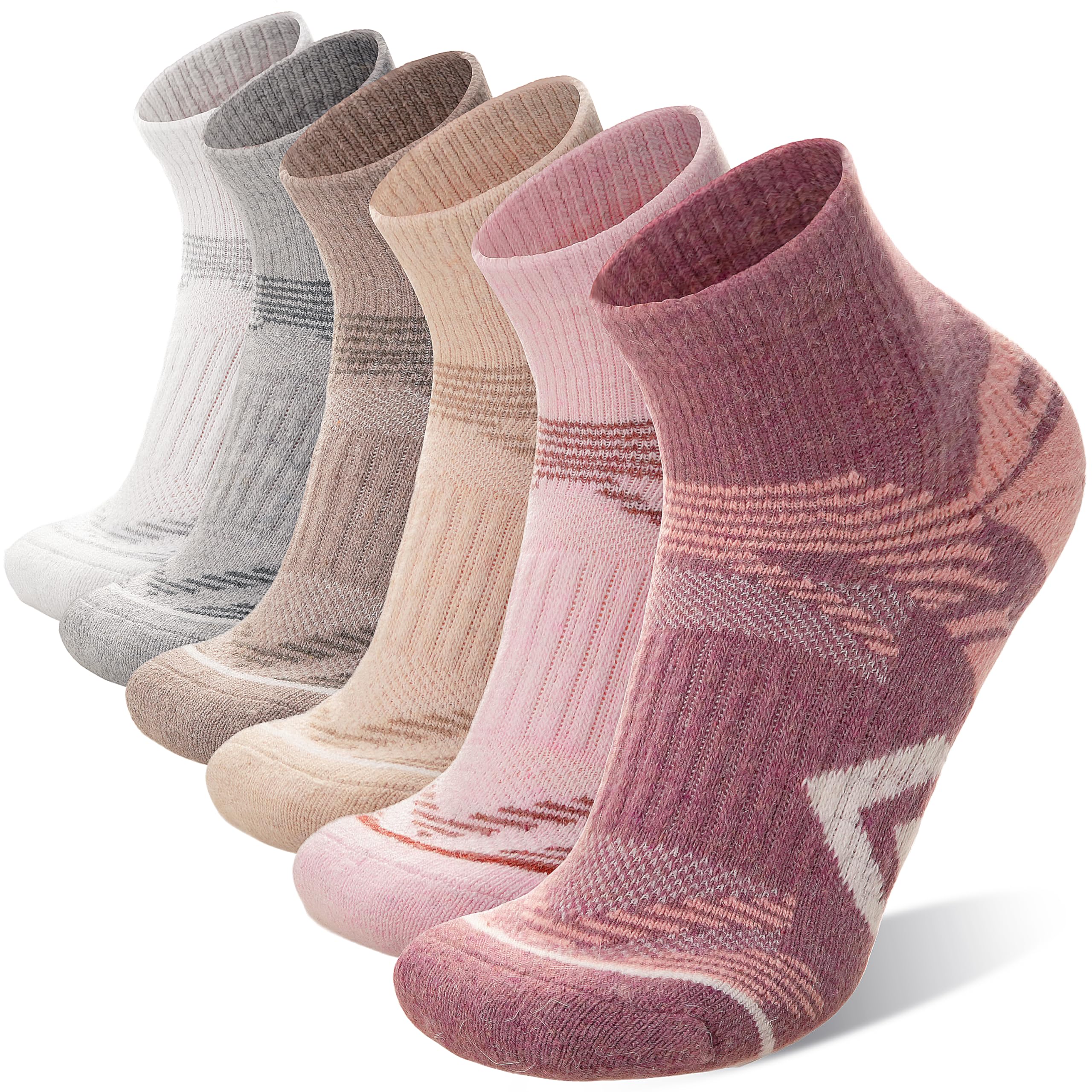
The ANTSANG 6-Pack delivers impressive value with a Merino wool blend that runs thicker and warmer than expected for a budget-friendly pack. Multiple reviews note the wool content feels higher than more expensive brands, providing genuine thermal insulation without the itch that often accompanies lower-grade wool. The compression action is light but noticeable — enough to reduce foot fatigue after gym sessions and short hikes without feeling restrictive.
The quarter ankle height works best with low-cut hiking shoes rather than full boots, and the thick cushioning absorbs shock effectively on packed trails. Some users reported minor interior thread loops and slight heel bunching, though these didn’t affect comfort during wear. The wool regulates sweat well in mild temperatures, but a few reviewers noted their feet still felt damp during warmer activity — cotton-blend liners may be needed for peak summer conditions.
After machine washing, the socks hold their shape without shrinking, and the snug fit around the arch provides enough support for moderate day hikes. If your priority is cold-weather cushioning and you prefer a natural fiber over synthetics, this pack offers exceptional warmth per dollar spent.
Why it’s great
- High Merino wool content provides natural warmth and odor resistance
- Thick cushioning absorbs shock on moderate trails
- Exceptional value as a 6-pack for cold-weather hiking
Good to know
- Quarter height limits use with tall boots
- Interior stitching can feel rough against bare skin
5. GermaPro Women’s Compression Hiking Socks

The GermaPro compression socks use Germanium-infused fiber combined with Coolmax to claim far-infrared and negative ion effects, but the measurable performance comes from the mid-grade compression and cushioned footbed. The sock delivers moderate ankle compression that reduces swelling on short to medium hikes, with targeted padding at the heel, ball, and Achilles tendon for blister prevention. The ankle length is notably long, comparable to Darn Tough’s older cut before that brand shortened its cuffs.
Reviewers consistently praise the comfort and durability, with one user reporting five-star performance after washing on the extra-hot setting. The socks are thick enough to fill out boot volume well, and the moisture-wicking Coolmax fiber keeps feet dry on moderate-exertion hikes. A few users found the top band too tight — one resorted to cutting the elastic cuff off, which caused the knit to separate into two layers.
At the budget-friendly end of the spectrum, this pair offers solid compression and cushioning for day hikes and daily wear. The sizing runs narrow, so those with wider calves should size up or consider the XL option. For hikers who want a dedicated women’s fit with functional compression and don’t mind the Germanium marketing angle, these perform well on the trail.
Why it’s great
- Targeted heel, ball, and Achilles cushioning prevents blisters on rocky terrain
- Long ankle length provides better coverage than many competitors
- Moisture-wicking Coolmax keeps feet dry during moderate exertion
Good to know
- Top band runs tight; may feel restrictive on larger calves
- Cuff elastic can split into layers if cut or stretched aggressively
FAQ
Can I wear compression socks on a multi-day backpacking trip?
Do I need a different compression level for downhill versus uphill hiking?
How do I prevent my compression socks from sliding down on the trail?
Final Thoughts: The Verdict
For most users, the best compression socks for hiking winner is the Zensah Tech+ Compression Socks because the true graduated compression and seamless toe design prevent both shin splints and blisters on long, technical terrain. If you need temperature regulation across alpine temperature swings, grab the HOLLOW Alpaca Compression Socks. And for budget-conscious hikers who prioritize moisture wicking in hot conditions, nothing beats the WSX Outdoor & Sports Socks for dry-foot reliability on sun-baked trails.

Mo Maruf
I created WellFizz to bridge the gap between vague wellness advice and actionable solutions. My mission is simple: to decode the research and give you practical tools you can actually use.
Beyond the data, I am a passionate traveler. I believe that stepping away from the screen to explore new environments is essential for mental clarity and physical vitality.