Our readers keep the lights on and my smoothie glass nicely filled. As an Amazon Associate, I earn from qualifying purchases.
Specs are compiled from manufacturer listings and verified buyer reviews and can change over time — please confirm the key details on the product page before buying.
Waking up to a fractured foot means every step reminds you the bone is broken, and finding socks that wrap the injury without cutting off circulation feels impossible. This guide compares four medical-grade compression socks built for exactly that — recovery after a fracture, tendon repair, or post-surgery swelling.
I’m Mohammad Maruf — the founder and writer behind WellFizz. This guide is built by comparing the manufacturers’ published specifications and the patterns across verified customer reviews, so you get each pick’s real strengths and trade-offs instead of marketing spin.
After looking at dozens of options designed for foot injuries and post-surgery recovery, I narrowed it down to four models with verified 20-30 mmHg graduated compression. Here is what you need to know about the best compression socks for fractured foot on the market today.
Quick Picks
- BraceAbility Compression Socks for Circulation — Best Overall
- NEENCA Professional Copper Compression Socks — Top Performer
- NEENCA Medical Compression Socks — — Best Value
- NEENCA Medical Compression Socks for — Comfort Pick
How To Choose The Best Compression Socks For Fractured Foot
When you fracture a bone in your foot, swelling sets in fast — sometimes traveling up into the ankle and calf. Compression socks work by applying gentle pressure that pushes fluid out of the tissue and back into your veins, which speeds up recovery. But not every “compression” sock is strong enough for a medical fracture; many athletic socks claim they compress but barely reach 15 mmHg. For a fractured foot you need the real 20-30 mmHg range (the pressure measure medical-grade socks use) to make a difference.
Compression Level: 20-30 mmHg Is the balance
Think of the mmHg (millimeters of mercury) number as the strength of the squeeze. For post-fracture swelling and pain, 20-30 mmHg is what doctors typically recommend — it is strong enough to reduce edema (the medical term for fluid swelling) without being so tight you cannot sleep in them. Lower numbers, like 15-20 mmHg, are fine for tired legs after a flight but too weak for a healing fracture. Every sock in this guide is rated 20-30 mmHg, so you are in the right zone.
Open Toe Vs. Closed Toe — It Matters For A Fracture
If your fracture is near the toes or you have a bandage or cast that wraps part of your foot, an open-toe (also called “toeless”) design lets you wear the sock without pressing on the injury. Closed-toe socks offer more warmth and full coverage, which some people prefer for comfort at night. Your choice depends entirely on where the fracture is and whether your doctor wants the toes exposed for monitoring swelling.
Material And Weight: What Goes On Your Wound Needs To Breathe
A fractured foot is often covered in bandages or a removable boot, so you want a sock that wicks moisture away (prevents sweat from building up against the skin) and is lightweight enough to slip inside a shoe or boot. Look for blends like nylon, spandex, or copper-infused fibers that stretch without digging into the ankle bone. Heavy fabric that bunches up inside a shoe can cause new pressure points on the fracture — the opposite of what you need.
Quick Comparison
| Model | Best For | Compression | Style | Weight | Amazon |
|---|---|---|---|---|---|
| BraceAbility Compression Socks | Post-surgery tendon recovery | 20-30 mmHg | Open toe / Knee high | 2.56 oz | Amazon |
| NEENCA Copper Infused Socks | Pain relief & swelling control | 20-30 mmHg | Low cut / Closed toe | 4.16 oz | Amazon |
| NEENCA Medical 2-Pair Socks | Two-pair value for daily rotation | 20-30 mmHg | Ankle / Closed toe | 5.82 oz | Amazon |
| NEENCA Women & Men Circulation Socks | Night wear & all-day comfort | 20-30 mmHg | Ankle / Closed toe | 5.29 oz | Amazon |
In‑Depth Reviews
1. BraceAbility Compression Socks for Circulation – 20-30 mmHg Knee High Open Toe Stockings
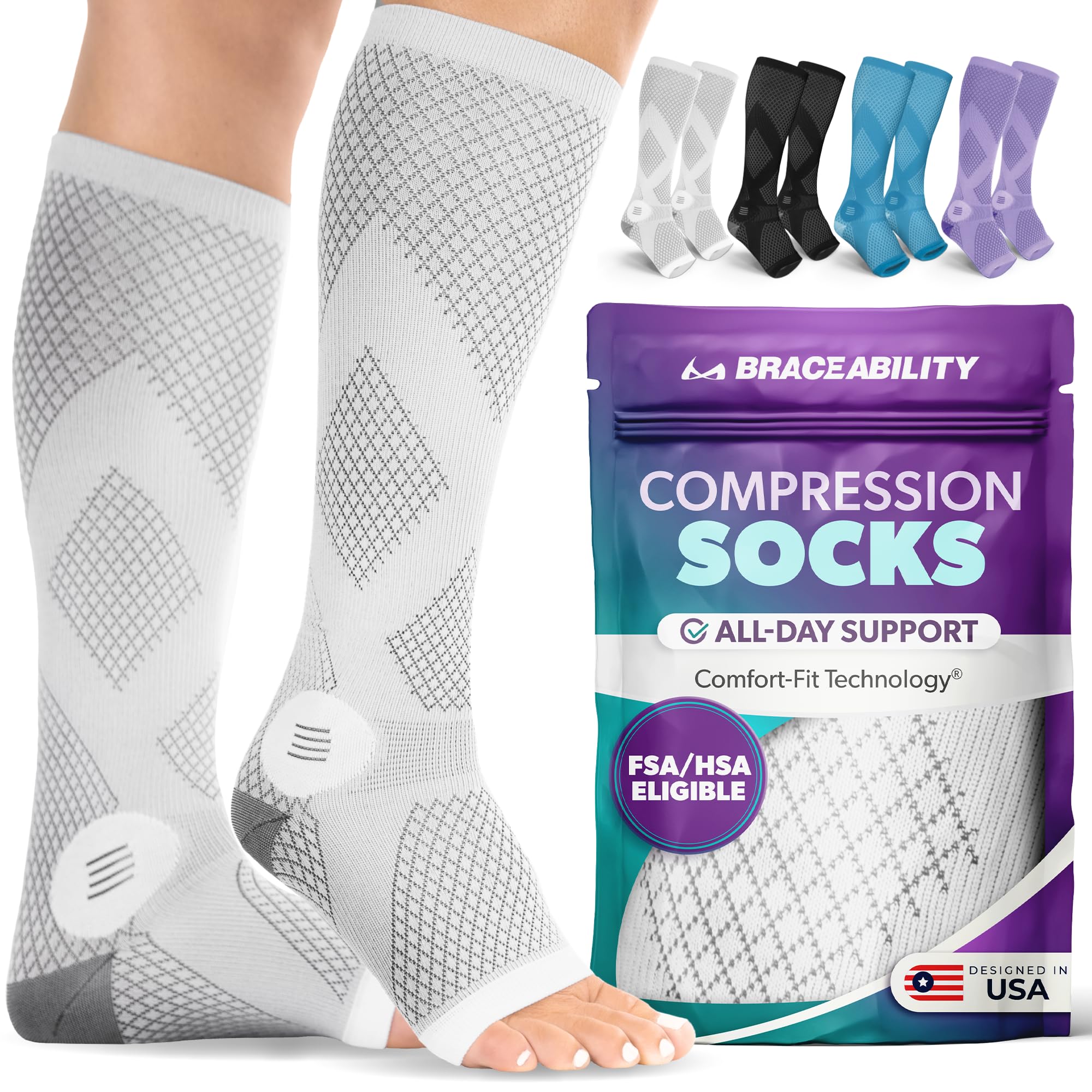
The open-toe design that earned a post-surgery testimonial for driving without pain just days after cast removal.
For someone recovering from a fractured foot or severed tendons, the BraceAbility sock solves the biggest problem — you can keep the toes free so bandages stay undisturbed while the rest of your foot gets the 20-30 mmHg squeeze it needs to push fluid out. The open-toe (a style where the sock ends before your toes, leaving them exposed) also means you can wear it with sandals during recovery, which buyers report using comfortably after a severed foot tendon surgery. One reviewer noted they walked 6,000 steps on day 4 after cast removal with the medium size fitting a women’s 9.5-10 shoe.
Weighing just 2.56 ounces, this sock is noticeably lighter than the NEENCA options — the NEENCA Medical 2-Pair sock comes in at 5.82 ounces, more than double the weight. That lightness matters when you are sliding a tender foot into a shoe. The knee-high height also helps push blood from the foot all the way up past the calf, which is useful if your fracture swelling travels up the leg. The soft-stretch material is described by reviewers as non-binding and breathable, which keeps you from overheating during all-day wear.
The trade-off is that these socks run warm and are a bit bulky for closed-toe shoes, as one buyer mentioned. If your foot is heavily bandaged and you plan to wear them mainly indoors or with sandals, that will not bother you. But if you need to stuff a swollen foot into a regular shoe, the lighter NEENCA Copper Socks might slide in easier.
Who it heals best: The perfect post-surgery recovery sock — especially if your injury is near the toes and you need open-toe access. Ideal for men and women with a medium to wide foot who want a sock that does not feel like a tourniquet.
Reach for this if: You had foot tendon repair or a toe fracture and need a medical-grade sock that lets your toes breathe.
Think twice if: You need the thinnest possible sock to fit inside a tight shoe or boot, or if you prefer full toe coverage for warmth at night.
2. NEENCA Professional Copper Compression Socks, Medical Ankle Support – 1 Pair, 20-30 mmHg
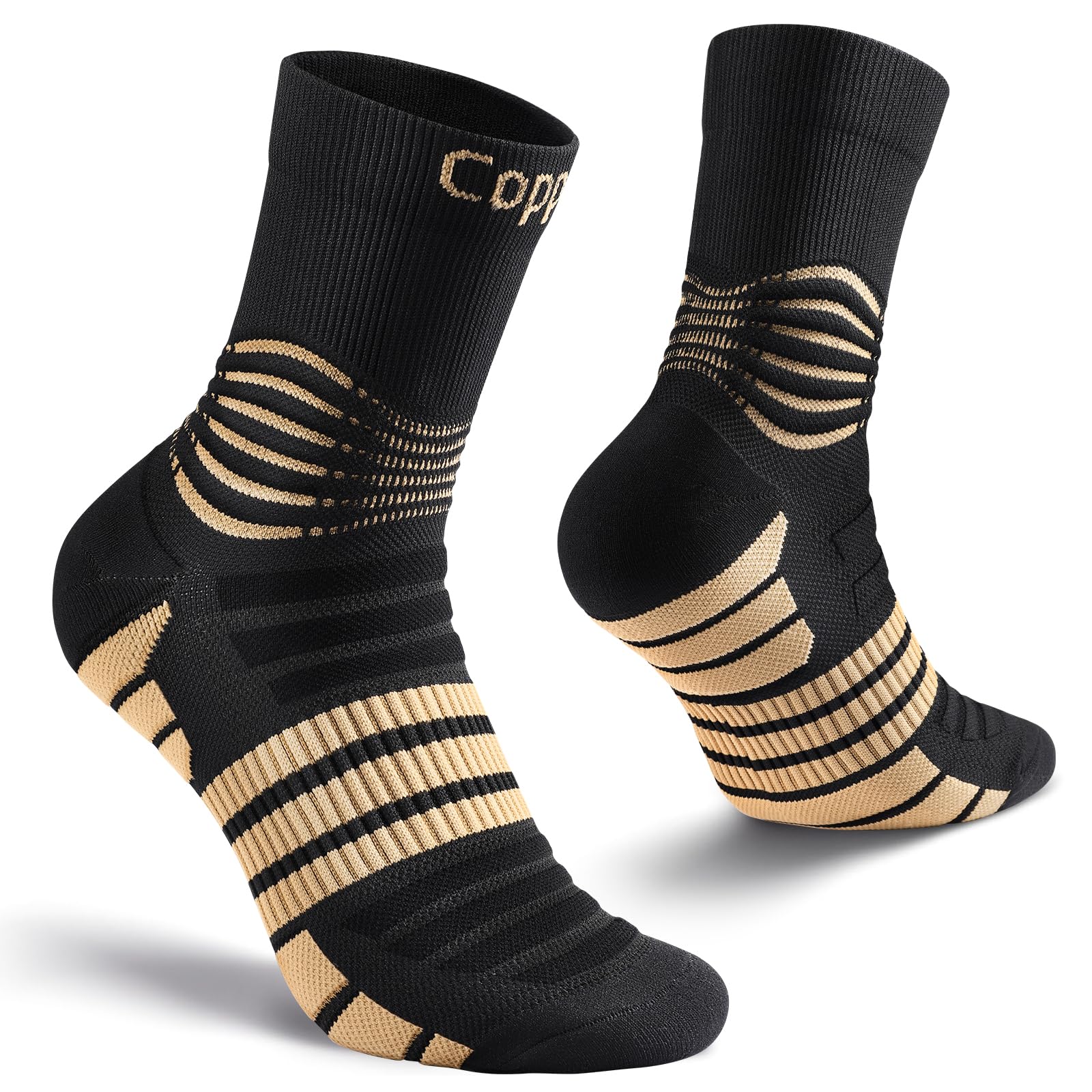
The copper-infused low cut that one buyer swears took away the pain of bedsheets touching their foot.
What makes this sock different is the fabric: 24% copper ions infused into the fiber (the rest is 62% nylon and 14% spandex). Copper has natural antimicrobial properties (it stops bacteria from growing) and the maker claims it helps keep your joint warm and reduce stiffness. Buyers seem to agree — one owner reported that an acupuncturist recommended copper socks for pain around the top of the foot and ankle, and that after wearing them the pain of bedsheets touching the foot disappeared entirely. That matters when a fracture makes even a blanket feel like a threat.
The key feature here is the “Ankle Tuck Compression Technique” — a patented design that integrates six compression rings around the ankle and a 6-layer thicker loop on the sole for shock absorption. On a fractured foot, that extra sole padding (which the manufacturer describes as applying force points according to ergonomics) means you can put weight on the sock without feeling every floorboard through the bandage. At 4.16 ounces it is heavier than the BraceAbility (2.56 ounces) but lighter than the 2-pair NEENCA sets (5.82 ounces and 5.29 ounces), striking a middle ground.
Some buyers found the sock too tight to pull on at first — one review called the fit “too tight to put on” for their specific foot shape. This is a common issue with 20-30 mmHg socks in general. The low-cut (ankle-length) design also means you only get compression around the ankle and foot, not the calf, so if your swelling climbs higher, the BraceAbility’s knee-high style would serve you better.
Copper edge: The copper infusion is not just marketing — real buyers confirm it helped with pain and stiffness. The reinforced sole gives you some shock absorption when walking on a healing foot.
Grab these if: You want the benefits of copper fiber against inflammation and the swelling is mainly in the foot and ankle, not the calf.
Pass if: You need a knee-high compression to control swelling that travels up the leg, or you have wide calves that make a low-cut fit tricky.
3. NEENCA Medical Compression Socks — 2 Pairs, Ankle Socks for Injury Recovery, 20-30 mmHg
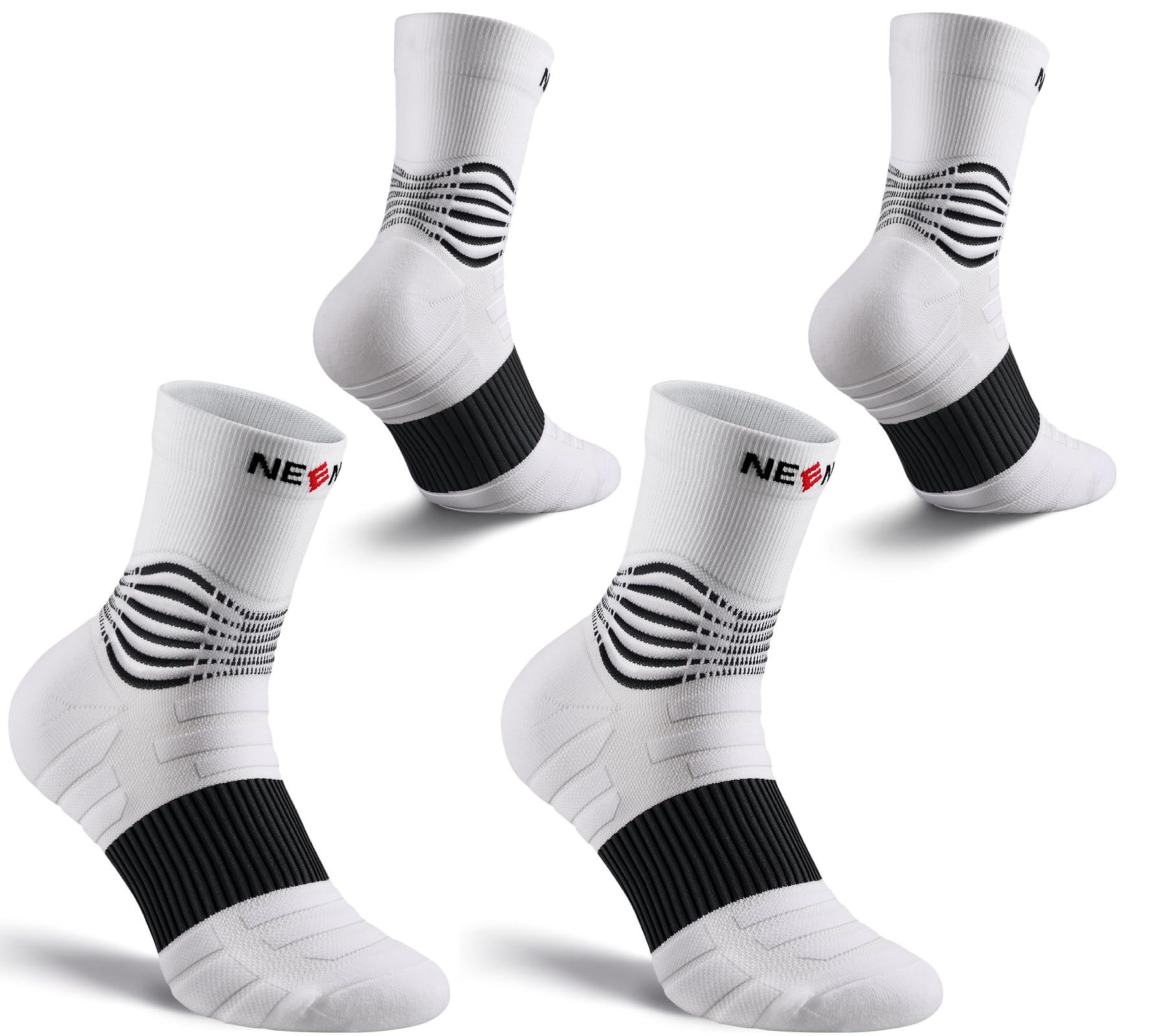
Two pairs for daily rotation with the same patented ankle tuck technique as the premium copper version.
When you are recovering from a foot fracture, you want a fresh pair every morning — especially if you are sweating in a boot or waking up at night in them. This pack gives you two pairs at a mid-range price point, and both socks use the same Exclusive Patent Ankle Tuck Compression Technique (the 6-ring ankle design and 6-layer thicker sole loop) found on the single-pair copper version above, just without the copper fibers. The material here is air knit fabric that the manufacturer says absorbs and evaporates water instantly, which translates to your foot staying drier when wrapped in bandages.
The package dimensions measure 8.66 x 8.31 x 1.06 inches, and the pair weighs 5.82 ounces — that is 53% larger by package volume than the copper version, which makes sense because you are getting two socks. What you sacrifice compared to the copper sock is the antimicrobial copper fiber; the standard nylon-spandex blend is still medical-grade (Class 1 Medical Device, the manufacturer states) and delivers the same 20-30 mmHg graduated pressure. Buyers who reviewed these specifically noted they provide enough compression to prevent ankle swelling and are much cooler than medical-grade knee-high stockings.
One downside some buyers highlight is that the ankle-length cut can leave a visible ring mark on the skin after removal, meaning the compression is working but the sock could be about 2 inches taller to distribute the pressure more evenly. If you have sensitive skin or plan to wear these around strangers, the knee-high BraceAbility avoids the ring effect entirely because it wraps higher up the calf.
What you gain with two pairs
- Rotate socks daily while one pair airs out — crucial for hygiene with a foot injury
- Same ankle tuck patent as the copper version at a lower entry cost
- Breathable air knit fabric keeps bandaged feet from overheating
Where it comes up short
- Ankle-only cut may not control swelling that reaches the lower shin
- The ring mark from the top edge is noticeable on some wearers
- Lacks the copper fiber that some buyers credit for pain relief
Best for: Anyone who wants a rotation set of medical-grade ankle socks for daily wear around the house or under a walking boot without spending premium dollars for copper.
Not ideal if: Your swelling extends past the ankle into the calf, or you found the low-cut design leaves a tight ring mark you find uncomfortable.
4. NEENCA Medical Compression Socks for Women & Men Circulation — 2 Pairs, Ankle Stockings, 20-30 mmHg
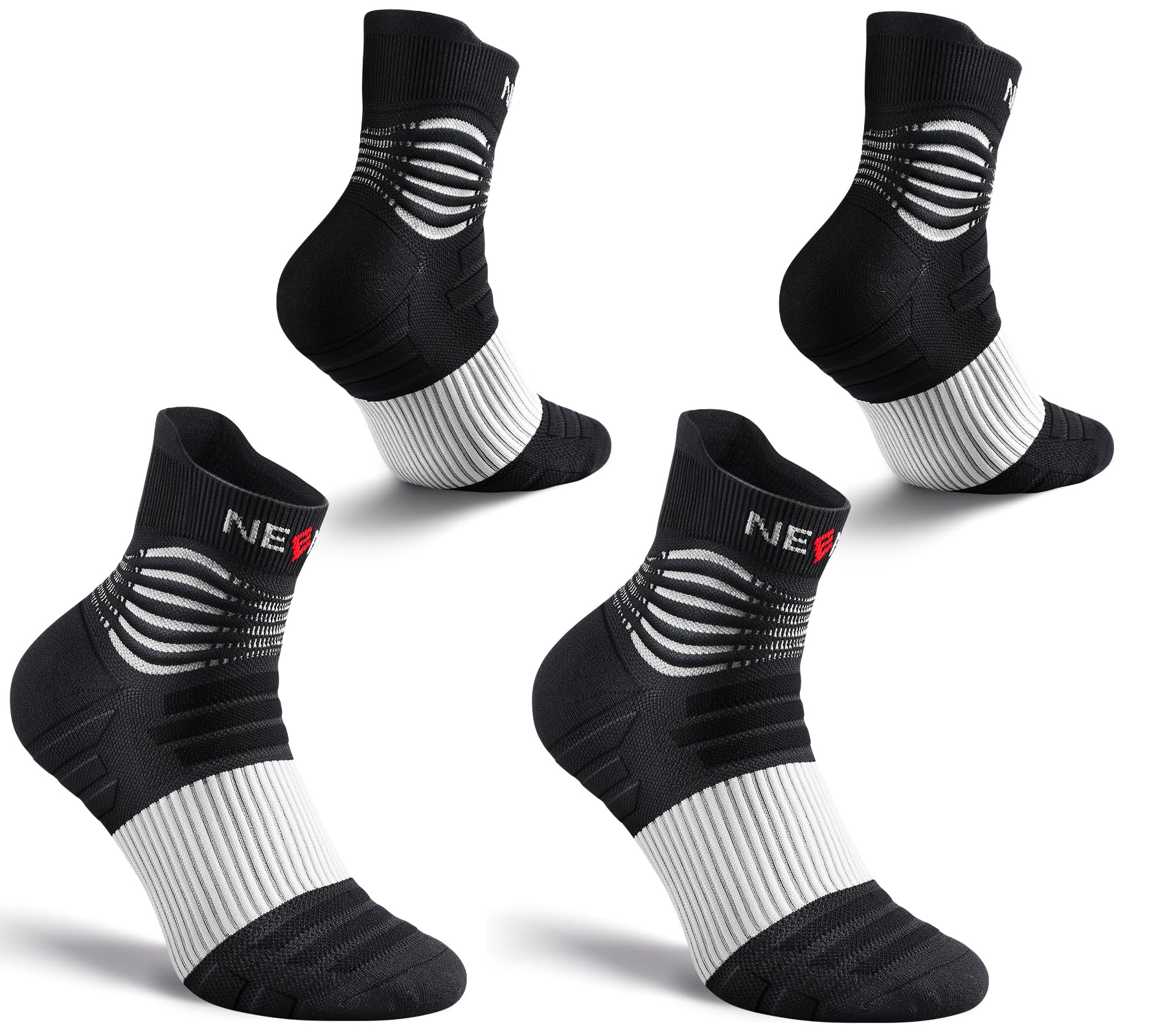
A cotton-blend two-pack that reviewers call the “cooler alternative” to hot medical stockings for summer recovery.
Fracturing a foot in the summer is miserable — you are already hot and swollen, and the last thing you want is a thick stocking. This sock uses a four-fabric blend (65% nylon, 20% spandex, 8% polyester, 7% cotton) that owners mention is significantly cooler than standard 30-40 mmHg knee-high medical stockings. One reviewer specifically searched for a summer alternative to their heavy prescription stockings and confirmed these provide enough compression to prevent ankle swelling while being “much cooler” to wear all day.
At 5.29 ounces for the pair, it is slightly lighter than the 2-pair NEENCA socks that weigh 5.82 ounces, and the cotton content (7%) adds a softness against the skin that pure nylon socks lack. For night wear — when a fractured foot can feel stiff and painful in bed — the cotton blend reduces itchiness, which the maker claims as a feature: “overcome the defects of similar products, medical compression socks with no allergies and itchiness.” The same patented Ankle Tuck Compression Technique (the 6-ring ankle support system) applies here too, so the sole has that thicker 6-layer loop for shock absorption.
The biggest complaint is the price — buyers love the compression but say it is “pricey” compared to other NEENCA sets. Considering you get two pairs for the same cost as one pair of the copper version, the value works out, but it sits at the top of the price range.
Why it stands out: The cotton-nylon-spandex blend gives a softer touch for sensitive post-fracture skin. Two pairs mean you can wear one while the other is in the wash — essential for avoiding re-infection or skin irritation on a healing foot.
Choose this for: Nighttime wear during a hot-weather recovery, or if you want a cotton-soft sock that does not make your foot sweat inside a boot.
skip it if: Budget is your first concern — the standard 2-pair NEENCA set costs less without the cotton blend and offers the same core compression.
Understanding the Specs
20-30 mmHg Graduated Compression
The “mmHg” (millimeters of mercury) is the unit doctors use to measure compression strength — think of it like a blood pressure reading for your sock. 20-30 mmHg is the medical-grade range typically prescribed for post-fracture swelling, varicose veins, and post-surgery recovery. The “graduated” part means the squeeze is strongest at the ankle and gets slightly looser as it goes up the leg, which helps push blood back toward your heart instead of pooling in your foot. For a fractured foot, this level of compression is what actually reduces the edema (fluid buildup) that makes the injury throb.
Open Toe vs. Closed Toe
An open-toe (sometimes called “toeless”) sock ends before your toes, leaving them exposed. This is critical if you have a bandage or fracture near the front of your foot, because the sock cannot press on the injury site. It also lets doctors check the color of your toes for circulation monitoring. A closed-toe sock covers the entire foot, which provides warmth and a more complete compression envelope — good for night wear or fractures mid-foot or near the heel. Your choice depends entirely on where the break is and whether your doctor wants the toes visible.
FAQ
Can I wear compression socks with a cast or walking boot?
Should I wear these socks to bed with a fractured foot?
How tight should a fractured foot compression sock feel?
What is the difference between 15-20 mmHg and 20-30 mmHg for a broken foot?
Is open-toe better than closed-toe for a fractured big toe?
Can I wear these socks while driving after a foot fracture?
How do copper-infused socks help a fracture?
How long does it take for compression socks to reduce foot fracture swelling?
Final Thoughts: The Verdict
For most users with a fractured foot, the compression socks for fractured foot winner is the BraceAbility Compression Socks because the open-toe design and knee-high length give you the most versatile coverage for post-surgery recovery, while weighing just 2.56 ounces so you can wear it under a boot. If you want copper fiber for anti-inflammatory support and a low-cut fit that stays out of the way, grab the NEENCA Professional Copper Compression Socks. And for a budget-friendly rotation of two pairs that still deliver the full 20-30 mmHg medical-grade compression, the NEENCA Medical Compression Socks 2-Pair gives you a second pair for the same squeeze strength.
How We Picked
We do not accept paid placement. Every pick is matched to a real buyer and a real use-case; we do not hands-on test units.
Sources & Methodology
Specifications: manufacturer listings and product documentation. Review insights: verified customer reviews, as of July 2026. Pricing: not shown on this page (it changes often); check the current price via the retailer link.
As an Amazon Associate, WellFizz earns from qualifying purchases. This does not affect which products we feature.
Related Guides

Mo Maruf
I created WellFizz to bridge the gap between vague wellness advice and actionable solutions. My mission is simple: to decode the research and give you practical tools you can actually use.
Beyond the data, I am a passionate traveler. I believe that stepping away from the screen to explore new environments is essential for mental clarity and physical vitality.