Our readers keep the lights on and my smoothie glass nicely filled. As an Amazon Associate, I earn from qualifying purchases.
Finding a pair of socks that doesn’t leave deep red grooves around your calves or crumple painfully against your toes can feel like a daily battle when you have diabetes. The wrong fabric or a tight top band can quickly restrict circulation, create pressure points, or trap moisture against sensitive skin. That is why selecting the right compression wear is about more than just comfort—it is a daily health decision that affects your mobility and long-term foot health.
I’m Mohammad Maruf — the founder and writer behind WellFizz. This guide is built on comparing material blends, pressure gradients, seam construction, and sizing data from hundreds of consumer experiences to identify which compression socks actually deliver on their promises for diabetic feet.
After analyzing dozens of models and thousands of verified customer reports across multiple sizing and compression needs, I’ve narrowed the field down to the most reliable options to help you find the best compression socks for diabetics that balance support with gentle, non-binding wear.
How To Choose The Best Compression Socks For Diabetics
Selecting compression socks for diabetic care requires looking beyond basic sizing. The wrong choice can create skin breakdown, restrict blood flow, or cause painful bunching. Focus on three core factors to ensure safety and effectiveness.
Prioritize Non-Binding Tops and Seamless Toes
Traditional elastic bands act like a tourniquet on swollen or sensitive legs. Look for a wide, gentle top band that stays up through gentle friction rather than constriction. A truly seamless toe eliminates the bulky seam that rubs against the toes and can lead to blisters or calluses. This single feature is often reported as the deciding factor for diabetics who previously gave up on compression socks due to pain.
Match the Compression Level to Your Need
Diabetic socks do not always require high pressure. Many benefit most from a gentle 15-20 mmHg range for mild edema or daily fatigue, while 20-30 mmHg is more appropriate for significant swelling or varicose veins. Always consult a healthcare provider before selecting a pressure level, as improperly high compression can worsen circulation in certain conditions. The goal is graduated pressure—tightest at the ankle and gradually loosening toward the calf.
Choose Moisture-Wicking and Breathable Fabrics
Fungal infections are a serious risk for diabetics, and trapped sweat creates the perfect breeding ground. Natural blends like rayon from bamboo offer temperature regulation and breathability, while cotton blends feel soft but may hold moisture. Nylon and spandex blends offer excellent durability and wicking but can feel less breathable. Look for fabrics that balance softness against the skin with active moisture transport to keep feet dry throughout the day.
Quick Comparison
On smaller screens, swipe sideways to see the full table.
| Model | Category | Best For | Key Spec | Amazon |
|---|---|---|---|---|
| Yomandamor Over the Calf Dress Socks | Mid-Range | Gentle daily wear with seamless comfort | Rayon from bamboo, seamless toe, non-binding top | Amazon |
| Physix Gear Compression Socks | Mid-Range | Active recovery and long standing hours | 20-30 mmHg graduated compression, cushioned sole | Amazon |
| Diamond Star Knee High Socks | Mid-Range | Non-binding comfort for swollen legs | 90% cotton, seamless toe, over the calf coverage | Amazon |
| Ailaka Zipper Compression Socks | Premium | Ease of use for limited mobility | YKK zipper, 20-30 mmHg, sizes up to 5XL | Amazon |
| LEVSOX Wide Calf Compression Socks | Premium | Wide calves and plus-size comfort | 20-30 mmHg, wide calf design, moisture-wicking nylon | Amazon |
In‑Depth Reviews
1. Yomandamor 4 Pairs Mens Over the Calf Compression/Diabetic Dress Socks

The Yomandamor socks are crafted from a rayon made from bamboo blend that feels noticeably softer against sensitive skin than standard cotton dress socks. The non-binding top band is wide and gentle, staying up throughout the day without leaving red marks—a critical detail for diabetics who need unrestricted blood flow at the calf. Many users report these as the first socks that do not cause toe cramping, thanks to the truly seamless toe box.
While these are marketed as dress socks, they offer a light compression that is more about gentle support than therapeutic pressure. The moisture-wicking properties of the bamboo rayon help keep feet dry during long workdays or warm weather, reducing the risk of fungal issues. Multiple reviewers with shoe sizes 13-15 confirm the extended sizing works as advertised, with the over-the-calf height staying put even during active movement in gardens or boots.
The main trade-off is the thin fabric, which some users find too light for cold winter days or heavy work. The compression is mild rather than medical-grade, so those needing a specific 20-30 mmHg level will need to look elsewhere. However, for everyday snug comfort that does not restrict or irritate, this four-pack offers solid value and consistent quality that keeps people coming back for more pairs.
Why it’s great
- Seamless toe construction eliminates friction and blister risk on sensitive toes
- Non-binding top band stays up without constricting calf circulation
- Breathable bamboo rayon wicks moisture and regulates temperature
Good to know
- Thin fabric may not provide enough warmth for cold climates
- Compression is mild and not suitable for medical-grade pressure needs
2. Physix Gear Compression Socks 20-30 mmHg

The Physix Gear socks deliver a consistent 20-30 mmHg graduated compression that starts firm at the ankle and eases up the calf—exactly what the medical community recommends for reducing swelling and improving venous return. The fabric is a comfortable blend that includes spandex for stretch retention, and the cushioned sole adds impact absorption for long shifts on hard floors. Fans of the product describe them as “life-changing” for knee pain and extensive edema.
Users with severe swelling from torn ligaments or osteoarthritis report significant reduction in pain after a single 12-hour shift. The arch support is integrated rather than a separate band, which prevents digging. The floral woven patterns are printed into the fabric, not glued on, so they survive repeated washes without peeling. The sizing accommodates calf circumferences up to 15-16 inches when selecting the XL option.
The primary downside is the toe area, which several reviewers with size 10-11 shoes found slightly cramped, with the pinky toe occasionally slipping out or the seam becoming noticeable. The knee-high length can also run too long for shorter individuals, causing wrinkles at the ankle that dig into the skin. These are best suited for people who prioritize high therapeutic compression over a perfectly tailored fit.
Why it’s great
- Reliable 20-30 mmHg graduated compression reduces swelling and leg fatigue
- Cushioned sole and arch support improve comfort during extended standing or walking
- Durable woven patterns resist wear and fading through many wash cycles
Good to know
- Toe box can feel tight for standard size 10-11 feet
- Length may be too long for shorter legs, creating ankle wrinkles
3. Diamond Star 6 Pairs Diabetic Knee High Socks
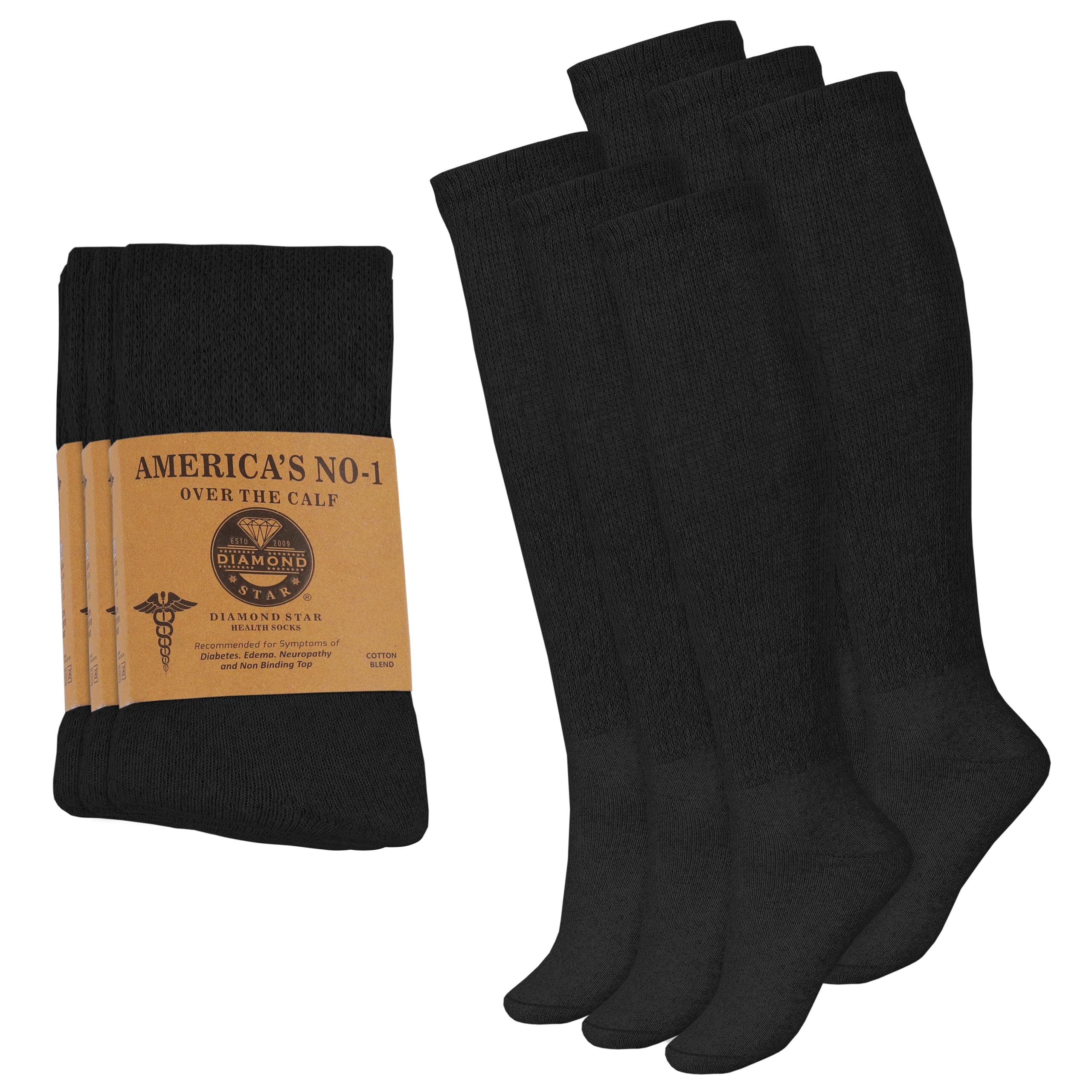
Diamond Star focuses on what matters most for diabetic feet: a high cotton content that feels natural against the skin and a wide, non-binding top that never squeezes. The 90% cotton construction absorbs moisture well, though users should note it is not as fast-wicking as synthetic blends. The over-the-calf height provides full coverage from ankle to knee, and the cushioned heel adds a layer of protection against friction at the back of the foot.
Reviews from individuals with edema and larger calves highlight how the loose knit and stretchable fabric accommodate swelling without resistance. The foot section can be pulled up slightly for those with smaller feet, making the same sock size adaptable across a wider range. Multiple repeat buyers confirm that the socks hold their shape after many washes, though hot water drying can cause shrinkage—warm wash and line drying is recommended to preserve the fit.
The main complaint involves isolated quality control issues where black lint or dye residue appeared inside the socks on the first wear. Also, the cotton fabric can feel warm in summer months, making these more of a cool-weather or air-conditioned environment choice. They are not compression socks in the medical sense—the gentle hold is about comfort and non-binding support rather than therapeutic pressure gradients.
Why it’s great
- High 90% cotton content feels natural and gentle on sensitive skin
- Wide non-binding top accommodates swollen calves without constriction
- Six-pair pack offers excellent value for daily rotation
Good to know
- Cotton holds moisture longer than synthetic wicking blends
- Some users report loose dye residue inside new socks
4. Ailaka Zipper Compression Socks 20-30 mmHg

The Ailaka zipper socks solve the single biggest friction point for diabetics with limited hand strength or dexterity: getting compression socks on and off. The side-mounted YKK zipper runs from the ankle up, allowing you to open the sock wide, slide your foot in, and zip it closed without struggling to pull tight fabric over the heel. The zipper handle is extended and easy to grip, making independent dressing possible even for elderly users or those recovering from surgery.
The compression is therapeutic-grade at 20-30 mmHg, with a graduated design that targets the ankle and reduces pressure up the calf. The fabric blend of 70% nylon and 30% spandex provides four-way stretch and a snug fit that does not loosen during the day. Sizing extends from medium to 5X-large, accommodating severe calf swelling that standard compression socks cannot handle. Users with edema report that the zip-up design allows them to wear effective compression for the first time without needing assistance.
The main trade-off is that the zipper, while smooth, sits against the leg and can create a visible line under tight pants. Some users find the 20-30 mmHg level noticeably tighter than other brands at the same rating, so careful measurement is essential before purchasing. The socks are opaque and durable, with several six-month daily wear reports confirming the zipper remains functional and the compression does not sag.
Why it’s great
- YKK zipper enables easy independent dressing for those with limited mobility
- Therapeutic 20-30 mmHg graduated compression effectively manages edema
- Extended sizing up to 5XL fits severe calf swelling
Good to know
- Zipper may show a visible line under slim-fit trousers
- Compression feels firmer than some competing 20-30 mmHg brands
5. LEVSOX Plus Size Compression Socks Wide Calf 20-30 mmHg

The LEVSOX wide calf socks are engineered specifically for individuals with larger ankles and calves who cannot fit into standard compression sock dimensions. The 20-30 mmHg graduated compression is delivered through a stretchy nylon-spandex blend that conforms without cutting in. Users with lymphedema and significant swelling report that these socks are the first that do not roll down or leave deep indentations at the top band, offering genuine all-day wearability.
The toe area uses a thin, non-irritating fabric with a seam that several reviewers describe as nearly invisible. The compression is supportive but not rigid, making these suitable for 24/7 wear if prescribed. The fabric breathes reasonably well for a synthetic blend, though some users note a slight chemical odor straight out of the package that dissipates after the first wash. The knee-high length is generous, which can be a pro for tall individuals but may dig into the back of the knee for shorter users.
Compared to heavily advertised wide calf brands, the LEVSOX offers a similar fit at a more accessible price point. The pattern options are limited compared to regular-sized versions, which some buyers find disappointing. However, the core function—effective graduated compression for wide legs without rolling or binding—is executed well enough that multiple reviewers purchased additional pairs after the first week of use.
Why it’s great
- Wide calf design fits legs that standard compression socks cannot accommodate
- 20-30 mmHg graduated compression effectively reduces edema and swelling
- Smooth toe seam minimizes irritation for sensitive diabetic feet
Good to know
- Length can be too tall for shorter individuals, causing behind-knee pressure
- Initial chemical odor requires a wash before first wear
FAQ
Can diabetics wear 20-30 mmHg compression socks safely?
How tight should diabetic compression socks feel on the calf?
Are seamless toe socks really necessary for diabetes?
Final Thoughts: The Verdict
For most users, the compression socks for diabetics winner is the Yomandamor Over the Calf Dress Socks because they combine a truly seamless toe and non-binding top with a soft bamboo rayon fabric that manages moisture without triggering irritation. If you need therapeutic 20-30 mmHg compression with easy on-off access, grab the Ailaka Zipper Compression Socks. And for wide calves that standard socks cannot fit comfortably, nothing beats the LEVSOX Plus Size Wide Calf Socks.

Mo Maruf
I created WellFizz to bridge the gap between vague wellness advice and actionable solutions. My mission is simple: to decode the research and give you practical tools you can actually use.
Beyond the data, I am a passionate traveler. I believe that stepping away from the screen to explore new environments is essential for mental clarity and physical vitality.