Our readers keep the lights on and my smoothie glass nicely filled. As an Amazon Associate, I earn from qualifying purchases.
Specs are compiled from manufacturer listings and verified buyer reviews and can change over time — please confirm the key details on the product page before buying.
If you have diabetes, a sock that squeezes too tight or has a rough toe seam can cause real damage without you even feeling it. The challenge is finding compression socks that support your legs without cutting off circulation or irritating sensitive skin. This guide picks the three that solve those problems.
I’m Mohammad Maruf — the founder and writer behind WellFizz. This guide is built by comparing the manufacturers’ published specifications and the patterns across verified customer reviews, so you get each pick’s real strengths and trade-offs instead of marketing spin.
We focus on the features that matter most—gentle graduated compression (pressure that is stronger at the ankle and looser higher up), smooth toes (no irritating ridge of thread), non-binding tops (no tight elastic band), and moisture-wicking materials (fabrics that pull sweat away)—to help you find the best compression socks for diabetic women that actually feel good all day long.
Our Picks at a Glance
How To Choose The Best Compression Socks For Diabetic Women
When shopping for diabetic compression socks, you need to look beyond the basic “one size fits all” approach. The wrong choice can cause pinching, irritation, or restricted blood flow — the exact problems you are trying to avoid. Here are the three things to check first.
Compression Level: Gentle Support, Not a Tourniquet
Compression socks are measured in millimeters of mercury (mmHg) — a unit that tells you how much pressure the sock applies to your leg. For diabetic women, the key is finding the balance between support and safety. Very firm compression (20-30 mmHg) is good for post-surgery swelling or varicose veins (swollen, twisted veins), but it might be too strong for everyday wear if you have neuropathy or fragile skin. Milder compression (8-15 mmHg) keeps the sock in place and helps with mild fluid buildup without digging into your leg. Always talk to your doctor about what level is right for you.
smooth Toe and Non-Binding Top
A regular sock has a thick seam at the toe that rubs against your skin with every step. For someone with reduced sensation in their feet (neuropathy), that rubbing can cause a blister or sore without you feeling it. A smooth toe reduces this risk. Similarly, the top band of the sock should be “non-binding.” This means it holds the sock up using gentle grip and stretch fabric instead of tight elastic that can cut off circulation and leave marks on your calf.
Fabric and Moisture Management
Diabetic feet are more prone to infections, so keeping your skin dry is critical. Look for materials like bamboo viscose, polyester, or nylon blends that wick moisture away from the skin rather than trapping sweat. A soft, breathable fabric also reduces friction inside your shoe, which lowers the chance of blisters.
Quick Comparison
| Model | Best For | Compression Level | Toe Design | Pairs Included | Amazon |
|---|---|---|---|---|---|
| BraceAbility Knee High★ Best Overall | Post-surgery & targeted relief | 20-30 mmHg | Closed (or open) | 1 | Amazon |
| JOBST SensiFoot | Everyday mild support | 8-15 mmHg | smooth | 1 | Amazon |
| Bamboo Viscose Diabetic Socks | Ultra-soft, non-binding comfort | Non-compression | Non-binding | 5 | Amazon |
In‑Depth Reviews
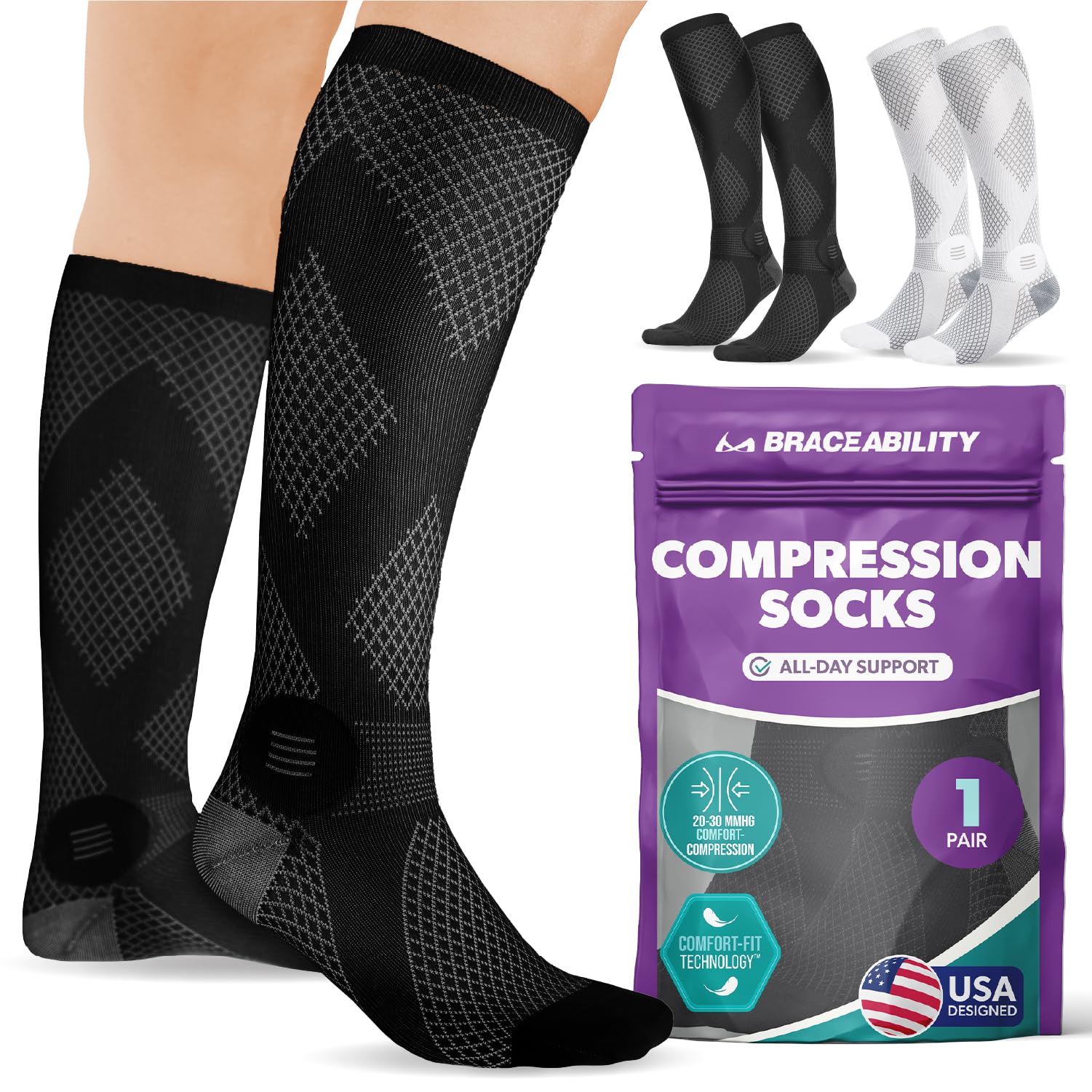
1. BraceAbility Knee High Compression Socks 20-30 mmHg
Our pick — over 4★ from 450+ verified ratings; the strongest balance of quality and price.
Firmer by far — the BraceAbility sock gives you about 2.5 times the squeeze of the JOBST, designed for active swelling management, not just daily comfort.
If you need serious medical-grade compression to manage post-surgery swelling, edema (fluid buildup in leg tissues), or varicose veins, this is the sock. It delivers 20-30 mmHg graduated compression to actively boost blood flow and push fluid out of your legs. Buyers report one reviewer “worn on day 4 after cast removal; helped with driving and errands (6k steps),” which shows it holds its shape even during long movement. At 2.89 ounces for the pair, it is lightweight enough to pack for travel or a long nursing shift.
The trade-off is real: that strong compression means the fabric is thick and warm. One reviewer deducted a star because it was “too warm for all-day wear.” High warmth is something to consider if you run hot or live in a warm climate. You also get flexibility in the toe — this sock comes in both closed-toe and open-toe (toeless) versions, which is great for sensitive toes that need to breathe. The medium size is reported to fit women’s shoe sizes 9.5-10 well, so double-check the sizing chart before you order.
For diabetic women managing active symptoms like swollen feet or recovering from a procedure, the firm hold is a powerful tool. But if you only need light daily support to prevent problems, this level of squeeze might be more than you need.
What makes it stand out
- Medical-grade 20-30 mmHg compression reduces significant swelling
- Flexible closed-toe or open-toe design for sensitive toes
- Nurse-approved, durable construction for long shifts
What to consider
- Too warm for some buyers in hot weather
- Only one pair per purchase
- Strong compression may be too much for everyday mild needs
Reach for this if: you need active symptom relief for swelling, post-surgery recovery, or varicose veins and can handle the warmth.
Look elsewhere if: you just want a light, airy sock for daily foot protection or you have very sensitive skin that can’t handle 20-30 mmHg compression.
2. JOBST SensiFoot Diabetic Compression Socks 8-15 mmHg
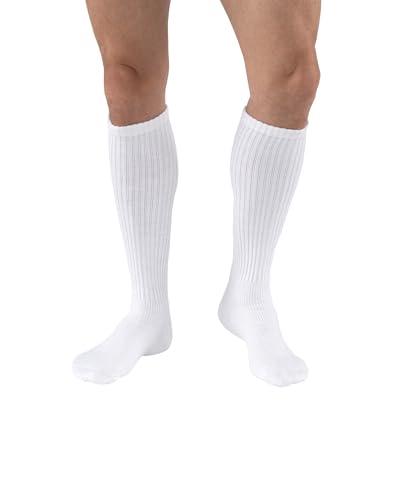
Unlike the BraceAbility’s firm squeeze, the JOBST gives you a protective grip that prioritizes safety over pure compression power.
JOBST is a well-known name in medical compression, and the SensiFoot is designed from the ground up for diabetic feet. Its key feature is the smooth toe seam, which creates a non-irritating surface that reduces pressure and friction on your toes — a critical detail if you have neuropathy and can’t feel a blister forming. The 8-15 mmHg compression level is mild and non-constricting. It is strong enough to keep the sock from sliding down or bunching inside your shoe while still being gentle enough for everyday wear. Owners mention that “these socks helped my legs by reducing the fluid build up, they also feel great.”
It also comes with extra padding in the toe, foot, and heel area. This cushioning reduces friction (the rubbing that causes blisters) and adds a layer of comfort if you are on your feet all day. The multi-fiber yarns wick moisture away, helping keep your feet dry and reducing the risk of fungal infections. At this compression level, it is much easier to pull on and take off than the firmer BraceAbility sock — customers note it is “very comfortable easy to put on and takeoff.”
The trade-off is that it offers only a single pair in the package, and the 8-15 mmHg level will not help if you have significant edema (major swelling) that needs stronger compression to manage. It is a preventative and maintenance tool, not a treatment for active swelling.
Why it works for diabetics
- Non-irritating smooth toe seam reduces blister risk
- Extra padding in foot, heel, and toe for friction protection
- Moisture-wicking fabric keeps feet dry
Where it falls short
- Mild compression won’t manage significant swelling
- Only one pair per purchase
- Limited to one color (white)
Your best bet if: you want a safe, comfortable sock for daily diabetic foot protection with just enough grip to stay put.
skip it if: you have current swelling that needs the stronger 20-30 mmHg compression to bring down.
3. Bamboo Viscose Diabetic Socks for Women (5 Pairs)
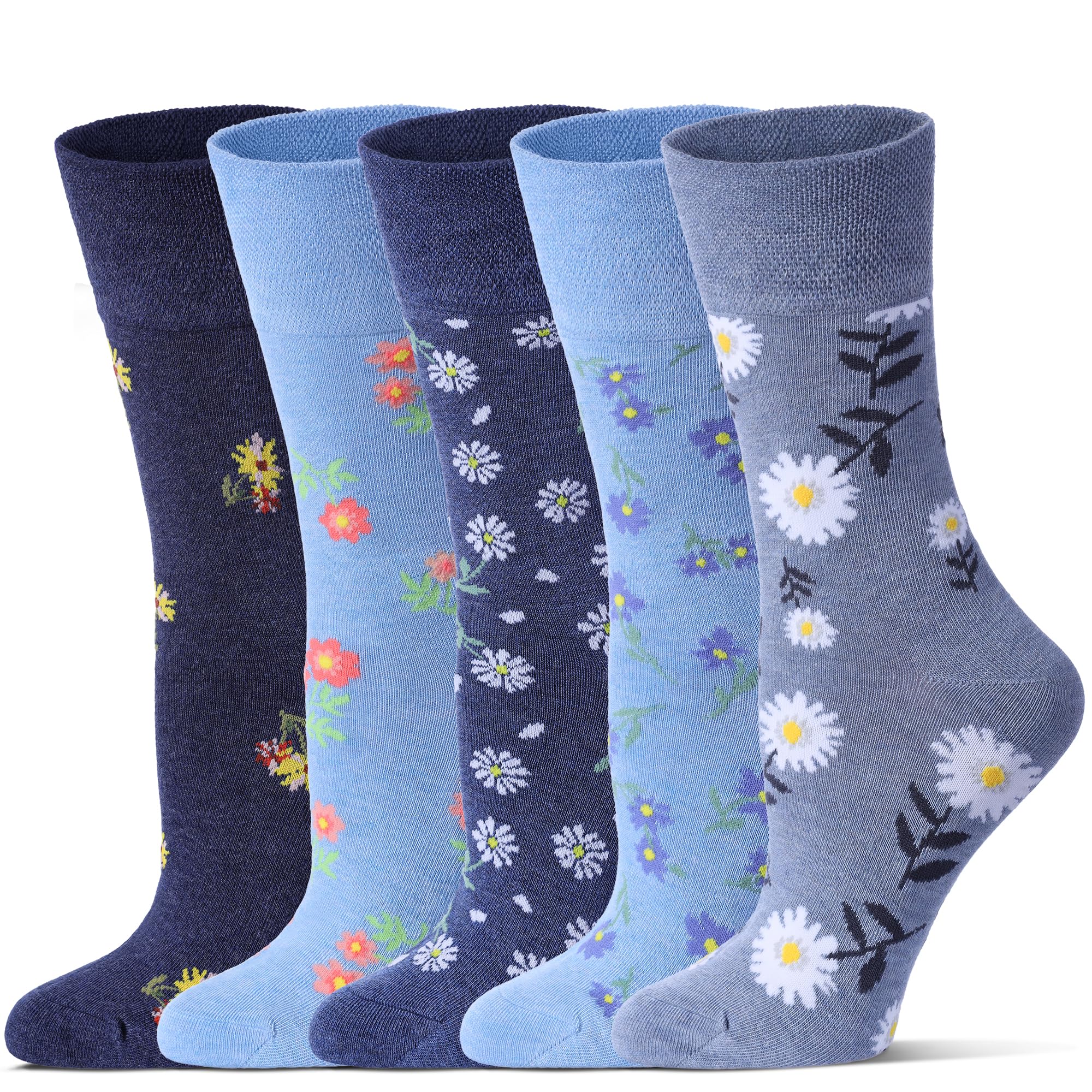
Zero squeeze, five pairs — this is the sock for when even the gentle JOBST feels like too much.
This is actually a non-compression sock — and that is exactly why it belongs on this list. Many diabetic women cannot tolerate any level of compression due to pain, neuropathy, or extremely fragile skin. For those women, this 5-pack of bamboo viscose socks is the answer. The top band is “non-binding,” meaning it holds the sock up using the gentle grip of the fabric itself rather than tight elastic that can dig into your calf. One buyer of a size 11 foot noted “sizing is appropriate,” so the fit is generous.
Reviewers consistently praise the fabric. They call it “super soft and comfortable” and note that it “feels like I’m doing the right thing for my feet when I wear these.” The bamboo viscose material is naturally breathable and moisture-wicking, which helps keep feet dry. The socks are thin, which makes them easy to slide into most shoes without feeling bulky. And because they come in a 5-pair pack, you have enough to get through a full week of rotation. Unlike the JOBST or BraceAbility picks, this is purely about comfort and protection from friction — no compression therapy at all.
The honest catch: because they are thin socks, one reviewer raised a valid concern about their durability over the long term, asking “how they will stand up to frequent use.” They are not designed for heavy walking or rugged shoes. If you need the circulatory benefits of compression to manage swelling, this sock will not provide it.
What you get
- Non-binding top prevents circulation restriction
- Ultra-soft bamboo viscose fabric feels great on sensitive skin
- 5 pairs in the pack for a full week’s rotation
What to watch for
- Thin fabric may wear out faster with heavy use
- Provides zero compression — not for swelling management
- Not designed for athletic or heavy walking activity
Ideal for: diabetic women who cannot wear compression socks due to pain or sensitivity and just need a soft, non-binding sock that protects against friction.
Not for: anyone who needs the graduated compression of the JOBST or BraceAbility to reduce fluid build-up or swelling.
Understanding the Specs
mmHg — The Compression Number
This is the unit measuring the amount of pressure the sock applies to your leg. Think of it as a tightening scale: 8-15 mmHg is a light, gentle grip that just holds the sock in place and helps with mild fluid. 20-30 mmHg is a firm, therapeutic squeeze that actively pushes fluid back up your leg. For diabetic feet, starting with a lower number is usually safer to avoid restricting blood flow further.
smooth Toe vs. Seamed Toe
A smooth toe is exactly what it sounds like — the fabric is woven in a tube shape so there is no thick ridge of thread across the end of the sock. For anyone with neuropathy (reduced feeling in the feet), a regular seam creates a constant point of friction that can lead to a sore without you ever feeling it happening. A smooth toe removes that risk entirely.
FAQ
Can diabetics wear 20-30 mmHg compression socks?
What is the difference between compression socks and diabetic socks?
Is 8-15 mmHg compression enough for diabetic swelling?
How tight should compression socks feel on diabetic feet?
How do I put on compression socks if they are hard to pull up?
Can I wear compression socks all day and night?
How many pairs of compression socks do I need for a week?
Why is a smooth toe important for diabetic women?
What does a non-binding top mean?
Can I wear diabetic compression socks with sandals or open-toe shoes?
Final Thoughts: The Verdict
For most buyers, the best compression socks for diabetic women is the JOBST SensiFoot because it perfectly balances mild, safe compression with protective features like a smooth toe and padding. If you need firmer, medical-grade support for swelling or recovery, grab the BraceAbility Knee High. And for women who cannot wear any compression at all and just want a soft, non-binding sock that protects against friction, the Bamboo Viscose 5-Pack is the ideal choice.
How We Picked
We do not accept paid placement. Every pick is matched to a real buyer and a real use-case; we do not hands-on test units.
Sources & Methodology
Specifications: manufacturer listings and product documentation. Review insights: verified customer reviews, as of July 2026. Pricing: not shown on this page (it changes often); check the current price via the retailer link.
As an Amazon Associate, WellFizz earns from qualifying purchases. This does not affect which products we feature.
Related Guides

Mo Maruf
I created WellFizz to bridge the gap between vague wellness advice and actionable solutions. My mission is simple: to decode the research and give you practical tools you can actually use.
Beyond the data, I am a passionate traveler. I believe that stepping away from the screen to explore new environments is essential for mental clarity and physical vitality.