Our readers keep the lights on and my smoothie glass nicely filled. As an Amazon Associate, I earn from qualifying purchases.
Specs are compiled from manufacturer listings and verified buyer reviews and can change over time — please confirm the key details on the product page before buying.
If you stand all day, run, travel, or just deal with a deep, dull ache in your calves, the right socks can change how your legs feel by the evening. The key is graduated compression — the sock is tighter at your ankle and loosens as it moves up your calf, This graduated design actively pushes blood upward to reduce calf pain and swelling.. This guide covers seven options, from a firm 20-30 mmHg medical-grade sock to a value-packed 8-pair bundle, so you can match support and fit to your routine.
I’m Mohammad Maruf — the founder and writer behind WellFizz. This guide is built by comparing the manufacturers’ published specifications and the patterns across verified customer reviews, so you get each pick’s real strengths and trade-offs instead of marketing spin.
if you need a sock for a 12-hour nursing shift, a long-haul flight, or daily runs, this roundup of the best compression socks for calf pain covers compression levels, materials, and real buyer feedback that matter for relief.
Our Picks at a Glance

How To Choose The Best Compression Socks For Calf Pain
Here is what to look for.
Compression Level (mmHg)
This is the most important spec. The number tells you how much pressure the sock applies. For everyday calf pain, standing, or travel, 15-20 mmHg (mild) is often enough. For medical conditions like varicose veins or deep leg soreness, 20-30 mmHg (firm) gives you the stronger support you need. Going too high can be uncomfortable; too low might not relieve the ache.
Graduated vs Uniform Compression
Look for “graduated” on the label. That means the pressure is strongest at the ankle and gradually decreases up the calf. This graduated design actively pushes blood upward, reducing swelling and fatigue in your calves. Uniform squeeze socks just hug your leg but do not help circulation.
Material and Breathability
If you wear them all day, breathability matters. Look for moisture-wicking nylon, microfiber, or merino wool blends. Cotton holds sweat and can get uncomfortable or cause irritation. A smooth toe also prevents blisters during long wear or athletic use.
Quick Comparison
| Model | Best For | Compression | Pairs | Key Material | Amazon |
|---|---|---|---|---|---|
| Physix Gear 20-30 mmHg★ Best Overall | Medical-grade firm support | 20-30 mmHg | 1 Pair | High-quality knit | Amazon |
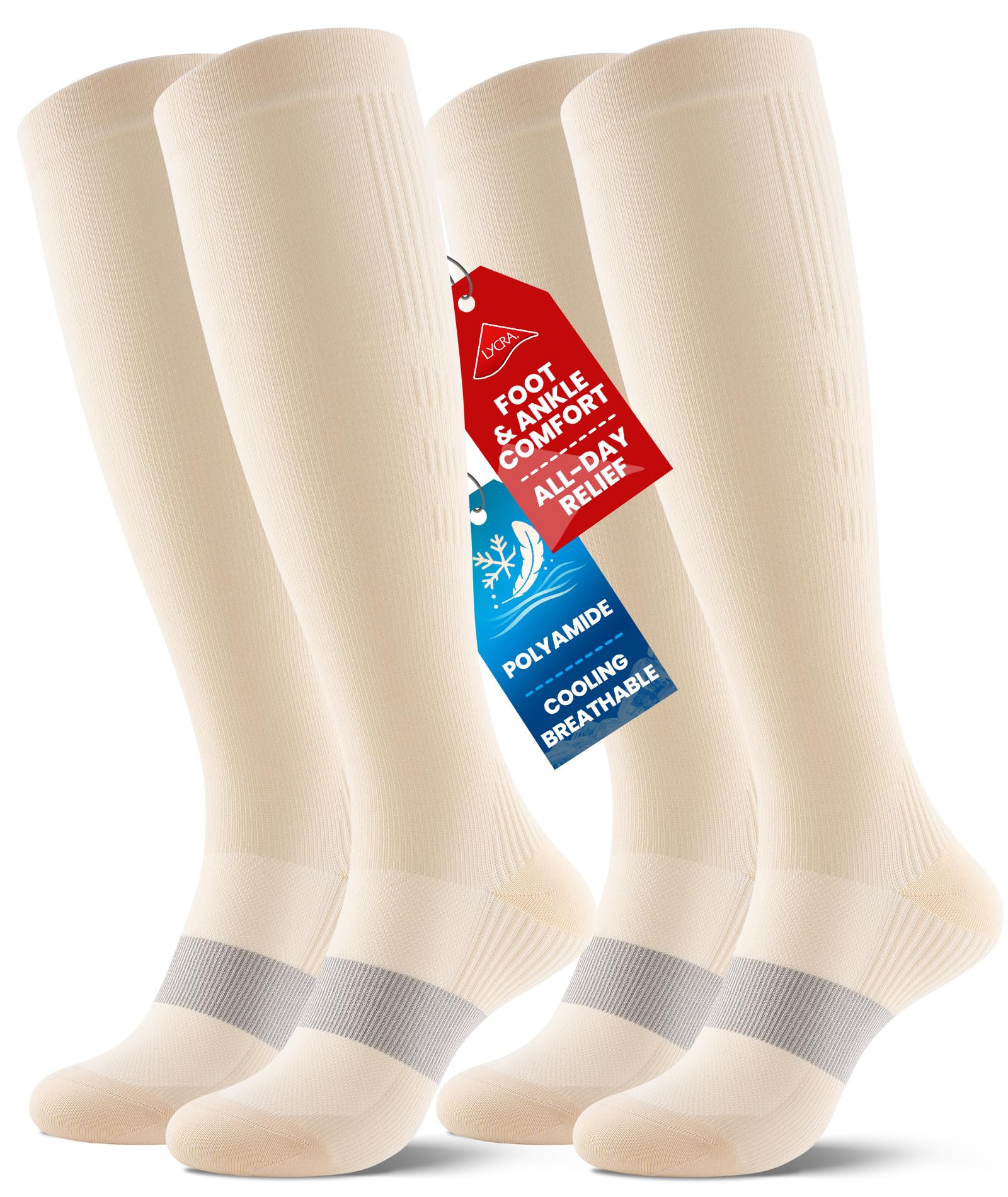
| PULIOU Cooling 20-30 mmHgCooling Power | Cooling + firm travel support | 20-30 mmHg | 2 Pairs | Moisture-wicking | Amazon |
| Benirap Breathable 20-30 mmHg | Lightweight athletic recovery | 20-30 mmHg | 2 Pairs | Breathable knit | Amazon |
| XZD 15-20 mmHg 3-Pair | Budget daily rotation | 15-20 mmHg | 3 Pairs | Universal knit | Amazon |
| CHARMKING 8-Pair 15-20 mmHg | Value bulk pack for mild support | 15-20 mmHg | 8 Pairs | Microfiber Nylon | Amazon |
| BBFREY Medical 20-30 mmHg 3-Pair | Medical-grade all-day use | 20-30 mmHg | 3 Pairs | Nylon blend | Amazon |
| Sockwell Pulse 20-30 mmHg | Merino wool comfort + firm support | 20-30 mmHg | 1 Pair | Merino Wool / Rayon | Amazon |
In‑Depth Reviews
1. Physix Gear Compression Socks 20-30 mmHg
Our pick — 4.5★ from 94,500+ verified ratings; the strongest balance of quality and price.
The 20-30 mmHg workhorse built for nurses, runners, and long shifts.
This sock gives you firm medical-grade compression — at 20-30 mmHg, it applies 20-30 mmHg of pressure versus a standard 15-20 mmHg sock, which actively pushes blood upward to stop that tired, heavy feeling in your calves. It works well if you deal with daily swelling, shin splints (pain along your shin bone), or post-workout recovery. The snug fit targets your arch and heel, which helps prevent injury during long runs or standing shifts.
Buyers report the socks hold up well after many washes, a common weak point in cheaper socks that lose elasticity. The unisex design fits both men and women, but you need to measure your calf carefully — the firm compression can feel too tight if you are between sizes.
Real muscle: Over 94,000 reviews and a 4.5-star average reflect consistent quality for demanding daily wear.
Best for: Anyone needing firm, medical-grade support for long hours on their feet or active recovery.
Consider if: You prefer a milder squeeze — the 20-30 mmHg level is serious pressure, not a casual lounging sock.
2. PULIOU Cooling Compression Socks 20-30 mmHg
Firm support that stays cool when your legs get hot.
Hot legs and compression socks can be an uncomfortable mix. PULIOU uses a cooling, moisture-wicking fabric that pulls sweat away, so you get the firm 20-30 mmHg squeeze without feeling clammy by midday. This works well for summer running, warm-weather travel, or anyone whose calves overheat in standard nylon blends.
You get two pairs in the pack, which is better value than a single high-end sock. Reviewers specifically point to breathability as the reason they chose this over more common brands. Compared to the CHARMKING 8-pair bundle, this is a mid-range option that balances cost with quality.
Why it stands out
- Cooling fabric makes all-day wear more comfortable.
- 20-30 mmHg firm compression for active recovery.
The trade-off
- Only two pairs — you will need to wash them more often for daily rotation.
Reach for these if: You need firm calf support but sweat easily in standard socks.
Look elsewhere if: You want a bigger rotation — two pairs means laundry every couple days.
3. Benirap Breathable Compression Socks 20-30 mmHg
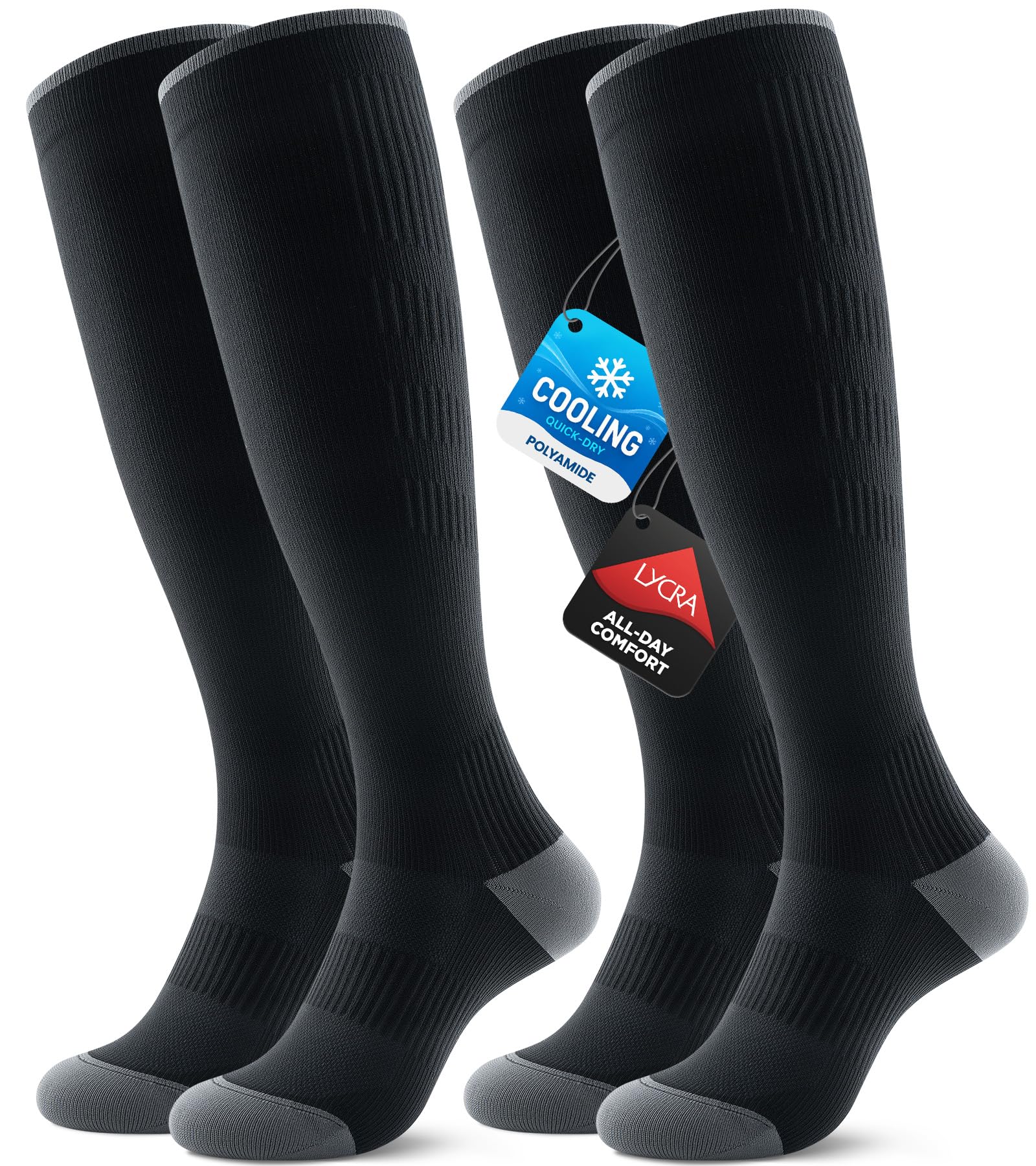
A 3.53-ounce lightweight build that breathes during hard runs.
Benirap gives you the same firm 20-30 mmHg compression as the top picks but cuts the weight to just 3.53 ounces. That makes a real difference if you are logging miles or wearing them under work pants — lighter fabric means less bulk and better airflow. The knee-high design covers your full calf, which is where most pain concentrates after a long run or a day on your feet.
With a near-perfect 4.8-star average from almost 500 reviews, buyers consistently mention breathability and comfortable fit. At two pairs, it lands in the same value territory as the PULIOU but edges ahead on weight for athletic use.
Light build, firm squeeze: If you want 20-30 mmHg support without heavy fabric, this is the leanest option in this list.
Pick this for: Runners and athletes who need firm compression in a barely-there sock.
Skip if: You prefer a thicker cushioned sole for comfort under heavy boots.
4. XZD Compression Socks 15-20 mmHg 3 Pairs
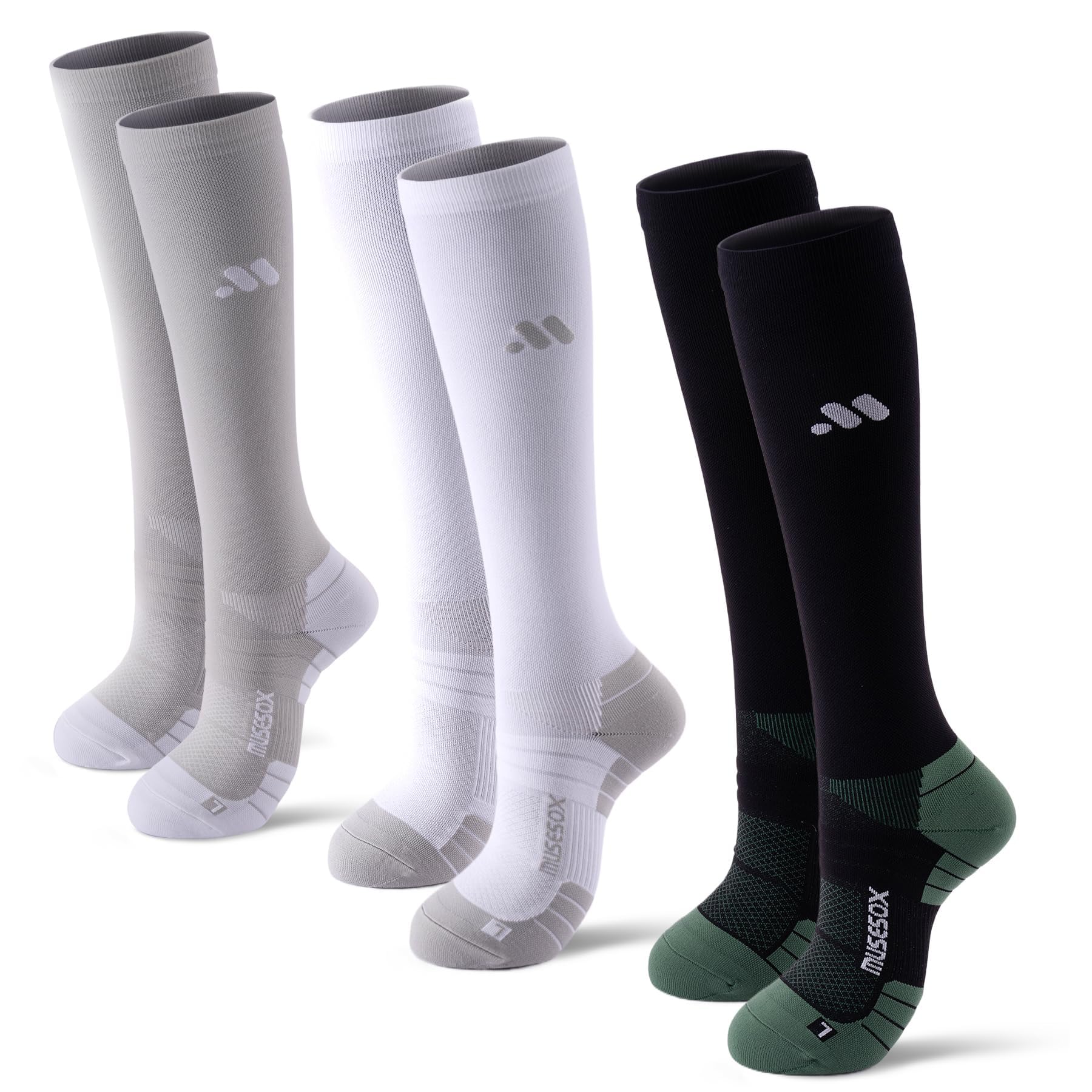
Three pairs of 15-20 mmHg mild compression for a week’s rotation on a budget.
Not everyone needs the firmest squeeze. If your calf pain is mild or you just want better circulation during travel or a desk job, this 15-20 mmHg sock offers graduated support without the tightness of a 20-30 mmHg medical-grade sock. You get three pairs in the box, which is enough for a full work week with a weekend wash.
The sock includes left/right foot labels — a small detail that helps the graduated fit work correctly. Buyers give it a strong 4.6 stars, and many mention it is a reliable everyday option that does not cut into the leg or slide down. It gives less compression than the Sockwell Pulse (which is 20-30 mmHg), so it is better suited for comfort than for therapeutic relief.
What works
- Three pairs for daily rotation at a price similar to one premium sock.
- Left/right labeling ensures correct graduated compression.
The limit
- 15-20 mmHg may not be strong enough for chronic calf pain or swelling.
Grab these for: Mild discomfort, long flights, or desk work where you just need a gentle push.
Pass if: You require the firm 20-30 mmHg level for medical recovery or varicose veins.
5. CHARMKING Compression Socks 15-20 mmHg (8 Pairs)

An 8-pair bundle of gentle compression for the whole week, no laundry required.
This is the quantity king of the list. CHARMKING gives you 8 pairs of knee-high socks with 15-20 mmHg graduated compression — that is 8 pairs versus the PULIOU cooling socks’ 2 pairs, making it the clear choice if you want a fresh pair every morning without obsessing over the laundry basket. The mild compression level supports circulation and helps prevent muscle cramps, but it is not designed for serious medical or athletic recovery.
The sock has an open-toe option and targeted support for the calf. With over 89,000 ratings and a 4.5-star average, buyers consistently report good durability for the price. That said, the compression is lighter than the 20-30 mmHg options here, so if you have significant calf pain you may need a firmer sock.
Volume play: At 8 pairs, you get 8 pairs versus the 2-pair options — practical for daily wear.
Best for: Daily mild support on a budget where having many pairs matters more than maximum pressure.
Consider the trade-off: The 15-20 mmHg level is good for flight and office use but lacks the firm grip for deep calf pain relief.
6. BBFREY Medical Compression Socks 20-30 mmHg (3 Pairs)
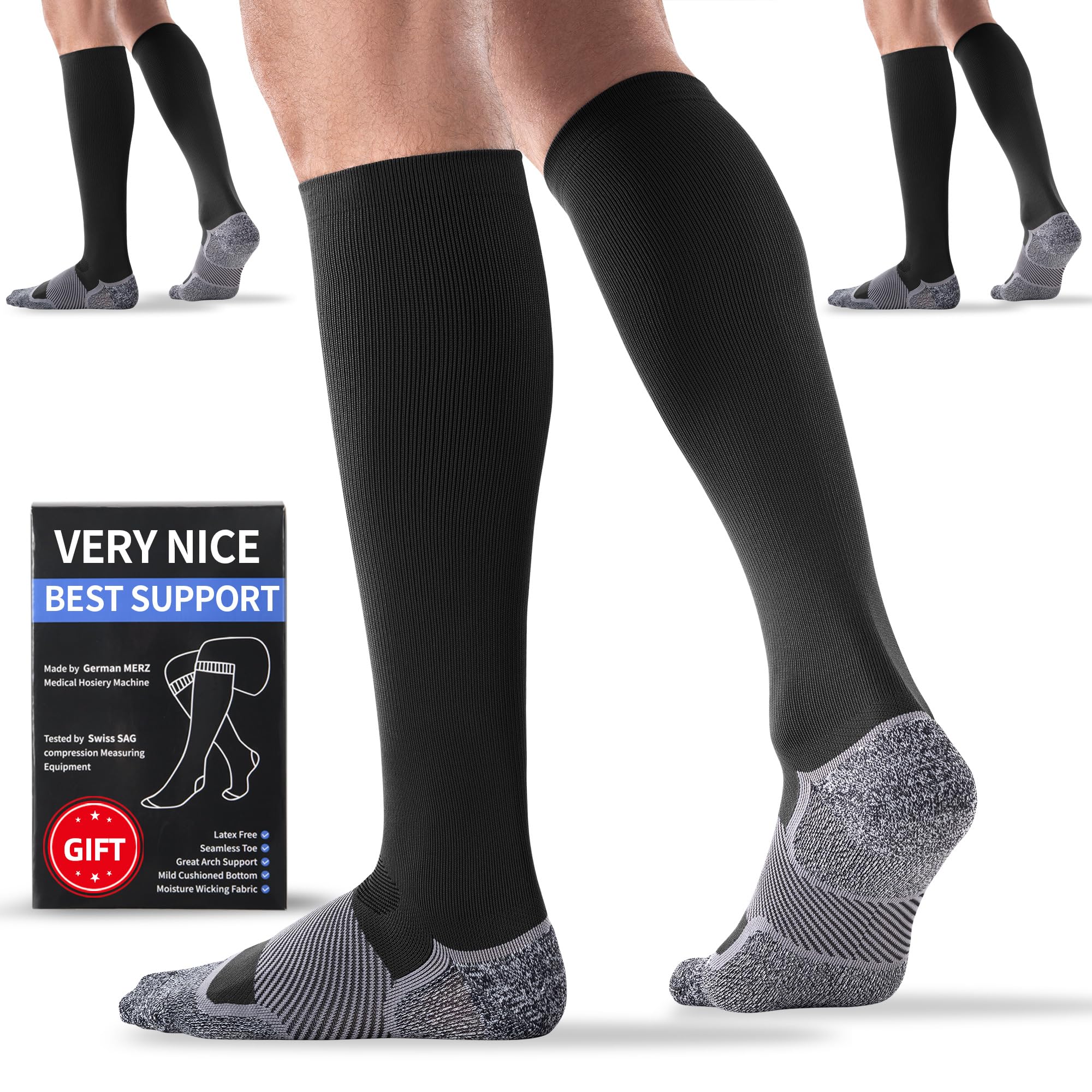
German-made medical-grade compression tested for consistency across three pairs.
BBFREY stands out because of its manufacturing approach — the socks are made on German medical sock machines and undergo rigorous pressure testing. That means the 20-30 mmHg gradient you get in pair one is the same in pair three, which matters for medical-grade recovery. The fabric blend uses microfiber nylon for durability with moisture-wicking and breathability built in.
The toe and heel have a light cushion for comfort, and the toe is smoothly stitched to prevent blisters. Buyers highlight the quality of the compression and the fit for all-day wear, especially for conditions like edema (swelling from fluid retention) or plantar fasciitis (pain in the heel and bottom of the foot). At three pairs, it offers a good rotation for someone who needs firm support daily without the single-pair limitation of the Sockwell or Physix Gear.
Engineering edge
- German-made medical machines for consistent 20-30 mmHg pressure.
- smooth toe and light cushion for all-day comfort.
The catch
- Premium pricing for the 3-pair pack compared to the budget 3-pair options.
Reach for these when: Consistent medical-grade compression across multiple pairs matters for your recovery routine.
Look elsewhere if: You just need a single pair for occasional use — a 3-pack may be more than you need.
7. Sockwell Women’s Pulse Knee High Firm 20-30 mmHg
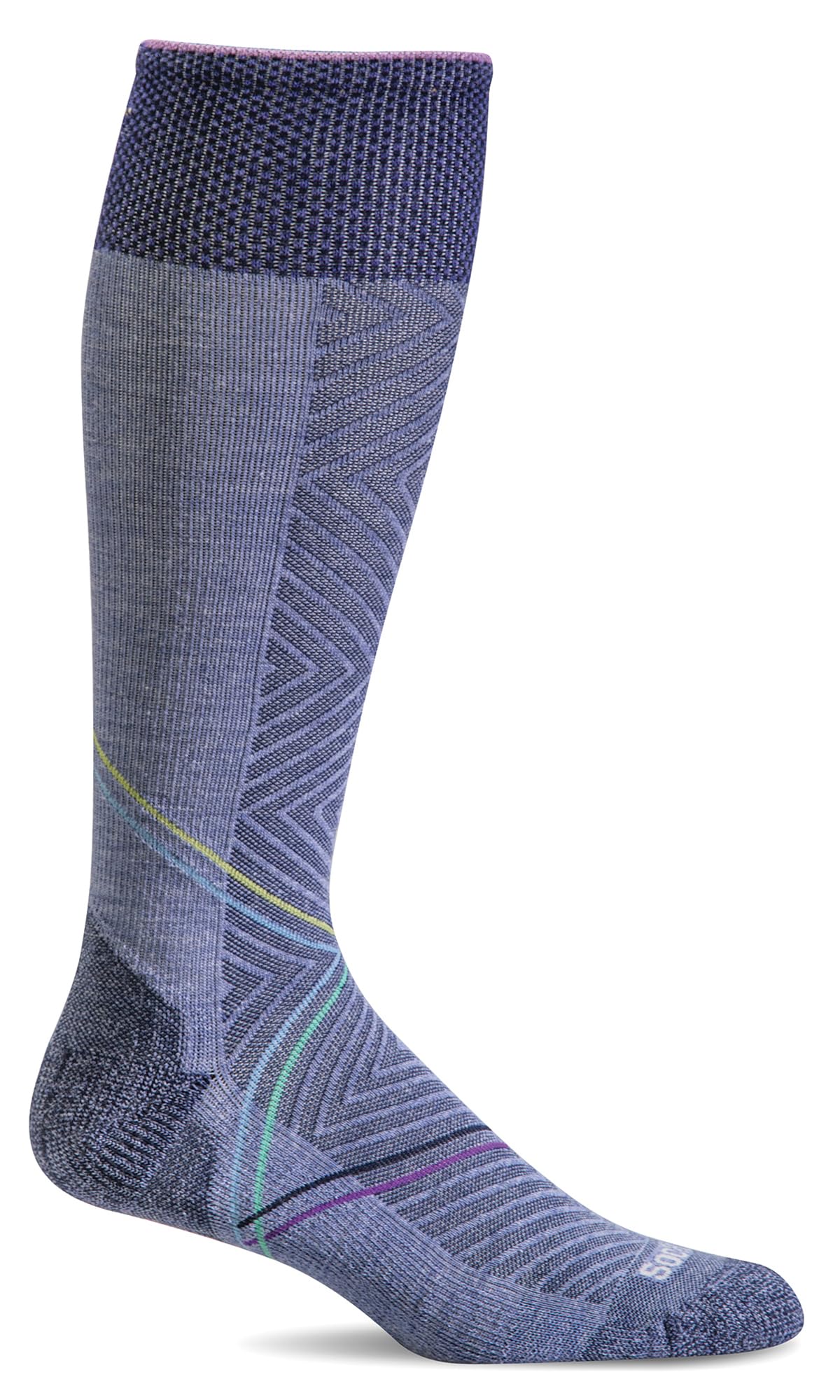
Merino wool meets firm 20-30 mmHg compression for temperature-regulating relief.
Most compression socks are synthetic nylon blends that can trap heat. Sockwell uses a signature fiber blend of merino wool sourced from the USA and rayon, which naturally manages moisture and temperature. That means your calves stay cooler in summer and warmer in winter while getting the same firm 20-30 mmHg graduated compression that soothes tired, aching legs.
The sock uses a triple-zone anti-fatigue design to boost circulation. Buyers give it a 4.6-star average, praising the comfort and style — it looks more like a fashion sock than a medical device. The sock is cut for women, so men may find the fit too narrow.
Wool advantage: The merino blend makes this the most breathable and temperature-stable firm-compression sock in the lineup.
Best for: Women who want firm 20-30 mmHg support but cannot stand sweaty synthetic socks.
Skip if: You need multiple pairs on a budget or you are a man — the women-specific sizing may not fit.
Understanding the Specs
Compression Level (mmHg)
This measures the pressure the sock applies, in millimeters of mercury (mmHg). Think of it as the “squeeze” strength. 15-20 mmHg is considered mild — good for travel, desk work, and mild calf fatigue. 20-30 mmHg is firm medical-grade — better for chronic pain, varicose veins (swollen, twisted veins), recovery after surgery, or heavy swelling. Higher mmHg means more pressure on your calf to push blood upward.
Graduated Compression
This means the sock is tightest at your ankle and gradually loosens as it goes up your calf. Graduated compression actively pushes blood toward your heart rather than just squeezing your leg evenly. If a sock does not say “graduated,” it may not help with circulation — it could just feel tight without doing the therapeutic work.
FAQ
Will 15-20 mmHg socks help with calf pain?
How tight should compression socks feel for calf pain?
Can I sleep in compression socks?
How do I measure my calf for the right size?
How many hours a day can I wear compression socks?
Can I machine wash compression socks?
What is the difference between a compression sleeve and compression socks?
Do compression socks help with shin splints?
Final Thoughts: The Verdict
For most people, the best compression socks for calf pain winner is the Physix Gear 20-30 mmHg because it delivers reliable, firm, medical-grade compression backed by over 94,000 reviews. If you want superior breathability and temperature control in a firm sock, grab the Sockwell Pulse Merino Wool 20-30 mmHg. And for a budget-friendly rotation with mild support, the standout is the CHARMKING 8-pair 15-20 mmHg bundle.
How We Picked
We do not accept paid placement. Every pick is matched to a real buyer and a real use-case; we do not hands-on test units.
Sources & Methodology
Specifications: manufacturer listings and product documentation. Review insights: verified customer reviews, as of July 2026. Pricing: not shown on this page (it changes often); check the current price via the retailer link.
As an Amazon Associate, WellFizz earns from qualifying purchases. This does not affect which products we feature.
Related Guides

Mo Maruf
I created WellFizz to bridge the gap between vague wellness advice and actionable solutions. My mission is simple: to decode the research and give you practical tools you can actually use.
Beyond the data, I am a passionate traveler. I believe that stepping away from the screen to explore new environments is essential for mental clarity and physical vitality.