Our readers keep the lights on and my smoothie glass nicely filled. As an Amazon Associate, I earn from qualifying purchases.
Specs are compiled from manufacturer listings and verified buyer reviews and can change over time — please confirm the key details on the product page before buying.
If your ankles feel tight or puffy by midday, the right pair of socks can make that feeling disappear fast. The trick is picking a pair with the right amount of squeeze for your situation, because not all compression socks are the same strength or build. This guide walks you through seven options that target ankle swelling, from lightweight support socks to medical-grade treatments.
I’m Mohammad Maruf — the founder and writer behind WellFizz. This guide is built by comparing the manufacturers’ published specifications and the patterns across verified customer reviews, so you get each pick’s real strengths and trade-offs instead of marketing spin.
Whether you are a nurse finishing a long shift, a traveler stuck in a narrow seat, or someone dealing with everyday fluid retention, you need socks that work without making you miserable. Here is exactly how to pick the right compression socks for ankle swelling and which models actually deliver the support they promise.
Our Picks at a Glance

How To Choose The Best Compression Socks For Ankle Swelling
Grabbing the cheapest sock or the one with the most pairs can leave you with a sock that does not actually squeeze enough to push fluid out of your ankles. You need to match the pressure to the problem.
Know the mmHg number that fits your swelling
The number followed by “mmHg” tells you how much pressure the sock applies to your leg. For mild swelling that appears late in the day, a 15-20 mmHg sock is usually enough. For noticeable puffiness that sticks around, a 20-30 mmHg sock provides the medical-grade squeeze that pushes fluid out faster.
Knee-high length covers the right zone
Swelling starts in your ankles and feet, so a sock that reaches just below your knee is the best length. It covers the entire area where fluid collects and the graduated pressure (tightest at the ankle, looser higher up) helps move that fluid upward.
Materials and breathability matter for all-day wear
If you plan to wear these socks for a full shift or a long flight, you need a fabric that wicks sweat and lets your skin breathe. Nylon and spandex blends are common, but some brands add copper fibers or cooling technology to help with moisture and odor.
Quick Comparison
| Model | Best For | Compression Level | Pairs | Length | Amazon |
|---|---|---|---|---|---|
| Physix Gear (1 Pair)★ Best Overall | Trusted all-day comfort | 20-30 mmHg | 1 | Knee High | Amazon |
| NEENCA Medical Socks (2 Pairs)Medical Grade | Medical-grade ankle relief | 20-30 mmHg | 2 | Knee High | Amazon |
| NEENCA Copper Sock (1 Pair) | Patented ankle support | 20-30 mmHg | 1 | Knee High | Amazon |
| PULIOU Cooling (2 Pairs) | Hot-weather wear | 20-30 mmHg | 2 | Knee High | Amazon |
| LEVSOX Open Toe (1 Pair) | Toe freedom and airflow | 20-30 mmHg | 1 | Knee High | Amazon |
| Compression Socks (3 Pairs) | Everyday rotation on a budget | 15-20 mmHg | 3 | Knee High | Amazon |
| CHARMKING (8 Pairs) | Stocking up for the whole family | 15-20 mmHg | 8 | Knee High | Amazon |
In‑Depth Reviews
1. Physix Gear Compression Socks — 20-30 mmHg
Our pick — 4.5★ from 94,500+ verified ratings; the strongest balance of quality and price.
The 94,000-review champ that balances medical compression with everyday comfort.
With over 94,800 ratings and a 4.5-star average, Physix Gear is the most reviewed compression sock on this list for a reason. It delivers a firm 20-30 mmHg squeeze — the same grade as the NEENCA medical socks above — but at a lower price point and in a single-pair package that makes it an easy “try one” purchase.
The design targets the arch and heel with extra support, which helps if you also deal with foot fatigue alongside ankle puffiness. The sock is marketed for athletes, nurses, and travelers alike, so the knit is durable enough for hours of standing or sitting in a cramped airplane seat. Unlike the NEENCA, this one does not use copper fibers or a patented ankle-ring design, but reviewers consistently mention it stays put without rolling down at the top.
The single-pair pack means you will need to wash and dry it daily if you wear it every day, but for someone just starting with compression, it is a lower-commitment way to see if the 20-30 mmHg level fixes your swelling before investing in a multi-pack.
Massive trust signal: Nearly 95,000 ratings with a 4.5 average is a rare indicator that the sock delivers on its promise consistently. The catch is that one pair means you have to hand-wash it overnight or buy a second pack.
Verdict: The safest first pick for anyone wanting proven 20-30 mmHg compression without spending on medical branding. Buy one pair to test, then grab more if it works.
One limit: Not the best if you want a multi-pair rotation — you will have to buy another pack separately.
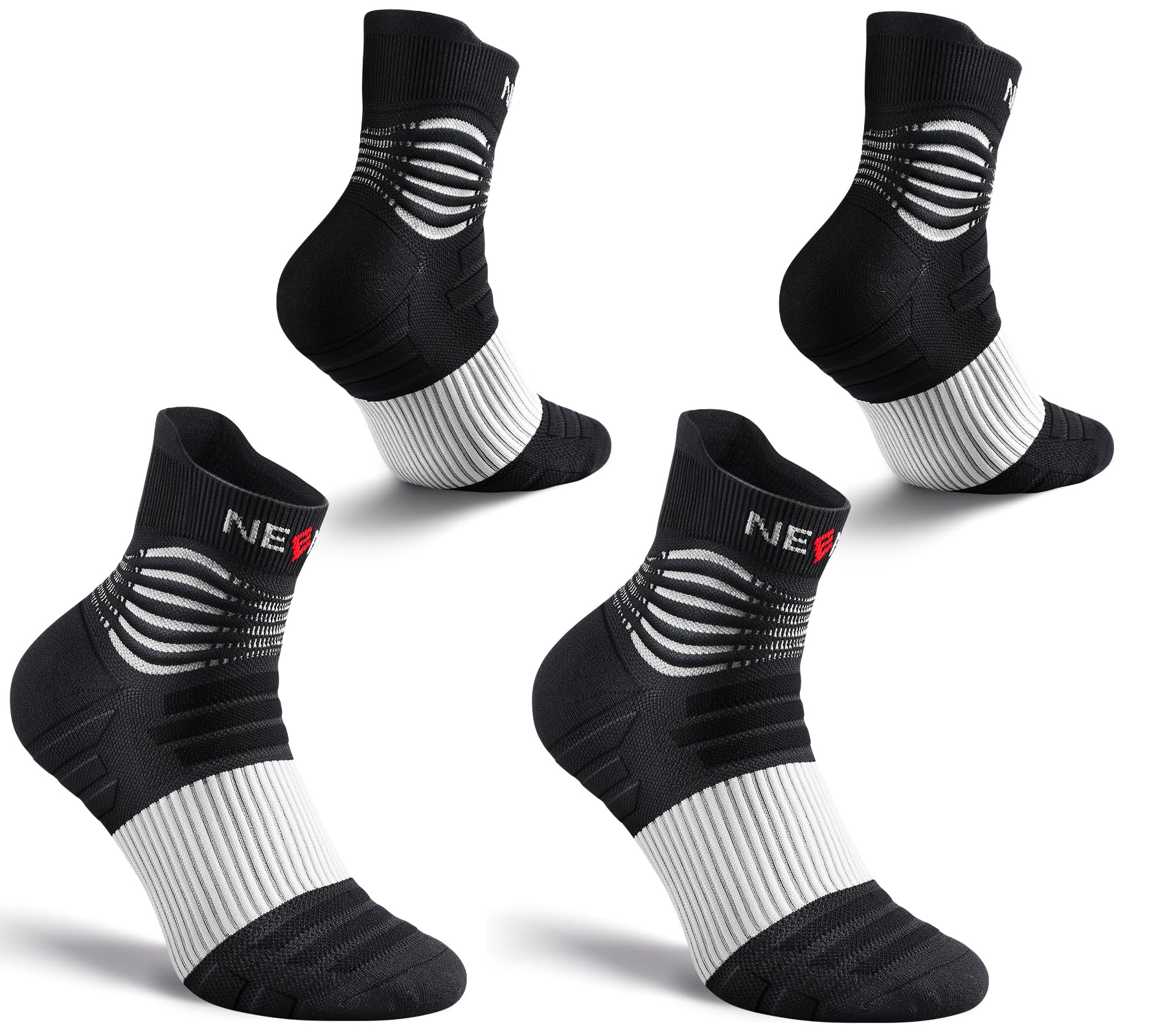
2. NEENCA Medical Compression Socks (2 Pairs) — 20-30 mmHg
The medical-grade sock that wraps each ankle in six targeted compression rings.
If your ankle swelling is persistent enough that a lighter sock does not cut it, this NEENCA pair brings the full prescription-level squeeze at 20-30 mmHg — a 33% higher compression level than a standard 15-20 mmHg sock. The maker calls it a “Class 1 Medical Device,” and the key feature is the patented Ankle Tuck Compression Technique that uses six compression rings right around the ankle to push fluid out from multiple angles.
The fabric blend — 65% nylon, 20% spandex, 8% polyester, and 7% cotton — is designed to avoid the itchiness some people get from medical socks. Buyers report the non-slip fabric stays in place all day, even during active movement, so you are not constantly tugging them up. It comes in a 2-pair pack, which helps if you need to alternate while one set is being washed.
Unlike budget multi-pair packs, this one is heavier on compression and lighter on quantity, so it is the right choice when swelling reduction is your single priority and you do not want to compromise on pressure.
Why the squeeze works
- 6 integrated compression rings at the ankle for targeted pressure relief.
- Reinforced arch support and 6-layer thicker loops on the sole for shock absorption.
- Made in the USA with a breathable, fast-drying air knit fabric.
One trade-off
- Only 2 pairs in the pack — less convenient for daily rotation than a 3+ pair bundle.
- 20-30 mmHg can feel too tight for people who only have mild evening puffiness.
Reach for these if: you have noticeable or persistent ankle swelling and you want a doctor-recommended, medical-grade pressure level backed by a patented design.
Look elsewhere if: your swelling is very light or only happens after a short walk — a 15-20 mmHg sock will be more comfortable for that.
3. NEENCA Copper Compression Socks — 20-30 mmHg (1 Pair)
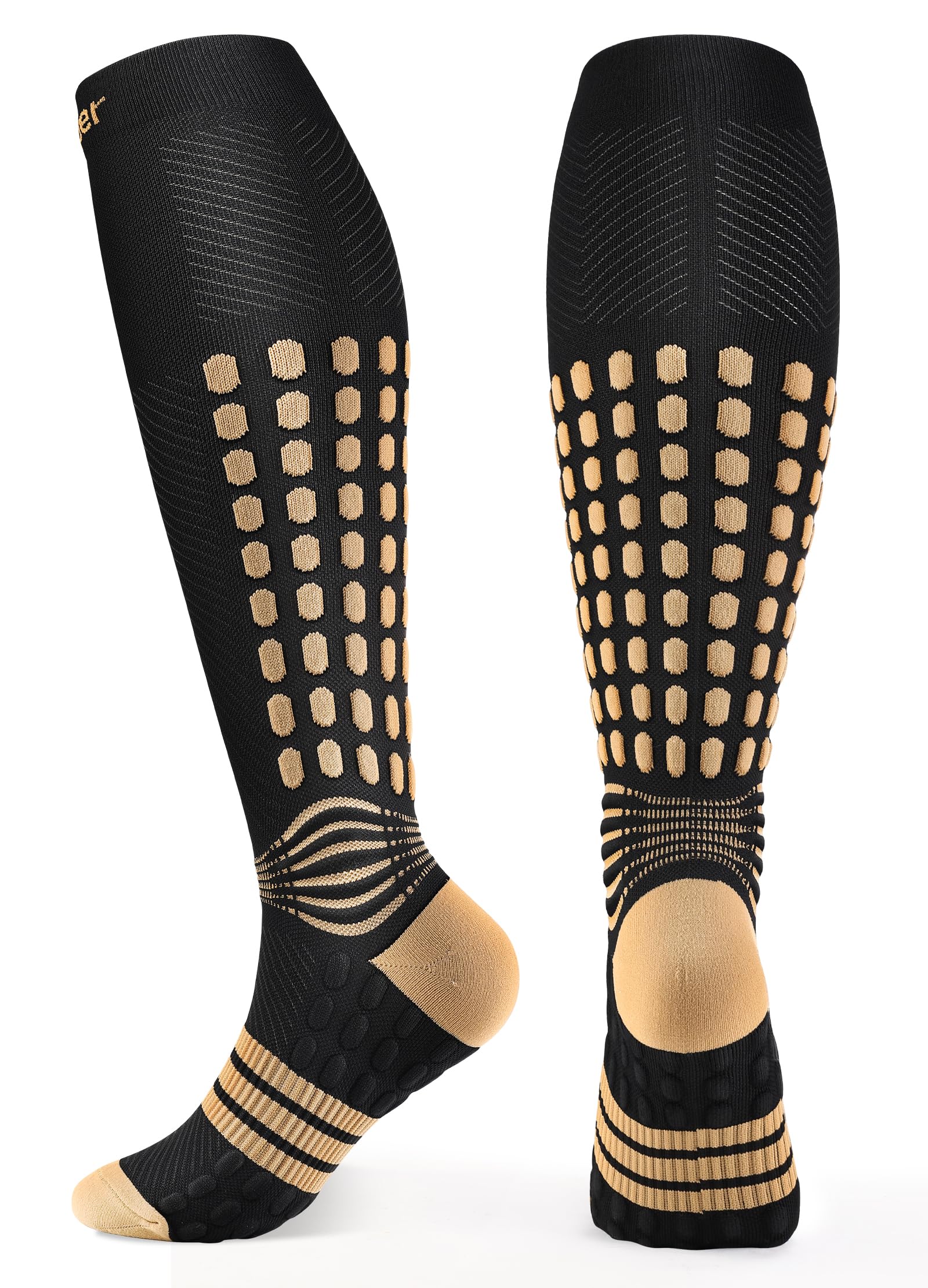
A copper-infused sock with a patented ankle tuck that grips from six directions.
This is the single-pair version of NEENCA’s medical-grade compression, and it packs the same core technology: the patented Ankle Tuck Compression Tech with six compression rings knitted around the ankle. The big difference here is the copper-infused fabric, which the maker says helps keep the feet warm and supports recovery — a feature the two-pair medical pack above does not offer.
At 20-30 mmHg, the pressure is the same firm medical grade, and the reinforced arch support and muscle massage dots on the sole add extra comfort for people who stand or run. This sock shares the same patented design as the NEENCA 2-pair pack, but in a single-pair copper version that weighs 5.29 ounces. The copper element is the main conversation point: owners mention less odor and a feeling of warmth compared to standard nylon-compression socks.
Compared to the Physix Gear above, this one edges ahead on engineering (the six compression rings versus a standard knit), but the single-pair format means you get only one shot to find the right size before the return window closes.
Standout feature: The six-ring ankle compression is unique on this list — no other sock here uses that exact multi-ring design to target ankle fluid. The copper thread is a plus if you care about odor control or have cold feet.
Best for: someone who wants the most technologically engineered ankle compression design in a single sock. skip it if you prefer a standard fabric feel without metal threads.
Heads up: Only one pair, so budget an extra pack if you wear compression daily.
4. PULIOU Cooling Compression Socks — 20-30 mmHg (2 Pairs)
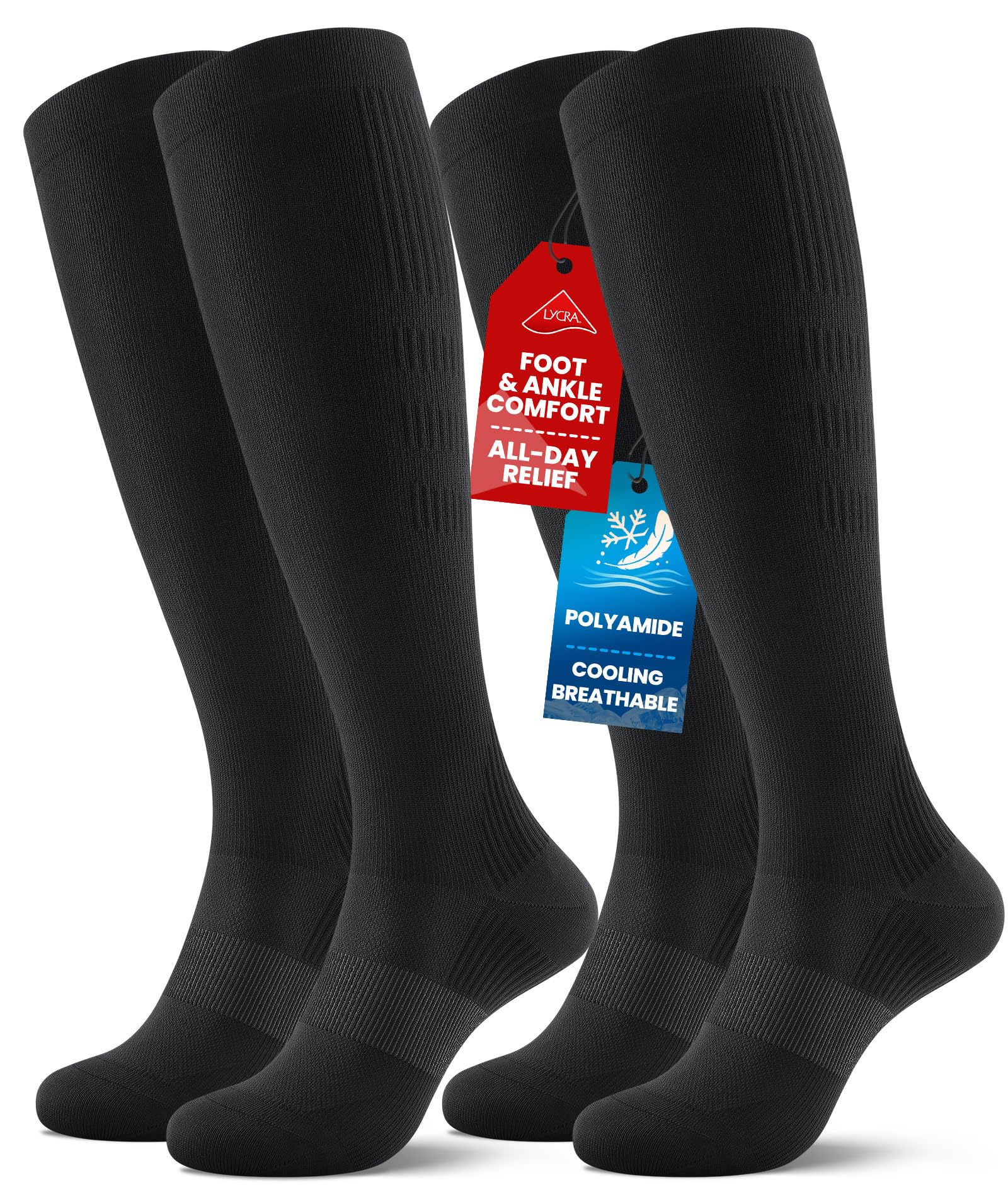
Medical-grade pressure in a fabric made for hot days and sweaty legs.
PULIOU is the outlier here — it delivers the same firm 20-30 mmHg compression as the top picks, but the draw is a cooling fabric engineered specifically for breathability. If you live in a warm climate, work in a hot kitchen, or simply hate the feeling of thick, hot compression hosiery, this sock is designed to keep your skin temperature lower while still squeezing the fluid out of your ankles.
At two pairs for the pack, this is a better value than the single-pair Physix Gear or the single-pair NEENCA Copper sock, while still offering the same medical-grade pressure. The PULIOU leads on pack count compared to the CHARMKING’s 8 pairs — that is a 4.0x gap — but the compression level here is 20-30 mmHg, significantly higher and more effective for real swelling than the CHARMKING’s 15-20 mmHg. This is the choice if you need firm pressure without overheating.
The trade-off is that the cooling technology is often achieved with thinner fabric, which some customers note can feel less durable over many washes compared to a standard thicker medical sock.
Smart pick for: anyone whose ankles swell but whose feet also get clammy in regular compression socks. The two-pair pack gives you a rotation without the bulk of an eight-pair drawer.
Reach for this if: heat is a factor in your daily wear — summer travel, outdoor work, or hot environments. Look elsewhere if you prefer a thicker, plusher fabric feel against your skin.
5. LEVSOX Open Toe Compression Socks — 20-30 mmHg
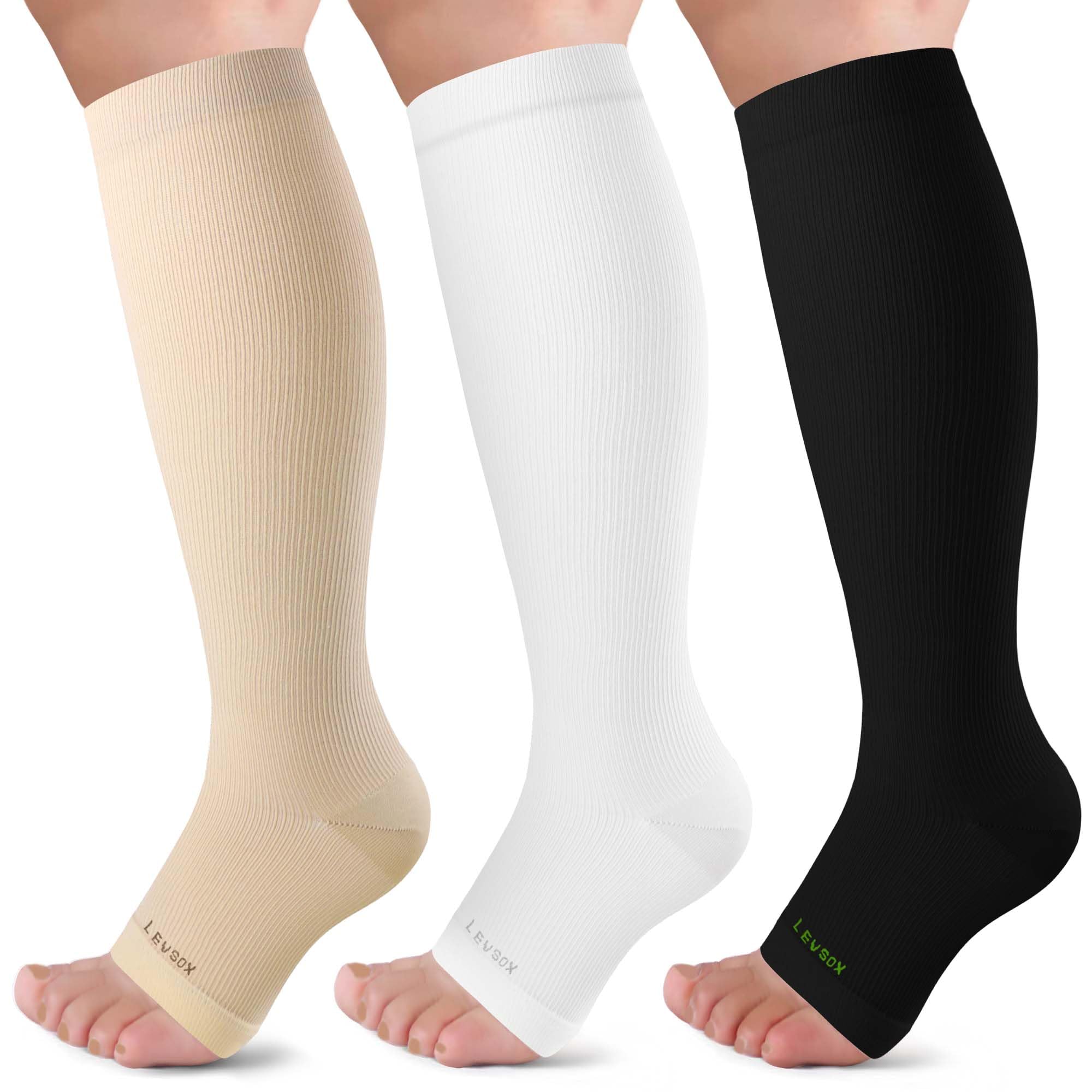
Toeless compression that gives your toes room to breathe while your ankles get full 20-30 mmHg pressure.
Not everyone likes the feeling of toes trapped inside tight compression fabric. The LEVSOX solves that with an open-toe (toeless) design that leaves your toes exposed while the rest of the sock applies 20-30 mmHg to your ankle and calf. This is especially helpful if you have swelling that reaches into your toes, or if you simply wear sandals or open-toe shoes and want the sock to stay hidden.
Graduated compression means the tightest pressure is at the ankle and it gradually reduces as it moves up the calf, helping push fluid upward. The sock is knee-high and unisex, fitting both men and women. Compared to the NEENCA and Physix Gear models, this is the most niche pick — it trades a few millimeters of toe coverage for comfort and ventilation in the toe area.
The 717 ratings with a 4.4 average suggest buyers are satisfied, but open-toe socks can slide around more on the foot than closed-toe versions, especially if you are active. It is a specialized tool, not the all-rounder.
The main advantage: total toe freedom means no bunching and better airflow. The disadvantage is you cannot wear these with closed-toe shoes unless you are okay with your toes showing.
Best for: people who find closed-toe compression socks claustrophobic or who wear mostly open sandals. pass on it if you need full foot coverage for cold weather or running.
6. Compression Socks for Women and Men — 15-20 mmHg (3 Pairs)
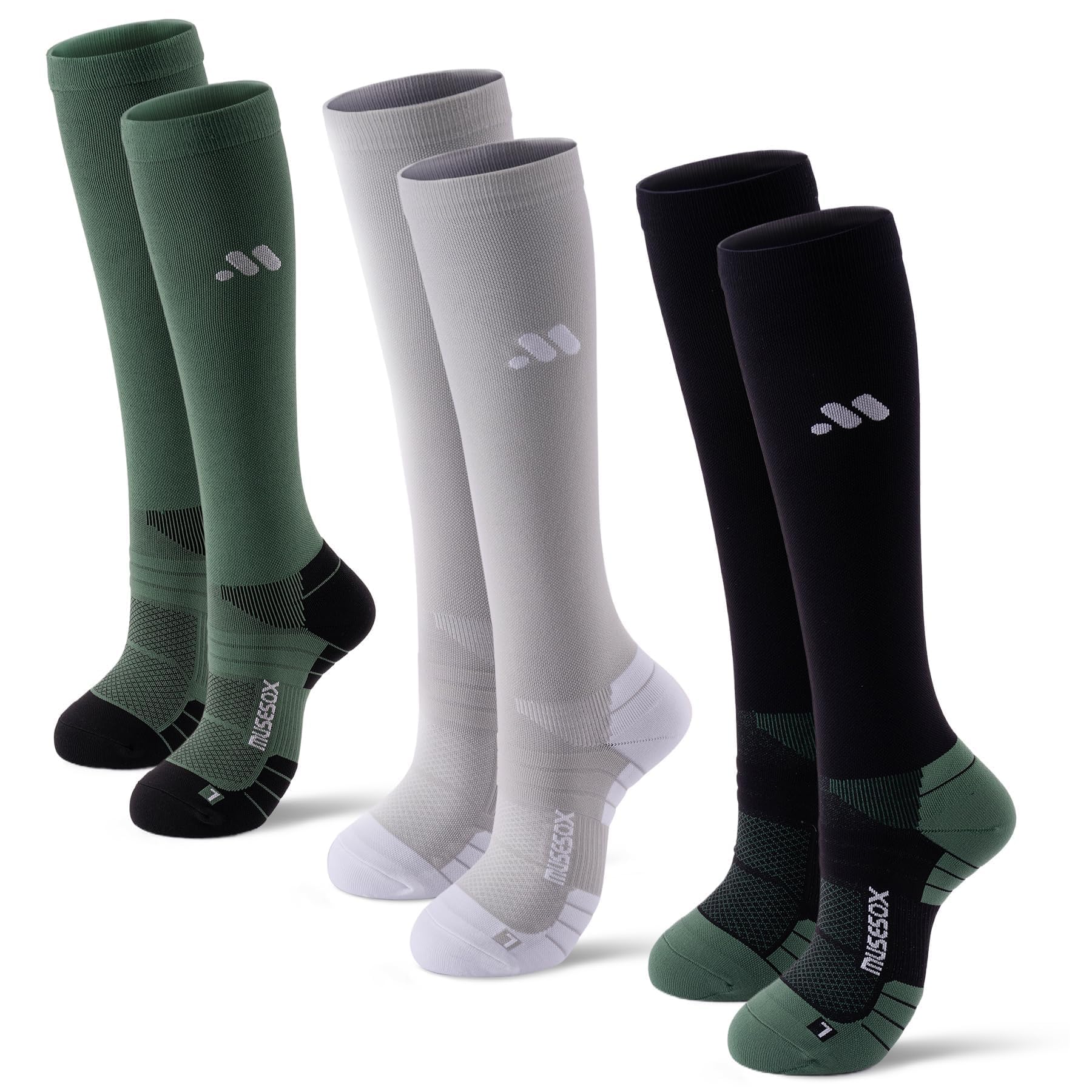
A budget-friendly 3-pair pack for mild swelling that does not need medical-grade pressure.
If your ankles only swell after a long day or during a flight, a 15-20 mmHg sock is often all you need. The sock has L/R foot labels for a tailored fit, and the knee-high length covers the full ankle-to-calf area where fluid collects.
At 15-20 mmHg, the compression is gentler than the 20-30 mmHg options above — the comparison facts show it is 33% less pressure than the NEENCA medical socks. That makes it more comfortable for beginners or people who only need light support. The 923 ratings with a 4.6 average indicate buyers are very happy with this pack for casual use.
The main limitation is that if your swelling is serious or persistent, the lighter pressure might not push out enough fluid. For mild or occasional swelling, it is a solid entry point that leaves you with two spare pairs.
Ideal for: someone who wants three pairs for the price of one premium sock and only needs light support. Not for you if you have been recommended 20-30 mmHg by a doctor.
Verdict: The best “starter pack” for mild daily swelling. it’s not for you if you already know your swelling needs the higher medical-grade squeeze.
7. CHARMKING Compression Socks — 15-20 mmHg (8 Pairs)

Eight pairs for a quarter of the cost per pair — but only if mild compression is enough for your swelling.
CHARMKING is the volume king on this list: 8 pairs of 15-20 mmHg knee-high compression socks for a bundle price that works out to a very low cost per pair. With over 89,000 ratings and a 4.5 average, it is the second most-reviewed sock here after Physix Gear. The product description highlights that the socks improve blood flow, reduce swelling, and stabilize the foot during activity, which makes them a versatile choice for casual wear or light athletic use.
The comparison with the PULIOU is instructive here — CHARMKING gives you 8 pairs to PULIOU’s 2 pairs (a 4.0x gap in quantity), but the compression level is 15-20 mmHg versus PULIOU’s 20-30 mmHg. For actual ankle swelling, the lower pressure means CHARMKING is best for mild daily support or prevention, not for treating existing fluid retention. The 15-20 mmHg level is a third lower than the 20-30 mmHg found in picks like the NEENCA medical socks.
Reviewers point out these are comfortable and machine-washable, and the 8-pair count means you could stock a whole household or go two weeks without doing laundry. The catch is that if you need real medical-grade squeeze, this pack will not deliver it — you would be better off with a higher-pressure option like the PULIOU or NEENCA, even if you get fewer pairs.
Why the bulk works
- 8 pairs give you a massive rotation — launder once every two weeks.
- 15-20 mmHg is comfortable for all-day wear and still helps with mild swelling.
- Machine washable and available for both women and men.
Where it falls short
- Lower compression level means it is less effective for moderate or severe ankle swelling.
- The bulk pack means you commit to 8 pairs of the same sock before knowing if the fit works for you.
Best for: large households, frequent travelers who want a backup for every bag, or anyone who just needs a light squeeze and hates doing laundry. look elsewhere if your doctor has told you to buy 20-30 mmHg.
Understanding the Specs
Compression Level (mmHg)
The “mmHg” number tells you exactly how much pressure the sock applies to your leg. Think of it like a blood pressure reading for your legs — the higher the number, the stronger the squeeze. A 15-20 mmHg sock provides light pressure good for mild puffiness, while a 20-30 mmHg sock gives medical-grade compression that pushes out noticeable fluid from your ankles.
Graduated Compression
Graduated means the sock is tightest at your ankle and loosens as it moves up your calf. This design helps push blood and fluid upward, against gravity, back toward your heart instead of letting it pool in your ankles and feet. A sock that is the same tightness all the way up will not help with swelling nearly as effectively.
FAQ
Will a 15-20 mmHg sock really help my ankle swelling?
How tight should compression socks feel against my ankle?
Can I sleep in compression socks for ankle swelling?
How long do compression socks last before they lose their squeeze?
Is there a difference between compression socks for men and women?
Open toe vs closed toe — which is better for ankle swelling?
Can compression socks prevent deep vein thrombosis (DVT) or blood clots?
Should I size up or down if my measurement is between sizes on the chart?
Final Thoughts: The Verdict
For most people dealing with real ankle swelling, the compression socks for ankle swelling winner is the NEENCA Medical 2-Pair Pack because it brings the highest 20-30 mmHg medical-grade pressure with a patented six-ring ankle design that directly targets fluid. If you want the best-reviewed and most trusted single-pair option for the same firm pressure, grab the Physix Gear. And if you need a whole wardrobe of light support for the entire family without spending much per sock, the CHARMKING 8-Pair Pack is the volume play that still delivers decent everyday support.
How We Picked
We do not accept paid placement. Every pick is matched to a real buyer and a real use-case; we do not hands-on test units.
Sources & Methodology
Specifications: manufacturer listings and product documentation. Review insights: verified customer reviews, as of July 2026. Pricing: not shown on this page (it changes often); check the current price via the retailer link.
As an Amazon Associate, WellFizz earns from qualifying purchases. This does not affect which products we feature.
Related Guides

Mo Maruf
I created WellFizz to bridge the gap between vague wellness advice and actionable solutions. My mission is simple: to decode the research and give you practical tools you can actually use.
Beyond the data, I am a passionate traveler. I believe that stepping away from the screen to explore new environments is essential for mental clarity and physical vitality.